10.45°N 84.02°W · Sarapiquí & Río Celeste
Northern Plains Eco-Lodges: Sarapiquí, Boca Tapada, Caño Negro and Río Celeste
12 places to stay
Most visitors to northern Costa Rica never get past La Fortuna. Yet some of the country’s best lowland nature lies farther north and east: the research forests of Sarapiquí, the great green macaw country around Boca Tapada, the seasonal wetlands of Caño Negro and the rain-soaked foothills of Tenorio Volcano above Bijagua. These are places for travelers who like birds, frogs, rivers and good guides more than big resorts.
This directory covers Puerto Viejo de Sarapiquí, La Virgen, Chilamate, Boca Tapada, the Maquenque refuge, Caño Negro and Bijagua on the Río Celeste side of Tenorio. Arenal and La Fortuna have their own Arenal and La Fortuna directory, and Bajos del Toro, including El Silencio Lodge, is in our Central Valley directory.
Northern Plains at a glance
| Area | Setting | Lodges | Best for |
|---|---|---|---|
| Sarapiquí (Puerto Viejo, La Virgen, Chilamate) | Lowland rainforest, rivers, research stations; paved roads | La Selva, Selva Verde, Tirimbina, Chilamate Rainforest Eco Retreat, La Quinta Sarapiquí | Nature learning, birding, families |
| Boca Tapada and Maquenque | Wet forest, lagoons and the San Carlos River near the Nicaraguan border | Maquenque Eco Lodge, Laguna del Lagarto, Pedacito de Cielo | Great green macaws, treehouses, serious birders |
| Caño Negro | Seasonal lagoons and flooded forest on the Río Frío | Small local lodges and cabinas | Waterbirds, boat tours |
| Bijagua and Río Celeste | Wet foothills between Tenorio and Miravalles volcanoes | Celeste Mountain Lodge, Tenorio Lodge, Finca Verde Lodge, Rio Celeste Hideaway | Río Celeste, frogs, tapir night walks |
Distances here are bigger than they look on a map, and the last stretch to Boca Tapada is on rural roads. Our guide to reaching remote eco-lodges has tips on cars and transfers.
Northern Lowlands lodges on our site
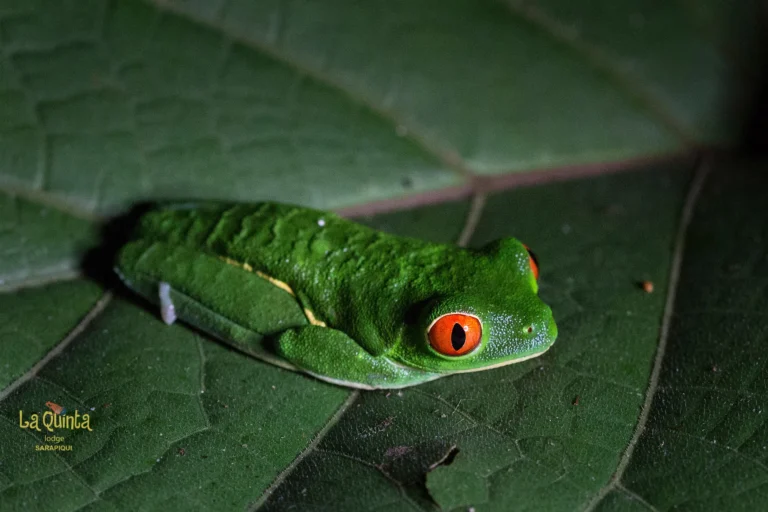

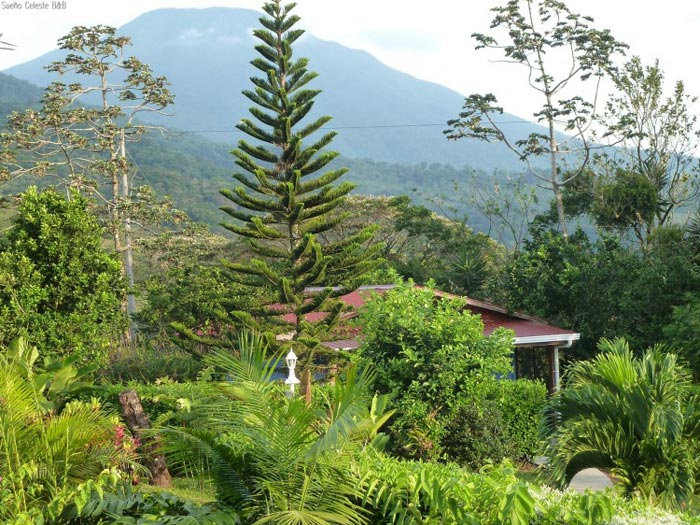

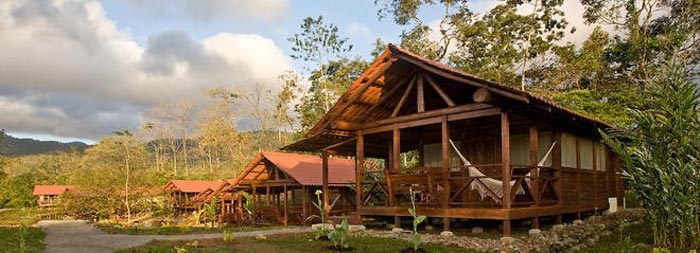

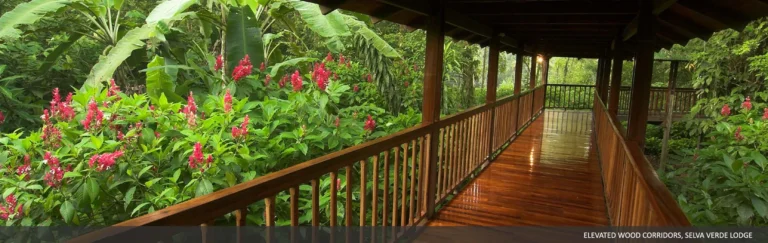


Sarapiquí: Costa Rica’s rainforest classroom
Sarapiquí is the best place in the country to learn how a lowland rainforest works, because it’s home to one of the most studied tropical forests anywhere.
La Selva Biological Station, run by the Organization for Tropical Studies, was set up in 1968 on the former farm of ecologist Leslie Holdridge. According to OTS, it protects 1,600 hectares of old-growth and recovering forest that abuts Braulio Carrillo National Park, forming a corridor that climbs from 35 m at the station to 2,906 m on Barva Volcano. Researchers have recorded more than 2,077 plant species, 470 bird species and 125 mammals, 72 of them bats. There are 61 km of trails, lodging for up to 180 people, and guided bird walks, night walks and natural history walks for visitors. Those numbers describe what’s been recorded over decades, not what one walk will show you, but a guide here can explain the forest better than almost anyone.
Selva Verde Lodge has hosted nature travelers since 1986 on a 500-acre property in Sarapiquí, with rooms and bungalows, naturalist guides, night walks and evening lectures. The official CST directory lists it at Elite level, certified May 2024 to May 2027, with 61 rooms.
Tirimbina Biological Reserve in La Virgen is a protected forest with its own rainforest lodge, 7 km of trails and three hanging bridges. It also holds an Elite CST certificate. It works well as a day visit even if you stay elsewhere.
Two smaller lodges round out the area. Chilamate Rainforest Eco Retreat, founded in 2006 by Davis, a Sarapiquí local, and Meghan, protects more than 42 hectares of lowland forest on the river and uses solar power and rainwater systems. La Quinta Sarapiquí Lodge, 12 km west of Puerto Viejo, opened in 1993 on 20 acres of gardens, reforested land and riverside forest.
The Sarapiquí River is also used for rafting. That’s an adventure activity with its own water-level and safety rules, so treat it separately from a slow wildlife float or a guided walk.
Boca Tapada and Maquenque: great green macaw country
Boca Tapada lies far to the north, beside the San Carlos River and close to Nicaragua. It’s the heart of the remaining breeding habitat of the great green macaw, which the World Parrot Trust lists as Critically Endangered, with an estimated 500 to 1,000 mature individuals left in the wild and numbers falling.
A 2012 paper in IUCN’s PARKS journal explains why this landscape matters. The macaw depends on the mountain almendro tree (Dipteryx panamensis) for both food and nest holes, and its nesting range in Costa Rica had shrunk by about 90% since the early 20th century. In 1994, researchers estimated only about 210 birds and 25 to 35 breeding pairs in the country. Their work led to the San Juan-La Selva Biological Corridor and, in 2005, the Maquenque Mixed National Wildlife Refuge, about 54,000 hectares, as its core. A council of 22 public and private organizations coordinates the corridor.
Maquenque Eco Lodge sits inside the refuge, 3.5 km east of Boca Tapada’s primary school. Its site lists treehouses, bungalows and a jungle suite, birding in macaw territory, boat trips on its wetlands and farm visits. It holds a CST Elite certificate, valid November 2025 to November 2028. Treehouses mean stairs, so ask for a ground-level room if mobility is an issue. Our treehouse and glamping guide compares other options.
Laguna del Lagarto Lodge has welcomed birders since 1992 and says it protects 500 hectares where about 350 bird species have been recorded, with outings on foot, on horseback and by boat. Hotel Pedacito de Cielo is a family-run lodge with bungalows and two decks above the San Carlos River, offering bird walks, night walks and river kayak and boat tours.
Please don’t ask guides to call in or bait macaws, and keep well away from nest trees. Our birds of Costa Rica guide and the round-up of eco-lodges for wildlife and birdwatching have more on ethical birding.
Caño Negro: a wetland that changes with the seasons
Caño Negro Mixed National Wildlife Refuge, near Los Chiles on the lower Río Frío, was created on January 4, 1984 and named a Ramsar wetland of international importance on December 27, 1991, one of Costa Rica’s first two. SINAC’s figures show about 9,970 hectares, most of it in Los Chiles canton; it’s a “mixed” refuge, with roughly 44% of the land privately owned.
The refuge floods in the rainy season and acts as overflow for the Río Frío. In the dry season, SINAC notes, the main lagoon breaks up into separate pools, which concentrates birds and fish. It records 307 bird species (206 resident and 101 migratory) and 160 mammal species, 90 of them bats. The lagoons also hold the tropical gar, a fish with heavy scales and a long toothy snout that SINAC calls a living fossil. Some lagoons are sacred sites for the Indigenous Maleku people, and the refuge has been part of UNESCO’s Agua y Paz Biosphere Reserve since 2007.
The refuge office is open 8:00 a.m. to 4:00 p.m. Lodging, food, boats and guides are run privately by people in the village of Caño Negro, so a local guide is the best way to see the wetland. Water levels change everything here: ask your guide what the lagoons are like before you go.
Bijagua and Río Celeste: wet forest on Tenorio’s slopes
Bijagua sits in a pass between Tenorio and Miravalles volcanoes, and the weather comes mostly from the Caribbean side, so it’s wetter and greener than the Guanacaste lowlands just to the west.
Tenorio Volcano National Park is 9 km from Bijagua. SINAC’s facts: the park was created on June 8, 1995 with 12,871 hectares, and together with its protective zone it covers 18,402 hectares. Rain averages 3,500 mm a year and the temperature averages 23°C. The main trail, Misterios del Tenorio, is 3 km each way (about 3 hours round trip) and passes the roughly 20 m Río Celeste waterfall, a viewpoint, the Laguna Azul, hot gas vents and El Teñidero, where two clear streams meet and the water turns blue. Entry is from 8:00 a.m. to 2:00 p.m., with up to 1,200 visitors a day and 500 on the trail at once, and tickets are sold only online through SINAC. You can’t enter the river, and drones, pets and single-use plastic aren’t allowed. Our Arenal and Río Celeste guide explains why the river is blue and how to time your visit.
Lodges around Bijagua:
- Celeste Mountain Lodge sits on the mountain pass with every room facing Tenorio and Miravalles. The lodge says it’s 5 km from the park by paved road and has a private 2 km birding trail through primary forest.
- Tenorio Lodge has 12 bungalows on about 7 hectares at roughly 500 m, with two natural lagoons, gardens and walking trails, according to its site.
- Finca Verde Lodge offers cabins in forest that the owners say was bare farmland about 25 years ago, with a butterfly garden, farm tour and guided walks for sloths, frogs and birds.
- Rio Celeste Hideaway sits within an 80-acre private reserve about 5 minutes from the park entrance, with private trails and river access. It holds a CST Elite certificate, valid to February 2028, and has 26 rooms.
After dark, the private Tapir Valley reserve at the base of Tenorio runs night tours that give the best chance of seeing Baird’s tapir, an endangered species, plus morning birding walks. Our reptiles and amphibians guide covers the frogs you’re likely to hear on a Bijagua night walk.
How to judge a northern lodge
Ask how much forest a lodge protects or has replanted, how it handles wastewater near rivers and wetlands, whether its guides are local, and what it does around nesting birds. Costa Rica’s CST program now has two levels, Basic and Elite, and you can check any business in the official directory. When we checked in October 2026, Selva Verde, Tirimbina, Maquenque and Rio Celeste Hideaway all held Elite certificates. Our CST guide explains what that means, and Costa Rica’s private nature reserves covers the role places like Tirimbina and La Selva play.
Sample itineraries
- 4 nights: Pick one area. Sarapiquí suits families and first-timers; Boca Tapada suits birders chasing the great green macaw.
- 7 nights: Three nights in Sarapiquí, two in Boca Tapada and two in Bijagua take you from lowland rainforest to macaw country to the volcanic foothills.
- 9 or 10 nights: Add Caño Negro for the wetlands. In heavy rain, rural roads can be slow, so get local advice before long transfers.
Selva Verde puts Sarapiquí about two hours from San José, so it makes an easy first or last stop. For full routes around the country, see our 7, 10 and 14-day itineraries.
Frequently asked questions
Is Sarapiquí a good alternative to Arenal?
For rainforest biology, rivers and expert guiding, yes. Arenal has the volcano views and hot springs; Sarapiquí has La Selva, one of the world's most studied tropical forests, with 470 bird species recorded.
Where can I see great green macaws?
The Boca Tapada and Maquenque area near the Nicaraguan border is the core of their remaining breeding habitat in Costa Rica, protected by the Maquenque refuge since 2005. Sightings aren't guaranteed, and the species is Critically Endangered, so watch from a distance.
When is the best time to visit Caño Negro?
It depends on what you want. In the dry season the lagoon breaks into smaller pools that concentrate birds; in the rainy season the area floods and boats can go farther. Ask a local guide about current water levels.
Do I need to book Río Celeste in advance?
Yes. SINAC sells Tenorio Volcano National Park tickets only online, entry runs from 8:00 a.m. to 2:00 p.m., and the park admits up to 1,200 visitors a day.
Can I stay in a treehouse in the Northern Plains?
Yes. Maquenque Eco Lodge in Boca Tapada has several treehouse room types. Expect stairs and night-time forest sounds, and ask for a bungalow if climbing is a problem.
Which northern lodges are CST certified?
In the official directory in October 2026, Selva Verde, Tirimbina, Maquenque Eco Lodge and Rio Celeste Hideaway were all listed at Elite level. Each listing shows an expiry date, so check again before booking.