8.54°N 83.56°W · Corcovado & Drake Bay
Osa Peninsula Eco-Lodges: Corcovado, Drake Bay, Cabo Matapalo and Golfo Dulce
24 places to stay
The Osa Peninsula is the Costa Rica many nature travelers picture: lowland rainforest running down to empty beaches, scarlet macaws overhead, and lodges where howler monkeys are the morning alarm. SINAC, the national parks agency, says Corcovado National Park alone holds about 2.5% of the world’s biodiversity. Planning a stay here takes more care than anywhere else in the country, though, because Drake Bay, Cabo Matapalo, Carate, Puerto Jiménez and Golfo Dulce are very different bases. Some are reached by road, some only by boat, and each one puts you close to a different part of the park.
This directory covers the peninsula itself and the lodges on the Golfo Dulce and Piedras Blancas side near Golfito. The mainland coast to the north (Dominical, Uvita and Ojochal) is in our Southern Pacific directory. For the park itself, read our Corcovado and Osa Peninsula guide.
Osa bases at a glance
| Base | How you get there | Lodges | Best for |
|---|---|---|---|
| Cabo Matapalo | Rural road south from Puerto Jiménez | Lapa Rios, Bosque del Cabo, El Remanso, Ojo del Mar | Wildlife on private reserves without long transfers |
| Carate | End of the road past Matapalo; transfers from Puerto Jiménez | La Leona Eco Lodge, Finca Exótica, Luna Lodge | Walking into Corcovado’s La Leona sector |
| Puerto Jiménez and Dos Brazos | Paved road, small airport in town | Bosque del Río Tigre | Birders, the El Tigre sector, flexible day trips |
| Drake Bay | Boat from Sierpe, or small plane | Aguila de Osa Inn, La Paloma Lodge, Copa de Arbol, Corcovado Wilderness Lodge | Boat trips to Sirena, San Pedrillo and Caño Island |
| Golfo Dulce | Boat from Golfito or Puerto Jiménez | Playa Cativo, Playa Nicuesa, Golfo Dulce Retreat | Calm water, dolphins, kayaking |
| Piedras Blancas (La Gamba) | Road from the Interamericana | Esquinas Rainforest Lodge | Rainforest without a boat or 4×4 |
If you’re unsure how boats, small planes and river crossings work, our guide to reaching remote eco-lodges walks through each option.
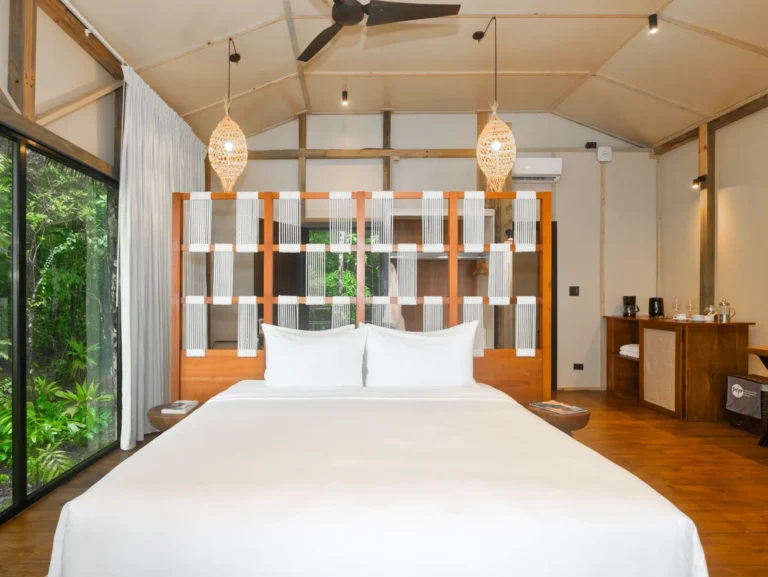
Osa Peninsula lodges on our site
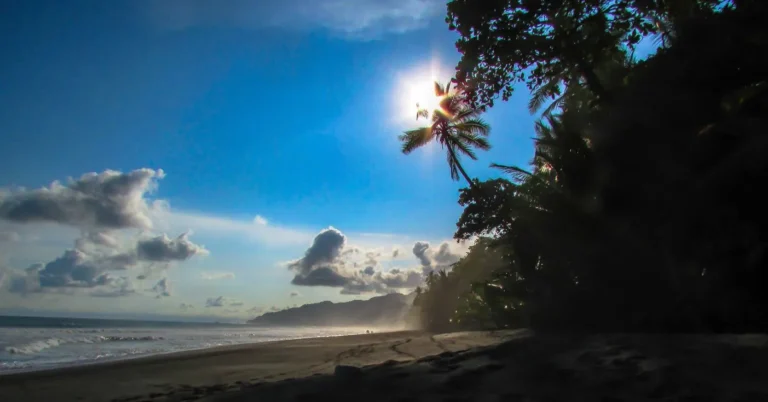
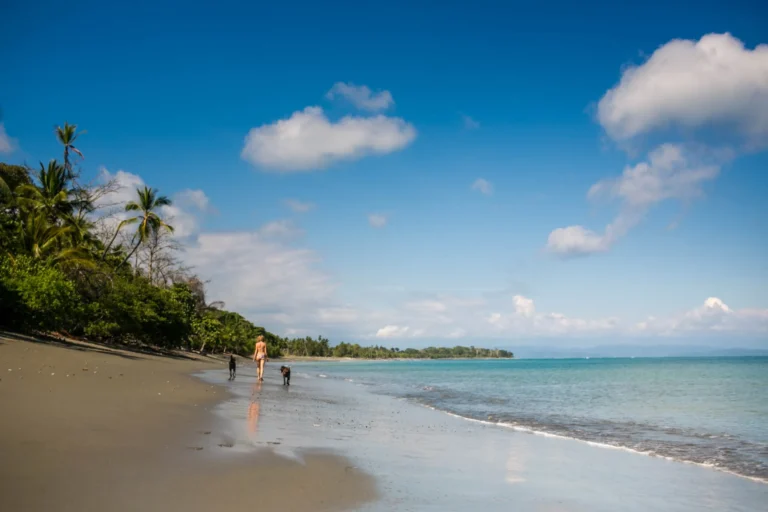
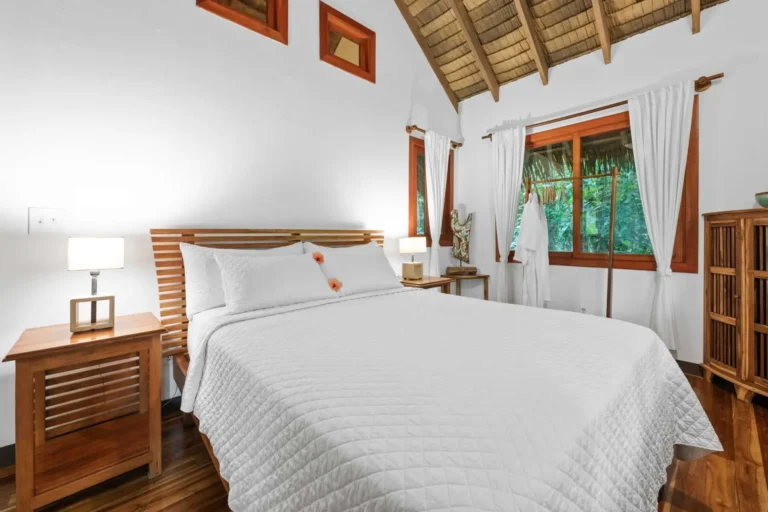
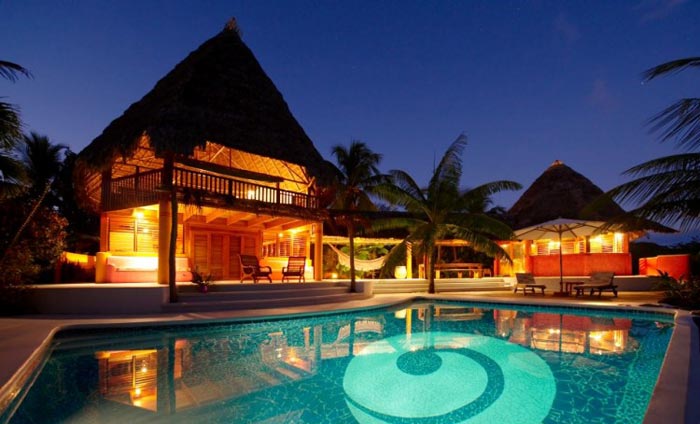
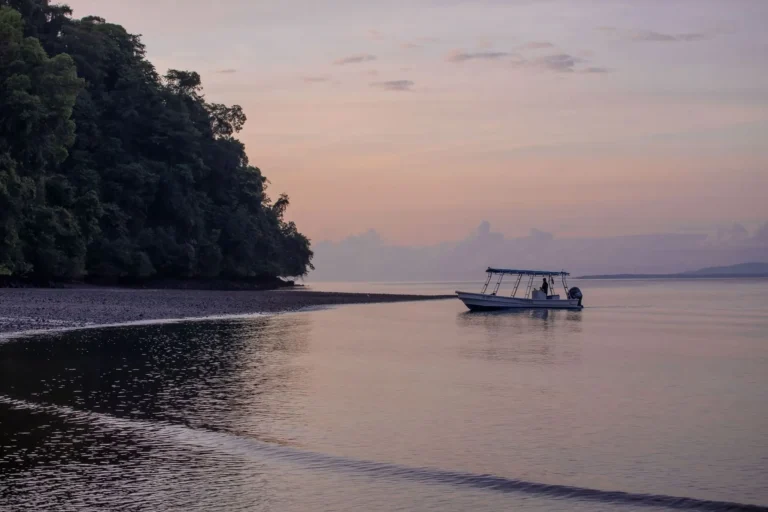
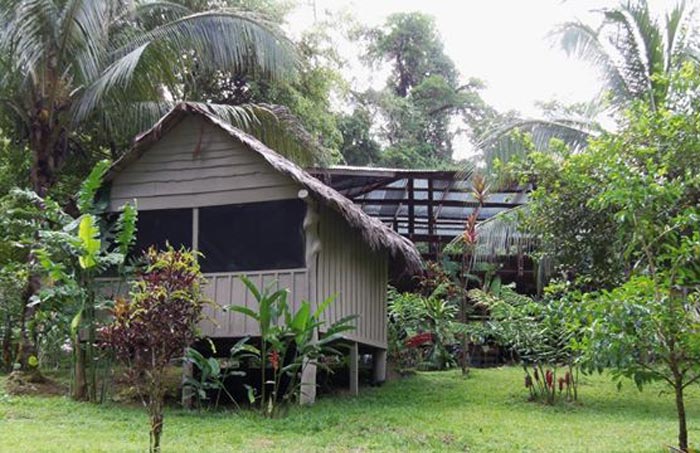
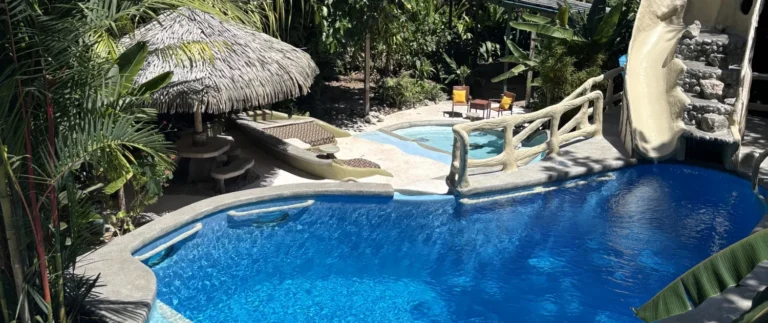
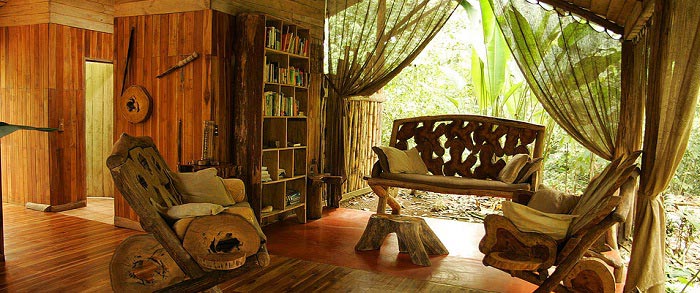


Corcovado: the sector you want decides your base
SINAC’s figures: Corcovado was created in 1975, covers about 42,560 hectares of land and 3,354 marine hectares, and rises to 782 m. Rain averages 5,500 mm a year in the hills and 3,500 mm on the coast. The dry season runs from mid-December to mid-April, and the Sirena sector page notes September and October are the wettest months.
The park has six visitor sectors, and each is reached a different way.
| Sector | Closest base | Access, according to SINAC | Good to know |
|---|---|---|---|
| Sirena | Drake Bay, Puerto Jiménez, Sierpe | Boat; or on foot from La Leona (16.5 km, 6 to 7 hours) or Los Patos (23 km, 8 to 9 hours). Flights are suspended. | The park’s central station, with 8 trails totaling about 20 km. Bull sharks and crocodiles at the river mouth at high tide. |
| San Pedrillo | Drake Bay | Boat | Waterfall, Río Pargo and Llorona trails; known for sunsets. |
| La Leona | Carate | A 3.5 km beach walk from Carate; Carate is reached by 4×4, shared taxi or small plane from Puerto Jiménez | The main land entrance; a beach trail continues toward Sirena. Hatchlings in turtle season. |
| Los Patos | Puerto Jiménez (La Palma side) | Road, then trail | The trail crosses the Río Rincón about twenty times. |
| Los Planes | Drake Bay area (land side) | Road only, to the Los Planes ranger station | A single flat 4.2 km trail, suited to all visitors and good for birds. |
| El Tigre | Dos Brazos de Río Tigre | Road | A strenuous 7 km hike with viewpoints; booked through the Dos Brazos community association. |
Key rules from SINAC:
- Reservations are mandatory for every sector, through the park’s reservation office (El Tigre goes through the Dos Brazos association).
- Bring a registered local guide. SINAC’s sector pages say visitors must enter with a local guide registered with the park’s tourism office or be refused entry, and the main park page singles out the long La Leona to Sirena and Los Patos to Sirena routes.
- Book early and carry ID. Reservations open up to 6 months ahead, are personal and non-transferable, and you’ll need your passport at the entrance.
- Not allowed: single-use plastic, picnics, bringing food into Sirena, swimming at the park’s beaches (strong currents), night walks, and touching or feeding animals.
- The park is open 7:00 a.m. to 3:00 p.m. daily. SINAC suggests three days for the full Los Patos, Sirena and La Leona traverse.
Cabo Matapalo: private reserves at the tip of the peninsula
Cabo Matapalo is where Golfo Dulce meets the open Pacific. Its lodges sit on large private forest holdings, so you can walk out of your room into good habitat at dawn.
Lapa Rios is one of Costa Rica’s best-known eco-lodges. Its sustainability page describes a 1,000-acre private reserve bordering Corcovado, 17 suites and villas, power mostly from 220 solar panels and ten small hydro turbines, salt-treated pools, compost and recycling through La Palma, and support for the local Carbonera and Piro schools. The official CST directory lists it at Elite level, certified April 2025 to April 2028.
Bosque del Cabo opened in 1990 on cliffs about 500 feet above the point where the gulf meets the ocean. Its site describes a 750-plus-acre forest reserve, ten thatched bungalows plus rental houses, trails down to beaches on both the gulf and the Pacific, and a suspension bridge of about 300 feet over a 75-foot-deep gorge. Its power comes from solar and hydro.
El Remanso offers 16 villas, bungalows and rooms in the forest, with a canopy tour, waterfall rappelling and guided hikes on site. Ojo del Mar is a smaller, yoga-focused retreat between the beach and the forest that has hosted guests for close to twenty years, with meals and retreat programs.
Carate: the road’s end and the La Leona entrance
Carate is the last stop on the road around the peninsula and the starting point for the walk into Corcovado’s La Leona sector. SINAC lists access by 4×4, shared taxi or small plane from Puerto Jiménez, and many lodges include a transfer. From Carate it’s a 3.5 km walk along the beach to the La Leona station.
La Leona Eco Lodge puts you right beside the park, in beach tent-cabins with private bathrooms and open-roof garden showers a few steps from the sand. Its packages include transfers between Puerto Jiménez and Carate, three meals a day and guided Corcovado tours from the La Leona ranger station. Finca Exótica, on Carate beach, has open-air cabanas, glamping tents and a beach house, with yoga on a deck above the Pacific. Luna Lodge sits in the forest above Carate with bungalows, safari tents and private trails to waterfalls; it closes each October and part of November, the rainiest weeks of the year.
These are not easy-access hotels. Pack light, plan to arrive in daylight, and don’t expect reliable phone signal.
Puerto Jiménez and Dos Brazos
Puerto Jiménez is the peninsula’s main town, with an airstrip and shops. It’s a sensible base if you want to book different day trips rather than commit to one remote lodge. Inland, the village of Dos Brazos de Río Tigre is the gateway to the El Tigre sector.
Bosque del Río Tigre is a small birding lodge on the edge of Dos Brazos, set in a 31-acre private reserve of primary and secondary forest, with naturalist and birding guides who work the Dos Brazos area. It suits birders who want a quiet place with expert guiding more than resort facilities.
Drake Bay: boats, beaches and two protected areas
Drake Bay, centered on the village of Agujitas, is the main base for boat trips to Corcovado’s Sirena and San Pedrillo sectors and to Caño Island. Most guests arrive by boat from Sierpe through the mangroves, landing on the beach, so pack in a soft bag you can carry through shallow water.
- Aguila de Osa Inn sits on a hillside above the bay and runs Caño Island diving, sportfishing, Corcovado hikes and whale and dolphin tours.
- La Paloma Lodge has 7 bungalows and 4 rooms on 14 acres on a cliff above the Pacific, a short walk from the Agujitas River.
- Copa de Arbol is an all-inclusive, boat-access beach resort at Caletas, about 2 km south of Drake Bay, with nine villas and tours that leave from its own beach.
- Corcovado Wilderness Lodge (formerly Casa Corcovado) sits on 189 acres bordered by the national park on three sides and the ocean on the fourth, and is reached only by boat. The CST directory lists it at Elite level, certified February 2026 to February 2029.
Ask whether a lodge is in the village or out along the coast. Coastal lodges have more forest around them but depend on boats for every outing; village lodges give you more independence.
Caño Island Biological Reserve
Caño Island lies about 16 km northwest of the peninsula. SINAC’s figures: created by law on March 9, 1978, with 320 hectares of land and 5,800 marine hectares. Its waters hold five coral platforms, among the most extensive and best-preserved reefs on Costa Rica’s Pacific coast, and the island has remains of pre-Columbian stone spheres.
Visits are tightly controlled. Boats leave from Drake Bay, Uvita and Sierpe; reservations open a maximum of 8 days ahead; every group needs a registered local guide or certified dive guide; and only ten people may be in the snorkel and dive zone at once. SINAC’s page still says visitors can’t land on the island, so trips are marine only.
Golfo Dulce and Piedras Blancas
Golfo Dulce is a deep, sheltered gulf between the peninsula and the mainland. Its calm water and forested shores make for a very different stay from the surf-battered Pacific side. A 2023 study in the University of Costa Rica’s Revista de Biología Tropical photo-identified 280 pantropical spotted dolphins in the gulf and estimated a population of roughly 187 to 368. The ICT reports that Golfo Dulce was named the first whale heritage destination in Latin America, and Golfito holds a whale festival in September.
Most gulf lodges border Piedras Blancas National Park, which SINAC says was created in 1990 from forest once part of Corcovado (known as Bosque Esquinas). It covers 15,147 land hectares and 1,200 marine hectares, shelters all four Costa Rican monkey species, jaguars and ocelots, and has a giant ceiba on the La Ceiba trail that SINAC says takes about 40 people to circle.
- Playa Cativo Lodge is boat-access only, about 30 minutes by boat from Golfito or Puerto Jiménez, inside a 1,000-acre private reserve next to Piedras Blancas. It offers kayaking, paddleboarding, snorkeling and guided rainforest walks. CST: Basic, certified March 2026 to March 2029.
- Playa Nicuesa Rainforest Lodge is also boat-access only, inside Piedras Blancas, powered by renewable energy, with kayaking, snorkeling, hiking and yoga. CST: Elite, certified October 2024 to October 2027.
- Golfo Dulce Retreat (the former Golfo Dulce Lodge web address now leads to it) sits on Playa San Josecito with four suites on about 1,000 acres of jungle, off the grid on a hydro turbine fed by forest springs. There’s no road, only boats.
- Esquinas Rainforest Lodge is the one you can drive to: it’s near the village of La Gamba, about three miles off the Interamericana Highway and roughly 30 minutes from Golfito’s airstrip, with 18 rooms and a jungle villa. The lodge says it’s carbon-neutral through tree planting in La Gamba. SINAC’s Ocelote trail, the park’s most visited, starts near La Gamba.
What lodges can and can’t promise about wildlife
Osa’s list is extraordinary: scarlet macaws, all four monkey species, tapirs, peccaries, sloths, two-toed and three-toed, and a huge range of frogs and insects. Jaguars and pumas live here too, but ordinary visitors rarely see them, and a lodge that promises a big cat isn’t being honest. Naturalist guides make the difference, because most of the forest’s life is hidden.
Conservation work on private land matters here as much as the park. Osa Conservation, a nonprofit working in southern Costa Rica, reports 530,654 trees planted and 145,650 sea-turtle hatchlings released in southern Costa Rica, and manages an 8,124-acre private wildlife refuge.
How to judge an Osa lodge
“Eco-lodge” isn’t a certification. Ask how much forest the lodge owns or protects, how it treats wastewater, where its power comes from, whether its guides are local and registered for Corcovado, and how it handles feeding of wildlife (it shouldn’t). Costa Rica’s CST program now has two levels, Basic and Elite, and you can look any lodge up in the official directory. When we checked in October 2026, Lapa Rios, Corcovado Wilderness Lodge and Playa Nicuesa held Elite certificates and Playa Cativo held Basic.
Sample itineraries
- 4 nights: Pick one base. Matapalo, Carate, Drake Bay or Golfo Dulce each works on its own; moving between them for a single night usually costs more time than it’s worth.
- 7 nights: Three nights in Drake Bay for a Sirena or San Pedrillo day and Caño Island, then four in Cabo Matapalo or on Golfo Dulce for forest trails and calm water. Or pair Carate with a gulf lodge.
- 10 nights or more: Add Dos Brazos for the El Tigre sector and birding, or two nights on the mainland coast around Uvita on the way in. Keep at least one spare day for weather.
Frequently asked questions
Where should I stay to visit Corcovado?
Choose the sector first. Drake Bay lodges reach Sirena and San Pedrillo by boat. Carate lodges walk in through La Leona. Puerto Jiménez is the base for Los Patos and Dos Brazos for El Tigre. All visits need an advance reservation through SINAC.
Do I need a guide in Corcovado?
Yes. SINAC's sector pages say every visitor must enter with a local guide registered with the park, and the long routes between La Leona and Sirena and between Los Patos and Sirena are specifically guided. Most lodges arrange guided park trips for their guests.
Can I land on Caño Island?
Not at the moment, according to SINAC's reserve page, which says only the marine area is open for snorkeling and diving. Bookings can be made at most 8 days ahead and require a registered guide.
Which Osa lodges can I drive to?
Cabo Matapalo lodges, Puerto Jiménez and Dos Brazos are on the road network, and Esquinas Rainforest Lodge near Golfito is reachable by car year-round. Carate needs a 4x4 or a transfer. Most Drake Bay and Golfo Dulce lodges are boat access only.
When is the best time to visit the Osa Peninsula?
SINAC gives the dry season as mid-December to mid-April, with September and October the wettest months. Some lodges, such as Luna Lodge, close for part of the rainy season. See our best time to visit guide for a month-by-month view.
Can I see jaguars in Corcovado?
Jaguars do live in the park and on surrounding private land, but sightings by visitors are rare. Tapirs, peccaries, monkeys and scarlet macaws are far more likely with a good guide.