10.30°N 84.82°W · Cloud forest & Santa Elena
Monteverde Eco-Lodges: Cloud Forest Hotels, Private Reserves and Birding Stays
3 places to stay
Monteverde is where Costa Rica’s forests climb into the clouds. Mist drifts through oak and fig crowns, mosses and orchids cover every branch, and on a still morning you can hear a three-wattled bellbird’s metallic call carry across a valley. It’s also a working mountain community, with family-run cabins in Santa Elena village, boutique hotels along the road to the reserves and small properties that protect their own patch of forest. Where you sleep shapes how much of that forest you actually get to know.
This directory covers Santa Elena, Cerro Plano, Monteverde and the surrounding Tilarán highlands. It explains how the area’s reserves differ, what each part of town is like as a base, and which lodges we can point you to, with facts checked against their own websites. For the natural history behind it all, start with our Monteverde cloud forest guide.
What makes Monteverde different
Cloud forest is rare. The Monteverde Cloud Forest Biological Preserve notes that tropical cloud forests form between roughly 1,200 and 2,500 meters and cover only about 0.26% of the Earth’s land surface. Mist alone can supply up to 40% of the water the forest captures, even when no rain falls. The same source counts more than 3,000 plant species in the preserve, including over 450 orchids and more than 800 epiphytes.
Monteverde also sits on the Continental Divide, so a short walk can take you from Pacific-slope forest to Caribbean-slope forest with different birds, plants and weather. That’s why two reserves a few kilometers apart can feel like different places, and why a lodge on one side of town may hear different dawn choruses than a lodge on the other. Our ecosystems guide explains how elevation and exposure create these bands.
The conservation story is unusually strong. The preserve is managed by the Tropical Science Center, a nonprofit that has protected forest here since 1972. On July 6, 2026, the International Union for Conservation of Nature announced that the reserve had joined its Green List, the first protected area in Costa Rica to do so, describing it as 4,125 hectares of cloud forest in the Tilarán range. The preserve’s sustainability page adds that it reached the Elite level of Costa Rica’s CST sustainability certification in 2026. Those are honors for the reserve itself, not for nearby hotels, but they tell you the forest you came to see is well looked after.
Monteverde lodges on our site
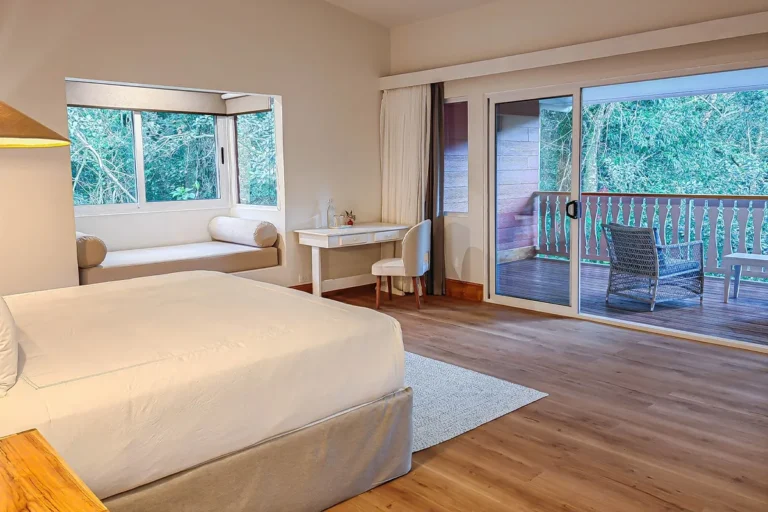
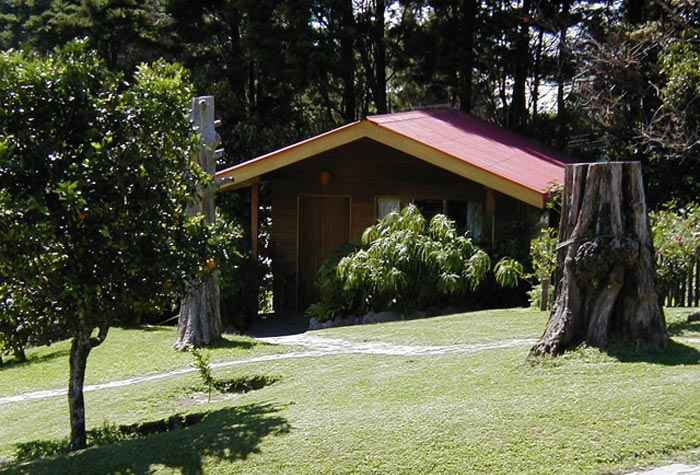

The reserves: which one fits your trip
Visitors often say “the Monteverde reserve” when they mean any of several protected areas run by different organizations. Each one has its own trails, rules and atmosphere.
| Reserve | Managed by | Size | What to know before you go |
|---|---|---|---|
| Monteverde Cloud Forest Biological Preserve | Tropical Science Center | About 4,125 ha | Timed entry slots; self-guided trails of 1.4, 2.8 and 4.1 km; guided day and night walks capped at 10 people |
| Santa Elena Cloud Forest Reserve | Board of the Santa Elena technical high school | 310 ha | Opened March 1, 1992; about 1,600 m elevation; around 4,000 mm of rain a year and an 18°C average |
| Children’s Eternal Rainforest (Bosque Eterno de los Niños) | Monteverde Conservation League | About 22,600 ha | Costa Rica’s largest private reserve; visitor trails at Bajo del Tigre, field stations deeper in the forest |
| Selvatura Park | Private company | Private park | Not a reserve: 3 km of trails with eight hanging bridges, 55 to 157 m long |
Monteverde Cloud Forest Biological Preserve. The best-known reserve runs visits in time slots, with numbers capped per slot based on scientific studies, according to its visitor page. You park free at a visitor center about 1.5 km below the entrance and ride a free shuttle up. The three self-guided circuits are the Essence Trail (1.4 km, about an hour, easy), the Heart of the Forest Trail (2.8 km, about 1.5 hours, crossing a hanging bridge) and the Continental Divide Trail (4.1 km, about 2.5 hours). The guided Natural History Walk and Night Walk each take a maximum of 10 people and last about 2.5 hours. Arrive 15 minutes before your slot; late arrivals may be turned away.
Santa Elena Cloud Forest Reserve. Smaller and a little higher, this reserve has an unusual story: its organization page explains that it has been run since 1991 by the administrative board of the local public technical high school under a permit from the environment ministry, one of the first in the country managed that way. It sits on the Caribbean side of the divide, so expect wetter, cooler conditions.
Children’s Eternal Rainforest. In 1987, American biologist Sharon Kinsman spoke to schoolchildren in Sweden, who raised enough money to buy six hectares of forest. That campaign grew into the Monteverde Conservation League’s reserve of about 22,600 hectares, named partly in honor of the Monteverde Quakers who had protected their watershed as “Bosqueterno” since 1951. Bajo del Tigre is its most accessible visitor area.
Selvatura and other bridge parks. Selvatura Park describes about 3 km of trails with eight bridges, the longest about 157 m, taking 1 to 1.5 hours. The bridges give a striking look at the canopy, but they’re a commercial attraction, not a protected reserve. Many travelers do one of each. Our guide to rainforest hikes, hanging bridges and canopy tours compares them in more detail.
Where to stay: Santa Elena, Cerro Plano or the forest edge
Monteverde’s lodging stretches along a few kilometers of road from Santa Elena village up through Cerro Plano toward the main reserve. The differences matter more than the map suggests, because roads are steep and evenings are cool and often wet.
| Base | Best for | Lodges to look at | Trade-off |
|---|---|---|---|
| Santa Elena village | Walking to restaurants and tour offices, travelers without a car | Arco Iris Lodge | Busier; you’ll ride to the reserves |
| Cerro Plano | A middle ground between village and reserves | Cala Lodge, Los Pinos Cabañas y Jardines, Hotel Belmar | Some properties sit on steep side roads |
| Toward the reserves | Forest sounds, early starts, private trails | Monteverde Lodge and Gardens, Monteverde Cloud Forest Lodge, Senda Monteverde | Fewer dinner options within walking distance |
If you won’t have a car, staying close to Santa Elena means you can eat out after a wet day without arranging transport. If birding is the point of your trip, a property with its own forest lets you start watching before breakfast.
Lodges we recommend in Monteverde
Every lodge below was open and taking reservations on its own website when we checked in October 2026. We list what each property says about itself; confirm room details and inclusions directly before you book.
Monteverde Lodge and Gardens
Monteverde Lodge and Gardens is a 31-room lodge within walking distance of town, set in designer gardens and its own small private cloud forest reserve. Its sustainability page says the 3.8-hectare property runs largely on 47 solar panels, uses a salt-purified pool rather than chlorine, composts restaurant waste for the gardens and has held Ecological Blue Flag recognition since 2022. In 2023 it joined a jaguar research program with Costa Rica’s National University. It belongs to the Böëna Lodges collection, which also includes Tortuga Lodge in Tortuguero. Guests can book guided reserve visits and a night tour on the lodge’s own reserve.
Arco Iris Lodge
Arco Iris Lodge is the pick for travelers who want village convenience with a garden feel. Its website describes 20 stone and hardwood cabins on 2.5 hectares of planted hillside, backed by protected forest, about a two-minute walk from the center of Santa Elena. Stone paths wind through the gardens, which makes early birding easy without leaving the property. It’s a sensible base if you’re arriving by bus or shuttle.
Monteverde Cloud Forest Lodge
Monteverde Cloud Forest Lodge places itself between the Monteverde and Santa Elena reserves, and highlights the three-wattled bellbird among the birds guests may hear. Our page describes a quiet property surrounded by primary and secondary forest with roughly 5 km of private trails and bungalow-style rooms with forest or garden views, some adapted with ramps. It suits couples and birders who’d rather wake to forest than to traffic.
Hotel Belmar
Hotel Belmar opened in 1985, which its website says made it the second lodging in the Monteverde region. It’s a full-service boutique hotel with a strong food story: its farm, Finca Madre Tierra, and on-site gardens supply herbs, vegetables, shade-grown coffee, cheese and eggs. The hotel’s sustainability page lists top-level CST ratings from 2011 to 2024 and describes Belmar as Monteverde’s first certified carbon-neutral hotel, from 2019. It suits travelers who want refined dining and comfortable rooms with a genuine farm-to-table connection.
Senda Monteverde
Senda Monteverde is part of the Cayuga Collection of sustainable luxury hotels and describes itself as minutes from the Cloud Forest Reserve. Guests get complimentary hiking in the Aguti Wildlife Reserve year-round, which is handy for an unhurried morning walk on arrival day. It’s a good match for couples who want boutique comfort but still plan to spend most of each day outdoors.
Cala Lodge
Cala Lodge sits on Calle Mariposa in Cerro Plano, surrounded by cloud forest. Its website lists past recognitions including CST Elite and the Ecological Blue Flag, and describes a goal of nature- and culture-based tourism that supports the local community. Room options include family suites, which makes it worth a look for families who want a mid-range base between village and reserves.
Los Pinos Cabañas y Jardines
Los Pinos, also in Cerro Plano, rents independent cabins, some with equipped kitchens, and gives guests access to trails through the hotel’s own private reserve. Its site describes a responsible tourism model focused on conserving cloud forest, using resources efficiently and supporting the community. Cabins with kitchens are practical for families and longer stays.
For treehouse and glamping options in the area, see our roundup of treehouses and glamping eco-stays.
Birdwatching: bellbirds, quetzals and patience
Monteverde is one of Costa Rica’s great birding destinations, and the preserve’s wildlife page explains why: species from the Pacific and Caribbean slopes meet along the divide. Two birds draw most visitors. The resplendent quetzal is listed as Near Threatened and still nests in the area’s old-growth oaks. The three-wattled bellbird, listed as Vulnerable, is often heard long before it’s seen. The preserve notes that many birds nest and show their brightest plumage in the drier months, roughly December to April.
No lodge or guide can promise a quetzal. What improves your chances is an early start, a guide who knows which fruiting trees are active that week, and a willingness to wait quietly. A good guide will also keep a respectful distance from nests and use recorded calls sparingly, if at all. Our birds of Costa Rica guide covers the country’s highland specialties, and our list of the best eco-lodges for wildlife and birdwatching includes other strong birding bases. If quetzals are your main goal, compare Monteverde with the San Gerardo de Dota valley in our Central Valley and highlands directory.
Mammals are harder to spot in cloud forest, but they’re here. The preserve lists Baird’s tapir, jaguar, ocelot, white-faced capuchin and two-toed sloth, plus more than 30 bat species. A guided night walk is the best way to see the forest’s quieter side: sleeping birds, frogs and glowing fungi.
Weather, roads and how long to stay
Monteverde is cool, windy and damp compared with the coast. The Santa Elena reserve records an average of about 18°C and around 4,000 mm of rain a year. Pack layers, a reliable rain jacket and shoes with grip, even in the dry season. Costa Rica’s tourism board explains that the Pacific side’s dry season runs from December to March, with September and October the wettest months, but on the divide, mist and drizzle can arrive in any month.
Roads into Monteverde are steep and winding, and some lodges sit on side roads with sharp driveways. Check your lodge’s exact location and parking before you arrive, especially with a small rental car or after dark.
How many nights? Two nights is the minimum for one reserve walk, a night tour and an early birding session. Three or four nights lets you add a second reserve or the bridges and gives you a buffer for a rainy morning. Many travelers pair Monteverde with Arenal; see our Arenal and Río Celeste guide and the lodges in our Arenal and La Fortuna directory, and our 7, 10 and 14-day itineraries for realistic transfer times.
How to judge a Monteverde lodge’s sustainability
Cloud forest soils, streams and steep slopes are easily damaged by construction and poor drainage, so look beyond recycling bins. Good questions to ask:
- Does the property protect native forest or restore it, and how much?
- How is wastewater treated, and how is runoff managed on slopes?
- Does the lodge employ local guides and staff, and buy from local farms?
- Does it hold a current CST certification, and at which level?
Costa Rica’s official Certification for Sustainable Tourism now uses two levels, Basic and Elite. Older “five leaves” ratings you may still see on some websites belong to the previous system. Our guides to CST certification and choosing a truly sustainable hotel explain how to read these claims, and our private nature reserves guide shows why small private forests around lodges matter for wildlife moving between the big reserves.
Frequently asked questions
Is it better to stay in Santa Elena or near the reserves?
Santa Elena is easier without a car: restaurants, tour offices and buses are close, and lodges like Arco Iris are a short walk from the center. Properties toward the reserves give you forest around your room and earlier starts, but you'll usually need transport for dinner.
Do I need to book the Monteverde Cloud Forest Preserve in advance?
It's wise. The preserve runs on time slots with capped numbers, and guided walks take a maximum of 10 people. Cancellations made at least 48 hours ahead receive a full refund, according to the preserve.
What's the difference between the Monteverde and Santa Elena reserves?
They're separate protected areas run by different organizations. Monteverde is much larger (about 4,125 hectares) and managed by the Tropical Science Center; Santa Elena covers 310 hectares, is run by a local high school's board and sits on the wetter Caribbean side of the divide.
When is the best time to see a quetzal in Monteverde?
The preserve notes that many birds nest and show their brightest plumage in the drier months, roughly December to April, and that quetzals still nest in the area's old-growth oaks. Sightings are never guaranteed, so book an early guided walk and keep a spare morning.
Are the hanging bridges inside the reserve?
The main preserve has one hanging bridge on its Heart of the Forest Trail. The large bridge circuits, such as Selvatura's eight bridges, are run by private companies on their own land. Check which venue a tour actually visits before you book.
How cold does Monteverde get?
Cooler than most visitors expect. The Santa Elena reserve averages about 18°C, and wind and mist make it feel colder, especially at night. Bring a fleece and a waterproof jacket.