9.16°N 83.74°W · Dominical, Uvita & Ojochal
Southern Pacific Eco-Lodges: Dominical, Uvita, Ojochal and Costa Ballena
3 places to stay
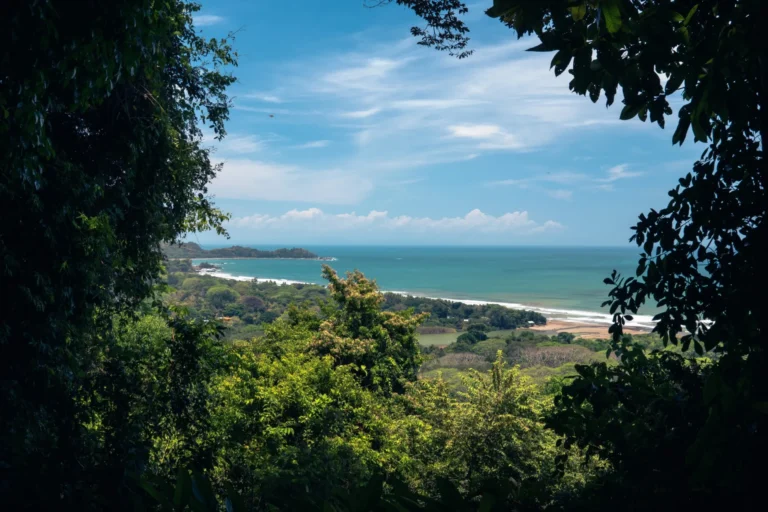
South of Quepos, the coastal mountains come down almost to the sea. Between Dominical and Ojochal, rainforest ridges sit a few minutes’ drive above beaches, river mouths and a marine national park that humpback whales visit twice a year. Locals and the tourism board call this stretch Costa Ballena, the Whale Coast. It’s a good region for travelers who want a balanced trip: a whale or snorkel outing one day, a forest walk or waterfall the next, and time to swim and rest in between.
This directory covers Dominical, Hacienda Barú, Uvita, Bahía Ballena, Ojochal and Playa Tortuga, plus the hills behind them. The more remote Osa Peninsula (Drake Bay, Corcovado, Puerto Jiménez and Golfo Dulce) has its own Osa Peninsula directory, and Manuel Antonio and Quepos are in our Central Pacific directory.
Costa Ballena at a glance
| Base | Setting | Lodges to look at | Best for |
|---|---|---|---|
| Dominical and Barú | Surf town, river valley, a private wildlife refuge | Hacienda Barú | Birders, families, budget-minded nature travelers |
| Uvita hills | Ridges above Marino Ballena with ocean views | La Cusinga, Mar y Selva, Kurà, Oxygen Jungle Villas, Rancho Pacifico | Whale season, couples, small groups |
| Ojochal and Playa Tortuga | Quieter village, restaurants, turtle beach to the south | Hotel Three Sixty | Adults wanting seclusion, turtle volunteering nearby |
Two things shape almost every stay here. First, most of the best-known lodges are on hillsides, not on the sand, so “ocean view” usually means a drive to the beach. Second, the roads up those hills can be steep and unpaved in places, so ask each lodge what vehicle it recommends before you rent a car. Our guide to reaching remote eco-lodges covers 4x4s, transfers and luggage in more detail.
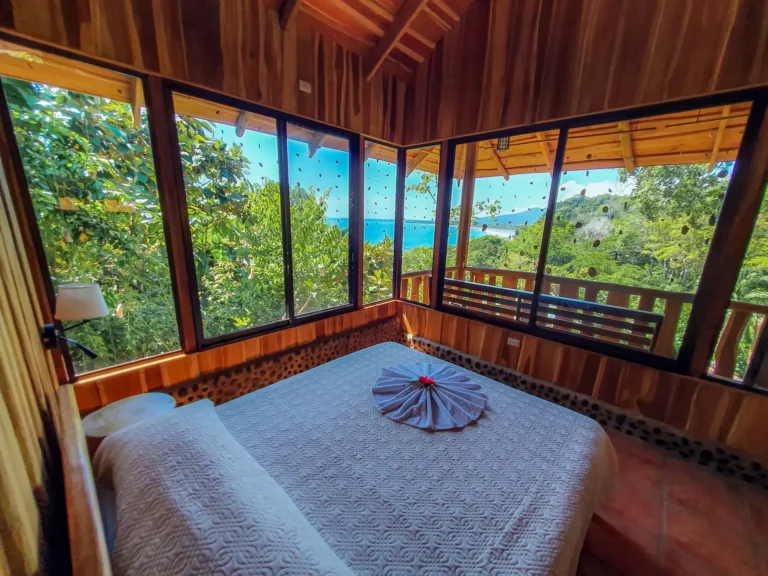
South Pacific lodges on our site
Marino Ballena National Park
Marino Ballena is the reason this coast is a nature destination and not just a string of beaches. According to SINAC, the national parks agency, it was the first protected area in Costa Rica created only for its marine resources. It covers 5,160 marine hectares and 171 land hectares, with a 15 km coastal strip running from the mouth of the Río Morete to Punta Piñuela.
The park began with local people. SINAC records that neighbors and small-scale fishers from Bahía Ballena and Piñuelas pushed for protection because large commercial shrimp boats were damaging their nets and the marine life they depended on. A first decree came on December 14, 1989; it was repealed in 1990, and the park was finally made official on June 9, 1992.
What you’ll find inside, according to SINAC:
- The Whale’s Tail (Cola de Ballena). A sand and rock tómbolo at Punta Uvita that you can only walk out on during the roughly six hours around low tide. Check the tide table at the entrance before you set off.
- Coral and snorkeling. The park has 17 coral species. The reef areas on the left side of the tómbolo and around Isla Ballena are the usual snorkel spots.
- Birds. Isla Ballena is an important nesting site for white ibis, and magnificent frigatebirds and brown boobies are also recorded.
- Marine life. Besides humpback whales, SINAC lists pantropical spotted and bottlenose dolphins, rays, hammerhead sharks and parrotfish, with resident dolphins present all year.
- Beaches. Uvita, Colonia, Arco, Ballena and Piñuela. Playa Arco can only be reached and left at low tide, through the Ballena sector.
| Park sector | Hours (daily) | Known for |
|---|---|---|
| Uvita | 7:00 a.m. to 5:00 p.m. | Playa Uvita and the Whale’s Tail tómbolo |
| Colonia | 7:00 a.m. to 6:00 p.m. | Playa Colonia |
| Ballena | 8:00 a.m. to 4:00 p.m. | Playa Ballena and the official entry to Playa Arco at low tide |
| Piñuela | 8:00 a.m. to 4:00 p.m. | Playa Piñuela, near Punta Piñuela at the park’s southern end |
Entry tickets are sold at the sector stations and are valid for the whole day; SINAC says payment is by credit or debit card only. Each sector has restrooms and showers. The park’s own recommendations are worth repeating: watch for rip currents, don’t swim where danger is signposted, and be careful at high tide near river mouths.
Whale season and how boats should behave
Humpback whales from two different populations use these waters. SINAC describes the northern-hemisphere whales arriving from December to April and the southern-hemisphere whales from July to November, with resident dolphins year-round. The Costa Rica Tourism Board (ICT) says the peak comes in September and October, when Uvita holds its annual Whale and Dolphin Festival. No month guarantees a sighting, and sea conditions can cancel a departure, so give yourself more than one possible tour day.
Boat tours are regulated by Executive Decree 32495, which requires operators to hold a SINAC or INCOPESCA permit, carry a rangefinder and give passengers a briefing before the trip. Boats must stay at least 100 m from whales and 50 m from dolphins, and may spend no more than 30 minutes with a group. A captain who holds back is following the law, not giving you a lesser tour. Our whale-watching guide explains the full rules and the science behind the two migrations, and marine life of Costa Rica covers the reef fish and dolphins you may see on the same trip.
Dominical and Hacienda Barú
Dominical is a surf town at the mouth of the Barú River, with strong waves and currents that make it a poor choice for casual swimming. A few minutes north, though, is one of the longest-running conservation stays on the coast.
Hacienda Barú sits inside the Barú National Wildlife Refuge, which the lodge says conserves 330 hectares (815 acres) of rainforest, mangrove, wetland, riverbank and beachfront. That mix of habitats is why birders have recorded more than 365 species on the refuge. The lodge has six cottages and six pool-view rooms, an open-air restaurant serving Costa Rican food, an orchid garden and a bird-watching tower, and it runs eleven guided tours, including an early lowland bird walk, a night walk and the “Flight of the Toucan” zipline. It has catered to birders for more than 30 years. For travelers who care more about trails and guides than spa menus, it’s one of the most practical bases in the region.
Uvita: hillside lodges above the marine park
Uvita is the commercial center of Costa Ballena and the closest town to the park’s Uvita sector and to most whale-boat departures. The lodges below are all in the hills around it, and they differ a lot in style.
La Cusinga Lodge is the region’s long-standing family eco-lodge. The Tresemer and Guzmán family has lived in Uvita since 1972 and opened the lodge in 1995, about 5 km south of the Uvita bridge on land bordering Marino Ballena. On its sustainability page, the lodge says it protects 242 hectares of forest as a private reserve and biological corridor, has reforested its land since 1990 (most of its building timber comes from trees it planted), uses solar water heating and composts its waste. It has ocean-view rooms and family rooms, a restaurant, a spa and space for yoga retreats.
Mar y Selva is a small private estate on the hillside above Uvita. On its own site it lists 10 private casas around a pool terrace, room for up to 30 guests if a group books the whole estate, and a drive of about 8 minutes to Marino Ballena. It suits families and retreat groups who want their own space more than hotel service.
Kurà Design Villas is an adults-only hotel on a coastal ridge above the Whale’s Tail. Its site lists 8 suites and places it about 15 minutes’ drive from the main road. It belongs to the Cayuga Collection of sustainable luxury hotels.
Oxygen Jungle Villas is another adults-only retreat in the rainforest above Uvita, with villas, a riverside spa and a restaurant; the lodge says the beaches are about 10 minutes away by car. It holds the top level of Costa Rica’s sustainability certification: the official CST directory lists it at Elite level, certified in May 2025 and valid to May 2028.
Rancho Pacifico sits higher up, at nearly 2,000 feet (about 600 m), with rainforest treehouses, villas and suites for adults only. On its eco page the resort says more than 95% of its electricity comes from renewable sources, its water comes from a mountain spring treated with UV light rather than chemicals, and it’s a member of 1% for the Planet. Guests can sign up to help the nonprofit Reserva Playa Tortuga with nesting sea turtles.
Ojochal and Playa Tortuga
Ojochal, south of Uvita along the coastal highway, is a quieter village known for its small restaurants. The hills behind it are steep and forested.
Hotel Three Sixty is an adults-only hotel with 12 villas in the hills above Ojochal. The CST directory lists it at Basic level, certified in June 2025 through June 2028. On its sustainability page the hotel says it uses solar power, sources food locally and plants one tree through One Tree Planted for each room night booked on its own website.
At Playa Tortuga, just south of Ojochal, Reserva Playa Tortuga is a nonprofit research and education center founded in 2009 by local citizen scientists and Costa Rican biologists. It runs sea-turtle, crocodile, mammal and bird monitoring in the area influenced by the Térraba-Sierpe wetlands, and says it has released more than 50,000 hatchlings and protects about 100 nests a season. It takes volunteers and interns, which makes it a good add-on for families staying anywhere in Ojochal or Uvita. Our sea turtle nesting guide explains the species and seasons on this coast.
Sierpe, Caño Island and the way to Osa
South of Ojochal, the Térraba and Sierpe rivers run through one of the country’s largest mangrove systems before reaching the sea. The town of Sierpe is the usual boat departure point for Drake Bay, and mangrove boat tours leave from there too. It’s a reasonable day trip from Ojochal, but it’s a full day from Dominical.
Caño Island Biological Reserve is also within reach. SINAC lists boat access from Drake Bay, Uvita and Sierpe, a maximum of 8 days’ advance booking, and a requirement to go with a registered local guide or certified dive guide. SINAC’s page still says visitors can’t land on the island and that only the marine area is open for snorkeling and diving, so check with your operator.
If you’re continuing to Corcovado, a night or two on Costa Ballena breaks up the trip nicely. Don’t plan a morning at the Whale’s Tail and an afternoon arrival at a boat-access Drake Bay lodge on the same day; tides, boats and roads don’t always cooperate. Our Corcovado and Osa Peninsula guide explains the park sectors and how to book them.
Wildlife beyond the whales
The forest on these ridges links the coast with the mountains inland, so wildlife moves through private land as well as the park. Toucans, tanagers, trogons and parrots are typical of forested lodges, and Hacienda Barú’s bird list shows how rich the lowland mix of mangrove, forest and river can be. Monkeys and sloths are possible, but sightings depend on how much forest a property keeps. A guided dawn walk will show you more than a day by the pool. See our birds of Costa Rica guide and the wider wildlife-watching guide for what to look for and when.
How to judge a Costa Ballena lodge
This coast has grown quickly, and hillside construction can cause erosion and runoff that ends up on the reefs below. Useful questions to ask any lodge:
- How much land do you protect, and is any of it a registered reserve or refuge?
- How do you treat wastewater, and where does your water come from?
- Are your guides local, and do your whale tours follow Decree 32495?
- Do you hold a current CST certificate, and at which level?
Costa Rica’s CST program now has two levels, Basic and Elite; the old one-to-five-leaf scale is no longer used. You can check any hotel in the official directory, as we did for the lodges above. Our guides to CST certification and how to choose a sustainable hotel go into more depth, and Costa Rica’s private nature reserves explains why places like Hacienda Barú and La Cusinga matter for wildlife corridors.
Sample stays
- 4 nights: Stay in one base in the Uvita hills. Do one whale or snorkel trip, one morning at the Whale’s Tail at low tide and one guided forest walk, and keep a day free in case the sea is rough.
- 7 nights: Split three nights at Hacienda Barú for birding and the night walk with four nights near Uvita or Ojochal for the park, a boat trip and a turtle-reserve visit in season.
- 10 nights or more: Add a mangrove tour from Sierpe and continue by boat to Drake Bay, or by road to Puerto Jiménez, for Corcovado.
For timing across the whole country, see our guide to the best time to visit for wildlife.
Frequently asked questions
When is the best time for whale watching in Uvita?
SINAC describes two seasons: northern-hemisphere humpbacks from December to April and southern-hemisphere humpbacks from July to November. The ICT names September and October as the peak. Dolphins live in the park all year.
Can I walk out on the Whale's Tail any time?
No. SINAC says the tómbolo at Punta Uvita can only be reached during the roughly six hours around low tide. Check the tide table at the Uvita sector entrance and leave before the water comes back in.
Are Costa Ballena lodges on the beach?
Mostly not. Hacienda Barú's refuge reaches the beach, but La Cusinga, Mar y Selva, Kurà, Oxygen Jungle Villas, Rancho Pacifico and Hotel Three Sixty are all on hillsides with ocean views and a short drive to the sand. If you want to walk to the water, ask each lodge exactly how far it is.
Which Southern Pacific lodges hold CST certification?
When we checked the official CST directory in October 2026, Oxygen Jungle Villas was listed at Elite level and Hotel Three Sixty at Basic level. Each listing shows an expiry date, so check the directory again before you book.
Is Costa Ballena the same as the Osa Peninsula?
No. Dominical, Uvita and Ojochal are on the mainland coast with paved highway access. The Osa Peninsula, with Corcovado, Drake Bay and Puerto Jiménez, is farther south and more remote, and some of its lodges are reached only by boat.
Is Dominical a good swimming beach for families?
Dominical is known for powerful surf and currents, so it suits surfers more than young swimmers. Inside Marino Ballena, SINAC still warns about rip currents and asks visitors not to swim where danger is signposted, so ask a ranger at the sector entrance which spots are calm that day.