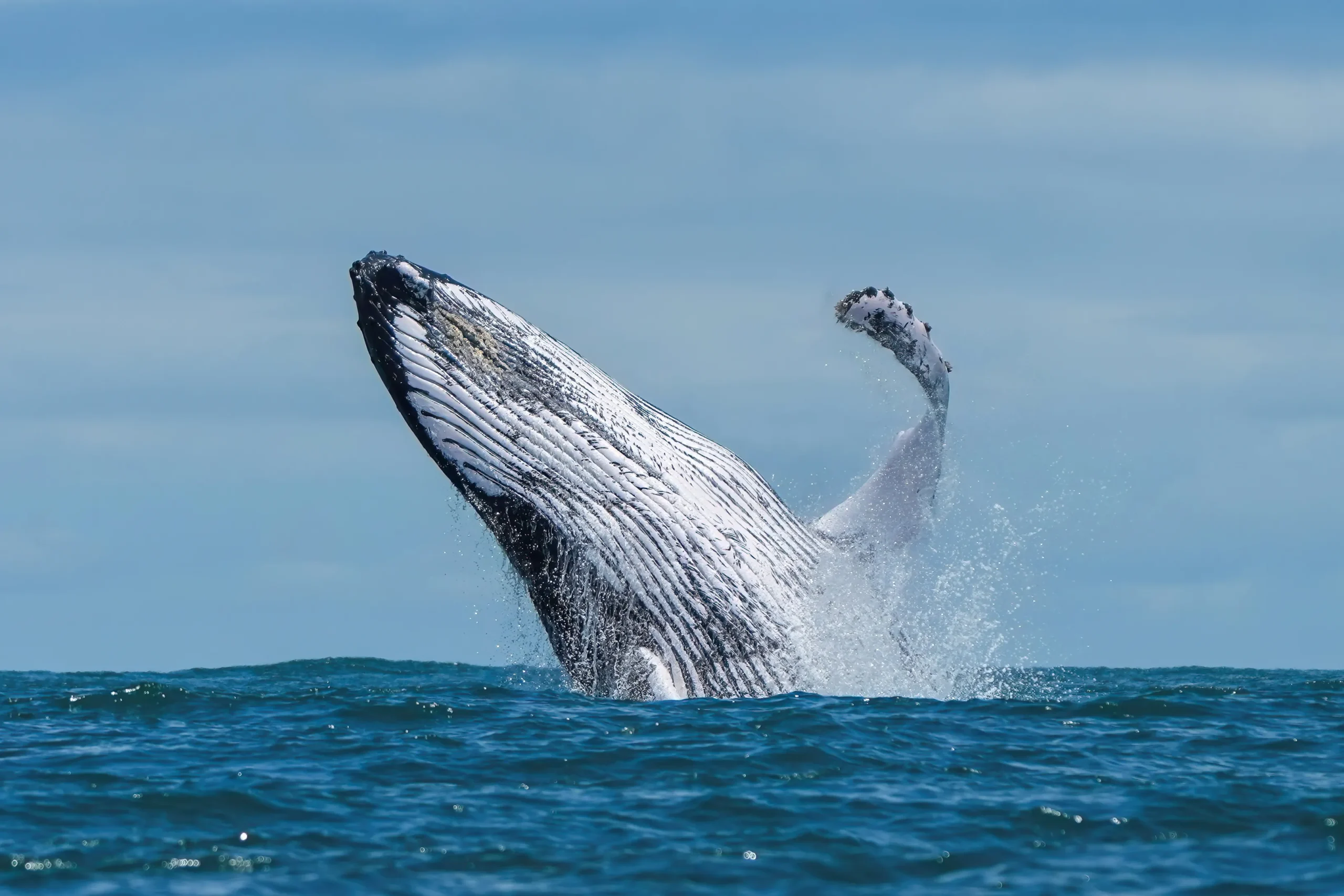
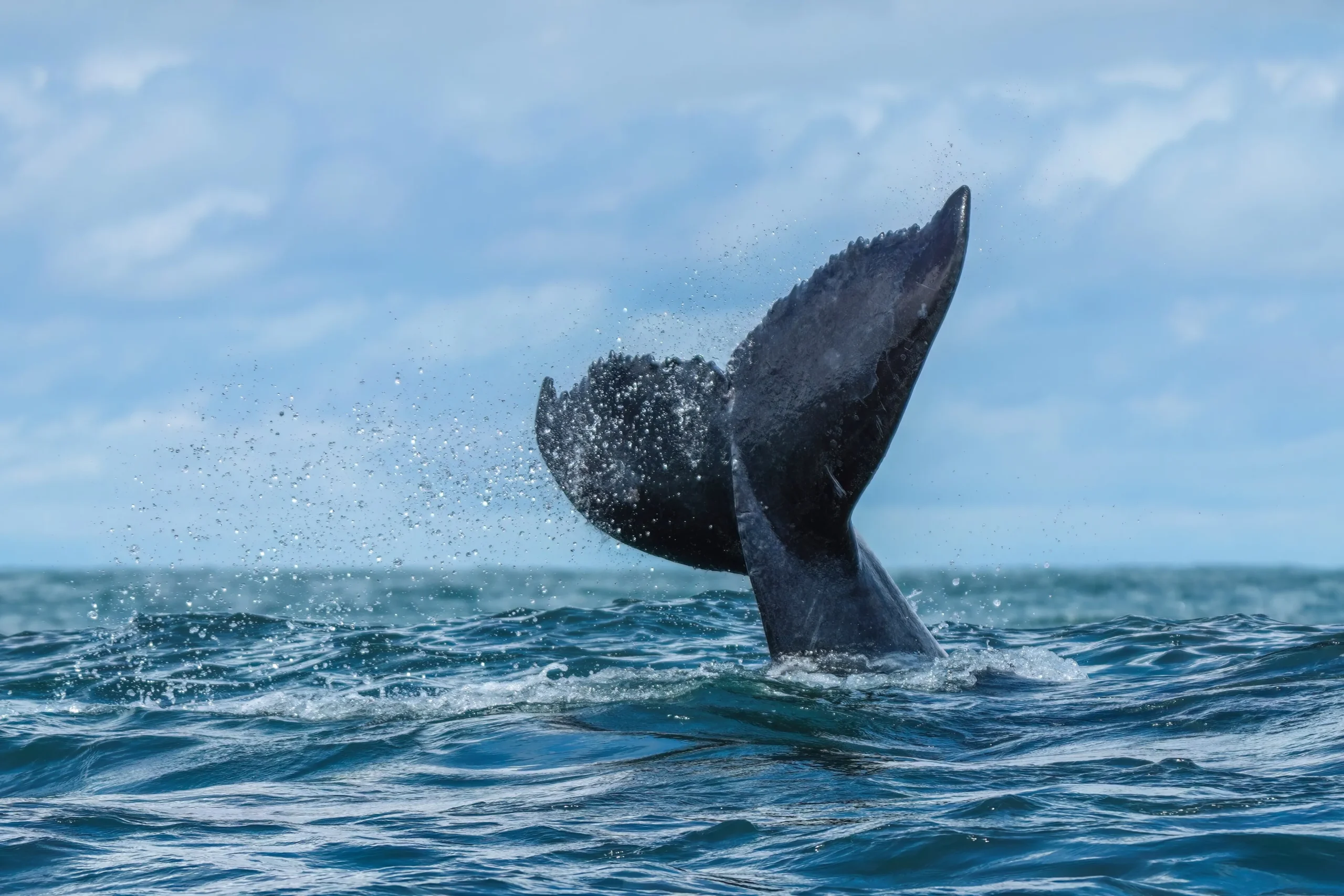
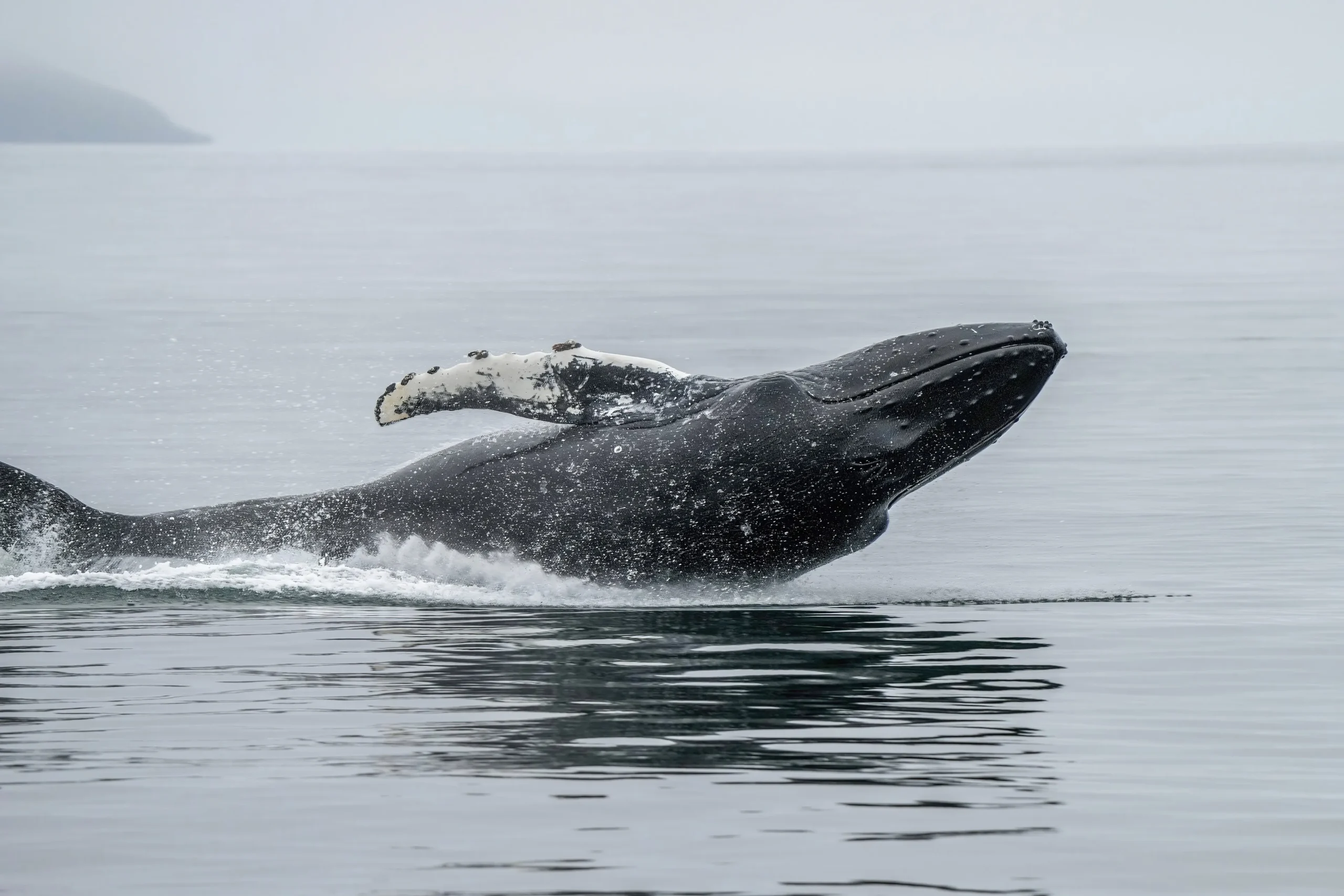
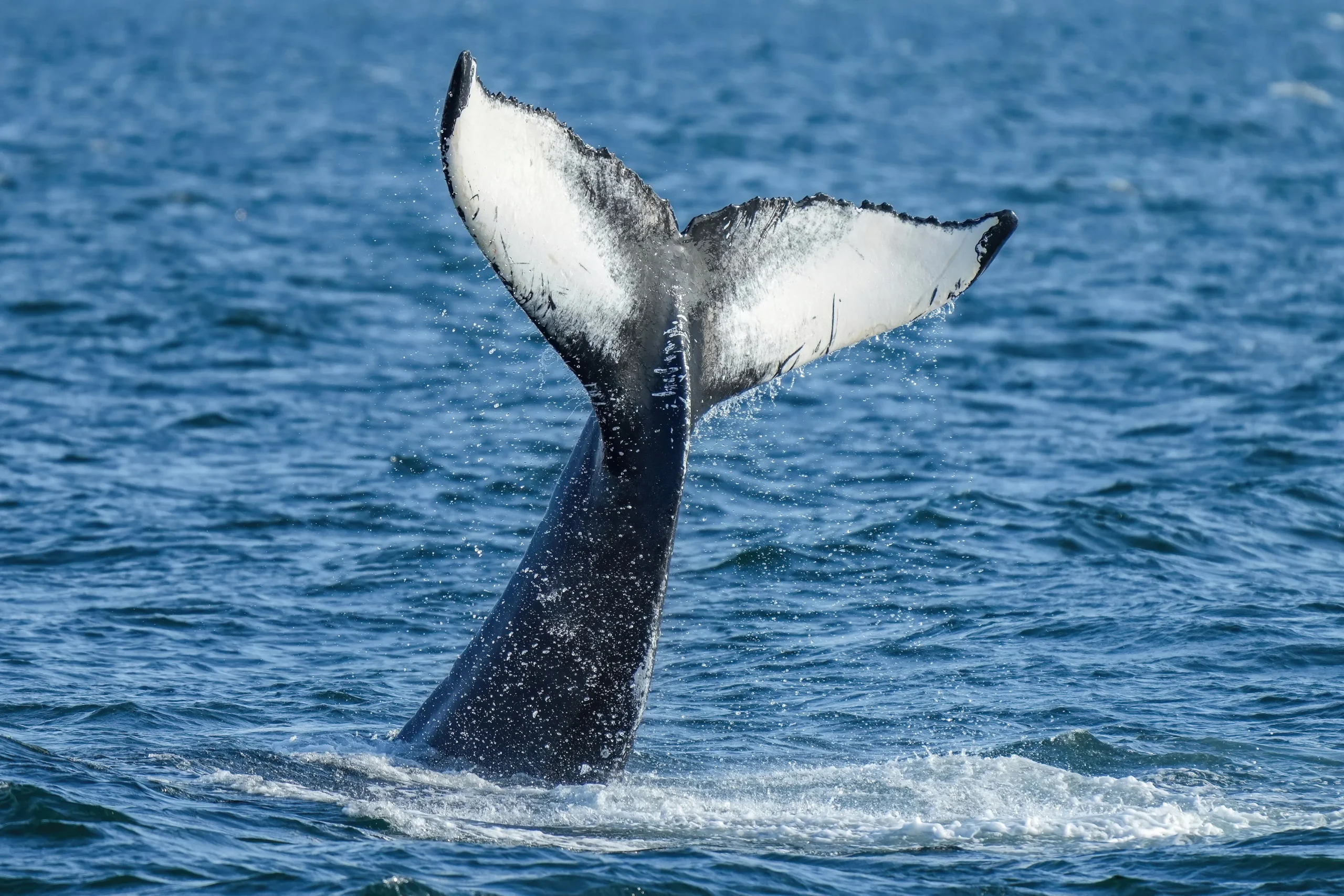
A humpback whale lifting its tail above the Pacific is one of Costa Rica’s most dramatic wildlife sights. Sometimes the ocean seems almost still before a dark curve breaks the surface, followed by a slow, deliberate dive. Other encounters are quieter: a distant blow, a mother and calf moving together, or dolphins appearing briefly beside a boat before continuing on their way.
Costa Rica’s Pacific waters offer two humpback seasons a year, resident dolphins and a national rulebook that tells boats exactly how close they may go. The experience can be extraordinary, but it is never predictable. It works best when you understand the migration, choose a suitable stretch of coast and book an operator who follows the rules.
Two humpback seasons from two hemispheres
Costa Rica is unusual because humpbacks arrive from both ends of the Pacific. The Costa Rica Tourism Board’s whales, dolphins and stingrays guide describes two main windows: one from the end of December to the beginning of April and another from the end of July to the beginning of November. It names September and October as the months with the highest probability of sightings, with Marino Ballena National Park at Uvita as the center of the activity. SINAC’s own Marino Ballena National Park page gives the same picture: northern whales from December to April, southern whales from July to November, and resident dolphins all year.
The southern visitors feed in Antarctic waters during the southern summer. A study in Biology Letters by Rasmussen and colleagues matched fluke photographs of individual whales seen off Costa Rica and Panama with whales photographed near the Antarctic Peninsula. Seven individuals, including a mother and calf, had traveled roughly 8,300 km, which the authors described as the longest documented migration of any mammal. The authors also explain why these whales come so far north: cold upwelling keeps the water off Peru and Ecuador too cool, so the warm breeding water they seek lies north of the equator.
The northern visitors belong to what NOAA calls the Central America population of humpback whales, which is listed as endangered under the US Endangered Species Act. NOAA says this population breeds along the Pacific coast of Central America, including off Costa Rica, and feeds off the US West Coast and southern British Columbia. A 2023 photo-identification study of the same population in El Salvador, published in the University of Costa Rica’s Revista de Biología Tropical, matched 87 percent of its whales to North Pacific feeding areas, most often central California.
| Season | Where the whales feed | Approximate months in Costa Rica | Where it is strongest | Planning notes |
|---|---|---|---|---|
| Southern Hemisphere humpbacks | Antarctic waters | Late July to early November; September and October are the best odds | Uvita and Marino Ballena, Drake Bay, Osa, Golfo Dulce | Overlaps the Pacific rainy season, so leave spare days for rough seas |
| Northern Hemisphere humpbacks | US West Coast and southern British Columbia | Late December to early April | Southern Pacific, with some sightings farther north | Dry-season weather, fewer whales reported than in September and October |
| Bottlenose and pantropical spotted dolphins | Resident in coastal and offshore waters | Year-round | Marino Ballena, Golfo Dulce, Osa, Gulf of Nicoya | Good outside whale months, but never guaranteed |
These are planning ranges, not promises. Migration timing, weather, visibility and the whales’ own behavior all affect what any single outing will see.
Uvita and Marino Ballena National Park
Uvita, on the Costa Ballena coast of the southern Pacific, is Costa Rica’s best-known whale-watching base. According to SINAC, Marino Ballena was the first Costa Rican protected area created specifically for its marine resources. It covers 5,160 marine hectares and 171 land hectares along 15 km of coast from the Morete River mouth to Punta Piñuela. Local residents and small-scale fishers pushed for its creation, and it was formally established by executive decree in 1992. Beyond humpbacks, SINAC lists spotted and bottlenose dolphins and manta rays among the park’s marine life, and notes that Isla Ballena is an important nesting site for white ibis, with frigatebirds and brown boobies also present. The famous whale-tail sandbar, the tómbolo, can only be walked at low tide.
Each September the Bahía Ballena community holds a whale and dolphin festival, which the ICT reported in 2024 alongside a second festival in Golfito. September and October are also wet months on this coast, so do not plan your only boat trip for the morning of your flight home.
Uvita pairs well with forested stays along the Ballena coast, so rainforest walks fill the days when the sea is too rough. One lodge we have reviewed:
- Mar y Selva overlooks Marino Ballena and is popular with birding groups and nature photographers.
Browse more options on our southern Pacific eco-lodges page.
Drake Bay and the Osa Peninsula
Drake Bay, on the northwest side of the Osa Peninsula, is the other classic base. Boats here combine whale and dolphin watching with trips to Caño Island Biological Reserve and the San Pedrillo side of Corcovado National Park, so marine observation complements rainforest travel. The ICT guide lists the Osa Peninsula and Drake Bay among the country’s most popular whale-watching areas.
The experience is different from a short Uvita outing. Drake Bay is more remote, transfers often go by boat and sea conditions shape the day. If you are coming mainly for Corcovado, treat whales as a likely bonus in season rather than the purpose of every boat ride. Lodges here include:
- Aguila de Osa Inn, on a bluff above Drake Bay, which organizes whale and dolphin boat tours as well as Caño Island snorkeling and diving.
- La Paloma Lodge, a family-owned lodge on a 24-acre property overlooking the ocean and Caño Island.
- Corcovado Wilderness Lodge (formerly Casa Corcovado Jungle Lodge), on a 170-acre property at the edge of the national park, reached by a boat journey of about 90 minutes from Sierpe.
Our Corcovado and Osa Peninsula guide covers park access and logistics, and the Osa Peninsula eco-lodges page lists more places to stay.
Golfo Dulce: sheltered water and resident dolphins
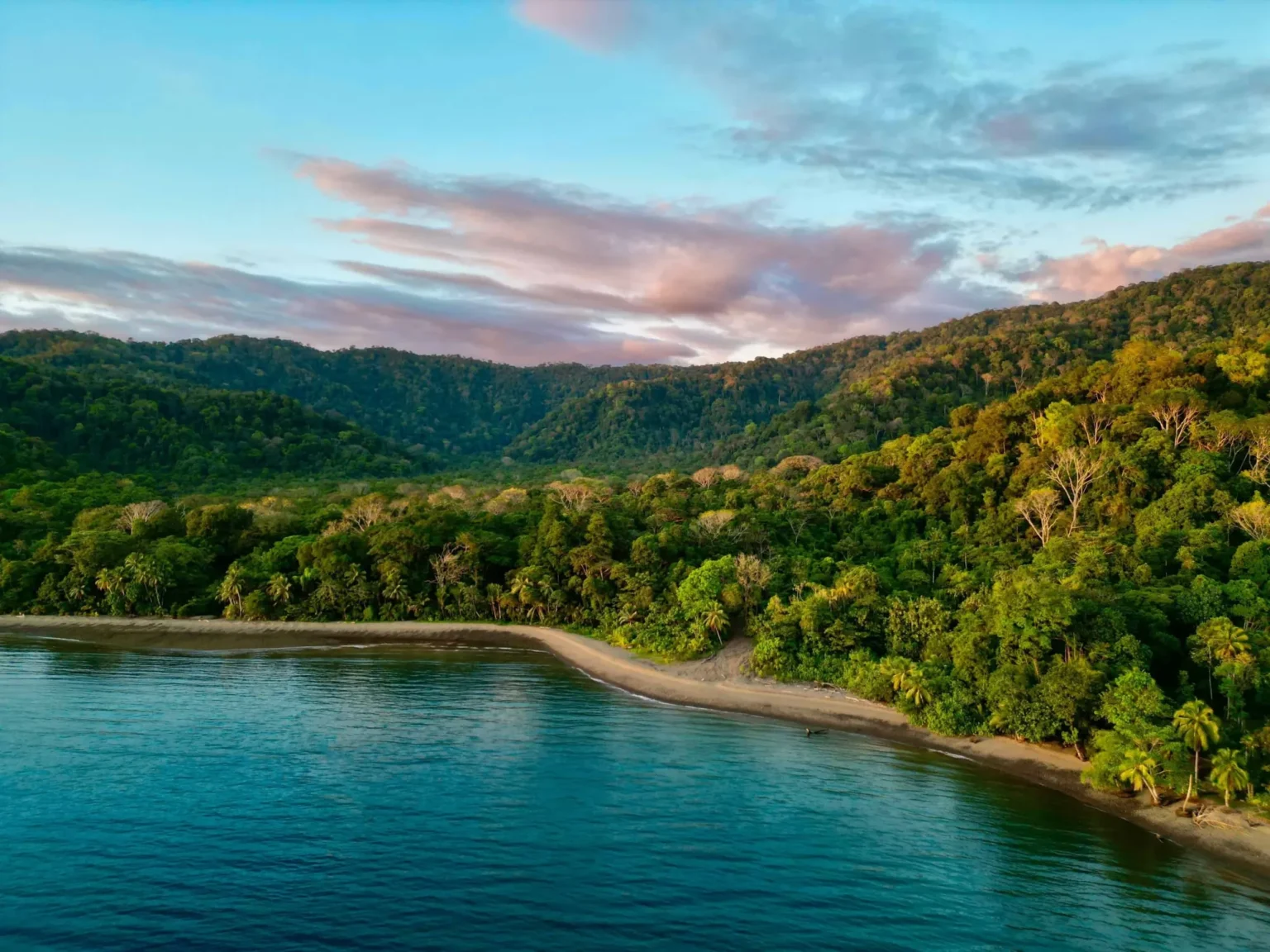
Golfo Dulce, the deep, fjord-like gulf between the Osa Peninsula and the mainland, feels different from the open ocean. Humpbacks enter the gulf in season, and the ICT notes that Golfo Dulce was named the first whale heritage destination in Latin America. It is also one of the best places in the country to learn about dolphins.
Researchers from the Centro de Investigación de Cetáceos photo-identified 280 coastal pantropical spotted dolphins in the gulf and estimated a population of roughly 187 to 368 animals, according to a 2023 paper in the Revista de Biología Tropical. The same paper notes that bottlenose dolphins in the gulf support local boat tourism, and the authors argue that the spotted dolphins deserve recognition as a distinct population because human pressure in the area is increasing. That is useful context, not a promise that dolphins will be at a particular spot on a particular day.
Several gulf lodges are reachable only by boat, which makes an unhurried, nature-first stay:
- Playa Nicuesa Rainforest Lodge is boat-access only, built with naturally fallen timber and powered by solar energy.
- Saladero Lodge sits on a 480-acre property between Piedras Blancas National Park and the gulf, with kayaks and snorkeling gear for guests and boat trips where dolphins are sometimes seen.
- Esquinas Rainforest Lodge, beside Piedras Blancas near the village of La Gamba, offers a three-hour dolphin-watching boat trip.
- Playa Cativo Lodge is a small boat-access lodge on about 400 hectares of private rainforest.
Central Pacific, Nicoya and Guanacaste
Whales and dolphins are not confined to the far south. The ICT guide lists Manuel Antonio, Quepos, Jacó, Montezuma, Curú, Tambor, Isla Tortuga and parts of the Gulf of Nicoya, plus northern communities such as Cuajiniquil, the Gulf of Papagayo, Tamarindo, El Coco and Sámara. It also notes that bottlenose and pantropical spotted dolphins are found year-round, that spinner and common dolphins are seen in the coastal waters of Osa and the Nicoya Peninsula, and that false killer whales, rough-toothed dolphins, orcas and Bryde’s whales turn up opportunistically along the Pacific.
Ask an operator which species are realistic for that coast and month. A frank answer is a sign of expertise. Lodges that pair beach time with marine outings include Casa Caletas Hotel on the Gulf of Nicoya, Hotel Punta Islita on a 300-acre property on the Nicoya coast and Sol Papagayo Resort on Playa Panamá, just south of Culebra Bay. See our Guanacaste and southern Nicoya pages for more.
What about the Caribbean coast?
Costa Rica’s Caribbean coast has rich marine life, but the country’s humpback-watching tourism is concentrated on the Pacific, and the ICT guide’s whale-watching locations are all Pacific. Caribbean nature travel centers instead on Tortuguero’s nesting turtles and canals and Cahuita’s coral reef. See our Tortuguero guide, sea turtle nesting guide and marine life guide.
Costa Rica’s whale and dolphin watching rules
Costa Rica regulates whale and dolphin watching under Executive Decree 32495, the Reglamento para la Operación de Actividades Relacionadas con Cetáceos, published in 2005. It applies to tour boats, private boats and researchers alike. It even covers a casual encounter: any boat that stays with whales or dolphins for more than five minutes, or follows them, must comply. The main rules:
| Rule | What the decree says |
|---|---|
| Distance from dolphins | No closer than 50 m with the engine running, or 30 m with it off |
| Distance from whales (over 5 m long) | No closer than 100 m |
| Animals feeding or socializing | No closer than 100 m to dolphins and 200 m to whales |
| A lone animal or a mother and calf | No more than 15 minutes, and no closer than 100 m to dolphins or 150 m to whales |
| Time with any group | 30 minutes maximum |
| Number of boats | Two boats per group; others wait at least 200 m away |
| Speed and approach | Approach diagonally from the side and behind, run parallel, and stay under 4 knots and slower than the slowest animal |
| In the water | Swimming or diving with cetaceans is prohibited for tourists |
| Feeding, noise and sound | No feeding, no loud music or engine noise within 100 m, no playing recorded sounds underwater and no echosounders in viewing areas |
The decree also requires tour operators to hold a permit from SINAC inside protected areas or from INCOPESCA elsewhere, to carry a rangefinder so they can actually measure distance, to use trained guides and to give passengers an orientation talk before the trip. If the animals show signs of disturbance, such as tail slapping, sudden speeding away or prolonged dives, the boat must leave slowly. The ICT’s guide summarizes the same core points for travelers: 50 m from dolphins, 100 m from whales, 30 minutes per group, two boats at a time and no feeding or swimming.
NOAA’s marine life viewing guidelines are a helpful international comparison, with similar distances and a 30-minute limit, but they are US guidance, not Costa Rican law.
How to choose a responsible operator
Good operators will happily answer a few direct questions before you book:
- Do you hold a SINAC or INCOPESCA permit for cetacean watching?
- How do you measure distance from the animals?
- What do you do when another boat is already with the whales?
- Will there be a briefing on how passengers should behave?
- What happens if conditions are unsafe or the animals move away?
Be wary of any company whose sales pitch is swimming with dolphins, close approaches or a guaranteed tail shot. Those promises conflict with the decree. A captain who slows down, keeps distance and leaves animals alone when they show signs of stress is giving you the better trip.
Do not assume a smaller boat is automatically more sustainable or safer, or that a larger vessel cannot be responsible. Engine behavior, captain training, passenger numbers and sea state all matter.
What happens on a typical outing
After a safety briefing, the boat heads to likely areas while the guide watches for blows, surfacing patterns and seabirds. Sometimes whales appear quickly; on other days there is a long search. When animals are found, the boat slows, keeps its distance and waits. A distant breach may be spectacular, but a calm sequence of breaths and a raised fluke can be just as moving.
The Pacific can be calm or rough depending on swell and wind, and a beautiful morning onshore does not always mean easy conditions offshore. Choose operators that cancel or shorten trips when it is unsafe. If you get seasick, plan ahead with medical advice that suits you. Bring sun protection, water, a secure hat and dry bags for electronics, and wear the life jacket the whole time, as the ICT guide advises. Families with young children or travelers with limited mobility should ask about boarding points and trip length; a short, stable coastal trip is often the better choice.
For photographs, a longer lens beats a closer boat. Never ask the captain to cut across an animal’s path or follow a pod for a better angle. A whale shown small against the coastline often makes the more memorable image.
Choosing a base for the trip
Match your base to the experience you want. Uvita and the Ballena coast give you the shortest boat rides to the main humpback area. Drake Bay combines whales with Caño Island and Corcovado. Golfo Dulce suits slower trips built around dolphins, kayaking and forest. When you compare lodges, ask how they choose their boat partners, as well as how they handle wastewater, outdoor lighting and local employment. Our guide to choosing a sustainable hotel in Costa Rica has a full checklist, and the wildlife watching guide helps you build whale days into a wider nature trip.
Frequently asked questions
What is the best month to see humpback whales in Costa Rica?
September and October give the best odds on the southern Pacific, according to the ICT. A second, smaller window runs from late December to early April, when whales from the North Pacific population are present.
How close can boats get to whales in Costa Rica?
Under Decree 32495, boats must stay at least 100 m from whales and at least 50 m from dolphins (30 m with the engine off). The minimum rises to 200 m from whales that are feeding or socializing and 150 m from a mother and calf. Boats may stay with a group for no more than 30 minutes.
Can you swim with wild dolphins or whales in Costa Rica?
No. The decree prohibits swimming or diving with cetaceans, except for researchers and professional underwater filmmakers holding a specific SINAC or INCOPESCA permit. A tour that offers it is breaking the rules.
Are whale sightings guaranteed?
No. Whales are free-ranging animals, and weather, sea state and behavior all affect what you see. An honest operator will tell you this before you pay.
Where do Costa Rica's humpbacks come from?
From two populations. Southern Hemisphere whales feed around Antarctica and arrive from late July. Northern Hemisphere whales from the endangered Central America population feed off the US West Coast and southern British Columbia and arrive from late December.
Can I see dolphins outside whale season?
Often, yes. SINAC notes resident dolphins at Marino Ballena year-round, and bottlenose and pantropical spotted dolphins occur along much of the Pacific in every month. Sightings are still not guaranteed.