
What if the most interesting part of your Costa Rica lodge stay were not the pool or the view, but breakfast? You might eat eggs you collected that morning, herbs grown beside the kitchen and chocolate you ground yourself from a pod picked an hour earlier. Organic farm stays add a practical layer to ecotourism. You see how people grow food in the tropics, how farming can repair damaged land and what sustainability looks like when the rainy season arrives.
Costa Rica has working farms that host travelers, eco-lodges with productive gardens and permaculture schools that teach ecological design. These overlap, but they are not the same thing. A hotel with a few herb beds is not an organic farm, and a conventional coffee tour is not regenerative agriculture. This guide explains the differences, names lodges where farming is genuinely part of the stay and gives you the questions that separate real practice from marketing.
What counts as a farm stay?
A true farm stay puts you on, or right beside, a working agricultural property. You eat what grows there, walk the fields with the people who manage them and, at some places, join structured workshops. Hands-on work should be optional and organized, never a way to turn paying guests into unpaid labor. Permaculture centers go further: their subject is the design of whole systems, linking water, soil, compost, plant diversity, energy and buildings.
“Organic” is a legal term in Costa Rica, not just a mood. The country’s organic agriculture law, Law No. 8591 of 2007, puts the Ministry of Agriculture and Livestock (MAG) in charge of promoting, controlling and regulating the organic sector, including transition periods and two kinds of certification: third-party certification and participatory certification. A farm that “uses some organic methods” is not the same as one with certified products. “Regenerative” has no single legal definition; it describes a direction of travel (more soil life, more trees, less erosion) rather than a standard. Ask which claim applies, and to which crops.
| Experience | What you actually do | Best for |
|---|---|---|
| Working farm lodging | Stay among gardens, orchards or animals; join farm tours | Families and curious travelers |
| Permaculture center | Learn food forests, water systems and ecological design | Students and hands-on learners |
| Cacao workshop | Follow cacao from pod to fermentation to chocolate bar | Food lovers, older children |
| Coffee farm visit | Learn shade growing, harvesting, processing and cupping | Short cultural outings in the highlands |
| Regeneration project | See reforestation, soil recovery and wildlife corridors | Travelers focused on environmental impact |
Arenal and La Fortuna: the easiest region for farm stays
The volcanic foothills around La Fortuna have the densest cluster of farm-based lodges in the country, and they pair naturally with rainforest walks and the park trails described in our Arenal and Río Celeste guide.
- Rancho Margot sits in a mountain valley near Lake Arenal, about forty minutes from La Fortuna, across more than 400 acres. Its restaurant vegetables come from the ranch’s own farm, much of the furniture is made from wood harvested on the property, and the ranch says it was certified carbon neutral in 2012. Guests can take a two-hour guided ranch tour of its sustainable systems or a workshop on the microorganisms used on the farm, and the ranch runs a volunteer program covering the garden and other work.
- Leaves and Lizards Arenal is a small hilltop farm lodge with 10 cabins on 30 acres in Monterrey de San Carlos, each with a view of Arenal Volcano. Its motto is “farm to table fresh”: milk, cheese, butter, eggs, meat and a range of fruits and vegetables come from the property, and guests can collect eggs, milk a cow or brush a horse.
- Chachagua Rainforest Hotel sits in the Chachagua Rainforest Reserve, next to the Children’s Eternal Rainforest, and describes organic farm operations among its activities. Its two-hour coffee and cacao experience covers coffee, cacao and sugar cane and includes a hands-on workshop that takes cacao from freshly harvested fruit to a finished bar.
Nearby, Finca Luna Nueva runs a 127-acre regenerative farm that has grown organic ginger and turmeric since 1994 and offers farm-to-table and chocolate workshops. Browse more stays in our Arenal and La Fortuna lodge directory.
A good Arenal plan combines one farm morning with one protected-forest walk. One shows managed land and how it can recover; the other shows the forest that land once was. Seeing both explains why farming and conservation in Costa Rica have to work together.
The Caribbean coast: a permaculture school near the beach
The southern Caribbean is wetter than the Pacific, and that shapes everything a farm grows there. Finca Tierra, near Puerto Viejo de Talamanca, is an off-grid permaculture education center and working farm that has been developed and refined since 2008. According to Finca Tierra’s own site, more than 1,000 students from over 40 countries have studied there. Its residential Permaculture Design Course runs 15 days, follows the internationally established 72-hour curriculum and is limited to 12 students, with accommodation in bamboo cabins. For travelers who do not want a full course, the farm also offers a slower week of gardening, harvesting and cooking with free afternoons for the beach. Meals are mostly plant based and draw on the farm’s food forests and gardens.
The same coast is home to Indigenous Bribri communities, where cacao has deep cultural roots. Stibrawpa, whose name means “artisan people” in Bribri, is a community association in Yorkín within the Talamanca Bribri Indigenous Territory, offers community-run rural tourism from one-day visits to three-day stays, and its day tour promises “the true taste of chocolate.” Our community and Indigenous ecotourism guide explains how to visit respectfully.
Cacao: the forest-food story
Cacao is a natural fit for agroforestry because the trees grow well under a managed canopy of taller shade trees. A good cacao experience covers planting, pollination, harvest, fermentation, drying and chocolate making, and is honest about the trade-offs between yield, biodiversity and income. A diverse cacao plot looks messier than a monoculture, but that mess is often where the birds and insects live.
Costa Rica holds one of the world’s great cacao gene banks. CATIE, the tropical agriculture research center in Turrialba, has kept its International Cocoa Collection for 80 years. It holds more than 1,235 cacao accessions from 25 countries, with the main collection at La Montaña farm in Turrialba and a replica at La Lola farm in Batán, 40 meters above sea level. CATIE says clones from the collection are helping revive fine-chocolate making in Costa Rica.
When you visit a cacao farm, ask who grows the cacao, whether fermentation happens locally and whether the farm sells finished chocolate or only raw beans. Those answers say more about who benefits than any photo of a chocolate bar. Cacao workshops are also one of the best farm activities for older children; see our family ecotourism guide for age-by-age ideas.
Coffee country: shade, birds and harvest timing
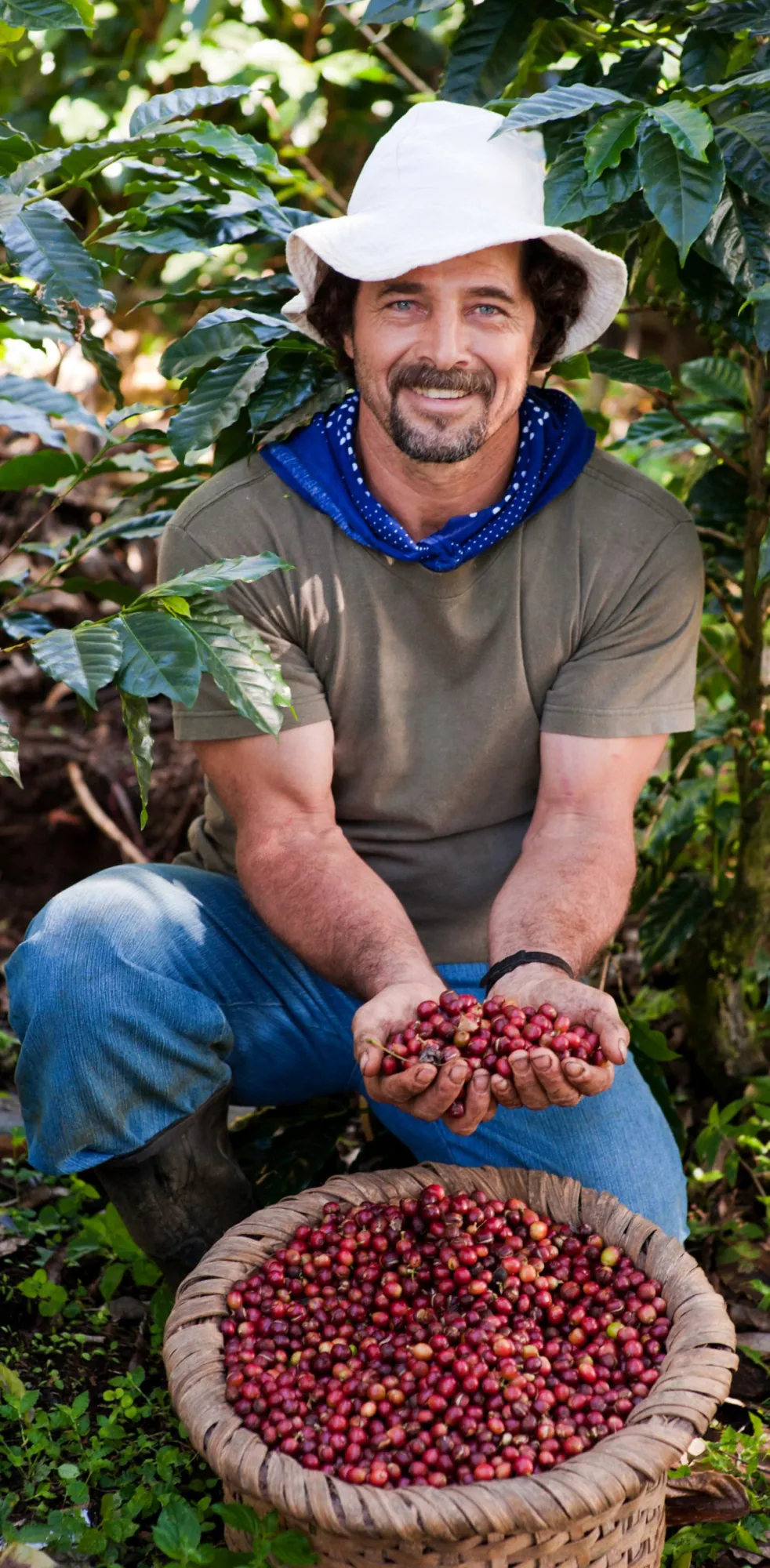
Costa Rica’s coffee grows in distinct regions, and harvest does not happen everywhere at once. The Costa Rican Coffee Institute (ICAFE) gives estimated picking seasons by region: Turrialba runs from July to January; Brunca and Guanacaste from August to February; the Central Valley and Tres Ríos from October to February or March; and Tarrazú and the Western Valley from November to March. In the high Los Santos area, picking begins in November and peaks in January. If you want to see red cherries being picked, plan around those months.
Finca Rosa Blanca Coffee Plantation & Inn, in Santa Bárbara de Heredia on the slopes of the Poás and Barva volcanoes, has 30 acres of shade-grown organic coffee. According to its coffee page, the coffee is certified organic by Kiwa BCS; the farm uses no synthetic agrochemicals, makes compost from worm beds and the hotel’s kitchen waste, and has planted more than 5,000 native trees with local schoolchildren and the environment ministry (MINAE). It reports more than 143 bird species on the property. Its coffee tour includes a farm walk and a cupping lesson.
Why shade and forest matter on a coffee farm is not just a feel-good story. A study at a large farm in Costa Rica’s Valle General, published in PNAS, found that bees from nearby forest raised coffee yields by 20% within about one kilometer of the forest edge and cut misshapen “peaberry” seeds by 27%. Forest patches of 46 and 111 hectares were doing measurable work for the farm next door.
A short coffee tour can be fun without being regenerative. Good questions: is the coffee grown under shade trees, how does the farm control erosion on steep slopes, how is wastewater from processing handled, and who picks the coffee?
Southern Nicoya: permaculture in a dry-season landscape
The southern Nicoya Peninsula has a long dry season, which makes water capture, irrigation and soil cover the most interesting things to learn about. Costa Rica’s tourism board describes the Pacific side as having more clearly defined seasons, with the dry season running from mid-December to late April and the green season from May to mid-December.
Rancho Delicioso, on the southern Nicoya Peninsula, presents itself as a yoga retreat, permaculture center and eco-village, with farm tours, a combined permaculture and yoga retreat and a Permaculture Design Certificate course on its schedule. Program formats change, so confirm current dates directly.
For a retreat-first stay with farm-fresh food, Anamaya sits on a clifftop above Montezuma with ocean views and includes organic meals with vegetarian, vegan and gluten-free options in its yoga and wellness retreats. Our yoga retreats guide compares other options, and the Southern Nicoya eco-lodge directory lists more stays.
Osa, Golfo Dulce and the north: farm edges and wildlife corridors
On the Osa Peninsula, protected forest does not stop at the national park line. Farms, regrowing forest, streams and private reserves can form corridors that wildlife uses to move between larger blocks of habitat, so a farm that keeps its trees and riverbanks can matter well beyond its harvest. Our Corcovado and Osa guide covers the parks themselves.
- Finca Exótica, at Carate beach next to Corcovado National Park, built its solar-powered Casa Grande restaurant from bamboo harvested on its own farm and tropical hardwood scraps, and serves organic, locally grown food with vegan and vegetarian options. Lodging ranges from open-air cabanas to glamping tents.
- Playa Nicuesa Rainforest Lodge, on the Golfo Dulce beside Piedras Blancas National Park, is reachable only by boat and cooks with organic ingredients from its own garden.
In the northern lowlands, Finca Verde Lodge in Bijagua shows what regeneration looks like over time: what was bare farmland about 25 years ago is now grown-up forest with monkeys, sloths and toucans, and the lodge runs a farm tour and a butterfly garden.
How farms fit Costa Rica’s conservation system
Forest recovery in Costa Rica came from a mix of policy, land-use change, private effort and payments, not tourism alone. Under Forestry Law No. 7575, the FONAFIFO Payment for Environmental Services program recognizes four services that forests provide: reducing greenhouse gas emissions, protecting biodiversity, protecting water and offering natural scenic beauty.
Farms are part of that system, not outside it. FONAFIFO’s list of payment activities includes agroforestry systems, agroforestry in coffee and mixed systems, alongside forest protection, reforestation and natural regeneration. It defines agroforestry as farming that mixes trees with crops or pasture, where the trees provide timber, firewood, fodder, fruit or medicine as well as shade and windbreaks. When a farm host says they are “reforesting,” it is fair to ask whether the land is in one of these programs.
| Crop or activity | Where to see it | Best months | Example stay |
|---|---|---|---|
| Coffee picking, Western Valley and Central Valley | Heredia and Alajuela slopes | October to March | Finca Rosa Blanca |
| Coffee picking, Turrialba | Turrialba valley | July to January | Day visit from the Central Valley |
| Cacao workshops | Arenal, Caribbean coast | Year-round as demonstrations | Chachagua Rainforest Hotel |
| Livestock and dairy chores | Arenal foothills | Year-round | Leaves and Lizards |
| Permaculture design course | Southern Caribbean | Scheduled course dates | Finca Tierra |
| Dry-season water and soil systems | Southern Nicoya | Mid-December to late April | Rancho Delicioso visit |
What to ask before you book
Farm stays reward a few direct questions:
- Is it a stay or a tour? A hotel that serves farm-to-table dinners may not run a working farm, and a great cacao tour may have no rooms. Book the lodging and the activity separately if needed.
- What exactly is certified? If organic matters to you, ask which certifier and which products. Certified coffee does not mean every vegetable on the plate is certified.
- What can guests do in my dates? Coffee harvest, cacao fruiting and garden abundance peak at different times. Ask what is hands-on, what is a demonstration and whether safety or biosecurity rules limit participation.
- Who guides? The best tours are led by people who work the land and will tell you what failed as well as what worked.
- How do I get there in the rain? Many farms sit on unpaved roads. Our guide to reaching remote lodges covers four-wheel-drive and transfer options.
Bring closed shoes, a refillable bottle, sun protection and clothes that can get muddy. On a tropical farm, insects and rain are part of the lesson.
Frequently asked questions
Can guests help work on an organic farm?
Often, yes, but in structured ways. Leaves and Lizards invites guests to collect eggs and milk a cow, and Rancho Margot runs volunteer placements in its garden and other areas. Work involving tools, machinery or large animals usually has supervision and safety limits.
Are all permaculture farms certified organic?
No. Permaculture is a design approach. Organic is a legal status in Costa Rica under Law No. 8591, which recognizes third-party and participatory certification overseen by the Ministry of Agriculture and Livestock. A permaculture farm may follow organic practices without holding certification.
When is the best time to see coffee being harvested?
It depends on the region. ICAFE's estimates put Turrialba's harvest from July to January and the Western Valley and Tarrazú from November to March. Outside those months, coffee tours still explain the process but you will not see picking.
Is a cacao or coffee tour better for families?
Cacao usually wins with children because it is tactile: cracking pods, tasting the sweet pulp and making a chocolate bar. Coffee tours suit teenagers and adults interested in how altitude, shade and processing shape flavor.
How long is a permaculture design course?
The standard course follows a 72-hour curriculum. At Finca Tierra it runs as a 15-day residential program limited to 12 students, with accommodation and meals included. Shorter workshops and farm weeks exist for travelers who want a taste without the full certificate.
Does eating local make a lodge sustainable?
It helps nearby producers and can cut transport, but it is only one factor. Water use, energy, waste, labor practices and how much forest the property protects matter just as much. Our what is an eco-lodge guide explains how to weigh them.