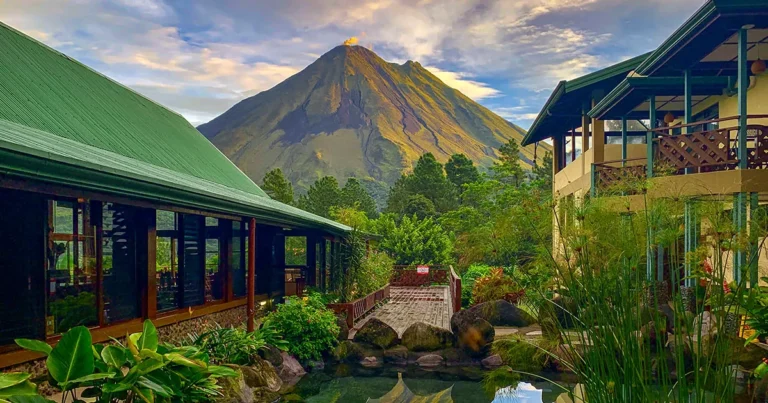
Finca Luna Nueva is a working regenerative farm with a small lodge attached, set in the rainforest foothills about 11 miles south of La Fortuna. People stay here less for the room than for the land around it: organic fields farmed since 1994, a medicinal plant sanctuary with more than 300 species, and forest trails that run toward one of Costa Rica’s largest private reserves.
| At a glance | |
|---|---|
| Location | San Isidro de Peñas Blancas, near Chachagua, La Fortuna de San Carlos (Alajuela) |
| Style | Farm lodge with casitas, bungalows and a dome suite |
| Setting | 127-acre regenerative farm, gardens and rainforest on the Caribbean slope |
| Best for | Food-focused travelers, birders, yoga groups, anyone curious about how the farm works |
| Getting there | Paved road; roughly 25 to 30 minutes’ drive from downtown La Fortuna |
| CST status | Displays the CST logo; not found in the current online directory (see below) |
Where it is and how to get there
The lodge sits in the farming community of San Isidro de Peñas Blancas, on the road between San Ramón and La Fortuna through Chachagua. According to the lodge’s directions page, the road is paved all the way, and the lodge warns drivers off the rock-road shortcuts some map apps suggest. From the Guanacaste beaches it estimates three to four hours by car. Buses between San Ramón or Ciudad Quesada and La Fortuna stop in San Isidro, and the lodge can arrange a private shuttle.
That location puts the Arenal Volcano National Park and the hot springs and waterfalls around La Fortuna within an easy day trip, while keeping evenings far quieter than town.
A farm first, a lodge second
The story starts with ginger. Founder Steven Farrell set up the farm in 1994 to grow organic ginger and turmeric for an herbal supplement company, and the land has been farmed without synthetic pesticides, chemical fertilizers or GMO seed ever since, according to the lodge’s own history. Today the property covers 127 acres and the lodge describes its approach as regenerative: farming that aims to rebuild topsoil, pull carbon back into the ground and bring biodiversity back. The farm grows more than 150 edible species and keeps a small dairy herd.
Older descriptions call the farm organic and Biodynamic; the current website talks about regenerative methods rather than any formal farm certification. The farm also helped buy land along the Río Chachagua to form a wildlife corridor. The native hardwoods planted there are now more than 40 feet tall, according to the lodge, and animals have returned to use them.
The Sacred Seeds sanctuary
One of the more unusual things on the property is the Santuario Semillas Sagradas, or Sacred Seeds Sanctuary. In 2006 ethnobotanist Rafael Ocampo, working with botanist Michael Balick and the farm’s founder, began planting an old ginger field with medicinal and spiritually significant plants instead of storing their seeds in a bank. United Plant Savers puts the collection at more than 300 species. It’s still the setting for the lodge’s herbal medicine workshop.
Rooms
Accommodation is small scale and spread through the gardens. The lodge’s rooms page lists:
- Casa Luna: a queen and a twin bed, mountain views and a second-floor wrap-around porch with hammocks.
- Casitas Deluxe: three separate casitas, each with a king bed, private bathroom and an outdoor sitting area.
- Family Bungalows: two bedrooms (one queen, one with four twins) sharing a bathroom and porch, sized for families or small groups.
- Casa de Barro: a house built with earth bags, with a private porch.
- Dome Suite: a king bed and a deck looking over the jungle and mountains.
- Casita Esplendor: the newest casita, with a king bed and a hammock porch among the gardens.
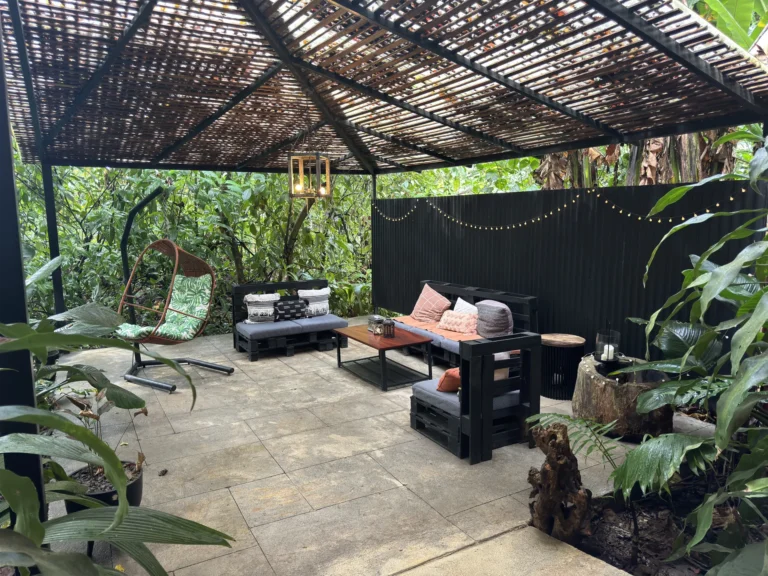
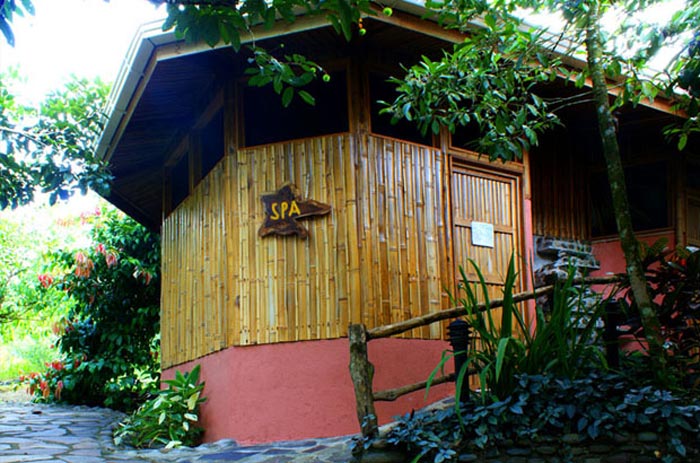
The site doesn’t mention air conditioning, which is normal in this cooler, rainy foothill zone. Shared spaces include an ozonated swimming pool, a spring-fed, solar-heated jacuzzi, a spa and a bamboo yoga pavilion that holds 20 or more people. Yoga teachers regularly bring their own groups.
Eating here
Food is the main reason many guests come. The open-air dining room sits beside the pool, and the menu changes with the weekly harvest from the farm and from small producers nearby, according to the lodge’s restaurant page. Breakfast is included with a stay; lunch and dinner are served too, and the kitchen asks guests to reserve so it can plan. Vegetarian, vegan and gluten-free diets are catered for.
The lodge runs a full bar and asks guests not to bring their own alcohol.
What to do on the property
The lodge’s on-site tours focus on the farm and forest:
- Farm tour and farm-to-table experience: walk the fields, then harvest and taste what’s in season.
- Chocolate workshop: visit the cacao grove and grind roasted beans on a volcanic stone metate.
- Cow milking: meet the dairy herd behind the lodge’s cheeses and yogurt.
- Stingless bee workshop: visit native bee hives and taste mariola honey.
- Herbal medicine workshop: a guided visit to the Sacred Seeds Sanctuary.
- Night walk: look for sleeping birds, glass frogs and kinkajous.
- Birding tour: from the trails, balconies or the canopy tower. The lodge reports more than 250 bird species recorded on its land, including toucans, hummingbirds and tanagers.
- Cabalonga Trail: a naturalist-led walk past large old trees and orchids.
Guests can also walk the farm’s trails on their own. Rafting, ziplines, Arenal hikes and hot springs are all booked through outside operators in La Fortuna.
The forest next door
The lodge borders the Bosque Eterno de los Niños, the Children’s Eternal Rainforest. It’s run by the Asociación Conservacionista de Monteverde, which began buying land in the mid-1980s to stop clearing on the Atlantic slope of the Tilarán range, including the Peñas Blancas valley. The association puts the reserve at roughly 22,600 hectares, which makes it the largest private reserve in Costa Rica.
Sustainability and certification
The lodge’s green credentials rest mainly on how it farms: organic since 1994, regenerative methods, a replanted river corridor, the medicinal plant sanctuary, and buildings that use bamboo and earth bags. It also displays the Certificación para la Sostenibilidad Turística (CST) logo on its website. However, it didn’t appear in the CST program’s online directory of certified businesses when checked on 2026-Oct-21, so travelers who care about the certificate should ask the lodge about its current status. Our guide to Costa Rica’s five-leaf CST certification explains how the program works.
Who it suits
Finca Luna Nueva suits travelers who want to know where their dinner was grown, birders, yoga groups, and families who like hands-on activities such as milking or chocolate making. It’s also a calm base for Arenal away from La Fortuna’s busy streets.
It’s less suited to anyone wanting air-conditioned resort rooms, room service or a beach. Rain is part of the deal: the lodge says the wet season usually runs from mid-May to the end of December, and it lends rubber boots for the trails.
For other farm stays, see our guide to organic farm stays and permaculture in Costa Rica. Nearby, Chachagua Rainforest Resort is a short drive down the same valley, and Rancho Margot offers another farm-based stay by Lake Arenal. The full region is covered in our Arenal and La Fortuna eco lodges section and our Arenal and Río Celeste ecotourism guide.
Frequently asked questions
Can you visit Finca Luna Nueva without staying overnight?
Yes. The lodge sells a one-day pass covering the trails, the bamboo tower, the pool and jacuzzi, and a farm-to-table lunch.
Is the road to the lodge suitable for a regular car?
The lodge says the road is paved the whole way. It advises against rock-road shortcuts that navigation apps sometimes suggest, so follow the lodge's directions rather than the fastest route on your phone.
Does the lodge cater to vegans and people with food allergies?
The restaurant says it caters to vegetarians, vegans, gluten-free diets and other restrictions. Lunch and dinner should be reserved ahead so the kitchen can plan around the week's harvest.
What is the Sacred Seeds Sanctuary?
It's a living collection of more than 300 medicinal and culturally important plant species, started on the farm in 2006 by ethnobotanist Rafael Ocampo and colleagues. Guests can explore it on the lodge's herbal medicine workshop.