9.65°N 85.07°W · Montezuma, Santa Teresa & Cabo Blanco
Southern Nicoya Eco-Lodges: Montezuma, Santa Teresa, Mal País and Tambor
10 places to stay
The southern tip of the Nicoya Peninsula packs a lot into a small area: Costa Rica’s first protected nature reserve, waterfalls a short walk from a beach village, long surf beaches, quiet Gulf of Nicoya coves and a strong tradition of yoga retreats. Lodging ranges from hostels with treetop cabins to clifftop retreat centers and small boutique hotels a few steps from the sand.
The short answer: choose Montezuma or Cabuya for forest, waterfalls and easy access to Cabo Blanco; Santa Teresa or Mal País for surf and a livelier beach scene; and Paquera and Tambor for the Gulf islands and the Curú refuge, especially if you arrive by ferry. This directory explains each base, names the lodges we’ve reviewed there and gives the practical facts you need: ferry, park days and seasons.
Choose your base: southern Nicoya at a glance
| Base | Nature and travel appeal | Lodges to compare | Things to know |
|---|---|---|---|
| Montezuma | Waterfalls, forest trails, beach walks, yoga retreats | Anamaya Yoga Retreat, Luz en el Cielo | Hillside lodges have views and wildlife; beachfront rooms have easier walking |
| Cabuya | Gateway to Cabo Blanco, rocky shore, quiet village | Stay in nearby Montezuma | Reserve closed Monday and Tuesday |
| Santa Teresa | Long surf beaches, restaurants, retreats | Canaima Chill House, Funky Monkey Lodge | Busy surf corridor, not a quiet reserve |
| Mal País | Rocky coves, tide pools, forest backroads | Indigo Yoga Resort | Closest surf town to Cabo Blanco |
| Paquera and the Gulf | Islands, Curú refuge, ferry access | Vista las Islas | Calm water and island trips; a drive from the surf beaches |
Southern Nicoya lodges on our site

Getting there and getting around
Most visitors reach the peninsula’s southern tip on the car ferry from Puntarenas to Paquera. Naviera Tambor, which has run the crossing since 1992, describes the route as 11 nautical miles across the Gulf of Nicoya, and it now operates three ferries. From Paquera, paved and unpaved roads lead to Tambor, Cóbano, Montezuma and Santa Teresa. Others drive down from Liberia through the length of the peninsula, or fly into the small Tambor airstrip.
Roads are the main limitation. Secondary routes can be dusty in the dry season and muddy or rutted in the green season, and some hillside lodges sit on steep tracks. A lodge at the top of a scenic road is lovely for a long stay and less so if you arrive after dark and leave at dawn. Ask each lodge for directions and whether you need four-wheel drive in your month. Our guide on reaching remote eco-lodges covers ferries, small planes and transfers.
The Nicoya Peninsula is on the Pacific side, where the national tourism board describes a well-defined dry season from mid-December to late April and a green season from May to mid-December. Dry months mean easy roads and full hotels; the green season brings lusher forest, fuller waterfalls and quieter beaches, with afternoon storms.
Cabo Blanco: where Costa Rica’s protected areas began
Cabo Blanco Absolute Nature Reserve, at the peninsula’s southern tip, is the anchor of any nature trip here. It was created in 1963 through the work of the Swedish naturalist Olof (Nicolás) Wessberg and the Danish Karen Mogensen, who had settled near Montezuma, with backing from President Francisco Orlich. Semanario Universidad, the University of Costa Rica’s weekly, calls it Costa Rica’s first natural reserve, the start of the national park movement. Our conservation story follows what came next.
“Absolute” reserves are the strictest category in the system. SINAC’s visitor page explains that they allow only research, education and visits in defined sectors under strict conditions. The public entrance is 2 km south of the Catholic church in Cabuya, and the reserve opens Wednesday to Sunday, 8 a.m. to 4 p.m., closed Monday and Tuesday. SINAC recommends buying tickets through its official online service before you go, and hours can change for emergencies or weather.
The main trails are forest hikes that end at wild beaches, not short strolls. Bring water, closed shoes and time; the trails can be hot in March and slippery in October. Montezuma and Cabuya are the obvious bases. Santa Teresa and Mal País are close as the crow flies but involve a longer drive around to the entrance.
Montezuma: waterfalls and hillside retreats
Montezuma is a small village on the peninsula’s southeastern shore, with sandy coves, rocky points and forested hills that come right down to the road. The Montezuma waterfalls are a short hike upriver from town. River levels change fast after rain and the rocks are slippery, so skip jumping and swimming when the water is high and follow local advice.
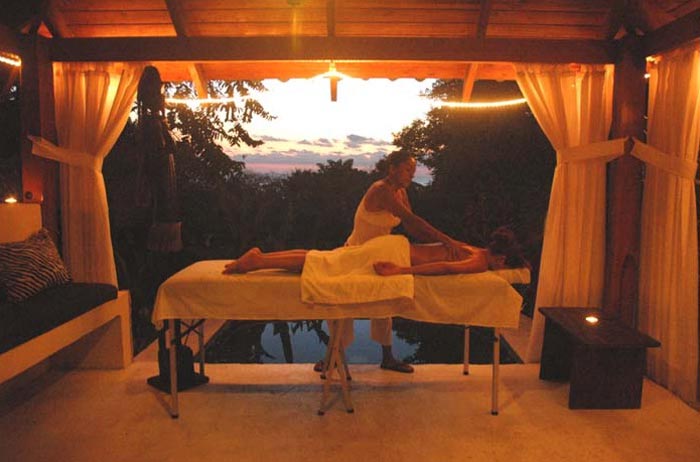
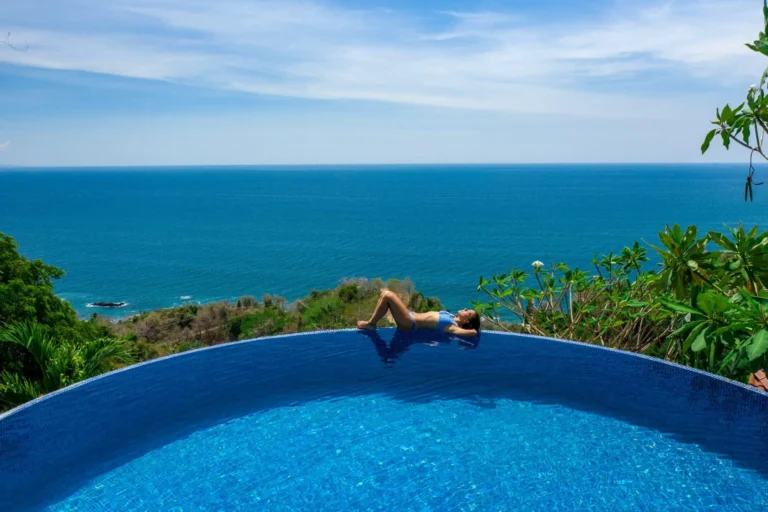
Anamaya Yoga Retreat sits on a clifftop in the forest above Montezuma, with wide views over the jungle and the Pacific and an ocean-view saltwater infinity pool. Anamaya runs week-long yoga and wellness retreats with visiting teachers, its own 200-hour yoga teacher trainings and themed programs, and also welcomes outside groups who bring their own retreat. Meals are organic, with vegetarian, vegan and gluten-free options, and guests can add massage, sauna, cold plunge, surf lessons and canopy tours. It suits travelers who want a structured week of practice in a striking setting, with Montezuma’s waterfalls and Cabo Blanco close at hand. Our yoga retreats guide compares it with retreat centers elsewhere.
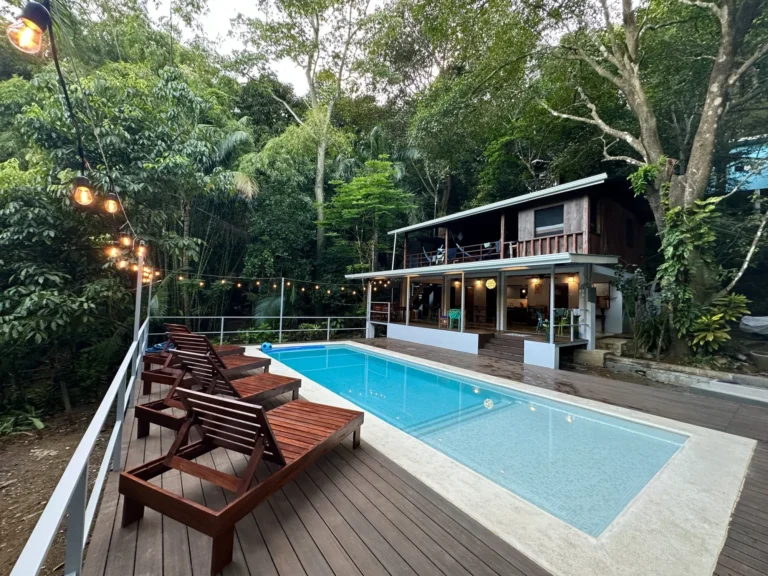
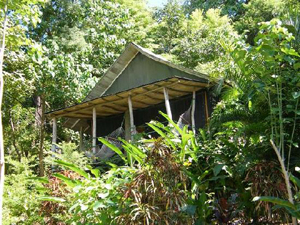
Luz en el Cielo is an eco bed and breakfast and hostel about 50 meters before the center of Montezuma. Its own site lists shared dorms, cabins raised among the trees and two rental houses, with an organic breakfast cooked to order, a guest kitchen, pool and tour desk. Monkeys visit the verandas daily, according to the lodge. It is one of the best value forest stays in the region and a good fit for solo travelers and younger budgets; see our affordable eco-lodges guide for more like it.
Inland from Montezuma, near Cóbano, Rancho Delicioso operates as a permaculture center, yoga retreat and eco-village. Farm stays like this give a very different week from a beach hotel; our organic farm stays guide explains what to expect and what to ask.
Santa Teresa: surf beaches and the sustainability question
Santa Teresa and Playa Carmen form a long surf corridor with restaurants, yoga studios and hotels on both sides of a single coastal road. It is lively and fun, and it has grown quickly, so this is the place to ask lodges how they handle water supply and wastewater in the busy dry months.
Canaima Chill House is a small hotel 400 meters up a side road from the main street in Santa Teresa and about 500 meters from the beach. The hotel lists eight suites, four for up to four people and four for two, in a garden setting, and says a new cobblestone road means guests no longer need a four-wheel drive at any time of year. It is a relaxed base for surfers who want trees around them rather than a beachfront strip.
Funky Monkey Lodge is a boutique hotel a few steps from the beach in the heart of Santa Teresa, hosting retreats as well as regular guests. It is a social, central choice, best for travelers whose days revolve around the surf and the town.
Mal País: quieter coves at the end of the road
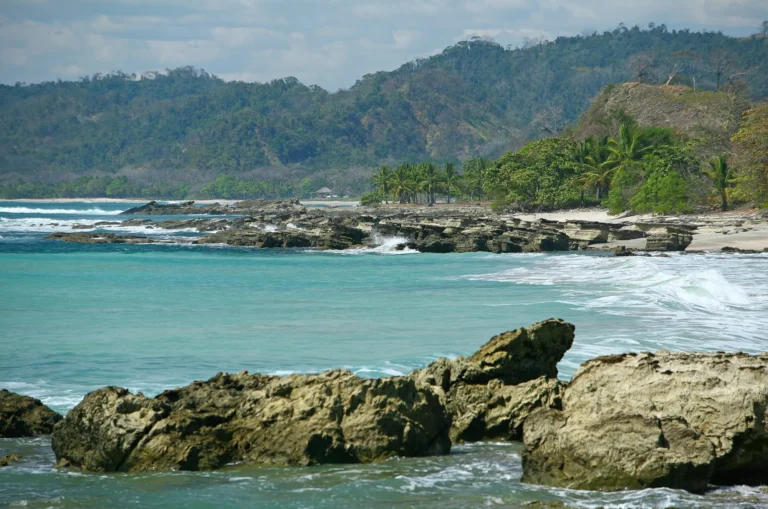
Mal País continues south from Santa Teresa toward Cabo Blanco, with rocky points, tide pools and a more scattered settlement. It is the closest surf town to the reserve, and forest edges come right down to the road.
Indigo Yoga Resort, formerly Beija Flor Resort, is in a garden setting in Mal País. Indigo offers daily yoga, stand-up paddleboarding and surf, runs 200-hour yoga teacher trainings in the dry season and says howler and capuchin monkeys use the trees on its grounds. It is a good middle ground between the surf scene and a retreat, and a short drive from the Cabo Blanco trails.
Paquera and Tambor: islands, calm water and Curú
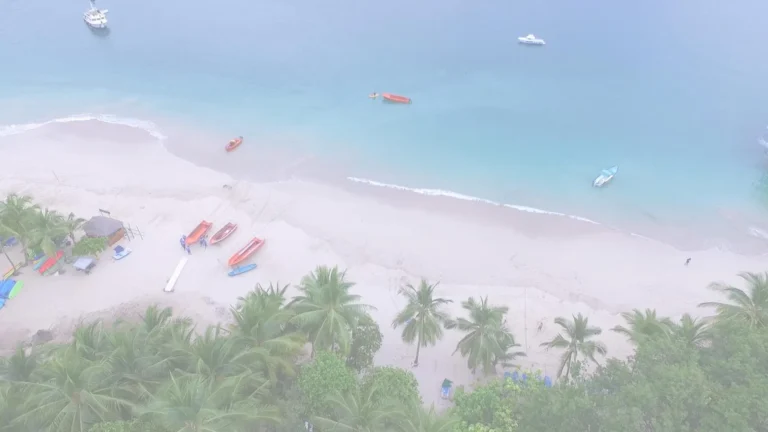
The northern side of the southern peninsula faces the Gulf of Nicoya rather than the open Pacific. Water is calmer, beaches are gentler, and boat trips run to small islands in the gulf. This is the first stretch you reach off the ferry, and it is easy to skip in the rush to the surf towns.
Vista las Islas is an eco-boutique hotel above Playa Órganos near Paquera, with island views from its 18 rooms, an open-air restaurant using local produce and a pool. The hotel arranges morning guided visits to the Curú Wildlife Refuge, island snorkeling trips and bioluminescence kayak tours. It suits families and travelers who want calm water, wildlife and short drives.
Curú Wildlife Refuge, near Paquera, combines coastal forest and beaches and is a good place for a guided walk to look for monkeys, birds and other wildlife before continuing south. Go early, carry water, and ask your lodge whether you need to book a guide ahead.
Wildlife on the southern peninsula
The southern Nicoya Peninsula is a mosaic of recovering forest, farms, coast and protected land rather than a vast wilderness. Howler and white-faced capuchin monkeys are often seen around lodges here, along with a good range of forest and coastal birds, and the reserves give quieter animals room to recover. Our mammals guide covers the species you’re most likely to meet.
Keep a respectful distance from monkeys and never feed them, even when they come onto a terrace. Feeding makes them aggressive and spreads disease. At night, use a dim light on forest paths and avoid flash photography of wildlife.
How to judge an eco-hotel here
A forest view is not proof of good environmental practice. On a peninsula where water runs short in the dry season and development has outpaced infrastructure, the useful questions are practical. Where does the water come from in April? How is wastewater treated? Is the hillside protected from erosion? Are tours run by local, licensed guides?
Costa Rica’s official CST program is free and voluntary and uses two levels, Basic and Elite. None of the southern Nicoya lodges in this directory appeared in the official certified directory when we checked in October 2026, which is common for small, owner-run places, so ask them directly about their practices. Our CST explainer shows how to look up a business, and our guide to choosing a sustainable hotel has a full checklist.
How to plan five, seven or ten nights
Five nights: stay in one place. Montezuma covers waterfalls and Cabo Blanco; Santa Teresa or Mal País covers surf. Crossing the peninsula for day trips eats more time than the map suggests.
Seven nights: split between Montezuma and Santa Teresa or Mal País, or between Paquera and Montezuma if you prefer calm water and Curú to surf. A retreat week at a single lodge is another good use of seven nights.
Ten nights: three bases work well: Paquera for Curú and the islands, Montezuma for the reserve and waterfalls, then Santa Teresa for surf and restaurants. Guanacaste is a long drive north; if you want to combine them, see our Guanacaste directory and our ecotourism itineraries.
Frequently asked questions
When is Cabo Blanco open?
SINAC lists Cabo Blanco as open Wednesday to Sunday from 8 a.m. to 4 p.m., closed Monday and Tuesday. The entrance is 2 km south of the church in Cabuya, and SINAC recommends buying tickets online through its official service before your visit.
How do I get to Montezuma and Santa Teresa?
The most common route is the car ferry from Puntarenas to Paquera, an 11-nautical-mile crossing run by Naviera Tambor, followed by a drive south. You can also drive the length of the peninsula from Liberia or fly to the Tambor airstrip. Check road conditions with your lodge in the green season.
Is Montezuma or Santa Teresa better for an eco-lodge stay?
Montezuma is better for forest, waterfalls and quick access to Cabo Blanco, and it has the region's best-known yoga retreats. Santa Teresa is better if surfing and restaurants are the priority. Mal País sits between the two in feel and is the closest surf town to the reserve.
Can I visit Cabo Blanco from Santa Teresa?
Yes, but plan a full morning. The reserve entrance is south of Cabuya on the Montezuma side, so from Santa Teresa you drive around rather than straight across. Arrive early, carry water, and remember the reserve is closed on Mondays and Tuesdays.
Are the yoga retreats open to people who don't do yoga?
Most retreat lodges, including Anamaya and Indigo, also take regular guests, and classes are optional unless you book a set retreat week. Check the calendar before you book, because a full retreat group changes the atmosphere of a small property.
Is the area good for families?
Yes, with the right base. Families often prefer the calm water around Paquera and Tambor or a Montezuma lodge with a pool, plus short guided outings, rather than several moves over rough roads. Rip currents are common on the surf beaches of Santa Teresa and Mal País.