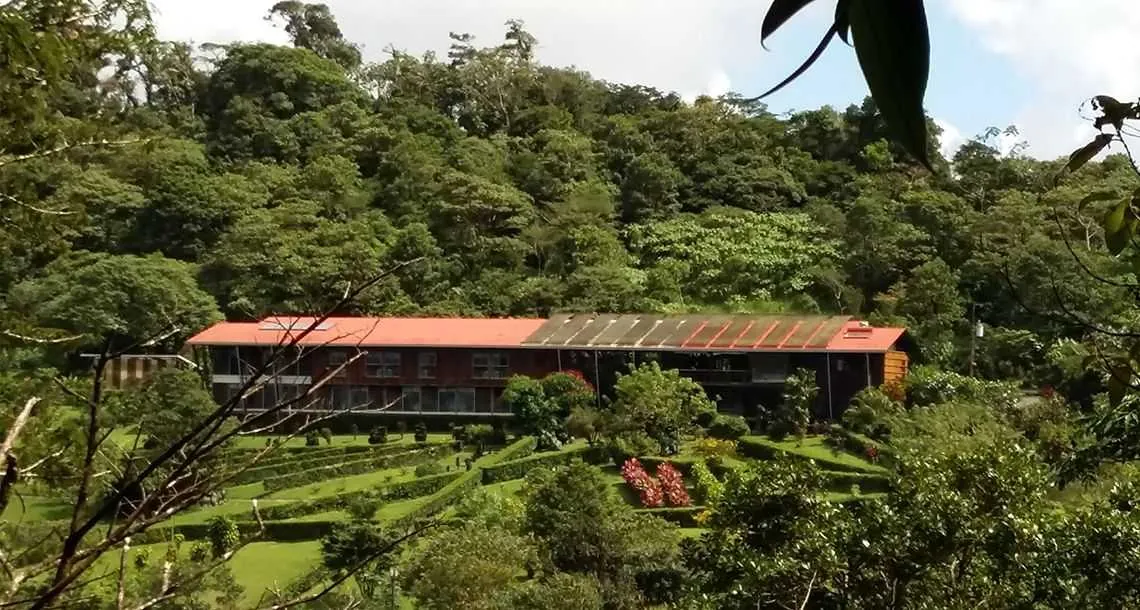
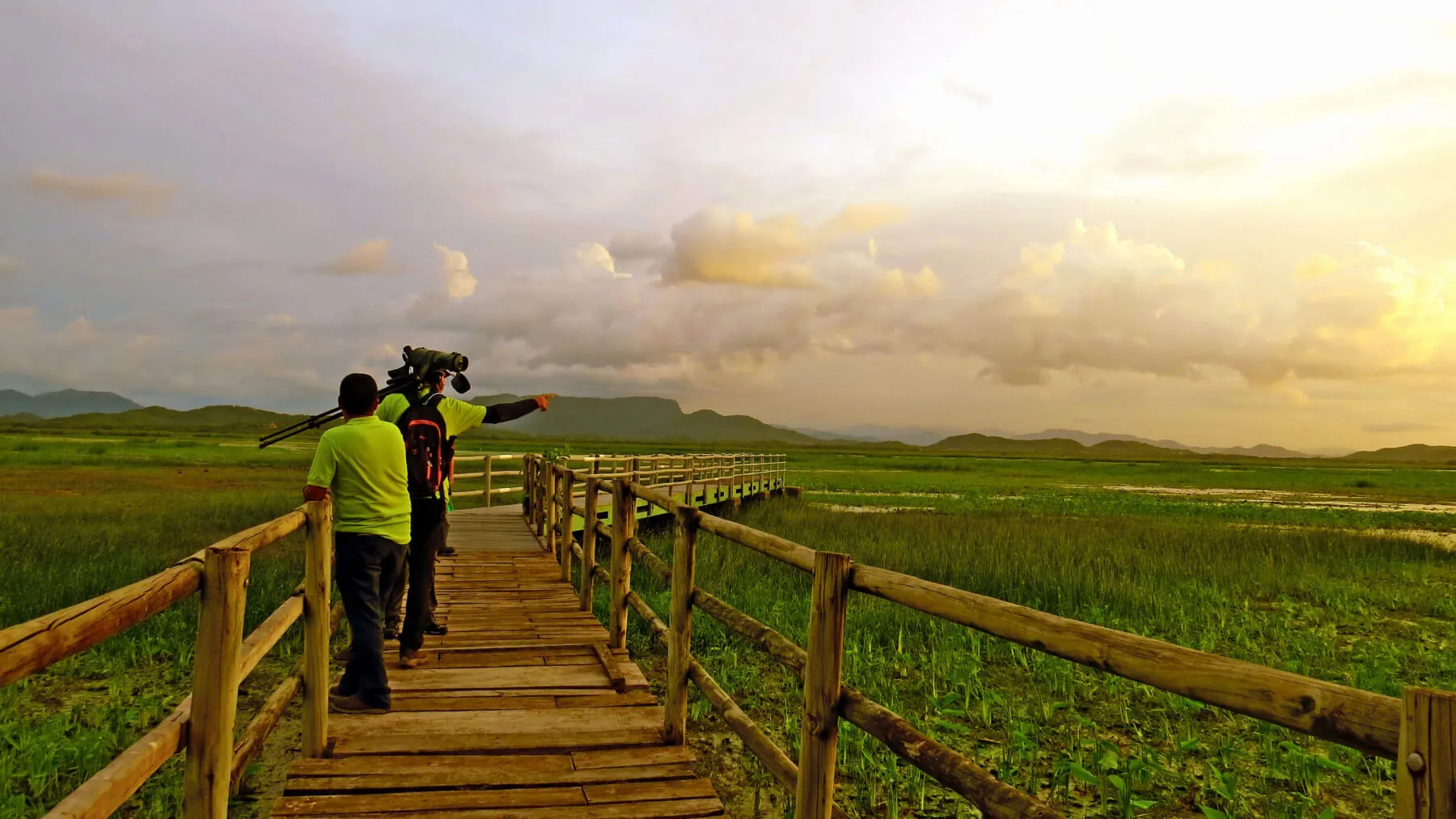
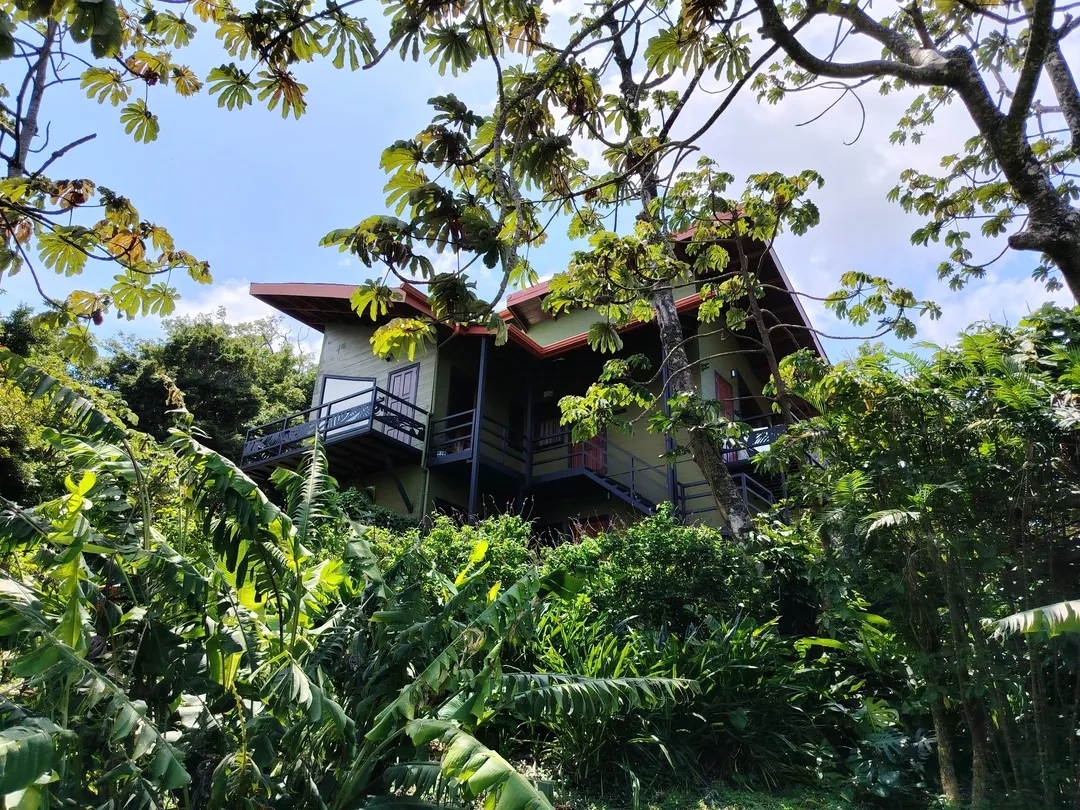
A rainforest vacation doesn’t have to start with a luxury booking. Some of Costa Rica’s most rewarding nature stays are family-run cabins, simple forest lodges, research-station rooms and small guesthouses where the owner’s knowledge of the local trails is worth more than any thread count. The trick is comparing them honestly. A low nightly rate isn’t always a low trip cost, and a cheap hotel in a beach town isn’t automatically an eco-lodge.
This guide doesn’t quote prices, because rates change with season, meals, taxes and booking channel. Instead it names real lodges whose own websites show simpler rooms, dorms, bunkhouses, family cottages or all-in packages, explains where affordable nature lodging makes the most sense, and shows how to work out what a stay will really cost. Our eco-lodge vacation costs guide covers typical budgets in more detail.
Value nature stays at a glance
| Region | Lodge | Style of stay | Where the value comes from |
|---|---|---|---|
| Arenal | Arenal Oasis Eco Lodge | Bungalows and a family villa | Frog-watching night tours start at the lodge |
| Arenal | Catarata Eco Lodge | Standard and family rooms, family-owned | Short hop to La Fortuna Waterfall |
| Arenal | Rancho Margot | Bunkhouse quarters and bungalows | Three meals and two daily yoga classes included |
| Bijagua | Celeste Mountain Lodge | Eco-designed rooms with volcano views | About 5 km from Tenorio Volcano National Park |
| Monteverde | Arco Iris Lodge | 20 stone-and-wood cabins | 2-minute walk to Santa Elena village |
| Sarapiquí | Selva Verde Lodge | Rooms and bungalows on 500 acres | Private forest and guides on site |
| Sarapiquí | La Selva Research Station | Station lodging | 1,600 hectares of studied rainforest |
| Caribbean slope | Casa Río Blanco | Family-run B&B cottages | River pools and Braulio Carrillo nearby |
| Tortuguero | Turtle Beach Lodge, Pachira Lodge | Package stays | Boat transfers, meals and tours bundled |
| South Caribbean | Shawandha, Geckoes | Bungalows and small houses | Free or donation-based parks nearby |
| Montezuma | Luz en el Cielo | Dorms, cabins and rental houses | Walk to town, beach and waterfall |
| Osa | La Leona Eco Lodge | Beach tent cabins | Packages include Carate transfers and meals |
The comfort level within each property varies, so compare the specific room. None of these is a promise of the lowest rate on your dates.
How to judge budget value
Build an all-in number for each option: room plus taxes, meals, round-trip transfers, park entry and one or two guided outings. Ask three lodges to quote the same nights and guests on that basis. The totals tell you far more than a headline rate.
Timing matters too. Visit Costa Rica splits the year into a dry season (mid-December to late April) and a green season (May to mid-December) and notes that the green season brings reduced rates and lighter crowds, with some southern hotels closing at its peak. The Caribbean coast has a different rainfall pattern and is often the better bet in September and October.
Eco credentials and price are separate questions. Many small guesthouses don’t hold the government’s CST certification, and that alone doesn’t make them irresponsible. If a property does claim certification, you can confirm it in the official CST directory. Otherwise, ask how the lodge handles water, waste and energy, and whether its staff and guides come from the area.
Arenal and La Fortuna: lots of choice, short distances
La Fortuna packs rainforest, waterfalls, hot springs and a volcano into a compact area, so a simple room close to town can cut transport costs. Arenal Volcano National Park has short, mostly flat trails (the Heliconias trail is 610 meters, Coladas 1.7 kilometers through the 1992 lava flows, El Ceibo 2.3 kilometers to a ceiba tree more than 400 years old), and SINAC says 100 percent of the entry fee goes to the fund that supports all of the country’s protected areas.
Arenal Oasis Eco Lodge is about 800 meters south of the main entrance road in La Fortuna, with bungalows and a family villa set in a small wildlife refuge. Its guided frog-watching night walk starts right at the lodge, which saves a transfer. Catarata Eco Lodge is a small family-owned lodge near La Fortuna Waterfall with standard and family rooms.
Rancho Margot, about 40 minutes from La Fortuna near Lake Arenal, isn’t a budget hotel in the usual sense, but its all-inclusive model can be good value. Alongside 19 bungalows it has 20 bunkhouse quarters, and stays include three buffet meals a day and two daily yoga sessions on a ranch of more than 400 acres with organic food production. When there’s no restaurant down the road, included meals matter. See our Arenal and Río Celeste guide for the area’s parks.
Bijagua and Río Celeste: rural, quiet, close to the park
Bijagua is a farming town at the foot of the Tenorio and Miravalles volcanoes, and it’s a cheaper, quieter base than La Fortuna for the famous blue river. Tenorio Volcano National Park is 9 kilometers from Bijagua. Its main trail, Misterios del Tenorio, is a 3-kilometer linear walk past the waterfall, a lookout, the blue lagoon and the bubbling springs. Entry runs 8 a.m. to 2 p.m., the park caps visitors at 1,200 a day and 500 on the trail at once, and tickets are sold only through SINAC’s online system. Book before you drive up.
Celeste Mountain Lodge is about 5 kilometers from the park by paved road. Its eco-designed rooms all look southwest toward two volcanoes, and it has a private trail of about 2 kilometers through rainforest for birding. The family-run kitchen is known for a tasting-menu dinner.
Monteverde: walkable village, self-guided reserve
Staying in Santa Elena village keeps restaurants, buses and tour pickups within walking distance. Arco Iris Lodge has 20 stone-and-hardwood cabins spread across 2.5 hectares of hillside gardens backed by protected forest, about a two-minute walk from the center of Santa Elena.
You don’t need a guide every day here. The Monteverde Cloud Forest Preserve sells self-guided entry by time slot: you check in at the visitor center 1.5 kilometers below the entrance, take a free shuttle to the trailhead and walk marked circuits of roughly 1 to 2.5 hours. Pay for one guided walk or night walk and do the rest on your own. Our Monteverde cloud forest guide compares the other reserves.
Sarapiquí and the Caribbean slope: forest for your money
Sarapiquí is about 2 hours from San José and is one of the best value regions for rainforest birding, because the forest is the attraction and you don’t need to drive anywhere once you arrive.
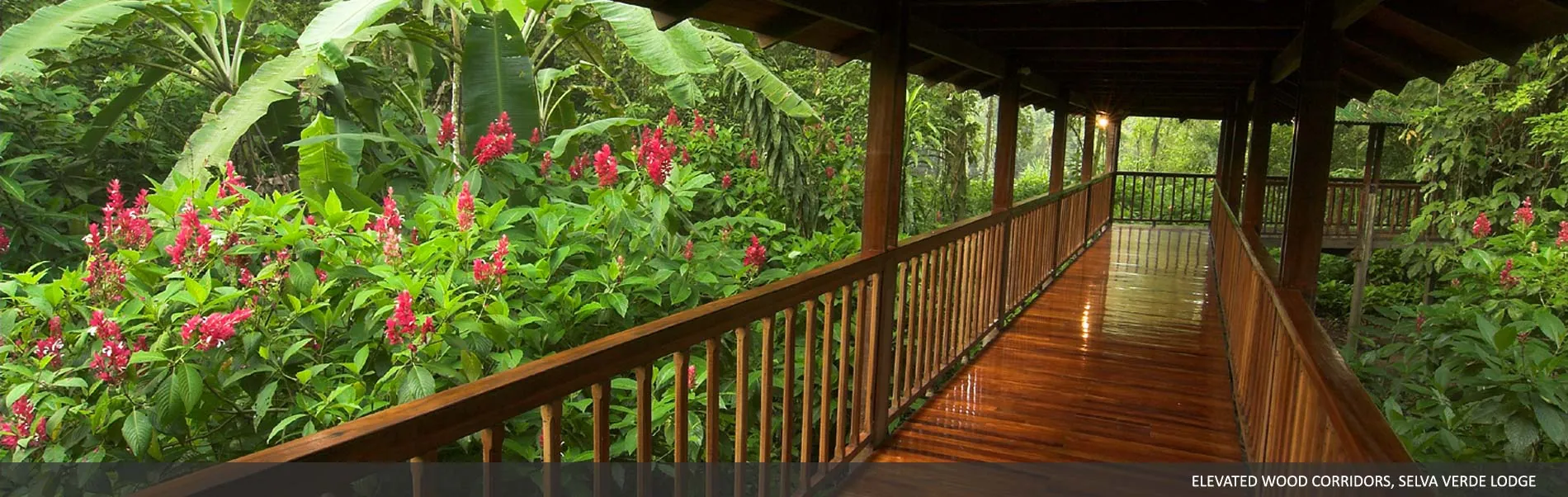
Selva Verde Lodge has hosted nature travelers since 1986 on 500 acres of its own forest, with rooms and bungalows, naturalist guides, birding and night activities. Down the road, the Organization for Tropical Studies’ La Selva Research Station offers lodging for natural history visitors on 1,600 hectares of old-growth and recovering lowland forest bordering Braulio Carrillo National Park. The station records more than 470 bird species and runs birding, natural history and night walks. Our page on La Selva covers it as a place to stay.
Near Guápiles, Casa Río Blanco is a small family-run bed and breakfast with three all-wood cottages and a cabin for families, overlooking a river with natural pools reached by trail. It describes itself honestly as rustic, basic and comfortable, and it’s a handy base for Braulio Carrillo’s Quebrada González sector and for the trip to Tortuguero.
Tortuguero: let a package do the math
In Tortuguero, where every arrival is by boat, a package can be the cheapest way to stay. Turtle Beach Lodge, on 175 acres between the canals and the Caribbean, bundles transport from San José, the boat, all meals, a canal tour, a village visit and a guided trail walk; park entry and night turtle tours cost extra. Pachira Lodge on the main canal, five minutes from the park, sells packages from 1 to 4 nights with guided tours.
SINAC’s Tortuguero National Park page lists the turtle nesting season as June to October, and the beach is closed at night from March to October except on the official guided program. Budget for that tour if turtles are your reason to go. Our Tortuguero guide explains how it works.
The southern Caribbean: parks that cost little or nothing
The coast from Cahuita to Manzanillo is one of the easiest places to see wildlife on a tight budget. At Cahuita National Park, entry through the Playa Blanca gate beside the village is by voluntary cash contribution, reinvested in the community and the park, and the reef there is the best preserved on the Caribbean coast. Further south, the Gandoca-Manzanillo Wildlife Refuge charges no entry fee, protects about 5 square kilometers of reef off Punta Uva, Manzanillo and Punta Mona, and records 377 bird species.
Hotel Shawandha has welcomed guests since 1993 and sits about 150 meters from Playa Chiquita by a private path, in more than 15,000 square meters of jungle garden. In Cocles, Geckoes Lodge rents 4 fully equipped houses, each with a private garden and plunge pool; self-catering for a family or group can bring the per-person cost down.
Southern Nicoya: walk to the waterfall
Montezuma is a small village where you can reach the beach, the waterfall trail and restaurants on foot. Luz en el Cielo is an eco bed-and-breakfast and hostel about 50 meters from the village center, with standard and upgraded dorms, cabins among the trees and two rental houses, and a made-to-order organic breakfast. Note that one cabin is closed for renovation.
Osa on a budget: pick the package carefully
The Osa Peninsula is rarely cheap, because transfers and guides are unavoidable. Corcovado requires a guide on the long La Leona to Sirena route, and SINAC asks all visitors to enter with a registered guide, so price that in from the start. Our Corcovado and Osa guide explains the sectors.
La Leona Eco Lodge offers beach tent cabins a few steps from the sand next to the park, with private bathrooms and open-roof garden showers. Its packages include three meals a day and transfers between Puerto Jiménez and Carate, which removes two of the biggest hidden costs on the peninsula.
Five ways to save without cutting corners
- Stay longer in fewer places. Every move costs a transfer and half a day.
- Pay for one excellent local guide rather than several rushed group tours.
- Use parks with free, donation-based or self-guided entry, such as Cahuita’s Playa Blanca gate, Gandoca-Manzanillo and Monteverde’s self-guided time slots.
- Choose included meals in remote places and eat locally in towns.
- Skip anything that feeds, handles or baits wildlife. It’s never good value for the animals.
Frequently asked questions
Are budget eco-lodges certified sustainable?
Some are, but price and certification are separate. The official CST has two current levels, Basic and Elite. Search a lodge's name in the CST directory; if it isn't listed, ask about water, waste, energy and local hiring instead.
Is a hostel better for the environment than a luxury lodge?
It may use fewer resources per guest, but that depends on how it manages water, energy and waste, and on how far guests travel each day. Size alone isn't proof either way.
What's the best affordable region for rainforest wildlife?
Sarapiquí and the southern Caribbean give the most forest for the money: Selva Verde and La Selva for birding, and Cahuita and Gandoca-Manzanillo for wildlife you can reach on foot or by bike.
Should I book a package at a remote lodge?
Often yes. In Tortuguero and on the Osa, packages usually bundle boats, transfers and meals that would cost more separately. Compare itemized totals before deciding.
How do I save on national park entry?
Buy tickets in advance on SINAC's online system, which most parks now require, and visit fewer paid sites for longer. Some areas, such as Cahuita's Playa Blanca sector and Gandoca-Manzanillo, are donation-based or free.
Is the green season worth it for budget travelers?
For many trips, yes. Rates and crowds drop from May to mid-December. Expect afternoon rain on the Pacific side, check whether your lodge is open in September and October, and consider the Caribbean then.