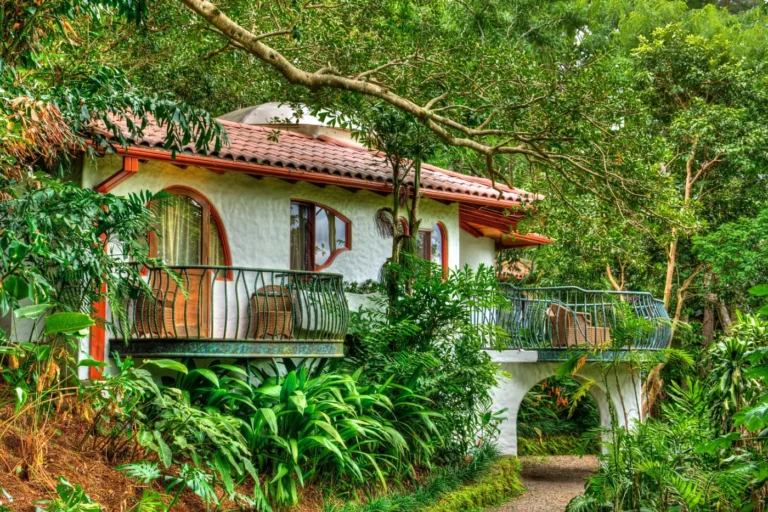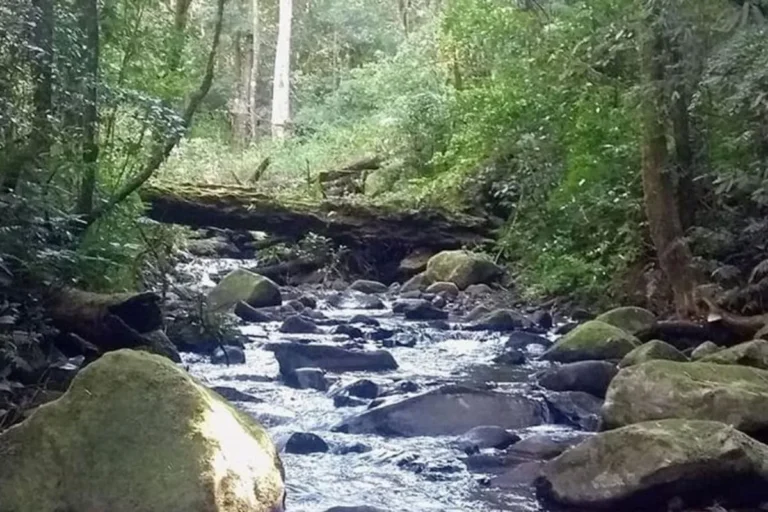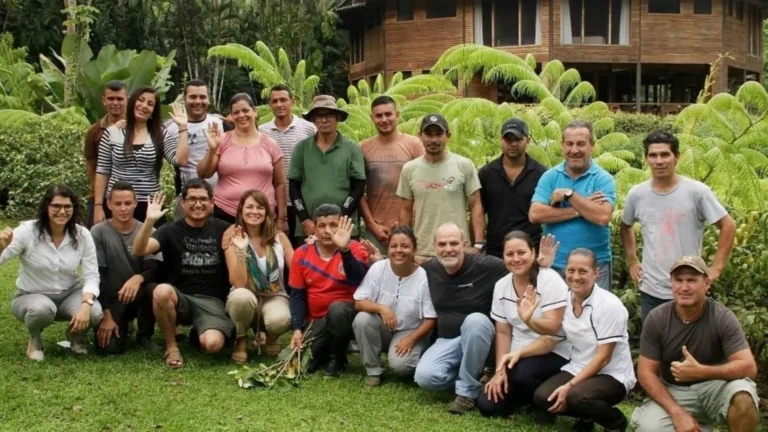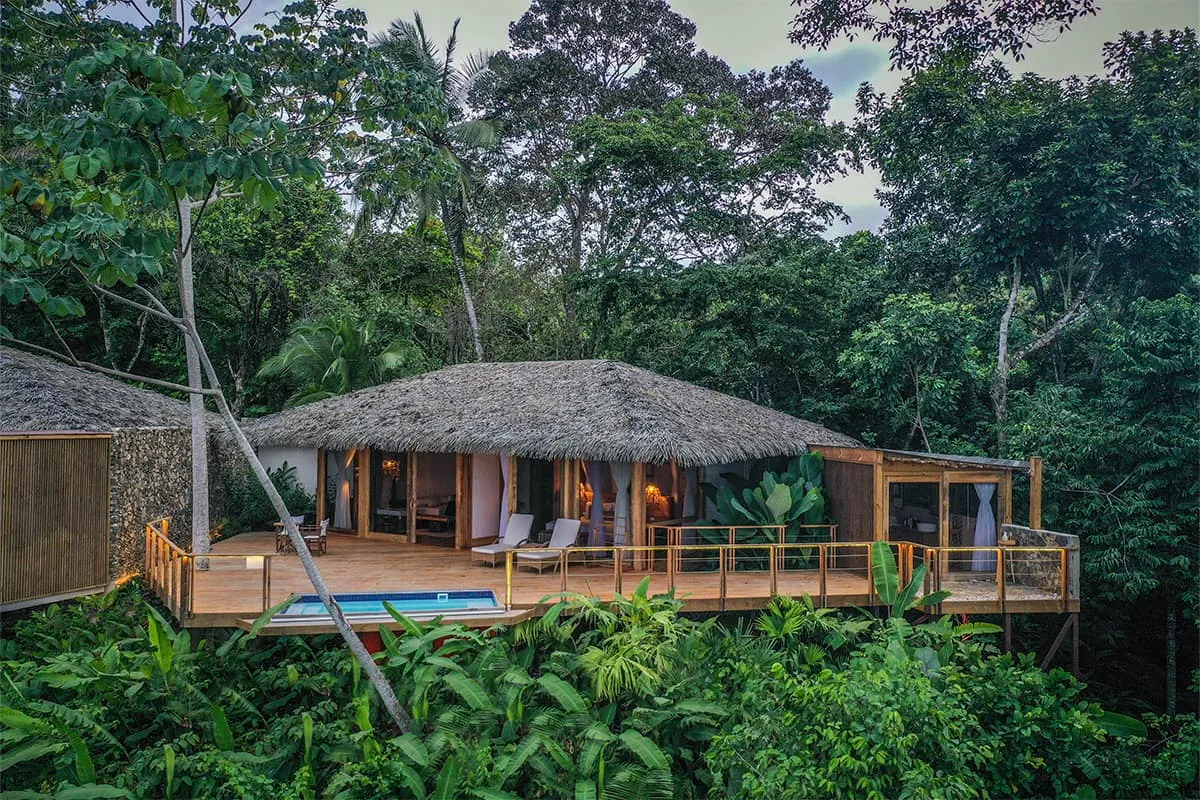
The best eco-lodge in Costa Rica isn’t the one with the prettiest room or the longest wildlife list on its website. It’s the one where the place, the property’s care for that place and your own reasons for travel line up. Some travelers want to hear howler monkeys at dawn on the Osa Peninsula. Others want a quetzal in a highland oak forest, a boat ride through Tortuguero’s canals, a working off-grid farm by Lake Arenal, or a week of yoga on a cliff above the Pacific.
This guide names the lodges we recommend in every region of the country, with what each one actually offers, how to reach it and what the official sustainability record shows. Every lodge here was checked against its own website in October 2026, and every certification claim was checked against the official CST directory at the same time.
The short answer: where should a nature traveler stay?
- For the most wildlife: the Osa Peninsula, at lodges such as Lapa Ríos and Bosque del Cabo on their own large rainforest reserves near Corcovado.
- For birding and rainforest science: Sarapiquí and Boca Tapada, at Selva Verde or Maquenque.
- For volcano scenery with trails from your room: Arenal, at Arenal Observatory Lodge or the off-grid Rancho Margot.
- For cloud forest and quetzals: Monteverde or the Savegre Valley, at Monteverde Lodge and Gardens or Savegre Mountain Hotel.
- For canals and turtles: Tortuguero, at Tortuga Lodge and Gardens.
- For a river-canyon hideaway: Pacuare Lodge on the Pacuare River.
- For coast, forest and culture together: the southern Caribbean around Puerto Viejo, or Guanacaste and southern Nicoya on the Pacific.
No single region does everything well. Most good trips combine two or three bases with different ecosystems, as our 7, 10 and 14-day itineraries show.
How we chose these lodges
We started from the lodges we have reviewed over the years and kept only those that pass three checks. First, the lodge’s own website had to be live and taking bookings in October 2026; several well-known names dropped out because their sites had gone dark, been sold or turned into spam pages. Second, each lodge needed something concrete to stand on: protected land, guided activities on site, a farm, a research link or a community program described on its own site. Third, we looked every lodge up in the official sustainability directory and report what we found, including when a lodge isn’t listed.
We don’t rank lodges against each other with stars or scores. A remote Osa reserve and a coffee farm near the airport serve different trips, and both can be the right answer. Instead, each region below names the lodges we would shortlist, with the facts that matter for choosing among them.
Costa Rica’s best eco-lodges compared
This table is descriptive rather than a ranking. “CST” shows each lodge’s level in the official CST certified directory as of October 20, 2026; “Not listed” means we didn’t find it there, which is common for small owner-run lodges and isn’t a judgment on their practices.
| Lodge | Region | What sets it apart | Best for | CST |
|---|---|---|---|---|
| Lapa Ríos | Osa, Cabo Matapalo | 1,000-acre private rainforest reserve | Wildlife with comfort | Elite |
| Bosque del Cabo | Osa, Cabo Matapalo | 750+ acre reserve on cliffs at the peninsula’s tip | Couples, naturalists | Not listed |
| Corcovado Wilderness Lodge | Osa, near Drake Bay | Boat-access lodge beside Corcovado | Park trips by sea | Elite |
| Aguila de Osa Inn | Osa, Drake Bay | Hillside lodge with tours to Corcovado and Caño Island | Divers, active travelers | Not listed |
| Playa Cativo Lodge | Golfo Dulce | Boat-only, inside a 1,000-acre private reserve | Quiet seclusion | Basic |
| Mar y Selva | South Pacific, Uvita | Ten private casas above Marino Ballena | Families, small groups | Not listed |
| Tortuga Lodge and Gardens | Tortuguero | 29 river-view rooms and its own private reserve | Canals and turtles | Not listed |
| Pacuare Lodge | Pacuare River | 20 bungalows in a 340-hectare protected area | Adventure luxury | Not listed |
| Shawandha Lodge | Southern Caribbean | Bungalows in a five-acre forest near Playa Chiquita | Beach plus forest | Not listed |
| Selva Verde | Sarapiquí | 500-acre lowland rainforest reserve, open since 1986 | Birders, students | Elite |
| Maquenque Eco Lodge | Boca Tapada | Treehouses on a rainforest and wetland reserve | Birding, unusual rooms | Elite |
| Arenal Observatory Lodge | Arenal | 352-hectare reserve inside the national park | Volcano views, trails | Not listed |
| Rancho Margot | Lake Arenal | Off-grid regenerative farm, 400+ acres | Families, learning | Not listed |
| Monteverde Lodge and Gardens | Monteverde | 31 rooms, gardens and a private reserve | Cloud forest comfort | Not listed |
| Savegre Mountain Hotel | San Gerardo de Dota | 500+ hectare private cloud forest reserve | Quetzals, highland birds | Not listed |
| El Silencio Lodge | Bajos del Toro | Private reserve with three waterfalls | Mountain wellness | Elite |
| Finca Rosa Blanca | Central Valley | 14-unit inn on an organic coffee farm | Short stays near the airport | Elite |
| Arenas del Mar | Manuel Antonio | Beachfront resort in an 11-acre forest | Beach and wildlife | Elite |
| Hotel Punta Islita | Guanacaste | 27 villas, 40-hectare protected forest, macaw project | Remote Pacific coast | Elite |
| Lagarta Lodge | Nosara | Hilltop above the estuary, bordering a reserve | Birding and surf | Elite |
| Anamaya Yoga Retreat | Montezuma | Clifftop retreat with ocean views and organic meals | Yoga and wellness weeks | Not listed |
What makes an eco-lodge genuinely ecological?
“Eco-lodge” isn’t a regulated label in Costa Rica. Any hotel near trees can use it. The country’s setting makes the question matter: the tourism board notes that Costa Rica holds about 6 percent of the world’s biodiversity and that its national conservation system protects about a quarter of its territory. A lodge in that landscape can either protect a piece of it or simply borrow the view.
The formal benchmark is the Certification for Sustainable Tourism (CST), run by the Costa Rican Tourism Institute. It is free and voluntary, follows Global Sustainable Tourism Council criteria and now has two levels, Basic and Elite; the program reports nearly 400 certifications issued since 2018. The old one-to-five-leaf scale has been retired, so a five-leaf plaque on a wall is history, not a current rating. Our CST explainer shows how to look up any business.
Certification is a useful signal, not the whole story. Practical evidence matters more. Does the lodge protect land, and how much? Where do its water and power come from, and how is wastewater treated? Does it employ and train local guides? Does it keep wildlife wild, with no feeding and no handling? Our guide to what an eco-lodge is and our sustainable hotel checklist go through these questions in detail.
Osa Peninsula: the wildest rainforest lodges
For wildlife, nowhere in Costa Rica matches the Osa. Corcovado National Park, created on October 24, 1975, covers 42,560 hectares of land and 3,354 hectares of sea, and SINAC describes it as holding 2.5 percent of the world’s biodiversity. A visit requires an advance reservation through the park’s reservation office, and SINAC recommends entering with a registered guide; our Corcovado and Osa guide explains sectors and logistics. The peninsula’s lodges sit on private forest that buffers the park, so much of the wildlife comes to you.
Lapa Ríos, near Cabo Matapalo, protects a 1,000-acre private reserve of lowland rainforest and holds CST Elite status. Its guided program runs from early bird walks to night walks, Corcovado trips by land and sea, and visits with a local medicine guide. It is the classic choice for travelers who want to be deep in the forest without giving up comfort.
Bosque del Cabo sits on the cliffs at the very tip of the peninsula, on a reserve of more than 750 acres, with bungalows and houses spread through the forest, solar and hydroelectric power and trails down to the beaches. Scarlet macaws, monkeys and the sound of surf below make it a favorite for naturalist couples.
On the Drake Bay side, Corcovado Wilderness Lodge, formerly Casa Corcovado, is reached by boat and sits beside the park, with CST Elite status. Aguila de Osa Inn overlooks Drake Bay itself and focuses on Corcovado and Caño Island trips, diving and snorkeling. Across the peninsula on the calm Golfo Dulce, Playa Cativo Lodge is reached only by boat and, according to the lodge, sits inside a 1,000-acre private reserve, a good choice for travelers who want quiet water as much as rainforest. Our Osa Peninsula directory covers more options, including Carate’s remote lodges.
South Pacific: whales, waterfalls and hillside casas
Between Dominical and Ojochal, rainforest-covered hills drop straight to the Pacific. The centerpiece is Marino Ballena National Park, with 5,160 marine hectares, 171 land hectares, 15 km of coast and 17 species of coral. Humpback whales visit from both hemispheres; our whale watching guide gives the seasons.
Most lodges here are on the hillsides with views rather than on the sand. Mar y Selva above Uvita has ten private casas around a pool terrace, a short drive from Marino Ballena, and can be booked whole by families or retreat groups. See our Southern Pacific directory for more.
Tortuguero and the Pacuare: canals, turtles and a river canyon
Tortuguero National Park was declared on September 24, 1970, and today covers 76,937 hectares of land and sea. It protects nesting beaches for four sea turtle species: green, leatherback, hawksbill and loggerhead. There’s no road in; you arrive by boat or small plane, and most exploring happens on the canals. Night turtle walks follow strict rules, which our Tortuguero guide and sea turtle nesting guide explain.
Tortuga Lodge and Gardens has 29 rooms facing the Tortuguero River and describes itself as the only hotel in Tortuguero with its own private nature reserve. Naturalist guides lead daily walks, canal and kayak trips and turtle tours in season. Valverde Glamping and Ecolodge, formerly La Baula Lodge, is a simpler choice with standard rooms and glamping suites, and Turtle Beach Lodge describes a 175-acre property with private forest trails and quiet beach, with packages that include boat transfers, meals and canal tours.
Inland on the Caribbean slope, Pacuare Lodge has just 20 bungalows within a 340-hectare protected area on the Pacuare River, with rafting, canyoning, birding and visits with the Indigenous Cabécar community among its activities. The lodge says it was recognized by the MICHELIN Guide in 2025 for sustainability and hospitality. It’s one of the country’s most memorable stays and a good splurge for adventurous couples. Our luxury eco-lodges guide compares it with other high-end options.
Southern Caribbean: forest down to the beach
South of Limón, Cahuita, Puerto Viejo, Cocles, Punta Uva and Manzanillo bring together rainforest, reef, Afro-Caribbean food and culture and Bribri communities. Rain falls in most months, though the tourism board notes the Caribbean has its own pattern, with a longer rainy period than the Pacific and drier spells at different times of year.
Shawandha Lodge, founded in 1993, keeps its bungalows in a five-acre stretch of forest near Playa Chiquita, according to the hotel. Samasati Nature Retreat is a rainforest retreat with views of the Caribbean Sea, yoga and wellness programs and the option to book a room and add meals and classes à la carte. Geckoes Lodge rents four private jungle houses near Puerto Viejo, and Selva Bananito Lodge, inland south of Limón, has protected a block of primary forest since 1995 and holds CST Basic status. Our Caribbean directory covers the full coast.
Sarapiquí and Boca Tapada: for people who love the rainforest
The northern lowlands lack Arenal’s postcard volcano but excel in ecological depth. La Selva Biological Station, run by the Organization for Tropical Studies, protects 1,600 hectares of lowland forest bordering Braulio Carrillo National Park and has recorded more than 2,077 plant species, 470 birds and 125 mammals, 72 of them bats. Visitors can join guided walks there.
Selva Verde has welcomed nature travelers since 1986 on 500 acres of rainforest in Sarapiquí and holds CST Elite status; it’s a strong base for birders, families and student groups. Farther north, Maquenque Eco Lodge in Boca Tapada, also CST Elite, offers treehouses and bungalows on a rainforest and wetland reserve where sloths, caimans and poison dart frogs live near the rooms, according to the lodge. La Selva itself also has research-station lodging. The same region includes Bijagua, where Celeste Mountain Lodge sits on the edge of Tenorio Volcano National Park near Río Celeste. Our Northern Lowlands directory has more.
Arenal and La Fortuna: volcano country
Arenal is the easiest region to combine comfort with daily nature, and it works well for first trips and families. The volcano has been quiet since 2010, so the attraction is forest, lava-flow trails, hot springs and farms rather than lava.
Arenal Observatory Lodge describes itself as inside Arenal Volcano National Park, on a reserve of more than 352 hectares with 110 hectares of primary forest, 11 km of self-guided trails and 800 meters of wheelchair-accessible path. Rancho Margot, near El Castillo, is a 400-plus-acre off-grid farm with 19 bungalows and bunkhouse rooms, farm tours, yoga and night walks; it reports carbon-neutral certification in 2012. Chachagua Rain Forest Lodge, now Chachagua Rainforest Hotel and Hot Springs, sits in a protected reserve south of La Fortuna with spring-fed pools and daily guided walks. Our Arenal and La Fortuna directory and Arenal and Río Celeste guide go deeper.
Monteverde: cloud forest above the clouds
Monteverde’s cool, misty forest is draped in mosses, orchids and bromeliads, and it’s one of the best places in the country for resplendent quetzals and three-wattled bellbirds. The Monteverde Cloud Forest Preserve offers self-guided trails plus small guided natural history and night walks, and the neighboring Santa Elena and Children’s Eternal Rainforest reserves spread visitors out further. Arrive early: mornings are clearer, birds are more active and the trails are quieter.
Monteverde Lodge and Gardens has 31 rooms framed by gardens and a private cloud forest reserve. Cloud Forest Lodge, between Monteverde and Santa Elena, is a quieter forest property run by the same Böëna lodge group. Our Monteverde directory and cloud forest guide cover the reserves and more lodges.
Highlands and the Central Valley: quetzals, waterfalls and coffee
The mountains around San José hold some of the country’s most rewarding short stays. In the Talamanca range, Los Quetzales National Park protects high oak and cloud forest at the head of the Savegre River, where frosty dawns give way to warm afternoons and the birding is some of the best in the country.
Savegre Mountain Hotel in San Gerardo de Dota protects a private cloud forest reserve of more than 500 hectares and has welcomed visitors since 1973. It’s the classic base for a dawn quetzal walk. El Silencio Lodge in Bajos del Toro, CST Elite, has guided hikes to three waterfalls in its private reserve. Finca Rosa Blanca, also CST Elite, is a 14-unit inn on an organic coffee farm in the hills above the airport, ideal for a first or last night. Birders should look at Rancho Naturalista near Turrialba, which reports more than 450 bird species recorded on its reserve and surroundings. See our Central Valley directory.
Central Pacific: easy wildlife near the beach
Manuel Antonio National Park, created in 1972 after local pressure to keep the beaches public, is the most accessible place to see monkeys, sloths and coastal forest. It’s closed on Tuesdays, and tickets are sold only online. Go at opening, hire a certified guide, and never feed the animals.
Arenas del Mar, CST Elite, is a beachfront resort surrounded by 11 acres of rainforest with an in-house naturalist. Si Como No, CST Basic, has 54 rooms on the ridge with forest and ocean views and a protected forest area. Near Carara National Park, the former Hotel Villa Lapas has become Santa Lucia Jungle Hacienda. Families find this region the simplest introduction; see our Central Pacific directory and family ecotourism guide.
Guanacaste: dry forest, volcanoes and turtle beaches
Guanacaste’s lowland forests drop their leaves in the dry season, and the region adds volcanic Rincón de la Vieja, the Palo Verde wetlands and the Ostional turtle refuge.
Hotel Punta Islita has, according to the hotel, 27 villas and a 40-hectare protected forest, runs a macaw conservation project and community programs, and holds CST Elite. In Nosara, Lagarta Lodge and The Harmony Hotel both hold CST Elite, and Buena Vista Lodge on the slopes of Rincón de la Vieja (CST Basic) has its own hot springs and forest trails. Our Guanacaste directory covers park days, turtle rules and the 2026 Palo Verde fire.
Southern Nicoya: retreats, waterfalls and Cabo Blanco
The peninsula’s southern tip holds Cabo Blanco, Costa Rica’s first protected nature reserve, created in 1963, plus Montezuma’s waterfalls and the surf beaches of Santa Teresa and Mal País.
Anamaya Yoga Retreat sits on a clifftop in the forest above Montezuma, with wide jungle and ocean views and a saltwater infinity pool. Anamaya runs week-long yoga and wellness retreats and teacher trainings, and serves organic meals with vegetarian, vegan and gluten-free options. Luz en el Cielo is an affordable eco B&B and hostel with treetop cabins at the edge of town, and Vista las Islas near Paquera looks over the Gulf of Nicoya and arranges guided visits to the Curú refuge. See our Southern Nicoya directory and yoga retreats guide.
When to go: seasons and wildlife by region
Costa Rica has two broad seasons, but they don’t fall the same way everywhere, and wildlife events follow their own calendars. Use this table to match a lodge region to your travel month. Our best time to visit guide goes month by month.
| Region | Drier months | Wildlife highlights and timing | Source |
|---|---|---|---|
| Osa and Corcovado | Mid-December to mid-April | Rainforest wildlife year-round; trails and river crossings easiest in the dry months | SINAC Corcovado |
| South Pacific (Uvita) | Mid-December to mid-April | Humpback whales from December to March and July to September | SINAC Marino Ballena, ICT |
| Tortuguero | Least rain in March, April and October | Green turtles nest from June through November | SINAC Tortuguero, Sea Turtle Conservancy |
| Nosara and Ostional | Mid-December to late April | Olive ridley arribadas year-round, once or twice a month | SINAC Ostional |
| Arenal, Monteverde, Sarapiquí | Wet in most months | Frogs and birds all year; clearer spells in the Pacific dry season | ICT |
A few details are worth knowing. SINAC’s Corcovado page gives the park’s dry season as mid-December to mid-April, with sporadic rain, and the rainy season for the rest of the year. On the Caribbean side, SINAC notes that July and December are Tortuguero’s wettest months and March, April and October the driest, which runs against the Pacific pattern. The Sea Turtle Conservancy, which has worked at Tortuguero for decades, describes it as home to the largest green turtle nesting population in the Atlantic, with nesting from June through November.
On the Pacific, the tourism board says migratory humpback whales visit from December through March and from July through September, as whales from both hemispheres arrive in their own winters. At Ostional, olive ridley turtles nest in mass arribadas year-round, once or twice a month, and visits during arribadas require an accredited local guide.
Getting between regions
Distances look short on a map and take longer on the ground. Mountain roads, river crossings, ferries and slow trucks add time, and the most remote lodges in Osa, Tortuguero, the Pacuare and the Golfo Dulce are reached by boat, small plane, raft or a final stretch of rough road. Many include transfers in their packages, and it’s worth asking them to arrange the last leg even when they don’t.
A practical rule is one base for every two to four nights, with no more than one long transfer day in a row. Domestic flights to Drake Bay, Puerto Jiménez, Tortuguero and Nosara can turn a day of driving into an hour in the air. Our guide on reaching remote eco-lodges covers boats, small planes and transfer timing.
Which eco-lodge suits which traveler?
First-time visitors: Arenal plus Monteverde or the Central Pacific. Choose a lodge with guided walks on site, such as Arenal Observatory Lodge or Monteverde Lodge and Gardens, and allow for weather.
Serious naturalists and birders: Osa (Lapa Ríos, Bosque del Cabo), Sarapiquí (Selva Verde), Boca Tapada (Maquenque), Savegre and Rancho Naturalista. See our wildlife and birdwatching lodge guide.
Families: Rancho Margot’s farm life, Selva Verde’s easy trails, Tortuga Lodge’s boat trips and Manuel Antonio’s beach-and-park combination all work well with children. Ask about trail difficulty, pools and swimming conditions.
Quiet luxury: Pacuare Lodge, Lapa Ríos, Arenas del Mar, Punta Islita and El Silencio offer very different settings with strong conservation stories.
Retreat travelers: Anamaya above Montezuma and Samasati on the Caribbean run structured yoga programs; Rancho Margot adds daily classes on a working farm. A retreat week is a different experience from a hotel with an optional class.
Budget-minded travelers: small lodges such as Luz en el Cielo, or a simple room near a park plus a top local guide, often deliver more nature than an expensive resort. Our affordable eco-lodges guide has more.
What drives the cost of an eco-lodge stay
Lodge prices vary with season, room type and what’s included, so compare complete trips rather than nightly rates. Remote lodges in Osa, Tortuguero and the Pacuare often bundle meals, boat or raft transfers and guided tours, which makes their rate look higher than a town hotel that charges for everything separately. Smaller family-run lodges usually charge for the room alone. Retreat packages include classes and meals that ordinary hotels don’t.
When comparing, list lodging, taxes, meals, airport and final transfers, guides, park tickets and cancellation terms. Expensive doesn’t prove environmental benefit, and cheap doesn’t rule it out. Our eco-lodge vacation costs guide breaks down typical budgets.
Choosing a forest stay, not just a forest view
Two rooms can look out on the same green hills and offer very different trips. One lodge protects a large block of forest, employs a resident naturalist and keeps trails open to small guided groups. Another sits in a landscaped garden and sends you on long drives to public parks. Both can be pleasant places to sleep, but only the first gives you daily, place-based time with the ecosystem.
Before comparing photos, ask three questions. What land does the property actually protect, and how large is it? Can guests walk that habitat on maintained trails, at dawn and after dark? Who explains the wildlife, the water and the forest management? The lodges in this guide answer those questions clearly on their own websites, which is a good sign in itself. Our private nature reserves guide explains how many of them fit into the country’s wider conservation network.
Booking questions worth asking
Ask what you can do from the property without a transfer. Ask how big the protected area is and how it’s managed. If tours need an outside guide or a park ticket, ask who books them and how far ahead. Check whether rooms are air-conditioned, screened or open-air, how meals work in remote places and what happens if a flight or boat is delayed. Check also whether the lodge closes for part of the green season; several remote lodges do.
The most revealing question is simple: “What would I learn about this ecosystem by staying here instead of at a regular hotel down the road?” A strong eco-lodge answers with its own trails, guides, research or community partners. Our national parks guide and best time to visit guide help you plan the parks and seasons around your lodge choices.
Frequently asked questions
Which region of Costa Rica has the best eco-lodges?
It depends on what you want to see. The Osa Peninsula is the best for wild rainforest and wildlife, Monteverde and Savegre for cloud forest, Tortuguero for canals and turtles, Sarapiquí for birding, Arenal for easy variety and southern Nicoya for retreats near the beach.
Is every hotel called an eco-lodge certified?
No. "Eco-lodge" is a self-chosen label. The official CST certification is free, voluntary and has two levels, Basic and Elite, and you can check any business in the online directory. Several lodges in this guide hold Elite, while others do serious work without certification.
Which Costa Rica eco-lodges hold CST Elite status?
As of October 2026, lodges in this guide listed at Elite include Lapa Ríos, Corcovado Wilderness Lodge, Selva Verde, Maquenque, El Silencio, Finca Rosa Blanca, Arenas del Mar, Hotel Punta Islita, Lagarta Lodge and The Harmony Hotel. Certificates last two years, so check again before you book.
Do eco-lodges guarantee wildlife sightings?
No. Animals are wild and sightings change with weather, season and luck. A lodge with protected forest and good guides raises your chances considerably, especially early in the morning and on night walks, but honest lodges never promise a jaguar.
How many nights should I stay at a remote eco-lodge?
Three or four nights is a good minimum in Osa, Tortuguero, Boca Tapada or the Pacuare. Getting there takes time by boat, small plane or rough road, and the second and third days are when you settle into the forest's rhythm.
Should I book directly with the lodge?
For remote lodges, booking directly makes it easier to confirm transfers, included tours, meal plans and seasonal closures. Whatever you choose, ask for the full itinerary of transfers in writing before you pay.