

Celeste Mountain Lodge is a French-run, 18-room eco lodge on the slopes above Bijagua, right on the edge of Tenorio Volcano National Park and the turquoise Río Celeste. Stay here for the volcano views from every room, a small patch of private primary forest with serious birding, and some of the most talked-about cooking in this corner of northern Costa Rica.
At a glance
| Location | Bijagua de Upala, Alajuela province |
|---|---|
| Style | Small contemporary eco lodge, single two-story building |
| Setting | About 800 meters up, between Tenorio and Miravalles volcanoes |
| Best for | Río Celeste visitors, birders, food-minded couples, travelers with reduced mobility |
| Getting there | Paved access road, according to the lodge; buses run daily to Bijagua |
| CST status | Not listed in the official directory |
Where it is
Bijagua is a farming town on the saddle between two volcanoes in the Guanacaste Volcanic Range, on the road that links the Pan-American Highway near Cañas with Upala. The lodge sits above the town at about 800 meters, where its own description puts the climate at a steady 18 to 30 °C and the rainfall at around 4,000 mm a year. That rain is why the hills stay so green, and why a light rain jacket belongs in every bag.
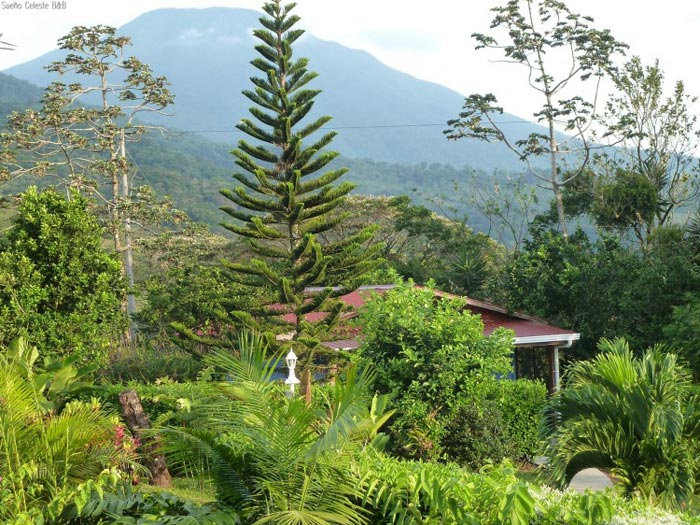
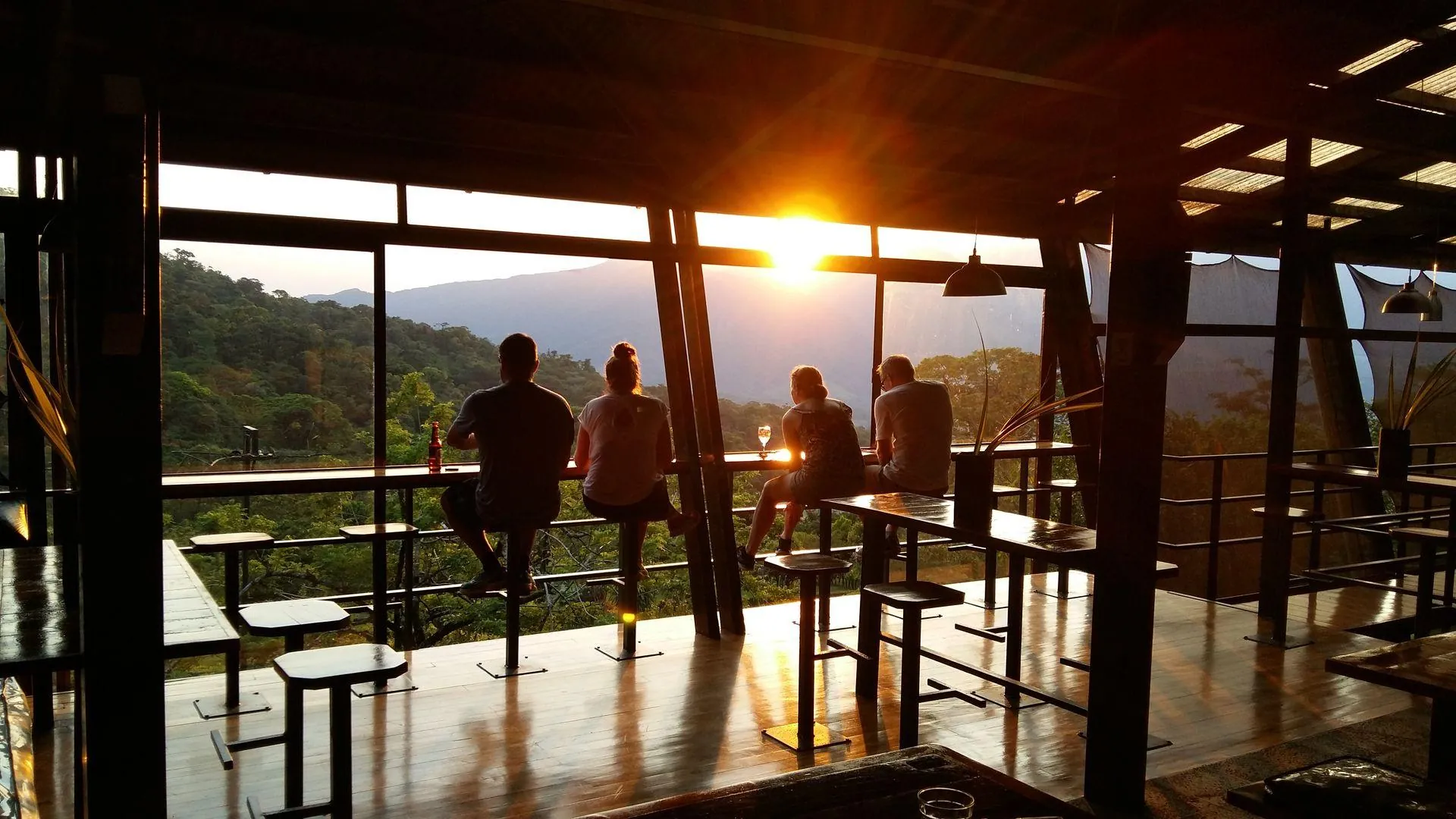
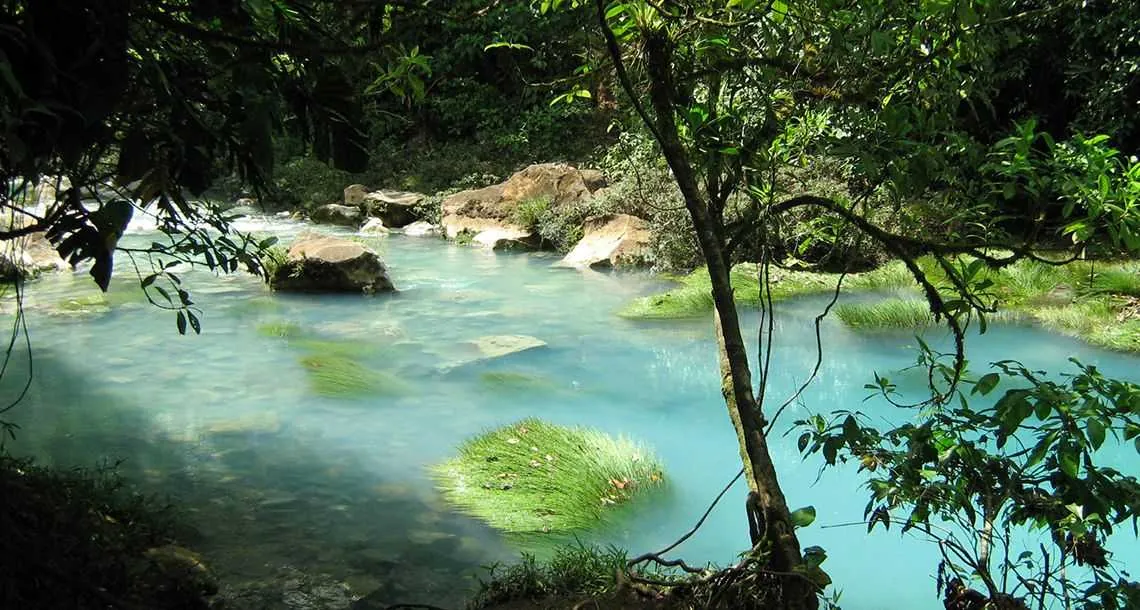
From the terrace, Montezuma, the third peak of Tenorio Volcano, rises directly in front, and the five peaks of Miravalles line the western horizon. The lodge borders Tenorio Volcano National Park, which SINAC, the national parks agency, places about 9 kilometers from Bijagua. The park protects the Río Celeste, whose sky-blue color begins at a spot called El Teñidero, along with the river’s waterfall and bubbling volcanic vents.
The lodge says its access road is now paved. Daily buses run to Bijagua from San José, Liberia, Cañas and Upala, though a car makes the most sense for getting to the park entrance and around the valley.
The building and rooms
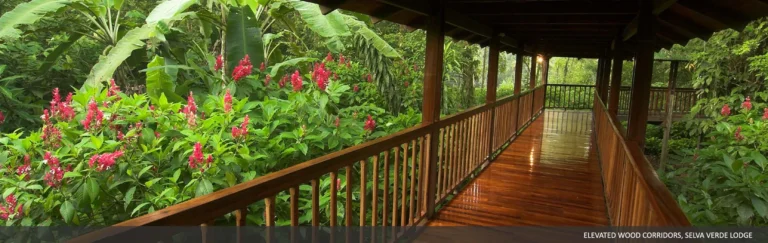
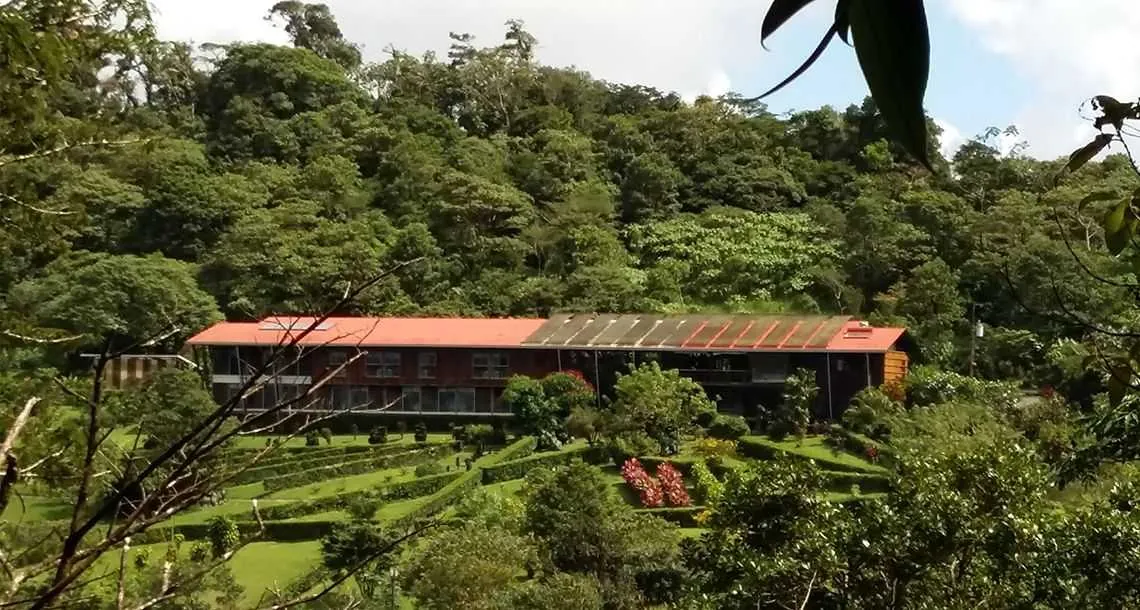
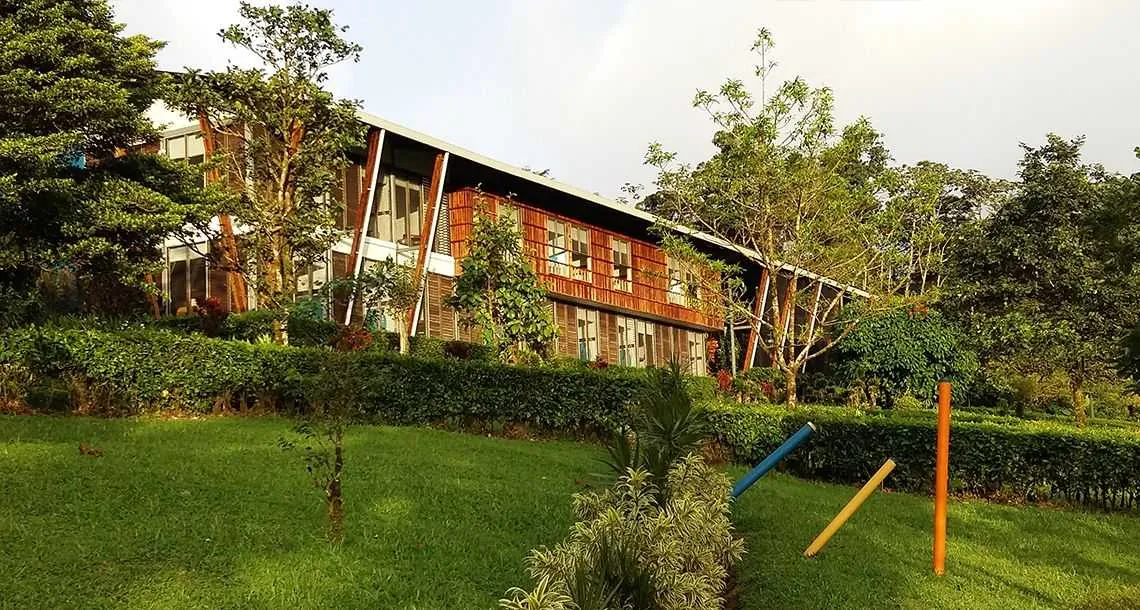
The lodge was designed by Belgian architect Jacqueline Gillet with Costa Rican assistants José Alí Porras and Rafael Tenorio, using bioclimatic principles: open spaces, few walls and air moving freely through the common areas. The result feels more like a modern country house than a jungle lodge.
There are 18 rooms in a single two-story building, all of them facing southwest toward the volcanoes, the rainforest and the valley. Rooms are about 27 square meters, with four having a larger bathroom. Bed setups cover one to four guests: a queen or king for couples, a queen plus single or three singles for three, and two double beds for four. Each has a private hot shower, a fridge, a hair dryer and free fiber-optic Wi-Fi.
Accessibility is taken seriously for a lodge in this terrain. One room is fully adapted for guests with disabilities, two of the larger bathrooms have accessible fittings, and the lodge keeps a Joelette, a one-wheeled trail chair carried by helpers, so guests with reduced mobility can get onto forest paths. There are also two rooms for guides and drivers, which suits travelers on guided tours.
The kitchen
Food is a big part of the lodge’s reputation. The restaurant serves what the lodge calls Tica-fusion cooking: dishes built on traditional Costa Rican recipes and local flavors, arranged as a creative menu of starters, mains and desserts. Guest reviews mention dishes presented on banana leaves. Vegetarian, vegan, gluten-free and lactose-free options are offered, along with children’s menus, and the lodge packs box lunches for days out. Breakfast is included in the stay. Dinner is a sit-down affair in the panoramic dining room or on the covered garden terrace, and there’s a bar with its own view. Massages can also be booked.
Birds and the private trail
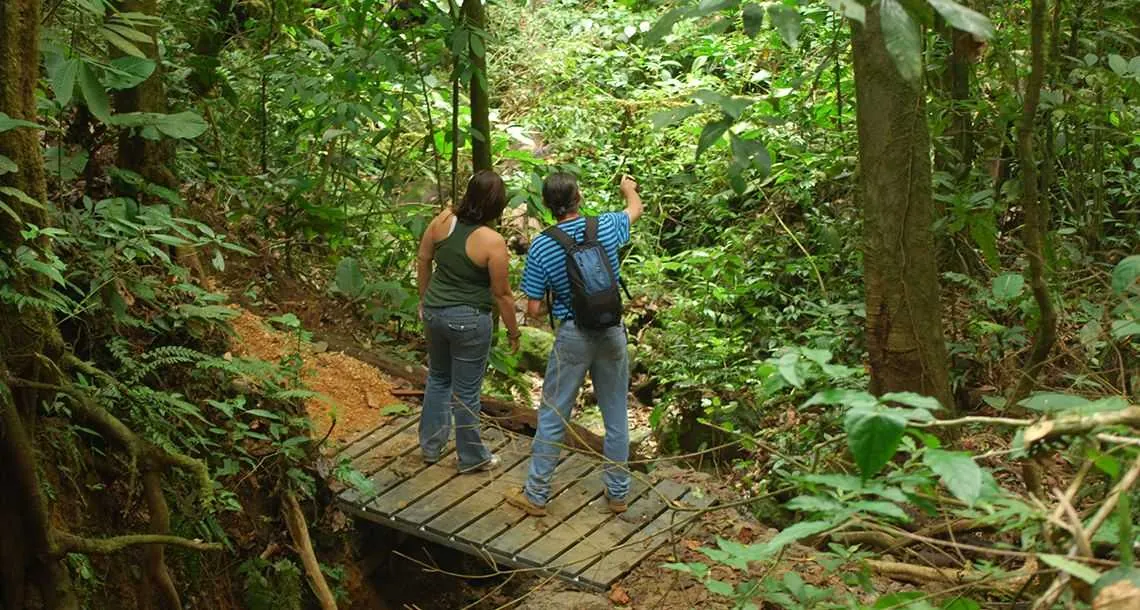
The property covers about 3 hectares of open land and 4 hectares of protected primary forest, crossed by a private path the lodge calls the Celeste Trail, around 2 kilometers long. The forest here sits in the transition between lowland rainforest and cloud forest, which is what makes Bijagua such a good birding area.
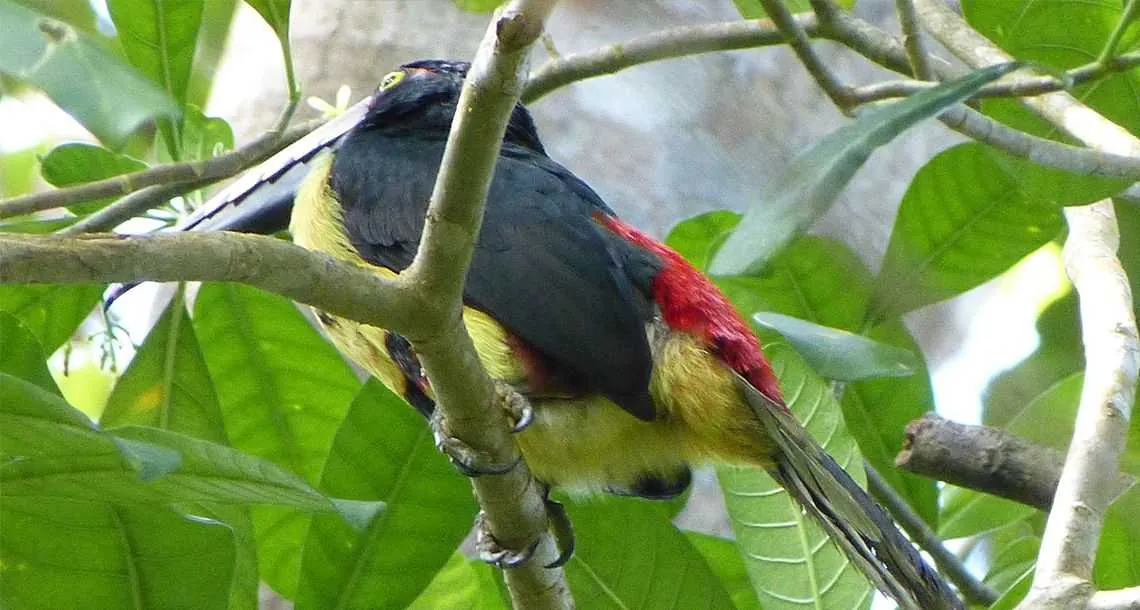
According to the lodge’s birdwatching page, up to 300 species can be recorded on the property over a year, counting residents and migrants. Among the species it lists for a full day of birding are tody motmot, keel-billed motmot, bare-necked umbrellabird, yellow-eared toucanet, great curassow, three-wattled bellbird and lattice-tailed trogon, several of them prized sightings for visiting birders. The lodge offers a bird checklist and guided birding; nothing is guaranteed, and early mornings give the best odds.
Visiting Río Celeste
Most guests come to see the Río Celeste, and the lodge is one of the closest places to stay to the park. Park tickets are sold only online through SINAC, with a timed entry slot chosen at booking, so reserve before arriving. The lodge recommends the 8 am slot, when trails are quieter and the light on the water is good. According to SINAC, the main trail runs 3 kilometers one way (about 6 kilometers and three hours round trip) past the roughly 20-meter waterfall, a lookout, the Laguna Azul, the borbollones where volcanic gases bubble up, and El Teñidero, where the blue color starts.
Beyond the park, the lodge points guests to rafting on the Río Celeste and other activities around Bijagua, and the Maleku indigenous territory near Guatuso is within day-trip range.
Sustainability in practice
Celeste Mountain Lodge is not listed in Costa Rica’s CST directory as of October 2026, so its environmental claims rest on what the lodge itself publishes. Its eco-responsible commitments page is unusually specific:
- Energy: solar water heating, partly automated lighting, and a bioclimatic clothes dryer for laundry.
- Water: flow limiters on taps and showers, and three bio-purifiers treating all wastewater.
- Building: two-story construction to use less land, with recycled tires, recycled plastic boards, construction offcuts, coconut fiber, and only plantation teak or salvaged wood.
- Waste: in-house recycling, bulk buying with reused packaging, and biodegradable soaps only.
- People: according to the lodge, its targets were 80 percent local workers during construction and 95 percent in daily operations. Staff receive training, including French lessons, and produce is bought from local farmers, with organic growers preferred.
Who it suits, and who might prefer somewhere else
Celeste Mountain is a good match for travelers who want a comfortable, well-run base for Río Celeste with real food and good birding on the doorstep, and it stands out for guests with reduced mobility. It’s run by a French team led by founder and general manager Joel Marchal, and the lodge’s website is French first, with English and Spanish versions.
It isn’t a pool resort and doesn’t advertise hot tubs, and the cool, wet climate at this elevation surprises visitors expecting beach heat. If you’d like to stay even closer to the park entrance, compare Hideaway Río Celeste; for another established lodge on the Bijagua side, see Tenorio Lodge; and for a small bed and breakfast in Bijagua, Sueño Celeste. More nearby options are in our Northern Plains eco lodges section, and our Arenal and Río Celeste ecotourism guide helps plan the wider route.
Frequently asked questions
Is Celeste Mountain Lodge inside Tenorio Volcano National Park?
The lodge describes itself as bordering the park and the Río Celeste, and its home page calls it the only hotel in the park. In practice it sits on private land at the park's edge above Bijagua, a short drive from the park entrance.
Do I need to book Río Celeste tickets in advance?
Yes. Entry to Tenorio Volcano National Park is sold online through SINAC with a fixed time slot. The lodge suggests booking the 8 am entry.
Is the lodge suitable for wheelchair users?
It's one of the better choices in the area. One room is adapted for guests with disabilities, two larger bathrooms have accessible fittings, and the lodge has a Joelette trail chair so guests with reduced mobility can reach the forest.
Which birds is the lodge known for?
The lodge reports up to 300 species on its land over a year. Specialties it highlights include the tody motmot, keel-billed motmot, bare-necked umbrellabird and three-wattled bellbird.
Are meals included?
Breakfast is included. Lunch and dinner are served at the lodge's restaurant, and the lodge also packs box lunches; check the current meal plan when booking.