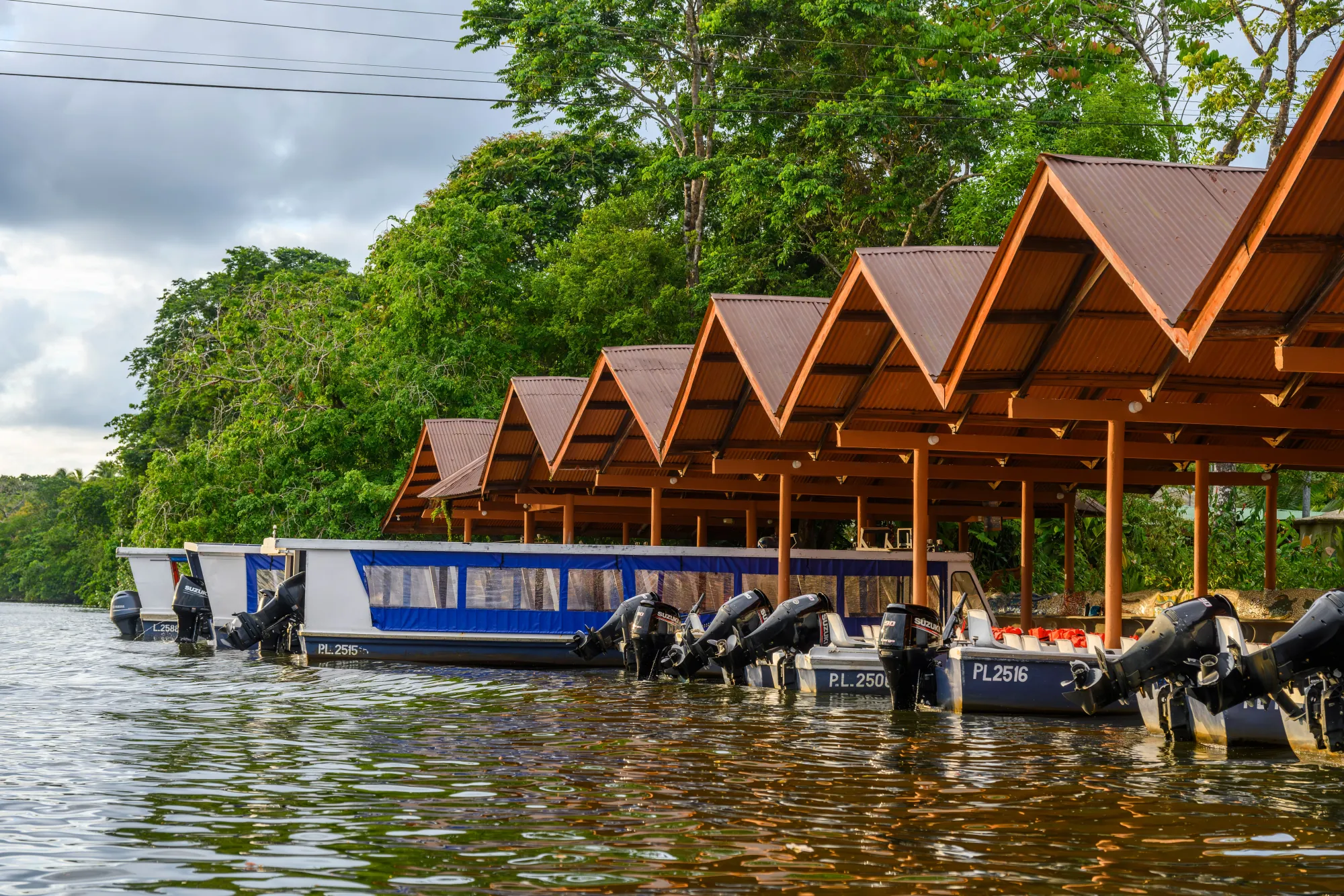
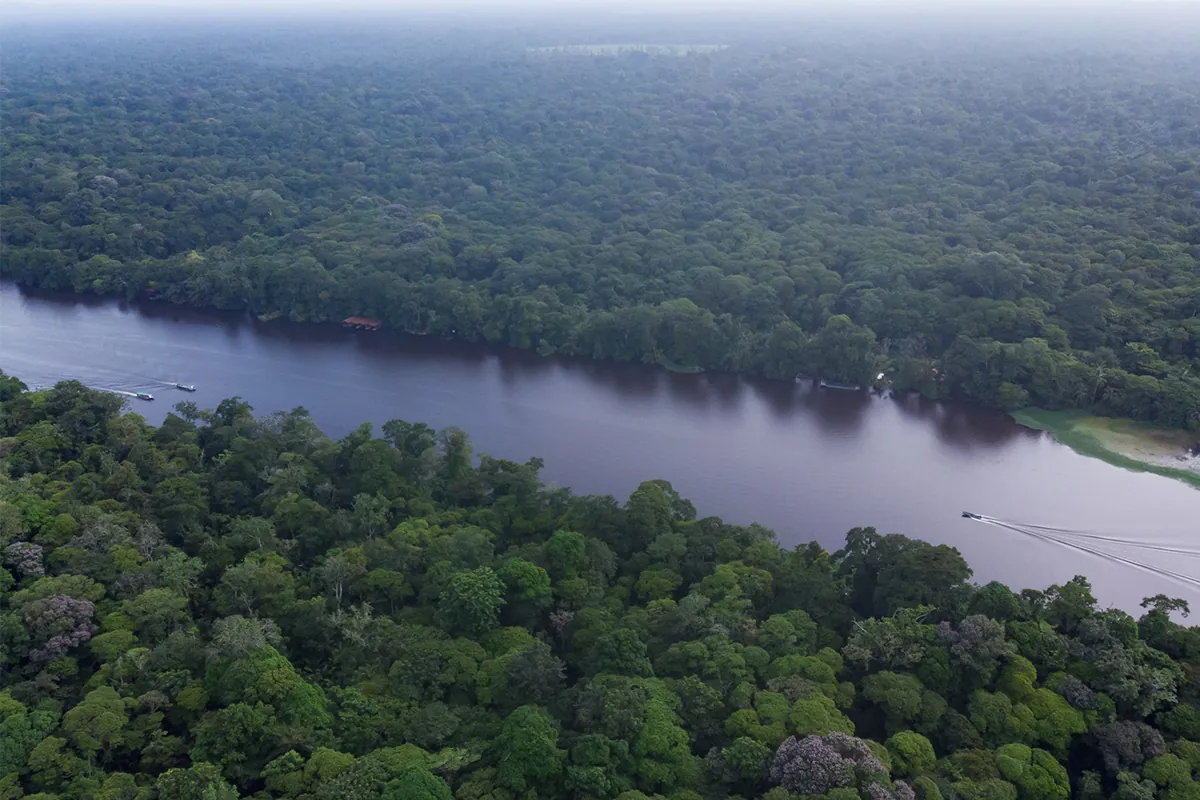
Tortuguero is the sort of place that changes the way you travel. No public road carries visitors into the village. Instead, the journey ends with a boat slipping between walls of green, past riverbanks where herons wait and broad leaves lean toward the water. The rainforest feels close enough to touch, although it is far better to leave it exactly where it grows.
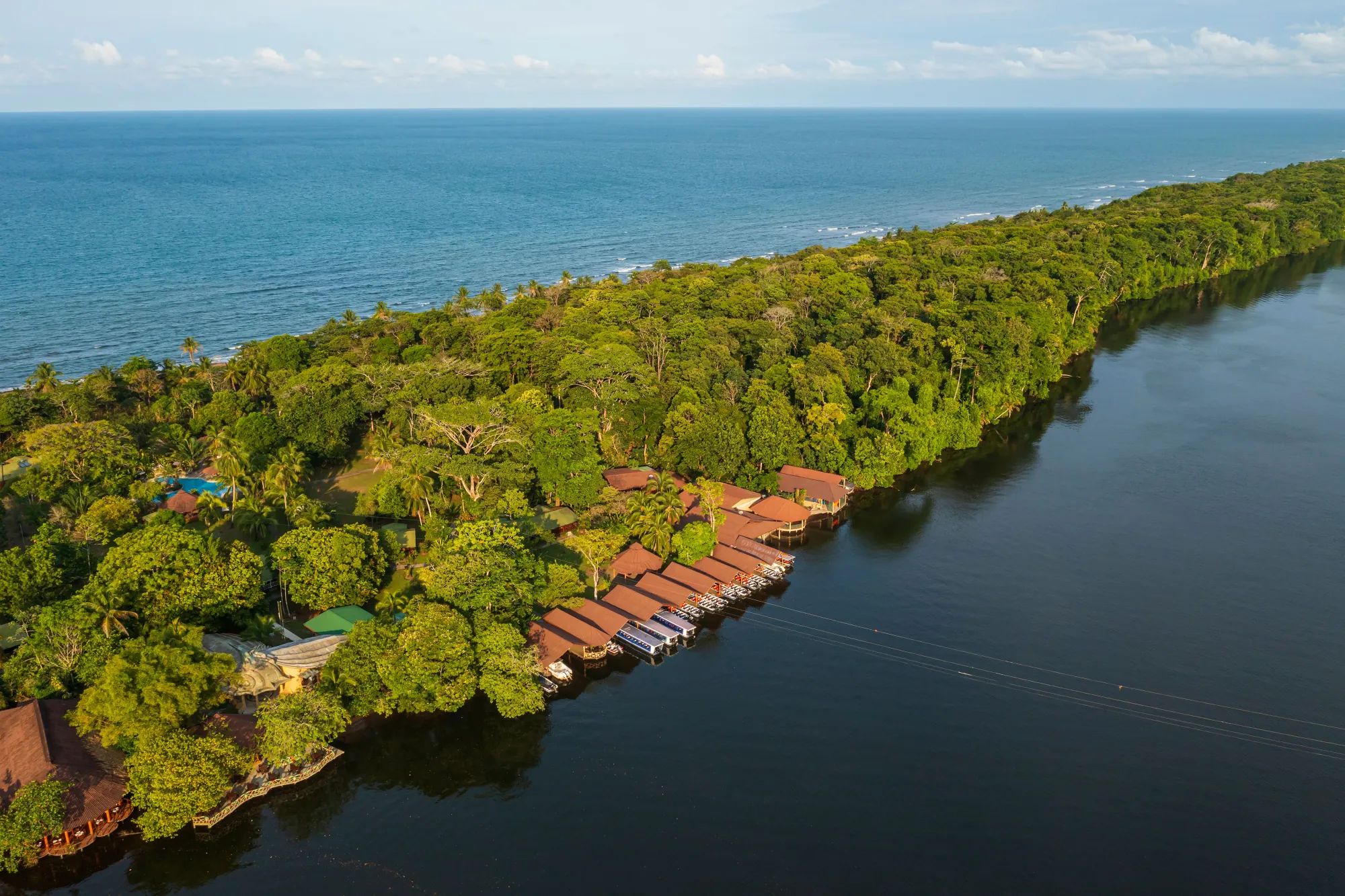
On Costa Rica’s northern Caribbean coast, Tortuguero protects waterways, coastal forest, wetlands and what SINAC calls the most important green turtle nesting beach in the Western Hemisphere. It also supports a village with its own rhythm, small businesses and generations of knowledge about life between forest and sea. This guide explains how the park works, the current rules for canal trips and night turtle tours, how to get there and which lodges we review make good bases. Two or three nights let its quieter character emerge.
Tortuguero in numbers
Tortuguero was declared a national park on 24 September 1970, after research by University of Florida zoologist Archie Carr, who began studying its turtles in the 1950s, drew attention to the beach. According to SINAC, the park now covers 76,937 hectares, of which 50,284 are marine and 26,653 are on land. Ninety-nine percent of the land area is kept under absolute protection, with only 1% used for visitation. The Tortuguero Conservation Area’s park brochure notes that it has also been a Ramsar wetland of international importance since 1996.
SINAC’s species inventory so far lists 734 plants, 442 birds, 138 mammals, 118 reptiles and 58 amphibians. The park protects nesting beaches for four sea turtle species, habitat for the endangered West Indian manatee, one of the country’s important jaguar populations and the yolillo palm swamps that line many canals. The great green macaw, an endangered species, uses Tortuguero as one of its main nesting and feeding areas.
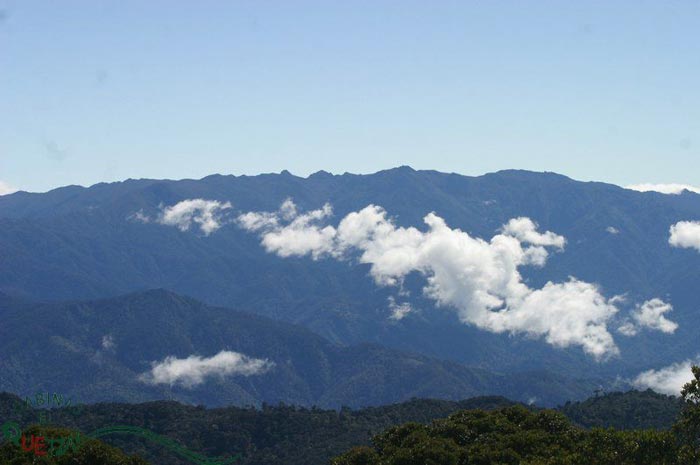
Rain is part of the deal. SINAC gives average annual rainfall of about 6,000 mm, with the wettest months in July and December and the least rainy in March, April and October. Temperatures usually run between 25°C and 30°C. The Caribbean does not follow the Pacific’s dry season, so a “dry season” itinerary built around Guanacaste does not apply here.
Exploring the canals by small boat
At Tortuguero, water is the main trail. Lagoons, rivers and narrow channels cut through lowland forest, giving an intimate view of a wet tropical ecosystem. Instead of scanning a hillside, you may watch a kingfisher dive beside the boat or see a caiman resting on a shaded bank.
A good canal trip is slow. The guide scans vegetation and listens while guests keep their voices low. A wake that seems minor to a passenger can erode the edges of a narrow channel. SINAC designates specific aquatic routes and specifies which kinds of boats may use each:
| Canal route | Length | Allowed craft | What to look for |
|---|---|---|---|
| Caño Chiquero and Caño Mora | 2.3 km | Non-polluting small craft only: canoe, kayak or electric motor | Dense, tall vegetation; occasionally the tayra |
| Río Tortuguero | 4.3 km | Motorboat, canoe, kayak | Gateway to the canal sector; water birds, reptiles and large-flowered poponjoche trees |
| Caño Harold | 3.5 km | Motorboat, canoe, kayak | Wide, calm canal good for spotting turtles and caimans |
| Caño Palma | 5.1 km | Motorboat, canoe, kayak | Narrow canal reached via Laguna Penitencia beside Cerro Tortuguero, rich in waterfowl |
Sources: SINAC Tortuguero page and the park brochure. The brochure lists water-trail departures early in the morning and through the day; early outings usually suit birders best.
On foot, the El Jaguar trail runs 2.5 km parallel to the beach, with beach access points every 100 meters. Cerro Tortuguero, a 119-meter hill near the community of San Francisco formed by volcanic activity about 1.8 million years ago, has a trail with views over what SINAC calls the country’s largest wetland. Park entry tickets for the Cuatro Esquinas and Jalova sectors are sold through SINAC’s online reservation system, and the park is open daily from 6 a.m. to noon and 1 p.m. to 4 p.m.
Choose an operator who treats observation as the goal: keep distance from animals, avoid damaging vegetation and never obstruct wildlife. The government’s Costa Rica Silvestre responsible tourist resources cover feeding, photos and selfies with wild animals.
Wildlife in the water, trees and forest
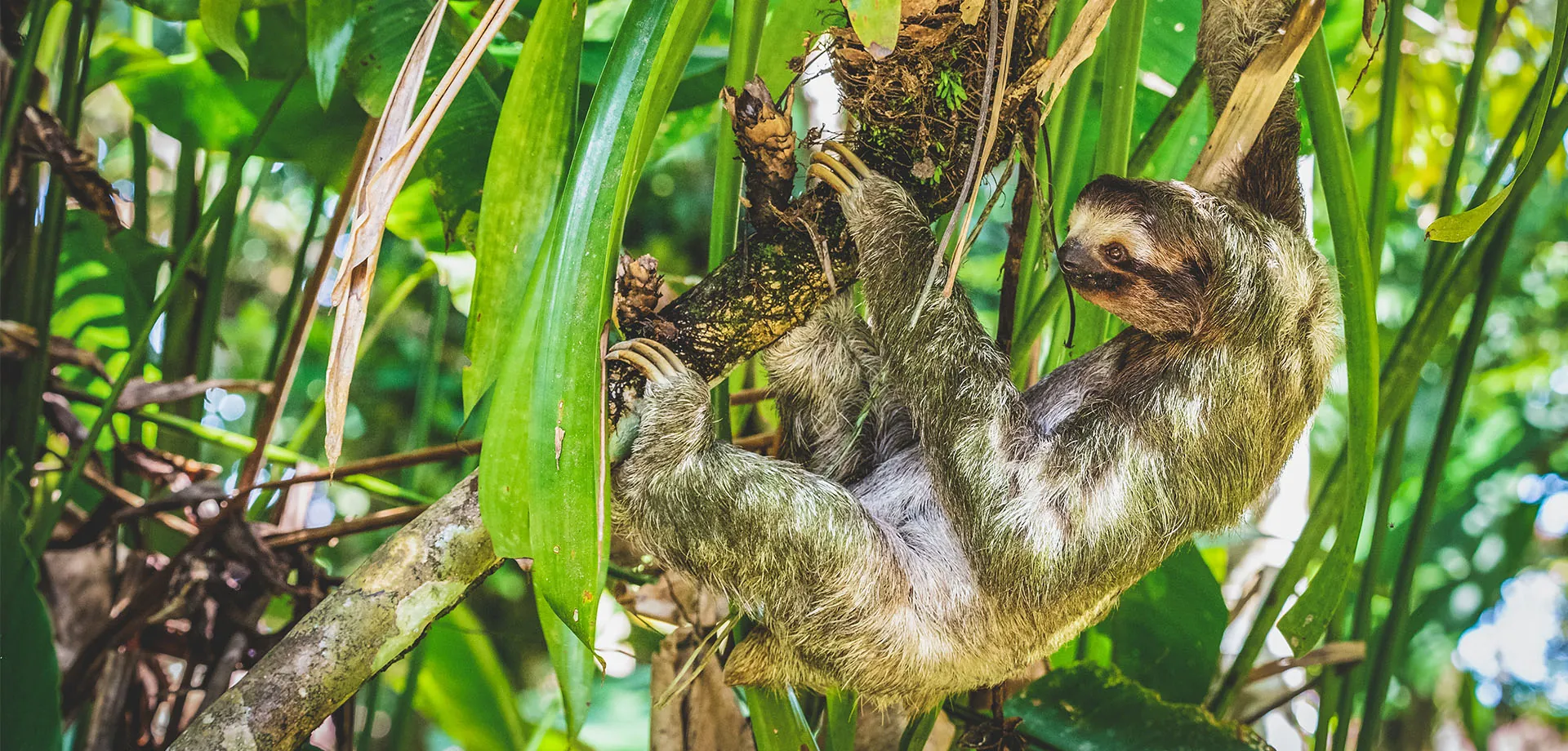
The canals and forest reward visitors in every season. SINAC highlights caimans sunning on logs, black river turtles stacked on the same trunk, jacanas, anhingas drying their wings, violaceous trogons, strawberry poison dart frogs, spider monkeys and white-faced capuchins. Howler monkeys, sloths, basilisk lizards, herons, kingfishers and toucans are all possible too.
That does not mean every outing produces the same animals. Water level, weather, fruit, time of day and chance all shape encounters. A patient naturalist can turn a quiet canal into a lesson by pointing out nests, plant relationships or tracks on a muddy bank. Do not trust advertisements promising a close encounter with a particular wild animal. Our birds guide explains what to look for along the water.
Sea turtles and night turtle tours
Tortuguero’s beach hosts the largest green turtle rookery in the Western Hemisphere, according to the Sea Turtle Conservancy, whose work here began with Archie Carr in the 1950s and which describes it as the longest continuous sea turtle monitoring and research project anywhere in the world. The beach it monitors stretches about 21 miles.
| Species | Nesting at Tortuguero | Notes |
|---|---|---|
| Leatherback | March to May | Largest sea turtle; fewer nests than greens |
| Green turtle | July to October in the park brochure; SINAC’s park page gives June to October and the Sea Turtle Conservancy says June through November | The species Tortuguero is famous for |
| Hawksbill and loggerhead | Nest in smaller numbers | Both listed by SINAC among the park’s four nesting species |
| Hatchlings | September to December | Emergence follows the green turtle peak |
Sources: park brochure, SINAC and Sea Turtle Conservancy. SINAC adds that visitors should check that the season has actually opened, because nesting dynamics can change from year to year.
The rules for watching nesting turtles are strict, and they exist to protect the turtles:
- The beach is closed at night. SINAC restricts beach access from 6 p.m. to 6 a.m. between 1 March and 31 October.
- Night viewing is only through the official turtle-watching program. Trained “turtle spotters” from a local organization walk the beach to find turtles as they emerge. Visitors wait at set stations with their guide and are brought to the turtle only once she is laying, when she is least likely to be disturbed.
- Tours run in fixed time slots. The park brochure lists turtle-watching departures at 8 p.m. and 10 p.m. from March to October, and the Sea Turtle Conservancy describes two beach windows, 8 to 10 p.m. and 10 p.m. to midnight.
- Go with a local guide, usually booked through your lodge or a licensed local operator. The Sea Turtle Conservancy notes that it trains local turtle guides and spotters.
- Keep lights off, never use flash and stay behind your guide. Bright light, noise and crowding can disturb a nesting turtle.
A legitimate tour never guarantees a sighting. A quiet evening on the beach with an expert guide still teaches a great deal. If turtles are your main reason for traveling, see our sea turtle nesting guide and marine life guide.
The village and its conservation connections
Tortuguero village (Barra del Tortuguero) is part of the destination, not just a stop between lodge and park. SINAC notes that it and nearby San Francisco still keep their traditions, and that bicycles are the main way of getting around. The village was settled in the early twentieth century by Afro-Caribbean families from Limón and Parismina along with migrants from Barra del Colorado and Nicaragua. Once dependent on logging and turtle harvesting, it now lives largely from tourism, and SINAC notes that few residents eat turtle today.
The Sea Turtle Conservancy runs a visitor center and community programs at its field station north of the village, with a small museum, a film and displays on turtle biology and research. Its outreach includes a youth assistant program, school activities and work with hotels and residents to manage beachfront lighting. Ask before photographing people, buy from local businesses where you can and remember that a conservation destination is also someone’s home.
Where to stay: canal lodges or village guesthouses?
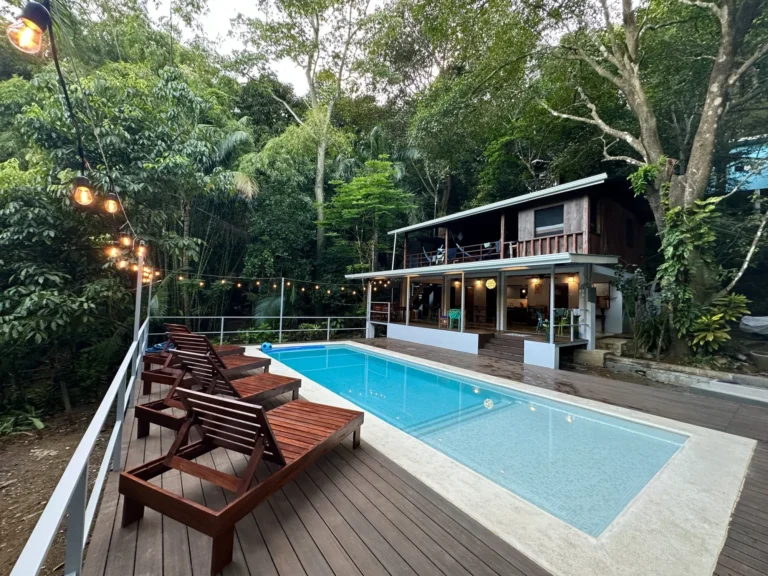
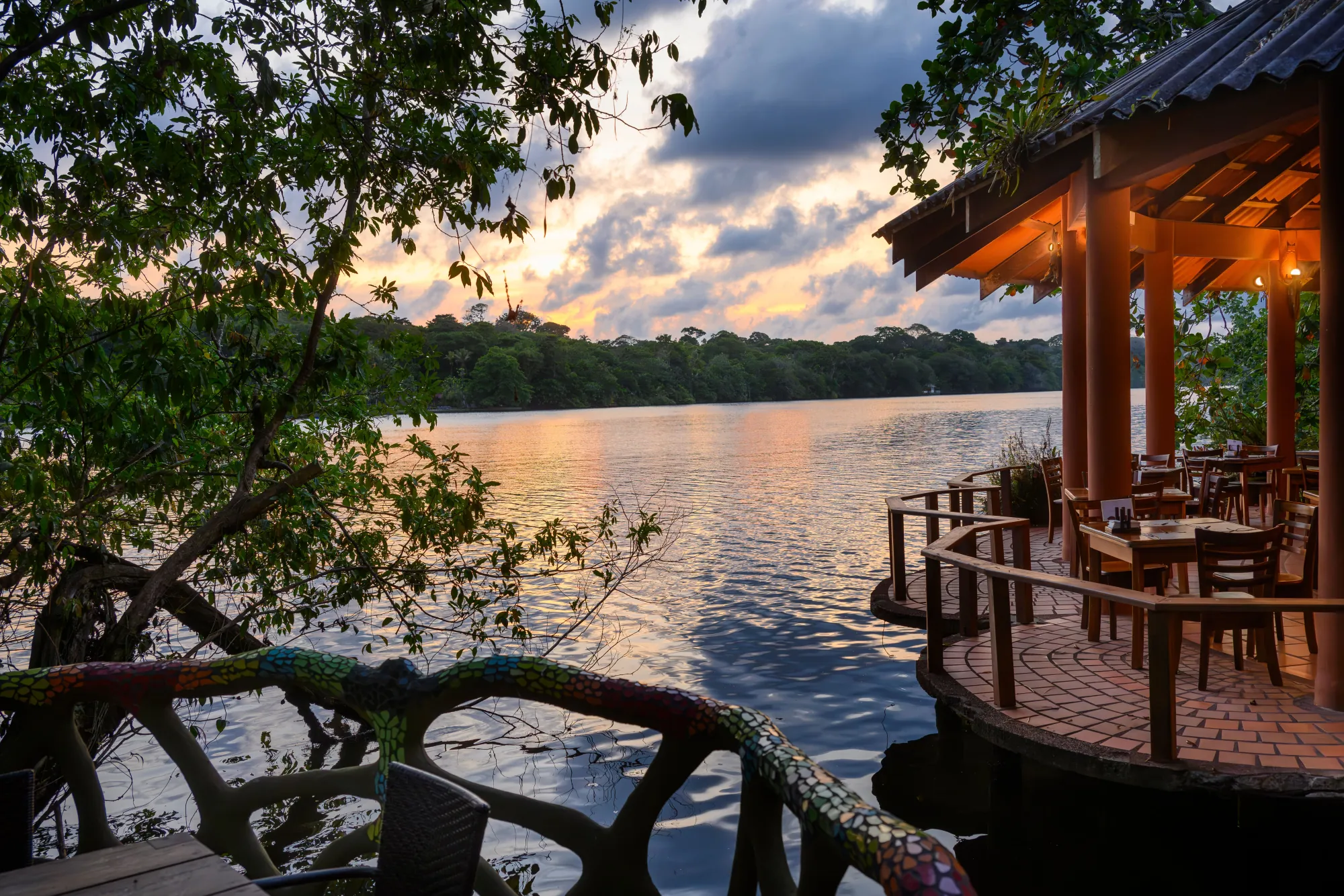
There are two broad choices. Lodges set along the canals or on forested land outside the village usually offer packages with boat transfers, meals and guided outings in a quiet setting. Village guesthouses offer more independence and direct contact with local businesses, with tours arranged separately. Neither is automatically more ecological. Ask what is included, how wastewater is treated so close to fragile waterways, what fuel the boats use and whether guides are local.
Lodges we review in Tortuguero:
- Turtle Beach Lodge sits on 175 acres with jungle trails, a stretch of Caribbean beach and a private canal, for a secluded stay.
- Tortuga Lodge and Gardens, on 146 private acres facing the national park, is one of the oldest lodges in the area and is owned by Costa Rica Expeditions.
- Pachira Lodge is a 34-acre, family-friendly property on the main canal, about five minutes from the national park.
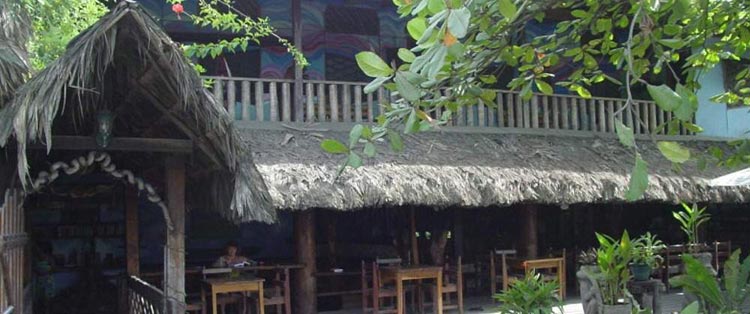
- Valverde Glamping and Ecolodge (formerly La Baula Lodge) is a riverbank lodge built in the early 1980s and run by the local Valverde family.
See more on our Caribbean eco-lodges page. For a broader view of what makes a lodge sustainable, see how to choose a sustainable hotel. Costa Rica’s CST certification now uses Basic and Elite levels, which you can ask any lodge about.
Getting to Tortuguero
Most independent travelers travel by road to the La Pavona river dock, shown on the park’s brochure map, and continue by public or private boat. Lodge packages usually bundle road and boat transfers from San José or other hubs, and some include stops along the way. Small domestic flights may also be possible, depending on airline schedules and weather.
Allow generous buffers. Boat timetables, transfer stages, road conditions and tropical rain all add time, so avoid booking a tight international connection the day you leave. Pack a small waterproof bag for cameras, documents and a change of clothes, and ask your lodge exactly where it will meet you.
Casa Rio Blanco Ecolodge, a small Dutch-family-run lodge on five acres of rainforest about 7 km west of Guápiles, is a convenient overnight on the Caribbean-slope route before or after the boat.
Combining Tortuguero with the rest of the Caribbean slope
Tortuguero pairs naturally with Sarapiquí’s lowland rainforest or with Cahuita and Puerto Viejo’s beaches and reefs. Group destinations sensibly rather than moving every night.
In Sarapiquí and the northern lowlands:
- La Selva is the Organization for Tropical Studies’ research station, which OTS describes as 1,600 hectares of old-growth and recovering forest bordering Braulio Carrillo National Park, founded in 1968, with 470 bird species and 61 km of trails.
- Selva Verde is a long-running lodge with a 500-acre rainforest reserve, popular with birders.
- Maquenque Eco Lodge near Boca Tapada sits on a 60-hectare reserve beside the Maquenque National Wildlife Refuge.
Along the Caribbean slope and rivers:
- The Pacuare Jungle Lodge is on the banks of the Pacuare River, with reforestation and solar heating among its practices.
- Selva Bananito Lodge was built from salvaged waste wood left over from earlier logging and has used solar-heated water from the start.
On the south Caribbean coast near Cahuita and Puerto Viejo:
- Costa Azul Lodge is a family-operated lodge steps from the beach at Cahuita, bordering the Puerto Vargas sector of Cahuita National Park.
- Shawandha Lodge sits on five acres of secondary forest about 200 meters from Playa Chiquita.
- Samasati Nature Retreat is a 250-acre rainforest retreat on the south Caribbean coast, combining yoga with nature tours.
- Almonds and Corals offers tents on raised wooden platforms within the Gandoca-Manzanillo Wildlife Refuge.
How long to stay and when to go
One night gives you a canal trip and a glimpse of the village but no slack for weather. Two nights suit most travelers: a relaxed arrival, an early canal outing, village time and perhaps a forest walk, plus a turtle tour in season. Three nights allow a slower pace and a second, different canal route.
There is no single perfect month. Leatherbacks nest from March to May and green turtles peak in the second half of the year, with hatchlings into December. Birders and general wildlife visitors do well at any time. The least rainy months, according to SINAC, are March, April and October, which is the opposite of what many Pacific-focused itineraries assume.
A place best experienced slowly
Tortuguero invites a different kind of attention. There is no volcano to chase and no need to fill every hour. The reward is in moving slowly along the water, listening to the forest, seeing how village and park connect and understanding the long journey of the turtles that return to this coast. Give it enough time and it may become the most memorable part of your trip. For the other side of the country, read our Corcovado and Osa guide.
Frequently asked questions
Can you drive to Tortuguero village?
No. There is no public road into the village. Visitors combine road travel with a boat transfer, usually from La Pavona, or use a small flight when available.
Can I walk on the beach at night to look for turtles?
Not on your own. SINAC closes the beach from 6 p.m. to 6 a.m. between 1 March and 31 October. Night viewing is only possible on an organized tour with a local guide through the park's turtle-watching program.
What time are the turtle tours?
The park brochure lists departures at 8 p.m. and 10 p.m. during the season. Your lodge or local guide will book a slot for you; confirm whether park entry is included.
Is Tortuguero worth visiting outside turtle season?
Yes. The canals, forest, birds and village are rewarding year-round, and the park's least rainy months (March, April and October) fall partly outside the green turtle season.
Can I kayak the canals?
Yes, on routes where SINAC allows it. Caño Chiquero and Caño Mora are reserved for canoes, kayaks and electric motors. Go with a reputable local operator and pay park entry first.
Can I swim at Tortuguero?
It is not recommended. The park brochure marks dangerous currents and prohibits swimming in the sea and lagoons, which are also used by boats and wildlife.