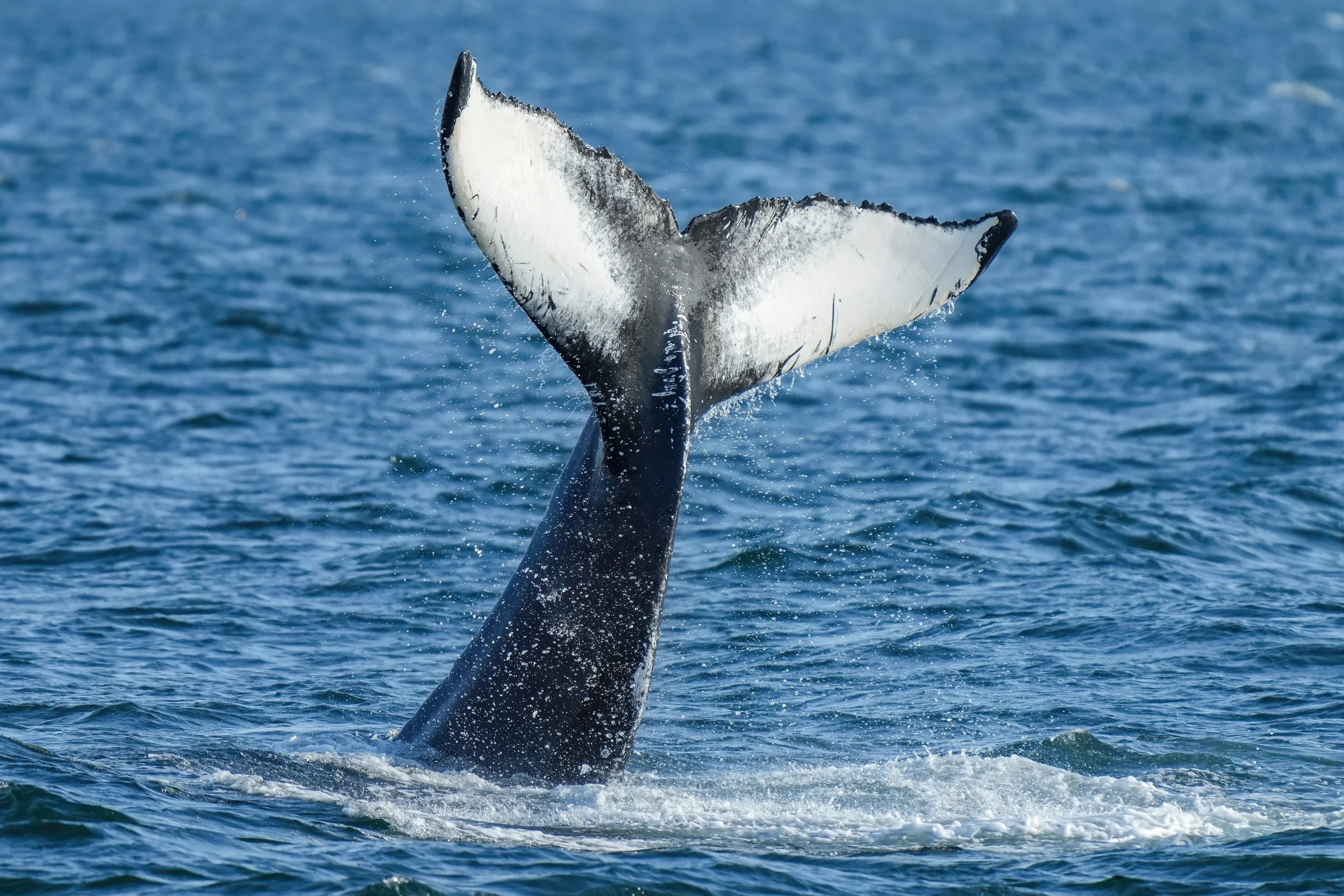
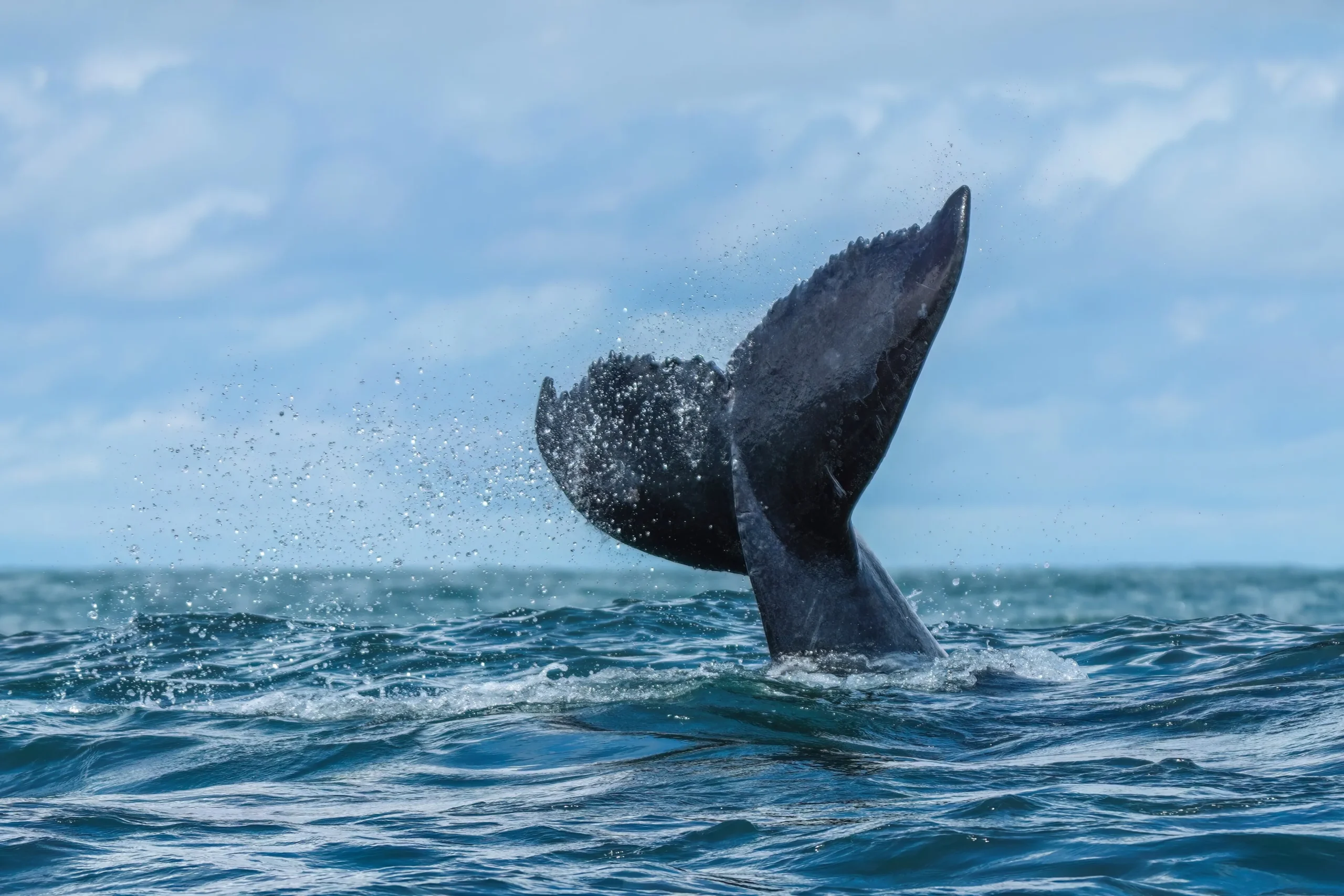
A humpback whale lifting its tail off the coast of Uvita is one of Costa Rica’s great wildlife encounters. But the country’s marine world is much larger than its most famous animals. Dolphins hunt in the sheltered waters of Golfo Dulce, sea turtles return to nesting beaches on both coasts, rays glide over sandy bottoms and reef fish move through the coral of the Caribbean and Pacific.
Costa Rica has two very different coastlines. The Pacific has deep offshore water, islands, rocky reefs, mangrove estuaries and broad gulfs. The Caribbean is shorter, with coral reefs, seagrass and some of the hemisphere’s most important turtle beaches. Choosing the right place and season transforms an ocean trip, provided the experience is built around watching marine animals without changing their behavior.
Humpback whales on the Pacific coast
Humpbacks visit Costa Rica from both hemispheres, which gives the Pacific coast two seasons. The Costa Rica Tourism Board’s whales, dolphins and stingrays guide puts them at roughly the end of December to the beginning of April and the end of July to the beginning of November, with September and October giving the best odds. SINAC’s Marino Ballena National Park page describes northern whales from December to April and southern whales from July to November. The southern whales feed in Antarctic waters; the northern ones belong to an endangered North Pacific population that feeds off the US West Coast.
The southern Pacific is the heart of whale watching: Uvita and Marino Ballena, Drake Bay and the Osa Peninsula, and Golfo Dulce. Marino Ballena was the first Costa Rican protected area created specifically for its marine resources, covering 5,160 marine hectares along 15 km of coast, according to SINAC.
Whale watching is regulated. Costa Rica’s cetacean decree, Executive Decree 32495, requires boats to stay at least 100 m from whales and 50 m from dolphins, to spend no more than 30 minutes with a group and to limit viewing to two boats at a time. Our whale watching and dolphin tours guide covers seasons, destinations and the full rules.
A good base for whale season is Mar y Selva, which overlooks Marino Ballena and is close to the Sierpe mangroves.
Dolphins in Costa Rican waters
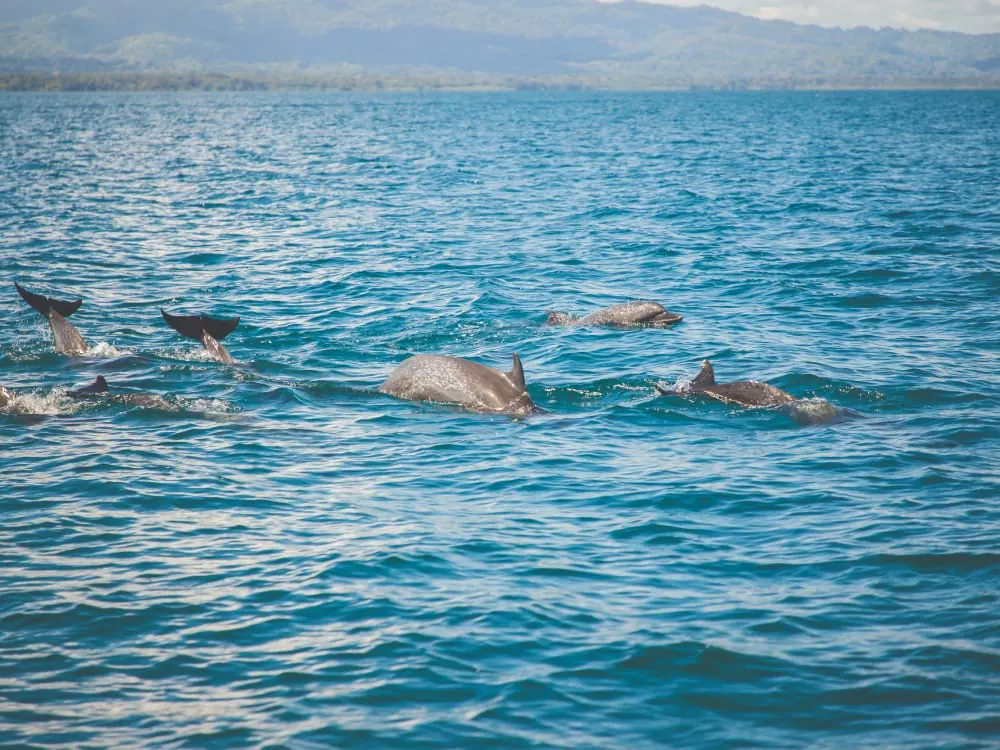
Dolphins are seen along much of the Pacific, but different habitats support different species. The ICT guide says bottlenose and pantropical spotted dolphins are the most common and are present year-round in coastal and offshore waters. Spinner and common dolphins are seen off the Osa and Nicoya peninsulas, and false killer whales, rough-toothed dolphins, orcas and Bryde’s whales appear opportunistically.
Golfo Dulce, the fjord-like gulf beside the Osa Peninsula, is a good place to understand dolphins as residents rather than passing visitors. A 2023 study in the University of Costa Rica’s Revista de Biología Tropical photo-identified 280 coastal pantropical spotted dolphins there and estimated a population of roughly 187 to 368 animals. The authors noted that bottlenose dolphins in the gulf support local boat tourism and that rising human pressure makes careful management important.
The same decree that protects whales protects dolphins. It forbids chasing, splitting groups, feeding and playing recorded sounds underwater, and tourists may not swim or dive with cetaceans. Avoid any operator that encourages you to jump in with wild dolphins. The best viewing happens when the boat slows down and lets the dolphins decide how close they come.
Gulf lodges such as Playa Nicuesa Rainforest Lodge, reachable only by boat and powered by solar energy, and Saladero Lodge, a 480-acre property beside Piedras Blancas National Park with kayaks and snorkeling gear for guests, make quiet bases for dolphin-focused days. See the southern Pacific eco-lodges page for more.
Sea turtles: five species, several different stories
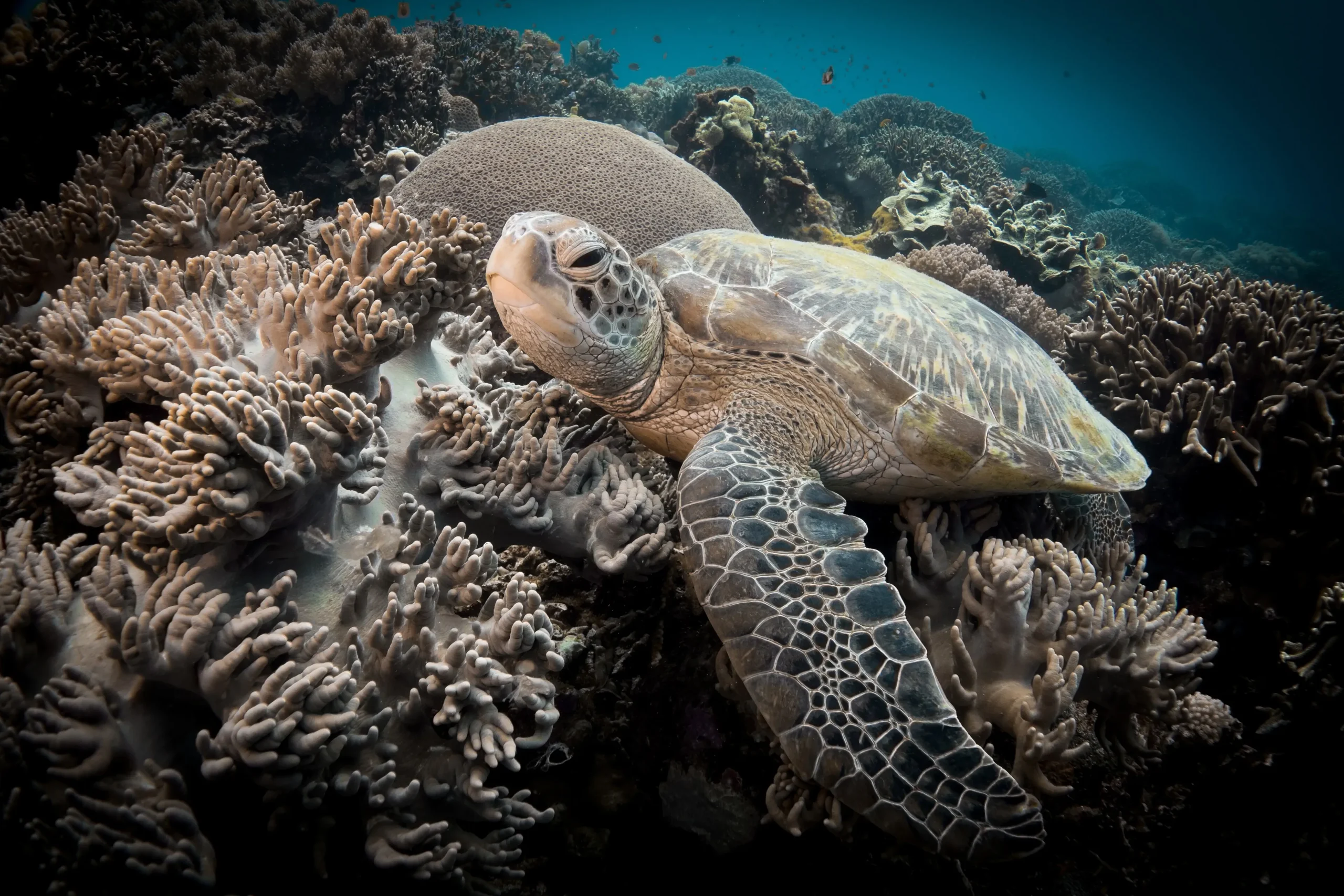
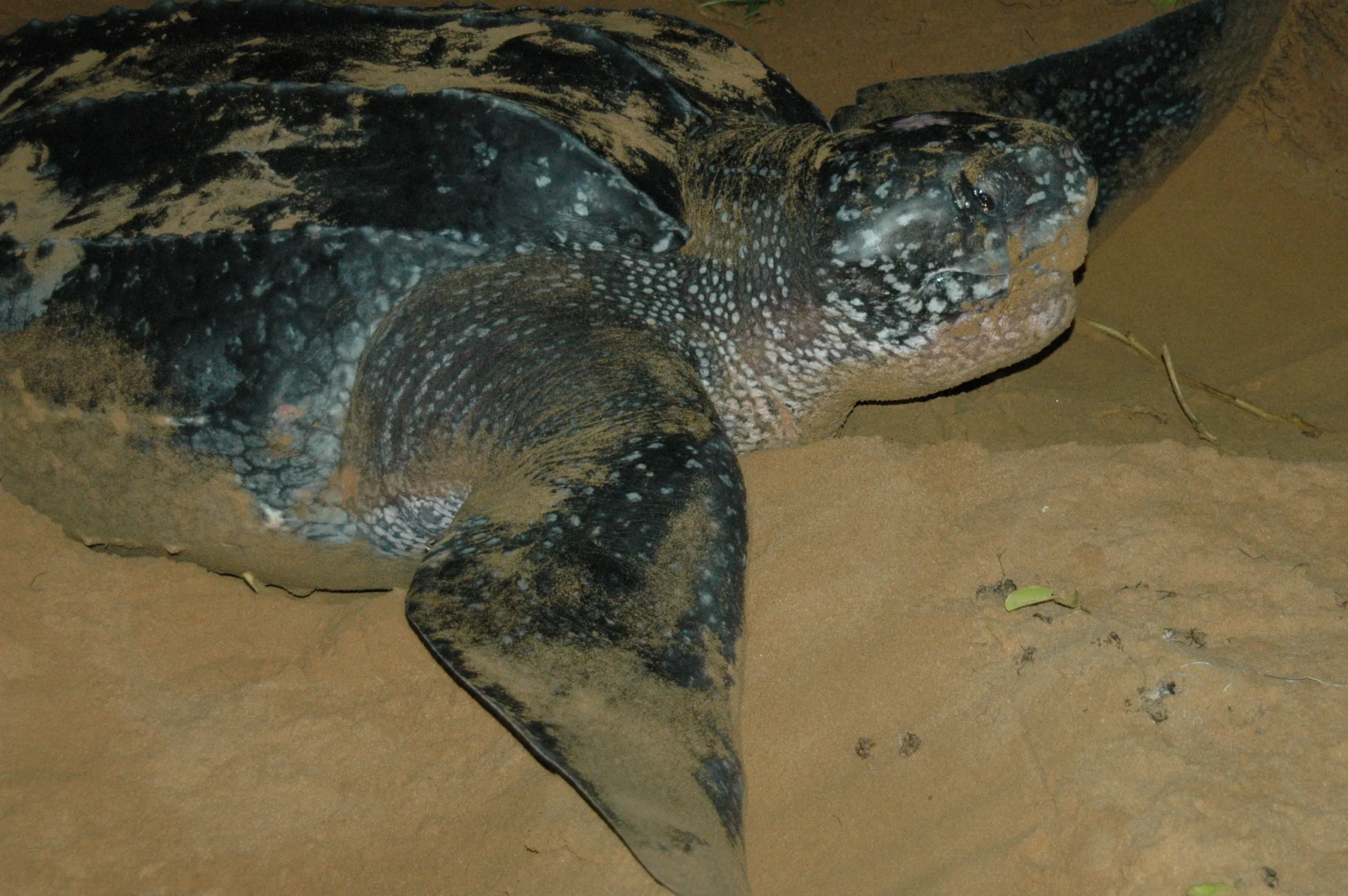
Five sea turtle species nest in Costa Rica: green, olive ridley, leatherback, hawksbill and loggerhead (some Costa Rican sources count the eastern Pacific “black turtle” separately, making six). They differ in nesting season, habitat and conservation status, and not every species nests at every beach.
- Tortuguero is, in SINAC’s words on its Tortuguero National Park page, the most important green turtle nesting beach in the Western Hemisphere. The park lists nesting from June to October, and the beach is closed to the public from 6 p.m. to 6 a.m. between March 1 and October 31 except on guided tours within the park’s observation program.
- Ostional hosts mass nesting events called arribadas, when 15,000 to 200,000 olive ridleys come ashore over a few nights, once or twice a month throughout the year, according to SINAC’s Ostional refuge page. An accredited local guide is mandatory during arribadas.
- Playa Grande, in Las Baulas National Park, protects leatherbacks that nest from October to February. SINAC’s Las Baulas page currently states there is no turtle observation in the park, so do not plan a trip around leatherback tours there without checking.
Nesting females need dark, quiet beaches. Lights, flash, crowding and obstacles interfere with nesting and with hatchlings finding the sea. Never touch a turtle or carry a hatchling to the water. Our sea turtle nesting guide has a season-by-beach table, and the Tortuguero National Park guide covers the Caribbean side in depth. At Tortuguero, Tortuga Lodge & Gardens, on 146 acres beside the park, is one of the area’s longest-running lodges and arranges turtle tours in season.
Coral reefs on two coasts
Costa Rica is not usually marketed as a reef destination, yet its reefs matter. On the Caribbean, SINAC’s Cahuita National Park page says 600 of the park’s roughly 22,400 marine hectares protect the most developed coral reef on Costa Rica’s Caribbean coast. Cahuita was created as a national monument in 1970 specifically to protect the reef and became a national park in 1978. SINAC recommends hiring one of the community guides trained by the national training institute (INA) and accredited by the ICT, and asks visitors never to stand on coral.
Farther south, the Gandoca-Manzanillo National Wildlife Refuge protects about 5 square kilometers of reef off Punta Uva, Manzanillo and Punta Mona, with brain corals and sea fans, and forbids taking shells or coral. On the Pacific, SINAC notes coral areas beside the Marino Ballena tómbolo and around Isla Ballena where snorkeling is possible, while Caño Island Biological Reserve, offshore from Drake Bay, is a well-known snorkeling and diving destination.
Coral is living animal colonies, not decorative rock. Do not stand on it, touch it or collect anything from protected areas, and use buoyancy skills suited to the conditions. On the Caribbean side, Cabinas Caribe Luna is within walking distance of Cahuita village and the park, and Costa Azul Lodge is a small family-run lodge on the Puerto Vargas side of the park. Almonds and Corals is a tented lodge inside the Gandoca-Manzanillo refuge. Browse more on our Caribbean eco-lodges page.
Sharks, rays and the open ocean
Sharks are important predators, but the species and the chance of an encounter vary widely by place. SINAC’s Corcovado National Park page notes that bull sharks and crocodiles can be seen near the mouth of the Sirena River at high tide, which is a reason to follow ranger advice about crossings rather than a tourist attraction. SINAC also lists hammerhead sharks and manta rays among the marine species of Marino Ballena.
Cocos Island National Park, far out in the Pacific, is famous among experienced divers for schooling hammerheads and other large open-ocean animals. It is a remote liveaboard expedition with strict park rules, not a casual day trip, and it suits trained divers comfortable with currents. Closer to shore, reef fish, rays and smaller shark species occur in many marine areas.
Rays may be seen while snorkeling or diving over sand. Give them room, do not touch them and never rest equipment on the seabed. A responsible dive operator explains currents, visibility, difficulty and site rules before you get in the water.
Mangroves, estuaries and coastal nurseries
Some of the most important marine habitats are less photogenic than reefs. Mangroves shelter young fish, stabilize shorelines and support birds, crabs and many other animals. Marino Ballena protects red mangrove and other species around Estero Negro, according to SINAC, and Las Baulas National Park includes the mangrove forest of the Tamarindo estuary, which visitors can explore with local guides. The Sierpe and Térraba river mangroves near Drake Bay and the Gulf of Nicoya estuaries are other good places to see how land and sea connect.
A quiet boat or kayak trip through a mangrove channel can reveal kingfishers, herons, crabs and roots surrounded by tidal water. Operators should control their wake, avoid damaging roots and never chase roosting birds or crocodiles for photographs. Near Nosara, Lagarta Lodge runs guided mangrove tours on silent electric boats. Mangrove health also depends on what happens upstream, so a healthy bay is tied to its whole watershed. Our ecosystems guide explores those connections.
Best destinations for marine ecotourism
| Destination | Coast | What to see | Best season | How to visit |
|---|---|---|---|---|
| Uvita and Marino Ballena | South Pacific | Humpbacks, spotted and bottlenose dolphins, reef snorkeling at the tómbolo | Whales late July to early November and late December to early April | Licensed boat tours from Uvita; tómbolo only at low tide |
| Drake Bay and Caño Island | South Pacific (Osa) | Whales and dolphins in season, snorkeling and diving | Year-round, subject to sea conditions | Boat tours from Drake Bay lodges |
| Golfo Dulce | South Pacific | Resident dolphins, seasonal humpbacks, mangroves | Year-round | Boat-access lodges and local operators |
| Cahuita | Caribbean | Costa Rica’s most developed Caribbean reef | Calm-sea days; ask local guides | Accredited local guides |
| Gandoca-Manzanillo | Caribbean | Reef, seagrass, leatherback nesting | Leatherbacks roughly February to July | Daytime visits; research and volunteer programs |
| Tortuguero | Caribbean | Green and leatherback turtles, canals | Greens June to October, leatherbacks March to May | Night tours with certified guides only |
| Ostional | North Pacific | Olive ridley arribadas | Year-round, once or twice a month | Accredited local guide mandatory |
| Cocos Island | Open Pacific | Hammerheads and large pelagic species | Ask expedition operators | Liveaboard diving for experienced divers |
For the Osa side of the table, Aguila de Osa Inn in Drake Bay organizes Caño Island snorkeling and diving as well as whale and dolphin trips, and our Corcovado and Osa guide explains how marine days fit with rainforest visits.
Weather, sea conditions and itinerary planning
Ocean activities depend on weather, swell, visibility and safety. Pacific conditions can change quickly, especially in the rainy months, and a reef that is clear one day may be cloudy the next. Leave flexible days in your schedule. A cancelled boat trip is a sign of good judgment, not poor service.
Plan around the ecosystem first and the hotel second. Around Uvita you are planning around whale seasons; on the Caribbean near Cahuita, reef conditions matter more; off the Osa, islands and currents shape the day; and Cocos Island needs expedition planning. Pair ocean outings with rainforest walks or mangrove trips so the trip still works when the sea does not cooperate.
What a marine naturalist adds
A good guide can explain why dolphins use sheltered gulf waters, how mangrove roots shelter young fish and why reefs need clear water. That interpretation turns a boat ride into ecotourism. Watch how the boat behaves around wildlife: speed, distance, wake and crowding tell you more than marketing language. The official Costa Rica Silvestre campaign offers simple guidance against feeding wildlife or posing animals for selfies, and it applies at sea as much as on land. For a land-and-sea overview, see our wildlife watching guide and the Costa Rica ecotourism guide.
Frequently asked questions
Which coast is best for whale watching?
The Pacific. Humpback tourism is concentrated on the southern Pacific around Uvita, Marino Ballena, Drake Bay and Golfo Dulce, with September and October giving the best odds and a second season from late December to early April.
Where can I see sea turtles nesting?
Tortuguero on the Caribbean (green turtles roughly June to October, leatherbacks March to May) and Ostional on the Pacific (olive ridley arribadas year-round) have organized, guided viewing. Rules and access differ between beaches.
Is Caño Island good for snorkeling?
It is one of the southern Pacific's well-known snorkeling and diving destinations, visited by boat from Drake Bay and, on longer trips, from the Uvita area. Visibility and sea conditions vary, and reserve rules apply.
Can visitors swim with wild dolphins?
No. Costa Rica's cetacean decree prohibits tourists from swimming or diving with whales and dolphins. Watch from a boat that keeps its distance.
Where is the best coral reef snorkeling in Costa Rica?
On the Caribbean, Cahuita National Park protects the most developed reef on that coast, and Gandoca-Manzanillo has smaller reefs farther south. On the Pacific, Caño Island and the coral areas beside the Marino Ballena tómbolo are the main options.
Are sharks a danger to snorkelers?
Shark encounters are not a typical part of a guided snorkeling trip, but follow local advice, especially at river mouths such as Sirena in Corcovado, where SINAC notes bull sharks and crocodiles at high tide.