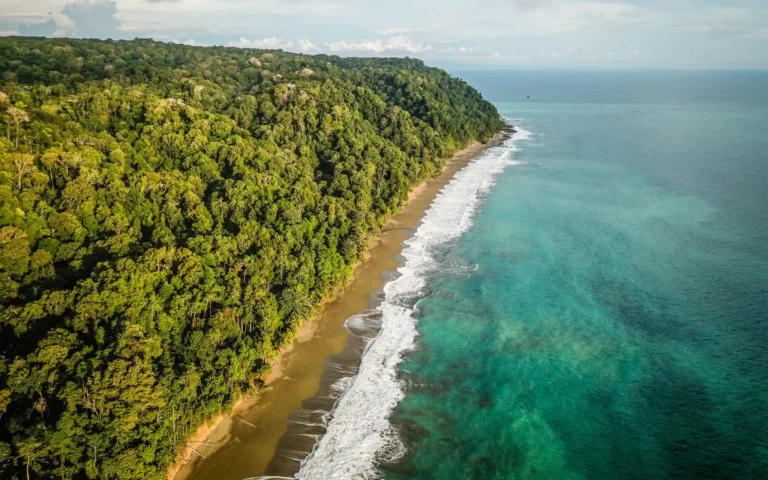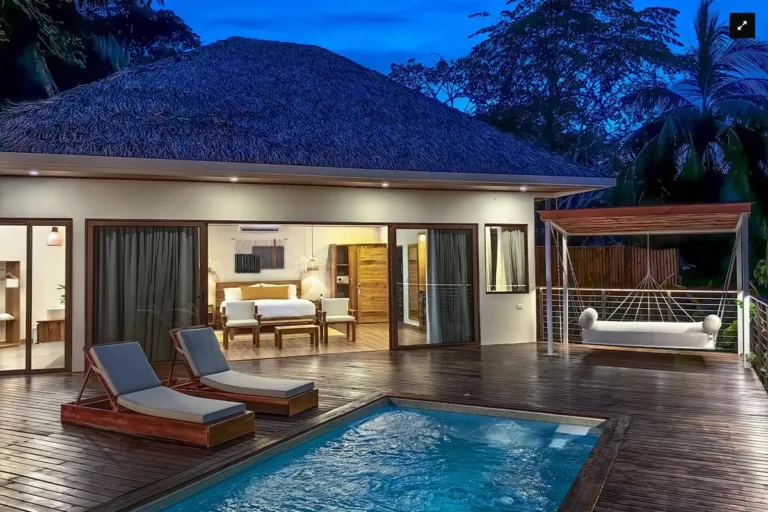
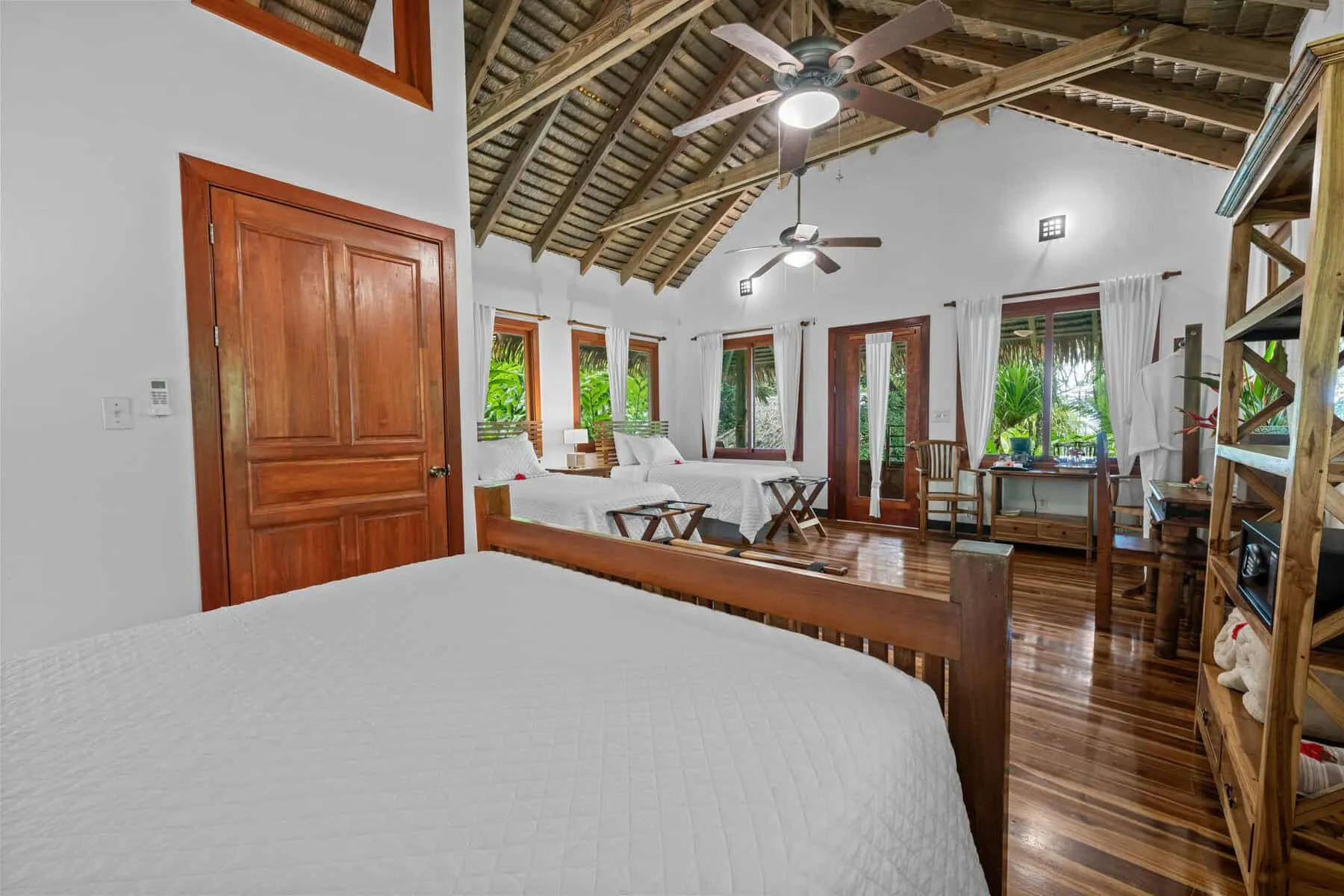
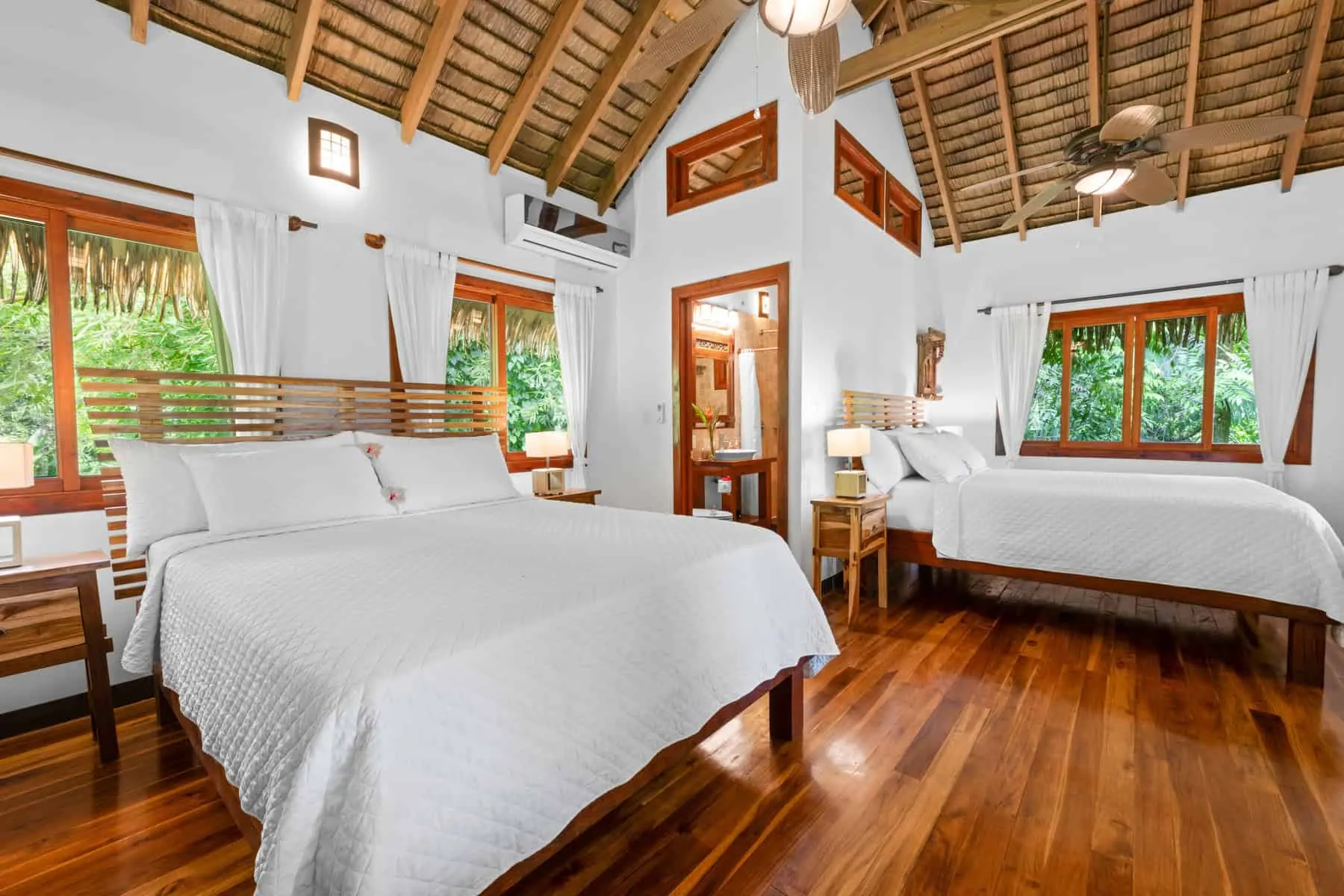
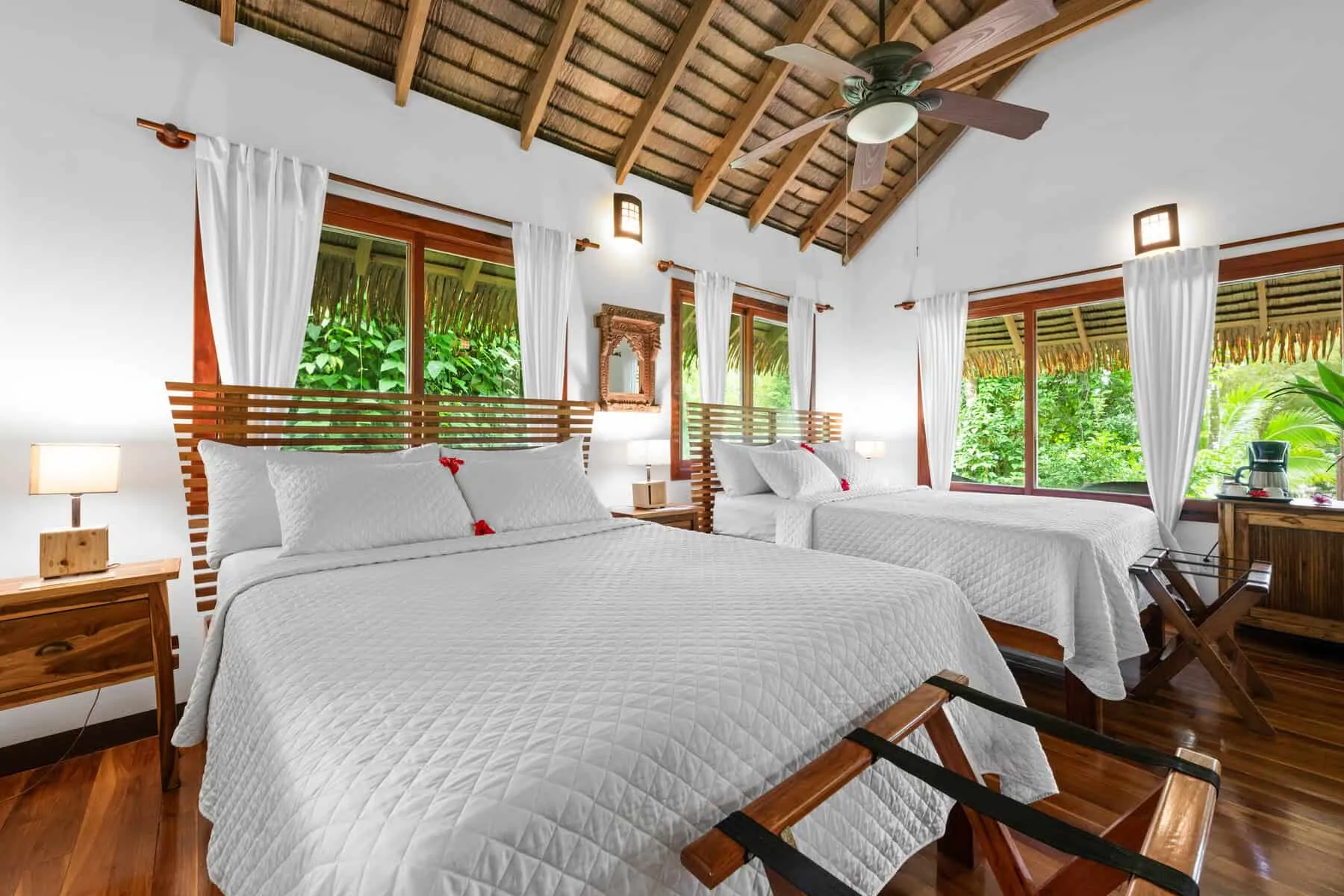
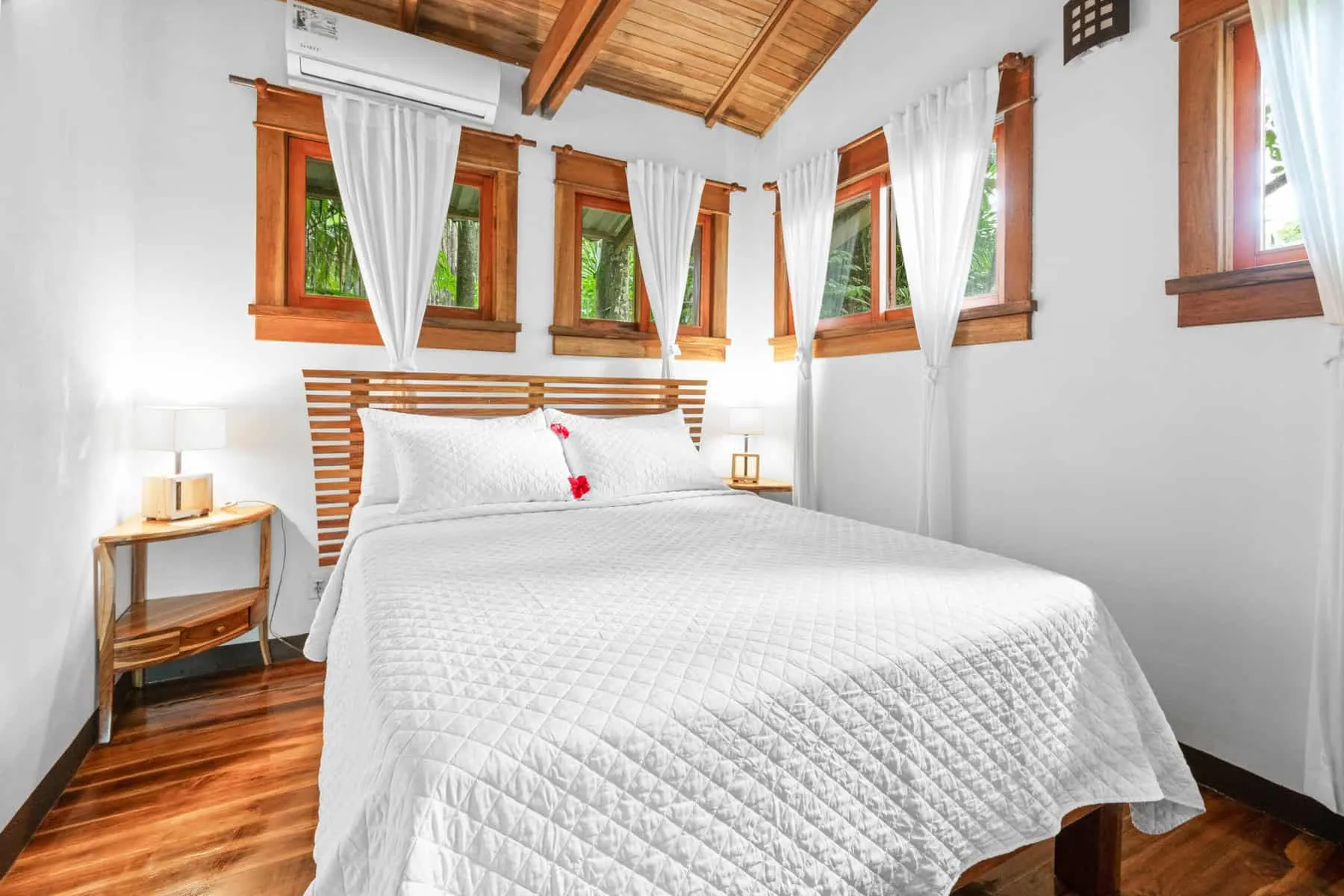

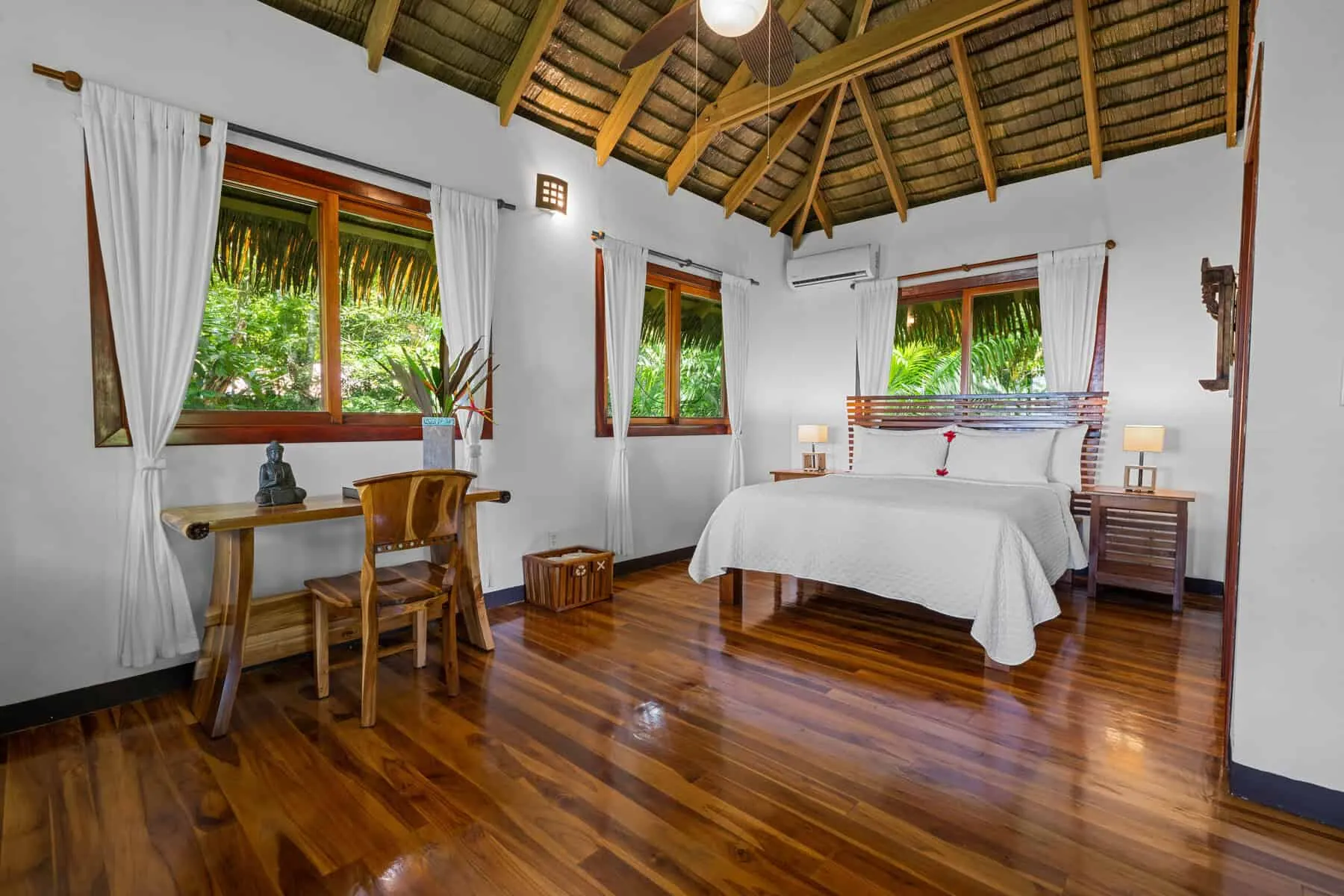

Copa de Árbol is a small all-inclusive resort of nine villas on a private stretch of forest and shoreline at Caletas, just south of Drake Bay, reachable only by boat. It is a comfortable way to experience the wild Osa coast: meals, kayaks and snorkel gear are included, monkeys and macaws pass through the 70-acre property, and boats to Corcovado and Caño Island leave from the beach in front of your villa.
At a glance
| Location | Caletas, about 2 km south of Drake Bay on the Osa Peninsula, between Drake Bay and Corcovado National Park |
|---|---|
| Style | Family-owned, all-inclusive boutique resort with nine villas, for about 28 guests at most |
| Setting | 70 acres (24 hectares) of rainforest on a small bay, with trails, tide pools and a saltwater pool |
| Best for | Couples, families with children aged four and up, and small retreat groups who want comfort and wildlife together |
| Getting there | Flight to Drake Bay, taxi to the shore, then a 10-minute boat; or drive to Sierpe and take a boat through the mangroves |
| CST status | Not in the official CST directory on 2026-Oct-21 |
Where it is
The resort’s About page places it just south of the town of Drake Bay, and its location page names the area Caletas, meaning “small coves.” There are no roads to the property. Guests arrive by boat and step off on the beach, and the resort warns that these wet landings can be challenging at times, so pack sandals or water shoes in your hand luggage.
The transportation page lays out two routes. The quicker one, which the resort recommends for families and anyone with mobility needs, is a 45-minute Sansa flight from San José to the Drake Bay airstrip, a 30 to 45-minute taxi to the shore and a 10-minute boat ride. The longer route is a drive of around five and a half hours from San José to Sierpe, then a boat of 1 to 1.5 hours down the Sierpe River through what the resort calls Central America’s largest mangrove forest, either by private boat or by the twice-daily shared water taxi.
A long-running family property
The property has been under the same ownership since it was founded, and the resort describes itself as privately owned and family-run. Its owners, Jason and Mike, have lived on the land for more than 25 years. According to the resort, it began as a four-room rainforest hideaway and has since been rebuilt, with the owners choosing to keep the number of villas low rather than expand.
The villas
There are nine villas. The resort’s Amenities page and villa listings describe them:
- Coco and Mango: oceanfront, one-story villas near the beach and restaurant, sleeping up to five; Mango is the largest single-story villa.
- Cacao and Amapola: two-level villas raised on stilts into the trees, with a lower deck with hammocks; Amapola is described as the most private.
- Palm: the largest villa, on two stories with two bedrooms, a handmade wooden staircase and a Japanese-style soaking tub.
- Bamboo, Sable and Balsa: ocean-view villas; Sable and Balsa are for two and suited to honeymoons.
- Amargo: a two-room duplex with two bathrooms and a large balcony reached by a footbridge.
The villas have air conditioning, Starlink Wi-Fi runs across the property, and a backup generator covers storms.
Food
All meals are included. Three chef-prepared meals a day are served at the open-air Miramar Bar and Restaurant overlooking the Pacific, along with coffee, tea, snacks and a happy hour. The dining page says the breakfast, lunch and dinner menus rotate daily, with several options at each meal, and are built on local produce and the catch of the day. Sample dishes range from fish casados and seared tuna to a vegetable risotto. Vegan, vegetarian, gluten-free and allergy diets are covered with advance notice. Alcohol, juices and specialty coffees cost extra, and private candlelit dinners can be arranged.
On the property
Copa de Árbol’s own land is a big part of the appeal:
- Trails: miles of paths through the forest to the shore, tide pools and small waterfalls.
- Guided wildlife hike: a two to three-hour walk around a one-kilometer loop nicknamed the Spider Monkey Loop. The resort keeps wildlife cameras along it and shares recent sightings before you set off. The hike page says it suits children aged four and up.
- Water sports: kayaks, stand-up paddleboards, snorkel gear and life vests are free, and staff carry them down to the beach.
- Pool: a saltwater infinity pool and a jacuzzi just above the ocean.
- Yoga and massage: an open-air yoga pavilion in the canopy is open for personal practice, with mats provided. Massages, including deep tissue, hot stone and reflexology, can be booked by the sea, in your villa or in the pavilion.
Tours
All tours leave from the resort’s shoreline. The menu includes Corcovado National Park at San Pedrillo and Sirena stations, snorkeling or scuba diving at Caño Island, dolphin and whale watching, birdwatching, a night walk, a mangrove tour on the Sierpe River, the Naguala waterfall, the Danta trail hike, a beach day at San Josecito and sport fishing.
Two outings use the coast next door. The Río Claro hike combines a boat to San Josecito beach, a canoe trip upstream to small waterfalls and pools, and a 45-minute walk home along the coves. The horseback ride to Río Claro, which the resort says only its own guests can book, follows the beaches and forest trails to the river mouth with a local guide.
Corcovado National Park, SINAC notes, requires an advance reservation for every visit and has six visitor sectors, including San Pedrillo and Sirena.
Wildlife
The resort says scarlet macaws, monkeys, sloths and many other species move freely across the property, and that its forest belongs to the same ecosystem as nearby Corcovado. It mentions white-faced and spider monkeys most often, with dolphins and seasonal whales offshore. Sightings, as the resort notes, are never guaranteed.
Sustainability
Copa de Árbol’s case rests mainly on its small scale. It says it keeps occupancy deliberately low to limit its footprint, builds into the forest rather than clearing it, keeps wildlife habitats on the property intact, and supports conservation groups and local projects on the peninsula, though it does not name them. Filtered drinking water stations and refills for reusable bottles cut down on plastic. The resort is not in the official CST directory, so these points are the resort’s own description.
Who it suits
Copa de Árbol suits couples and families who want the Osa’s wildlife and remoteness without giving up air conditioning, Wi-Fi and three meals a day, and small groups or yoga teachers who want to rent the property.
It is not suitable for children under four, according to the resort, and the boat-only access and wet landings will not suit everyone. Travelers on a tighter budget, or who prefer a simpler lodge, can compare Las Caletas Lodge on the same stretch of coast, the family-run Lodge Punta Marenco near Río Claro, or La Paloma Lodge above Drake Bay. See all our Osa Peninsula eco-lodges and our pick of the best luxury eco-lodges in Costa Rica.
Frequently asked questions
What is included in a stay at Copa de Árbol?
Three meals a day, snacks, coffee and tea, and the use of kayaks, stand-up paddleboards and snorkel gear. Alcoholic drinks, juices, specialty coffees, tours, massages and transfers are extra.
Can I reach Copa de Árbol by car?
Not all the way. You can drive to Sierpe and continue by boat, or fly to Drake Bay and take a taxi and a short boat ride. Every route ends with a boat landing on the beach.
Is Copa de Árbol good for children?
The resort welcomes children aged four and older, offers villas that sleep up to five and recommends its short on-site wildlife hike for families. It says the property is not suitable for children under four.
Can I work remotely from Copa de Árbol?
The resort has Starlink Wi-Fi across the property and says the connection is strong enough for remote work, though weather can affect speeds. A backup generator covers power cuts.