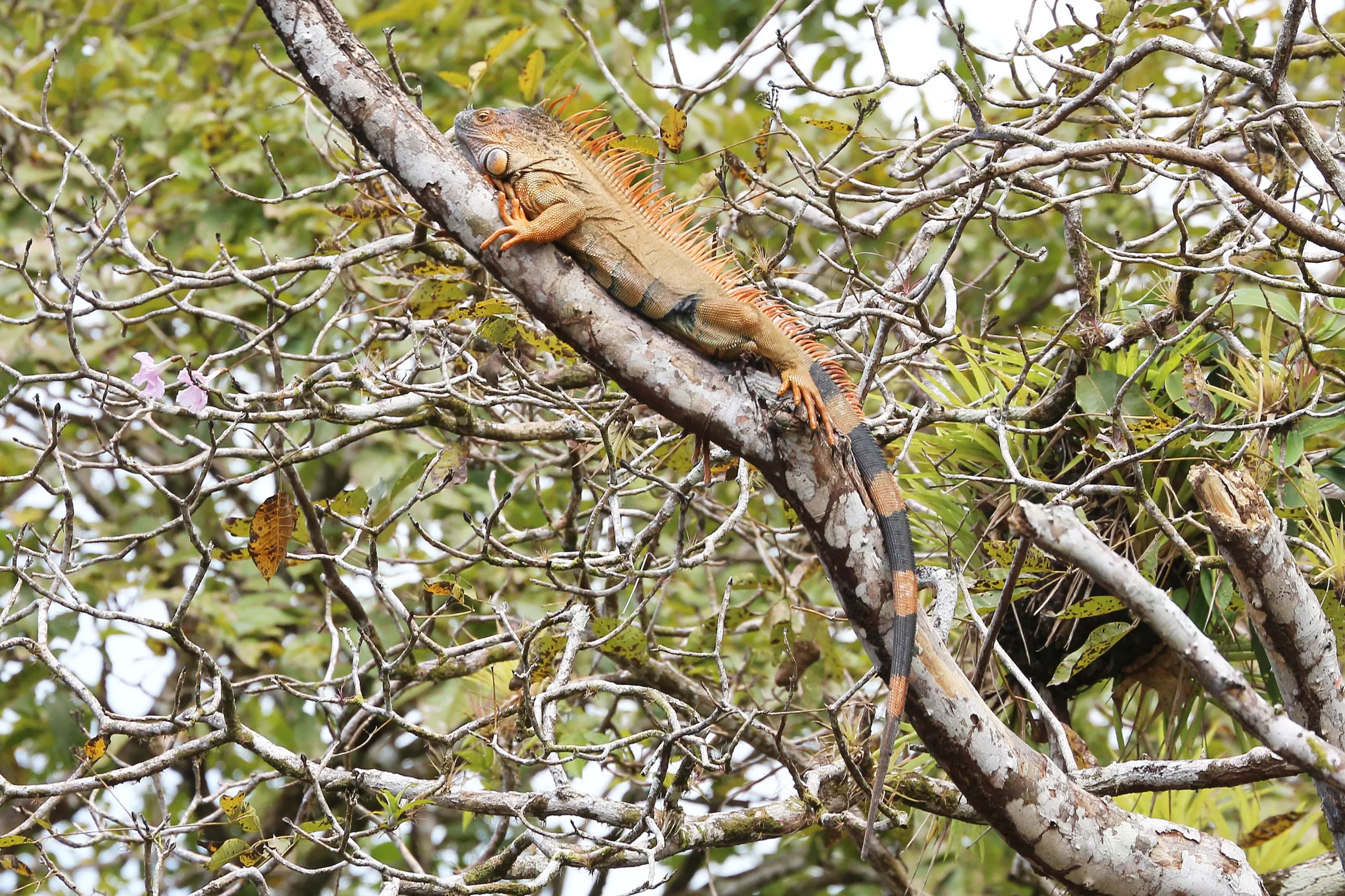
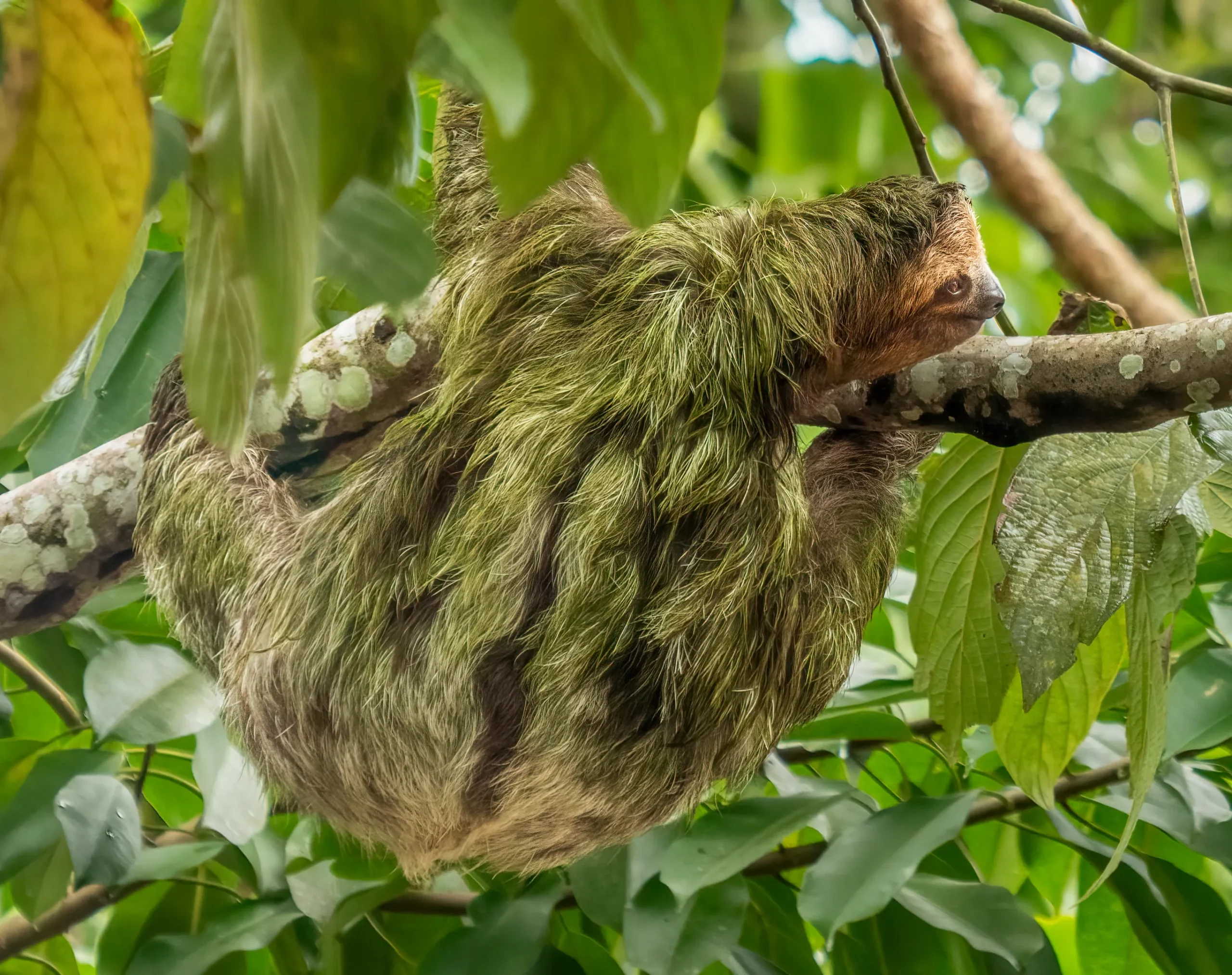
A sloth resting in a tree, a scarlet macaw crossing the beach, a hummingbird defending its favorite flowers: wildlife encounters often become the most vivid memories of a Costa Rica trip. Yet the best sightings rarely happen on command. They come from choosing the right habitat, slowing down and learning to notice what the forest is already doing.
Costa Rica is unusually rewarding because mountains, lowland rainforest, dry forest, wetlands and two very different coasts sit close together. But a famous destination is not the best place for every animal. Travelers who plan around ecosystems rather than a generic “wildlife tour” enjoy richer outings and fewer disappointments. This guide compares the country’s strongest wildlife areas, explains the rules that apply in each and names lodges that put you close to good habitat.
Start with habitat, not a checklist
Different animals need different surroundings. A sloth may be easier to see along a quiet forest edge than deep inside untouched rainforest. Herons need riverbanks and marshes. A resplendent quetzal depends on highland forest and fruiting trees. A humpback whale belongs to another world entirely.
Ask yourself which animals you most want to learn about, and which environments suit them. A few slow outings in well-chosen habitats usually beat a race between distant parks. Our guides to Costa Rica’s mammals, birds, reptiles and amphibians and ecosystems explain the natural history behind these choices.
| Destination | Habitat | Wildlife highlights | Best for | Key visiting rules |
|---|---|---|---|---|
| Corcovado and Osa | Lowland rainforest, coast | Tapirs, monkeys, peccaries, scarlet macaws | Immersive, multi-day trips | Advance reservation; guide required on main trails |
| Tortuguero | Canals, flooded forest, beach | Caimans, river turtles, waterbirds, nesting sea turtles | Wildlife from a boat | Boat tours on set schedules; night beach access only with guides |
| Monteverde | Cloud forest | Quetzals, bellbirds, frogs, night insects | Birding and forest ecology | Timed entry slots; small guided groups |
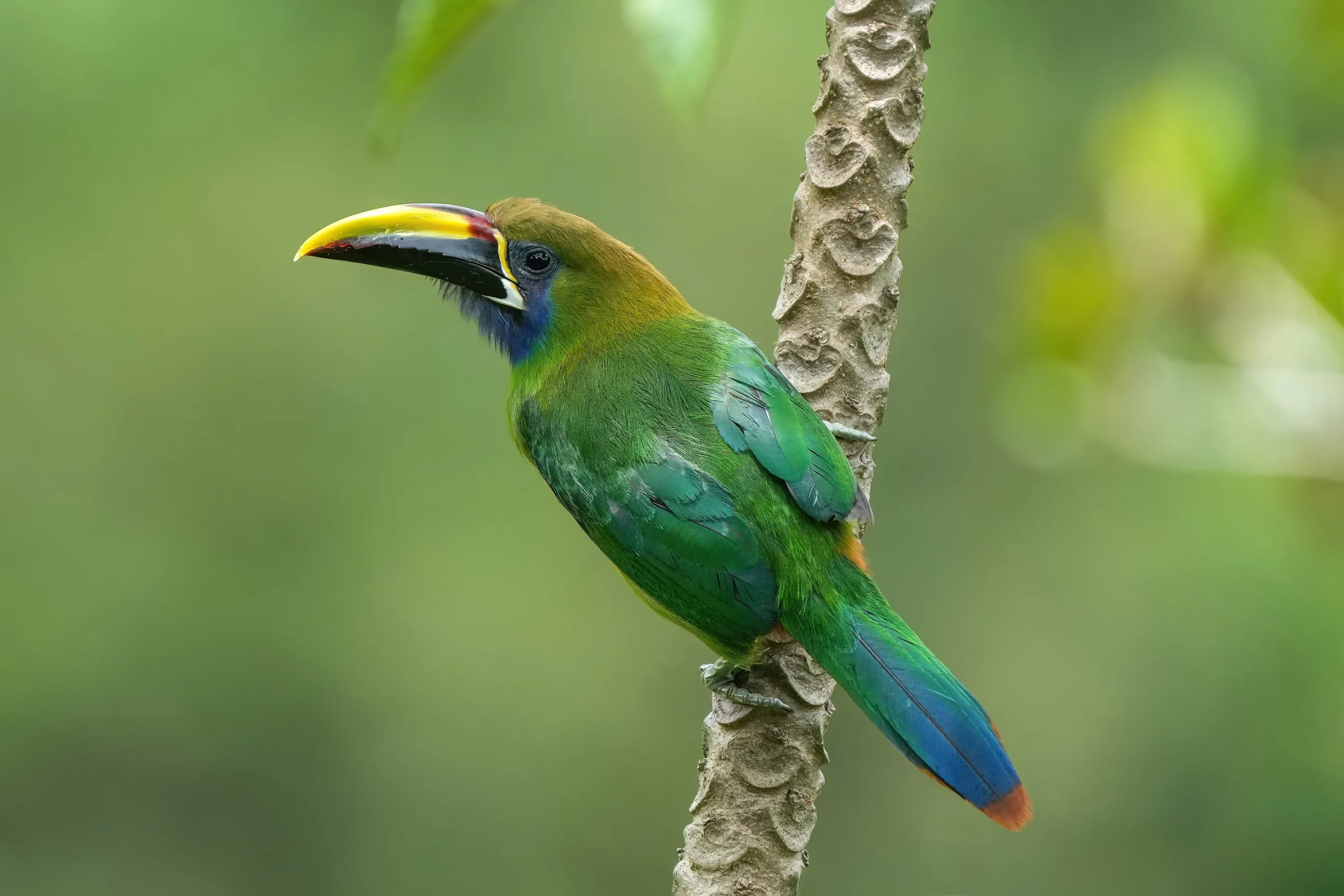
| Sarapiquí and Boca Tapada | Lowland rainforest | Toucans, great green macaws, frogs | Guided naturalist walks | Book station visits in advance |
| Caño Negro and Palo Verde | Wetlands | Waterbirds, caimans, crocodiles | Easy, open-view birding | Guided boat trips; seasonal water levels |
| Manuel Antonio and Carara | Coastal and transition forest | Monkeys, sloths, scarlet macaws | Short, accessible outings | Manuel Antonio closed Tuesdays; no food on trails |
Corcovado and the Osa Peninsula: the immersive rainforest trip
For a genuine lowland rainforest expedition, Corcovado National Park and the wider Osa Peninsula are hard to beat. Trails can reveal monkeys, peccaries, coatis, colorful birds, amphibians and signs of larger mammals. Tapirs are among the park’s signature animals, though no sighting can be promised.
According to SINAC’s Corcovado page, the park was created in 1975 and covers 42,560 hectares of land and 3,354 hectares of sea. It has six visitor sectors: San Pedrillo, Sirena, La Leona, Los Patos, Los Planes and El Tigre. A reservation is mandatory before any visit, and SINAC says hikers must hire a local guide because of the park’s demanding conditions; the long La Leona to Sirena and Los Patos to Sirena trails must be walked with a tourism guide. Meals are available only at Sirena and El Tigre with a reservation, and visitors may not bring food into the Sirena sector. Reaching the park from Drake Bay is very different from starting at Carate or Puerto Jiménez, so read our Corcovado and Osa guide before booking.
Staying several nights in one forested place often teaches you more than a single park visit. Lodges with their own forest include:
- La Leona Eco Lodge, owned by a local family, on 36.5 hectares of rainforest beside Corcovado, offering guided rainforest and night tours.
- Corcovado Wilderness Lodge (formerly Casa Corcovado Jungle Lodge), on a 170-acre property on the edge of the park near Drake Bay.
- Bosque del Rio Tigre, a small birding lodge on a 31-acre reserve outside Dos Brazos, close to the El Tigre sector.
- Lapa Rios Ecolodge, a long-standing ecotourism project built around the idea that a standing forest is worth more than a cut one.
- El Remanso Lodge, on a 185-acre private reserve with trails, waterfalls and a secluded beach.
See all our Osa Peninsula eco-lodges.
Tortuguero: wildlife from the water
Tortuguero’s canals offer a different perspective. Slow boat tours pass flooded forest and riverbanks where waterbirds, caimans, freshwater turtles and monkeys may appear. The Tortuguero Conservation Area’s brochure counts 442 bird species, 138 mammal species and 118 reptile species in the park, notes its Ramsar wetland status since 1996 and lists water-trail departures at 6 a.m., 8:30 a.m., 11 a.m. and 2:30 p.m. Early trips are often the most atmospheric, with birds active on quiet channels.
Boats suit travelers who do not want strenuous hikes, but they are not impact-free. Noise, wake and close approaches disturb animals, so ask whether your tour uses permitted routes and quiet craft such as paddle canoes or electric motors. Pachira Lodge faces the main canal about five minutes from the park, and Tortuga Lodge & Gardens offers a free guided 6 a.m. walk on its 146-acre property. Our Tortuguero National Park guide covers trip length and access.
Monteverde: cloud forest birds and hidden mammals
Monteverde is one of the country’s best places for cloud forest interpretation and birding. The resplendent quetzal is the star, but a guide can also explain mosses, epiphytes, flowering plants and the link between fruiting trees and forest birds. Fog, dense vegetation and steep terrain can hide animals, and a quetzal’s presence depends partly on food supply and season.
The Monteverde Cloud Forest Reserve has protected forest since 1972 and now covers more than 4,100 hectares (over 10,000 acres). Visits are booked in timed slots. Its guided natural history walk and night walk each last about two and a half hours with no more than 10 participants. Other reserves in the area have their own trails and entry systems, so choose one that matches your interests and fitness.
Lodges include Monteverde Lodge & Gardens, run by Costa Rica Expeditions about 15 minutes from the cloud forest, which arranges guided day and night hikes, and Monteverde Cloud Forest Lodge, on about 70 acres of primary and secondary forest. Combine Monteverde with Arenal, where Arenal Observatory Lodge began as a research station, and read our Monteverde guide and Arenal and Río Celeste guide.
Sarapiquí and the Northern Plains: guided rainforest walks
Sarapiquí and Boca Tapada reward visitors who want active naturalist interpretation, birding and lowland rainforest. The Organization for Tropical Studies’ La Selva Biological Station is one of the world’s most studied tropical forests, with records of more than 2,077 plant species, 470 bird species, 125 mammal species (72 of them bats), 48 amphibians and 87 reptiles. Research stations are not casual attractions, so arrange natural history visits in advance.
Long-term research here also shows why patient observation matters. A study in the Proceedings of the National Academy of Sciences found that the density of leaf-litter frogs and lizards in La Selva’s old-growth forest fell by about 75 percent between 1970 and 2005, most plausibly linked to changing climate and less leaf litter. Even a rich forest can be fragile.
Good bases include La Selva itself, where visitors can stay at the station and walk its trail system, Selva Verde, a 500-acre lodge in Sarapiquí popular with birders, and Maquenque Eco Lodge, a 60-hectare reserve near Boca Tapada beside the Maquenque National Wildlife Refuge. More options are on our northern eco-lodges page.
Caño Negro and Palo Verde: wetlands and waterbirds
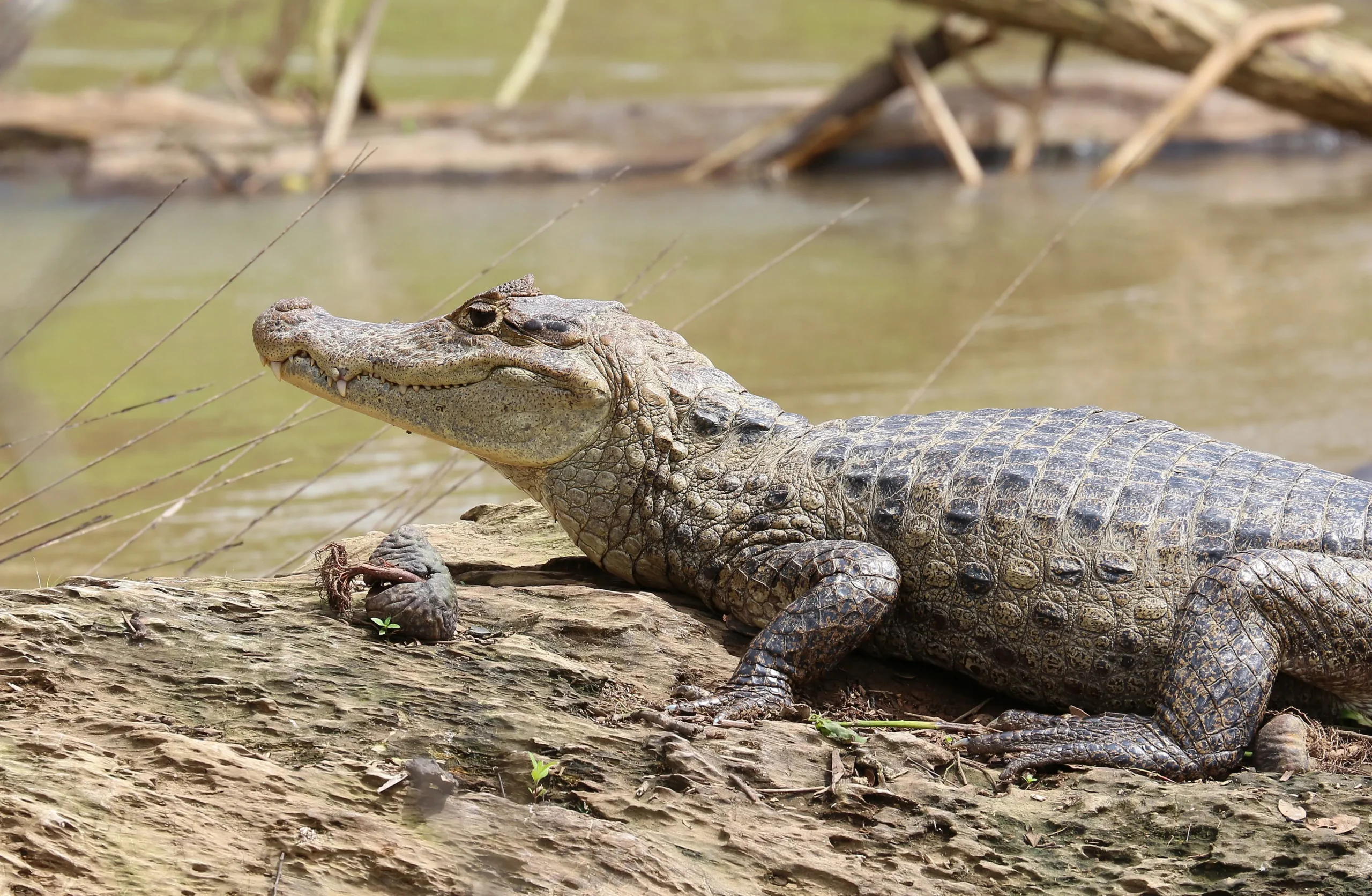
Wetlands make excellent wildlife destinations because animals are visible across open water. SINAC’s Caño Negro refuge page says the refuge was created in 1984, became one of Costa Rica’s first two Ramsar wetlands in December 1991 and records 307 bird species (206 resident and 101 migratory) and 160 mammal species, 90 of them bats. Caimans are easy to find in its lagoons, and the tropical gar, a “living fossil” fish, lives there too. An observation tower more than 20 meters high holds up to 10 people per platform.
In Guanacaste, the OTS describes Palo Verde as a park of about 19,800 hectares whose wetlands regularly host more than 20,000 waterbirds, many of them migratory. About 3,000 wading birds nest on Isla Pájaros in the Tempisque River late in the wet season. The station offers early birding walks and Tempisque River boat trips.
Water levels change with the season. High water can scatter birds across flooded areas, while lower water often concentrates them, so ask local guides about current conditions rather than relying on a fixed calendar. Nearby in Guanacaste, Buena Vista Lodge, on a large hacienda bordering Rincón de la Vieja National Park, is a good dry-forest base; see our Guanacaste eco-lodges page.
Manuel Antonio and Carara: approachable nature outings
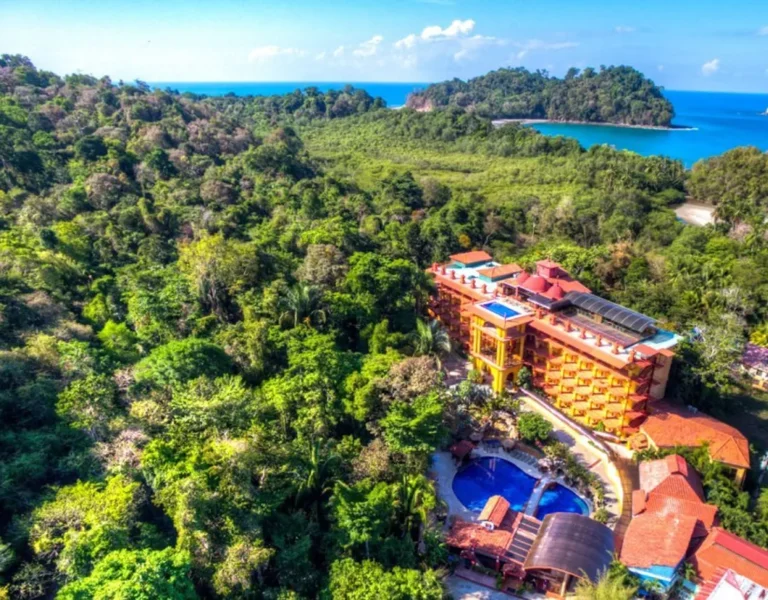
Manuel Antonio combines rainforest and coast for travelers who want wildlife without a remote expedition. Monkeys, sloths, reptiles and birds can all appear along its paths. The park is busy, so know the rules: SINAC says it is open Wednesday to Monday from 7 a.m. to 3 p.m. and closed on Tuesdays. Food is not allowed on beaches or trails, feeding wildlife is prohibited, and an official guide association operates inside the park.
Carara National Park, near the Tárcoles River, protects the only transition forest of the central Pacific, where dry and wet forest species meet. SINAC records 420 bird species there, 47 percent of the 893 reported in Costa Rica, and it is famous for scarlet macaws. It was also the first national park with a universal-access trail.
Lodges include Si Como No, with a butterfly garden and a 30-acre wildlife refuge, Arenas del Mar, on 12 acres of beach and forest, and Santa Lucia Jungle Hacienda (formerly Hotel Villa Lapas), set in a 500-acre private reserve near Carara and the Tárcoles River. See our central Pacific eco-lodges.
Birdwatching, with or without a life list
Experienced birders arrive with target lists, while beginners simply enjoy the colors and calls. Both benefit from a specialist guide who knows songs and microhabitats. The eBird exploration tools are useful for checking recent records and hotspots, but a recent report is not a promise that a bird will be in the same tree when you arrive.
For highland birds, Savegre Mountain Hotel in San Gerardo de Dota offers birding and cloud forest night tours, and Rancho Naturalista near Turrialba is a 125-acre birding lodge with more than 430 species recorded on its reserve. Our birds of Costa Rica guide has more.
Night walks: when another rainforest appears
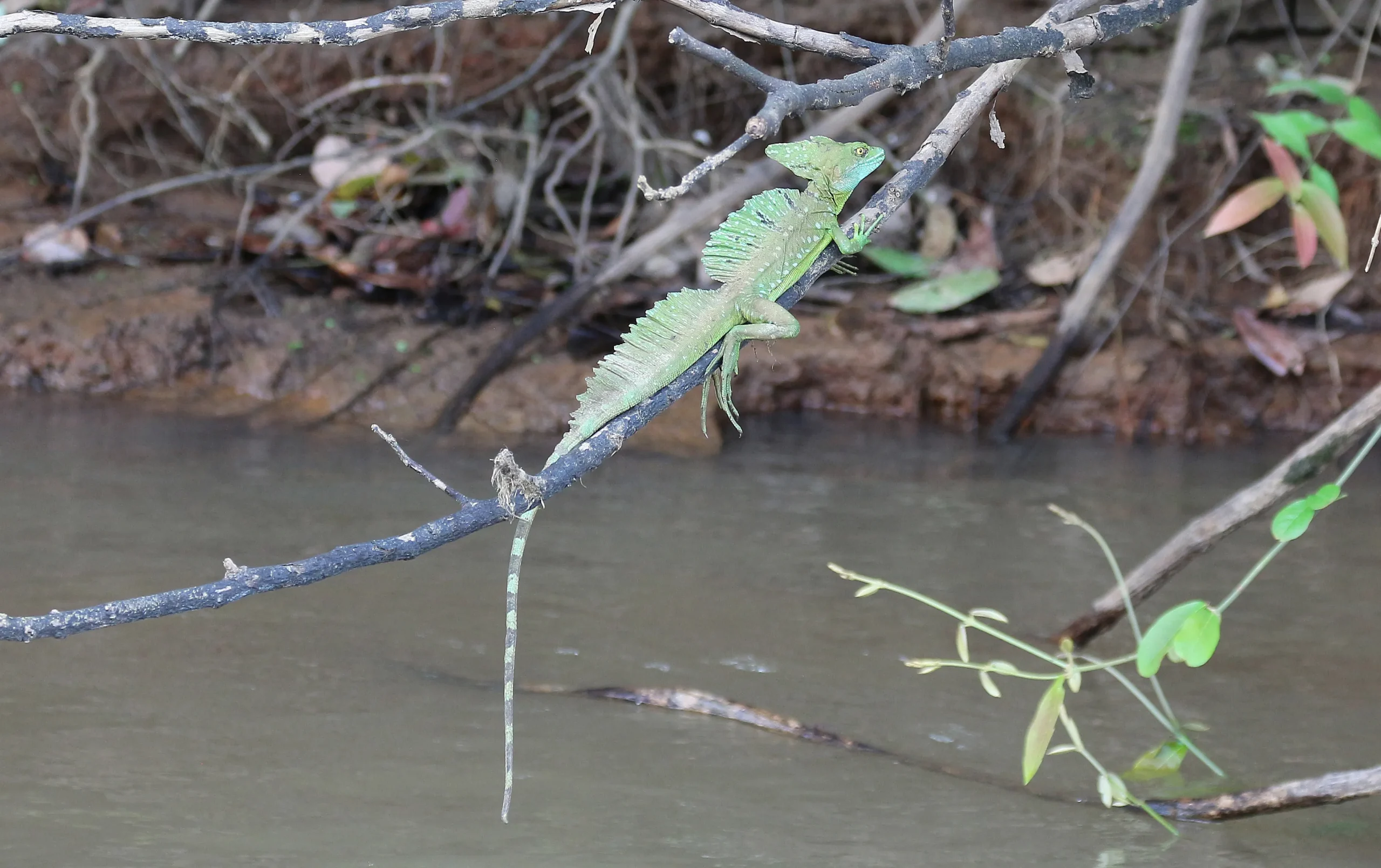
After dark the forest becomes a different place. Frogs call from wet leaves, insects gather on vegetation and nocturnal mammals move through the canopy. Choose a guide who avoids handling animals, limits light, stays on authorized paths and keeps groups small. A guide who moves animals into better positions or encourages touching is not offering a more authentic experience. Walking the same trail at dawn and after dark is one of the best ways to see how species share the day.
Marine wildlife
Costa Rica’s Pacific hosts humpbacks from two hemispheres, dolphins live along much of the coast and sea turtles nest on both coasts. Each has its own rules: boats must keep set distances from whales and dolphins, and turtle beaches have guided-only night access. Our marine life guide, whale watching guide and sea turtle nesting guide cover the details.
How to recognize an ethical wildlife guide
A good guide explains what may be seen without promising specific animals, knows the protected area’s rules, keeps a respectful distance and never baits or feeds wildlife. SINAC and the ICT’s advice on safe and responsible tourism in protected areas asks visitors to choose ICT-certified guides and operators, use only official entrances and opening hours, stay on trails and never touch, trap or feed wild animals. The official Costa Rica Silvestre campaign adds guidance on not feeding wildlife and on cruelty-free photos and selfies.
Before booking, ask:
- Is the trail or waterway authorized for tours?
- How large is the group?
- Will the guide use food, playback recordings or handling to get sightings?
- How are flashlights and flash photography managed?
- What happens if an animal moves away?
Choosing an eco-lodge for wildlife
A lodge beside intact forest or a reserve gives you repeated chances to see wildlife without long drives. But a hotel surrounded by lawns is not the same as one protecting native forest. Ask about property size, trails, reforestation, naturalist guides, outdoor lighting and whether guests are told not to feed animals. Our guides to choosing a sustainable hotel and private nature reserves go deeper.
In the field, slow down, bring binoculars, wear muted clothing and keep the schedule flexible. Turn off camera sounds, skip flash near nocturnal animals and nesting turtles, and never pressure a guide to break rules for a photo.
Frequently asked questions
Where are my chances best for seeing sloths?
Lowland rainforest and forest-edge habitats are productive, including Manuel Antonio, the Caribbean lowlands and the Osa. A good guide and a forested property often matter more than the town you choose.
Are jaguar sightings realistic for most travelers?
No. Jaguars live in Corcovado, Tortuguero and other large forests, but they are elusive. Visit for the whole ecosystem rather than expecting a big cat.
Do I need a guide in Costa Rica's national parks?
It depends on the park. Corcovado requires a reservation and a guide for its main trails, Tortuguero's night beach visits are guide-only, and Manuel Antonio has an official guide association inside the park. Elsewhere a guide is optional but usually doubles what you see.
Can I feed monkeys to attract them for photographs?
No. Feeding wildlife is prohibited in parks such as Manuel Antonio and discouraged by official campaigns because it harms animals' health and behavior and can lead to bites.
Is wildlife watching better in the rainy season?
Not universally. Rain, flowering, fruiting and water levels affect species differently. Wetland birds can concentrate as water levels drop in the dry season, while many forest frogs call most actively after rain.
How many bird species does Costa Rica have?
SINAC's Carara page cites 893 species reported in the country. Totals vary slightly by source and year as new records are added.