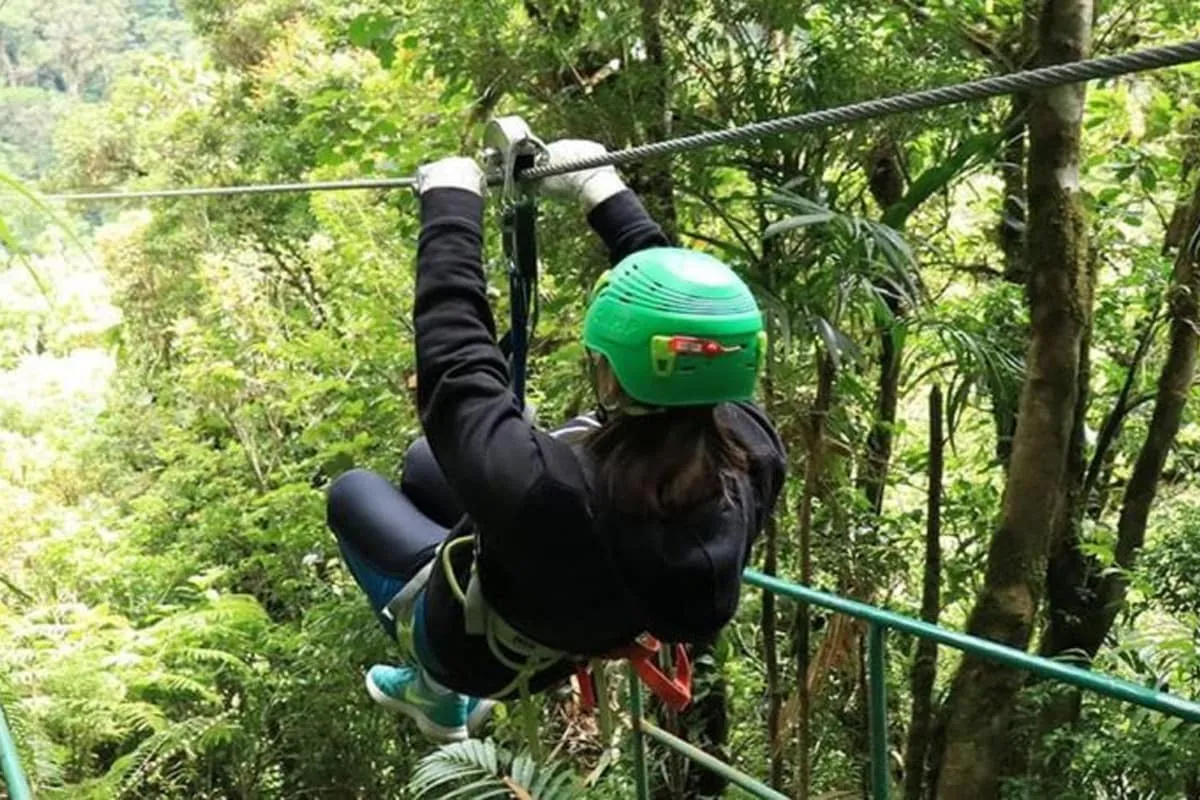
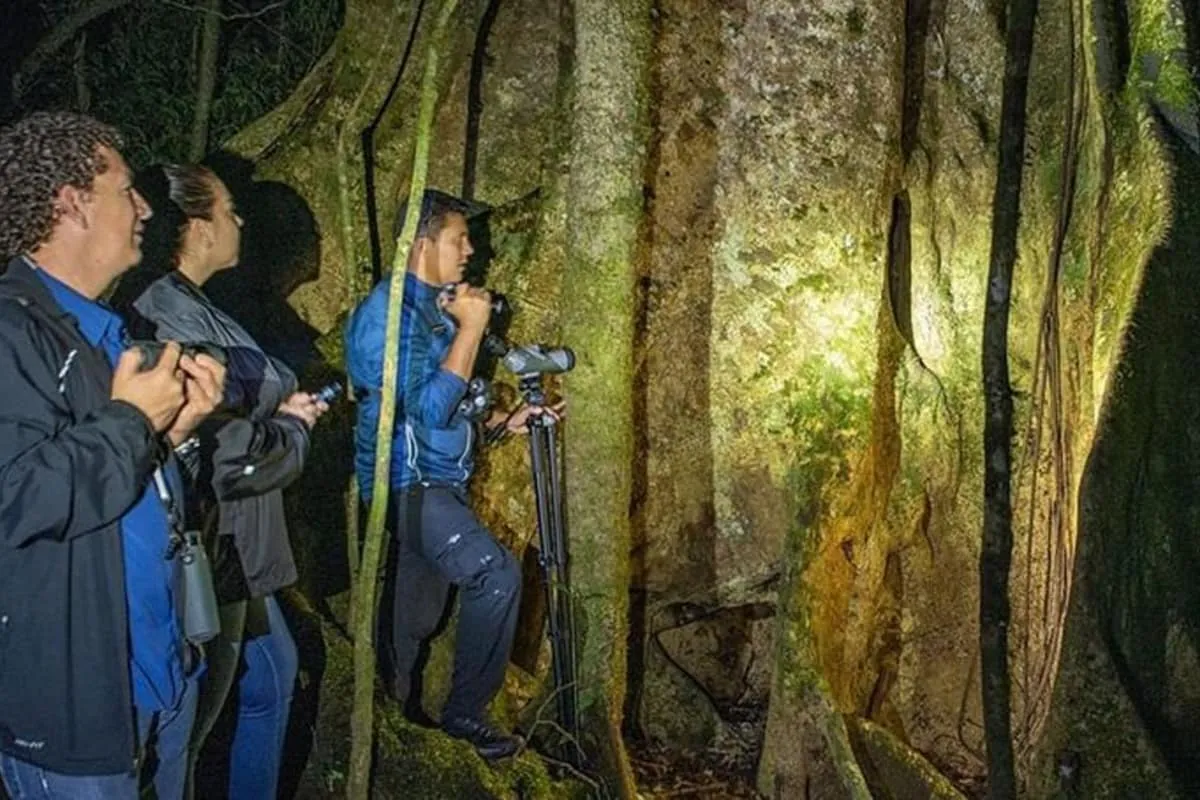
The most memorable way to understand a rainforest is to enter it slowly. A huge buttressed tree can stop you in your tracks. A line of leafcutter ants may cross the trail like a miniature highway. Higher up, a hanging bridge opens a window into the canopy, where bromeliads grow on branches and birds move through layers of foliage that are almost invisible from the ground. Then there is the zipline, a very different experience that makes the forest feel immense.
Costa Rica offers all three, but they are not interchangeable, and choosing well changes both your experience and your footprint on the forest. This guide compares the main regions, the rules that apply in each, and lodges that put good trails right outside your door.
Which experience should you choose?
If wildlife is your priority, book an early guided nature walk in well-protected habitat. If you’re curious about orchids, epiphytes and how a forest works vertically, choose suspended walkways with a naturalist. If your goal is an active adventure with forest scenery, a zipline may be the best match. Many travelers enjoy two of these rather than squeezing all three into one rushed afternoon. A forest walk also brings subtler discoveries than a cable: fresh tapir tracks, a trogon calling from a shaded branch, a glass frog asleep under a leaf.
| Place | Main habitat | Best-known experience | What to know before you go |
|---|---|---|---|
| Monteverde Cloud Forest Reserve | Cloud forest | Self-guided circuits of 1.4, 2.8 and 4.1 km, one with a hanging bridge; guided day and night walks | Timed entry slots; guided walks capped at 10 people |
| Selvatura Park, Monteverde | Cloud forest | 3 km of trails with eight bridges, 55 to 157 m long | Private park; no food on trails, no rocking the bridges |
| Arenal Volcano National Park | Lowland rainforest, lava flows | Flat trails of 610 m to 2.3 km past 1992 lava flows and a ceiba over 400 years old | Open daily 8 a.m. to 4 p.m.; climbing the volcano is prohibited |
| Místico Park, La Fortuna | Rainforest near Arenal | Six hanging bridges, guided, self-guided and night walks | Private park near La Fortuna |
| Tirimbina, Sarapiquí | Lowland rainforest | 7 km of trails with three hanging bridges | Open daily 7 a.m. to 5 p.m. |
| Carara National Park | Transition forest | 1.2 km universal-access trail; 420 recorded bird species | Local guides are independent, not park staff |
| Corcovado National Park | Lowland rainforest, coast | Multi-day routes to Sirena with a registered local guide | Reservation mandatory; no night walks inside the park |
Monteverde: bridges and cloud forest immersion
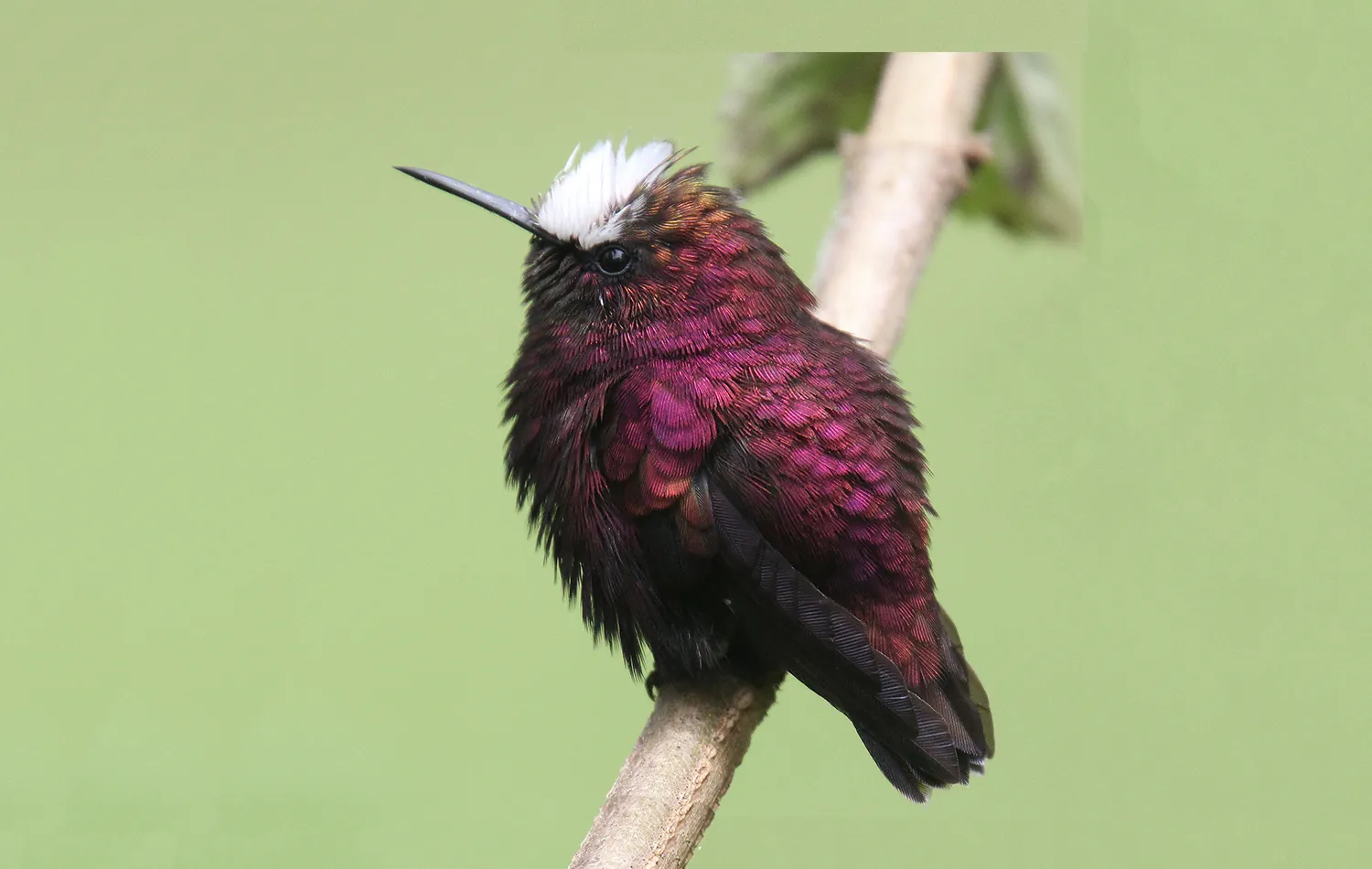
Monteverde sits in a different ecological world from Costa Rica’s hot lowlands. Mist moves through the trees, moss softens every branch and hummingbirds work the flowering plants along forest edges. The Monteverde Cloud Forest Biological Reserve protects more than 4,100 hectares (over 10,000 acres) and runs its main experience as a self-guided walk on three circuits: the Essence Trail (1.4 km, about an hour, easy), the Heart of the Forest Trail (2.8 km, about 1.5 hours, which crosses the reserve’s own hanging bridge) and the Continental Divide Trail (4.1 km, about 2.5 hours, climbing to wind-shaped dwarf forest and viewpoints over both slopes). Entry runs on time slots with a free shuttle from a visitor center 1.5 km below the entrance; the reserve asks you to arrive 15 minutes early and warns that late arrivals may not get in. Its guided Natural History Walk is limited to 10 participants, and a separate guided night walk starts at dusk.
For a full bridge circuit, Selvatura Park describes 3 kilometers of trails with eight bridges ranging from 55 to 157 meters long, open 7 a.m. to 4 p.m. year-round, with the walk taking about 1 to 1.5 hours. Its posted rules are worth copying anywhere you walk: no food on the trails, no jumping on or rocking the bridges, no feeding animals, no shouting and stay on the marked path. Engineered walkways like these give high views, but they’re not a substitute for a quiet trail in a protected reserve. Both fit into a two-night stay.
Wind and rain are normal here. Bring a light waterproof layer even if the sun is out in Santa Elena village. A convenient base is Monteverde Lodge and Gardens, a 31-room lodge within walking distance of town, set in gardens and its own private patch of cloud forest. It arranges excursions to the Monteverde, Santa Elena and Curi-Cancha reserves, plus a night tour, so you can mix public reserve trails with a guided evening walk without a long drive.
Our Monteverde cloud forest guide covers the area’s other reserves, and our Monteverde eco-lodges page lists more places to stay.
Arenal and La Fortuna: rainforest with volcano views
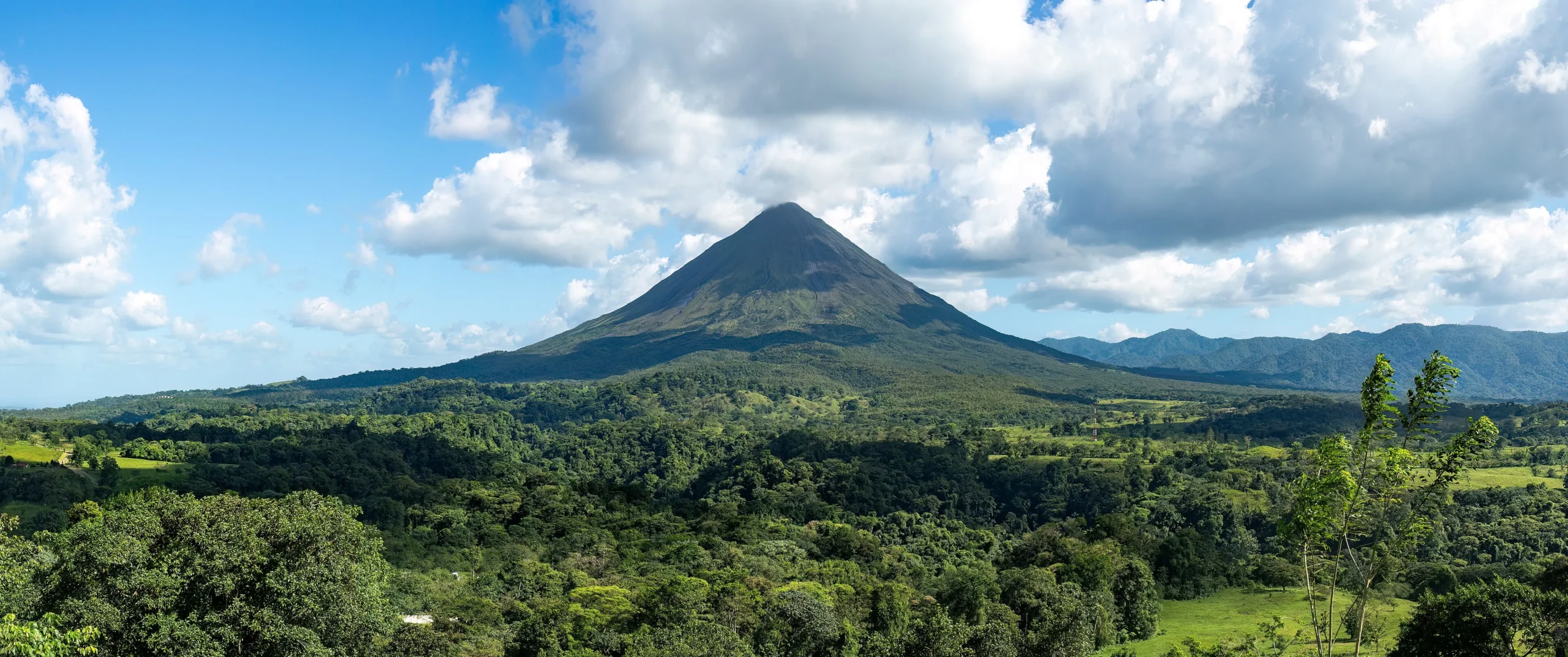
The Arenal area combines rainforest, volcanic slopes, river valleys and views toward Lake Arenal. According to SINAC’s Arenal Volcano National Park page, the park was created on 30 September 1991 and is open every day from 8 a.m. to 4 p.m. Its trails are short and mostly flat: Heliconias (610 m), Coladas (1.7 km, with views of the cone, the lake and the Tilarán range) and El Ceibo (2.3 km, to a ceiba tree more than 400 years old), plus a viewpoint 1.5 km from the entrance. Climbing the volcanic cone is absolutely prohibited, and all entry fees go to the National Parks Fund that supports every protected area in the country.
For bridges, Místico Park near La Fortuna has six hanging bridges and offers guided, self-guided, twilight and night walks, plus a dedicated bird-watching tour. Toucans and monkeys occur in the region, but sightings depend on habitat, timing and quiet behavior. The most productive walk is often the first one in the morning, before larger groups and afternoon rain.
Lodges with real trails:
- Arenal Observatory Lodge describes itself as inside Arenal Volcano National Park, on a reserve of more than 352 hectares that includes about 110 hectares of primary forest. Guests have 11 km of self-guided trails, hanging bridges, the Danta waterfall and 800 meters of wheelchair-accessible trail.
- Rancho Margot spreads across more than 400 acres about forty minutes from La Fortuna, near Lake Arenal. It runs off the grid, offers a guided night walk and farm tours, and says it was certified carbon neutral in 2012.
Read more in our Arenal and Río Celeste guide and browse Arenal and La Fortuna eco-lodges.
Sarapiquí and Boca Tapada: a rainforest classroom
Sarapiquí rewards visitors who like ecological detail. Tirimbina Biological Reserve is open daily from 7 a.m. to 5 p.m. and has 7 km of trails (rated easy to medium) with three hanging bridges; it also runs free environmental education for local communities and keeps biologists on site. A short drive away, La Selva Research Station, run by the Organization for Tropical Studies since 1968, protects 1,600 hectares of old-growth and recovering lowland forest bordering Braulio Carrillo National Park. OTS counts more than 2,077 plant species, 470 birds, 125 mammals (72 of them bats) and 48 amphibians there, and offers birding, natural history and night walks to visitors who book ahead through its natural-history program. Its 61 km of trails include an all-access trail, and the station can house up to 180 overnight visitors.
Sarapiquí works well as a two-night stay: an early bird walk, time beside a river and a guided night walk, when frogs and invertebrates take over.
- Selva Verde has welcomed nature travelers since 1986 on a 500-acre property in Sarapiquí, about two hours from San José, with naturalist guides, birding routes and night activities.
- Maquenque Eco Lodge in Boca Tapada is farther north, with treehouse rooms in a rainforest and wetland reserve in great green macaw country. The lodge states it holds CST Elite sustainability certification.
See more in our Northern Plains eco-lodges section.
Osa and the southern rainforests: wilder trails
The Osa Peninsula offers Costa Rica’s most immersive forest walking, from private lodge trails to routes in Corcovado National Park. It isn’t gentle. Heat, humidity, mud, uneven ground and river crossings make many outings demanding. SINAC’s Corcovado page says the park covers 42,560 hectares of land, its dry season runs from mid-December to mid-April, a reservation is mandatory, and night walks are not allowed inside the park. For the Sirena sector, SINAC’s Sirena page is blunt: you must enter with a local guide registered with the Osa Conservation Area’s sustainable tourism office, or you’ll be refused entry. Our Corcovado and Osa guide walks through each entrance.
That’s one reason lodge trails matter so much here: night walks happen on private land, never in the park. Keep lights off animals as much as possible, skip the flash and never handle wildlife.
- La Leona Eco Lodge sits beside Corcovado near the La Leona ranger station, with rainforest tent cabins set at canopy level on the edge of primary forest. It runs night tours and guided park hikes.
- Bosque del Cabo, open as a lodge since 1990, covers more than 750 acres at Cabo Matapalo. Trails lead to beaches on both the Golfo Dulce and the Pacific, and the property has its own suspension bridge and a zipline to a tree platform.
- Esquinas Rainforest Lodge, near La Gamba, has a 37-acre private reserve next to Piedras Blancas National Park, which together attract over 300 bird species. It’s accessible by car all year, about 30 minutes from Golfito airport.
Browse all our Osa Peninsula eco-lodges.
Central Pacific and the highlands: easy access, different forests
Two forests close to San José are easy to add to a longer trip. Carara National Park protects transition forest; SINAC records 420 bird species there, 47 percent of the 893 reported nationally, and calls it the first national park with a universal-access trail, a 1.2 km route with rest stops, adapted restrooms and signs in Spanish, English and Braille. Guides at the entrance are local and independent, not park staff. Farther south, Manuel Antonio National Park is open Wednesday to Monday from 7 a.m. to 3 p.m., closed Tuesdays, with tickets sold only online. Both can be busy, so go early and pick a guide who prefers observation to photo stops.
In the mountains, the walking is cooler and the species change.
- Savegre Mountain Hotel in San Gerardo de Dota sits at about 2,200 meters in Talamanca cloud forest and protects more than 500 hectares of private forest reserve, with trails, bird walks and a river running through it. Its story there goes back to 1973.
- El Silencio Lodge in Bajos del Toro has three waterfalls and over 2 km of trails on its property, with guided hikes, canopy tours and waterfall rappelling, about 90 minutes from the main international airport.
Hanging bridges: for observation, not a race
A bridge can sway and may feel more exposed than a trail. Walk steadily, follow posted capacity limits and leave space between people. Selvatura, for example, rates each of its bridges for 50 to 80 people at once and says its structures are certified by Costa Rica’s college of engineers and architects (CFIA); ask any operator how its bridges are inspected. If someone is uneasy with heights, ask about a ground-level option. Never jump, shake a bridge or lean over railings for a photo.
A bridge doesn’t guarantee better sightings, since passing groups can be noisy. Its real advantage is perspective: you see how vines link trees and how epiphytes live on branches without rooting in the soil.
Ziplines: how to choose a responsible operator
Canopy tours introduce people to forest landscapes and provide local jobs, but the environmental footprint varies. Platforms, cables, access roads, vehicles and visitor numbers all matter. Ask what forest was cleared during construction, how trees are protected and how equipment is maintained.
Costa Rica regulates adventure tourism. Executive Decree 39703-S-TUR of 22 February 2016, the regulation for adventure tourism activities, requires operators to use trained, qualified guides for each specific activity, holding the Costa Rican Tourism Institute’s guide credential in the relevant category, as summarized in the later guides regulation, Decree 41369-MEIC-TUR. That same regulation separates general, specialized and local guides, local guides being trained for specific conservation areas. In practice, look for helmets, careful harness checks, clear communication between staff and a willingness to stop in wind or lightning. The longest advertised cable isn’t the measure of a good tour. Many operators also set age, height and weight limits; check the rules for the exact course you plan to book.
Keep the line clear between a commercial adventure park and a biological reserve. Adventure parks can be enjoyable and educational, but conservation shows up as protected forest, wildlife policy and restoration, not just trees around cables. Likewise, butterfly gardens and captive animal displays are not the same as free-ranging wildlife in protected habitat.
What makes a good guide
A strong guide pays attention to behavior and habitat, not just names. They explain why a bird is feeding in a certain tree, how ants shape the soil or what a fallen log adds to forest regrowth. They let guests watch without crowding animals, and they say so when they don’t know an answer. The ICT and SINAC advise visitors to protected areas to hire guides with ICT certification or proper operating permits, use only official signposted entrances and keep to official hours.
Ask whether a tour focuses on birding, general ecology, photography or family learning before you reserve.
When to go and what to bring
Morning is the most comfortable time on trails and the most productive for birds. Afternoons often bring heavy showers, especially in the wet season. In the Osa, SINAC puts the dry season at mid-December to mid-April. Monteverde is cooler and windier than Sarapiquí or the Osa, so pack a warm layer there. Our best time to visit guide breaks seasons down by region.
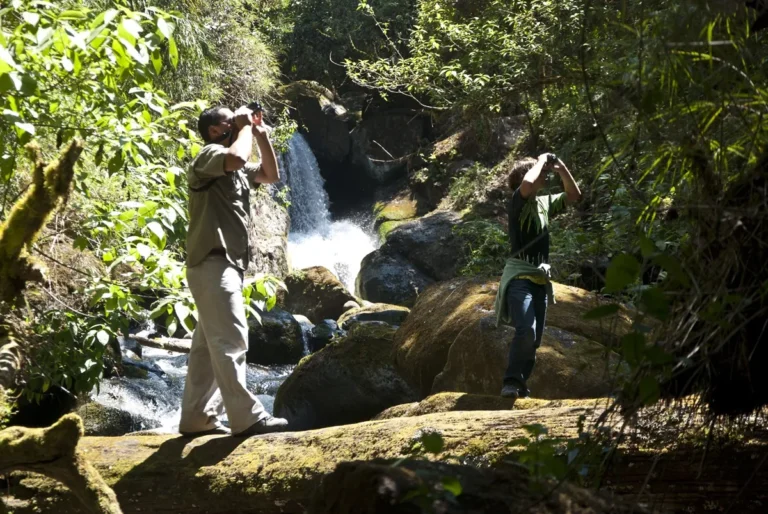
Bring binoculars in a protective case, closed shoes with real grip, a rain layer, insect repellent and a reusable water bottle. Keep your hands free on steps and bridges. Don’t carry food into areas where crumbs or litter could attract animals; Selvatura and many parks ban food on trails outright. If you’re walking with small children, ask about trail length and restrooms first.
Choose the experience and the lodge together
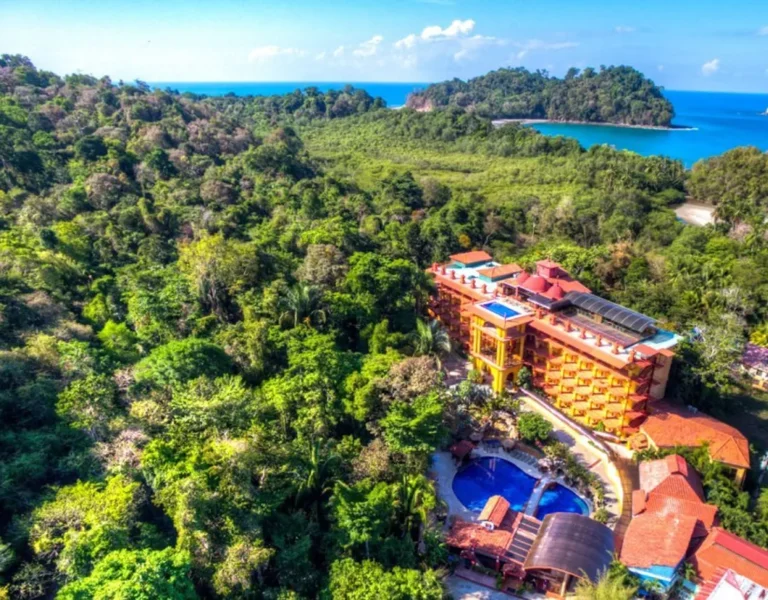
A hotel may advertise forest views without any safe paths into the habitat. Before booking, ask whether trails are on the property, on a private reserve or inside a national park. That decides who sets the rules, if a guide is required and if night walks are possible. A lodge beside a private reserve can be as rewarding as one next to a national park. If a lodge mentions sustainability certification, check it against our CST certification guide.
| Main interest | Best kind of outing | Lodge to consider |
|---|---|---|
| Cloud forest plants and birds | Early timed entry at the Monteverde reserve, then a guided night walk | Monteverde Lodge and Gardens |
| Lowland rainforest ecology | Guided Sarapiquí trail, bridges at Tirimbina or a station walk at La Selva | Selva Verde |
| Volcano scenery and easy trails | Arenal park lava-flow trails plus lodge trails and bridges | Arenal Observatory Lodge |
| Wilderness wildlife | Corcovado day with a registered local guide | La Leona Eco Lodge |
| Highland cloud forest and quetzals | Private-reserve trails at 2,200 m | Savegre Mountain Hotel |
| Waterfalls plus a zipline | Lodge trails, waterfalls and canopy tour in one place | El Silencio Lodge |
Waterfall walks have their own chapter in our waterfalls, rivers and hot springs guide.
Frequently asked questions
Are hanging bridges good for seeing wildlife?
They can be, especially early with a guide, but sightings depend on animal activity and how busy the walkway is. Their most reliable advantage is a view into forest layers you can't study from below. Dawn and dusk walks, such as Místico's twilight tour, usually beat a midday crossing.
Is Monteverde or Arenal better for hanging bridges?
Monteverde gives you misty cloud forest and cooler air; Selvatura's circuit has eight bridges and the Monteverde reserve itself has one on its 2.8 km trail. Arenal offers warmer lowland rainforest and volcano views, with six bridges at Místico. Choose by the ecosystem you most want to see.
Do you need a guide for rainforest hikes in Costa Rica?
It depends on where you are. Arenal, Carara and the Monteverde reserve's circuits can be walked on your own. Corcovado is different: SINAC requires a registered local guide for its Sirena sector and turns away visitors without one. Even where it's optional, a good naturalist with a spotting scope will show you far more than you'd find alone.
Can I do a night hike inside a national park?
Usually not. Corcovado lists night walks among its prohibited activities, and most parks close in the afternoon (Arenal at 4 p.m., Manuel Antonio at 3 p.m.). Night walks happen on private reserves and lodge land, and at the Monteverde reserve, which runs its own guided night walk.
Are ziplines in Costa Rica regulated?
Yes. Decree 39703-S-TUR of 2016 sets the rules for adventure tourism, including the requirement for trained, qualified guides with the ICT credential for each activity. Still ask about equipment checks, staff experience and weather policy, and confirm age, height and weight limits for your specific course.
Which rainforest trails suit wheelchair users or limited mobility?
A few are built for it. Carara has a 1.2 km universal-access trail with rest stops and Braille signs, La Selva has an all-access trail, and Arenal Observatory Lodge has 800 meters of wheelchair-accessible trail. Elsewhere, ask about steps, slopes and bridge surfaces before you go.