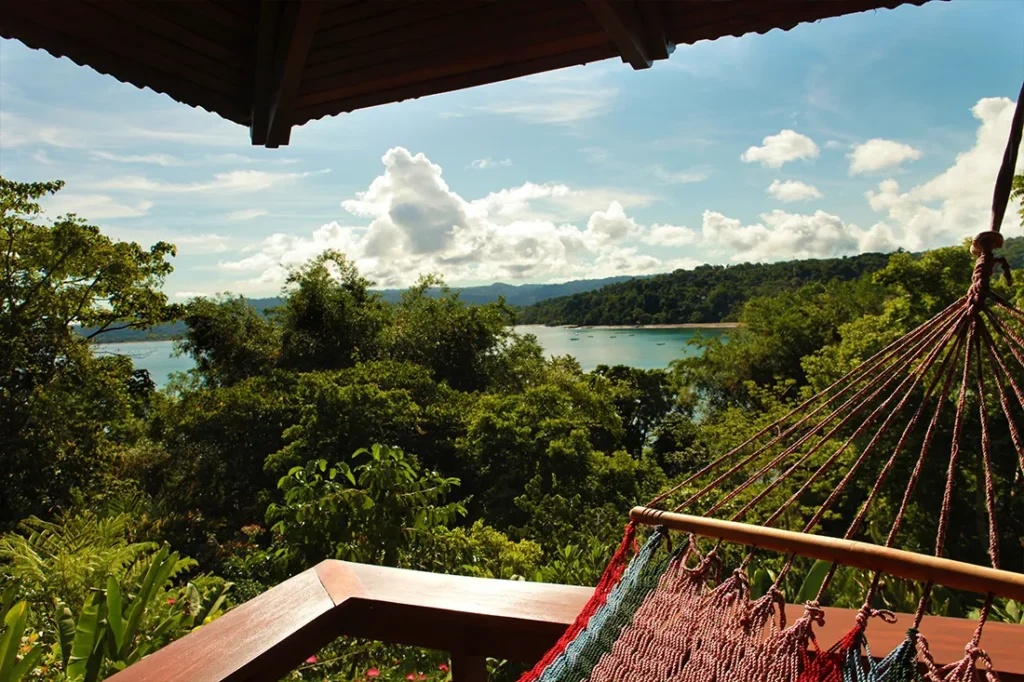
An oceanfront room is easy to find in Costa Rica. A genuinely good beachfront eco-lodge is harder to choose. The best ones pair the coast with real habitat behind it, whether that’s rainforest, mangroves, a marine park or a turtle nesting beach, and they take the responsibilities of a shoreline seriously: low lighting near nesting turtles, careful wastewater treatment and no wildlife feeding for photos.
Start by deciding which coast and what kind of beach you want. The North Pacific has a strong dry season and established beach towns. The Osa Peninsula and Golfo Dulce bring rainforest right down to the sand, often with boat-only access. The southern Caribbean combines reef, coastal forest and Afro-Caribbean culture, with a different rainfall pattern. Then check what “beachfront” actually means at each lodge.
Beachfront, beach-near or ocean-view?
Hotel marketing uses these phrases loosely. In this guide, beachfront means the lodge sits directly on the sand or just above it with its own path down. Beach-near means a short walk. Ocean-view means you see the sea from a hillside or cliff and reach the beach by trail, shuttle or car.
There’s also no such thing as a truly private beach in Costa Rica. Under the Maritime Terrestrial Zone Law, the first 50 meters inland from the ordinary high-tide line is a public zone with free access, and the next 150 meters is a restricted zone where private use is allowed only by concession, as a 2026 Semanario Universidad report on beach access summarizes. When a lodge says “private beach,” it usually means a beach that only boats or its own trails reach.
| Lodge | Coast | Relationship to the sand | Access |
|---|---|---|---|
| Playa Cativo Lodge | Golfo Dulce | Beachfront, Ocean Front Casita available | Boat only, about 30 minutes |
| Playa Nicuesa Rainforest Lodge | Golfo Dulce | Beachfront | Boat, about 30 minutes from Golfito or Puerto Jiménez |
| Golfo Dulce Lodge | Golfo Dulce | Beachfront at Playa San Josecito | Boat only |
| Corcovado Wilderness Lodge | Osa, Drake Bay side | Above a palm-lined beach, about 2 km of oceanfront | Boat only, usually from Sierpe |
| La Leona Eco Lodge | Osa, Carate | Tent cabins a few steps from the beach | Road to Carate, lodge transfers |
| Finca Exótica | Osa, Carate | Beachfront | Road to Carate |
| Arenas del Mar | Manuel Antonio | Direct access to two beaches | Road |
| Almonds and Corals | South Caribbean | Beachfront | Road, 2 km before Manzanillo |
| Turtle Beach Lodge | Tortuguero | Between the canals and the Caribbean | Boat |
| Hotel Shawandha | South Caribbean | About 150 m to Playa Chiquita | Road |
| Harmony Hotel | Nosara | On Playa Guiones | Road |
| Lapa Ríos, Bosque del Cabo | Osa, Cabo Matapalo | Ridge and cliff tops above the sea | Road from Puerto Jiménez |
| La Paloma Lodge | Osa, Drake Bay | Cliff-top, short walk to beaches | Boat or road to Drake |
| Anamaya | Montezuma | Hillside above the sea, ocean views | Road |
| Hotel Punta Islita | Guanacaste coast | Hillside with a beach club | Road or air |
Golfo Dulce: sheltered water and forest to the shore
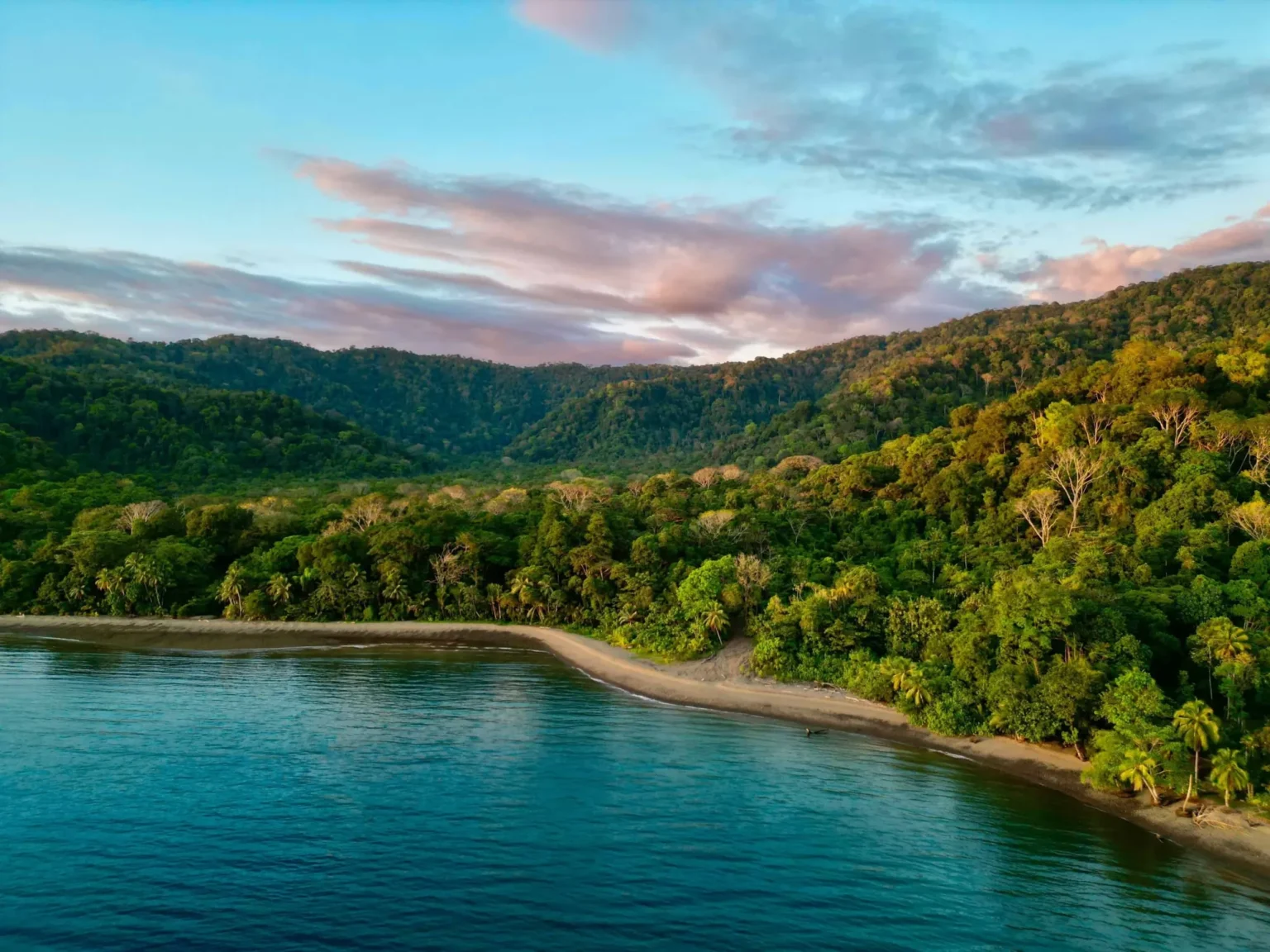
Golfo Dulce is a deep, fjord-like gulf bordered by forested slopes, and its calmer water feels very different from the open Pacific. Researchers writing in the Revista de Biología Tropical photo-identified 280 pantropical spotted dolphins in the gulf, and the Costa Rican Tourism Institute notes that Golfo Dulce was named Latin America’s first whale heritage destination, with boats asked to keep 150 meters from humpbacks.
Three boat-access lodges put you on the sand here. Playa Cativo Lodge has a 1,000-acre private reserve beside Piedras Blancas National Park, kayaks, paddleboards and snorkeling in Cativo Bay, and its fuller plan includes transfers from Golfito or Puerto Jiménez. Playa Nicuesa Rainforest Lodge is beachfront too, about 30 minutes by boat, with kayaking, snorkeling, hiking and yoga, and it holds CST Elite certification. Golfo Dulce Lodge is the most intimate: four suites at Playa San Josecito, surrounded by Piedras Blancas and about 1,000 acres of protected jungle, with all meals cooked on site and no road access.
Calm-looking water isn’t always safe or clear. Rain and river runoff cloud the gulf, so ask the lodge about current snorkeling conditions.
Osa Peninsula: wild beaches, strong surf
The Osa’s beaches are spectacular and often dangerous. SINAC’s rules for Corcovado National Park don’t allow swimming at the park’s beaches because of strong currents, and similar surf runs along much of the peninsula’s Pacific shore. Ask your lodge which coves are safe and when.
On the Drake Bay side, Corcovado Wilderness Lodge (formerly Casa Corcovado) sits above a palm-lined beach with about 2 kilometers of oceanfront and 189 acres of rainforest bordering the park; it’s boat-only and holds CST Elite. Nearby La Paloma Lodge is a family-run cliff-top lodge with 7 bungalows and 4 rooms, a short walk from the Agujitas River and black-sand beaches.
At Carate, at the end of the road, La Leona Eco Lodge has beach tent cabins a few steps from the sand beside the park’s La Leona entrance, and Finca Exótica is a beachfront property with open-air cabanas, glamping tents and a yoga deck above the Pacific.
At Cabo Matapalo, the forest is the main event and the sea is the view. Lapa Ríos occupies a 1,000-acre private reserve on a ridge, and Bosque del Cabo sits on cliffs about 500 feet above where the gulf meets the Pacific, with trails down to beaches on both sides. Our Corcovado and Osa guide covers the area.
Uvita and Marino Ballena: a beach built around a marine park
North of the Osa, the coast around Uvita is protected by Marino Ballena National Park. SINAC says the idea for the park came from neighbors and small-scale fishermen in Bahía Ballena and Piñuela who were worried about commercial fishing, and its creation was confirmed by decree on June 9, 1992. It covers 5,160 hectares of sea and 171 hectares of land along 15 kilometers of coast, including the beaches of Uvita, Colonia, Arco, Ballena and Piñuela. The famous Whale’s Tail, a sand-and-rock tombolo, can only be walked during the roughly 6 hours around low tide, and there’s coral for snorkeling beside it and around Isla Ballena. Humpbacks arrive in two seasons, and resident dolphins are seen all year.
Most stays here are a short drive from the sand rather than on it, because the park protects the shoreline itself. That’s a good trade: a quiet beach with a ranger station beats a crowded hotel strip. Plan beach walks around the tide table.
Manuel Antonio: forest and beach in one park
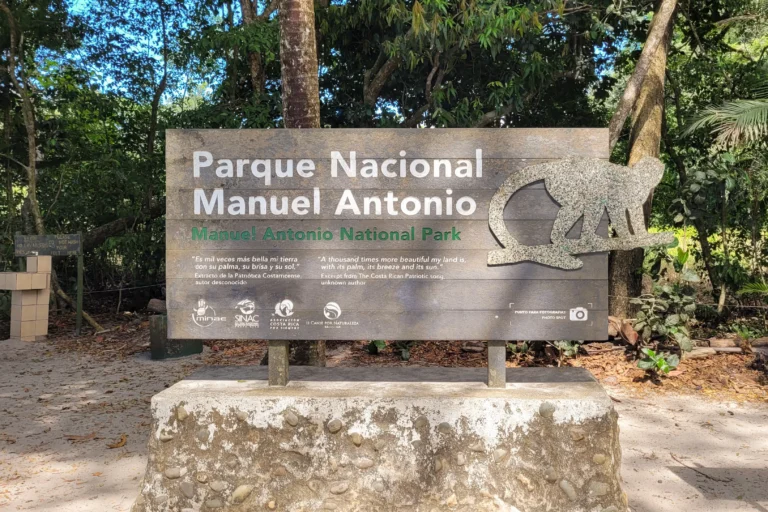
Arenas del Mar is one of the few hotels here with direct beach access, on about 11 acres of rainforest reserve between two beaches, one of them Playitas, with an in-house naturalist. It’s CST Elite. Manuel Antonio National Park next door combines beaches, primary forest, mangroves and a 14-hectare lagoon. SINAC says it’s the most visited protected area in the country, closed on Tuesdays, with tickets sold only online and no food allowed on its beaches and trails.
Nicoya Peninsula and Guanacaste: surf beaches and turtle refuges
In Nosara, the Harmony Hotel sits on Playa Guiones, with a complimentary yoga class for each guest every day, and holds CST Elite. Playa Guiones is part of the Ostional National Wildlife Refuge, which SINAC says protects the world’s main olive ridley nesting site. During arribadas, 15,000 to 200,000 females come ashore on about 800 meters of Ostional beach, once or twice a month, and entry then requires an accredited local guide.
On the Guanacaste coast, Hotel Punta Islita has 27 villas on the hillside, a beach club and a 40-hectare protected forest. Further north, Las Baulas Marine National Park near Tamarindo protects the nesting beaches of the critically endangered leatherback at Playa Grande, Ventanas and Langosta; during the October to February nesting season, visitors may stay on the beach only until 5 p.m.
Near Montezuma, Anamaya is a hillside yoga retreat with ocean views from most of its rooms and a saltwater infinity pool, about 25 minutes from Santa Teresa. It isn’t on the sand, but its view over the Pacific is one of the best on the peninsula, and Montezuma’s beaches and waterfall are close by. Our yoga retreats guide covers it in full.
The southern Caribbean: reef, forest and culture
The coast from Cahuita to Manzanillo has rainforest almost to the waterline. Cahuita National Park, a monument from 1970 and a national park from 1978, protects the best-preserved coral reef on Costa Rica’s Caribbean coast; entry at the Playa Blanca gate is by voluntary contribution. The Gandoca-Manzanillo Wildlife Refuge protects about 5 square kilometers of reef off Punta Uva, Manzanillo and Punta Mona, and its beaches host nesting leatherback, loggerhead, green and hawksbill turtles. SINAC asks visitors not to stand on coral.
Almonds and Corals, 2 kilometers before Manzanillo, is a beachfront hotel set in the rainforest with a beach restaurant focused on local ingredients. Hotel Shawandha, open since 1993, is about 150 meters from Playa Chiquita by a private path through more than 15,000 square meters of jungle garden.
Tortuguero: a wildlife coast, not a swimming beach
Turtle Beach Lodge sits on 175 acres between the canals and the Caribbean, reached only by boat, with packages that include meals, a canal tour and a guided trail walk. Its beach is for walking and wildlife, not swimming: surf and currents are strong. SINAC’s Tortuguero page closes the national park beach from 6 p.m. to 6 a.m. between March 1 and October 31, except on the official guided turtle program, and lists the nesting season as June to October. See our sea turtle nesting guide for the best beaches and months.
What makes coastal accommodation sustainable?
Beyond reusable bottles, look for:
- Turtle-friendly lighting that keeps the beach dark at night.
- Wastewater treatment that doesn’t drain to the beach or reef.
- Setbacks and vegetation left in place between buildings and sand.
- Responsible boat tours that keep 150 meters from whales and don’t chase dolphins.
- No wildlife feeding for photos, and clear guidance on reef etiquette.
Two official programs help. The Costa Rican Tourism Institute’s Ecological Blue Flag Program is an annual award in ten categories, with beaches rated up to five stars; it rates the beach, not the hotel. The CST certification rates the business. A lodge can have one without the other.
Frequently asked questions
Are beaches at eco-lodges safe for swimming?
Not always. Corcovado's park beaches are closed to swimming because of currents, Tortuguero's surf is strong, and many Pacific beaches have rip currents and no lifeguards. Ask the lodge which spots are safe, and follow posted warnings.
Can a lodge in Costa Rica have a private beach?
Not legally. The first 50 meters from the high-tide line is public and freely accessible. "Private beach" usually means one that's hard to reach except through the lodge or by boat.
Is a clifftop lodge the same as a beachfront lodge?
No. Lodges like Lapa Ríos, Bosque del Cabo, La Paloma and Anamaya have superb ocean views and trails or short trips to the sand, but they aren't on the beach. Ask how long it takes to walk down, and how steep the path is.
Where can I see nesting turtles from a beach lodge?
Tortuguero for green turtles (nesting season June to October per SINAC), Ostional near Nosara for olive ridley arribadas, Las Baulas near Tamarindo for leatherbacks from October to February, and Gandoca-Manzanillo on the Caribbean. Always go with an authorized guide.
Which coast is best for a beach-and-rainforest trip?
The Osa and Golfo Dulce for deep rainforest by the sea, Manuel Antonio for easy access, the southern Caribbean for reef and culture, and the Nicoya Peninsula for surf and yoga.
When is the best time for whales from a beach lodge?
SINAC says humpbacks visit Marino Ballena in two seasons: whales from the north from December to April and from the south from July to November. Our whale watching guide covers the best departure points.