
Few wildlife experiences feel as extraordinary as watching a sea turtle return to the beach where she will lay her eggs. She has spent years traveling the ocean, yet on a dark stretch of Costa Rican sand she begins one of nature’s oldest routines. For the visitor it may be unforgettable. For the turtle it is demanding, vulnerable work that should unfold without interference.
Costa Rica protects some of the most important nesting beaches in the Americas, on both the Caribbean and the Pacific. Each species keeps its own calendar, each beach has its own rules and some famous beaches no longer offer public viewing at all. The planning principle is simple: choose the right beach and season, follow the local rules and never expect a guaranteed sighting.
Which sea turtles nest in Costa Rica?
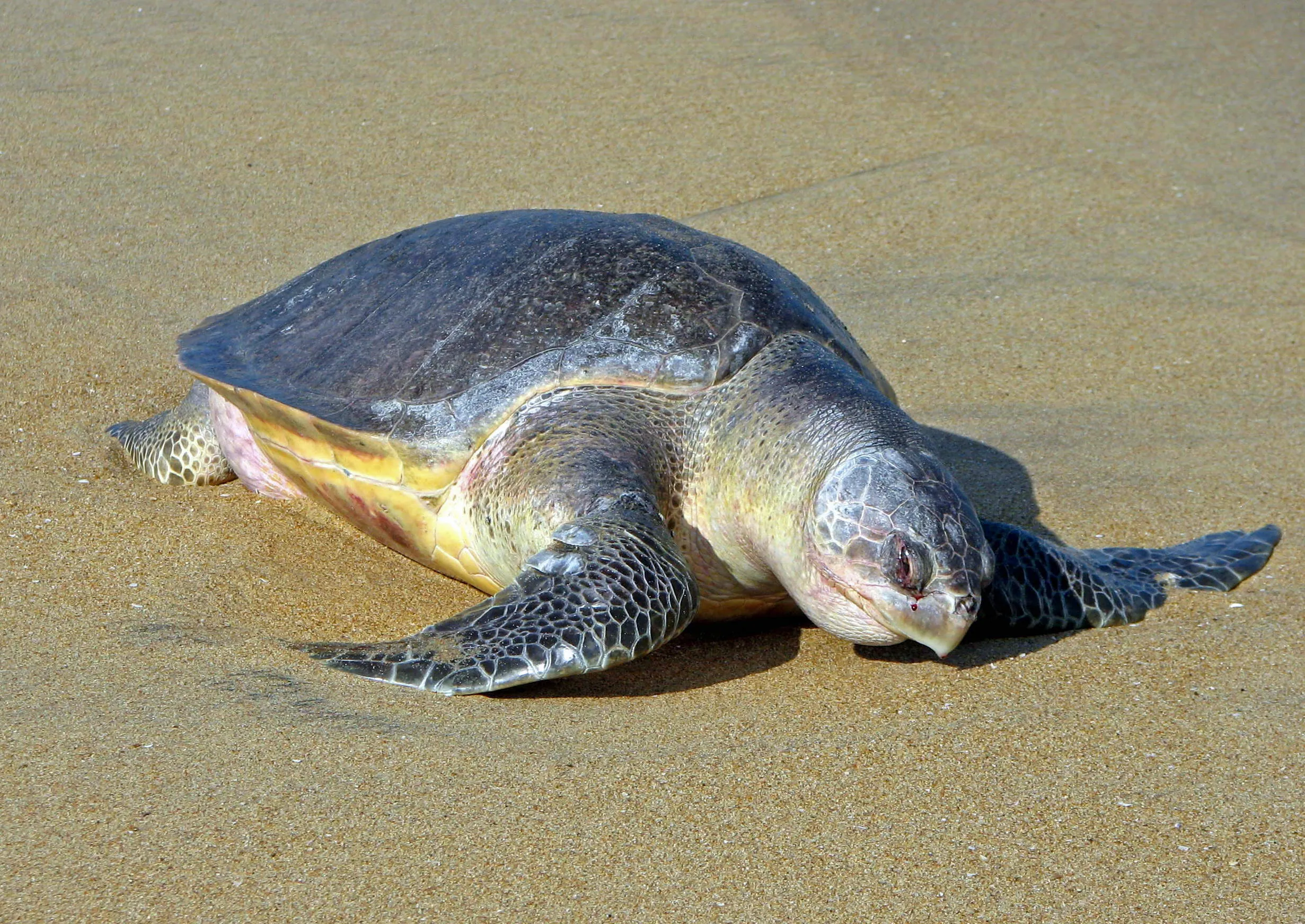
Five sea turtle species nest on Costa Rican beaches: green, leatherback, olive ridley, hawksbill and loggerhead. Some Costa Rican sources count six, because they treat the eastern Pacific “black turtle” (Chelonia agassizii, a dark Pacific form of the green turtle) as its own species. A 1999 study in the Revista de Biología Tropical, for example, lists six nesting species, and SINAC’s Ostional refuge page also refers to six species in Costa Rica.
All of them are threatened. The Leatherback Trust, which runs research and volunteer programs at Playa Grande, summarizes the IUCN Red List status: leatherbacks are Vulnerable globally, but the eastern Pacific population that nests in Guanacaste is Critically Endangered. Hawksbills are Critically Endangered, green turtles Endangered and olive ridleys Vulnerable.
When and where: seasons by species and beach
There is no single national turtle season. Use the table below as a starting point, then confirm current conditions with the park or the local guide association before you travel.
| Species | Main beaches for visitors | Nesting months | How you can watch |
|---|---|---|---|
| Green turtle | Tortuguero (Caribbean) | July to October per the park’s brochure; SINAC’s park page says June to October | Night tours with certified guides and park spotters only |
| Leatherback (Caribbean) | Tortuguero; Gandoca-Manzanillo | Tortuguero March to May; Gandoca roughly February to July, peaking April and May | Night tours at Tortuguero; research and volunteer programs on the south Caribbean |
| Leatherback (Pacific) | Playa Grande, Las Baulas National Park | October to February | SINAC currently lists no turtle observation in the park |
| Olive ridley | Ostional; Camaronal | All year, with arribadas once or twice a month at Ostional | Accredited local guide mandatory at Ostional during arribadas |
| Black turtle (eastern Pacific green) | Las Baulas | Not well publicized for visitors | Rarely the focus of public tours |
| Hawksbill and loggerhead | Tortuguero and Gandoca-Manzanillo | Not well publicized for visitors | Occasional; not a reliable tour target |
| Hatchlings | Tortuguero | September to December | Seen only by chance or with guides; never handled |
Tortuguero: green turtles on the Caribbean
Tortuguero is Costa Rica’s most famous turtle destination. SINAC’s Tortuguero National Park page describes it as protecting the most important green turtle nesting beach in the Western Hemisphere, and the Sea Turtle Conservancy calls it the largest green turtle nesting population in the Atlantic. The park was declared on September 24, 1970, now covers 76,937 hectares (50,284 marine and 26,653 on land) and protects nesting by four species: green, leatherback, hawksbill and loggerhead.
Scientific work here goes back to the 1950s, when University of Florida zoologist Archie Carr began studying the green turtles of what was then called Turtle Bogue. He founded the Caribbean Conservation Corporation, today’s Sea Turtle Conservancy, which says green turtles nest from June through November and runs volunteer patrols from late June into October.
Night access is tightly controlled. SINAC closes the beach to the public from 6 p.m. to 6 a.m. between March 1 and October 31. The only way to watch is the park’s turtle observation program: trained local spotters walk the beach and find turtles as they come ashore, while visitors wait with their certified guide at a holding point. Only when a turtle is laying and can be watched without disturbance does the group approach. The Tortuguero conservation area brochure lists turtle-watching departures at 8 p.m. and 10 p.m. from March to October, leatherback nesting from March to May, green turtle nesting from July to October and hatchlings from September to December. SINAC also asks visitors to check that the season has officially opened, because nesting can shift from year to year.
Tortuguero’s canals offer excellent wildlife even if you see no turtles. Lodges we have reviewed here include:
- Tortuga Lodge & Gardens, one of the oldest lodges in the area, on a 146-acre property run by Costa Rica Expeditions, with a free 6 a.m. guided walk.
- Pachira Lodge, a 34-acre lodge facing the main canal, about five minutes from the park.
- Turtle Beach Lodge, on 175 acres between the beach and a private canal, which has donated to the COTERC organization for turtle research.
- Valverde Glamping & Ecolodge (formerly La Baula Lodge), a family-run riverside lodge in business since the early 1980s.
Read our Tortuguero National Park guide for transfers and trip length, and see the Caribbean eco-lodges page for more places to stay.
Ostional: the olive ridley arribada
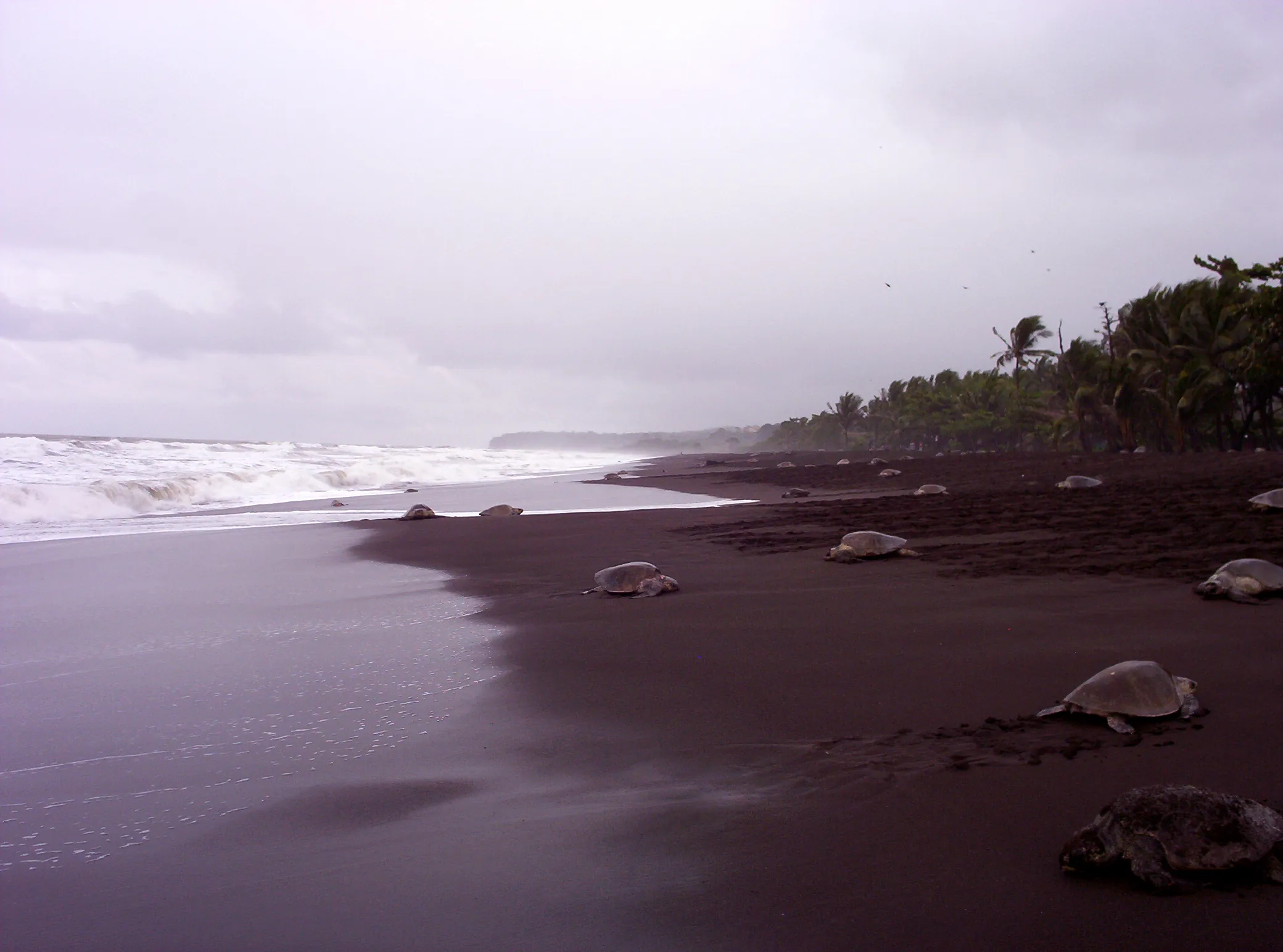
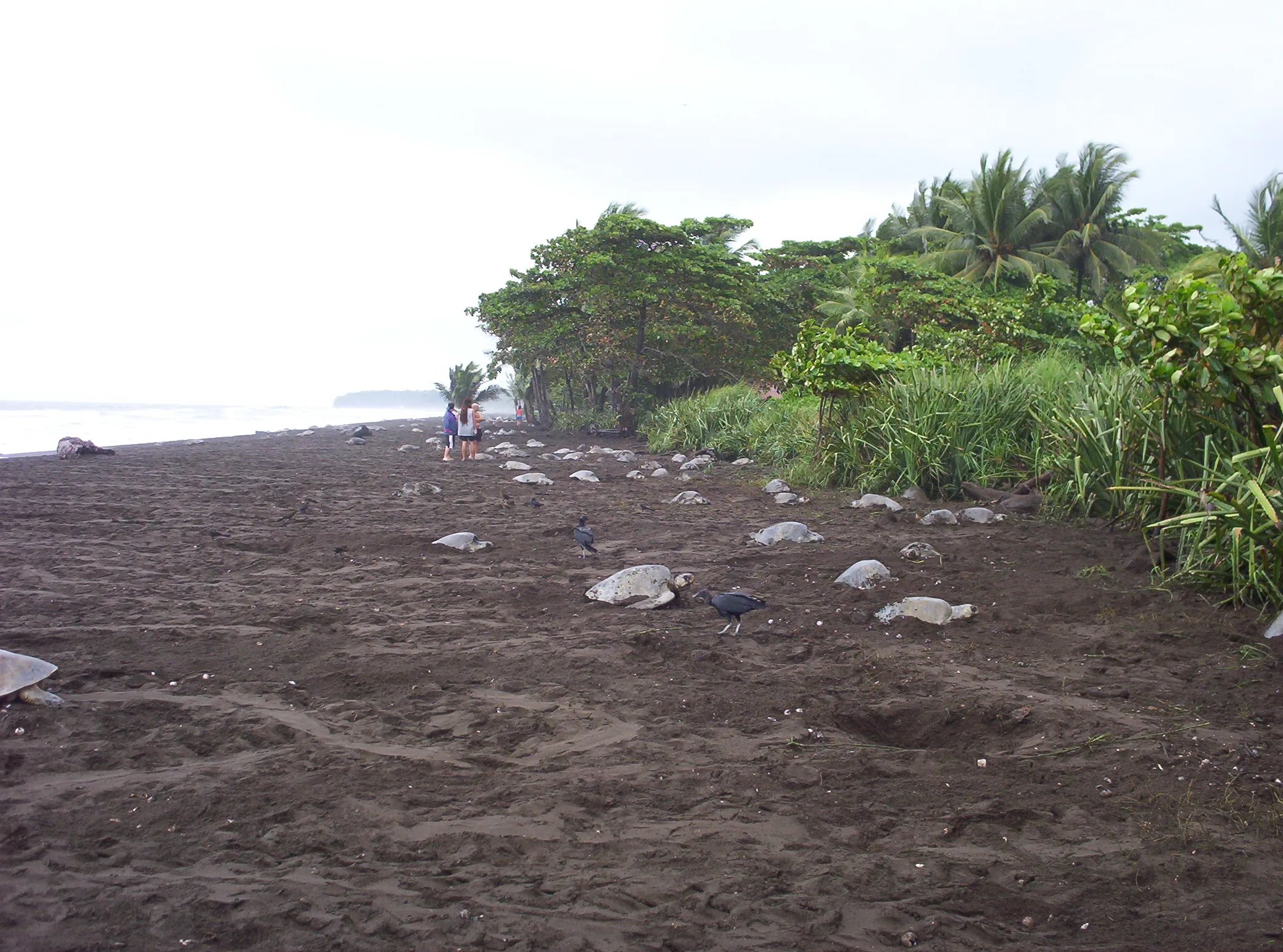
Ostional, just north of Nosara on Guanacaste’s Pacific coast, is famous for the arribada, a mass nesting in which thousands of olive ridleys come ashore over a few nights. According to SINAC, the Ostional National Wildlife Refuge was created in 1983 and covers 468 hectares of land and 8,000 hectares of sea along about 7 km of beach. Arribadas happen year-round, usually once or twice a month, and concentrate on roughly 800 meters of beach, with anywhere from 15,000 to 200,000 females taking part. SINAC calls Ostional the second most important arribada beach in the world after Escobilla in Mexico.
The rules are clear. During arribadas, visitors must enter with a local tourism guide, and SINAC lists the Ostional Local Guides Association (AGLO) as a contact. The guide fee is separate from the refuge entry fee. SINAC also asks night visitors not to wear reflective clothing and to ask the guide how and when to use any light, because light can scare a turtle into abandoning her nest. Horseback tours on the sand are not allowed because they damage nests.
Ostional is also unusual for its community egg management. SINAC presents the managed use of turtle eggs as part of the refuge’s sustainable-development model, because the community itself protects and maintains the turtles’ habitat. It is a distinctive and sometimes debated arrangement, so learn about it from official information and local guides rather than online commentary.
Because the timing of an arribada cannot be fixed far in advance, plan a few nights in the Nosara area so you can go if one starts. Lodges nearby include Lagarta Lodge, beside a 90-acre private nature preserve about 25 minutes’ drive from Ostional, Lacqua Viva Resort, surrounded by forest near the refuge, and The Harmony Hotel Nosara on Playa Guiones. Browse more on our Guanacaste eco-lodges page.
Playa Grande and the leatherback story
Las Baulas National Park, at Playa Grande near Tamarindo, was created to protect the leatherbacks that nest on Playa Grande, Ventanas and Langosta. SINAC’s Las Baulas page gives the nesting season as October to February and lists three visiting species: leatherback, olive ridley and black turtle.
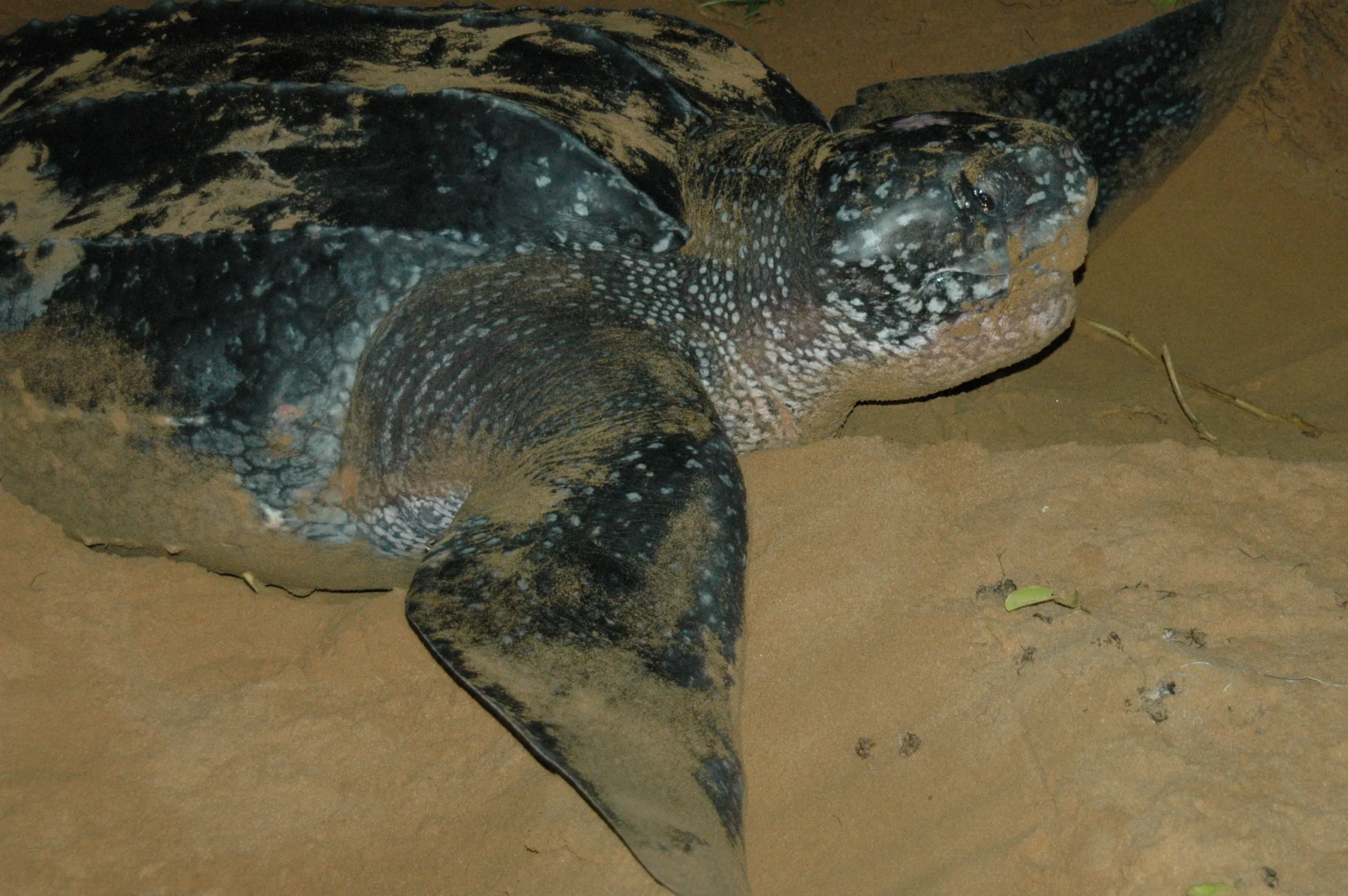
The leatherback story here is sobering. A 1996 study in Chelonian Conservation and Biology estimated that about 1,600 leatherbacks nested at Playa Grande in each of the 1988-89 and 1989-90 seasons, compared with 202 in 1993-94. The authors linked the decline to coastal development around the nesting beaches and to leatherbacks caught accidentally in offshore fisheries. The Leatherback Trust lists the eastern Pacific population as Critically Endangered.
Importantly for planners, SINAC’s park page currently states that there is no turtle observation in the park. The park is open from 6 a.m. to 6 p.m., with beach use ending at 5 p.m. during the October to February nesting season, and the Tamarindo estuary can be visited with local guides. Older travel content, including some of our own lodge reviews, describes leatherback tours at Playa Grande. Treat those as historical unless SINAC confirms a program is running. Researchers such as the Leatherback Trust offer a volunteer program from October to March for travelers who want to help directly.
If you base yourself near Tamarindo, El Sabanero Eco-Lodge is a few minutes from Tamarindo and Playa Grande. Ask locally what turtle programs, if any, are operating that season.
Camaronal and other Pacific beaches
Camaronal National Wildlife Refuge, on the Nicoya Peninsula coast south of Sámara, is a quieter olive ridley nesting site. A 2021 study in Ecología Austral by researchers from the Universidad Nacional and MINAE recorded 15,515 olive ridley arrivals at Camaronal between 2013 and 2015, with the most arrivals during the waning quarter moon. The authors recommended watching groups of no more than 10 people, each around a single nesting turtle, so that nesting is not disturbed. Hotel Punta Islita, on a 300-acre property on the same stretch of coast, is a comfortable base for the area.
Farther south, some Osa beaches support nesting but have little formal tourism. La Leona Eco Lodge, owned by a local family on the edge of Corcovado, lists a seasonal turtle-watching tour. Ask any operator to explain its permits and how it works with local conservation groups, and avoid informal offers to “find turtles” on a dark beach.
Protected does not mean open at night. Beach access, approved operators and permitted activities differ from place to place, so check before you go.
The south Caribbean: Gandoca-Manzanillo
The Gandoca-Manzanillo National Wildlife Refuge, created in 1985 near the Panama border, protects forest, coral reef and nesting habitat. SINAC’s refuge page names leatherback and loggerhead turtles among the threatened species it protects, along with about 5 square kilometers of reef off Punta Uva, Manzanillo and Punta Mona.
Long-term monitoring at Playa Gandoca by the conservation group ANAI, published in the Revista de Biología Tropical, recorded leatherback nesting from February through July each year between 1990 and 1997, peaking in April and May, with an average of 534 nests a year. The author named poaching, beach debris and erosion as the main threats. Programs here have focused on research and volunteers rather than casual tourist viewing, and availability changes from year to year.
Lodges near the refuge include Almonds and Corals, a tented jungle lodge inside the Gandoca-Manzanillo refuge, and Shawandha Lodge, on 5 acres of secondary forest about 200 meters from Playa Chiquita. A daytime visit with a conservation group may be the most responsible way to learn about turtles on this coast.
How a legitimate turtle tour works
A well-run tour follows rules on timing, group size, light, route and distance. The guide waits for the right moment and may decide not to approach at all if a turtle is still digging or seems disturbed. Accept that decision. Much of the best information comes while you wait: why artificial light disorients hatchlings, how nests are protected and why the turtle’s return to the sea is a vulnerable moment.
On any nesting beach:
- Do not use flash, phone screens or bright flashlights. Follow your guide’s instructions on light, and wear dark clothing.
- Never touch, ride, lift or move a turtle or hatchling, and never stand between a turtle and the sea.
- Do not walk over marked nests, dig into nests or drive on the beach.
- Do not fly drones or play music.
- Leave hatchlings alone. If you find one outside a tour, tell park staff or a local conservation group.
These rules match the official Costa Rica Silvestre guidance against touching, feeding or taking selfies with wild animals. A night without a turtle is not a failed tour. It is what responsible observation sometimes looks like.
Choosing a lodge that helps
Staying near a nesting beach does not make a hotel sustainable. Beachfront lights, building placement and waste can all harm turtles. Ask whether the property shields its lights from the beach, keeps native vegetation along the shore and sends guests only to approved programs. A lodge that can name its conservation partners and explain what they do together is a good sign. Our guide to choosing a sustainable hotel in Costa Rica has a full checklist, and the marine life guide explains why nesting beaches are only one part of the turtle’s life. For more ways to build nature into a trip, see our wildlife watching guide and the Costa Rica national parks guide.
Frequently asked questions
What is the best place to see nesting sea turtles in Costa Rica?
For most visitors, Tortuguero (green turtles, roughly July to October, with leatherbacks from March to May) and Ostional (olive ridley arribadas, year-round) are the most reliable, because both have organized, guided viewing systems.
When do olive ridley arribadas happen at Ostional?
SINAC says arribadas happen throughout the year, usually once or twice a month. Exact dates cannot be predicted far ahead, so allow several nights nearby and stay in touch with the local guide association.
Can I still see leatherbacks at Playa Grande?
SINAC's Las Baulas page currently says there is no turtle observation in the park, even though leatherbacks still nest from October to February. Check with SINAC or research groups before planning a trip around them.
Can I walk Tortuguero beach at night on my own?
No. SINAC closes the beach from 6 p.m. to 6 a.m. between March 1 and October 31. Night visits are only possible on guided tours within the park's turtle observation program.
Can children join turtle nesting tours?
Sometimes. It depends on the program's rules, the hour and the child's ability to wait quietly in the dark. For young children, a daytime visit to a conservation or visitor center is often a better introduction.
Does watching turtles help conservation?
It can, when programs are regulated, employ local guides and support monitoring or habitat protection. Tortuguero's spotter system and Ostional's guide requirement exist to make tourism part of protection rather than a threat to it.