Tamandua is a rustic, family-run field station in the forest above Drake Bay, inside the Golfo Dulce Forest Reserve and close to the border of Corcovado National Park. Guests sleep in simple screened bungalows, swim in river pools, and walk the same trails where the family runs butterfly, orchid and camera-trap studies. It’s for travelers who want real forest, a biologist host and no frills, and who don’t mind six river crossings to get there.
At a glance
| Location | La Bijagua, about 4.5 to 5 km inland from the beach at Drake Bay, Osa Peninsula |
|---|---|
| Style | Family-run biological station with five rustic bungalows; two apartment options nearer town |
| Setting | Primary and secondary lowland rainforest with rivers, waterfalls and natural pools |
| Best for | Naturalists, students, volunteers and fit travelers who like basic comforts |
| Getting there | About 20 minutes from Drake Bay village by 4×4, crossing six rivers; dry season only |
| CST status | Not in the official CST directory on 2026-Oct-21 |
Where it is
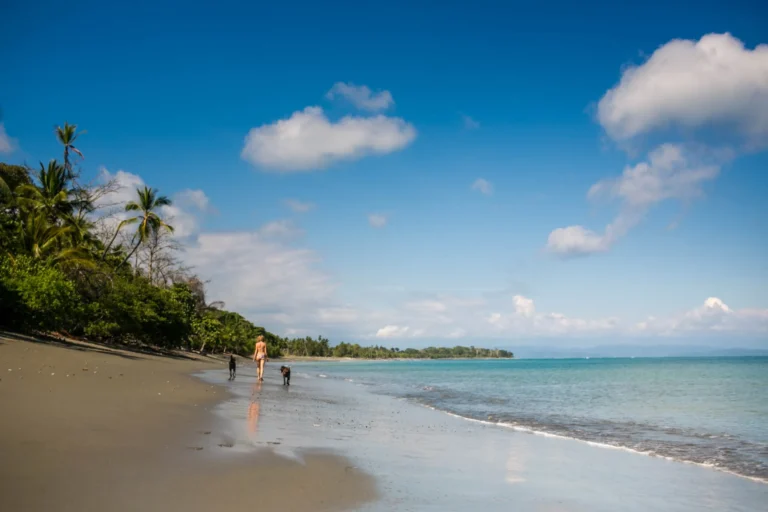
Drake Bay sits on the northwest side of the Osa Peninsula, the jumping-off point for boat trips into Corcovado and out to Caño Island. Tamandua is in the hills behind the bay. The family’s Who we are page places the station 5 km from the beach (the contact page says 4.5 km) in the Golfo Dulce Forest Reserve, very close to the boundary of Corcovado National Park.
Getting there is part of the adventure. From Agujitas, the village at Drake Bay, the station is about 20 minutes by road, but that road has steep hills and six river crossings, so the family recommends only 4×4 vehicles and asks guests to arrange transport ahead, especially if it has rained. Heavy rain can raise the rivers enough to block the way in or out. For that reason the station normally closes in the rainy season.
Reaching Drake Bay itself takes planning. The station’s travel notes give three options: a 6 to 8 hour drive from San José, with river crossings near the end; a bus to Palmar Norte, a taxi to Sierpe and one of the two daily boats down the river and along the coast to Drake Bay; or a small-plane flight of about 40 minutes to the Drake airstrip, followed by roughly 40 minutes by taxi to the station.
The family behind it
Tamandua is a Costa Rican family project. Ananías grew up in this forest and knows it intimately. Rebeca Quirós is a tropical biologist and tourist guide. Their children, Valeria and Braulio, have spent their childhood here. Allan cooks for guests and leads night walks, and Jorge, a forestry engineer, has joined as a guide. Our older page described the land as a property the family had protected for decades, and the current site says several hectares of primary forest are protected today.
Bungalows and other lodging
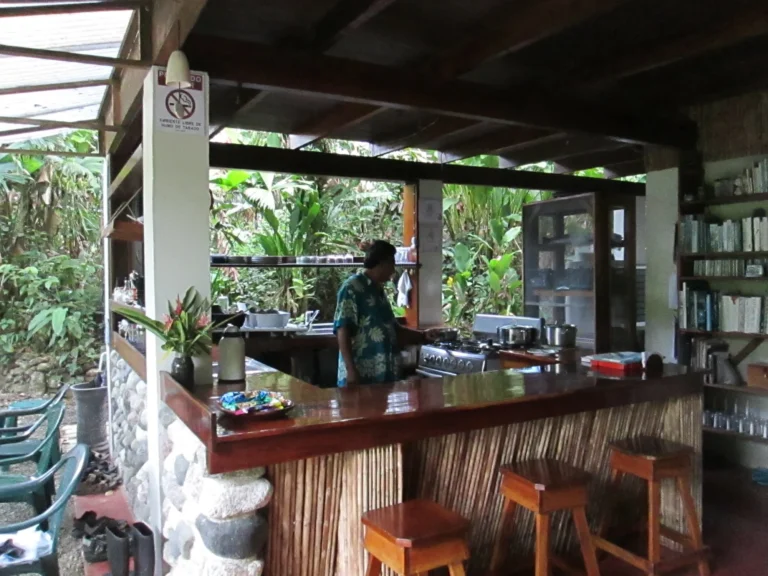
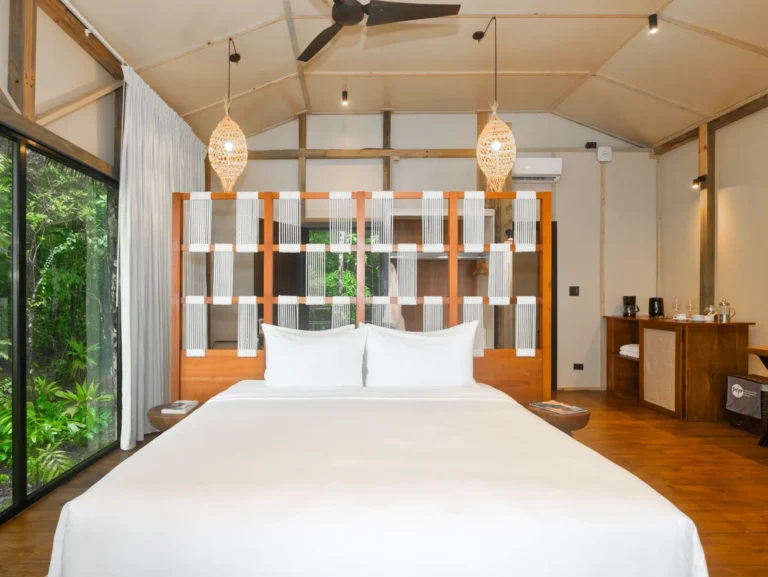
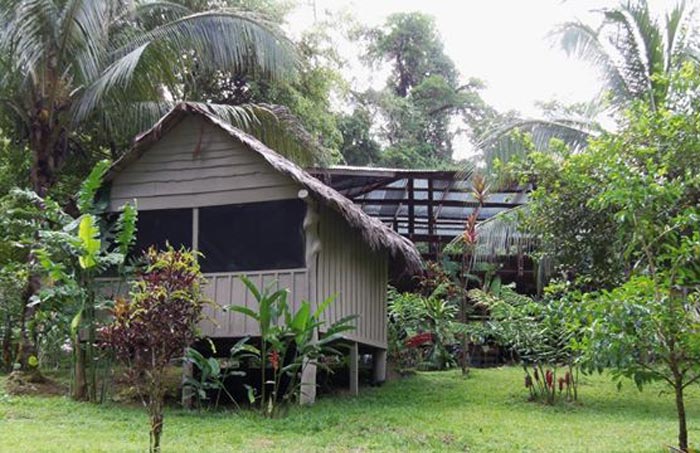
The station has five simple wooden bungalows set in the forest. According to the bungalows page, three are triples with a shared bathroom and two sleep four with a private bathroom. They’re screened, with balconies looking onto the garden, river or mountain, and bedding and towels are provided. There’s no electricity in the rooms, no hot water, no fans and no television. Solar panels power the main hall, where you can charge cameras and phones, though the family warns power is limited in rainy weather. The station says it has a cell signal and Wi-Fi in the main area, but guest reviews suggest connections can be patchy, so plan to be mostly offline.
Meals aren’t included in the bungalow price, but Allan cooks for guests, and there’s a shared kitchen with utensils if you’d rather prepare your own. Tell the family about special diets before you arrive.
The project also runs two lodgings much closer to the beach, which stay open in the rainy season: the Caligo de Osa apartments and Casa Tamandua, a two-bedroom house for up to five, 1.5 km from Drake Bay beach and 3 km before the station. Both have full kitchens and are easy to reach from the village.
Research you can take part in
What sets Tamandua apart from the other lodges around Drake Bay is the science on the doorstep. The family describes several long-term, non-profit projects:
- Butterfly monitoring. Since 2017, volunteers have set fruit-baited traps 7 days a month to photograph and release fruit-feeding butterflies, tracking changes between seasons and years. The butterfly page explains that butterflies are good indicators of forest health.
- Camera traps. Cameras have recorded wildlife on the property since 2011, and the camera-trap page says they’ve picked up all five wild cat species found on the Osa. The goal is to identify individual spotted cats by their markings and follow white-lipped peccary herds that move through in the rainy season.
- Orchid rescue. Orchids that fall to the ground on branches during storms are collected and tied onto trees along a special trail, then identified when they bloom.
- A species inventory of birds, mammals, trees, amphibians and reptiles, built from photos taken by staff, volunteers and guests.
Volunteers can stay and help with maintenance, guest service and research. If you have a good camera, the inventory is an easy way to contribute.
What to do
On the station’s own land, the family offers:
- A morning walk on about 3 km of private trails through primary forest, crossing streams and ending with a swim in a natural pool. You’ll see mostly birds, lizards and insects, with a chance of mammals.
- A night walk of 2 to 3 hours, partly in the river, looking for frogs, snakes and insects. Rubber boots are provided.
- Two-hour birding walks at dawn or dusk.
- A three-hour horseback ride along the river to a waterfall.
From Drake Bay the family can also book a boat day to Corcovado’s San Pedrillo or Sirena ranger stations, and snorkeling or diving at Caño Island Biological Reserve, about 40 minutes offshore, with dolphins and, in season, whales on the way. Corcovado requires a certified guide and advance booking with passport details, so arrange it before you arrive.
Safety and comfort
The family is unusually frank. Venomous snakes are common, so always use a flashlight and closed shoes after dark, and check your shoes before putting them on. The nearest clinic is in Agujitas on weekdays, and the closest hospitals are 2.5 to 3 hours away in Puerto Jiménez and Ciudad Cortés. The station advises older travelers and anyone with a serious medical condition not to stay. Pets aren’t allowed, to protect the wildlife.
Sustainability
Tamandua is small-scale and low-impact by nature: solar power for the main hall only, no air conditioning, a family protecting forest next to Corcovado, and research shared freely with visitors. It isn’t in the official CST directory, so the conservation work is described here as the family reports it.
Who it suits
Tamandua suits biology students, birders, wildlife photographers, volunteers and adventurous travelers who prefer river pools and night walks to hot showers. It isn’t for anyone needing comfort, reliable connectivity, easy access or nearby medical care, and it’s usually closed in the wettest months.
For more comfort around Drake Bay, compare Aguila de Osa Inn or La Paloma Lodge, or browse all our Osa Peninsula eco-lodges. Our Corcovado and Osa Peninsula guide explains how to plan park visits from Drake Bay. Tamandua is also listed on Costa Rica Journeys.
Frequently asked questions
Is Tamandua open all year?
The biological station normally closes in the rainy season because rising rivers can cut off the road. The family's apartments and house near Drake Bay beach stay open year-round.
Can I drive my own car to the station?
Only in a 4x4, only in the dry season, and preferably not at night. Ask the family about road and river conditions first, or arrange their transport from Agujitas.
Are meals included?
No. Lodging and food are priced separately. Allan, the station cook, prepares meals for guests on request, and there's also a shared kitchen you can use.
Can I volunteer with the research projects?
Yes. Volunteers help with maintenance and guest service as well as the butterfly monitoring, orchid trail and species inventory. Contact the family with your dates and skills.