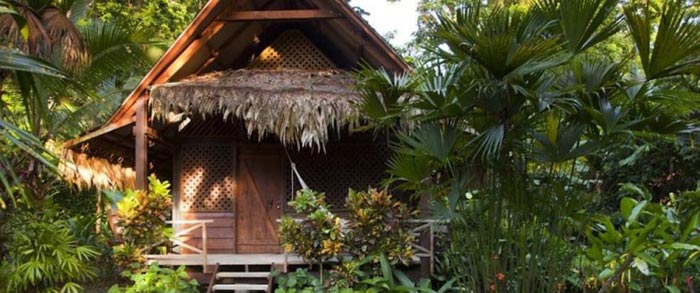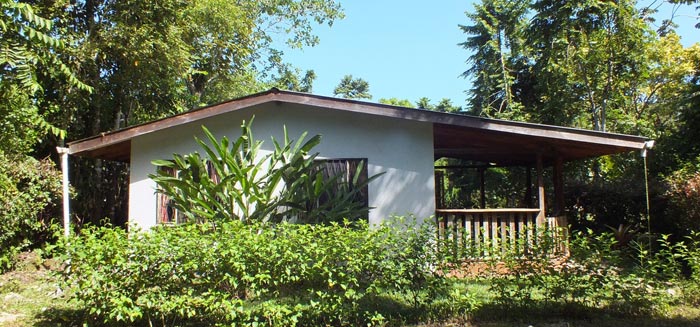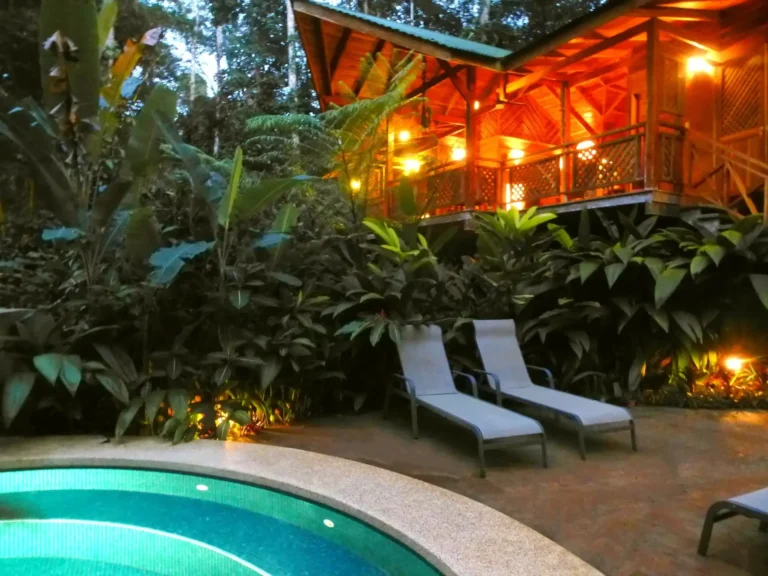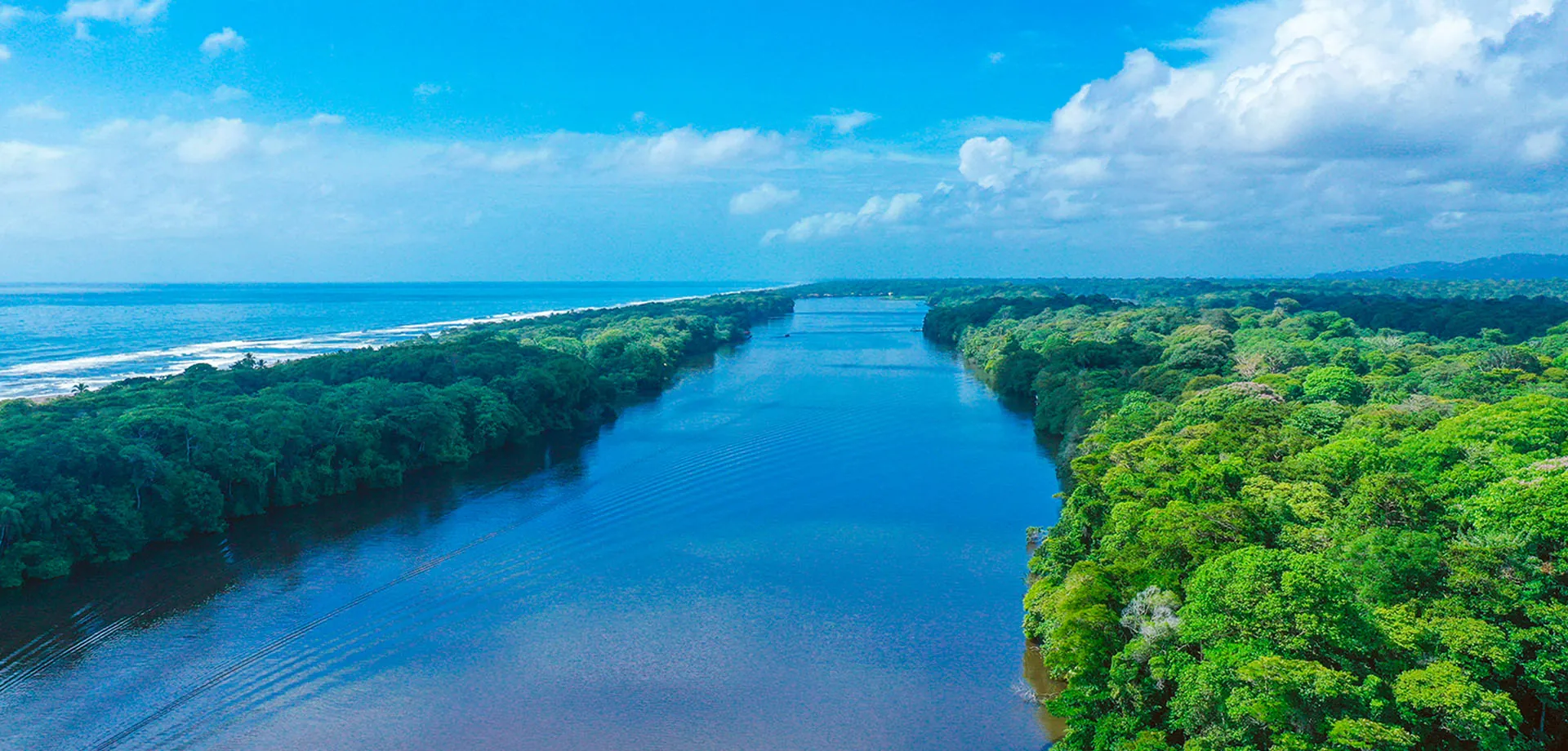

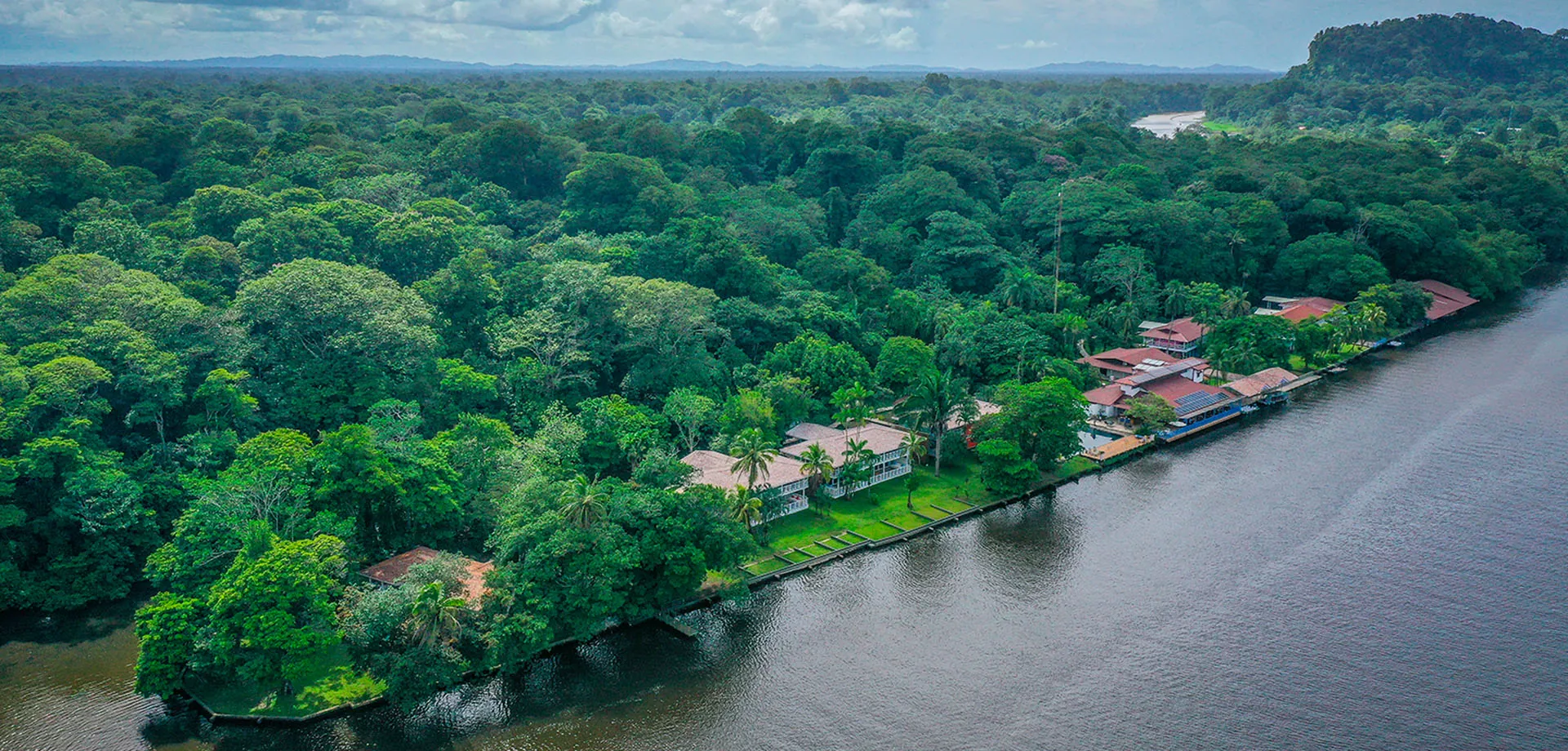

Tortuga Lodge is a small, upscale riverside lodge in Tortuguero, set in plantation-style gardens on the Tortuguero River, a mile from where it meets the Caribbean. With 29 rooms, its own 26-hectare forest reserve and naturalist guides on staff, it’s the quiet, comfortable alternative to Tortuguero’s big package lodges, and one of the few here that publishes detailed figures on its energy, water and waste.
At a glance
| Location | Tortuguero River, about 10 minutes by boat from Tortuguero village, opposite the airstrip |
|---|---|
| Style | Small upscale lodge with suites, rooms and a villa, part of the Böëna Lodges group |
| Setting | Riverside gardens backed by a 26-hectare private reserve |
| Best for | Couples, families and wildlife lovers who want Tortuguero with space and service |
| Getting there | 25 to 30 minute flight from San José, or road and boat via Caño Blanco |
| CST status | Not listed in the official directory (checked 2026-Oct-21) |
Where it is
The lodge sits on the Tortuguero River about a mile from the river mouth, according to its travel page, roughly 10 minutes by boat from Tortuguero village. The airstrip is directly across the canal, which makes flying in unusually easy.
There’s no road to Tortuguero. You have two choices:
- Fly. Xplore Air, the group’s own Cessna Caravan service, flies from Pavas or Juan Santamaría International Airport in about 25 to 30 minutes, and national carriers such as Sansa also serve the strip. A boat picks you up for the short crossing.
- Drive and boat. Drive to the Caño Blanco dock and take the lodge’s boat. The shared boat leaves at 10:30 am, with later departures possible up to 3 pm, and must be booked at least two business days ahead. The whole trip from San José by land and water takes about five hours.
Rooms
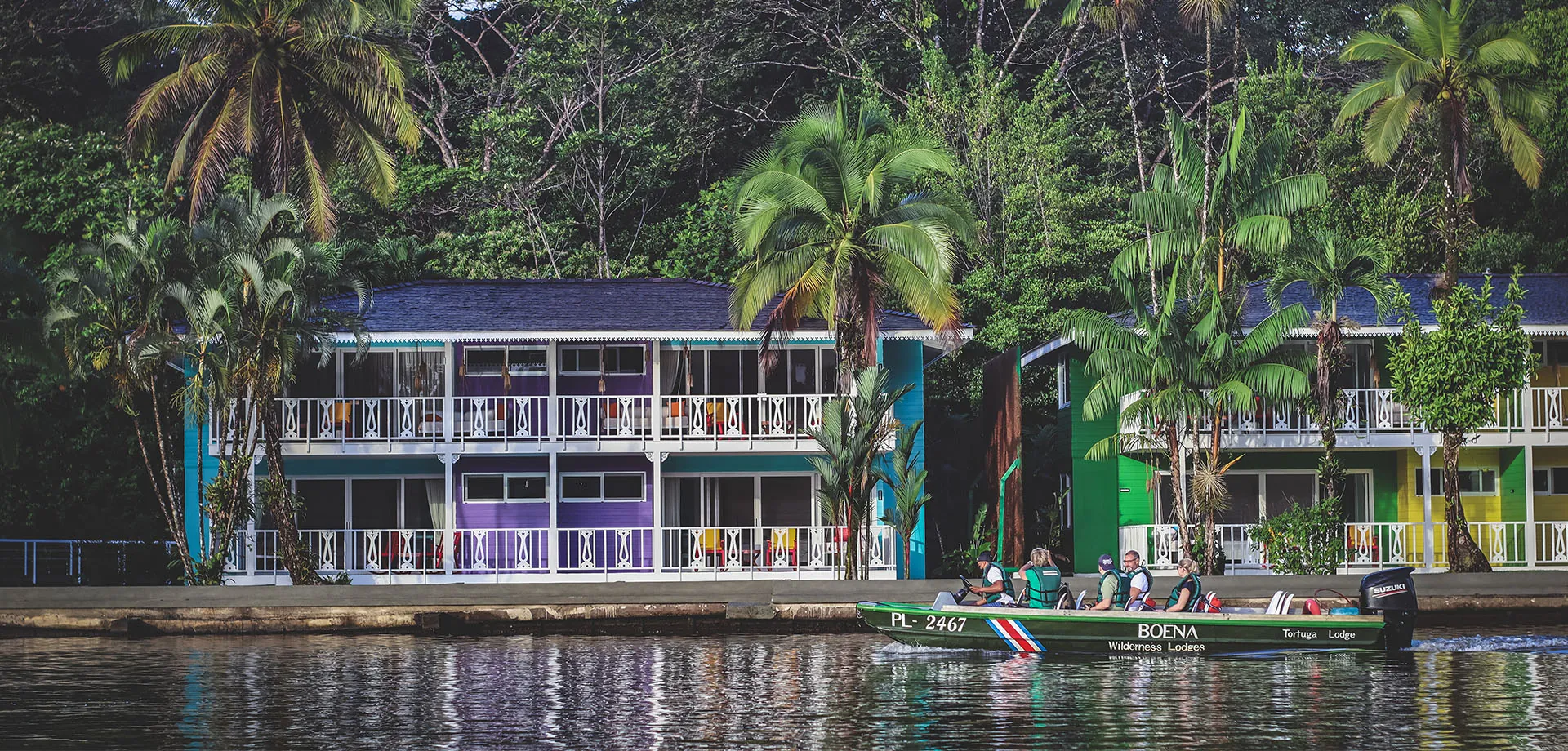
The lodge offers 29 rooms in seven categories, according to its accommodations page. Five of them are described on the site:
- Miss Florentina Villa: the top unit, decorated in a Caribbean Victorian style.
- Miss Evelyn Suites: Victorian-era furniture with lighter tropical touches.
- Mr Mishak Suites: dark wood and bright tropical accents.
- Miss Perla Suites: balcony rooms looking over the canals and grounds.
- Papi Brown Rooms: terrace rooms with partial views of the canal, gardens and forest.
Every category has eco-efficient air conditioning, according to the lodge’s FAQ, along with Wi-Fi, pillow-top beds and a private terrace or balcony. Rubber boots, walking sticks and umbrellas are provided for excursions, which helps when the Caribbean rain arrives.
Food
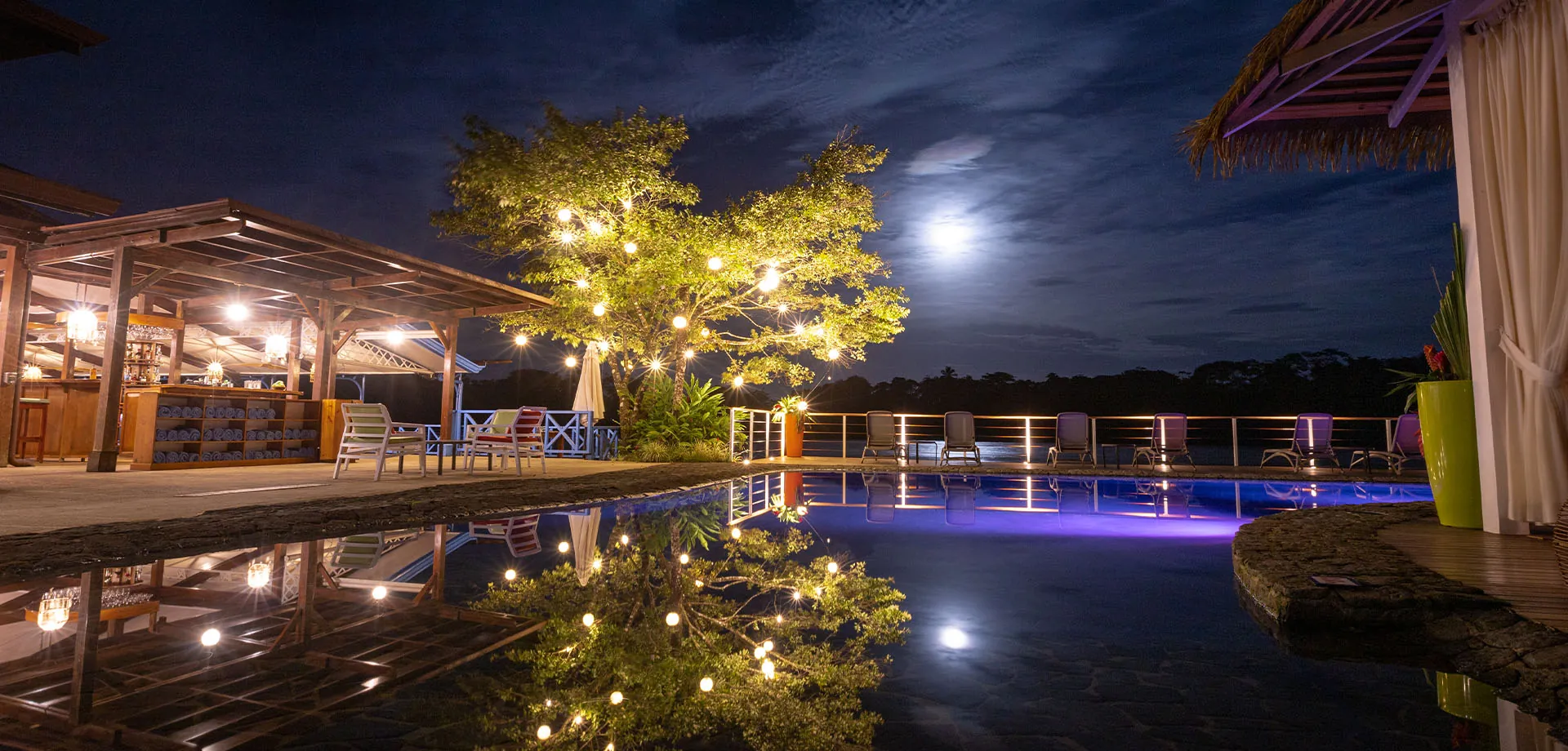
Meals are served at the open-air Mydas Nest restaurant over the river, according to the dining page. The menu is à la carte Costa Rican Caribbean cooking with some fusion dishes, and there are full plant-based menus at every meal. Vegetarian, vegan and gluten-free diets can usually be handled with notice. Afternoon coffee and pastries are on the house, and the bar has a terrace on the water. The lodge’s Tortuguero package includes three meals a day.
Things to do
Most guests come for the national park and the turtles. The activities page lists:
- Turtle nesting tours: in groups of up to 10. Spotters on the beach call in when a turtle comes ashore, and only a limited number of groups are sent to each one.
- Hatchling walks: in the early morning or before sunset, to look for a nest that has started hatching.
- Natural history boat excursion: three hours through the national park’s waterways with a local naturalist.
- Kayaking the canals: two hours.
- Cerro Tortuguero: a two-hour hike of moderate difficulty to a lookout over the Caribbean lowlands.
- Laguna 4: a boat trip along the Caño Palma channel.
- Twilight walk: two hours in the lodge’s private reserve.
- Cacao and chocolate: a visit to the lodge’s cacao orchard.
- Village tour: two hours on Tortuguero’s history and culture.
- Fishing: half and full days on the Atlantic.
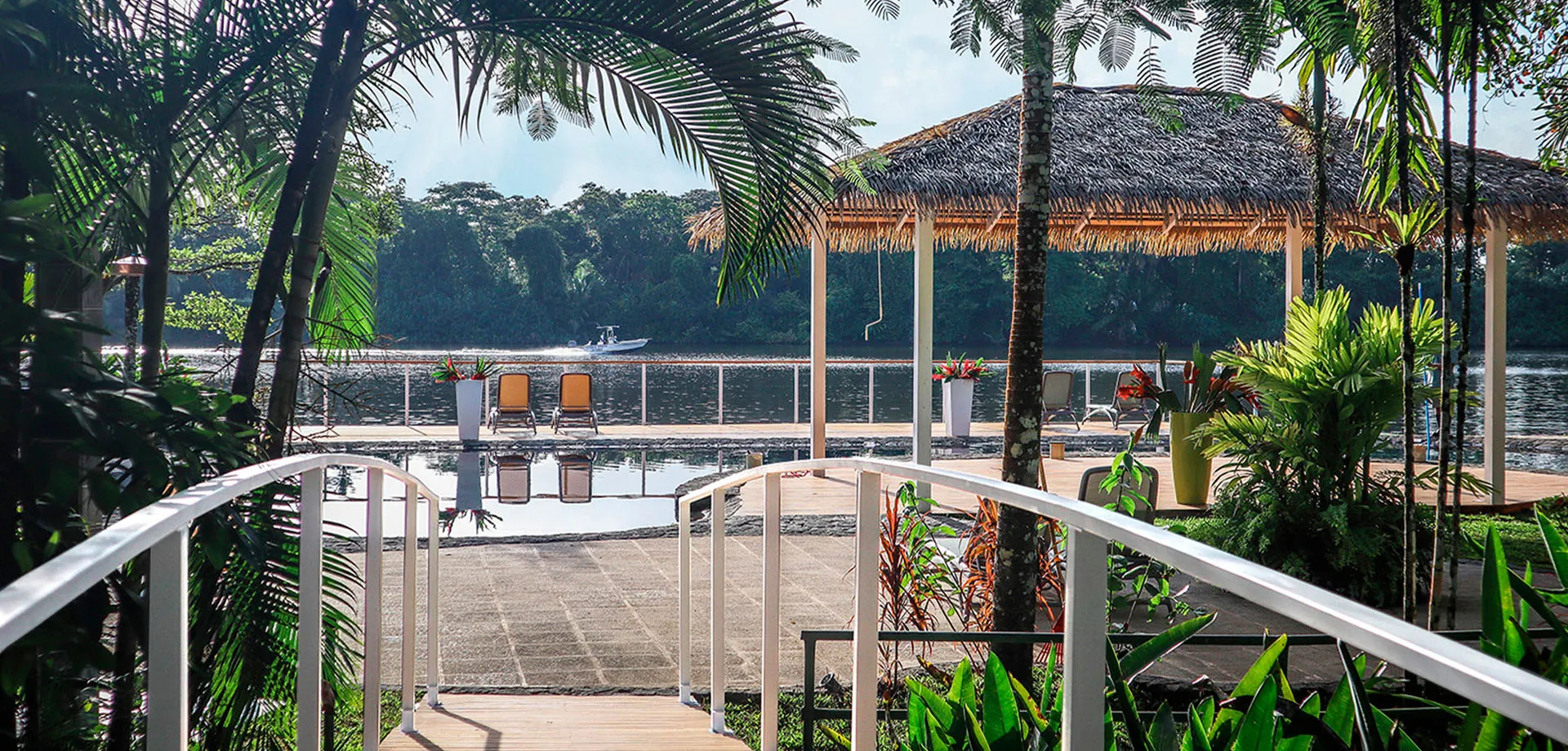
Four short trails behind the lodge are free to walk on your own, and there’s a pool, treated with salt rather than chlorine. Children of any age are welcome, though some tours must be booked privately for kids aged seven and under. The lodge recommends staying at least three nights.
Tortuguero National Park and the turtles
Tortuguero National Park was created in 1970 and covers 26,653 hectares of land and more than 50,000 hectares of sea. The Tortuguero Conservation Area counts 442 bird species and about 138 mammals in the park, and calls its green turtle population the largest in the world, with around 22,500 females nesting each year. Leatherbacks and hawksbills nest here too. To watch nesting on the beach, you must go with a tour operator authorized by the park.
According to the Sea Turtle Conservancy, green turtle nesting runs from June through November. Our Tortuguero National Park guide and sea turtle nesting guide explain how to plan around the season.
Sustainability
Tortuga Lodge isn’t in the CST directory, though its sustainability page says the Böëna group follows CST standards, and the lodge belongs to CANAECO, Costa Rica’s national chamber of sustainable tourism. The specifics are more useful than most:
- Energy: 55 solar panels cover about 55% of energy use, and biodigesters make methane for cooking staff meals.
- Water: filtered and UV-treated drinking water to cut bottled water; meters to track use; a three-tank septic system so gray water doesn’t reach the canals; salt rather than chlorine in the pools; biodegradable soaps; four-stroke boat engines.
- Waste: sorting, recycling through Tortuguero’s recycling center, composting kitchen scraps for the gardens and avoiding single-use plastic.
- People: all staff come from the area, and the lodge has funded school repairs in San Francisco and Barra de Tortuguero and sponsors a Caribbean music school.
The private reserve is another plus. The lodge says it’s the only hotel in Tortuguero with its own nature reserve.
Who it suits
Tortuga Lodge suits couples, families and nature lovers who want Tortuguero’s wildlife without a busy dining room or a fixed group itinerary, and who value air conditioning and service after a hot day on the canals. Flying in makes it workable even on a short trip.
It’s less suited to budget travelers or anyone who wants to stroll into the village in the evening, since you’re a boat ride away. For different styles nearby, look at Laguna Lodge between the lagoon and the beach, the larger Pachira Lodge with its full-board packages, or Mawamba Lodge near the village. More options are in our Caribbean eco-lodges section.
Frequently asked questions
How do I get to Tortuga Lodge?
Fly from San José to the Tortuguero airstrip, which is directly across the canal from the lodge, in about 25 to 30 minutes. Or drive to Caño Blanco and take the lodge's boat, which leaves at 10:30 am and must be booked two business days ahead.
Do the rooms at Tortuga Lodge have air conditioning?
Yes. The lodge says every room category has eco-efficient air conditioning, which is unusual in Tortuguero.
When can I see turtles nesting near Tortuga Lodge?
Green turtles nest at Tortuguero from June through November, according to the Sea Turtle Conservancy. The lodge runs guided nesting tours with park-authorized guides, and hatchling walks once nests start to hatch.
Does Tortuga Lodge have its own nature reserve?
Yes. The lodge protects 26 hectares as a private reserve, with four short trails you can walk freely and a guided twilight tour.