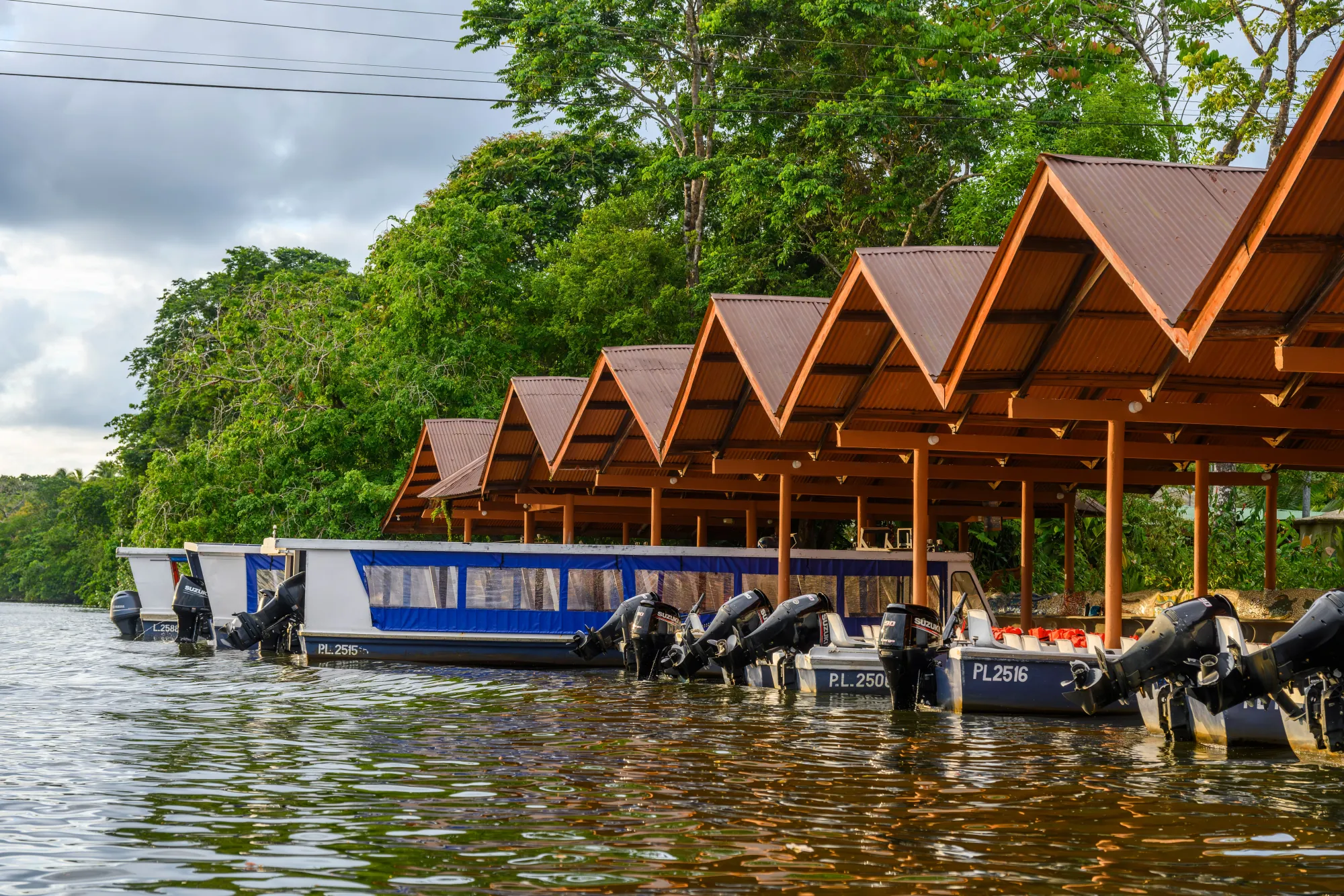
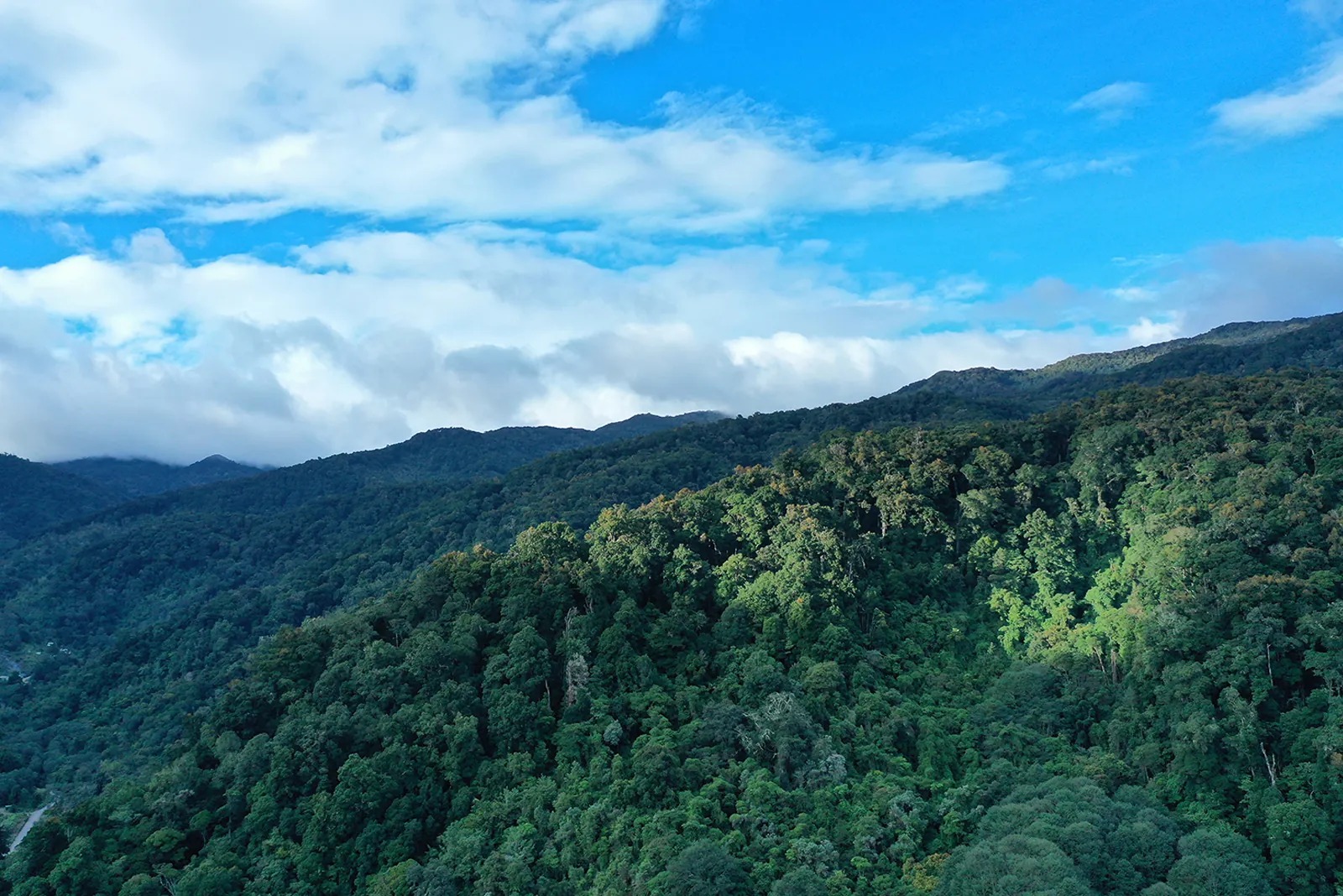
A dugout canoe works its way up the Yorkín River in Talamanca, past cacao trees, river stones and forested hills. The people waiting at the landing aren’t performers in a staged version of village life. They’re hosts who decide how much of their language, food, farming knowledge and community they want to share with visitors. That difference is the heart of this guide. Community-based tourism is most valuable when residents decide what tourism looks like and keep a fair share of what it earns.
Costa Rica is famous for national parks and wildlife, yet some of its most rewarding ecotourism takes place outside the park gate. A rural association may run homestays beside a forest corridor. A women’s group may teach traditional cacao preparation. A community association may handle bookings for a national park entrance. Done well, these visits support local ownership, cultural continuity and practical reasons to keep forests and rivers standing. Our Costa Rica ecotourism guide covers the bigger picture; this article focuses on the people who live beside the places travelers come to see.
What community-based tourism actually means
Community-based tourism isn’t simply a tour that stops in a village. It means local people have a substantial role in planning, running and benefiting from the activity. A family guesthouse can qualify, but so can a network of hosts, guides, cooks and boat operators working together.
Costa Rica gives the idea a legal footing. Law 8724, the Law to Promote Rural Community Tourism of July 17, 2009, was amended by Law 10049 in November 2021. The amended text defines a posada de turismo rural (rural tourism inn) as lodging with no minimum number of rooms, each with a private bathroom, focused on sharing the daily life and customs of families in a rural setting, with meals allowed. The Costa Rican Tourism Board (ICT) says on its tourism development page that rural community tourism experiences are created in cooperatives or community associations, and it runs a bilingual catalog plus training and promotion for these groups.
There is also a long-standing network behind the sector. According to the TO DO Award profile of ACTUAR, the Costa Rican Association of Rural Community-Based Tourism was founded in 2001 by Indigenous groups, farmers’ organizations and women’s organizations. When it won that award in 2014, it linked 34 communities and marketed their tours through its own travel agency.
Legal recognition doesn’t make every advertised “cultural experience” genuine. It does show this is a real economic sector with defined forms, not a marketing trend. Ask who owns the enterprise, who sets the itinerary and who receives the fee.
Indigenous Costa Rica: the basic facts
Indigenous peoples in Costa Rica aren’t one cultural group. The national statistics office’s report on the 2011 census of Indigenous territories (INEC) recognizes eight peoples: Bribri, Brunca (Boruca), Cabécar, Chorotega, Huetar, Maleku, Ngöbe and Teribe (Térraba). Together they hold 24 legally defined territories. That census counted 104,143 people who identified as Indigenous nationwide, and 35,943 of them lived inside the territories, which had a total population of 48,500.
The legal basis for those territories is Law 6172 of 1977, the Indigenous Law. Its Article 3 declares the reserves inalienable and exclusive to the Indigenous communities that live in them, and its Article 4 says each territory is governed by its own community structures. For travelers, the practical takeaway is simple: a territory isn’t public land or a park. You visit at a community’s invitation, on its terms.
| People | Territories (INEC 2011) | General area | Visitor programs covered in this guide |
|---|---|---|---|
| Bribri | Talamanca Bribri, Këköldi, Salitre, Cabagra | Southern Caribbean and southern Pacific slopes | Stibrawpa (Yorkín) and AGITUBRIT (Suretka) |
| Cabécar | Chirripó, Bajo Chirripó, Nairi Awari, Talamanca Cabécar, Tayni, Telire, Ujarrás, China Kichá | Talamanca range, both slopes | Nairi Awari partnership with Pacuare Lodge |
| Brunca (Boruca) | Boruca, Curré | Buenos Aires, Puntarenas | Masks and the Juego de los Diablitos |
| Maleku | Guatuso | Northern Plains, Alajuela | Community visits in the palenques |
| Ngöbe | Abrojo Montezuma, Osa, Conteburica, Coto Brus, Altos de San Antonio | Southern Pacific near Panama | Not covered here |
| Teribe | Térraba | Buenos Aires, Puntarenas | Not covered here |
| Huetar | Zapatón, Quitirrisí | Central Valley edges | Not covered here |
| Chorotega | Matambú | Nicoya Peninsula | Not covered here |
The last column shows only what this guide covers, not a promise of access. Many communities don’t host tourists at all, and that’s their choice.
Bribri community tourism in Talamanca
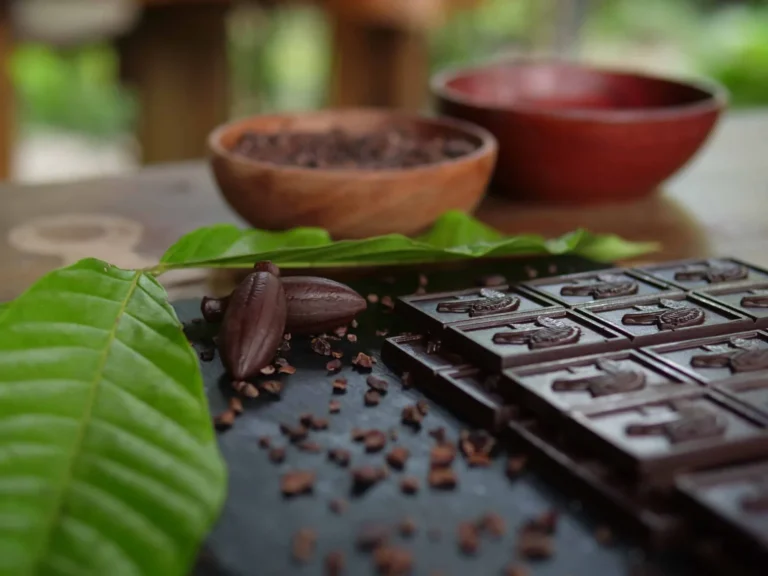
The Bribri communities of southeastern Costa Rica offer one of the clearest examples of nature travel and cultural continuity supporting each other. In Yorkín, inside the Talamanca Bribri territory, the Stibrawpa women’s association was founded in 1996, according to Cultural Survival’s profile of the group. Visitors reach the village by canoe, roughly an hour up the Yorkín River. Activities described there include forest hikes, chocolate making from cacao (traditionally a women’s practice), visits to organic plots, talks on medicinal plants and overnight stays in thatched buildings. The same article reports that tourism earnings helped the association set up a local health clinic, a high school and a water system.
Nearby, the ICT’s own Caribbean tourist guide describes AGITUBRIT, an association of Indigenous guides created in 2014 with 15 members from several Talamanca communities, based in Suretka. Its tours include forest walks, river trips, waterfalls, visits to conical houses, organic gardens and cacao processing, framed by what the guides call Siwá, the ancestral thinking behind their traditions.
A meaningful visit may include a discussion of cacao cultivation, Bribri food, household farming and how families look after rivers and forest. Hosts set the boundaries on photography and on which spaces are open. Expect rural transport, rain and a schedule shaped by community life rather than a hotel program.
Where to stay for Talamanca visits
The southern Caribbean coast is the natural base. Browse our Caribbean eco-lodges, or start with these:
- Finca Tierra, a nine-acre, off-grid permaculture farm at Cocles near Puerto Viejo that has been rebuilding former cattle pasture since 2008. Its own site notes the area is surrounded by Afro-Caribbean and Indigenous communities, and it lodges students and retreat guests in bamboo cabinas.
- Selva Bananito Lodge, a private reserve on the Caribbean slope of the Talamanca Mountains that acts as a buffer for La Amistad International Park. Its conservation work began in 1995, and the lodge says the forest helps protect water for around 100,000 people downstream.
- Pacuare Lodge, on the Pacuare River, is a useful example of a lodge working alongside an Indigenous community without being community-owned. Its sustainability page describes a 340-hectare reserve, staff drawn largely from nearby communities including the Cabécar territory of Nairi Awari, training for Cabécar residents in guiding, English and food handling, and a Cabécar hike experience. The lodge reports receiving the Elite level of Costa Rica’s CST sustainability certification in 2024; our CST certification guide explains how to check a listing.
Maleku culture and the Caño Negro wetlands
The Maleku live in three villages, called palenques, in the canton of Guatuso: Margarita, El Sol and Tonjibe. The University of Costa Rica’s Indigenous languages program (Dipalicori) notes that the Maleku language belongs to the Chibchan family, that 67.5% of people living in the territory reported speaking it in the 2011 census, and that UNESCO criteria class it as “definitely endangered.” Community-led visits in the palenques often center on that language, along with food, crafts and history.
The same region holds the Caño Negro National Wildlife Refuge. SINAC says it was created by decree on January 4, 1984, became one of Costa Rica’s first two Ramsar wetlands on December 27, 1991, and has recorded 307 bird species (206 resident, 101 migratory). The lagoon is the largest in northern Costa Rica, and in the dry season it breaks up into separate pools.
A day on the Río Frío can be paired with a separately arranged Maleku visit, but treat them as two different things. A wetland boat trip is about birds, caimans and water levels. A Maleku-led visit should center the hosts’ own account of language, place and history. Don’t expect wildlife at a cultural visit, or cultural access just because a community lives near a tourist route.
Where to stay in the north
See our Northern Plains eco-lodges. Two options with real local roots:
- Maquenque Eco Lodge sits on the San Carlos River at Boca Tapada, inside the Maquenque Mixed Wildlife Refuge. It describes local hiring, partnerships with the Boca Tapada community and environmental education, and great green macaws cross overhead at dusk.
- Finca Verde Lodge is in the rural community of Bijagua, where the owners say bare farmland has grown back into forest over roughly 25 years. Guests stay in cabins and join guided walks for sloths, frogs and birds.
Boruca arts in the southern highlands
The Brunca (Boruca) people live in two territories, Boruca and Curré, in the canton of Buenos Aires. Their carved masks and the Juego de los Diablitos, held in Boruca each year at the turn of the year, are protected as part of the community’s traditional knowledge. In 2019, Semanario Universidad reported that the national registry rejected a textile trademark using a Boruca-style mask and the name “Diablitos” after the territory’s development association opposed it. In the festival, the Boruca are represented by the diablitos and the Spanish conquerors by the bull.
That case is a good reminder for shoppers. A store selling “Indigenous-style” masks isn’t the same as buying from a named Boruca artisan or association. Buy directly where you can, and ask whether a design is traditional, newly interpreted or made for the visitor market. There’s no need to treat a living community as a museum piece.
The highlands around San Vito make a good companion stop. The Organization for Tropical Studies’ Las Cruces station and the Wilson Botanical Garden represent a different kind of local nature economy built on science and education. Our Southern Pacific eco-lodges page lists nearby stays.
Nicoya and Gulf of Nicoya communities
The Gulf of Nicoya holds islands, fishing villages and mangroves that most travelers skip on their way to Santa Teresa or Montezuma. In April 2026, Delfino reported on community tourism around Isla Venado, Isla Chira, Costa de Pájaros and Manzanillo, supported by the MarViva Foundation. Activities include mangrove tours, responsible artisanal fishing, mangrove-linked beekeeping, local cooking and rural lodging. One named example is Posada Rural La Amistad on Isla Chira, a women-led business offering rustic rooms, local food and nature tours.
Before booking a gulf trip, ask who runs the boat, how tides and weather affect the return crossing, and how the fee is shared. A small boat isn’t automatically low impact.
On the southern peninsula, Luz en el Cielo is an eco bed-and-breakfast and hostel at the edge of Montezuma village, serving an organic breakfast cooked to order, with beaches and waterfalls a short walk away. See more Southern Nicoya eco-lodges.
The Osa Peninsula: communities at the park gate
On the Osa, community tourism is woven into park access itself. SINAC’s Corcovado National Park page says reservations are mandatory, that the long La Leona to Sirena and Los Patos to Sirena trails must be walked with a tourism guide, and that bookings for the El Tigre sector are handled by the Asociación Dos Brazos de Río Tigre, a local community association. It also lists neighboring communities worth visiting, including Rancho Quemado, La Palma, Carate, Los Planes and Dos Brazos. Our Corcovado and Osa guide covers the sectors in detail.
- Bosque del Rio Tigre is a small birding lodge at Dos Brazos, close to the El Tigre sector, where hosts Liz and Abraham guide guests as naturalists.
- La Leona Eco Lodge has beach tent-cabins with private bathrooms next to Corcovado’s La Leona entrance near Carate, with guided park tours, night walks and lagoon kayaking.
Browse all our Osa Peninsula eco-lodges.
Farms and rural learning
Not every rural experience is Indigenous or even community-owned, but family farms are a large part of rural tourism. Rancho Margot, on more than 400 acres near Lake Arenal, grows much of its own food, runs workshops on regenerative practices and takes volunteers in its garden and kitchen. Our guide to organic farm stays and permaculture covers this side of rural travel in depth.
How to judge a community tourism operator
A good operator names the resident organization, explains who will guide you and gives a realistic account of transport and what you’ll do. Some programs include a boat, a meal and a guide; others are a short workshop. Paying more doesn’t mean more money stays local, so ask how it’s shared.
Watch for warning signs: no named village or organizer, inaccurate photos, promises of private access to ceremonies, or language describing people as “untouched” by modern life. Even a well-meaning visitor can cause harm by arriving unannounced, photographing children without consent or treating homes as exhibits.
| What to check | Question to ask | Why it matters |
|---|---|---|
| Local leadership | Who owns the enterprise and decides what visitors see? | Keeps the community from becoming a backdrop for outsiders’ businesses |
| Payment | How does the fee reach hosts and guides? | Makes the local benefit visible |
| Cultural consent | Are photos and demonstrations invited? | Respects living traditions |
| Accommodation | Is it a homestay, a rural inn or an independent lodge? | Sets realistic expectations about facilities |
| Conservation | Does the program protect forest, water or farmland in a documented way? | Connects tourism to real environmental work |
Book directly with the community organization when you can, and stay overnight if hosts offer it. A second day spreads spending among cooks, farmers, guides and boat owners, and it takes the rush out of the visit. For broader checks on any property, see our guide on how to choose a sustainable hotel.
Etiquette for cultural visits
Ask before photographing people, homes, sacred places or artwork. Follow guidance on clothing and which areas are open. Don’t hand candy or cash to children; if a program supports a school, give through the organization. A few words of Spanish help, and so does learning the community’s own greeting if hosts offer it.
Carry cash only if the operator advises it, and ask about payment methods in advance. Bring a refillable bottle, sun protection and rain gear. Phone signal and electricity can be intermittent; our guide to reaching remote eco-lodges covers roads, boats and transfers.
Traditional knowledge can deepen your understanding of a landscape, but don’t romanticize hardship. Roads, clinics and schools are decisions for residents, not features to preserve for visitors’ photos.
Keep the plan simple
Three or four nights in one region with two different kinds of experience works well. On the southern Caribbean, stay near Puerto Viejo or Cahuita and arrange one community-led Talamanca visit with confirmed transport. In the north, pair Caño Negro birding with a separately booked Maleku visit. On the Osa, hire local guides for the park and leave time for the villages around your lodge.
You don’t need to fit every culture into one trip. Traveling slowly, paying fairly and listening carefully do more good than collecting “authentic experiences.” The most memorable moments often start when you learn the name of the person showing you their home ground.
Frequently asked questions
How many Indigenous peoples and territories does Costa Rica have?
The national statistics office (INEC) recognizes eight Indigenous peoples and 24 Indigenous territories. The 2011 census counted 104,143 people who identified as Indigenous, about a third of whom lived inside the territories.
Can visitors stay overnight in Indigenous communities?
Some communities offer organized stays. Cultural Survival describes overnight lodging in thatched buildings run by the Stibrawpa association in Yorkín, for example. Book through the organization, confirm current arrangements directly and never arrive unannounced.
Do I need permission to enter an Indigenous territory?
Territories are communal land governed by their own councils under the 1977 Indigenous Law, not public parks. The simplest rule is to visit only with a community organization or guide that has invited you.
Is community tourism always environmentally sustainable?
No. Community ownership and environmental impact are separate questions. Look at transport, water, waste and wildlife practices as well as who controls the business.
Is an Indigenous cultural visit the same as a wildlife tour?
Usually not. A community visit centers the hosts' knowledge and choices. If it includes a forest walk, ask what it covers and who is guiding it.
How can I tell if a rural lodging is a recognized community business?
Ask whether it is registered with the ICT's rural community tourism program, which works with cooperatives and community associations, and whether it belongs to a network such as ACTUAR. Then ask the questions in the checklist above about ownership and how fees are shared.