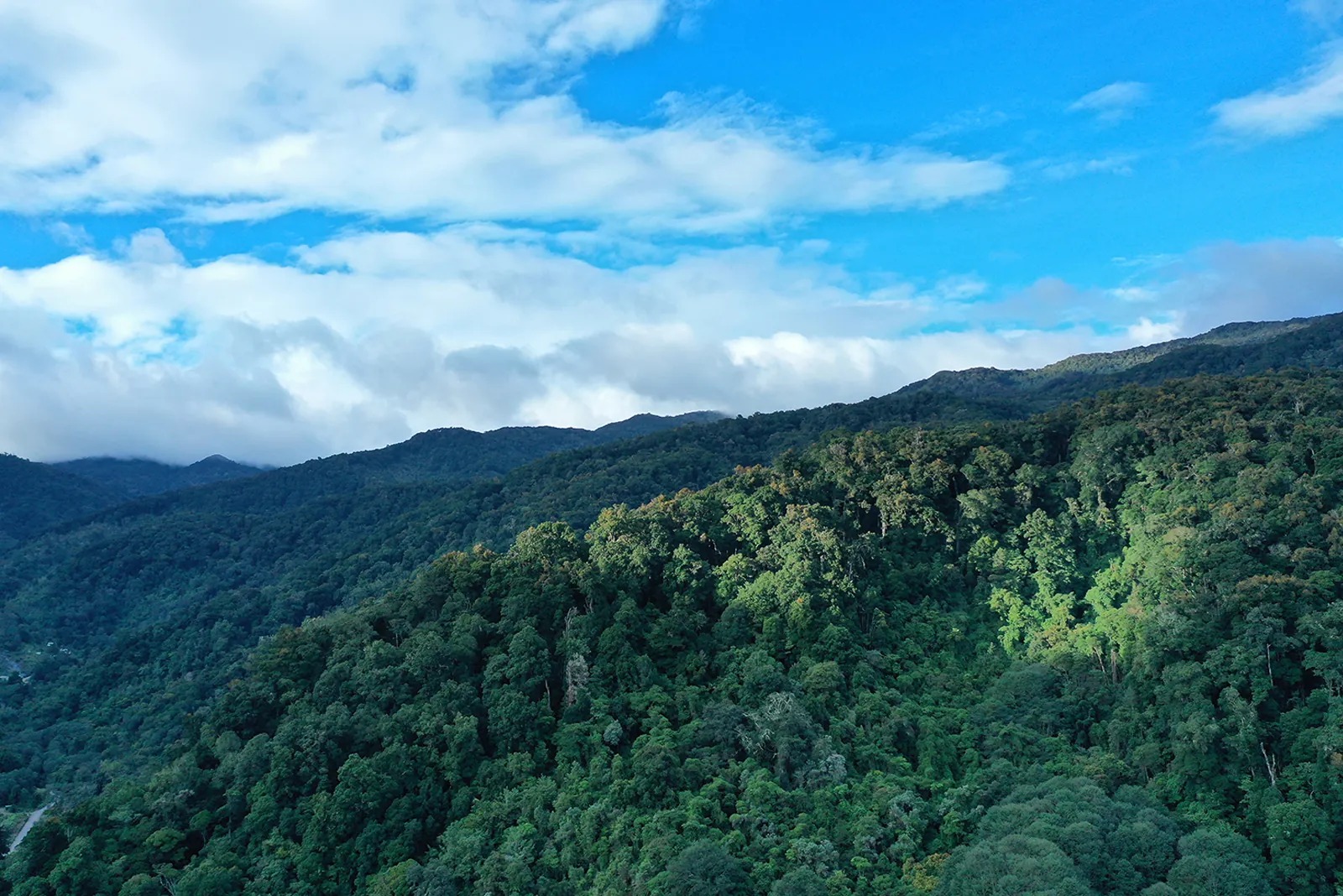
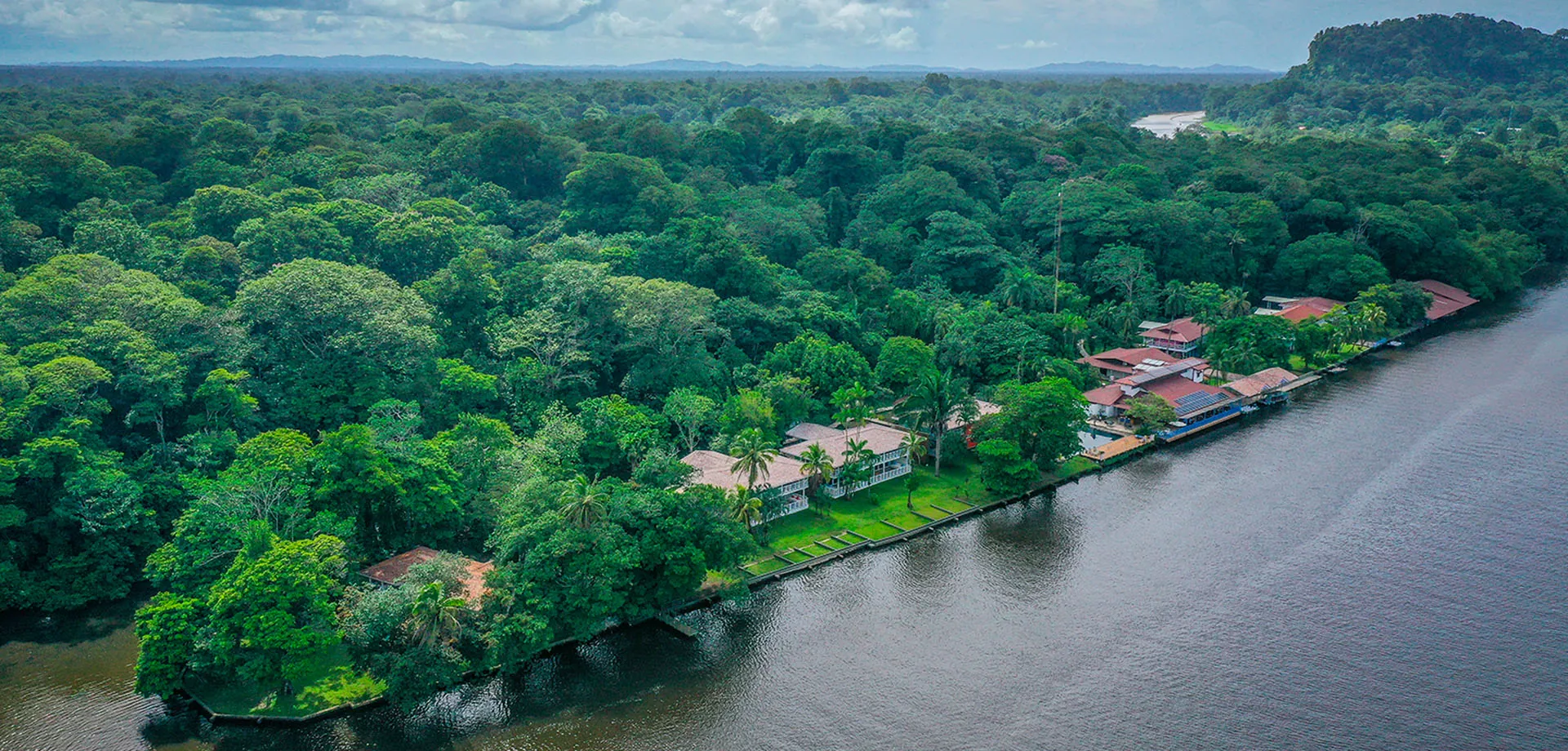
Stand at the edge of a Costa Rican rainforest and it’s easy to imagine that everything beyond the trail has always been green. The chorus of birds, the dense canopy and the moss-wrapped trunks suggest a landscape untouched by time. In reality, many of the forests visitors admire today survive because people made hard decisions to protect them, and a large share of the rest has grown back on land that was pasture within living memory.
Costa Rica’s environmental story is often told as a miraculous reversal of deforestation. The real history is more interesting. It combines national parks, field science, private land protection, payments to forest owners, changing rural economies and an ecotourism industry that gave many families a financial reason to keep forest standing. The country still faces serious pressures, but its experience is one of the clearest examples anywhere of conservation becoming part of national life.
From forest loss to forest recovery
Through much of the twentieth century, cattle ranching, crops, settlement and new roads cleared large areas of woodland, especially in the accessible lowlands. Exact historical figures vary with how “forest” is defined and measured, so treat any single number for the low point with caution. What is not in doubt is the direction of travel since then.
According to an article by the technical director of Costa Rica’s National System of Conservation Areas (SINAC), published by the Universidad Nacional’s journal Ambientico, the country announced forest cover of about 52.4 percent in 2013, and SINAC’s 2021 forest-type map put it at about 57.1 percent of national territory. That map splits the total into mature forest (about 24 percent of the country), secondary forest (about 23 percent), deciduous dry forest, palm swamp and mangrove. In other words, nearly half of today’s forest is regrowth, which is why recovering forest matters so much to this story.
The same article notes that Costa Rica holds more than 5 percent of the planet’s known biodiversity, and that almost a quarter of the country lies inside protected areas, where most of the mature forest is found.
The creation of a national park system
Costa Rica’s park movement grew through the second half of the twentieth century, driven by scientists, officials, local residents and foreign conservationists. A few milestones show how quickly it took shape:
| Year | Milestone | What it protected |
|---|---|---|
| 1970 | Tortuguero becomes a national park, building on sea turtle research begun by zoologist Archie Carr in the 1950s | Caribbean green turtle beach and wetlands |
| 1972 | The Monteverde Cloud Forest Preserve begins its work, according to the preserve | Tilarán cloud forest |
| 1975 | Corcovado is decreed on 24 October; SINAC lists it today at 42,560 land hectares | Osa Peninsula lowland rainforest |
| 1986 | The Monteverde Conservation League forms and begins the Children’s Eternal Rainforest | Atlantic and Pacific slopes of the Tilarán range |
| 1996 | Forest Law 7575 writes payments for environmental services into law and creates FONAFIFO | Private forest across the country |
| 1998 | Biodiversity Law 7788 gives SINAC its legal footing | The whole protected-area system |
| 1999 | Área de Conservación Guanacaste joins the World Heritage list, as the IUCN records | The region’s largest block of tropical dry forest |
Today SINAC manages public protected areas through regional conservation areas. National parks are only one category; there are also wildlife refuges, biological reserves, forest reserves, protected zones and wetlands, each with different rules. Calling every protected place a national park blurs those differences and can mislead visitors about access. Our national parks guide explains how the main parks work for visitors today. And a park boundary can’t stop every threat to a watershed or a migrating animal, which is why conservation here extends well beyond lines on a map.
How Costa Rica changed the economics of forests
A key insight was that forests provide services that ordinary land markets ignore. Trees store carbon, regulate water, protect soils and support wildlife. Under Forest Law 7575, the FONAFIFO Payment for Environmental Services program recognizes four of them: greenhouse-gas mitigation, biodiversity protection, water protection for urban, rural or hydroelectric use, and scenic natural beauty for tourism and science. FONAFIFO says the program was first financed with a share of the national fuel tax, which today directs 3.5 percent of the single fuel tax to it, alongside international partners.
The idea didn’t appear from nowhere. Forestry engineer Marielos Alfaro, writing in Ambientico, traces it to a 1993 to 1996 reform debate in which the forestry group Fundecor proposed paying for forest services as older reforestation subsidies were being phased out.
Payments alone don’t explain the recovery. Changes in the rural economy, the growth of protected areas and the rise of nature tourism all played a part, and researchers still debate how much each one mattered. But the program changed a basic calculation: clearing land was no longer the only economically rational choice for a landowner.
Private reserves fill the gaps
Public parks are only part of the network. Families, scientists, nonprofits and tourism businesses protect privately owned forest throughout the country. A 2021 study by University of Costa Rica researchers in the Revista Iberoamericana Ambiente & Sustentabilidad counted more than 210 private reserves in the national private reserves association alone, plus others outside it, and noted how little is known about their combined contribution.
Monteverde shows what private conservation can achieve at scale. According to the Monteverde Conservation League, the league was founded by community members in 1986, and a campaign started by Swedish schoolchildren grew into the Children’s Eternal Rainforest, now almost 23,000 hectares bought with help from donors in more than 40 countries and described by the league as the largest private reserve in Costa Rica. Together with the Monteverde Cloud Forest Preserve, Santa Elena and other reserves, it forms a complex of about 28,000 hectares. In 2026 the Monteverde Cloud Forest Preserve reported that it had become the first protected area in Costa Rica included on the IUCN Green List. That recognition belongs to the preserve itself, not to every hotel in the area.
Lodges are part of this picture. Rancho Margot on Lake Arenal worked with the Monteverde Conservation League to create a ranger station within the Children’s Eternal Rainforest. Our private nature reserves guide looks at how to tell a working reserve from a hotel garden.
Scientists helped explain why protection mattered
Costa Rica’s research history is unusually visible to visitors. The Organization for Tropical Studies set up La Selva as its station in 1968 on a farm owned by forester Leslie Holdridge; today it protects about 1,600 hectares of old-growth and recovering lowland forest bordering Braulio Carrillo National Park. Travelers can stay at La Selva itself and walk the same trails researchers use.
Long-term science turns conservation from a preference for green scenery into evidence. The great green macaw is a good example. A study in the IUCN journal PARKS reports that the bird’s nesting range in Costa Rica had shrunk by about 90 percent since the early twentieth century, and that research begun in 1994 led an alliance of 22 organizations to build the San Juan-La Selva Biological Corridor, with the Maquenque National Wildlife Refuge at its core. Maquenque Eco Lodge, a 60-hectare reserve near Boca Tapada, gives visitors access to that landscape, and Selva Verde protects about 500 acres in nearby Sarapiquí.
Ecotourism gave forests a paycheck
As Costa Rica became known for rainforest wildlife, volcanoes and cloud forest, demand grew for guides, lodges, drivers and cooks. In many regions, land could earn more as habitat than as pasture.
Some of the country’s best-known lodges were built on that premise. Lapa Rios Ecolodge on the Osa Peninsula presents itself as a model ecotourism project built on the idea that a forest left standing is worth more than one cut down. In Guanacaste, Buena Vista Lodge began as a cattle hacienda beside Rincón de la Vieja before turning to ecotourism.
The promise isn’t automatic. Large resorts can capture most visitor spending, jobs may be seasonal, and popular sites can be overused. A responsible model asks who benefits, how much pressure the landscape takes and whether conservation shapes how visitors are managed. Costa Rica’s CST sustainability certification and our guide to choosing a sustainable hotel help travelers ask the right questions.
Secondary forest and restoration
A recovering tropical forest can change remarkably within a few decades. Pioneer plants colonize open ground, birds and bats carry seeds in, and more complex structure develops over time. Soil history, neighboring forest, rainfall and continued disturbance all shape the outcome.
Secondary forest isn’t identical to old growth, and very large trees and some specialist species take far longer to return. But with secondary forest now roughly as extensive as mature forest on SINAC’s 2021 map, dismissing regrowth as “lesser nature” misses half the story.
Lodges on former farmland can show this recovery up close. Leaves and Lizards near Arenal sits on a former dairy farm whose owners planted about 3,000 trees after buying it in 2006. The meaningful question at any property is whether planted areas become working habitat, not how many seedlings appear in a promotional photo. Our ecosystems guide explains how secondary forest differs from old growth.
Wildlife corridors beyond park boundaries
A jaguar, tapir or spider monkey doesn’t recognize a park boundary. Wildlife travels for food, mates and new territory, and roads, fences and cleared land can isolate populations. Corridors and wildlife-friendly private land are therefore essential additions to formal reserves.
The Osa Peninsula is the clearest case. Osa Conservation reports that its camera-trap network installed more than 222 cameras across the region in 2018, at the time the largest such grid in Central America, with about 30 members including landowners, researchers, park managers and ecotourism operators. The network has recorded species once confined to Corcovado moving into Piedras Blancas National Park. Esquinas Rainforest Lodge, beside Piedras Blancas and the village of La Gamba, links its guest program to conservation and research in exactly this corridor. Browse more stays across the Osa Peninsula, and see our Corcovado and Osa guide for park logistics.
Marine and coastal conservation
Much of Costa Rica’s environmental image is rainforest, yet both coasts support nesting turtles, whales, dolphins, coral, mangroves and productive fisheries. The pressures differ from those on land. Beach lighting disorients turtles, boat traffic disturbs whales, pollution damages reefs and development eats into mangroves.
Tortuguero shows how science and tourism can work together. SINAC describes Tortuguero as the most important green turtle nesting beach in the Western Hemisphere, and its turtle-viewing program uses trained local spotters so that visitors wait at set points rather than wandering the beach. Tortuga Lodge & Gardens, one of the oldest lodges in the area, sits on 146 acres beside the park. Our Tortuguero guide and sea turtle nesting guide explain the rules.
What Costa Rica hasn’t solved
Success stories become a problem when they imply the work is finished. Costa Rica still faces habitat fragmentation, water stress in some tourism areas, pollution, poaching, climate-related change and uneven economic benefits. Roads and property development can cut wildlife corridors. Protected areas need staff and funding. Even well-known sites face pressure: in 2025 the IUCN’s World Heritage Outlook rated the outlook for Área de Conservación Guanacaste, home to the region’s best remaining dry forest, as “significant concern.” The most credible lodges acknowledge problems like these and explain what they’re doing about them.
What visitors can do
Spend time in parks and reserves where admission supports management. Hire qualified local guides. Choose lodges that can explain their conservation role in specifics. Don’t feed wildlife or take plants, shells or rocks. Stay on marked trails and follow seasonal rules on nesting beaches. Cut disposable waste and plan transport sensibly.
Giving a small independent reserve enough business to keep its trails and staff can be a direct contribution. Our complete ecotourism guide is a good next step.
Frequently asked questions
How much of Costa Rica is forested today?
SINAC's 2021 forest-type map put forest cover at about 57.1 percent of the country, up from about 52.4 percent announced in 2013. Roughly half of that total is secondary forest that has regrown on former farmland, so recovery numbers shouldn't be read as a return of old-growth forest.
How much of the country is protected?
Almost a quarter of Costa Rica's territory sits in protected areas, according to SINAC material published in Ambientico. That figure includes national parks, wildlife refuges, biological reserves and other categories with very different access rules, and it doesn't count the many private reserves.
What is payment for environmental services?
It's a program run by FONAFIFO under Forest Law 7575 that pays landowners for four services their forests provide: carbon storage, biodiversity, water protection and scenic beauty. FONAFIFO says it's funded largely by a share of the national fuel tax.
Are all protected areas open to tourists?
No. Some exist mainly for research or strict protection, and others limit access to certain sectors, hours or guided groups. Check the SINAC page for a public area, or contact a private reserve directly, before you plan a visit.
Do eco-lodges really help conservation?
Many do, through protected land, restoration, research partnerships and local jobs, but the contribution varies a lot. Look for specifics such as reserve size, monitoring work and partnerships with recognized organizations rather than general green language.
What's the biggest remaining threat?
There isn't a single one. Habitat fragmentation from roads and development, water stress, pressure on coasts and climate change all affect different ecosystems in different ways, and protected areas still depend on stable staffing and funding.