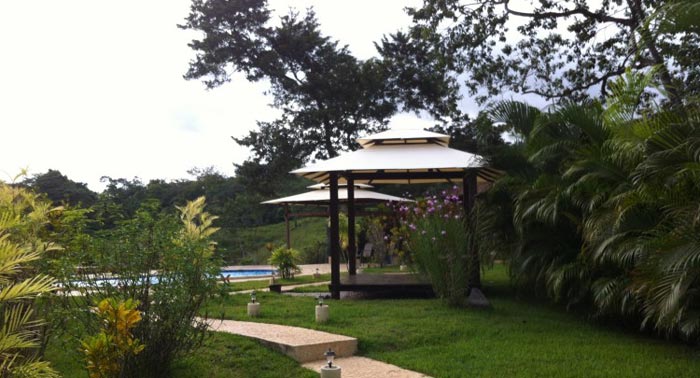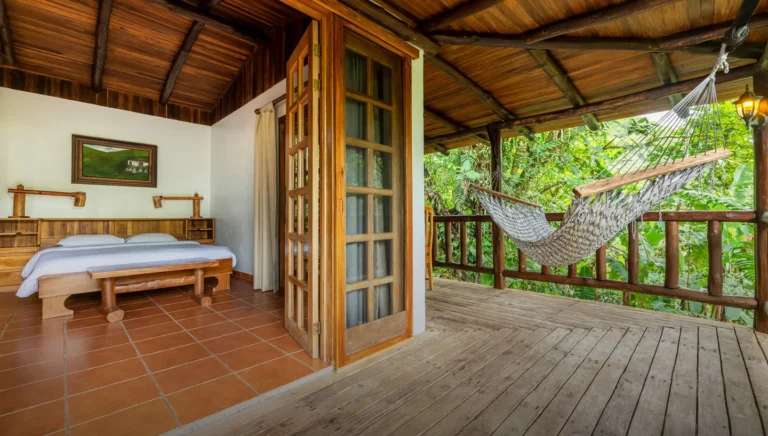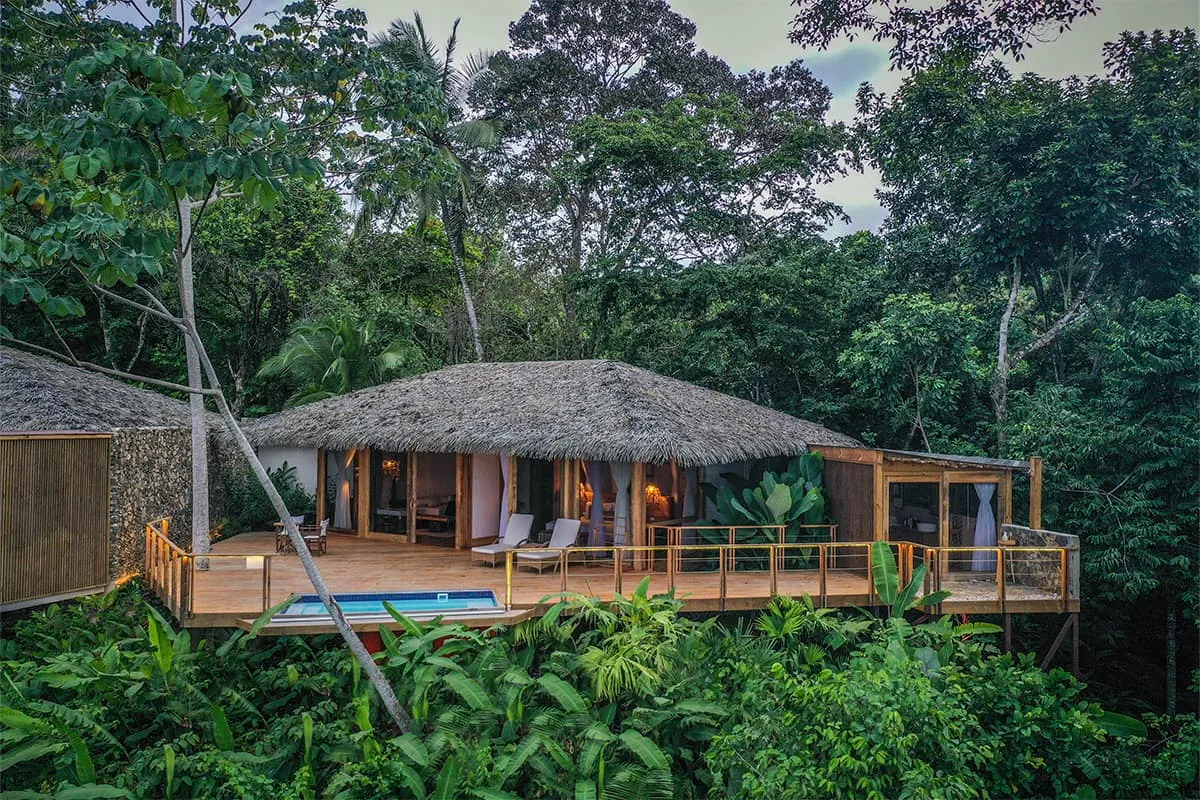

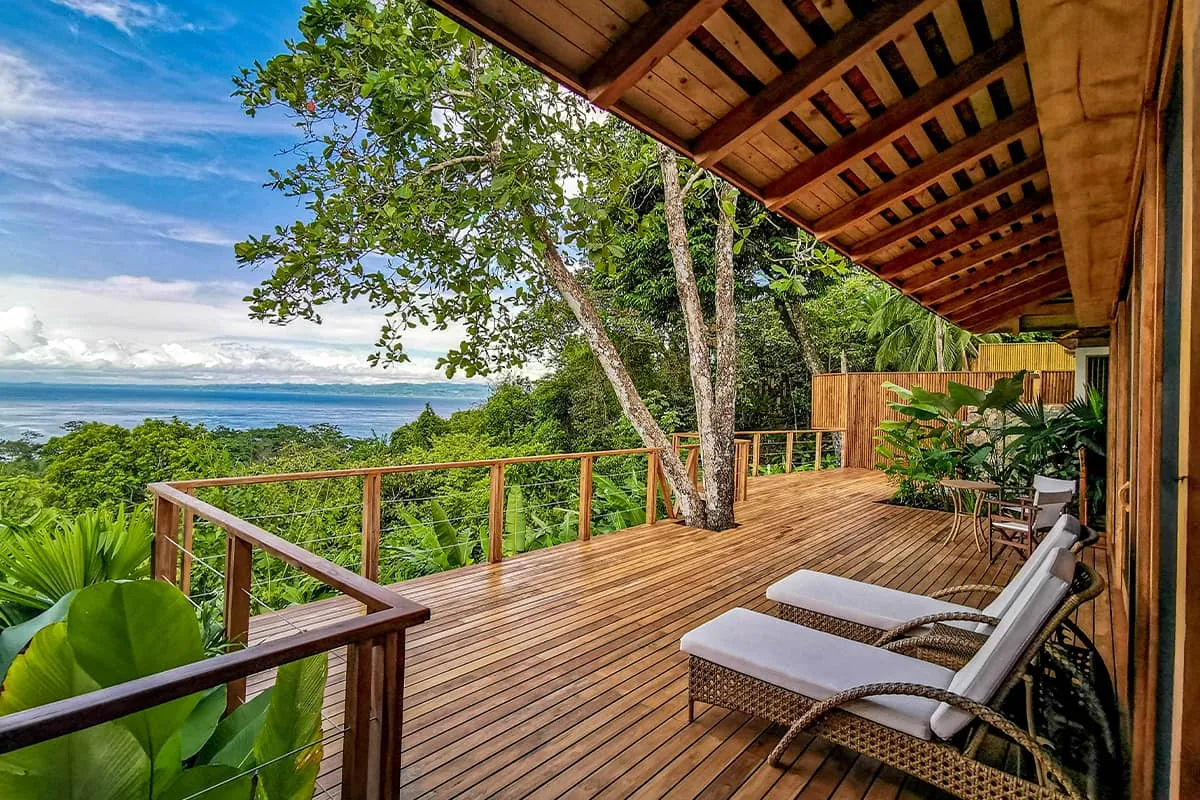
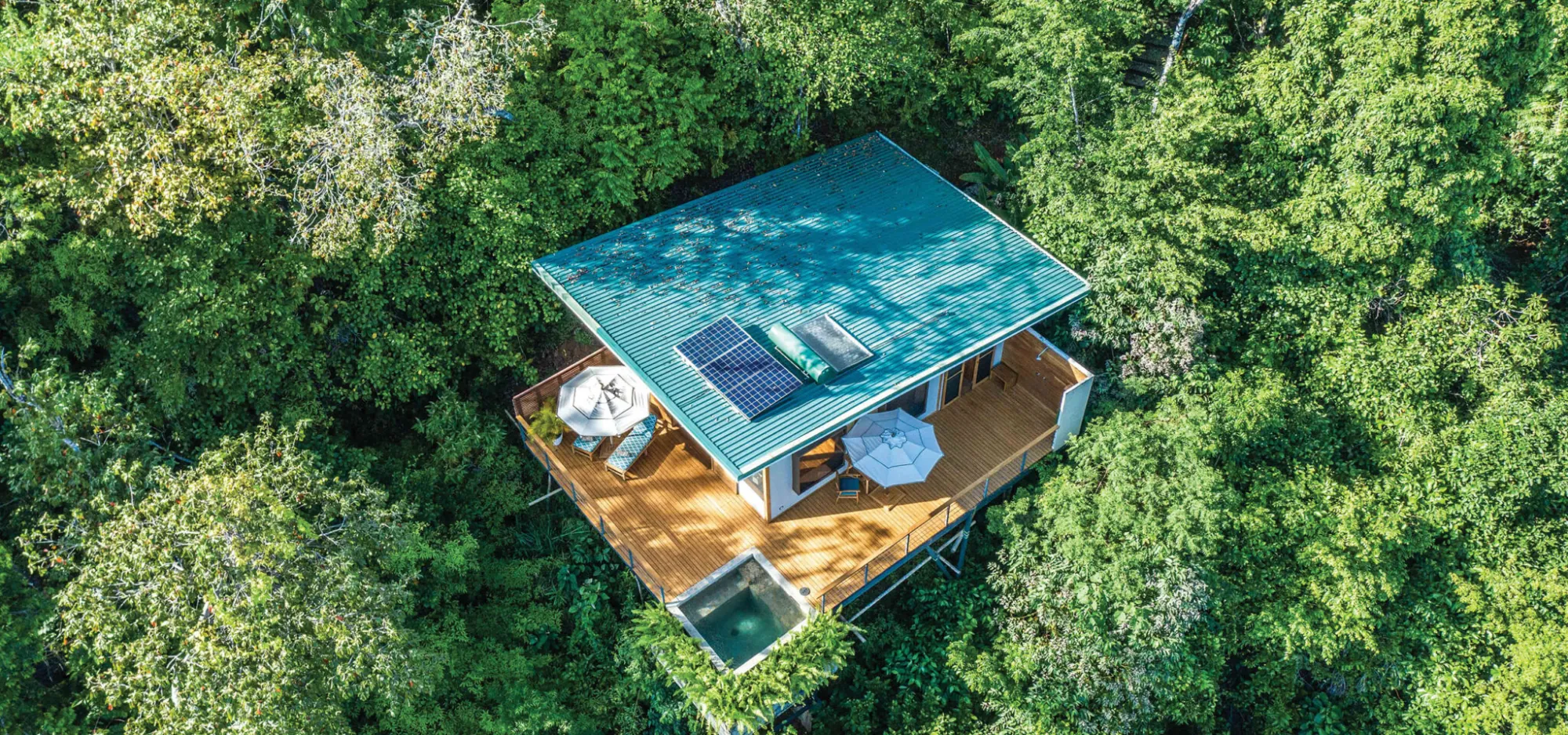
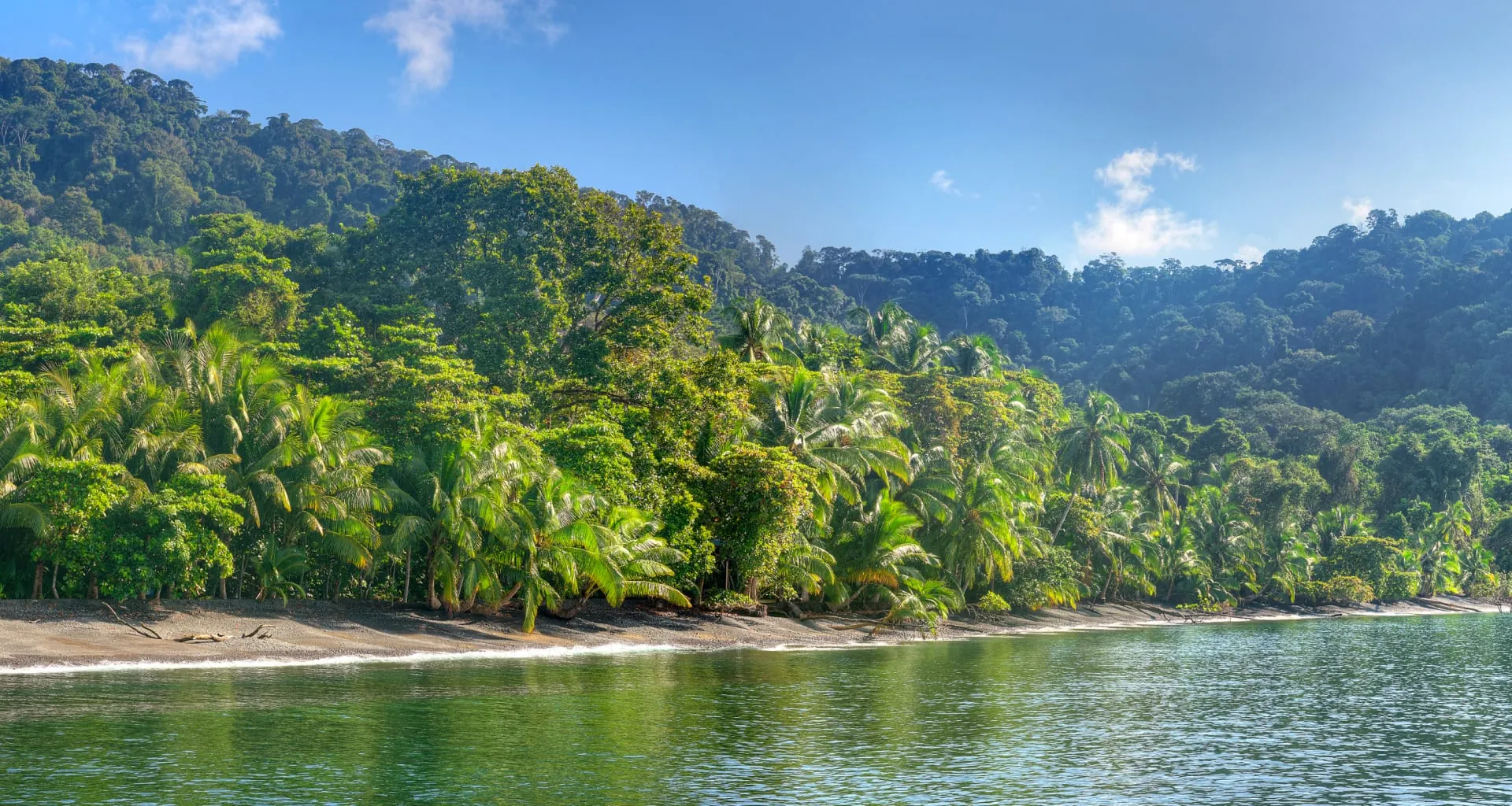
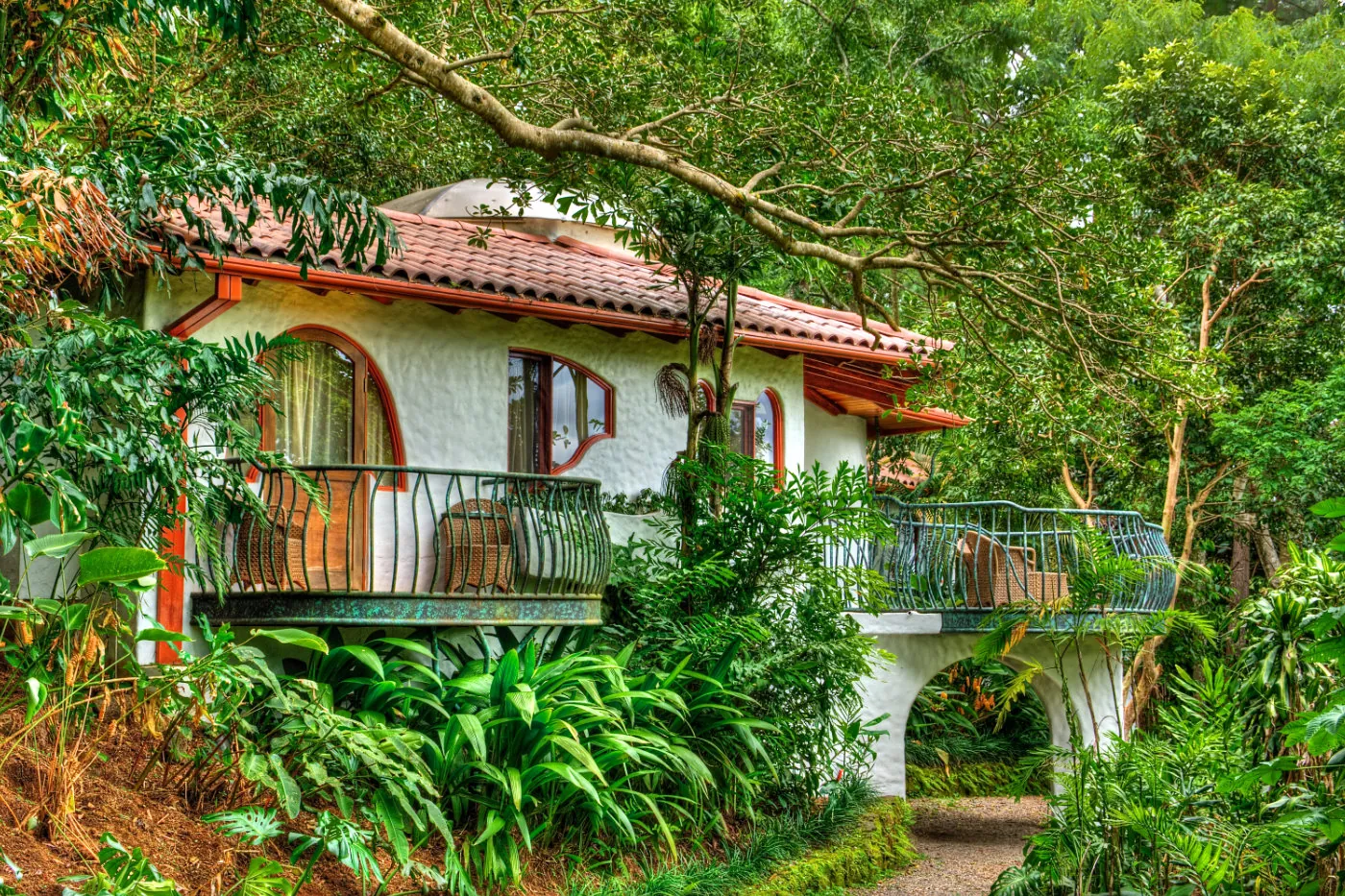
A room surrounded by trees can be wonderful, but trees alone do not make an eco-lodge. In Costa Rica the word has been used for everything from off-grid rainforest cabins to polished luxury resorts. Some of these places actively protect forest, restore habitat and support rural communities. Others simply occupy beautiful land.
Knowing the difference helps you find a stay that fits your values without giving up the experiences you came for. It also explains why a simple wooden cabin can be a stronger example of ecotourism than a large hotel covered in sustainability slogans, and why a well-run luxury lodge can sometimes contribute more to conservation than its architecture suggests.
What “eco-lodge” actually means
An eco-lodge is accommodation designed and run with close attention to its natural setting, its environmental impact and its relationship with the people around it. There is no single legal definition in Costa Rica, and the name by itself is not a certification. At its best, an eco-lodge is part of a local conservation economy: guests pay to stay near nature, local people earn a living connected to protecting that nature, and the property avoids damaging the systems it depends on.
That covers far more than a building in the forest. Wastewater treatment, land stewardship, electricity, building materials, wildlife protection, staff welfare and local purchasing all count. So does interpretation. A naturalist explaining why a patch of secondary forest is recovering can make a stay far richer than a generic sightseeing tour.
The Global Sustainable Tourism Council arranges its international standards in four pillars: sustainable management, socioeconomic impacts, cultural impacts and environmental impacts. That is a useful mental checklist for any lodge. Costa Rica’s own program, the Certification for Sustainable Tourism (CST), applies similar thinking to local businesses, but holding CST and calling yourself an eco-lodge are separate things. Our CST certification guide explains today’s Basic and Elite levels and how to check them.
Seven signs of a strong eco-lodge
1. The land around it is protected or improving
A credible eco-lodge can tell you what it does for the land. It might protect a private reserve, restore old pasture, keep mature trees, guard a river corridor or support a nearby conservation project. Look for specifics: a named area, a size, a partner, photos over time.
Lapa Ríos on the Osa Peninsula protects a 1,000-acre private reserve, according to the lodge. At the other end of the scale, Leaves and Lizards near Arenal is a small former dairy farm where, as our review describes, the owners planted thousands of trees after buying the land in 2006. Both are land stories you can check.
Many of the best examples began as private conservation projects. The Costa Rican Private Nature Reserves Network lists more than 200 member properties, among them reserves attached to lodges such as Lapa Ríos, Selva Verde, El Silencio and Rancho Naturalista. Membership is not a hotel rating, but it shows how much of Costa Rica’s conservation happens on private land. Our private nature reserves guide explains how the network works.
2. The buildings suit the climate
Tropical buildings can use shade, cross-ventilation, deep roof overhangs and careful orientation to reduce the need for air conditioning. In cool, damp cloud forest, good rooms also need to handle moisture. Responsible construction keeps clearing and erosion to a minimum and uses durable, sensibly sourced materials.
An open-air bungalow is not automatically greener than a closed room with efficient air conditioning. Insects, humidity, maintenance and the efficiency of equipment all matter. What counts is how the building performs over years of use and repair.
3. Water and wastewater are handled carefully
Costa Rica is wet in many regions, but not every property has unlimited safe water, and coastal communities can feel real pressure in the dry season. Poorly treated sewage can damage rivers, groundwater and reefs. Ask where drinking water comes from, how quality is checked, how laundry is handled and how wastewater is treated. A pretty stream below the cabins is not proof that the water practices are sound.
Water-saving fixtures and leak repairs help. A clear, specific explanation counts for more than a sign asking you to reuse towels while the gardens are sprinkled every afternoon.
4. Energy and waste are measured, not just advertised
Solar panels and small hydro systems are appealing, especially at remote lodges where diesel arrives by boat. Playa Nicuesa Rainforest Lodge in Golfo Dulce, reachable only by boat, says it runs on renewable energy. Rancho Margot near Lake Arenal describes itself as an off-grid working ranch that grows food for its own kitchen.
A grid connection is not a failing in Costa Rica. The national utility ICE reports that 98.6 percent of the country’s electricity came from renewable sources in 2025. For a grid-connected lodge, efficient refrigeration, kitchens, pumps and lighting usually matter more than a photogenic panel.
Waste needs the same honesty. Recycling depends on collection that can be patchy in remote areas. Composting, buying in bulk, cutting packaging and planning menus to reduce food waste often do more than a row of colored bins. It is fair to ask where things go after they leave the property.
5. Wildlife is watched, not used
One of the joys of a Costa Rican eco-lodge is seeing animals behave naturally: monkeys crossing the canopy, toucans in a fig tree, frogs calling after rain. Animals should never be fed, handled or baited for guest photos. Feeding monkeys and coatis changes their behavior and creates risks for people and animals alike. The official Costa Rica Silvestre responsible tourist resources cover feeding, pets and a code of ethics for wildlife photos and selfies.
Lighting matters too, especially near beaches. SINAC warns at the Ostional wildlife refuge that light can frighten a nesting turtle into abandoning her nest. A beachfront lodge that keeps its lights low and shielded is doing something real for wildlife, even if guests never notice.
6. Local people benefit
A lodge can have impressive green technology and still fall short if neighbors see little benefit. Look for local hiring and training, local suppliers, partnerships with community guides and respect for nearby Indigenous and rural communities. Some of the most meaningful places are simply run by local families: La Leona Eco Lodge near Corcovado is owned by a local family, and Finca Verde Lodge in Bijagua is a family-run organic farm with four cabins and a butterfly garden.
The ICT’s sustainable traveler advice encourages visitors to shop locally, seek out independently owned businesses and look for accommodations and tour operators with CST. Booking locally led excursions is an easy way to act on that.
7. The lodge is honest about its limits
Nature is unpredictable. A credible lodge may tell you toucans are common and sloths live nearby, but it will not guarantee a jaguar. A good manager will also admit limitations: a backup generator, patchy recycling, a road that floods. A clear account of what is improving is more persuasive than a claim to be perfectly green.
Types of eco-lodges in Costa Rica
| Type | Where you find them | Examples on our site | Best for |
|---|---|---|---|
| Lowland rainforest lodge | Osa Peninsula, Sarapiquí, Boca Tapada, Caribbean | Lapa Ríos, Selva Verde, Maquenque Eco Lodge | Monkeys, birds, frogs, forest walks |
| Cloud forest lodge | Monteverde, Bajos del Toro, San Gerardo de Dota | El Silencio Lodge, Savegre Mountain Hotel, Monteverde Cloud Forest Lodge | Quetzals, orchids, cool misty trails |
| Coastal eco-lodge | Golfo Dulce, Nosara, southern Caribbean | Playa Nicuesa, Lagarta Lodge, Almonds and Corals | Forest and sea in one stay |
| Farm stay and permaculture | Arenal, Bijagua, Puerto Viejo | Rancho Margot, Finca Tierra, Finca Verde Lodge | Food, gardens, restoration in practice |
| Research station | Sarapiquí and other field sites | La Selva | Serious naturalists, students, birders |
| Luxury eco-resort | Manuel Antonio, Osa, Central Valley | Arenas del Mar, Finca Rosa Blanca | Comfort with a conservation story |
Rainforest lodges sit in the warm, wet lowlands. Expect humidity, loud nights and wet paths after showers. Our Osa Peninsula eco-lodges and Caribbean eco-lodges are good places to start.
Cloud forest lodges are cooler and mistier. The Monteverde Cloud Forest Preserve is a good model of managed access: it caps visitors by time slot and keeps guided walks to 10 people. Our Monteverde cloud forest guide covers the area’s lodges and reserves.
Coastal eco-lodges combine beach and forest. Being on the sand is not enough. Coastal building and lighting can seriously affect nesting turtles and mangroves, so ask what the property does about both. Our sea turtle nesting guide explains why light matters.
Farm stays and permaculture retreats combine hospitality with growing food and restoring land. Finca Tierra near Puerto Viejo runs farm tours and workshops on agroforestry and alternative building. A farm’s real methods matter more than the word “permaculture” on a booking page.
Research stations put science first. The Organization for Tropical Studies station at La Selva has recorded about 470 bird species and 2,077 plant species, and it offers guided walks and simple rooms to visitors.
Luxury eco-resorts can offer excellent food and design while protecting substantial land. The more amenities a property has, the more useful it is to look at the evidence behind its sustainability story.
Eco-lodge, eco-resort, eco-hotel: does the label matter?
The labels overlap. “Eco-lodge” usually suggests a smaller place rooted in a particular landscape. “Eco-resort” suggests more amenities and organized activities. “Eco-hotel” can apply almost anywhere, including towns. None has a legal threshold in Costa Rica, and a resort can outperform a lodge, or the reverse.
The useful comparison is between specific properties. What land is protected? How many guests? What are the water and energy demands? What has been independently verified? Our guide on how to choose a sustainable hotel turns those questions into a checklist.
Can an eco-lodge be luxurious?
Yes. Sustainability is not a synonym for roughing it. Well-run high-end properties can use tourism income to protect forest, create skilled rural jobs and support research. Arenas del Mar in Manuel Antonio and Finca Rosa Blanca, a 14-room inn on an organic coffee farm in Heredia, are both listed at CST Elite in the official CST directory, checked in October 2026.
Luxury still brings trade-offs: bigger buildings, private plunge pools, imported goods, high energy use and frequent transfers. It is reasonable to ask how those impacts are handled without assuming that a high price or a design award settles the question.
What to expect during your stay
Eco-lodges are not all remote, uncomfortable or expensive. Some have air conditioning, pools and full spa menus. Others rely on fans, screens and shared meals. Wildlife is often busiest before sunrise, and night sounds can be astonishingly loud. Visitors who need complete quiet, climate control or level paved paths should read room details carefully.
Accessibility varies widely. Lodges often follow the natural slope of the land, with steps, bridges and muddy paths. Some have made real efforts: Arenal Observatory Lodge says it has 800 meters of wheelchair-accessible trail, and our review of Monteverde Cloud Forest Lodge notes accessible rooms with ramps. Ask specifically, and ask about transfers too, since boat landings can be the hardest part.
Check that photos show the room category you are booking, and ask about insects, dietary needs, transport and whether a high-clearance vehicle is needed. In remote areas, confirm transfers and whether guided activities are included. Finally, look at the real location on a map: “near Corcovado” may mean a long boat ride to the nearest entrance, as our Corcovado and Osa Peninsula guide explains. Our complete Costa Rica ecotourism guide explains how the regions connect.
The best definition shows up in daily life
A true eco-lodge does not need to be perfect, primitive or spectacularly expensive. It should show, in practical ways, that it belongs to its landscape and wants that landscape to thrive. The evidence might be a restored hillside, a protected river corridor, a knowledgeable local guide or a wastewater system no guest ever sees. The reward is a stay that feels connected to a living place rather than built on top of it.
Frequently asked questions
Are all Costa Rican eco-lodges certified?
No. "Eco-lodge" is a descriptive term, not a certificate. CST is free and voluntary, so many responsible lodges never apply, while some places use green language without much behind it. You can check any business in the official CST directory.
Do eco-lodges have air conditioning and Wi-Fi?
Some do and some do not. A remote forest cabin may rely on breezes and limit internet, while a boutique eco-resort may offer familiar comforts. Check the specific room and property description.
Is an eco-lodge suitable for children?
Many are excellent for families. Look for short trails, guided walks pitched at children, railings, pool safety and manageable transfers. Very remote or open-air properties are not right for every family.
Where should I stay for the most wildlife?
The Osa Peninsula, Tortuguero, Sarapiquí and Boca Tapada are strong choices, each with different species. More time in one well-protected habitat usually beats a rushed circuit. Our wildlife watching guide compares the options.
Is a lodge with lots of animals on the grounds always a good eco-lodge?
Not necessarily. Wildlife can survive for a while in fragmented habitat, and animals that appear on schedule may be fed. Ask what habitat the lodge protects and whether animals are ever fed or baited.
Is a grid-connected lodge less green than an off-grid one?
Not in Costa Rica, where nearly all grid electricity comes from renewable sources. Off-grid systems make sense in remote places; for connected lodges, efficient equipment and sensible design matter more.