Costa Rica is the kind of place where the first experience of a rainforest can happen before breakfast. A howler monkey calls from a hillside, a hummingbird works the flowers outside the dining room, and a trail begins just beyond the last cabin. For some visitors this is the trip they have imagined for years. For others it becomes the reason they come back.
The country’s reputation rests on more than beautiful forests. Ecotourism here connects protected landscapes, local livelihoods, scientific research and tourism in ways a traveler can see firsthand. You might spend a morning with a naturalist learning how a cloud forest collects moisture, take a quiet boat through Caribbean canals, or stay at a family-run lodge that has replanted an old cattle pasture. Those experiences share one idea: nature is not the backdrop to the trip. It is the trip.
This guide covers where to go, what you can realistically expect to see, how the rules work in the most popular protected areas, how to judge an eco-lodge, and how to plan a route that supports the places you came to enjoy.
What ecotourism means in Costa Rica
Ecotourism is responsible travel to natural areas that supports conservation and the well-being of local people while helping visitors understand what they are seeing. A trip does not become ecotourism because it happens in the jungle. A guided walk that helps fund a reserve, employs local guides and keeps a respectful distance from wildlife is close to the ideal. A noisy attraction that calls itself “eco” without showing what it protects is not.
Costa Rica is unusually well suited to the idea. The national tourism board, the ICT, describes the country as holding about 6 percent of the Earth’s biodiversity, with 26 percent of its territory officially zoned as protected. The 6 percent figure is a widely used estimate rather than a census, but the protected-area network is very real: national parks, wildlife refuges, biological reserves and private reserves spread across dry forest in Guanacaste, wet Caribbean lowlands and cool highland cloud forest.
The best eco-oriented trip is not necessarily the most remote or the most expensive. A small guesthouse beside a community-run refuge can contribute more than a large resort with green leaves on its brochure. What matters is the relationship among the visitor, the place and the people who look after it.
How Costa Rica got here
Costa Rica’s environmental story is neither accidental nor finished. Much of the country’s forest was cleared for cattle and crops during the twentieth century. National park creation, private conservation, changes in farm economics and public payments for standing forest helped reverse the trend. Under Forestry Law 7575, the national forestry fund FONAFIFO runs a Payment for Environmental Services program that pays landowners for four services forests provide: greenhouse gas mitigation, biodiversity protection, water protection and scenic beauty for tourism and science. Our Costa Rica conservation story explains how those pieces fit together.
Many of today’s famous parks began in that same era. Manuel Antonio was created in 1972 after local residents pushed back against foreign owners who blocked access to the beaches, according to SINAC’s park history. Tortuguero was declared a national park on September 24, 1970, after research begun in the 1950s by the University of Florida zoologist Archie Carr showed how important its beach was for green turtles, as SINAC’s Tortuguero page recounts. Corcovado followed in 1975.
Tourism changed the economic argument. Standing forest could support guides, cooks, boat captains, researchers and farmers who supply lodges. That does not mean tourism alone restored the forest, or that its effects are always positive. Roads, water demand, coastal construction and crowding still put real pressure on these places. What changed is that nature protection became part of the national identity and the foundation of many rural businesses.
Science runs through all of this. The Organization for Tropical Studies operates three field stations: La Selva in the Caribbean lowlands, Palo Verde in the dry northwest and Las Cruces in the southern hills. La Selva alone has recorded about 2,077 plant species, 470 bird species, 125 mammal species (72 of them bats), 87 reptiles and 48 amphibians. Our page on La Selva describes the guided walks and simple lodging it offers visitors.
The regions at a glance
Costa Rica packs very different ecosystems into short distances, but mountains, rivers and boat-only coastlines make travel slower than the map suggests. This table summarizes the main nature regions. Each is covered in more detail below.
| Region | Key protected areas | Wildlife it is known for | Access notes |
|---|---|---|---|
| Arenal and Northern Plains | Arenal Volcano NP, Tenorio Volcano NP, Maquenque refuge | Great green macaw, frogs, lowland birds | Paved roads to La Fortuna; rougher roads to Boca Tapada |
| Monteverde and cloud forests | Monteverde Cloud Forest Preserve, Santa Elena | Resplendent quetzal, three-wattled bellbird, orchids | Timed entry slots at the Monteverde Preserve |
| Guanacaste and Nicoya coast | Rincón de la Vieja NP, Palo Verde NP, Ostional refuge | Dry forest mammals, waterbirds, olive ridley turtles | Accredited local guide required at Ostional during arribadas |
| Central Pacific | Carara NP, Manuel Antonio NP | Scarlet macaw, monkeys, sloths | Manuel Antonio tickets sold online only; closed Tuesdays |
| Osa and southern Pacific | Corcovado NP, Piedras Blancas NP, Marino Ballena NP | Tapir, four monkey species, humpback whales | Advance reservation mandatory for Corcovado; guide required on key trails |
| Caribbean | Tortuguero NP, Cahuita NP, Gandoca-Manzanillo | Green turtle, manatee, caiman, reef fish | Tortuguero reached by boat or small plane; beach closed at night March to October |
| Highlands | Los Quetzales NP area, Tapantí | Quetzal, highland hummingbirds | Cool, wet mountain roads |
Arenal and the Northern Plains
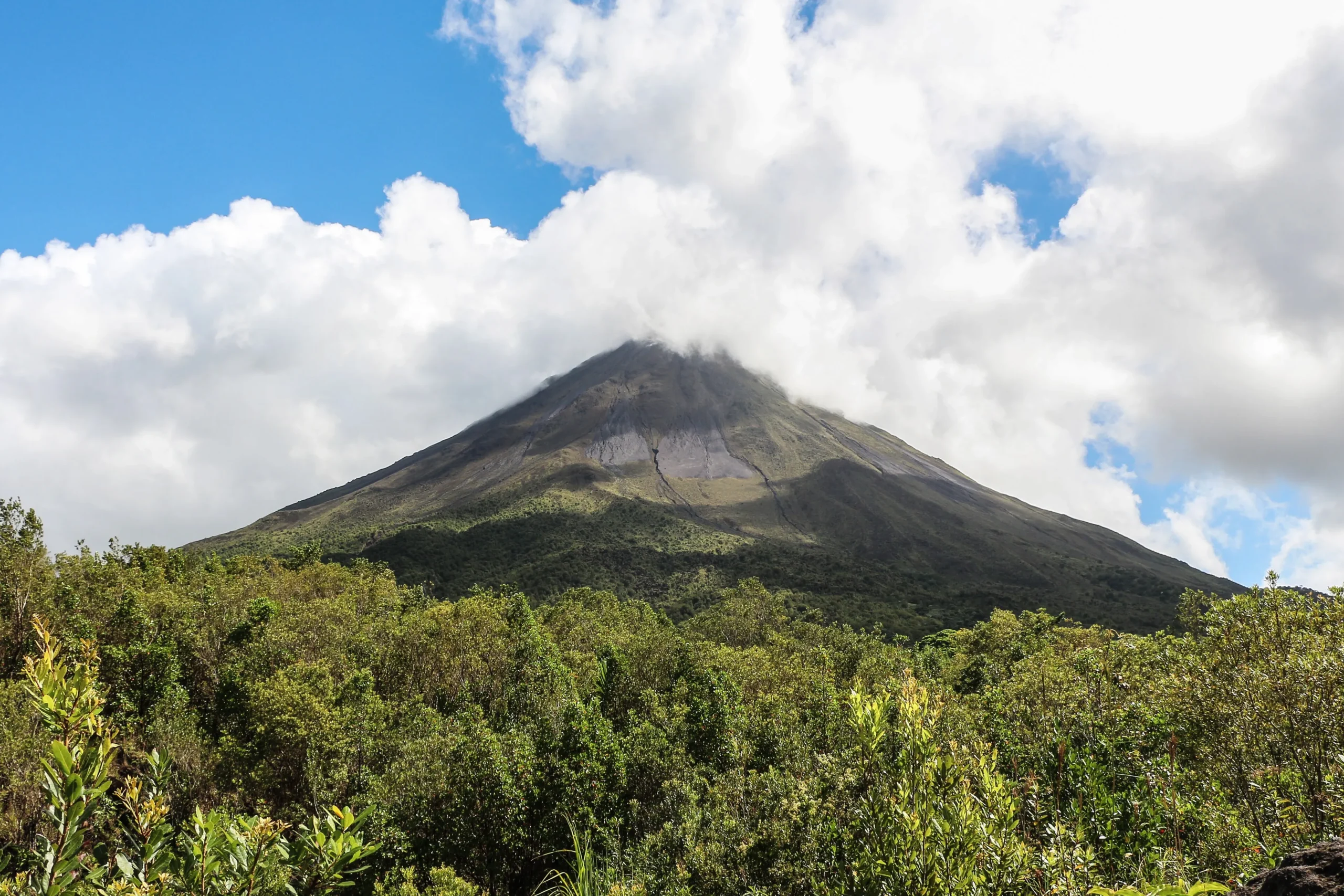
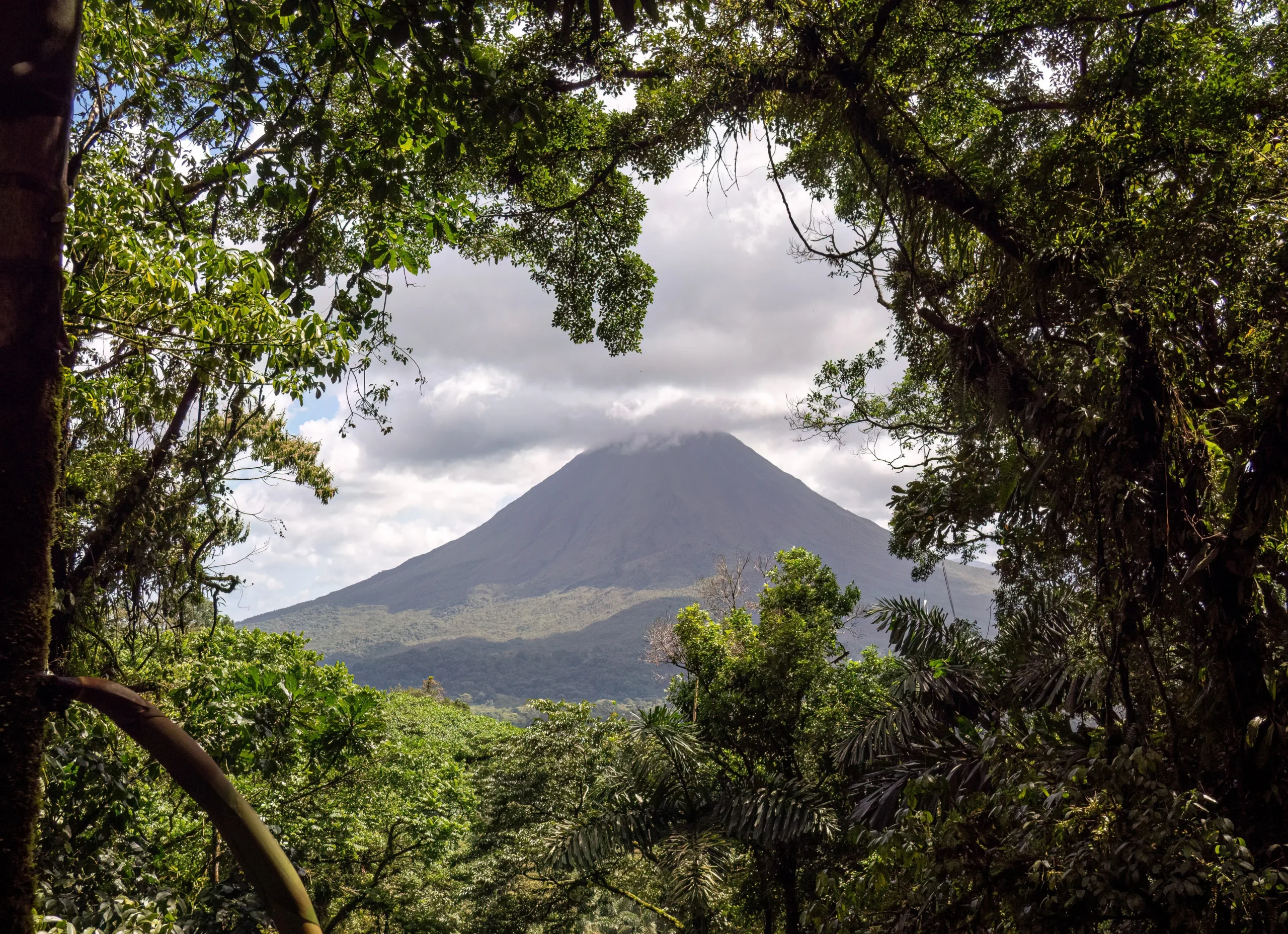
Around La Fortuna, Arenal’s volcanic cone rises above lowland rainforest and old lava fields. Trails, rivers, hanging bridges and hot springs make it one of the easiest places to combine nature with comfortable lodging, and our Arenal and Río Celeste guide covers it in depth.
Arenal Observatory Lodge sits on more than 352 hectares beside the national park, with about 11 km of self-guided trails and, unusually for a forest lodge, 800 meters of wheelchair-accessible trail, according to the lodge. Rancho Margot, forty minutes from La Fortuna near Lake Arenal, runs as an off-grid working ranch of more than 400 acres that grows food for its own kitchen and offers farm tours. Leaves and Lizards is a small former dairy farm where, as our review notes, the owners planted thousands of trees after buying the land in 2006.
The northern plains extend well beyond Arenal. In Sarapiquí, Selva Verde has hosted naturalists since 1986 on a 500-acre property with environmental education programs; it is listed at the Elite level in the official CST directory of certified businesses. Farther north near the Nicaraguan border, Maquenque Eco Lodge protects a 60-hectare reserve near Boca Tapada, prime country for the endangered great green macaw.
Near Bijagua, Tenorio Volcano National Park protects the Río Celeste. Its famous blue is not a dye or copper. A University of Costa Rica study found that where the clear Quebrada Agria meets the clear Río Buena Vista, suspended aluminosilicate particles scatter sunlight and turn the water sky blue for about 14 km downstream. Celeste Mountain Lodge and Tenorio Lodge are both close to the park, with views of the Tenorio and Miravalles volcanoes. Browse more stays among our northern Costa Rica eco-lodges.
Monteverde and the cloud forests
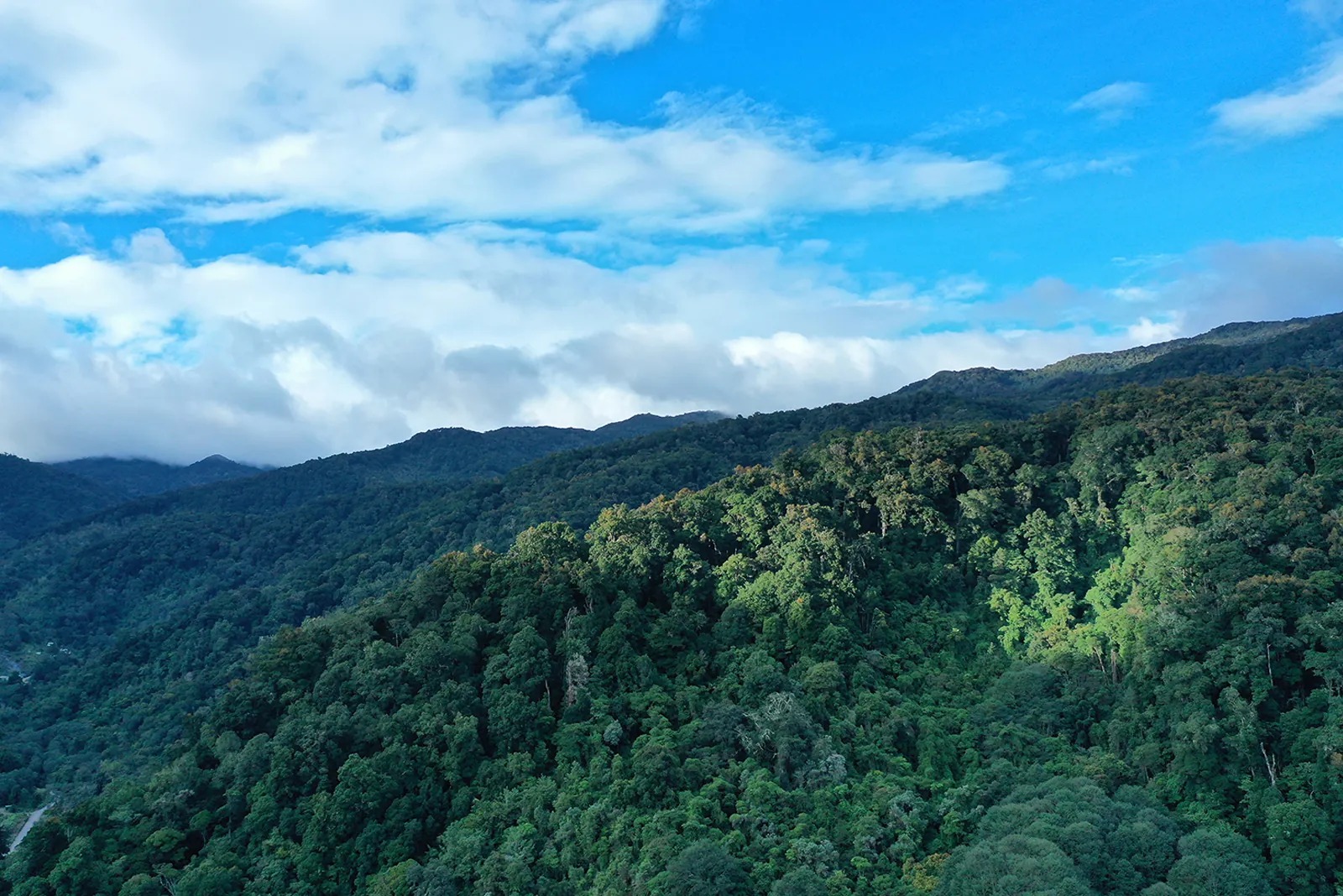
At higher elevations, moisture-laden air condenses on mountain forests and feeds mosses, orchids and bromeliads. Monteverde feels nothing like the coast: cooler, misty and quiet, with birders listening for three-wattled bellbirds and hoping for a resplendent quetzal.
The Monteverde Cloud Forest Preserve protects more than 4,100 hectares and has worked through science and education since 1972. Visitor numbers are capped by time slot, guided natural history and night walks take no more than 10 people, and a free shuttle runs the 1.5 km between the visitor center and the entrance. The preserve itself holds the Elite level of CST in the protected areas category. Nearby Santa Elena and other reserves offer different trails and are usually less busy.
Monteverde Lodge and Gardens is one of the region’s longest-running nature lodges, about 15 minutes from the preserve with its own botanical gardens. Arco Iris Lodge in Santa Elena has cabins built by local craftsmen and private trails to a lookout. Two or three nights let you combine a dawn bird walk, a guided night walk and an unhurried afternoon on the trails. Our Monteverde cloud forest guide covers the reserves one by one.
Cloud forest is not limited to Monteverde. In Bajos del Toro, El Silencio Lodge sits on about 500 private acres of forest and waterfalls and is listed at CST Elite. In the Talamanca highlands, Savegre Mountain Hotel in San Gerardo de Dota, run by the Chacón family, is a classic base for quetzal watching.
Guanacaste and the Nicoya coast
Many people picture Costa Rica as green all year, but Guanacaste’s tropical dry forest follows a strong seasonal rhythm. During the dry months many trees drop their leaves and animals gather near water; the forest turns green again when the rains return.
Rincón de la Vieja National Park, created in 1973, covers 14,300 hectares with two visitor sectors, Las Pailas and Santa María, where boiling mud pots and fumaroles sit beside dry, moist and cloud forest. SINAC notes that 32 rivers begin on the massif. Buena Vista Lodge occupies a large former cattle hacienda on the park’s edge. To the south, Palo Verde National Park protects wetland and dry forest in the lower Tempisque basin and is one of the country’s great waterbird sites.
The Nicoya coast adds one of the world’s great wildlife events. The Ostional National Wildlife Refuge protects the world’s most important nesting site for the olive ridley turtle. During arribadas, which happen year round, usually once or twice a month, between fifteen thousand and two hundred thousand females can come ashore on about 800 meters of beach. Entry during arribadas requires an accredited local guide. Nearby in Nosara, Lagarta Lodge borders a private biological reserve on Cerro Lagarta, and The Harmony Hotel is on Playa Guiones; both are listed at CST Elite. Farther south, Hotel Punta Islita also holds Elite status.
One correction to older travel writing: leatherback watching at Playa Grande is not currently offered. SINAC’s Las Baulas page states plainly that there is no turtle observation there; visits to the estuary are with local guides. See our Guanacaste eco-lodges for more places to stay.
Southern Nicoya Peninsula
South of the Gulf of Nicoya, Montezuma, Cabuya, Mal País and Santa Teresa bring forest, waterfalls and surf beaches close together. Cabo Blanco Absolute Natural Reserve, at the tip of the peninsula, is one of the earliest protected areas in Costa Rican conservation history. The region is also known for yoga retreats and small nature-focused hotels.
Anamaya Yoga Retreat sits on a hillside above Montezuma with ocean views and organic meals, while Luz en el Cielo offers simpler dorms and treehouse-style cabins in the same town. The peninsula suits a slower trip built around one base. Travel between beach towns can take longer than expected, especially after rain. Browse our southern Nicoya eco-lodges.
Central Pacific
Carara National Park, about 90 km from San José, protects the only transition forest of the central Pacific, where dry-forest and wet-forest species meet. It is world famous for scarlet macaws, and it was the first national park with a universal-access trail, a 1.2 km route with rest areas and signs in Spanish, English and braille. Tickets are sold online through SINAC’s booking system. Santa Lucia Jungle Hacienda, formerly Hotel Villa Lapas, is close to Carara and the Tárcoles River.
Manuel Antonio is one of the easiest places in the country to see monkeys and sloths from maintained trails, and also one of the busiest. SINAC says it opens Wednesday through Monday (closed Tuesdays), with tickets sold only online and guided walks offered by a concession of certified local guides. Early starts make a big difference. Arenas del Mar sits on its own stretch of beach and forest and is listed at CST Elite; Si Como No has a butterfly garden and a private wildlife refuge with night walks and is listed at CST Basic. More options are in our central Pacific eco-lodges.
Osa Peninsula and the southern Pacific
The Osa holds some of the most intact lowland rainforest on the Pacific side of Central America. Corcovado National Park covers 42,560 hectares of land and 3,354 hectares of sea, and SINAC describes it as home to 2.5 percent of the world’s biodiversity. It has six visitor sectors: San Pedrillo, Sirena, La Leona, Los Patos, Los Planes and El Tigre. An advance reservation is mandatory, visitors should enter with a registered tour guide, and a guide is required on the long trails between La Leona and Sirena and between Los Patos and Sirena. Tapirs, all four native monkey species and wild cats live here, though no sighting is ever guaranteed. Read our Corcovado and Osa Peninsula guide before choosing a base.
Lodges here range from simple to luxurious. Lapa Ríos protects a 1,000-acre private reserve near Cabo Matapalo and is listed at CST Elite. Nearby Bosque del Cabo has protected more than 750 acres on the cliffs above the meeting of Golfo Dulce and the Pacific since opening in 1990. Near Carate, La Leona Eco Lodge is run by a local family close to the La Leona park entrance. On the Drake Bay side, Corcovado Wilderness Lodge, formerly Casa Corcovado Jungle Lodge, borders the park and is listed at CST Elite. Inside Golfo Dulce, Playa Nicuesa Rainforest Lodge is reachable only by boat and runs on renewable energy, according to the lodge.
Farther north along the coast, Marino Ballena National Park was Costa Rica’s first protected area created purely for marine resources, with 5,160 marine hectares, 17 coral species and a 15 km coastline. Remote lodges in this region may be reached by boat, rough road or both, so confirm transfers before buying flights. Explore our Osa Peninsula eco-lodges.
Caribbean coast and Tortuguero
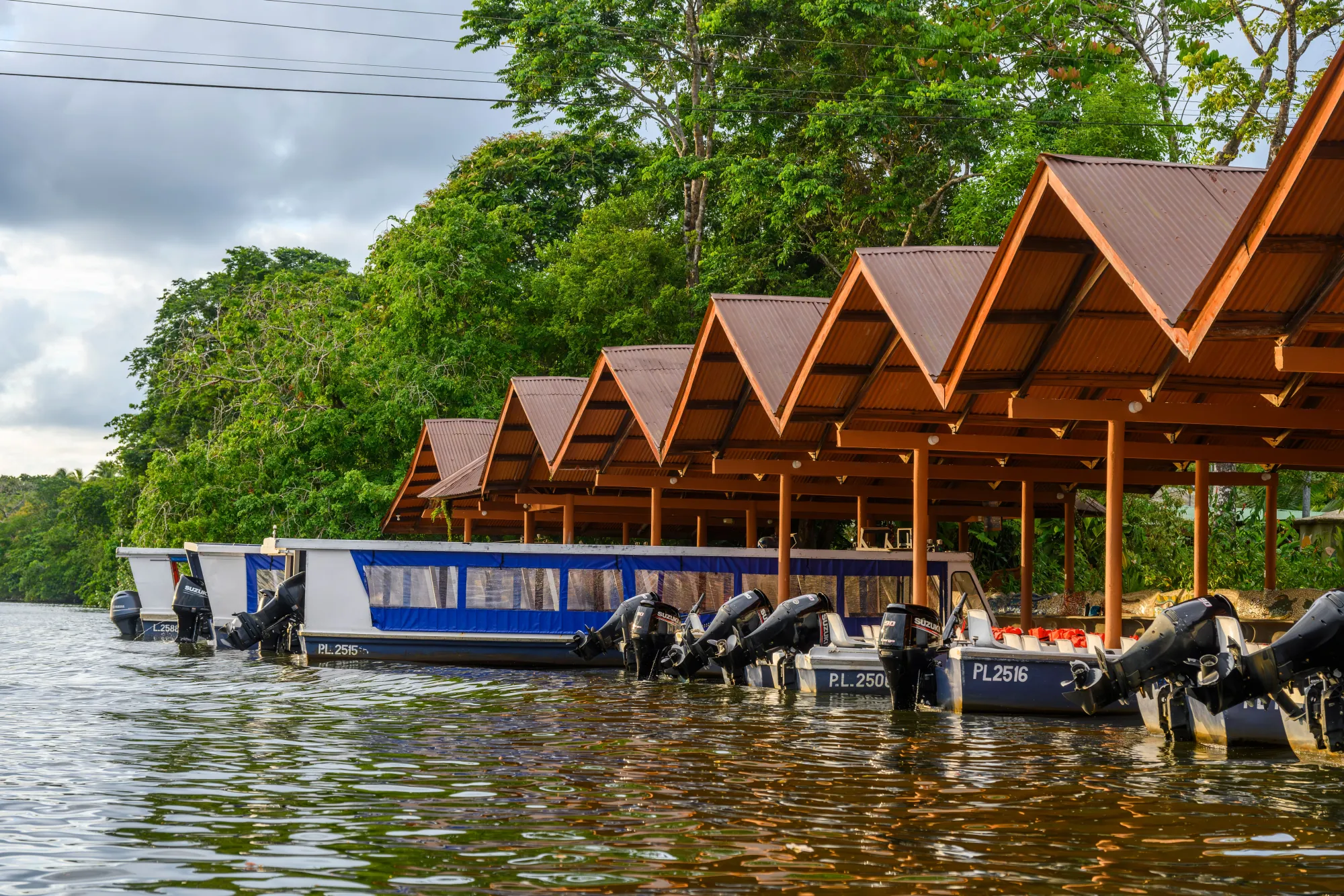
The Caribbean side has its own weather, culture and ecosystems. Tortuguero National Park covers 26,653 hectares of land and 50,284 of sea and protects the most important green turtle nesting beach in the Western Hemisphere, plus nesting by leatherbacks, hawksbills and loggerheads. SINAC has recorded 138 mammal species there, including manatees and jaguars. The park is reached only by boat (or small plane to the airstrip), and to protect nesting turtles the beach is closed to the public from 6 pm to 6 am between March 1 and October 31. Night turtle watching happens only through the park’s program, in which trained local spotters find turtles and then bring small groups to watch. Our Tortuguero National Park guide explains how it works.
Lodges here line the canals rather than the beach roads. Tortuga Lodge and Gardens is one of the oldest lodges in the area, Pachira Lodge faces the main canal a few minutes from the park, and Valverde Glamping and Ecolodge, formerly La Baula Lodge, is run by a local family. Inland, The Pacuare Jungle Lodge sits on a bend of the Pacuare River within a 340-hectare protected area.
Farther south, Cahuita National Park protects the best-preserved coral reef on the Costa Rican Caribbean and is co-managed with the local community; its guides are trained by the national training institute INA and accredited by the ICT. Almonds and Corals offers platform tents inside the Gandoca-Manzanillo Wildlife Refuge, and Selva Bananito Lodge sits in forest south of Limón and is listed at CST Basic. The southern Caribbean has deep Afro-Caribbean and Indigenous roots that are best experienced through locally led tours. See our Caribbean eco-lodges.
The central highlands
The highlands are easy to overlook on the way to the coast. Rancho Naturalista near Turrialba is a long-established birding lodge whose private reserve, according to our review, has a list of more than 430 species. Finca Rosa Blanca in Santa Bárbara de Heredia is a 14-room inn on an organic, shade-grown coffee farm and is listed at CST Elite. Both work well as a first or last stop, and Finca Rosa Blanca is a short drive from San José.
Wildlife: what to expect, and where
Let wildlife shape your itinerary, but treat every promise of a guaranteed sighting with suspicion. Howler monkeys are widespread and usually heard before they are seen. White-faced capuchins are common in several parks, and their boldness around people is a reason to guard your food, not to feed them. Spider monkeys need larger connected forests, and squirrel monkeys are found only on the central and southern Pacific. Our mammals of Costa Rica guide covers identification.
For birds, Monteverde and San Gerardo de Dota are the classic quetzal destinations, Carara is the easy place for scarlet macaws, and Palo Verde and Caño Negro reward patient waterbird watchers. A skilled local guide who knows calls and fruiting trees will usually find more than you will alone. Our birds of Costa Rica guide lists the best sites.
Sloths are a favorite request around Manuel Antonio, Cahuita and the Caribbean lowlands, but they blend into the canopy and are much easier to see through a guide’s spotting scope. Tapirs take luck and time in places like Corcovado. Jaguars live in the large protected forests but are rarely seen; camera-trap photos and tracks are far more realistic than a sighting.
Wildlife seasons worth planning around
| Experience | Where | When | Source and rules |
|---|---|---|---|
| Humpback whales from the Southern Hemisphere | Osa, Golfo Dulce, Drake Bay, Uvita, Dominical | Around July to September, with the ICT naming September and October as the peak | ICT; boats keep about 150 m away |
| Humpback whales from the Northern Hemisphere | Guanacaste, Nicoya and central Pacific | Late November or early December to March | ICT |
| Green turtle nesting | Tortuguero | June to October per SINAC; beach closed at night March 1 to October 31 | SINAC program with trained spotters |
| Olive ridley arribadas | Ostional | Year round, usually once or twice a month | Accredited local guide required |
| Pacific dry season | Most of the Pacific and Guanacaste | Mid-December to late April | ICT |
For whales, the ICT’s whale season notice asks visitors to choose certified operators, keep about 150 meters between the boat and the animals and never touch or disturb them. Our guides to whale watching and sea turtle nesting go into more detail.
Parks, refuges, private reserves and research stations
A national park is a government protected area with its own management plan and visitor rules. Biological reserves usually put protection and research first and may allow little or no visitation. Wildlife refuges protect critical habitat but vary widely in what visitors can do. Private reserves may belong to families, nonprofits, communities or lodges; some have excellent guided trails and others are closed to the public.
For travelers, the distinctions matter in practical ways. A national park may require an online ticket, a specific entrance sector or a guide. A private reserve may offer a more flexible half-day walk. A research station may organize visits around education. Many lodges, including Lapa Ríos, Selva Verde and El Silencio, protect private reserves of their own. Our national parks guide explains the public system park by park.
What makes an eco-lodge genuinely ecological?
Eco-lodges range from simple cabins in protected forest to sophisticated low-impact resorts. Judge them by what they do, not by their décor. Does the property protect or restore habitat? How is wastewater treated and where does drinking water come from? What happens to waste? Does it hire and train people from nearby communities? Are buildings designed for the climate? Is there current, independent certification?
Costa Rica’s official program is the Certification for Sustainable Tourism, or CST, run by the ICT. You will still see old ratings expressed as one to five leaves, but the current program has two levels, Basic and Elite. A five-leaf logo on an old web page does not prove current Elite status. The official CST directory lets you look a business up by name. Our CST certification guide walks through the lookup step by step.
Not every small, responsible lodge goes through certification, and a certificate does not mean zero impact. A large resort with polished sustainability marketing may still have a big footprint, and a family-run forest cabin may be doing excellent conservation work without any paperwork. Our guides to what an eco-lodge is and how to choose a sustainable hotel give a fuller checklist.
Choose the experience first, then the room
Some visitors want a gentle introduction to nature: a comfortable room, a pool, good food and a guided walk each morning. Others want multi-day hikes, dawn bird surveys or a boat ride to a lodge without road access. Neither is the better traveler. They need different places to stay.
Birders should look for private trails, early breakfasts and guides who know calls. Families should prioritize short trails, safe transport and guides who can interest children without disturbing animals. Photographers usually do better with several days in one habitat than with a rush through five parks. Travelers with limited mobility should ask detailed questions about steps, mud, bridges and boat transfers; Carara’s universal-access trail and Arenal Observatory Lodge’s accessible path show that some options exist, but remote lodges can be hard going.
When to go
The answer depends on which Costa Rica you want to see. The ICT describes a dry season from about mid-December to late April and a green season from May to mid-December, with the Pacific following that pattern most clearly. The Caribbean has a longer rainy period and its own rhythm. Mountain areas have their own mist and temperature patterns, and even in the dry months a wet forest can be very wet.
The green season brings waterfalls, fewer visitors and lush forest, along with muddy trails, higher rivers and slower roads. The dry season simplifies driving and beach plans but fills the popular parks. Wildlife adds another layer, so check the seasons table above, then look at the regional climate rather than assuming the whole country shares one season. Whatever the month, pack rain gear, dry bags for electronics and shoes that can get wet.
Sample routes for seven, ten and fourteen days
A seven-day trip works best with no more than two bases. One reliable pairing is Arenal and Monteverde for volcano country, rainforest and cloud forest. Another is the central Pacific with Uvita or Dominical, combining easy wildlife viewing with whale season. A third is a focused Osa trip, with enough nights to absorb the travel time and still join guided outings.
With ten days you can add a third region if the transfers work, for example Sarapiquí, Arenal and Monteverde for research-station rainforest, volcanic forest and cloud forest without crossing both coasts. Wildlife-focused travelers might pair the Osa with the Costa Ballena. Tortuguero and the southern Caribbean also combine well, though boat and road connections need careful timing.
Two weeks give you room to slow down. Four or five nights at one excellent nature lodge often produce more than one night each in five places: an extra dawn walk, a second try on a productive trail or an afternoon listening to rain. Our wildlife watching guide suggests which experiences reward extra time.
Traveling responsibly in practice
Responsible travel does not have to be complicated. Stay on marked trails. Keep your distance from wildlife. Never feed monkeys, coatis, birds or sloths, and do not handle frogs, turtles or other animals for photos. The official Costa Rica Silvestre responsible tourist resources cover feeding, pets and an ethics code for wildlife photos and selfies. At night on turtle beaches, wear dark clothing and use a light only when and how your guide says; SINAC notes at Ostional that light can frighten a turtle into abandoning her nest.
Spend locally. Booking a locally owned lodge, hiring a naturalist from the area and eating in community restaurants keep more of your money in the region. Fewer transfers and longer stays usually mean both a smaller footprint and a better trip. Costa Rica’s grid helps too: the national utility ICE reports that 98.6 percent of the country’s electricity came from renewable sources in 2025, so a grid-connected lodge is not a mark against it. Flights and long private drives remain the largest part of most travelers’ impact, and offsets are not a substitute for planning fewer of them.
Finally, judge activities by what lives there and what you learn, not by whether the name includes “eco.” A forest trail in protected habitat with a patient naturalist offers real ecological insight. Ask what the operator does if an animal moves away or a beach is closed. Good guides have alternatives rather than pushing wildlife or bending the rules.
The journey behind the postcard
Costa Rica is not one uniform jungle, and ecotourism is not one kind of vacation. It is a set of choices that bring you closer to living forests, coasts, scientific work and the communities that look after them. The best trips leave room for surprise: the unexpected bird, a guide’s patient explanation, a forest that has been allowed to grow back.
Choose your destinations with curiosity, your guides with care and your lodging with attention to what it protects. A good eco-lodge is a wonderful place to sleep. A good ecotourism trip changes how you see the landscape long after you get home.
Frequently asked questions
Is Costa Rica good for a first ecotourism trip?
Yes. Arenal, Monteverde and the central Pacific have established lodging, good roads by Costa Rican standards and plenty of guided nature activities. They combine easily and still offer impressive forests and wildlife.
Do I need a guide in Costa Rica's national parks?
It depends on the park and the trail. Corcovado requires an advance reservation and a guide on its long cross-park trails, and Ostional requires an accredited local guide during arribadas. Tortuguero's night turtle viewing happens only through the park's guided program. Many other parks allow independent walking on public trails, but guides usually find far more wildlife.
Do I have to buy park tickets in advance?
For several popular parks, yes. SINAC sells Manuel Antonio and Carara tickets only through its online system, and Manuel Antonio is closed on Tuesdays. Rules change, so check the park's official page before each visit.
Can I see a jaguar?
Jaguars live in large protected forests such as Corcovado and Tortuguero, but wild sightings are very rare. Treat any tour that promises one with skepticism.
Is the green season worth it?
Often, yes. Forests are lush, waterfalls are full and lodges are quieter. Allow for afternoon rain, muddy trails, higher rivers and slower driving, and remember that the Caribbean and Pacific follow different patterns.
Does a five-leaf hotel still hold the top certification?
Not necessarily. Five leaves belong to the older CST scale. The current levels are Basic and Elite, and the official CST directory is the place to check a business's current status.