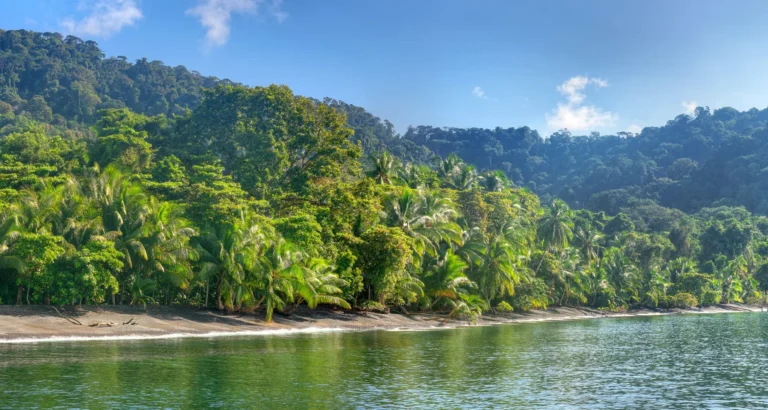

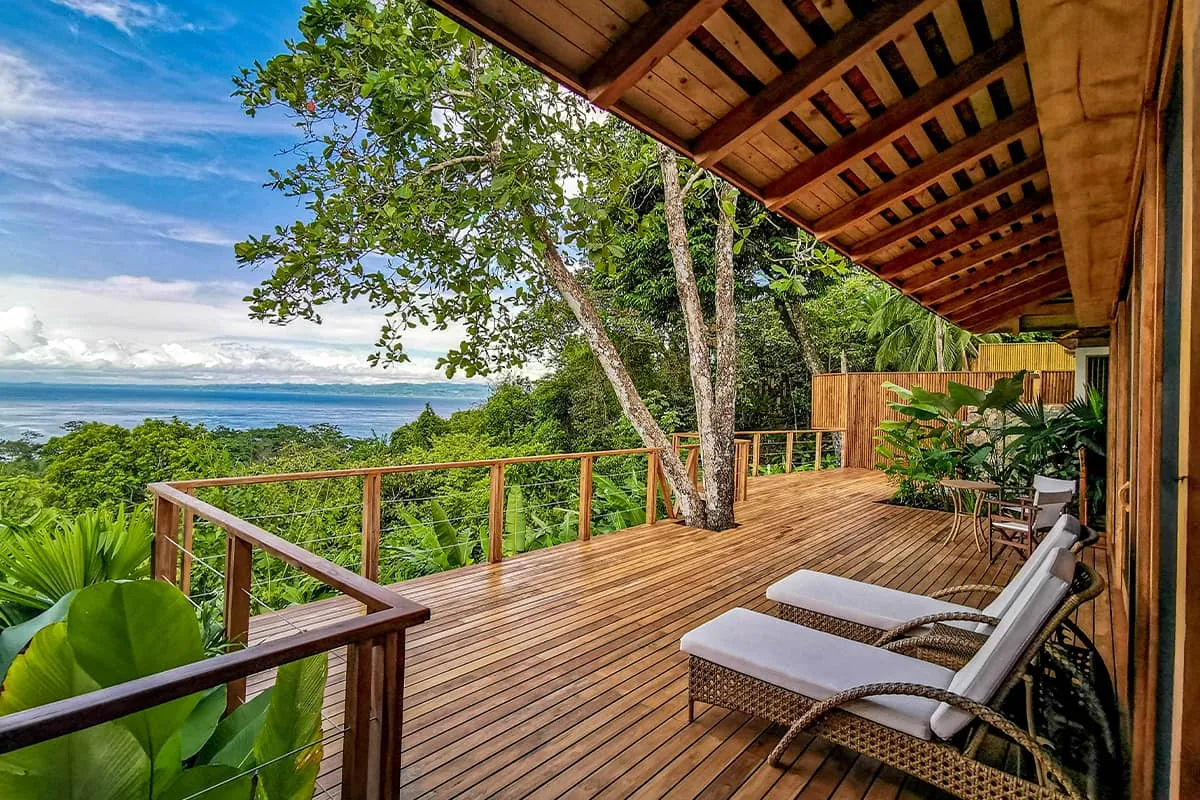

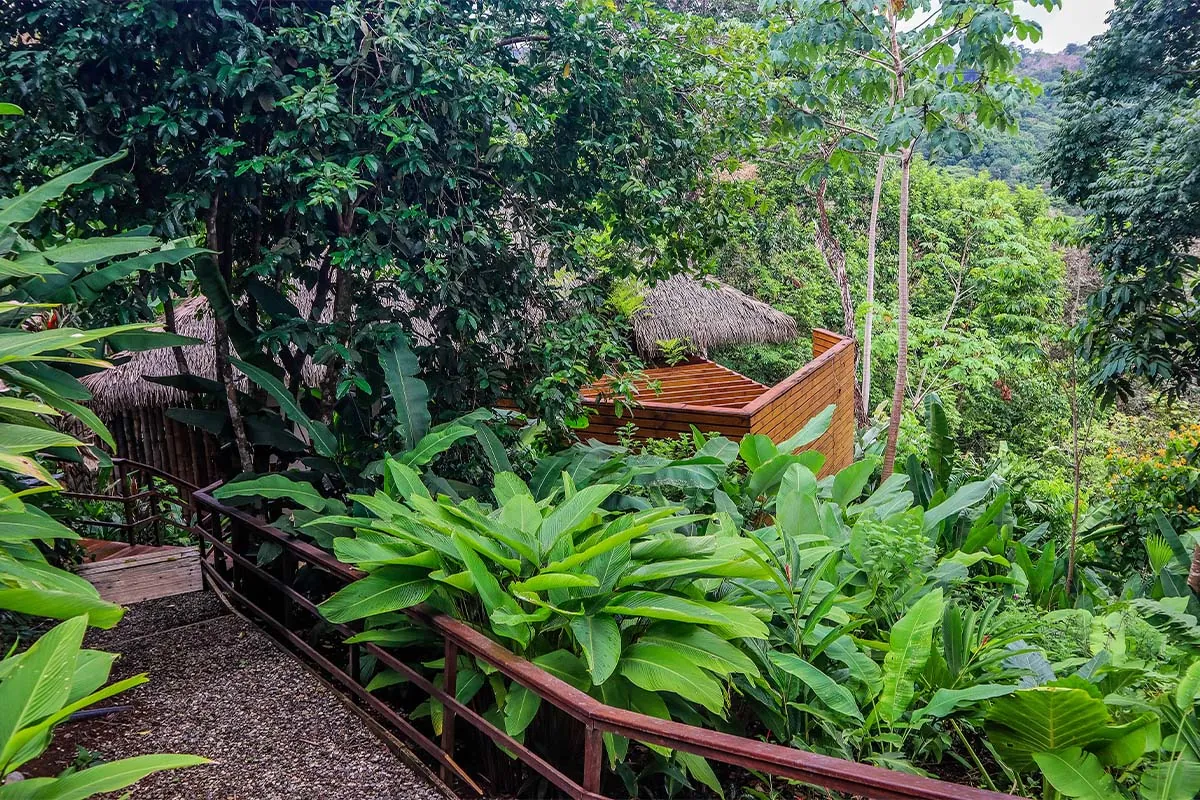


Lapa Rios is a 17-room lodge on a ridge at the southern tip of the Osa Peninsula, looking out over the Golfo Dulce from inside its own 1,000-acre rainforest reserve. It opened in the early 1990s as one of Costa Rica’s first lodges built specifically to pay for forest protection, and it still holds the top Elite level of the national CST sustainability certification. Come for guided rainforest walks, quiet beaches and a real conservation record, if you don’t mind a long dirt-road transfer.
| At a glance | |
|---|---|
| Location | Cabo Matapalo area, about 45 minutes by dirt road south of Puerto Jiménez, Osa Peninsula |
| Style | Small eco-luxury lodge: open-air bungalows, suites and villas |
| Setting | Ridge-top rainforest above the Golfo Dulce, inside a 1,000-acre private reserve |
| Best for | Wildlife lovers, couples, families with children aged 6 and up |
| Getting there | Fly to Puerto Jiménez, then the lodge’s 4×4 transfer; self-drive needs a 4×4 |
| CST status | Elite level, certified April 2025 |
A lodge built to keep a forest standing
The name means “river of scarlet macaws”, and the founders chose it after watching a flock of the birds cross the jungle together. Those founders were John and Karen Lewis, former Peace Corps volunteers from Minnesota who bought the land and opened the lodge in 1993, according to Lapa Rios. They protected the reserve with a conservation easement signed with CEDARENA, a Costa Rican NGO working with The Nature Conservancy, according to the Cayuga Collection, which managed the lodge for them for about 2 decades.
In 2019 the Lewises sold to the owners of Pacuare Lodge, and Lapa Rios is now part of their Böëna group alongside Pacuare, Monteverde, Tortuga and Cloud Forest lodges.
Where it is
The lodge sits near Cabo Matapalo, where the Osa Peninsula meets the mouth of the Golfo Dulce. Most guests fly into the small airstrip at Puerto Jiménez, where staff meet the plane and drive the last stretch in a 4×4. The lodge says the dirt-road drive takes 45 to 60 minutes and crosses 3 shallow streams. Self-drivers need a 4×4, and there’s parking on site.
Corcovado National Park is the big draw on this side of the country, and Lapa Rios runs guided day trips there by land and by boat. For more on the region, read our Corcovado and Osa Peninsula guide or browse the other Osa Peninsula eco lodges.
Rooms
The CST listing records 17 rooms. They come in 6 types, reached on foot along paths kept dim for wildlife, so bring a headlamp:
- Forest View Bungalows (80 square meters) face the trees, with ceiling fans, indoor and outdoor showers and a terrace.
- Deluxe Bungalows (85 square meters) were recently renovated with air conditioning and glass doors facing sunrise over the Golfo Dulce.
- Matapalo Suites (125 square meters) sit above the canopy with 240-degree views, a wraparound deck with a hanging daybed, air conditioning, and room for up to 4.
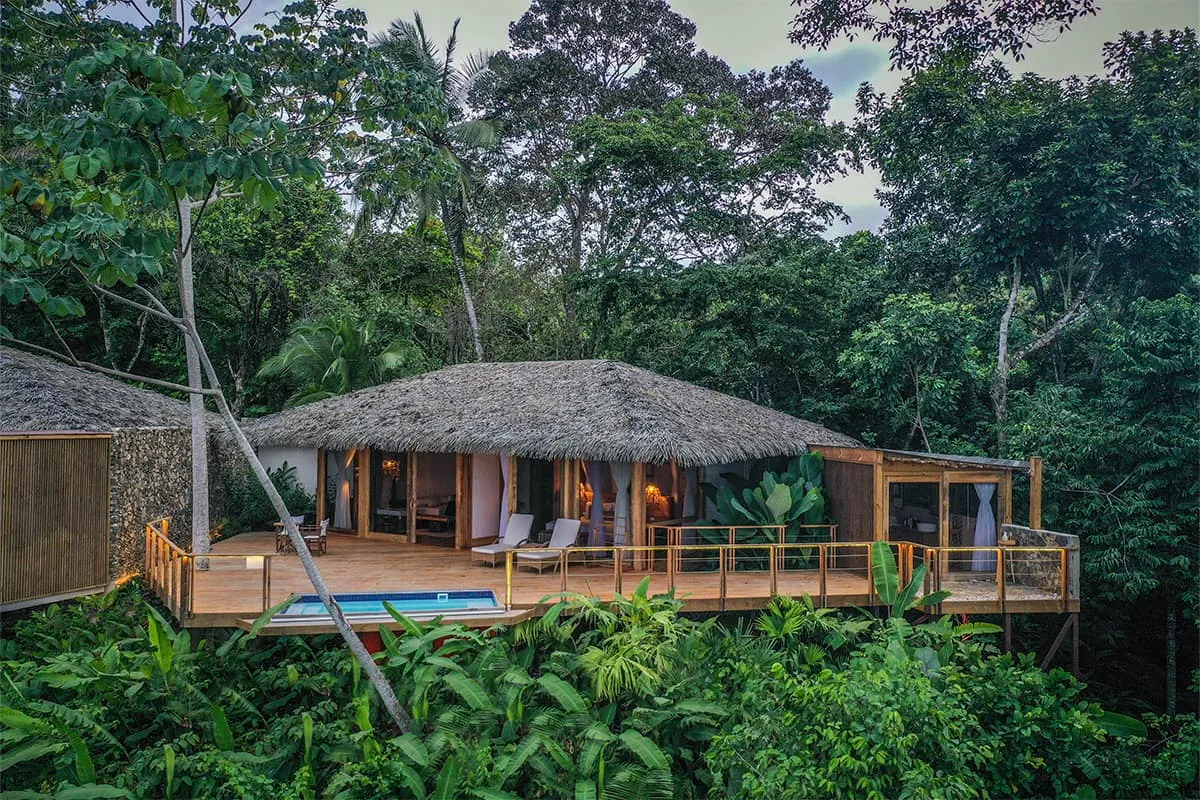
- Premier Villas (2 of them, 170 square meters) and Lapa Villas (4, 200 square meters) are the top tier, with canopy-level decks and Gulf views; the Lapa Villas add plunge pools. Both sleep up to 5.
- Brisa Suite (170 square meters) is a single suite named after Brisa Hennessy, the Olympic surfer who grew up at Cabo Matapalo.
The villas cool the bed, not the room, with an “Evening Breeze” canopy. Wi-Fi reaches rooms and social areas, and there’s a pool and in-room massage.
What you do here
Guided walks are arranged after you arrive. The Full Experience package covers up to 2 in-house activities per night, chosen from a list that includes the dawn Early Birds tour, the Osa Trail, the Rainforest Ridge Hike, the Wild Waterfalls Hike, a night walk, a local medicine walk, a sustainability tour of the back-of-house systems, a starfish walk and a turtle nesting patrol (in season).
Extra-cost outings include the Corcovado trips, a canopy zipline, waterfall rappelling, horseback riding and kayaking near Piro, a dolphin tour on the Río Esquinas, whale watching, sport fishing, stand-up paddling and surf lessons.
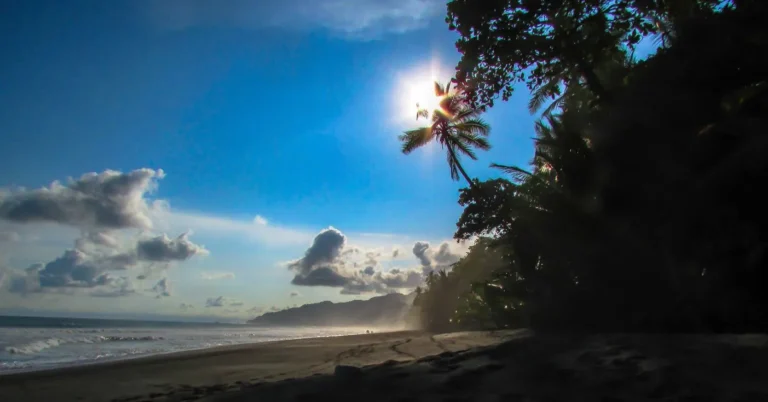
Playa Pan Dulce, about 10 minutes’ walk downhill, suits beginner surfers and swimmers, and stronger surfers have breaks around Matapalo.
Wildlife
According to the lodge, more than 300 bird species have been recorded around the reserve, and scarlet macaws, monkeys, sloths and frogs are regular sightings. From the ridge and on the water, guests often see dolphins, rays and sea turtles, with humpback whales passing in season. Sightings are never guaranteed.
Food
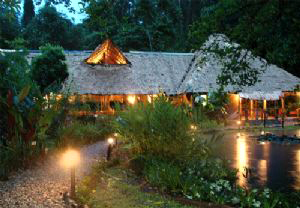
Meals are served at the open-air Guapira Restaurant, led by head chef Dayana Robles Sánchez. The Guapira page describes separate plant-based and standard menus built on organic and local ingredients, with Costa Rican dishes such as casados, ceviche and the house Chifri Lapas alongside fusion cooking, and a wine cellar. The lodge says most dishes can be adapted for allergies.
On the Full Experience package, 3 à la carte meals a day are included, along with shared transfers from Puerto Jiménez. A bed and breakfast option also exists.
Sustainability
CST rates Lapa Rios at the Elite level, certified on 22 April 2025 and valid to 2028. The lodge’s sustainability page adds these points, all according to the lodge:
- All staff are local residents, and most management roles are held by women, including the lodge manager.
- Energy is 100% renewable, and single-use plastics have been phased out over a decade. There’s no bottled water: tap water comes from a rainforest aquifer and is filtered twice.
- A one-time conservation contribution per guest funds research on big cats, waste management projects and environmental education.
- The lodge supports the Carbonera and Piro schools, and local students tour the back-of-house facilities to learn about clean energy and waste.
- Guests can plant a primary forest seedling in a regenerating area, and an on-site organic garden is used for teaching rather than supplying the kitchen.
Who it suits
Lapa Rios suits travelers who want days with a naturalist, evenings eating well, and a lodge whose conservation story goes back 3 decades. It works for couples and for families with kids aged 6 or older (the minimum age).
It’s less suited to anyone who dislikes stairs, hills and dark paths, or who wants a short, easy transfer. The lodge itself suggests 4 to 5 nights. If you’d rather be even closer to Corcovado, Luna Lodge near Carate or La Leona Eco Lodge beside the park’s La Leona entrance are wilder options, and Bosque del Cabo is a near neighbor on the Matapalo cliffs.
Frequently asked questions
How do I get to Lapa Rios?
Most guests fly to Puerto Jiménez and are met at the airstrip. The transfer to the lodge takes 45 to 60 minutes on a dirt road with 3 shallow river crossings. You can also drive a 4x4 all the way, and there's parking at the lodge.
Do the rooms at Lapa Rios have air conditioning?
Some do. The Matapalo Suites and the renovated Deluxe Bungalows have air conditioning. The Premier and Lapa Villas use a cooled canopy over the bed, and the Forest View Bungalows rely on ceiling fans and the breeze through screened walls.
Can I swim at the beach below the lodge?
Yes. Playa Pan Dulce is about a 10-minute walk downhill, and the lodge says the 2 beaches directly in front of it are safe for swimming. The lodge can also drive you down and set up loungers.
Do I need to book the Corcovado trip in advance?
It's wise to. Corcovado limits daily visitor numbers, so the lodge asks you to mention it when you reserve so it can secure permits. Most of the walks on the lodge's own reserve are arranged after arrival.