You may hear Costa Rica’s mammals long before you see them. A howler monkey’s dawn call travels over a valley. Something rustles in the canopy while you watch a toucan. On a muddy Osa Peninsula trail, a broad, unfamiliar footprint suggests that a much larger animal passed by during the night.
Costa Rica protects habitat for monkeys, sloths, tapirs, wild cats, bats, anteaters, peccaries and a surprising cast of smaller mammals. The most recent national checklist, the 2023 revised checklist of the mammals of Costa Rica published in the journal Therya, confirms 256 species, and the same authors report that close to 30 percent of them are threatened under Costa Rican or international criteria. Bats alone account for 118 of those species and rodents for 51, which is a useful reminder that most of the country’s mammals are small, nocturnal and easy to miss.
This guide focuses on recognizing the animals, understanding where they live and choosing lodges and tours that let you watch them without disturbing them. For trip planning across all wildlife groups, see our complete Costa Rica ecotourism guide.
Costa Rica’s four monkey species
Costa Rica has four native monkeys: the mantled howler, the white-faced capuchin, Geoffroy’s spider monkey and the Central American squirrel monkey. They are not equally common or equally widespread, and the 2023 checklist notes that three of the four are listed as endangered at the national level, based on SINAC’s 2017 assessment. The squirrel monkey is also listed as Endangered by the IUCN.
A long-running review of Costa Rican primates by Zaldívar and colleagues in the Revista de Biología Tropical remains one of the clearest summaries of where each species lives. It found howlers and capuchins in every conservation area in the country, spider monkeys concentrated in larger protected forests, and squirrel monkeys confined to a narrow band of Pacific lowlands.
Mantled howler monkey
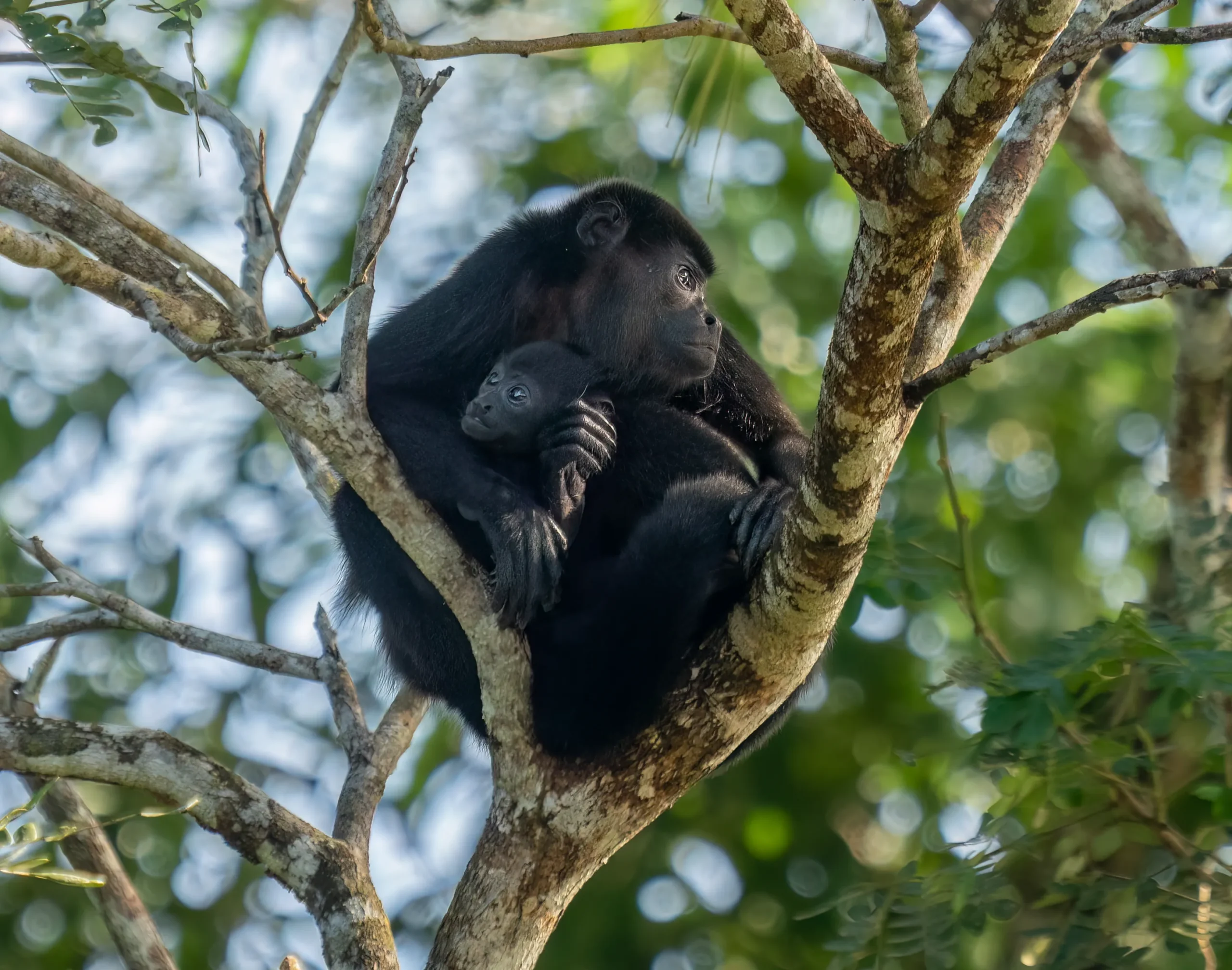
The howler is the voice of many Costa Rican forests. Its booming call, produced with an enlarged throat structure, can carry a long way over the canopy at dawn and before rain. Howlers are leaf eaters that spend long periods resting high in trees, so their sound is far more reliable than a clear view. You may hear them in the dry forests of Guanacaste, on the Nicoya Peninsula, along Tortuguero’s canals, in the Sarapiquí lowlands, in the Osa and even on the lower slopes around Monteverde.
White-faced capuchin
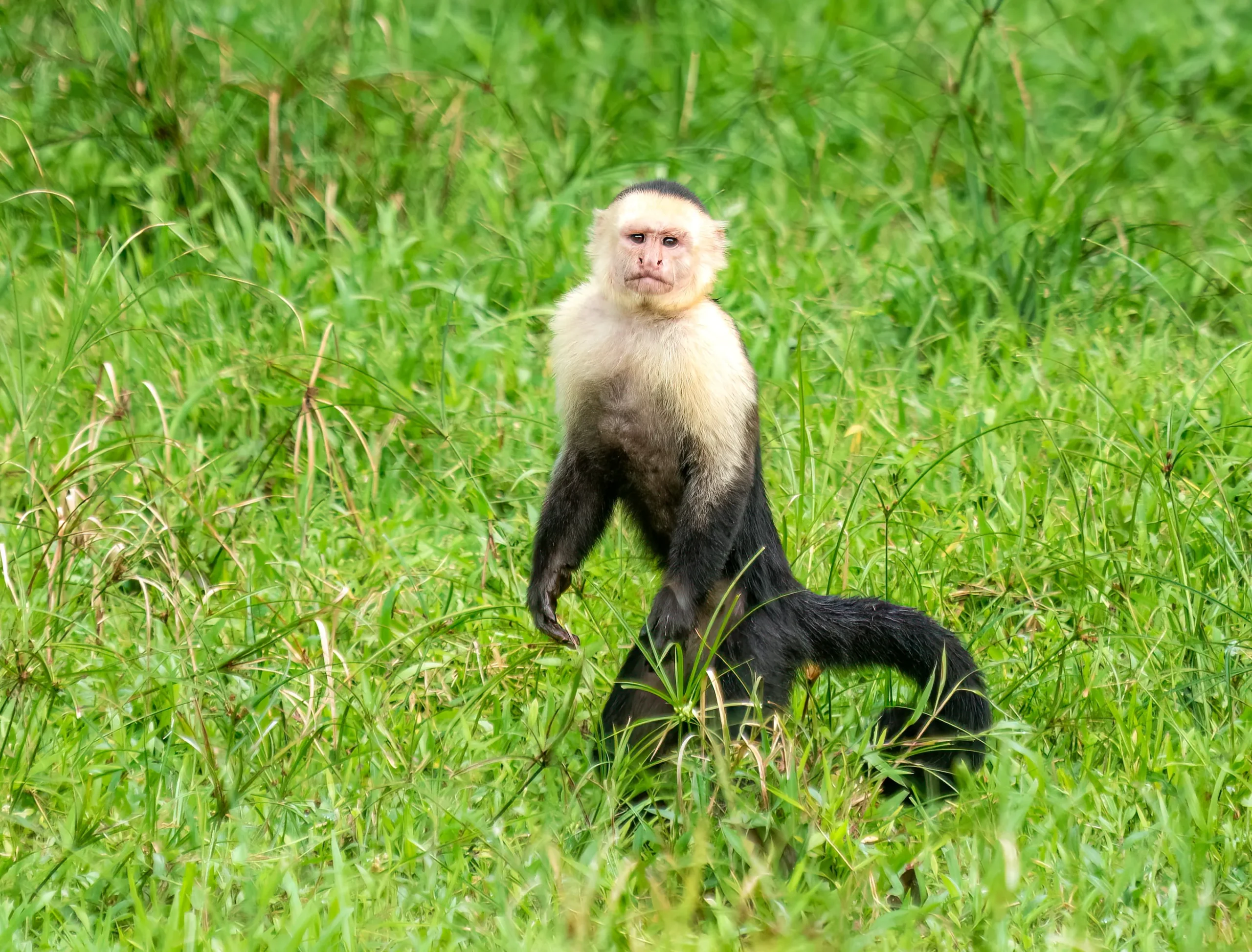
The capuchin is an adaptable, highly observant monkey that forages for fruit, insects and small animals at every level of the forest. Like howlers, it occurs across the country, from Guanacaste’s dry forest to the Caribbean coast and the Osa. Around busy visitor areas, capuchins can learn to associate people with food. That makes keeping snacks secured and maintaining distance especially important. A capuchin that approaches a backpack is not asking for friendship.
Geoffroy’s spider monkey
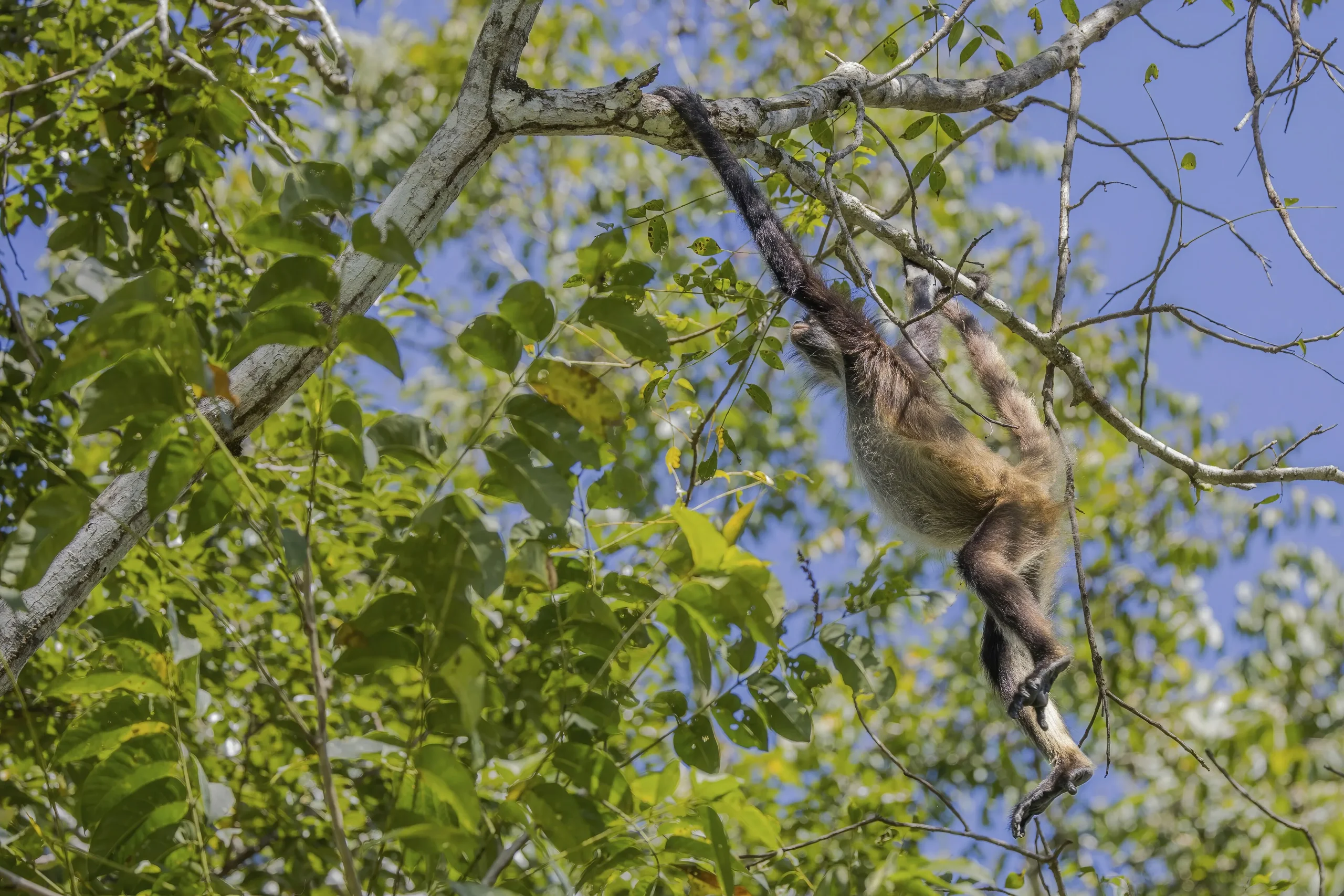
The spider monkey has extraordinarily long limbs and a prehensile tail, and it moves through the upper canopy in loose groups that split and regroup during the day. It eats mostly ripe fruit and depends on connected, mature forest. Osa Conservation lists it as endangered and has published a guide to 79 of the 111 plant species that spider monkeys on the peninsula are known to eat. The primate review found spider monkeys absent from the Central Pacific conservation area, so do not expect them at Manuel Antonio. Better places to hope for them are large forest blocks such as the Osa Peninsula and parts of Guanacaste, including Palo Verde, where the same review recorded them at low density.
Central American squirrel monkey
The squirrel monkey is the smallest and the most restricted. The primate review describes its historic range as Pacific wet lowlands below roughly 500 meters, an area of under 8,000 square kilometers, and it occurs only in the Central Pacific and Osa conservation areas. Groups move quickly through lower branches and forest edges, often making a soft, constant chatter. Costa Rica’s tourism board notes that the Manuel Antonio population belongs to a distinct, increasingly threatened subspecies.
Where to see each monkey
| Monkey | Where it lives | Good places to look | What to expect |
|---|---|---|---|
| Mantled howler | Every conservation area in the country | Guanacaste dry forest, Tortuguero canals, Sarapiquí, Osa | Heard far more often than seen; dawn chorus |
| White-faced capuchin | Every conservation area in the country | Manuel Antonio, Guanacaste dry forest, Osa, Caribbean coast | Bold near visitor areas; never feed |
| Geoffroy’s spider monkey | Larger, connected forests; absent from the Central Pacific conservation area | Osa Peninsula and Corcovado, Palo Verde and other large Guanacaste forests | High canopy; patience and a guide help |
| Central American squirrel monkey | Pacific wet lowlands of the Central Pacific and Osa only | Manuel Antonio area, Osa Peninsula and Corcovado | Fast, noisy groups in lower branches |
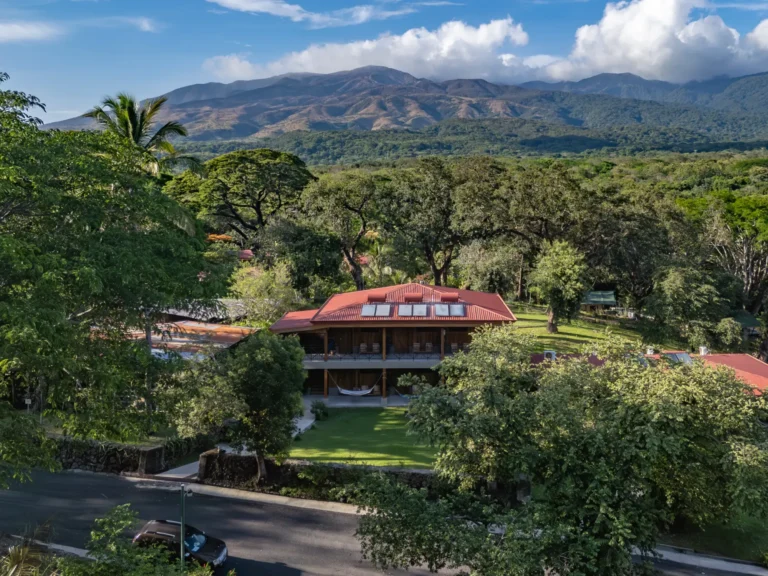
Because spider monkeys and squirrel monkeys both live there, and howlers and capuchins occur everywhere, the Osa Peninsula is the region where a patient visitor has the best chance of meeting all four species. Lodges on the edge of Corcovado make good bases: La Leona Eco Lodge is a family-owned lodge on 36.5 hectares of rainforest near the park’s La Leona entrance, Luna Lodge sits above Playa Carate with more than 75 acres of its land in primary forest, and Corcovado Wilderness Lodge (formerly Casa Corcovado Jungle Lodge) is surrounded by about 170 acres of rainforest and reached by boat from Sierpe. Our Corcovado and Osa Peninsula guide explains how to combine lodge trails with guided park visits.
Sloths: patience is part of the encounter
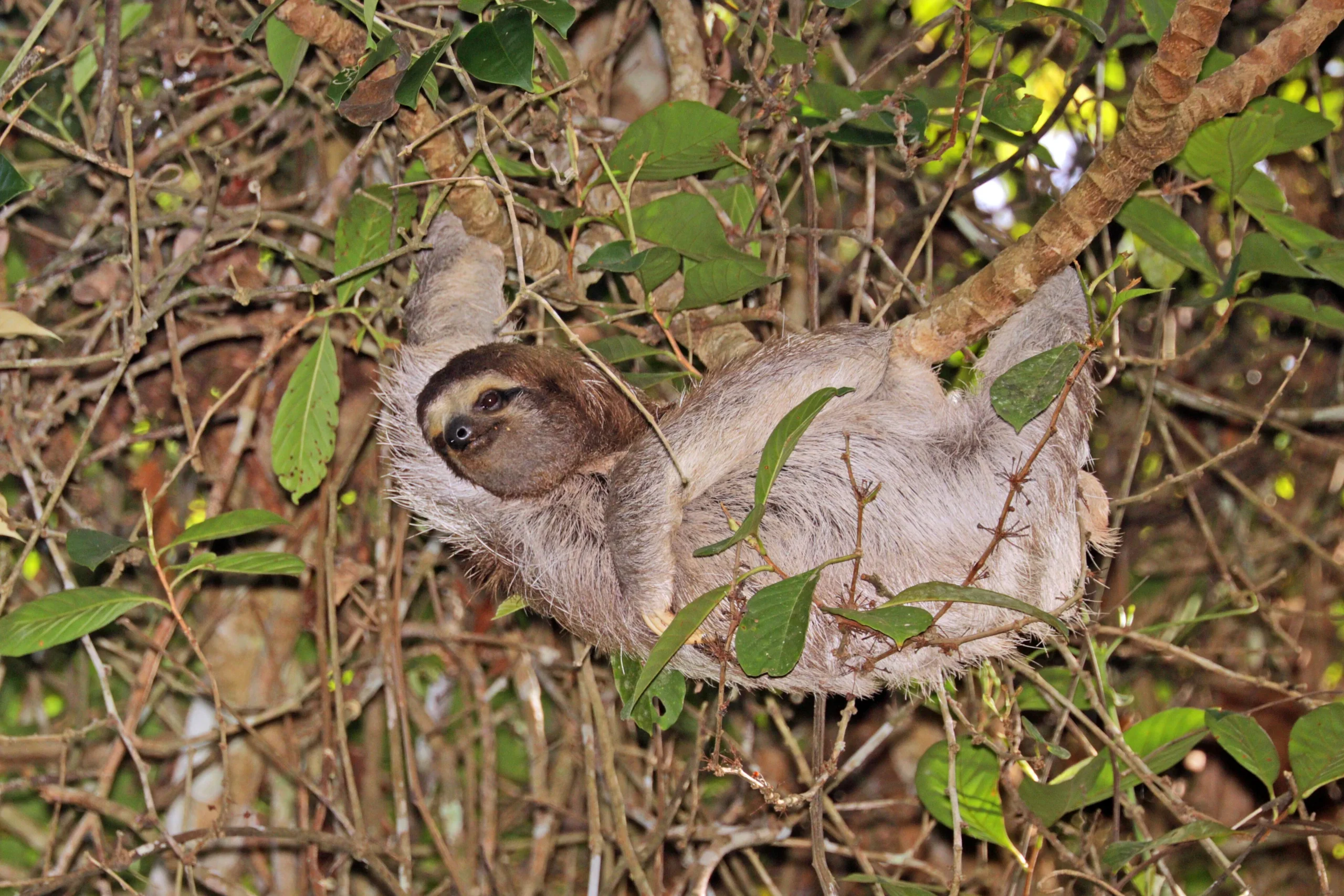
Costa Rica has two sloth species: the brown-throated three-toed sloth and Hoffmann’s two-toed sloth. Both spend almost all their lives in trees. Three-toed sloths are the ones visitors most often see hanging in the open in daylight, while two-toed sloths are often curled into a ball high in the foliage.
A common belief is that two-toed sloths are strictly nocturnal. A 2023 study in PeerJ that fitted data loggers to wild sloths around the Caribbean coast found both species active by day and by night, with three-toed sloths inactive about 85 percent of the time and individual animals varying widely. In practice, this means a sloth can be awake at any hour, but you will usually be looking at a resting animal.
Sloths blend into foliage exceptionally well. A trained naturalist with a spotting scope can turn what looks like an ordinary bundle of leaves into a memorable encounter. Good places to look include the forest around Manuel Antonio, Cahuita, Tortuguero and the Caribbean lowlands, where the Cahuita National Park description lists sloths alongside raccoons, coatis and iguanas. In the highlands, Monteverde Cloud Forest Lodge describes three-toed sloths, howlers and capuchins along walks on its roughly 70-acre property.
Never pay for a wild sloth to be taken from a tree and handed to visitors. Handling is stressful and can be harmful. A meaningful sloth encounter means watching an animal in its own habitat and leaving it undisturbed. The Costa Rica Silvestre responsible tourist toolkit links to guidance on feeding wildlife and a cruelty-free code for wildlife photos and selfies.
Baird’s tapir: a rainforest heavyweight
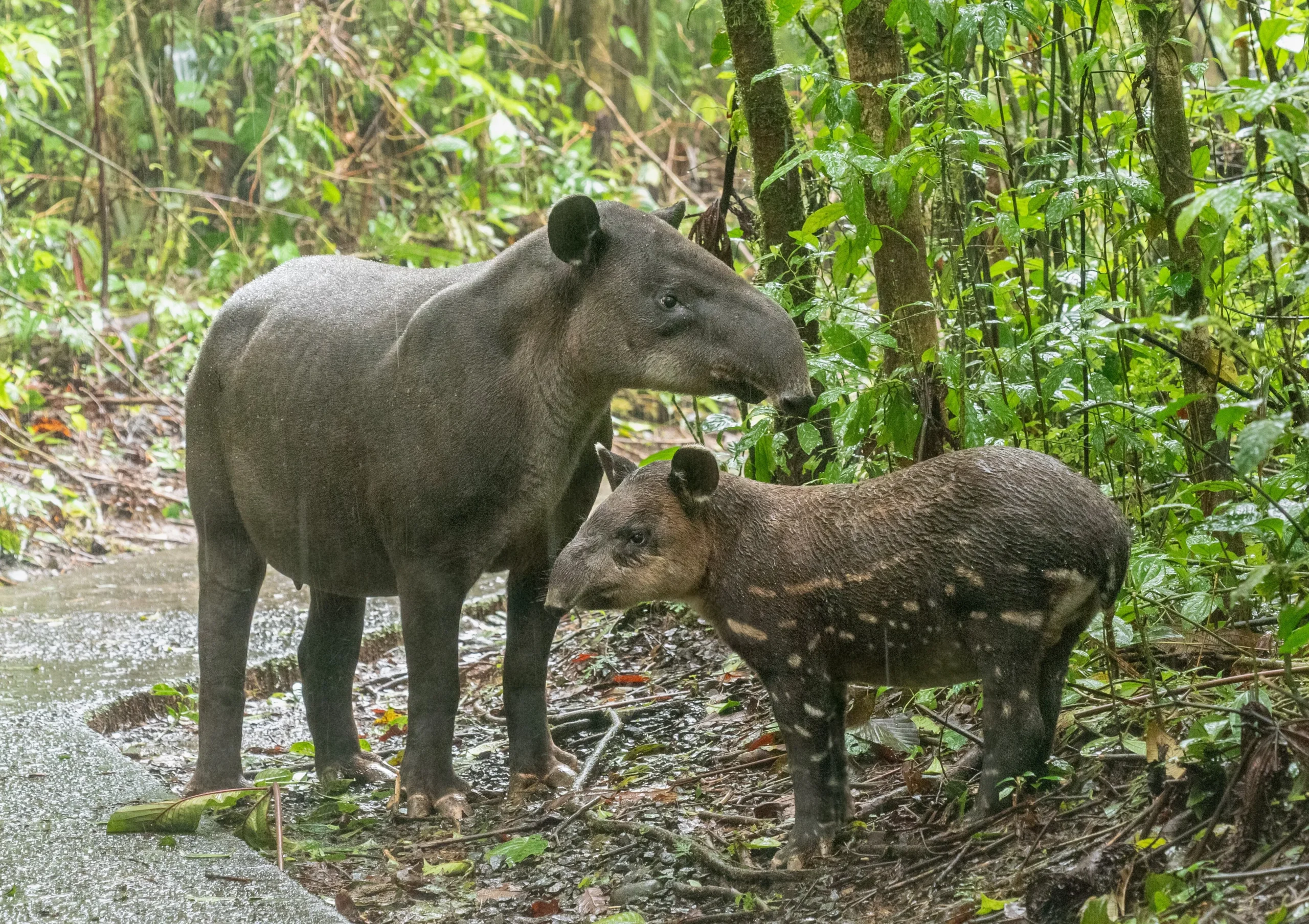
Baird’s tapir is the largest land mammal in Central America and is listed as Endangered by the IUCN, as the 2023 checklist notes. It has a strong body, a short, flexible snout and an important ecological role in moving seeds through the forest. Tapirs need large, protected habitats and can be elusive even where populations persist.
Corcovado is the best-known place to hope for one. SINAC’s own Corcovado National Park page describes the possibility of meeting a tapir on the beach or a herd of peccaries on the trail, while cautioning that no particular sighting can be promised because so much depends on weather, tides, moon and season. The odds improve with patient observation and a good local guide, not with loud pursuit. Do not block an animal’s route, approach for a selfie or assume that a calm-looking tapir is harmless at close range. Seeing one from the trail is enough.
Jaguars, pumas and the other wild cats
Costa Rica has six wild cat species: jaguar, puma, ocelot, margay, oncilla and jaguarundi. The 2023 checklist reports that all six are considered endangered at the national level. The jaguar is the largest cat in the Americas, pumas use a wider range of landscapes, and the smaller cats move through dense vegetation or stay active when visitors are elsewhere.
It is important to be realistic: wild jaguar sightings in Costa Rica are extremely rare. Promotional images may show a cat crossing a beach, but that is not a typical visitor experience. Researchers mostly detect these animals with remote cameras and tracks. Osa Conservation’s camera-trap work describes a network that grew to 30 members and, in 2018, installed more than 222 cameras across the Osa, which it calls the largest camera-trap grid in Central America at the time. One of those cameras recorded a puma at Punta Marenco on the edge of Corcovado.
A forest with no visible jaguar can still be essential jaguar territory. The presence of large predators depends on healthy prey populations, intact corridors and cooperation among parks, private reserves and neighbors, which is why lodges that protect forest matter well beyond their own boundaries. Our private nature reserves guide looks at that network in more detail.
Coatis, kinkajous, peccaries and other forest mammals
The white-nosed coati is an energetic, long-nosed relative of raccoons that searches the ground and low vegetation for insects and fruit. Coatis can become bold around popular beaches and picnic spots when people feed them. Kinkajous live largely in the trees and are mostly active at night; their rounded faces and prehensile tails are distinctive, but a quick glimpse through foliage can make identification difficult. Agoutis carry and bury large forest seeds, which makes them important planters of the next generation of trees.
The northern tamandua, a medium-sized anteater, feeds on ants and termites and may be seen both on the ground and climbing. Armadillos forage on the forest floor at quieter hours. Collared peccaries are generally easier to encounter than the larger white-lipped peccary, which moves in big herds, needs extensive forest and is listed as Vulnerable by the IUCN. Approaching a peccary group closely is unwise, particularly when young are present.
Small private reserves can be excellent for these species. Bosque del Río Tigre, a small lodge on a 31-acre reserve near Dos Brazos on the Osa, lists howler monkeys, coatis and tayras among the animals on its land. In Guanacaste, Lagarta Lodge in Nosara sits beside a 90-acre private preserve where early walkers may meet raccoons, coatis, armadillos and monkeys. Ask a guide which species are expected in a particular habitat; that is more useful than arriving with a universal checklist.
Bats are most of the story
Bats rarely get the attention given to sloths or monkeys, yet with 118 species they make up almost half of Costa Rica’s mammals. They pollinate flowers, disperse seeds and eat enormous numbers of insects. At La Selva Research Station, the Organization for Tropical Studies counts 125 mammal species on 1,600 hectares of lowland forest, and 72 of them are bats.
In the lowlands of the north, SINAC’s page for the Caño Negro wetland refuge reports 160 mammal species, 90 of them bats. These numbers are a useful corrective to the assumption that the large animals seen from lodge trails represent most of the mammal life around you.
A good night walk may show bats feeding at flowering trees or flying low over water. Avoid entering roosts, touching bats or using flash at close range. Naturalists can explain their role without creating close-contact experiences.
Where to look for mammals
The best region depends on which animals matter most to you. The table below summarizes the main options; individual sightings always depend on habitat, season and chance.
| Region | Mammals often seen | Mammals possible but uncommon | Lodges to consider |
|---|---|---|---|
| Osa Peninsula and Corcovado | All four monkeys, coatis, collared peccaries, agoutis | Tapir, white-lipped peccary, wild cats | La Leona Eco Lodge, Aguila de Osa Inn, Bosque del Río Tigre |
| Manuel Antonio (Central Pacific) | Capuchins, squirrel monkeys, sloths, coatis, raccoons | Howlers | Si Como No, Arenas del Mar |
| Tortuguero and the Caribbean | Howlers, capuchins, sloths | Tamanduas, kinkajous at night | Tortuga Lodge and Gardens |
| Sarapiquí and Boca Tapada | Howlers, capuchins, sloths, bats | Peccaries, tamanduas | Selva Verde, Maquenque Eco Lodge |
| Guanacaste dry forest | Howlers, capuchins, coatis | Spider monkeys, wild cats | Lagarta Lodge |
| Monteverde and the highlands | Sloths, howlers, capuchins | Nocturnal mammals on guided night walks | Monteverde Cloud Forest Lodge |
Osa Peninsula and Corcovado. Corcovado protects about 42,560 hectares of land, and SINAC says it holds an estimated 2.5 percent of the world’s biodiversity. Visits require an advance reservation with the park, and SINAC states that the long trails from La Leona or Los Patos to Sirena Biological Station must be walked with a tourism guide; its recommendations also say to hire a local guide for hikes in the park. Night walks inside the park are not permitted, so nocturnal mammal watching happens on private land. In Drake Bay, Aguila de Osa Inn arranges guided Corcovado trips and night wildlife tours, and the Tamandua Biological Station protects about 50 hectares of family-owned forest near the park. Browse all our Osa Peninsula eco-lodges.
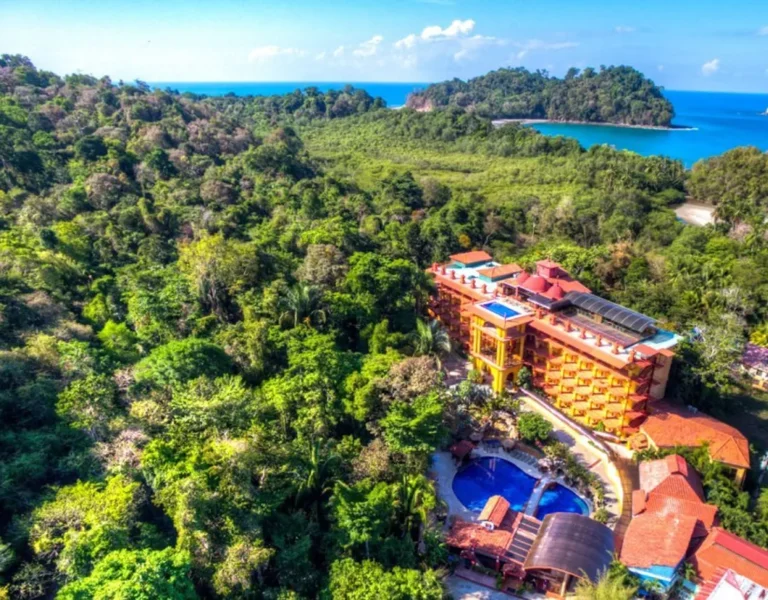
Manuel Antonio. This is often the most reliable place for capuchins, squirrel monkeys, sloths and coatis, but crowds make careful etiquette essential. The tourism board’s park page says the park opens Tuesday through Sunday and that tickets are sold only online through SINAC’s system, with no parking at the park. Si Como No has a 30-acre wildlife refuge with guided night walks, and Arenas del Mar sits on about 12 acres of beach and forest a walk from the park.
Tortuguero. Canals and flooded forest make boat-based mammal watching productive and quiet. Tortuga Lodge and Gardens sits on 146 acres facing the park, and our review describes early-morning naturalist walks for howler troops. Our Tortuguero National Park guide covers boat etiquette, and our Caribbean eco-lodges page lists more stays.
Sarapiquí, Boca Tapada and Guanacaste. In the northern lowlands, Selva Verde protects about 500 acres in Sarapiquí, and Maquenque Eco Lodge is a 60-hectare reserve near Boca Tapada with guided night tours. In Guanacaste’s dry season, leaf fall opens the canopy and can make howlers and capuchins easier to see, although heat pushes most activity into the early morning.
Timing, guides and realistic expectations
Early morning is usually best, when temperatures are comfortable and trails are quiet. Late afternoon brings another burst of activity, and many species are mostly nocturnal. Weather, fruiting trees and disturbance all change the pattern, so there is no single monkey hour or guaranteed sloth tree. On the Pacific side, SINAC gives Corcovado’s dry season as mid-December to mid-April; trails are easier then, though mammals are present all year.
A naturalist guide recognizes calls, tracks, feeding signs and subtle movement that a visitor would miss, and a spotting scope is especially useful for canopy animals. If mammals are the main reason for your trip, spend three or four nights at one habitat-rich lodge rather than moving every day. Tracks in soft soil, fruit dropped beneath feeding trees and distant calls are evidence too, and a guide who explains them can make a walk memorable even when the animals stay hidden. Our best wildlife watching experiences guide compares ethical tour types.
Keeping the animals wild
Stay on designated trails and follow your guide. Never feed wildlife; SINAC lists touching, feeding and harassing animals among the things not allowed in Corcovado, and the same principle applies everywhere. Keep a respectful distance from young animals and groups, do not pursue animals through vegetation and do not block an escape route.
When choosing a lodge, ask whether its trails pass through connected native forest rather than ornamental gardens, whether guides keep groups small and whether any feeding stations or captive animals are part of the experience. A property that protects habitat and offers naturalist-led observation will usually give better, more honest encounters than one promising a guaranteed sighting of a single popular animal.
Frequently asked questions
Which mammals are easiest to see in Costa Rica?
Howler monkeys, white-faced capuchins and coatis are comparatively easy to encounter in suitable areas because they are widespread and active by day. Sloths are common in some lowland forests but are hard to find without a guide who knows how to scan the canopy.
Where can I see all four monkey species?
The Osa Peninsula, including Corcovado National Park and nearby private reserves, is the region where all four live together. Manuel Antonio has three species but not spider monkeys, which are absent from the Central Pacific conservation area. No visit guarantees all four.
Do I need a guide to see mammals in Corcovado?
SINAC requires a reservation for every Corcovado visit and requires a tourism guide on the La Leona to Sirena and Los Patos to Sirena trails; its recommendations also say to hire a local guide for hikes in the park. A good guide also greatly improves your chances of finding tapirs, peccaries and monkeys. Check current rules with SINAC before you go, as they can change.
Are jaguars dangerous to tourists?
Jaguars are elusive and very rarely encountered by visitors. Follow protected-area rules and your guide's instructions, and do not try to search for them on your own, particularly off trail or after dark.
Can I see sloths at night?
Sometimes. Research on wild sloths in Costa Rica shows both species can be active by day or night. Night walks on private reserves occasionally find active two-toed sloths, but most sightings are of resting animals spotted in daylight.
Should I choose a lodge with wildlife feeding stations?
No. Prefer properties that protect habitat and offer naturalist-led observation without feeding or handling wild mammals. Feeding changes animal behavior, can spread disease and increases conflict with people.