
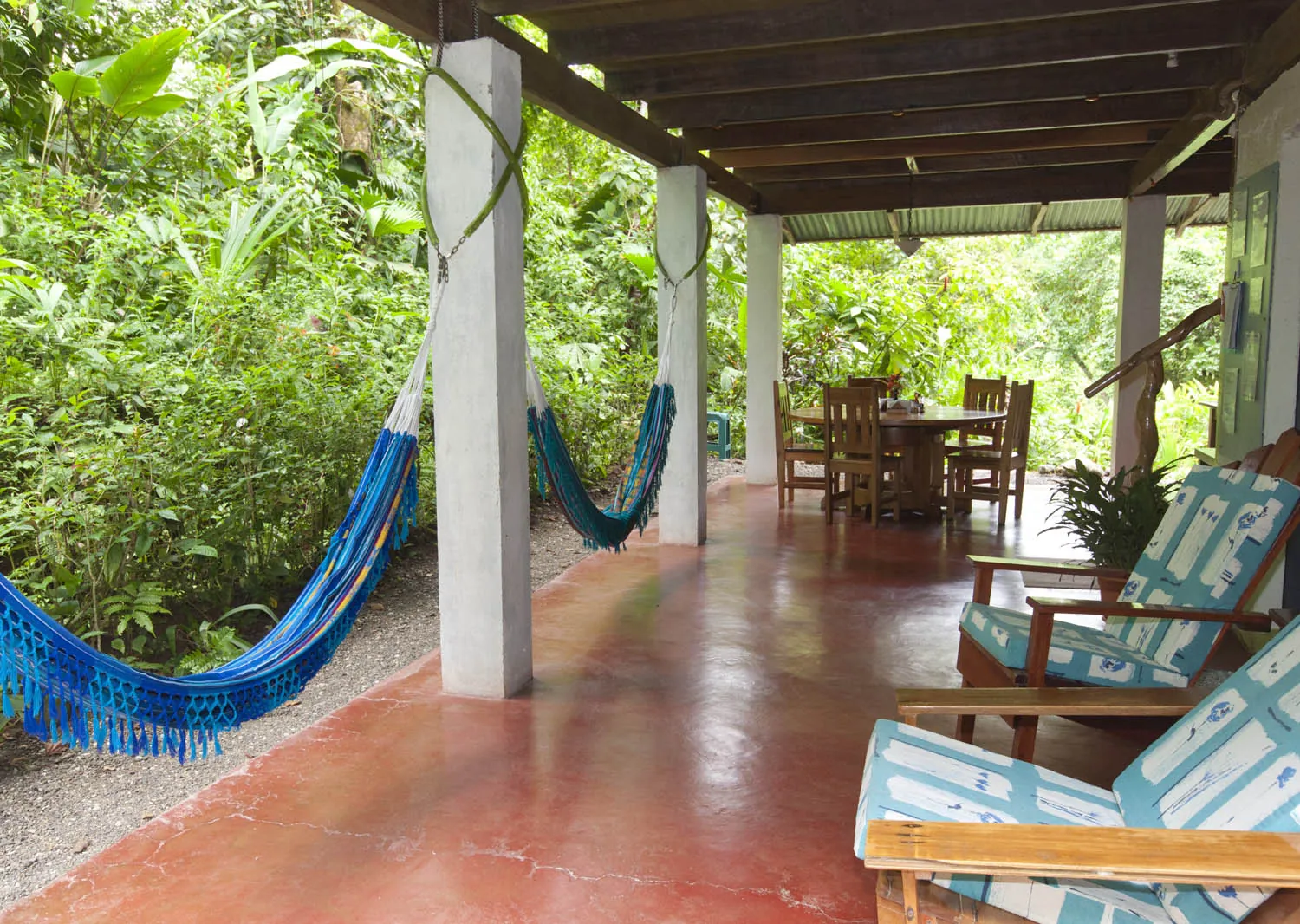
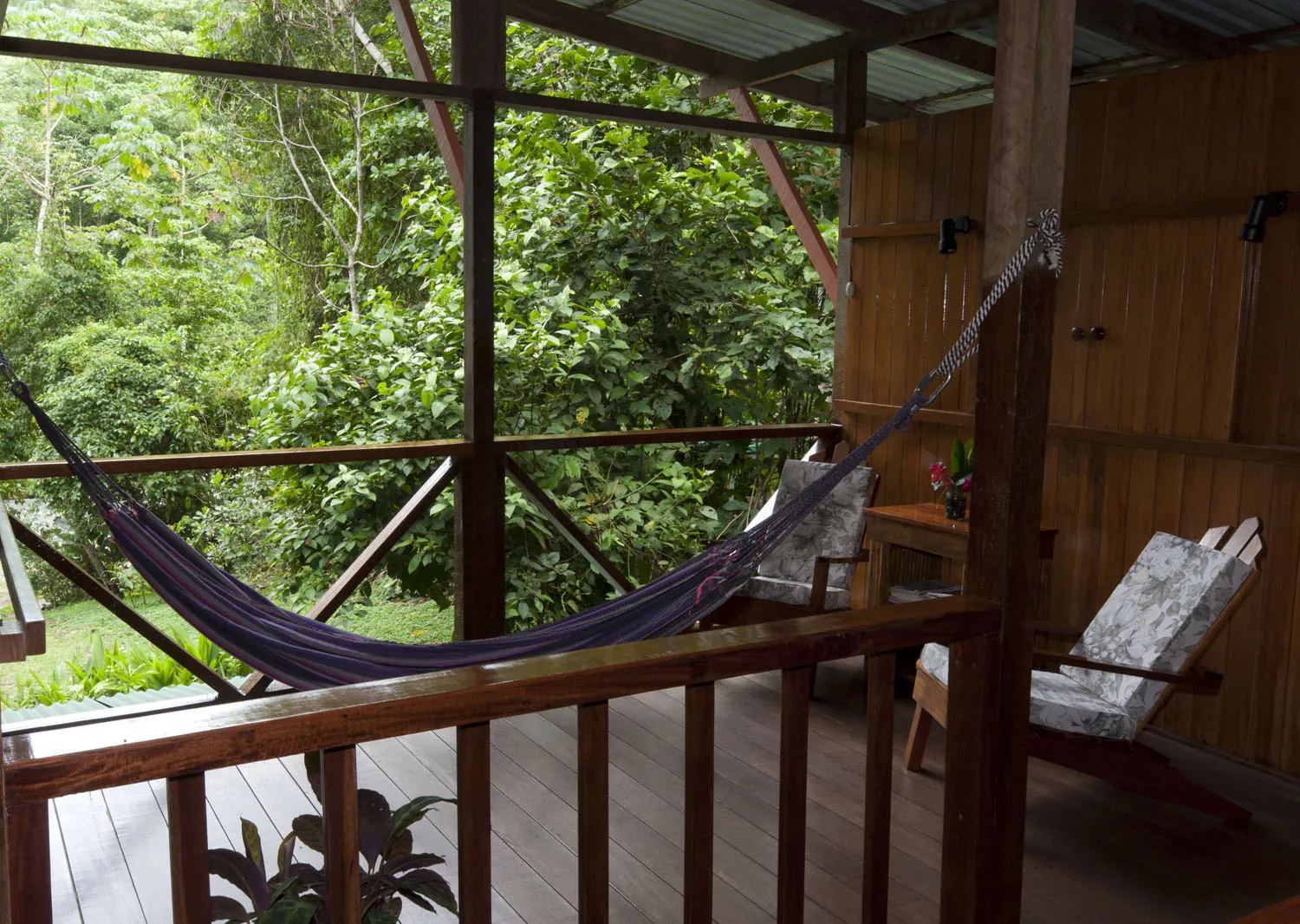


Bosque del Río Tigre is a tiny, guide-run lodge on the Río Tigre just past the old gold-mining village of Dos Brazos, on the inland edge of the Osa Peninsula near Corcovado National Park. With four upstairs rooms and one garden cabin, run since 1998 by two naturalist guides, it is one of the most personal birding stays in Costa Rica. It suits serious birders and quiet nature lovers who value expert guiding and home cooking over pools and private bathrooms.
At a glance
| Location | Across the Río Tigre from Dos Brazos de Río Tigre, inland from Puerto Jiménez |
|---|---|
| Style | Small naturalist lodge: four rooms with shared baths, plus a private garden cabina |
| Setting | Riverside forest, gardens and old mining lagoons at the foot of the Osa’s hills |
| Best for | Birders, photographers and naturalists who want small groups and expert guides |
| Getting there | Road via Chacarita and Sándalo, then a ford across the Río Tigre; 1.5 to 2 hours from Chacarita |
| CST status | Not in the official CST directory on 2026-Oct-21 |
Where it is
The lodge sits about 100 meters beyond a river crossing at the edge of Dos Brazos de Río Tigre, a village that grew up around gold mining. Its driving instructions follow the paved road onto the Osa toward Puerto Jiménez, then turn off 3 km south of Sándalo for Dos Brazos. The final approach crosses the Río Tigre itself. In the dry season a 4×4 can usually cross, but the lodge warns never to drive in if the water is muddy or above calf height; instead, wait at Soda Caimán by the river and ask them to call the lodge.
Allow 5.5 to 7 hours of driving from San José, or 1.5 to 2 hours from Chacarita, and arrive before dark. Puerto Jiménez also has a small airstrip with domestic flights from San José. The directions page dates from 2015 and notes that the riverbed shifts after each rainy season, so ask for updated directions before you go. Our guide on how to reach remote Costa Rica eco-lodges covers trips like this.
The hosts
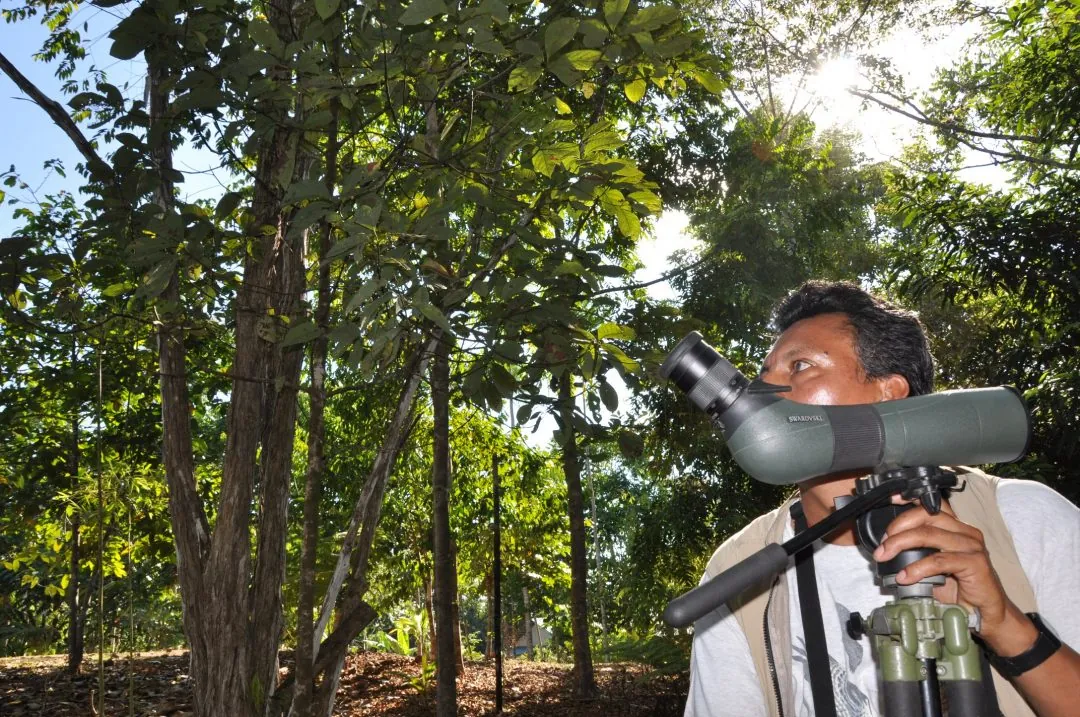
Liz Jones and Abraham Gallo opened the lodge in February 1998, building it as a small lodge and research station. The about page explains why: they wanted the kind of place they themselves looked for, a quiet forest lodge with knowledgeable personal guides. Both are naturalist guides. Over the years they have hosted visiting researchers, built a natural history library, published two projects in professional journals, and spent two years on the first serious field work on three endangered birds with small ranges. Abraham has found two bird nests never before documented on the Osa.
Abraham also runs the kitchen, which tells you a lot about the scale of the place.
Rooms
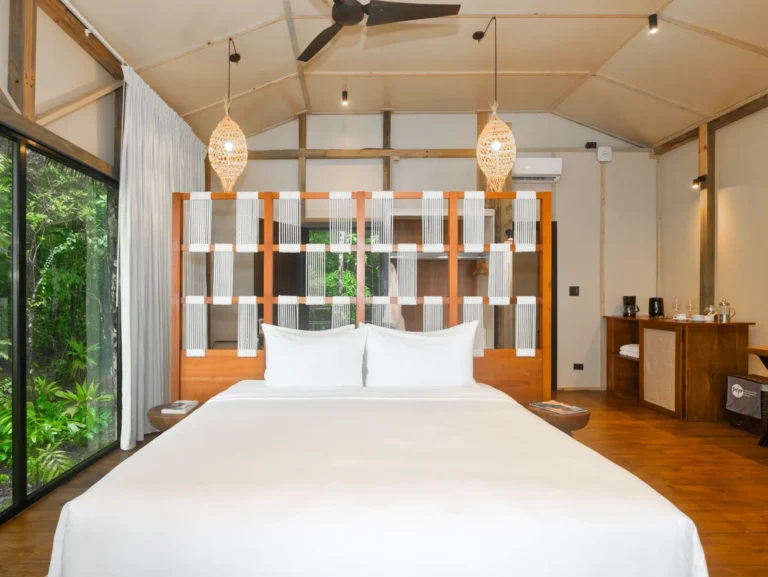
The main lodge is a two-storey wooden house finished in native woods. Upstairs, the guest rooms page describes four rooms, one at each corner, each open to the forest on two sides for airflow and birding from bed. Two have double beds with large mosquito nets, and two have twin beds. There are reading lights, shelves and hooks, but no private bathrooms: guests share one bathroom upstairs and one downstairs, plus two roomy hot-water showers in the garden a few steps away.
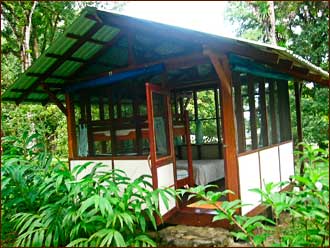
For more privacy, the Garden Cabina stands about 25 meters from the lodge with a double bed, its own bathroom, a porch and a hammock.
Meals
All meals are included, along with unlimited fresh juice, wine at dinner and snacks. The meals page describes a pre-breakfast snack of coffee and banana bread for early birders, a Costa Rican breakfast with gallo pinto and homemade bread, a light lunch, and a more elaborate dinner at 6:30, often fish such as mahi-mahi, with salad, vegetables and a homemade dessert. Vegetarian dishes are part of the regular menu, and packed meals are provided for early starts and day trips. Herbal teas often come from the garden.
Birding and nature
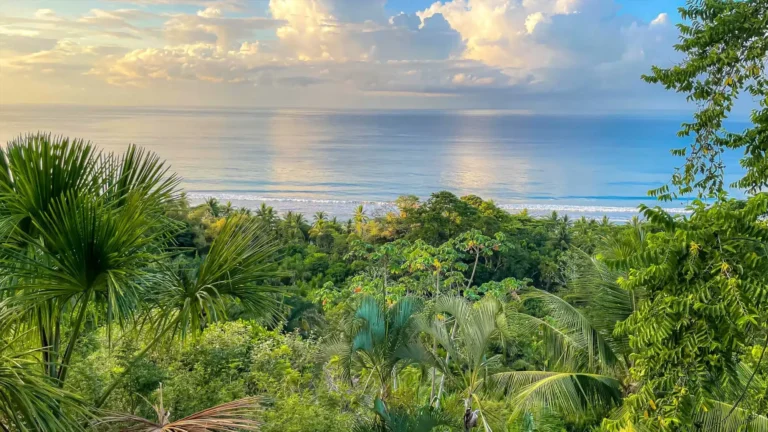
This is the reason to come. The lodge’s page on the diversity of Dos Brazos explains why the area is so rich: forest from 80 to 450 meters in elevation mixes with small farms, gardens and riverbanks, and mechanical gold mining in the 1970s and 1980s left lagoons and swamps that now hold frogs and other still-water species. The Río Tigre changes here from a fast mountain stream into a broader lowland river.
Birders come for Osa specialties and forest species that are hard to find at beachside lodges, and the hosts keep a site list. Earlier descriptions of the lodge report howler monkeys, poison dart frogs, coatis and tayras on or near the property. As always, sightings depend on season and luck, but here you have two experts helping.
Guiding isn’t automatically included. Independent local guides can be booked ahead for a full day or for morning and afternoon walks, and the lodge offers packages that include unlimited guiding for stays of two nights or more.
Corcovado and beyond
Dos Brazos is a quieter, inland gateway to Corcovado National Park, and the lodge mentions a local trail into the park from the village. Day trips to Puerto Jiménez, the mangroves of the Golfo Dulce and the Osa’s beaches can be arranged. Read our Corcovado and Osa Peninsula guide before you plan park visits, as entry rules and guide requirements are strict.
Sustainability
The lodge’s whole model is low impact: five guest units, shared facilities, a natural history focus, local guides and a long record of supporting field research. It does not publish a list of energy, water or waste practices, and it is not in the official CST directory, so judge it on its small scale and its hosts’ work rather than a certificate.
Who it suits
Bosque del Río Tigre is ideal for dedicated birders, wildlife photographers, biology students and quiet couples who want to learn from people who know the forest intimately. Solo travelers do well here too, since meals are shared.
Skip it if you need a private bathroom in every room (book the Garden Cabina instead), air conditioning, a pool, or a beach on the doorstep. For more comfort near Puerto Jiménez, see Iguana Lodge, or for a forest lodge on the Golfo Dulce reached by boat, Playa Cativo Lodge. Browse all our Osa Peninsula eco-lodges and our list of the best eco-lodges for wildlife and birdwatching.
Frequently asked questions
Can I drive to Bosque del Río Tigre in a normal car?
The last step is a ford across the Río Tigre, which needs a 4x4 even in the dry season and should never be attempted when the river is high. If you fly into Puerto Jiménez, ask the hosts how best to arrange the last leg.
Are guided walks included?
Not automatically. Meals, juice, dinner wine and snacks are included, while guiding is booked separately or as part of a package. Book guides early, as they are first come, first served.
Is the lodge open all year?
The lodge publishes rates for a pre-season from November, a high season from mid-December to mid-April, and a green season from mid-June to mid-August. Contact the hosts about dates outside those periods.
Does every room have its own bathroom?
No. The four upstairs rooms share two bathrooms and two hot-water garden showers. The Garden Cabina is the only unit with a private bathroom.