The difference between a great wildlife lodge and a hotel near a famous park often shows before breakfast. At a strong nature lodge you step outside with binoculars and start watching right away: the forest, the trails and the guides are part of the stay. At an ordinary hotel you may spend the first hour of the day getting to where the animals live.
Costa Rica gives birders and naturalists remarkable choice. The country’s official bird list, kept by the Rare Species and Ornithological Records Committee, stood at 942 species in its 2025 edition. Those birds are spread across cloud forest, wet Caribbean lowlands, Pacific rainforest, dry forest and wetlands, and no single lodge has them all. The best plan is to pick habitats, set realistic targets and give each place enough time in the field.
Choose by habitat, then by lodge
| Area | Habitat | Often sought | Lodges to consider |
|---|---|---|---|
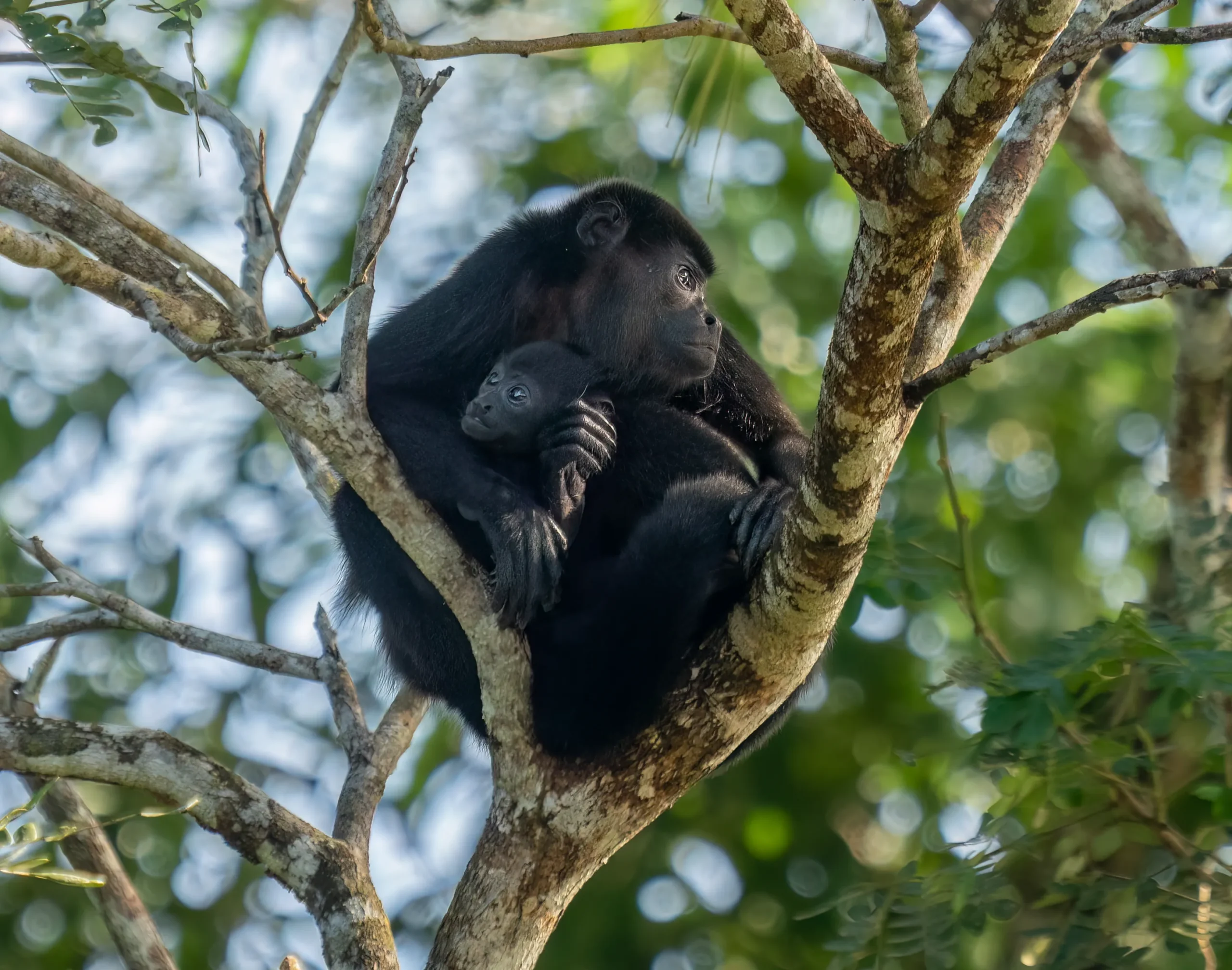
| Osa Peninsula | Pacific lowland rainforest | Scarlet macaw, four monkey species, tapir tracks, forest birds | Lapa Ríos, Bosque del Cabo, Bosque del Río Tigre |
| Golfito and Piedras Blancas | Lowland rainforest | Rainforest birds, monkeys, frogs | Esquinas Rainforest Lodge |
| Sarapiquí | Caribbean-slope wet forest | Toucans, poison dart frogs, mixed flocks | Selva Verde, La Selva |
| Boca Tapada | Lowland forest and wetland | Great green macaw, waterbirds | Maquenque Lodge |
| Turrialba | Caribbean-slope foothills | Hummingbirds, tanagers | Rancho Naturalista |
| Savegre Valley | Montane oak forest | Resplendent quetzal, highland hummingbirds | Savegre Hotel |
| Arenal | Foothill rainforest | Forest birds, lava-flow edge species | Arenal Observatory Lodge |
| Monteverde | Cloud forest | Quetzal, three-wattled bellbird | Monteverde Lodge and Gardens |
| Bijagua and Rincón de la Vieja | Volcanic foothill forest | Tapir habitat, forest birds | Celeste Mountain Lodge, Buena Vista Lodge |
| Tortuguero | Canals and flooded forest | Herons, kingfishers, caimans, turtles | Tortuga Lodge, Turtle Beach Lodge |
| Carara area | Transitional forest | Scarlet macaw, Pacific lowland birds | Santa Lucía Jungle Hacienda |
The table shows what each habitat is known for, not what any one walk will produce. Season, weather, fruiting trees and luck all play a part. Our birds of Costa Rica guide covers the key species by region.
Osa Peninsula: rainforest at the door
SINAC describes Corcovado National Park as 42,560 hectares of land and estimates it holds 2.5 percent of the world’s biodiversity. Guides are required on the long La Leona to Sirena and Los Patos to Sirena trails. But you don’t have to enter the park to see a great deal: several Osa lodges protect large private forests of their own. Our Corcovado and Osa guide explains the park sectors.
Lapa Ríos sits in a 1,000-acre private reserve at Cabo Matapalo, with a ridge hike and night walk among its activities. Next door, Bosque del Cabo protects more than 750 acres, with trails to waterfalls and to beaches on both the Golfo Dulce and the Pacific. Both lodges are good bases for scarlet macaws and monkeys without leaving the property.
For a birding focus, Bosque del Río Tigre near Dos Brazos, on the edge of Corcovado, is a small lodge run by naturalist hosts Liz Jones and Abraham Gallo. Meals are included, guided birding can be added or booked as an all-inclusive package, and the lodge publishes a bird site list. Its 2026 to 2027 season runs from November through mid-August.
Golfito: a lodge inside a national park
Esquinas Rainforest Lodge is a rare thing: an 18-room lodge inside Piedras Blancas National Park, near the village of La Gamba, reachable by car year-round and about 30 minutes from the Golfito airstrip. The lodge reports more than 300 bird species. SINAC says the park, created in 1990 with 15,147 hectares of land, was once part of Corcovado under the name Bosque Esquinas, has a short dry season in March and April, and shelters all four of Costa Rica’s monkey species.
Sarapiquí: field-guide detail in warm rainforest
Sarapiquí suits travelers who love tropical biology, and it’s only about 2 hours from San José. Selva Verde Lodge has been hosting nature travelers since 1986 on 500 acres of its own forest, with naturalist guides, birding and night activities.
The Organization for Tropical Studies’ La Selva is one of the world’s best-studied tropical forests. The station protects 1,600 hectares bordering Braulio Carrillo National Park, was founded in 1968 and has recorded more than 470 bird species, 125 mammals (72 of them bats), 48 amphibians and 87 reptiles. Natural history visitors can stay overnight and book birding, night and natural history walks. Those totals are decades of research records, not what a three-hour walk will turn up, but they show why patient birders love the place.
Boca Tapada: macaw country
Maquenque Lodge sits on the San Carlos River inside the Maquenque Mixed Wildlife Refuge, with treehouses and bungalows, birding, and boat trips on the wetlands. It holds CST Elite certification. The great green macaw is the bird people come for; it’s critically endangered, so ask a guide about recent sightings and nesting trees rather than expecting one on a set schedule.
Further west, the Caño Negro Wildlife Refuge was created in 1984 and named a Ramsar wetland of international importance on December 27, 1991, one of Costa Rica’s first two. SINAC lists 307 bird species there, 206 resident and 101 migratory. It’s a separate trip from Boca Tapada, so plan the driving time.
Highlands: quetzals and hummingbirds
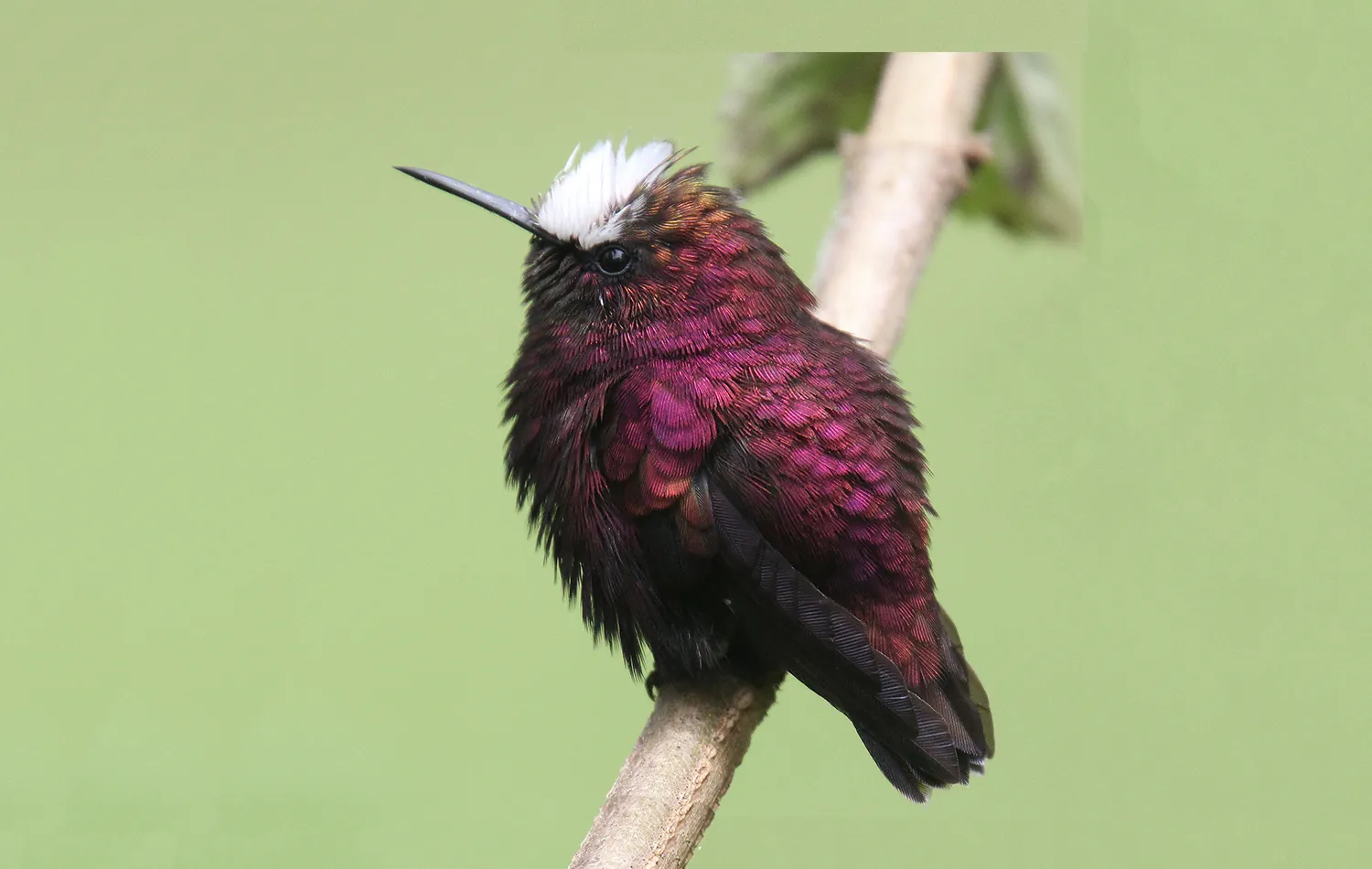
Rancho Naturalista in the mountains near Turrialba is built for birders, with expert resident guides, family-style meals, hummingbird feeders and its well-known hummingbird pools. It reports more than 450 bird species recorded in its private reserve and surrounding areas.
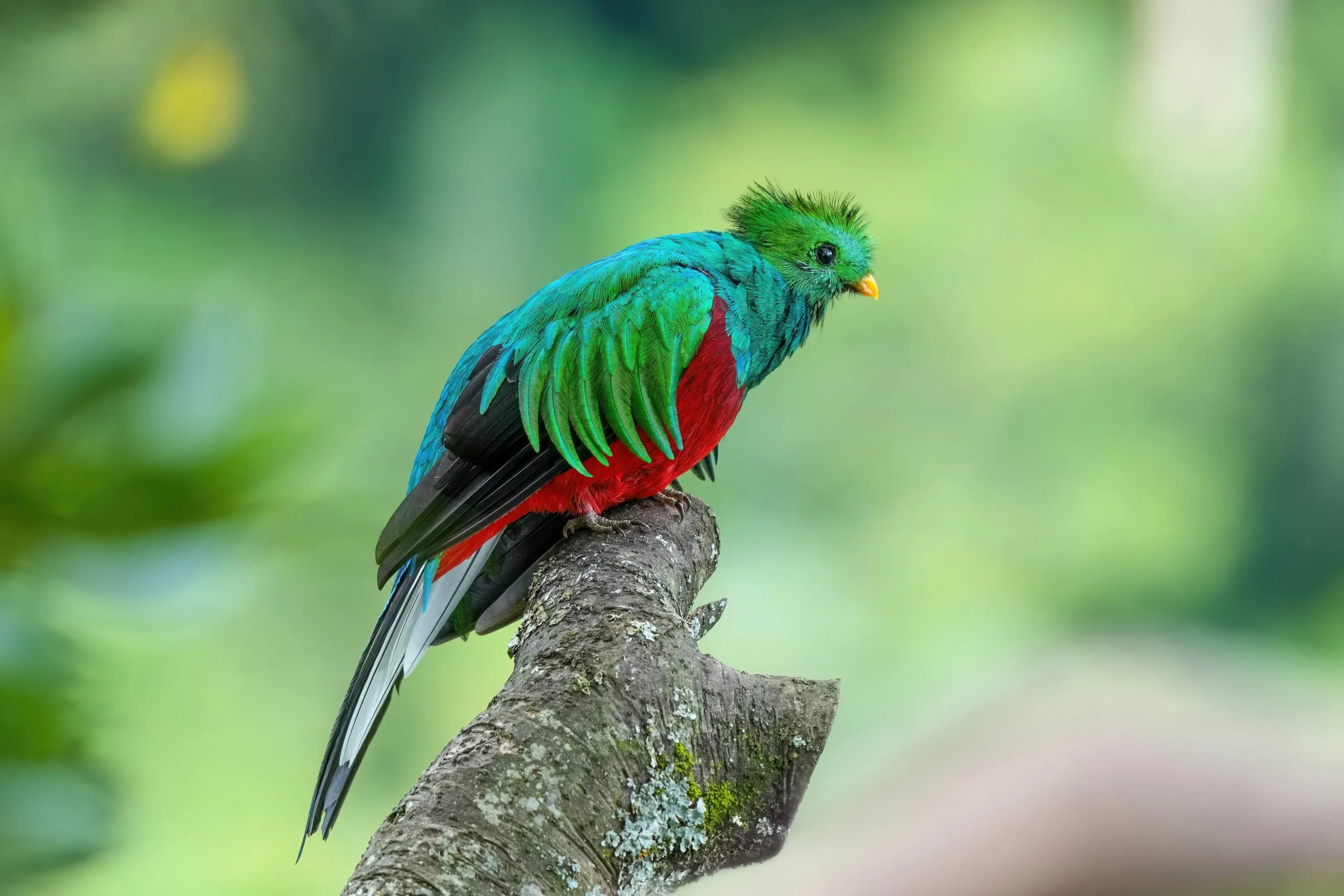
In San Gerardo de Dota, Savegre Hotel sits at 2,200 meters with more than 500 hectares of private cloud forest and says January to June is the best time for quetzals. Nearby Los Quetzales National Park, 76.5 kilometers south of San José, protects oak forest draped in moss; SINAC notes the quetzal is classed as near threatened by the IUCN, and a 480-meter trail is designed for birdwatching.
In Monteverde, the cloud forest preserve spans about 1,200 to 1,800 meters on the Continental Divide, where Pacific and Caribbean species meet; look for quetzals nesting in old oaks and listen for bellbirds high in the canopy. Monteverde Lodge and Gardens has 31 rooms with a private cloud forest reserve and runs night tours there. Our Monteverde guide compares the reserves.
Arenal and the northern volcanoes
Arenal Observatory Lodge is inside Arenal Volcano National Park, on a reserve of more than 352 hectares with 11 kilometers of self-guided trails, including 800 meters suited to wheelchairs. It reports more than 500 bird species at the lodge.
Near Bijagua, Celeste Mountain Lodge has a private trail of about 2 kilometers through rainforest for birding, and it’s about 5 kilometers from Tenorio Volcano National Park, where SINAC lists tapir, puma, ocelot, the bare-necked umbrellabird and the sunbittern among the park’s wildlife.
On the Guanacaste side, Buena Vista Lodge, now called Rincón de la Vieja Hotel & Eco Adventure Park, has 60 rooms in the foothills less than an hour from Liberia’s airport, with birdwatching and guided night walks among many adventure activities. Rincón de la Vieja National Park was created in 1973, covers 14,300 hectares and has two visitor sectors, Las Pailas and Santa María.
Tortuguero and the Carara coast
Tortuguero is for travelers who enjoy watching from a boat. Tortuga Lodge has 29 river-view rooms, gardens and a private reserve, with naturalist walks, kayak trips into the park and turtle tours in season. Turtle Beach Lodge sits on 175 acres between the canals and the sea, and its packages include a canal tour and a guided trail walk. SINAC’s Tortuguero page gives the turtle nesting season as June to October, with night beach access only on the official guided program.
On the Central Pacific, Santa Lucía Jungle Hacienda (formerly Hotel Villa Lapas) sits on a river at the edge of Carara National Park. SINAC calls Carara the only transitional forest in the Central Pacific and records 420 bird species there, 47 percent of the country’s total in its count. Scarlet macaws are a highlight.
Questions to ask a lodge before you book
- Where are sightings made? On the property, in an adjoining reserve, or only on tours elsewhere? A lodge’s species list may borrow from a park hours away.
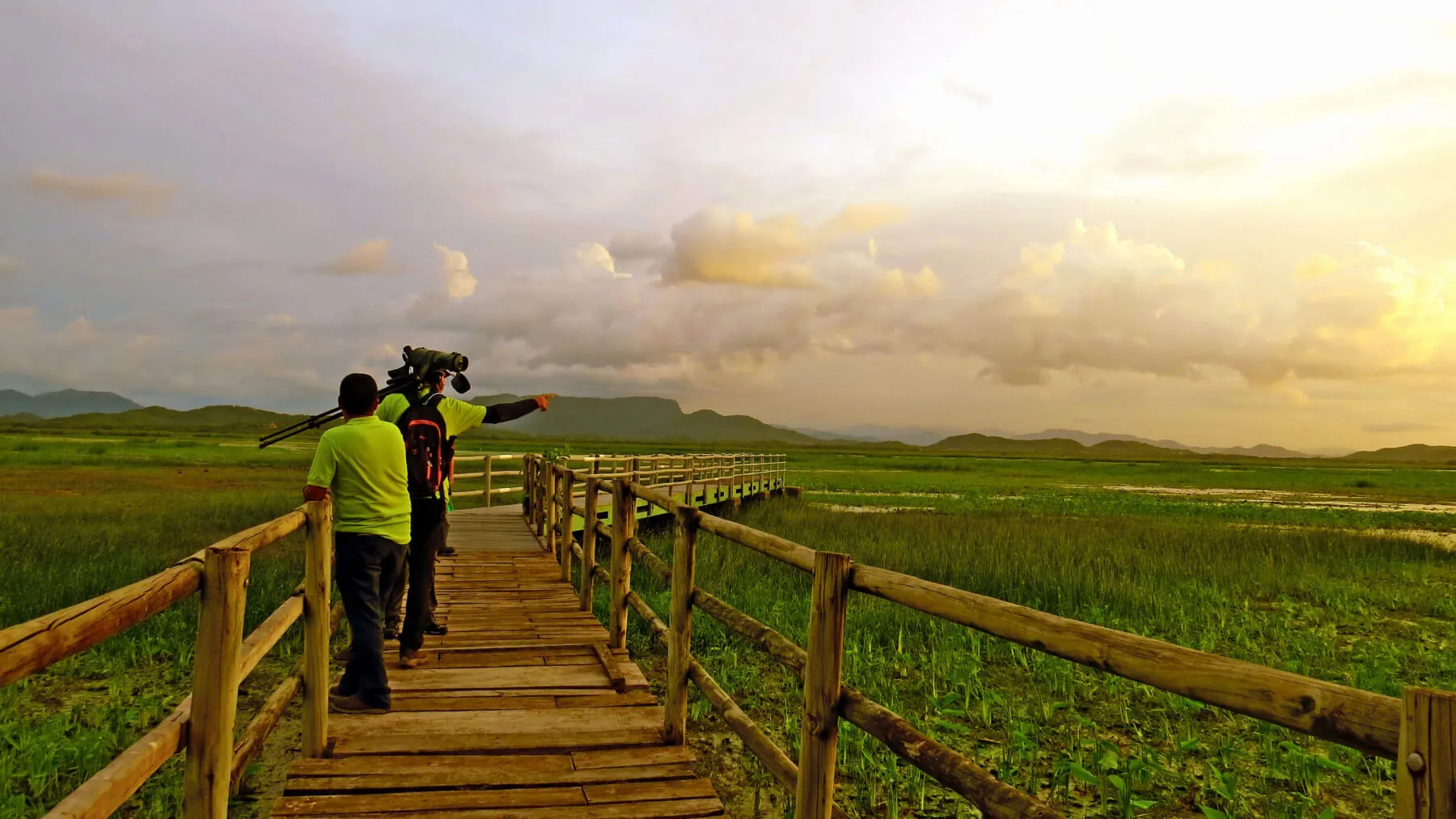
- Who guides, and how? A strong birding guide carries a scope, knows calls, starts at first light and keeps groups small.
- What’s typical in my month? Ask for recent sightings for your travel dates, not a lifetime list.
- How are animals treated? Avoid any operator that baits, feeds or handles wildlife or chases animals by boat.
The Costa Rican Tourism Institute’s wildlife guidance asks visitors to watch from a distance and never touch, trap, handle or feed wild animals. Our wildlife watching guide has more field etiquette.
Night walks: the other half of the wildlife
Many of the animals people most want to see, from red-eyed tree frogs to kinkajous, owls and sleeping birds, are only findable after dark. This is where a lodge with its own forest really earns its keep. Corcovado’s rules list night walks among the activities not allowed inside the park, so on the Osa your night wildlife comes from lodge reserves like Lapa Ríos’s 1,000 acres or the grounds at Bosque del Cabo. La Selva’s records of 48 amphibian and 87 reptile species explain why its night walks are popular, and Monteverde Lodge and Gardens runs night tours in its own private reserve. Buena Vista Lodge offers guided night walks on the slopes of Rincón de la Vieja.
A good night guide keeps the group small, uses a red or dimmed light where possible, doesn’t pick up or handle animals, and doesn’t shine lights into eyes for long. Wear closed shoes, long trousers and insect repellent, and go with the expectation of frogs, insects and spiders rather than big cats.
Pairing habitats on one trip
Because each habitat holds a different set of species, the most productive wildlife trips combine contrasting zones. Three pairings work especially well:
- Lowland plus highland: Selva Verde or La Selva in Sarapiquí with Savegre in the Dota highlands, adding quetzals and highland hummingbirds to toucans, frogs and lowland flocks.
- Caribbean slope plus Pacific rainforest: Rancho Naturalista or Tortuguero with an Osa lodge, swapping Caribbean-slope species for scarlet macaws and Pacific lowland birds.
- Wetlands plus volcano forest: Maquenque in Boca Tapada with Arenal Observatory Lodge or Celeste Mountain Lodge, mixing waterbirds and macaws with foothill forest species.
How long to stay
Two nights give a good first taste of Sarapiquí or Monteverde. Give the Osa, Boca Tapada and Tortuguero at least 3 nights each, because transfer days are long. A birding trip gains the most by pairing elevations, for example Sarapiquí lowlands with Savegre highlands, rather than visiting several similar lowland lodges.
Frequently asked questions
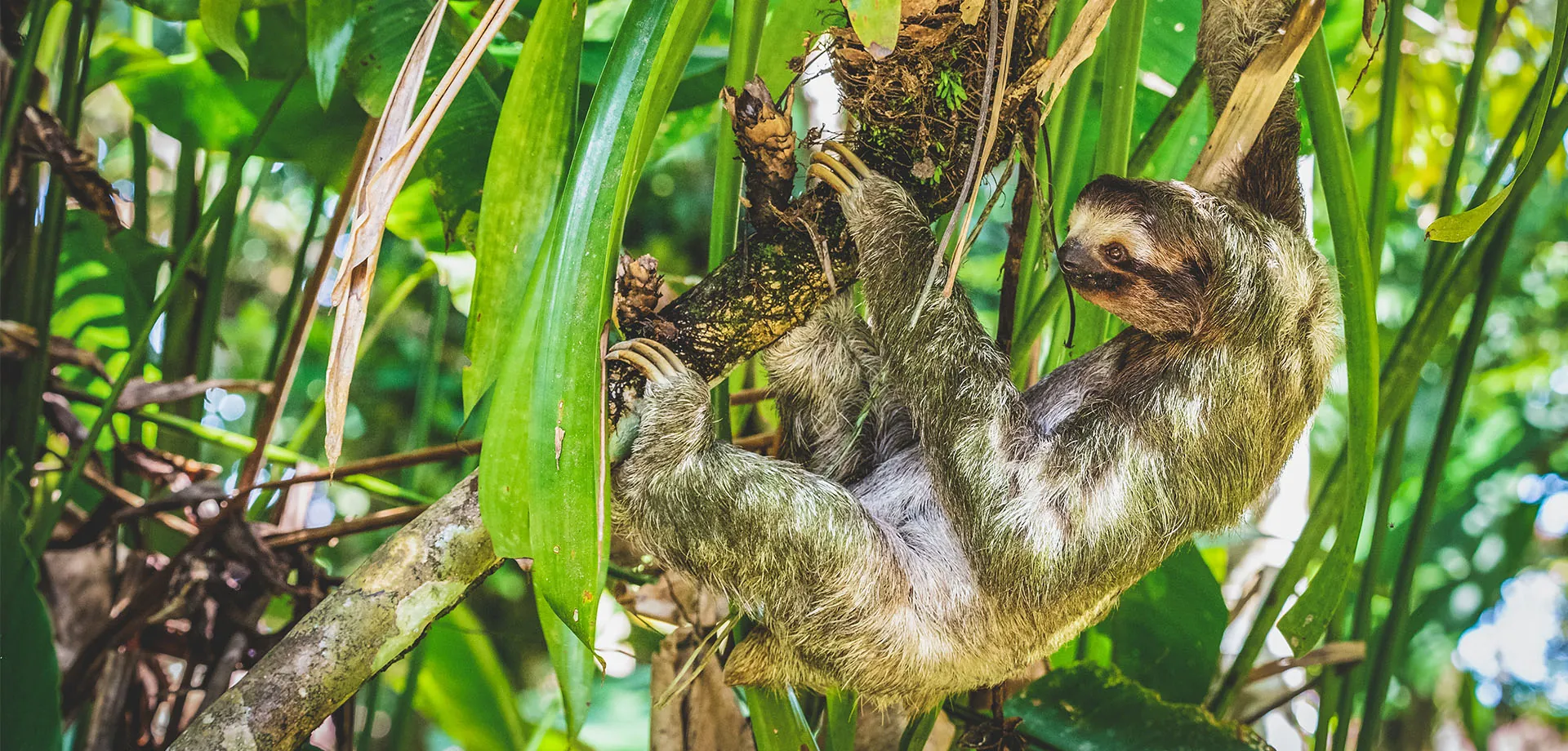
Which lodge is best for seeing sloths?
Sloths live in wet forest across much of the country, but no lodge can promise one. A good naturalist in the right habitat, such as Sarapiquí, Tortuguero or the Osa, is your best chance.
Where should I go for the resplendent quetzal?
San Gerardo de Dota and Monteverde. Savegre Hotel says January to June is the best period, and Los Quetzales National Park is nearby. Sightings still depend on season and luck.
Is an Osa lodge worth it without visiting Corcovado?
Yes. Lodges such as Lapa Ríos and Bosque del Cabo protect hundreds of acres of their own forest, with macaws and monkeys often seen on the grounds. A guided park day adds a lot if you have the time.
What's the best lodge for a serious birder?
Rancho Naturalista and Bosque del Río Tigre are run with birders in mind, with resident guides and site lists. La Selva and Selva Verde are strong for lowland Caribbean-slope species, and Savegre for highland birds.
Can I see great green macaws?
Possibly, around Boca Tapada and the northern lowlands, and in Tortuguero, which SINAC lists as a key nesting and feeding area. The species is critically endangered, so treat a sighting as a bonus.
When is the best season for birdwatching?
There's good birding all year. Quetzals are easiest from January to June, according to Savegre. Migrants add variety in the northern winter: Caño Negro alone counts 101 migratory species among its 307. Drier months on the Pacific side make trails easier, while the green season brings fewer visitors.