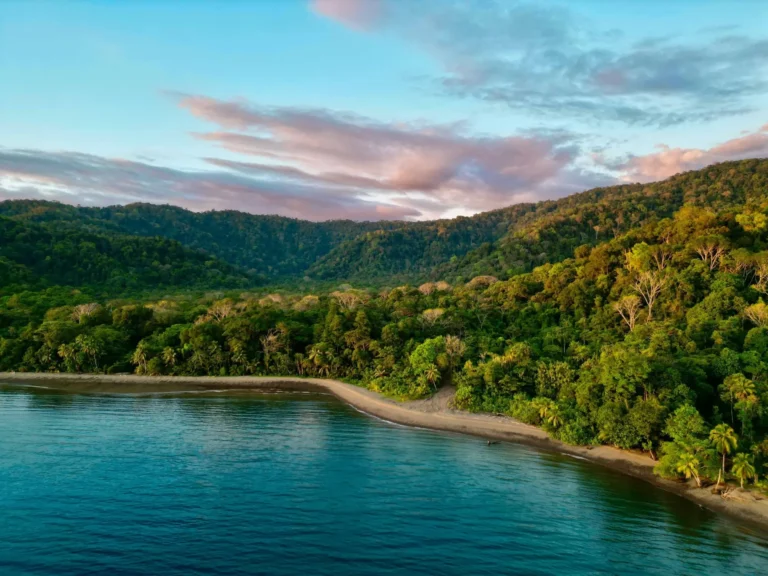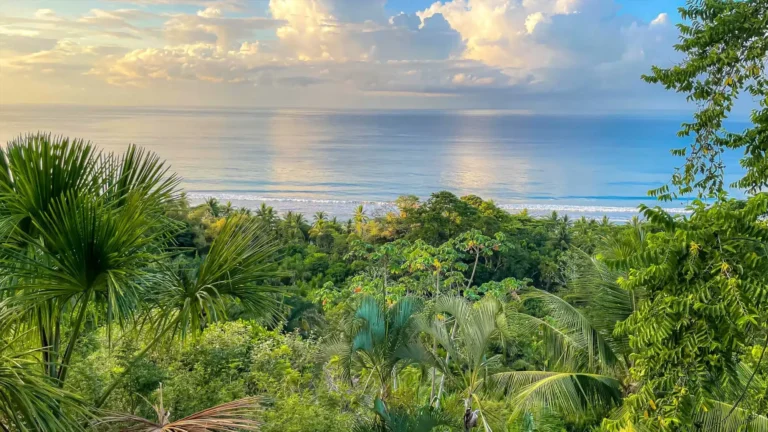
Saladero is a small, boat-access lodge on the north shore of the Golfo Dulce, with Piedras Blancas National Park rising directly behind its beach. It has recently reopened after a full renovation, and it now works best for people who want a quiet, all-inclusive stretch of days with dolphins in the gulf, rainforest trails out the back door and no road traffic at all.
| At a glance | |
|---|---|
| Location | North shore of the Golfo Dulce, inside Piedras Blancas National Park, reached from Golfito or Puerto Jiménez |
| Style | Small, rustic beachfront lodge run as an all-inclusive stay or whole-property rental |
| Setting | Half a mile of beach, gardens and primary lowland rainforest |
| Best for | Couples, solo travelers and small retreat groups who don’t need air conditioning or nightlife |
| Getting there | Boat transfer only, after a flight or drive to Golfito or Puerto Jiménez |
| CST status | Not listed (checked 2026-Oct-21) |
Where it is and how you get there
There’s no road to Saladero, and no telephone line either. According to the lodge’s own description, the property sits between the gulf and the forest of Piedras Blancas, one of the few places on Costa Rica’s Pacific coast where lowland rainforest still runs right down to the waterline. The national park is part of a biological corridor linking Corcovado with the Golfo Dulce Forest Reserve, according to the Costa Rica Tourism Board’s park page.
The getting-here page explains the logistics clearly. Most guests fly into Puerto Jiménez (the lodge’s preferred option) or Golfito on a domestic flight, are met at the airstrip, and then go by taxi to the public dock for the boat ride across. If you drive, you leave the car in Golfito or Puerto Jiménez and are picked up at the dock or a nearby hotel.
Timing matters. All boat transfers run between 7 a.m. and 2 p.m., the usual pickup is mid-morning, and departures leave the lodge by 8 a.m. If your flight lands after 2 p.m., plan on a night in town and an early boat the next day. Our guide to reaching remote eco lodges covers domestic flights and boat transfers in more detail.
The property
Saladero’s numbers are modest and specific. The lodge describes half a mile of beachfront on the gulf, 32 acres of tropical gardens and 363 acres of primary lowland rainforest. The current team sometimes refers to the place as Pandorita.
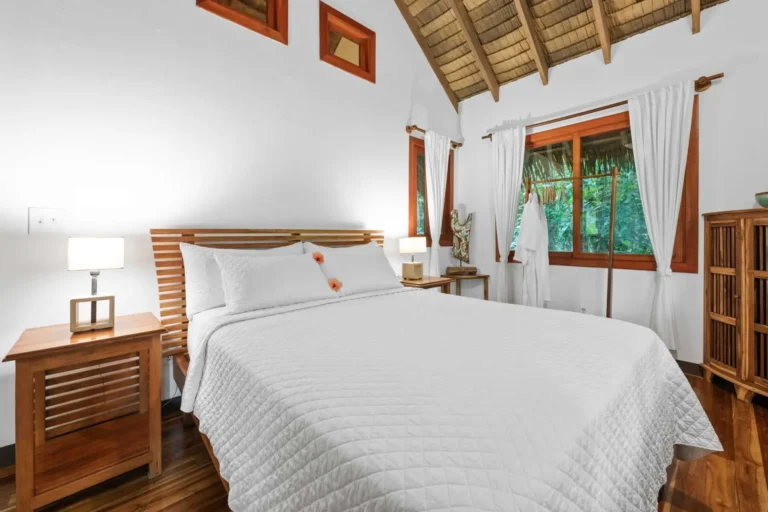
Rooms are few, and each is different:
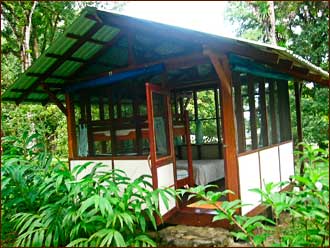
- Glamping: single-occupancy only, with a bamboo bed, ocean view and full rain and mosquito protection. These sit closest to the maloca, a traditional round gathering house.
- Mariposa: a single room in its own garden of pineapple plants and cashew trees, with a small veranda facing both the ocean and the forest. Its full bathroom is a short walk away.
- Bungalow: a single-occupancy casita in jungle shade beside a freshwater stream, planted with hibiscus, ginger and heliconia.
- Tree House: up a flight of stairs, with a private balcony, for one or two people.
- Beach House: two upstairs rooms with a wide ocean view, one with a king bed and one with two queens.
Power comes from solar-charged batteries and small hydro systems, and hot water is heated mainly by passive means, according to the lodge. There’s also a yoga deck. Expect screens, fans and sea breeze rather than air conditioning.
Ways to stay
The reopened Saladero isn’t run like a conventional hotel with nightly room sales. The lodge currently offers two formats: a four-night, all-inclusive stay with a guided program covering the forest, mangroves and gulf, and exclusive hire of the whole property, with staff, for a week or longer. The packages page says a whole-property rental covers up to 14 people and includes cooking, cleaning and the guided tours, which makes it a natural fit for yoga teachers and workshop leaders. Booking is by email or WhatsApp rather than an online engine. The site frames these offers around the May to October season, so ask about other months before planning around them.
What you do here
The lodge says dolphins live in the gulf year-round and often swim close to shore in the early morning. The activities page lists:
- Dolphin and whale boat trips. Humpbacks visit the gulf seasonally, and the lodge names January to April and August to September as the months they gather to breed and calve. Our whale watching guide explains the two migrations.
- Reef snorkeling at a coral reef nearby, plus a look at corals from the lodge’s own restoration project.
- Mangrove kayaking, where crocodiles are among the animals regularly seen.
- Rainforest hikes in Piedras Blancas on the Jaguar and Puma trails, which start from the property.
Wildlife reported by the lodge includes scarlet macaws, toucans, howler and spider monkeys, sloths, coatis, kinkajous and anteaters, with frogs loud by day and easiest to spot at night. The lodge also lists all five of the region’s wild cats, but a sighting of any of them would be a rare stroke of luck, not something to plan a trip around.
Food
Meals are cooked from scratch in an open kitchen by a chef from Golfito, according to the restaurant page. The menu is mostly vegetarian and vegan, with fresh-caught fish for those who eat seafood. Herbs, roots and fruit come from the gardens when possible: coconuts, bananas, pineapple, papaya, guanábana, moringa, ginger, turmeric, lemongrass and limes all grow on site. Expect gallo pinto at breakfast, curries, coconut rice and plantain chips later in the day, and the occasional night when the pizza oven is fired up.
Conservation and community
Saladero’s sustainability story rests on its off-grid power, its forest, which is now part of the national park, and the projects described on its donations page: coral gardening to restore reefs in the gulf, permaculture growing, and support for Indigenous communities that the team says has run for about 15 years. The welcome message is signed by a group of five Swiss partners who describe themselves as non-profit minded, and the day-to-day staff are local: the boat captain and maintenance lead grew up on the Golfo Dulce, and housekeeping and the kitchen are also run by people from the area.
Saladero does not appear in the official CST certified-entities directory as of 2026-Oct-21, so the practices above are the lodge’s own account rather than audited claims.
Who it suits, and who might prefer somewhere else
Saladero suits travelers who are happy to give up roads, shops and phone signal for several days, and who want their activities built into the stay. It’s also a strong choice for a small group that wants a whole beach and forest to itself for a retreat. It’s less suited to anyone who needs air conditioning, a choice of restaurants, nightly flexibility or a quick one-night stop: the boat schedule and the package format reward longer stays.
If you want a larger lodge on the same coast, Playa Nicuesa Rainforest Lodge and Playa Cativo Lodge are also boat-access properties beside Piedras Blancas, while Esquinas Rainforest Lodge sits inland on the park’s road side. For the wider area, see our Osa Peninsula and Golfo Dulce lodges and the Corcovado and Osa guide.
Frequently asked questions
Can you reach Saladero Lodge by car?
No. You can drive as far as Golfito or Puerto Jiménez and leave your car there, but the last leg is always by boat. Transfers run only in the morning and early afternoon, so a late arrival means a night in town first.
Can you book a single night?
The current offers are a four-night all-inclusive stay and a week-or-longer rental of the whole property. Write to the lodge directly if you're hoping for a shorter or off-season stay.
What is the food like for vegetarians?
Very good, by the lodge's description: the kitchen is largely plant-based, with fish as the main exception, and much of the fruit and many herbs come from the lodge's own gardens.
When are whales in the Golfo Dulce?
The lodge points to January to April and August to September, when humpbacks from the southern and northern hemispheres arrive to breed and give birth. Dolphins are seen all year.