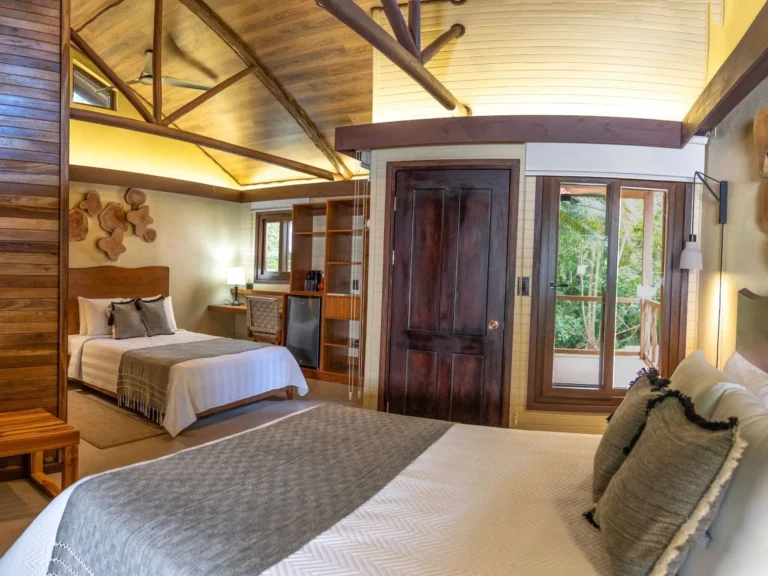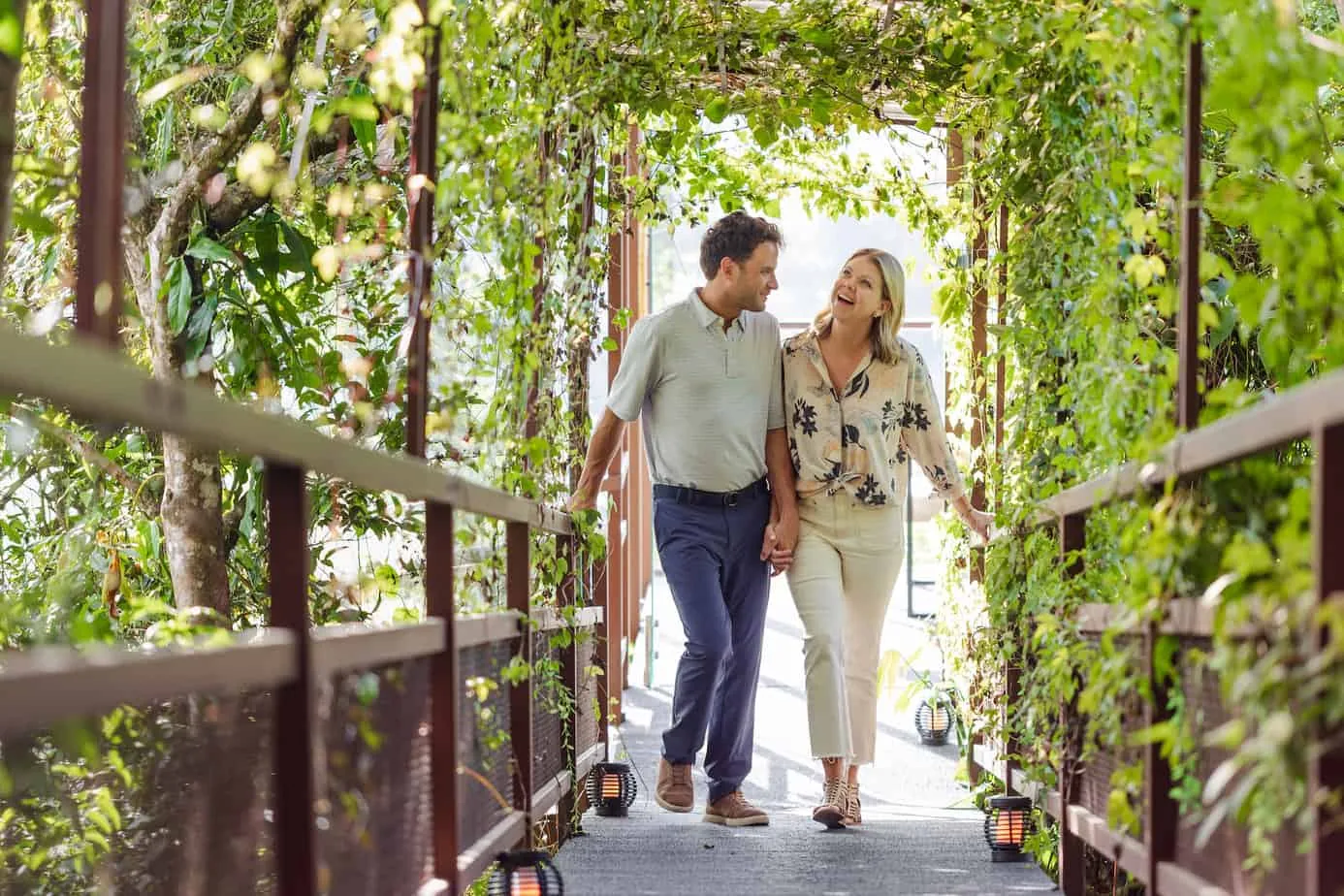
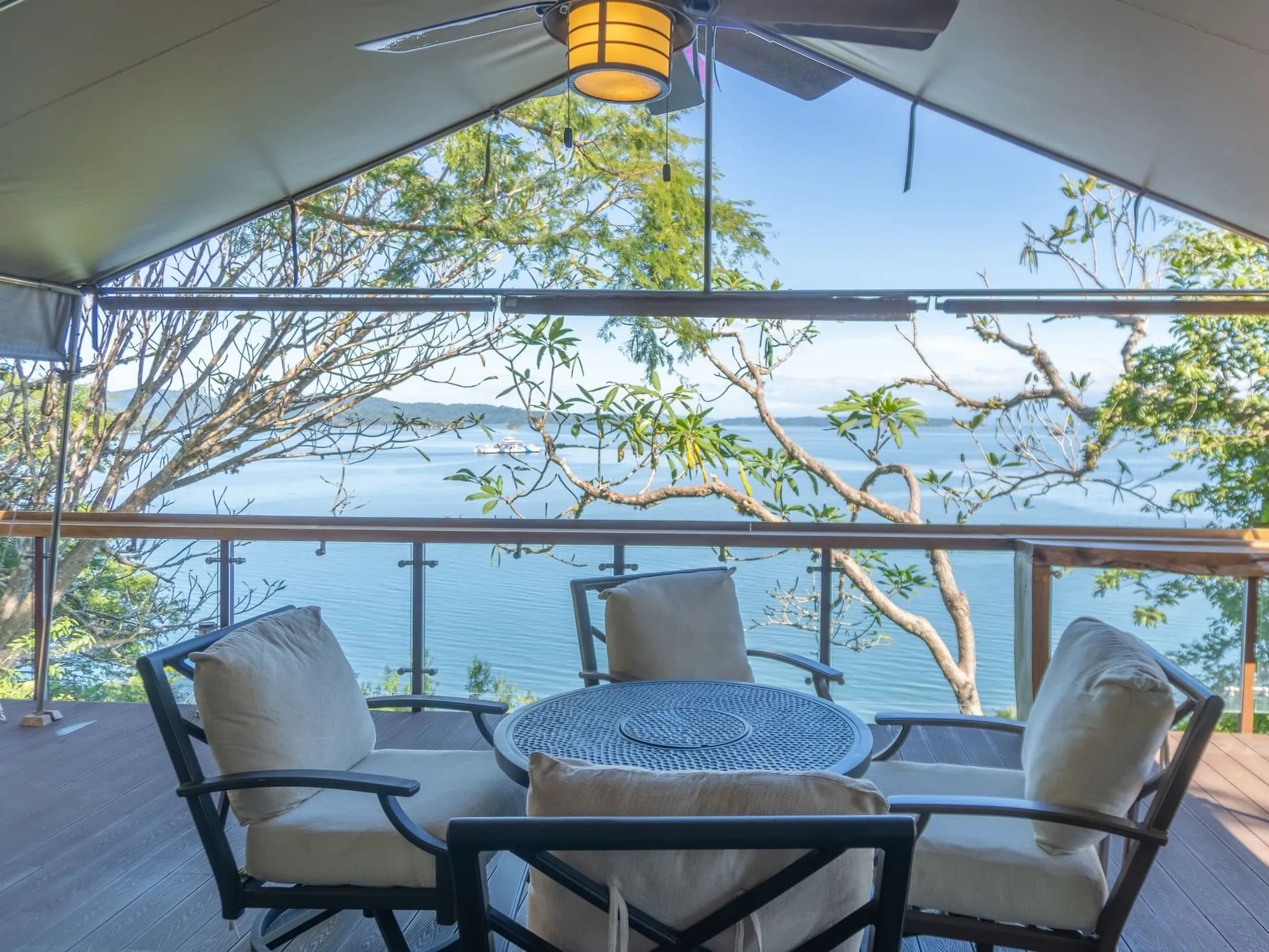
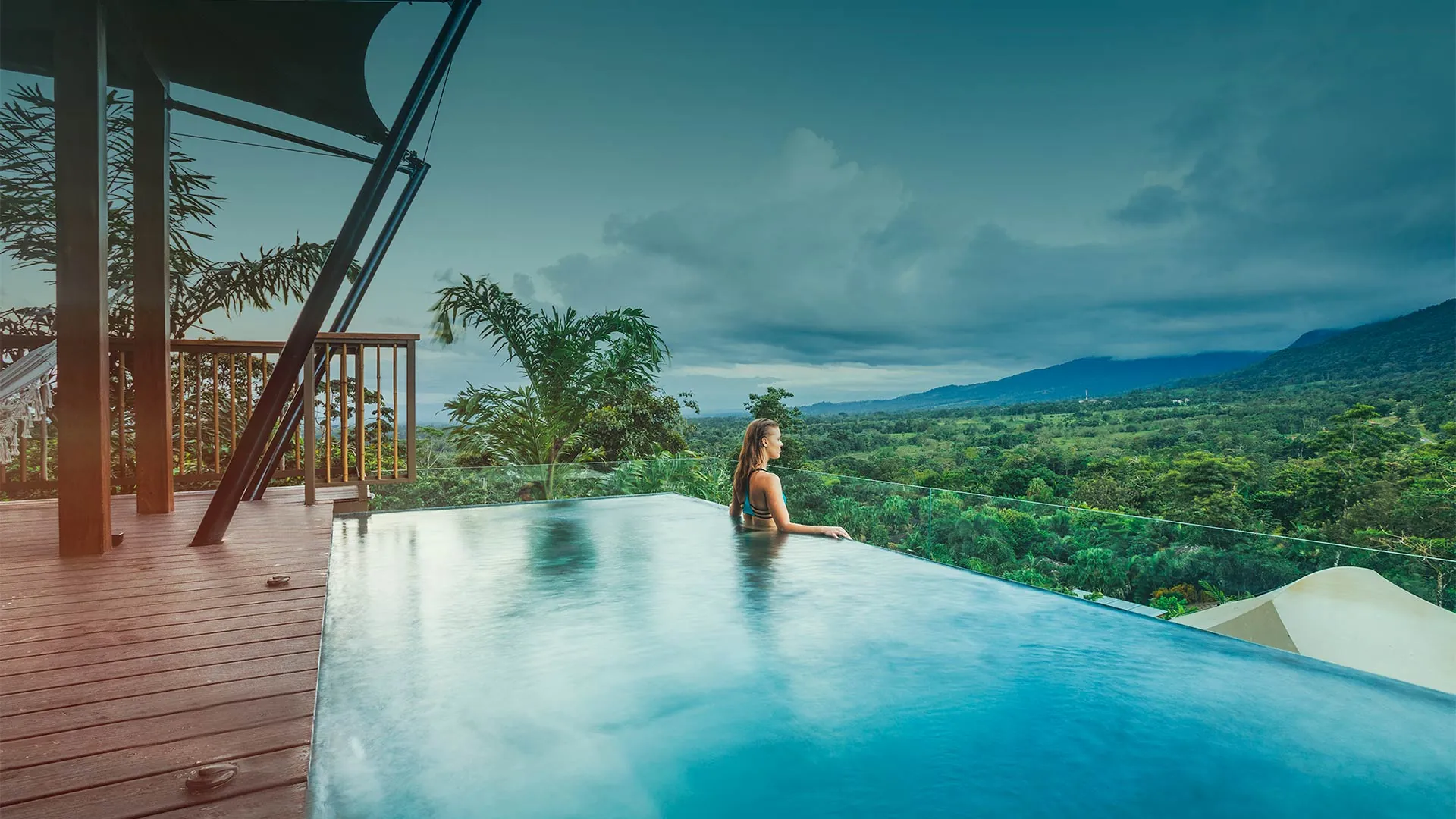
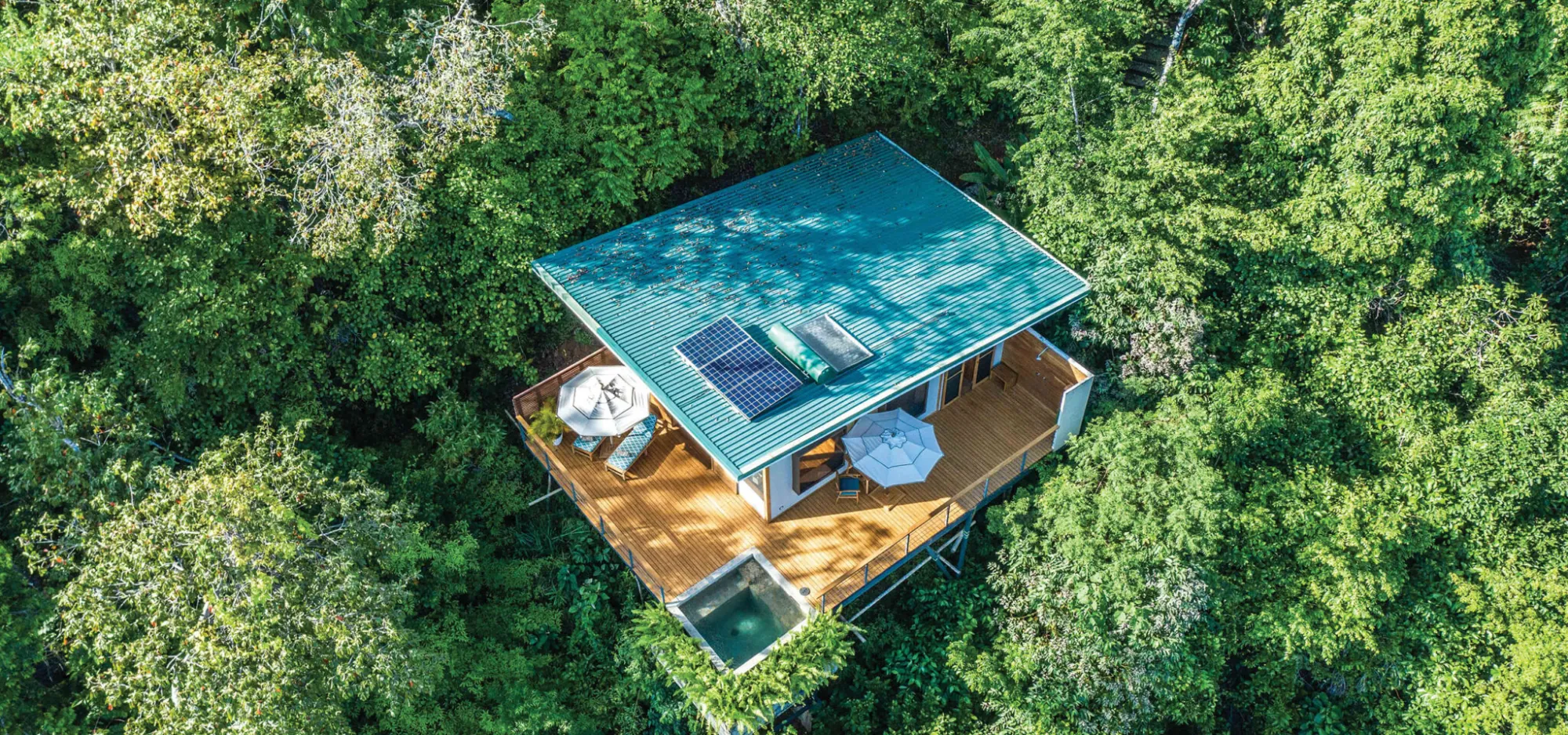
Sleeping in the trees is an easy idea to fall for. You wake to birds in the canopy, hear rain on the roof and step onto a deck surrounded by leaves. Costa Rica has real treehouses, canvas tents on platforms, open-air cabanas, cliff-edge bungalows and island glamping. Some come with excellent beds and private hot tubs; others are deliberately simple. A few sit inside protected wildlife habitat, and others are simply unusual rooms in a pretty spot.
The useful question isn’t whether the room looks good online. It’s whether the setting, the climate and the practical details suit you, and whether the stay connects you with the habitat around it. A treehouse in the wet northern lowlands, a tent on a Tortuguero lagoon and a glass-fronted suite in Monteverde’s cool air are completely different trips.
Unusual stays compared
| Stay | Region | Type of room | Habitat around it |
|---|---|---|---|
| Maquenque Lodge | Boca Tapada, northern lowlands | Treehouses from 30 to 60 m², plus ground-level bungalows | Inside the Maquenque Mixed Wildlife Refuge, on the San Carlos River |
| Corcovado Wilderness Lodge | Osa, Drake Bay side | Ocean-view treehouses, suites and villas | 189 acres bordering Corcovado National Park |
| Valverde Glamping & Ecolodge | Tortuguero | Glamping tent suites and rooms | Canals, lagoon and turtle nesting beach |
| La Leona Eco Lodge | Osa, Carate | Beach tent cabins with open-roof showers | Next to Corcovado’s La Leona sector |
| Luna Lodge | Osa, Carate area | Safari tents, bungalows and hacienda-style rooms | Rainforest protected by the lodge since 1998 |
| Finca Exótica | Osa, Carate | Open-air cabanas and glamping tents | Beachfront at the edge of Corcovado |
| Bosque del Cabo | Osa, Cabo Matapalo | Thatched cliff-top bungalows | 750+ acres of forest reserve |
| Chira Glamping | Monteverde | Five glamping suites with private hot tubs | Cloud forest at about 1,600 m |
| Isla Chiquita Glamping Hotel | Gulf of Nicoya | Tent suites, some with ocean views | Small island off Paquera |
What to ask before you book any unusual room
The photos usually show morning sun and a perfect bed. The questions that matter are about ordinary evenings:
| Type of stay | Questions to ask |
|---|---|
| Treehouse or raised cabin | How many steps? Railings? How does luggage get up? Is there a lit path to the room after dark? |
| Safari or glamping tent | Air conditioning or fans? Screens? Private bathroom? What happens in a heavy storm? |
| Open-air cabana | Mosquito nets? Can it be closed up? How private is it from paths and neighbors? |
| Boat-access or island stay | Transfer times, last boat of the day, and what happens if the sea is rough |
Families should ask about minimum ages and balcony rules. Guests who use mobility aids or dislike heights should ask for exact step counts and a ground-level option.
Maquenque: treehouses inside a wildlife refuge
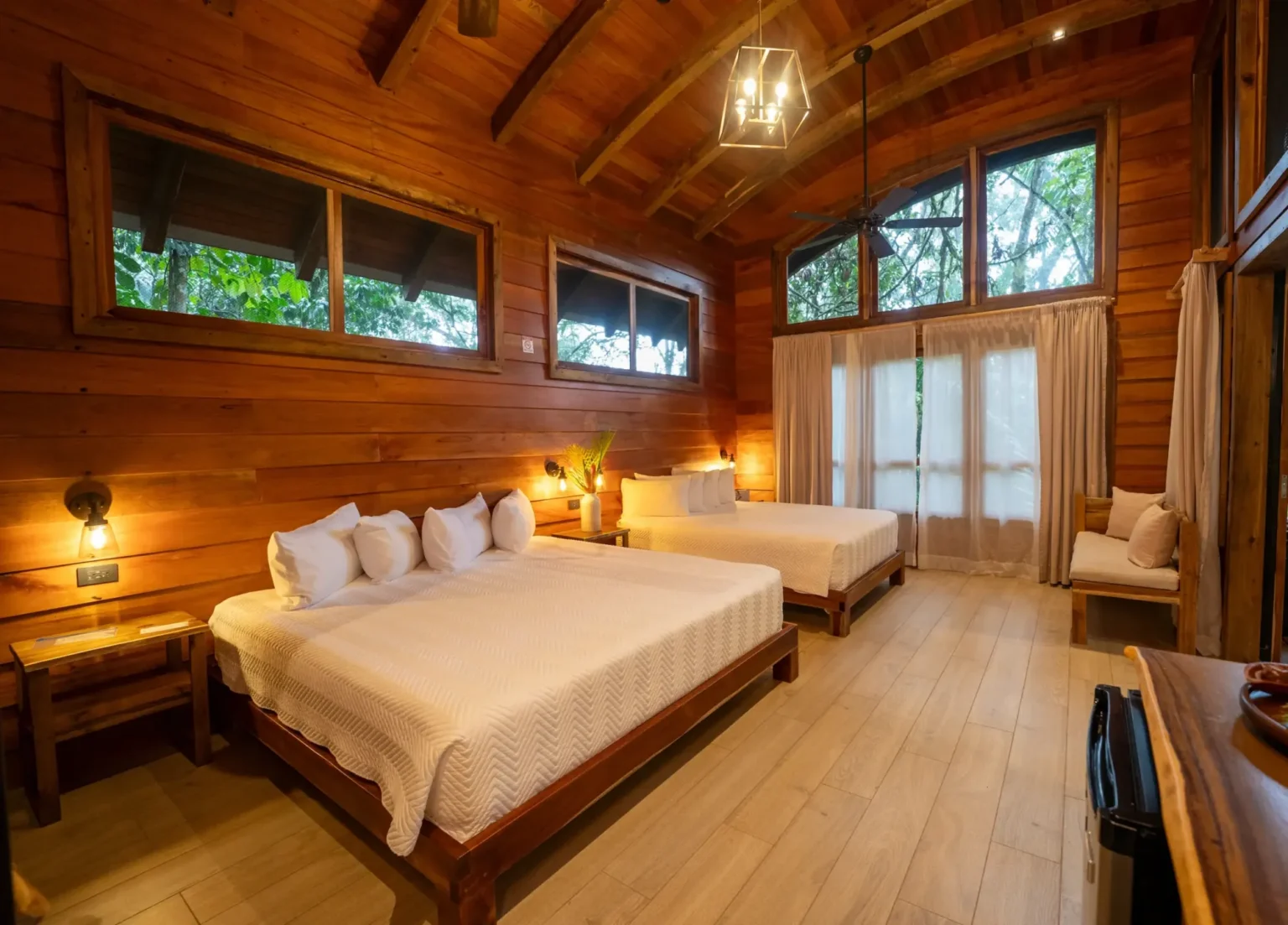
Maquenque Lodge is the clearest choice if you want a true treehouse with serious wildlife around it. It sits on the banks of the San Carlos River in Boca Tapada, inside the Maquenque Mixed Wildlife Refuge, and offers Tree Houses of 30 m², Deluxe Tree Houses of 50 m² and Junior Tree Houses of up to 60 m² for families, alongside ground-level bungalows and jungle suites. It holds Costa Rica’s CST Elite sustainability certification, and its activities include birding, boat trips on the wetlands, farm visits and a spa.
The big draw here is the great green macaw. The species is listed as critically endangered by the IUCN, and a 2024 report on SINAC’s research with the Macaw Recovery Network and the Tropical Science Center found the Costa Rican population had grown over the previous 15 years, while noting that breeding success in the wild still lags. A treehouse gives you height, not guaranteed sightings; you’ll still want a guide. Allow 2 or 3 nights, since the drive is long. Our birds of Costa Rica guide covers the macaws in more detail.
Osa Peninsula: treehouses, tents and cabins at the forest’s edge
The Osa has the widest range of unusual rooms, all within reach of Corcovado National Park, which SINAC lists at 42,560 hectares of land and requires visitors to hike its long La Leona to Sirena route with a guide. Our Corcovado and Osa guide covers the park’s sectors.
Corcovado Wilderness Lodge (once known as Casa Corcovado) is reached only by boat on the Drake Bay side. Its Oceanview Treehouses sit within 189 acres of rainforest that border the national park, and an arboreal tree-climbing activity takes you higher still. The lodge holds CST Elite.
On the Carate side, La Leona Eco Lodge has beach tent cabins a few steps from the sand, each with a private bathroom, open-roof garden shower and front deck, beside the park’s La Leona sector. Its packages include three meals and transfers from Puerto Jiménez to Carate. Luna Lodge mixes safari tents with bungalows and hacienda-style rooms, includes three meals a day, offers daily yoga and has protected its rainforest since 1998. It closes in October and part of November. Finca Exótica is a beachfront property with rustic open-air cabanas and glamping tents, plus a yoga deck above the Pacific.
At Cabo Matapalo, Bosque del Cabo isn’t a treehouse lodge, but it’s unusual in its own way. Its thatched bungalows sit on cliffs about 500 feet above the point where the Golfo Dulce meets the Pacific, within more than 750 acres of forest, and a 300-foot suspension bridge crosses a 75-foot-deep gorge to its tropical garden. A tree platform and zipline are among the activities.
An open-air cabin is a promise of forest sounds, weather and sometimes insects, not of animal sightings. If you need reliable air conditioning, choose an enclosed room.
Tortuguero: glamping on the canals
Valverde Glamping & Ecolodge, formerly La Baula Lodge, offers glamping tent suites alongside standard rooms in Tortuguero, a village with no cars that you reach by boat or small plane. Days revolve around boat and kayak trips, guided wildlife tours and trails, with a lagoon-side bar for evenings.
The tents put you close to one of the most important turtle beaches in the Americas. SINAC’s Tortuguero National Park page gives the nesting season as June to October and closes the beach between 6 p.m. and 6 a.m. from March 1 to October 31, except on the official guided turtle program. Our Tortuguero guide explains how to book it.
Monteverde: glamping in the clouds
Monteverde’s appeal is cool, misty cloud forest. The Monteverde Cloud Forest Preserve spans roughly 1,200 to 1,800 meters on the Continental Divide, where Pacific and Caribbean bird species meet, including the resplendent quetzal and the three-wattled bellbird.
On the Sapo Dorado road, Chira Glamping has five glamping suites at about 1,600 meters: four honeymoon suites of 80 m² and one family suite of 135 m², each with a private hot tub, a glass-walled shower and breakfast included. It reports average temperatures of about 20°C by day and 15°C at night, so pack a warm layer. Check the distance to the reserve you want to visit, because Monteverde’s roads are steep and you may want a car or taxi. Our Monteverde cloud forest guide compares the reserves.
Island glamping in the Gulf of Nicoya
Isla Chiquita Glamping Hotel is on a small island about a 10-minute boat ride from Paquera, with a complimentary water taxi from Punta Cuchillos near the Paquera ferry landing. Rooms range from tent suites to premium ocean-view tents (six of them now with air conditioning), a sunset suite and ocean-view casitas. It’s a good fit for slow mornings, sunsets and sea views. It isn’t a rainforest wildlife stay, so pair it with a forest lodge if mammals and birds are your priority.
Canopy rooms in Pacuare and the Nicoya coast
Pacuare Lodge isn’t a treehouse lodge, but its Canopy Villa is one of 20 bungalows in a river canyon on the Caribbean slope, inside a 340-hectare protected area. Its sustainability report describes power from hydro turbines and solar panels and a jaguar camera-trap program with the National University since 2009.
On the Nicoya Peninsula, two yoga retreats add unusual rooms. Anamaya, perched above Montezuma with ocean views, includes the Garuda Tower among its 14 rooms and cabinas. In Mal País, Indigo Yoga Resort lists a glamping suite alongside its cottages and villas. See our yoga and wellness retreats guide for both.
When unusual architecture helps, and when it doesn’t
Raising a room can make sense: it keeps it above seasonal water, catches the breeze and lets small animals pass underneath. But platforms, stilts and walkways can also damage roots and compact soil, and a wooden facade doesn’t prove low-impact construction. Ask whether trees were cut, how wastewater is treated, where power comes from and how much the lodge relies on air conditioning and vehicle transfers.
Responsible lodges also don’t stage encounters. The Costa Rican Tourism Institute’s wildlife guidance asks visitors to watch animals from a distance and never touch, trap, handle or feed them. A toucan photographed at a dining table may mean bait. If a lodge claims certification, check it in the official CST directory.
Weather and timing for tent and treehouse stays
Canvas and open walls make weather part of the stay, so it pays to know each region’s pattern. On the Osa, SINAC gives Corcovado’s dry season as mid-December to mid-April, which is also when beach tents and open-air cabanas are at their most comfortable; some Osa lodges close for part of the wettest months, as Luna Lodge does in October and November. Tortuguero is wet all year: SINAC’s Spanish-language park page puts average rainfall at about 6,000 millimeters, with July and December the wettest months and March, April and October the least rainy, and temperatures between 25°C and 30°C. That makes a well-roofed tent with a raised floor much more important there than a view.
Monteverde is cool rather than hot, and the wind and mist that make the cloud forest are also what you’ll feel on a glass-fronted deck. In the northern lowlands around Boca Tapada, rain falls through much of the year and the wetlands fill, which is good for waterbirds and boat trips but means muddy paths to your treehouse. Wherever you go, pick a room with a covered route to the bathroom and somewhere to dry clothes. Our guide to the best time to visit Costa Rica for wildlife goes region by region.
Matching the stay to the traveler
- Couples who want privacy: Chira Glamping’s hot-tub suites, a Corcovado Wilderness Lodge treehouse or a Bosque del Cabo cliff bungalow.
- Families: Maquenque’s Junior Tree House (up to 5 adults) or a ground-level bungalow, Isla Chiquita’s family tent, or Valverde’s rooms in car-free Tortuguero.
- Birders and naturalists: Maquenque for wetland and lowland species, the Osa tents for rainforest at your door.
- Yoga and wellness travelers: Luna Lodge’s daily classes with safari tents, Finca Exótica’s yoga deck, or Anamaya’s ocean-view rooms above Montezuma.
- First-timers who want a taste: one or two nights in an unusual room, paired with a conventional lodge elsewhere.
Packing for a canopy or tent stay
- Headlamp or flashlight for paths after dark.
- Light rain jacket and shoes with grip for wet stairs and boardwalks.
- A warm layer for Monteverde and other highland stays.
- Dry bags for electronics on boat and island transfers.
- Earplugs if you sleep lightly: howler monkeys and frogs are part of the experience.
Frequently asked questions
Are Costa Rica treehouses safe for children?
It depends on the design and the lodge's rules. Ask about minimum ages, railings and stairs for the exact room category, and whether a ground-level room is available. Maquenque, for example, offers ground-level bungalows as well as treehouses.
Do treehouses and tents have air conditioning?
Some do, many rely on fans and breezes. At Isla Chiquita, six of the premium ocean-view tents now have air conditioning; open-air cabanas on the Osa usually don't. Check the specific room category.
Which region is best for an unusual eco-stay?
Choose the habitat first: Boca Tapada for treehouses in lowland wetland forest, the Osa for tents and treehouses beside Corcovado, Tortuguero for canal-side glamping, Monteverde for cool cloud forest and the Gulf of Nicoya for island glamping.
Is glamping in Costa Rica comfortable in the rainy season?
Usually, if the tent has a solid roof, raised floor and private bathroom. Expect humidity and noise from rain. Ask what the lodge does in storms and whether boat transfers can be cancelled by weather.
Does staying in a treehouse mean I'll see more wildlife?
Not necessarily. Height helps with canopy birds and monkeys, but most sightings still come from guided walks at dawn and dusk and from patience.