
There’s no single best month to visit Costa Rica for nature. It depends on what you hope to see, where you plan to stay and how you feel about rain. A January trip to Guanacaste brings long sunny afternoons and golden dry forest. The same week in Tortuguero can be wet and green. October is often the wettest stretch on the southern Pacific, yet it’s one of the relatively drier periods on the Caribbean coast. When the goal is wildlife rather than guaranteed sunshine, those differences matter more than any “high season” label.
The most useful approach is to choose the habitat and the wildlife event first, then pick the season, and only then book the lodge. This guide explains the two coastal calendars, the big wildlife windows (turtles, whales, migrating birds) and what each region is like through the year, with eco-lodges we review in each area. For the bigger picture of where to go, start with our Costa Rica ecotourism guide.
Two coasts, two calendars
Costa Rica’s tourism board describes a dry season from mid-December to late April and a green (wet) season from May to mid-December, but it also stresses that the Pacific has the more clearly defined seasons while the Caribbean has a longer rainy period. Its climate page gives more detail:
- Pacific side: dry from December to March, with March the driest and hottest month. April and November are transition months, and the rains run from May to October. A relative dip in rain in July and August is called the veranillo, or “little summer.”
- Caribbean side: no well-defined dry season. Even the driest months see roughly 100 to 200 mm of rain. The two relatively dry periods are February to March and September to October. The strongest rainy period runs from November to January, and December is the wettest month.
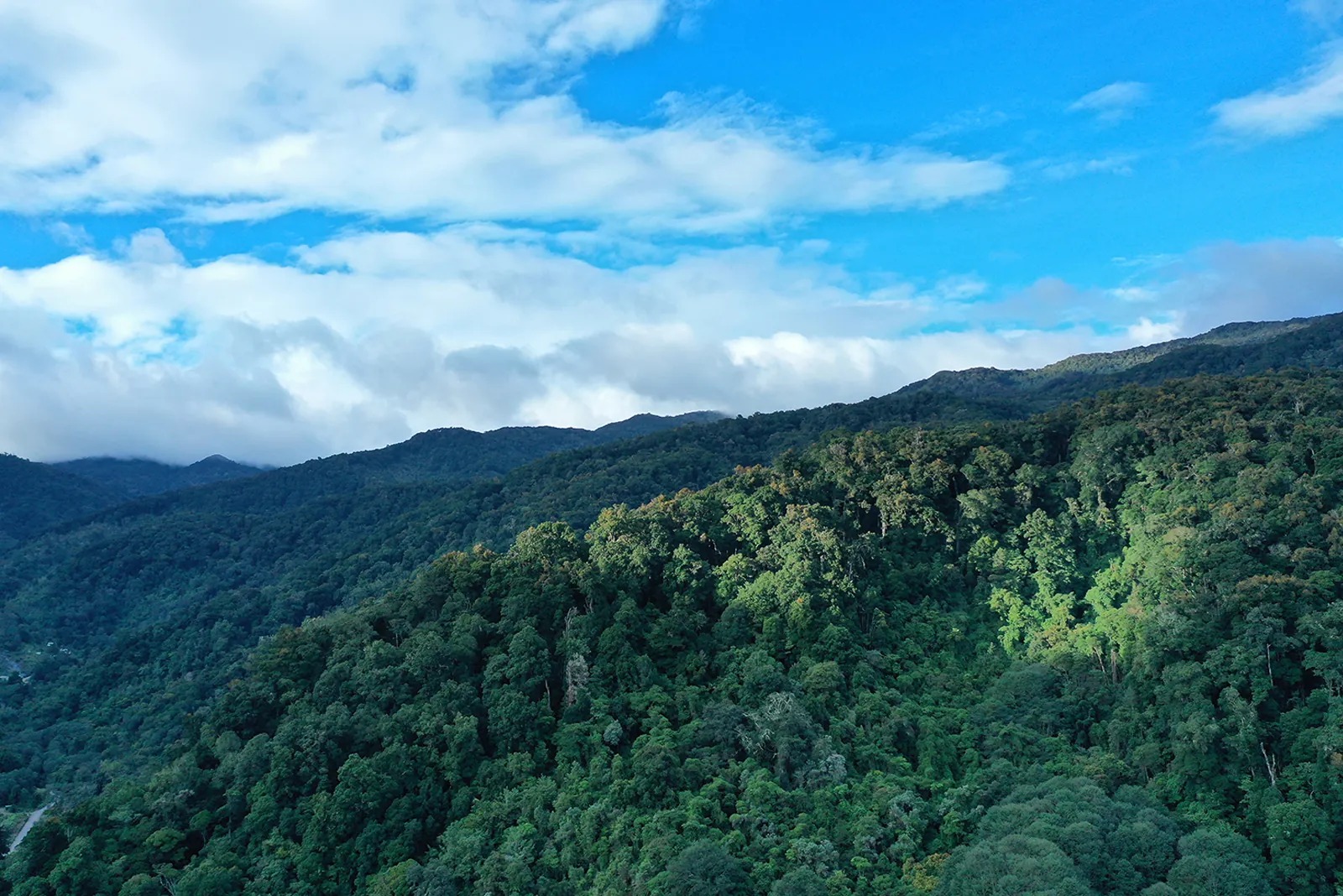
Mountains add another layer. Cloud forests can be misty in any month, and altitude often matters as much as the date. The highlands around Los Quetzales National Park run from 1,240 to 3,190 meters with temperatures of 5 to 14 °C, a world away from the Osa lowlands a few hours’ drive south.
| Months | Pacific lowlands | Caribbean coast | Good nature focus |
|---|---|---|---|
| December to March | Dry, March driest and hottest | Wet in December and January, relatively drier in February and March | Guanacaste dry forest, Palo Verde wetlands, Corcovado, northern humpback whales |
| April | Transition toward rain | Rain returns | Easter crowds; leatherback nesting on the Caribbean |
| May to June | Rains begin | Rainy | Fresh green forest, fewer visitors |
| July to August | Rainy, with a veranillo dip | Rainy | Southern humpbacks, green turtles at Tortuguero, first migrant birds |
| September to October | Wettest Pacific months | Relatively drier | Caribbean coast, peak bird migration, whale peak in the south |
| November | Transition toward dry | Heavy rain returns | Waterbirds arriving, quieter lodges |
This is a planning summary, not a forecast. Rainfall changes with altitude and watershed, and storms can override normal patterns in any year.
The wildlife calendar
Several of Costa Rica’s best-known wildlife events have fixed windows. Others, like monkeys and sloths, can be seen year-round. Use the table to anchor a trip, then read the regional notes below.
| Wildlife event | Where | Months | Official source |
|---|---|---|---|
| Green turtle nesting | Tortuguero | June to October, peaking July to October | SINAC Tortuguero, park brochure |
| Leatherback nesting | Tortuguero (Caribbean) | March to May | Park brochure |
| Turtle hatchlings | Tortuguero | September to December | Park brochure |
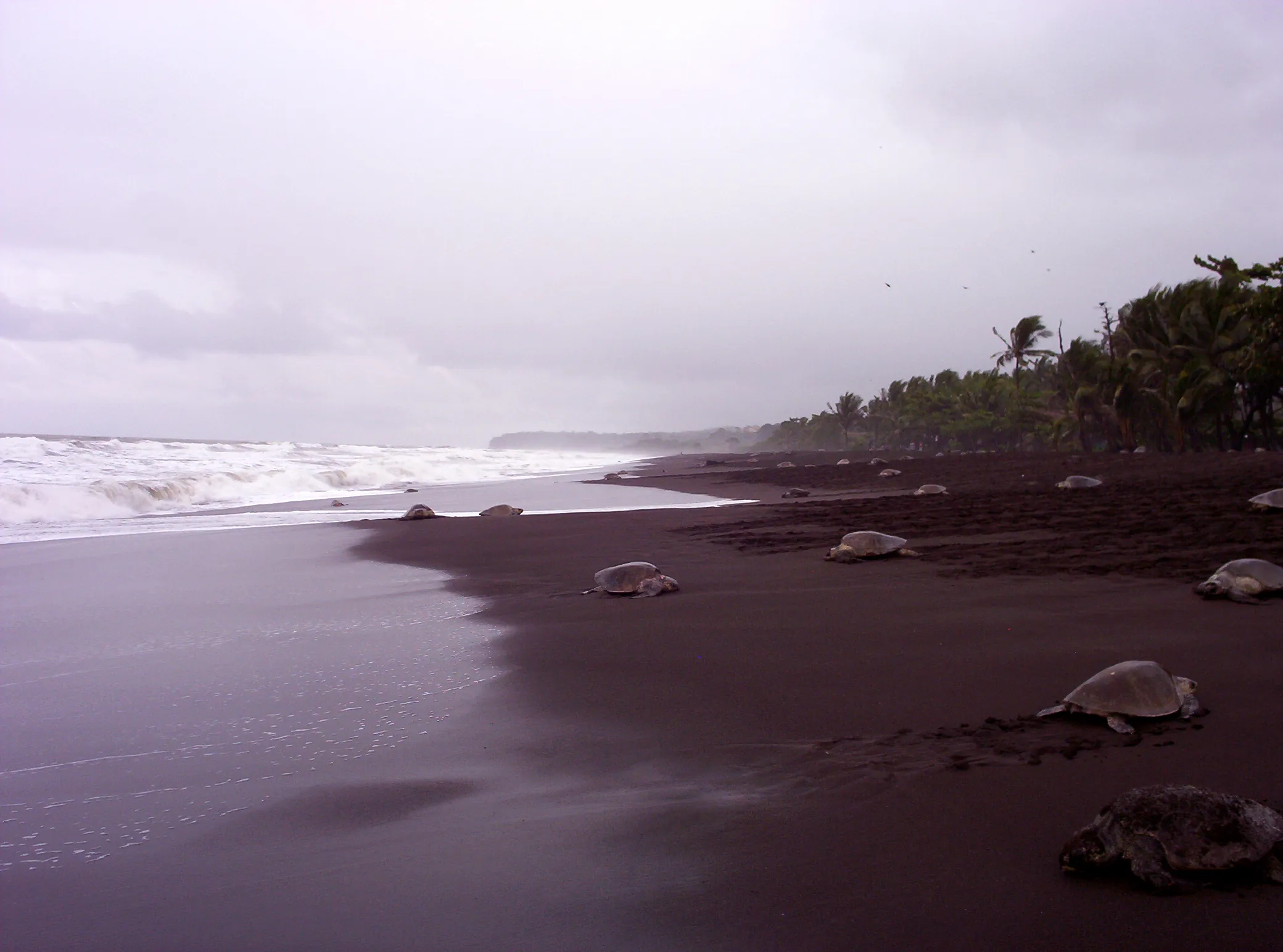
| Olive ridley arribadas | Ostional, Guanacaste | Year-round, once or twice a month | SINAC Ostional |
| Humpback whales (northern population) | Marino Ballena, Uvita | December to April | SINAC Marino Ballena |
| Humpback whales (southern population) | Marino Ballena, Uvita | July to November | SINAC Marino Ballena |
| Migrant birds arriving | Nationwide | From July, peak September and October | ICT bird migration |
| Waterbirds at Laguna Palo Verde | Palo Verde, Guanacaste | September to March | ICT Palo Verde |
A season is a probability, not a promise. SINAC itself tells Tortuguero visitors to confirm that nesting has started before counting on it, because the ecology can shift from year to year.
Guanacaste: dry forest is the point
Guanacaste’s tropical dry forest is at its most distinctive from December to April. Many trees drop their leaves, the forest opens up and animals gather near water, which can make wildlife easier to spot. When the rains arrive in May, the same hills turn green within weeks. A traveler expecting dense jungle in March may be surprised by bare branches, but that’s a healthy dry forest doing what it does.
Palo Verde National Park is the region’s great wetland. The tourism board calls Laguna Palo Verde a birdwatching hotspot from September to March, with more than 280 bird species recorded and the country’s largest colony of black-crowned night herons on Isla Pájaros. Plan with care in 2027: a lightning-sparked fire burned about 3,617 hectares of the park’s wetland between May 28 and June 6, 2026. The park administrator estimated the marsh could recover its plant cover in about five years, so check current access and conditions before you build a trip around it.
Heat is the other dry-season factor. Hike early, carry plenty of water and save the afternoon for a swim. Buena Vista Lodge, on a former cattle hacienda beside Rincón de la Vieja, makes a good base for dry-forest and volcano trails, and Celeste Mountain Lodge near Bijagua gives you wetter, greener rainforest on the Caribbean-facing slope of the same volcanic range. Farther south on the Nicoya coast, Lagarta Lodge in Nosara sits close to Ostional, where olive ridley arribadas can happen in any month.
Arenal and the Northern Plains: rainforest without a dry guarantee
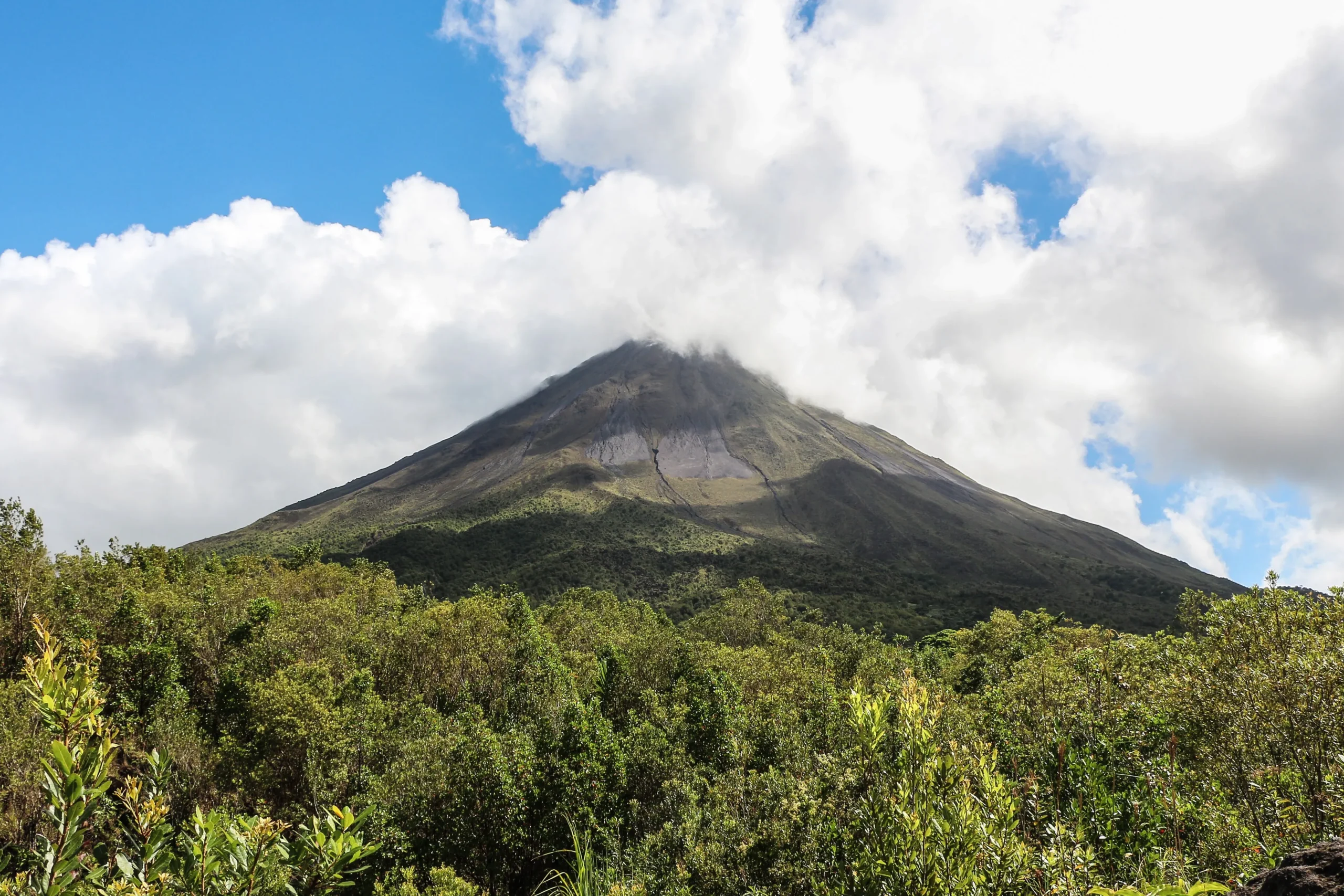
Around La Fortuna and Sarapiquí, moisture is part of the landscape. Arenal’s cone may be hidden in cloud on any date, so an itinerary built only around volcano photos is easy to disappoint. Rainforest walks, birdwatching and hanging bridges stay rewarding under gray skies, and the forest is often livelier after rain.
Caño Negro, near the Nicaraguan border, changes more than most places. SINAC notes that in the dry season the water level drops and the lagoon breaks into separate pools, which concentrates fish and the birds that feed on them. Ask a local boat guide how the water level looks before you go.
Arenal Observatory Lodge sits inside Arenal Volcano National Park with its own trail network, Rancho Margot is an off-grid farm on more than 400 acres near Lake Arenal, and Selva Verde has offered rainforest stays in Sarapiquí since 1986. Maquenque Eco Lodge in Boca Tapada borders the wetlands and forests of the Maquenque refuge. For rain-sensitive travelers, schedule outings early, keep one afternoon free and choose at least one activity that’s still enjoyable in a shower.
Monteverde and Dota: cloud forest in every season
Monteverde is cooler and windier than the lowlands, and low cloud is the ecosystem, not a weather failure. Mist feeds the mosses, orchids and bromeliads that make a cloud forest feel distinctive. Bring a warm layer and a rain jacket even in the Pacific dry season. Our Monteverde cloud forest guide covers the reserves and their timed-entry rules.
Quetzal season is a question we hear often. The tourism board explains that quetzals and three-wattled bellbirds move between elevations to follow fruiting wild avocado trees, which bear fruit for only a short period. That’s why local guides track fruiting trees rather than the calendar, and why no month guarantees a sighting. In San Gerardo de Dota, Savegre Mountain Hotel, run by the Chacón family, has private reserve trails in quetzal habitat. In Monteverde, Monteverde Lodge & Gardens is about 15 minutes from the main reserve.
Southern Pacific and Osa: plan around the heaviest rain
The southern Pacific is among Costa Rica’s wettest regions. Corcovado’s dry season runs from mid-December to mid-April, and SINAC’s page for the Sirena station describes a rainy season from May to November, with the heaviest rain in September and October. Rain affects flights, roads, boat transfers and river crossings, and a delay in a remote area has bigger consequences than in a town on a paved highway. Some lodges close for the wettest weeks. La Paloma Lodge in Drake Bay, for example, has announced a closure from September 1 to October 31, 2026, so check your lodge’s dates before you book.
Corcovado requires an advance reservation for every visit, and guided routes are mandatory on the long trails to Sirena. Details are in our Corcovado and Osa guide. Lapa Ríos, with its 1,000-acre reserve at Cabo Matapalo, and La Leona Eco Lodge, run by a local family at the Carate edge of the park, sit on different sides of the peninsula with different access.
If deep forest is the goal and your dates are flexible, the green season can still be rewarding. Just don’t schedule an uncertain boat transfer on the day before an international flight.
Tortuguero and the Caribbean: turtles and canals
Tortuguero has no road to the village, and its canals are the heart of the visit. SINAC records about 6,000 mm of rain a year here, with July and December the wettest months and March, April and October the least rainy. Boat outings work in most weather, and the canals are rich in birds, caimans, river turtles and monkeys in every season.
Turtle watching runs from March to October, with guided tours leaving at 8 p.m. and 10 p.m. according to the park brochure. From March 1 to October 31 the beach is closed to visitors from 6 p.m. to 6 a.m., except on authorized tours with trained spotters. Avoid any operator promising close-up hatchling photos or unrestricted beach access. Our sea turtle nesting guide covers every major nesting beach, and Tortuga Lodge & Gardens, on 146 acres, is one of the oldest lodges in the area.
On the southern Caribbean, September and October are often a better bet than the Pacific. Cabinas Caribe Luna is within walking distance of Cahuita National Park, where coral reef and coastal forest meet. The tourism board notes that the Caribbean is often the best choice in the fall for both weather and services.
Whales: two populations, two windows
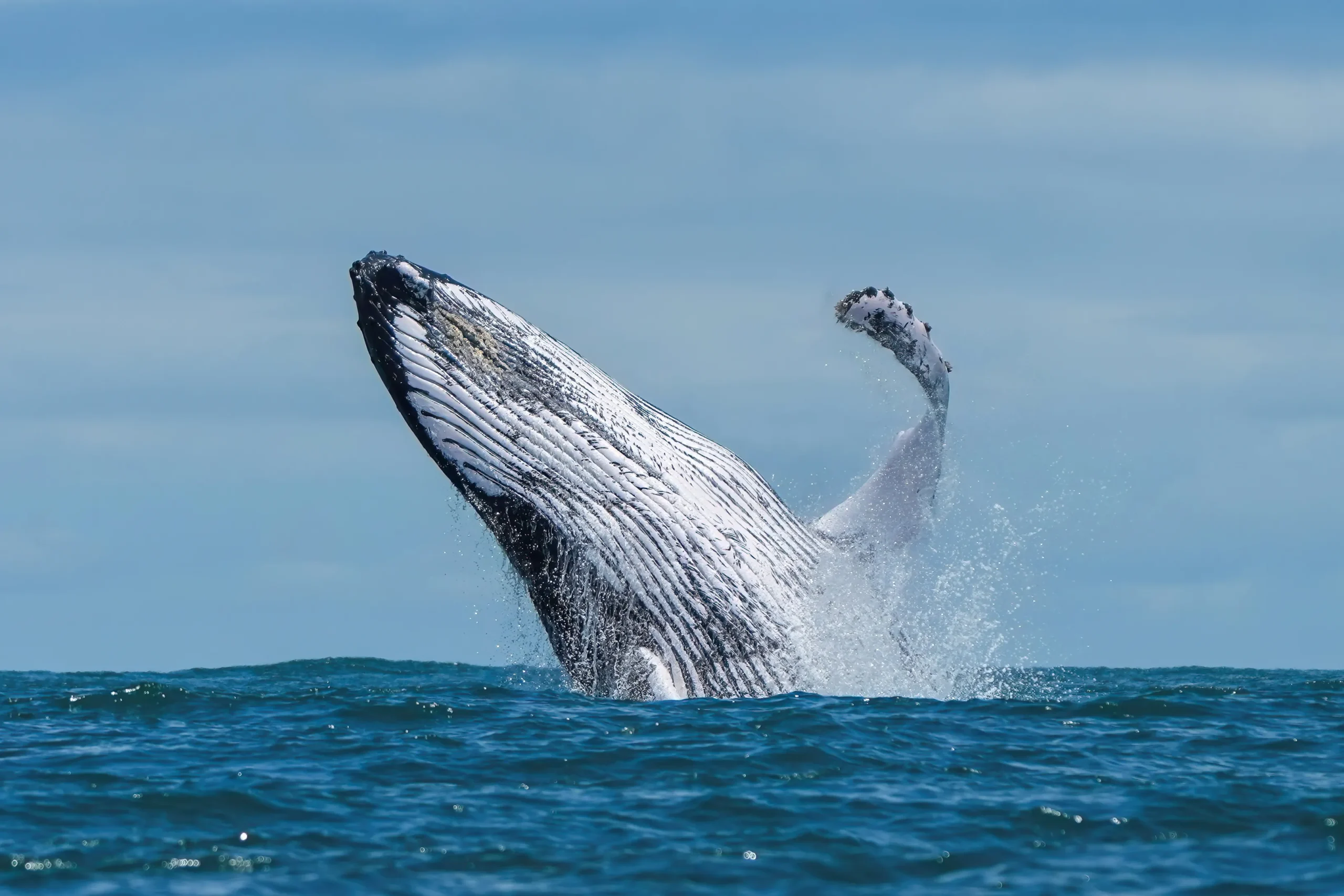
Marino Ballena National Park near Uvita is unusual because humpbacks arrive from both hemispheres. SINAC describes northern whales from December to April and southern whales from July to November, with resident dolphins year-round. The park protects 5,160 marine hectares and 171 land hectares along 15 km of coast. These are windows, not guarantees, and sightings vary by day and sea conditions. Use licensed operators who follow Costa Rica’s distance rules; our whale and dolphin guide explains them.
Birds: migration and the green season
About 220 of Costa Rica’s bird species are migratory, and the tourism board estimates that some five million birds pass through each year. The first shorebirds appear around the Gulf of Nicoya in July, warblers and kites arrive in August, and migration peaks in September and October. Ducks fill the Pacific freshwater wetlands from late October. That makes the green season genuinely good for birding, especially for travelers who don’t mind a wet afternoon.
Is the green season better for ecotourism?
It can be. Fewer visitors, lower demand and fresh growth all help, and spreading tourism income across the year supports guides and small lodges. The tourism board notes that fall brings lighter crowds, but also that some hotels and attractions close, particularly in the south. Season alone doesn’t make a trip sustainable, though. A green-season trip with many long transfers can have a bigger footprint than a simpler dry-season journey. Fewer bases, longer stays and local guides matter more than the month.
A quick month-by-month guide
- January to March: the most reliable Pacific weather, Corcovado’s dry season, northern humpbacks and Palo Verde waterbirds. Book early; this is the busiest period.
- April: a transition month. Holy Week (Semana Santa) draws big domestic crowds, and leatherbacks nest on the Caribbean.
- May to June: the green season begins. Forests are fresh and visitor numbers fall.
- July to August: southern humpbacks arrive, green turtles nest at Tortuguero and the veranillo often brings a drier spell on the Pacific.
- September to October: the best months for the Caribbean and peak bird migration, but the wettest in the southern Pacific. Confirm that your Osa lodge is open.
- November: the Pacific starts drying out and waterbirds return to the wetlands. A good month for quieter trips.
For route ideas that fit each season, see our 7, 10 and 14-day ecotourism itineraries, and for rain-season logistics, our guide to reaching remote eco-lodges.
Frequently asked questions
Does it rain all day in the green season?
Usually not. The tourism board describes green-season rain as coming in sporadic bursts. Long storms do happen, though, especially on the southern Pacific in September and October, so build a flexible day into any trip that depends on boats or remote roads.
Is the Caribbean dry when the Pacific is rainy?
Not dry, but often drier. The tourism board's climate page names September to October and February to March as the Caribbean's relatively dry periods. Rain still falls in every month, and December is the wettest.
When can I see humpback whales near Uvita?
SINAC gives two windows at Marino Ballena: December to April for whales from the north and July to November for whales from the south. Sightings on any given day aren't guaranteed.
When is turtle season at Tortuguero?
Green turtles nest from June to October, leatherbacks from March to May and hatchlings emerge from September to December. Night viewing is only allowed on authorized guided tours, and SINAC advises confirming that the season has opened before you go.
When is the best time for birdwatching?
Resident birds can be seen all year. Migrants arrive from July, peak in September and October and stay roughly six months, while Palo Verde's waterbirds gather from September to March. Early mornings matter more than the month.
Is December always dry?
No. The Pacific dry season often arrives gradually in December, and December is the wettest month on the Caribbean coast.
When should I avoid the Osa Peninsula?
September and October bring Corcovado's heaviest rain, and some lodges close for part of that period. If you go then, choose a lodge that's open, allow extra time for transfers and keep your plans flexible.