



Pacuare Lodge is a remote luxury lodge of about 20 thatched suites and villas on a bend of the Pacuare River, in rainforest on the Caribbean slope of the Talamanca mountains. Most guests arrive by whitewater raft. It suits travelers who want real wilderness, Cabécar culture and serious adventure without giving up fine food and a soft bed, and its sustainability work is unusually well documented.
At a glance
| Location | Pacuare River, about 20 miles from Siquirres, Limón province |
|---|---|
| Style | Luxury rainforest lodge with about 20 suites and villas, run by Böëna Lodges |
| Setting | 340-hectare private reserve inside a protected zone of around 25,000 acres, at roughly 770 feet |
| Best for | Active couples, honeymooners and families with children 7 or older who want rafting and rainforest |
| Getting there | Raft down the river, or a 4×4 transfer of about 45 minutes from the lodge’s base near Siquirres |
| CST status | Lodge reports CST Elite (January 2024); not found in the official directory on 2026-Oct-21 |
A note on the name
Older guides, including the previous version of this page, called it Pacuare Jungle Lodge. Its current name is simply Pacuare Lodge, and it is now the flagship of Böëna Lodges, a Costa Rican company that also runs Lapa Rios on the Osa Peninsula, Tortuga Lodge in Tortuguero and two lodges in Monteverde. Böëna says the word means health and healing in Cabécar.
Where it is and how you get there
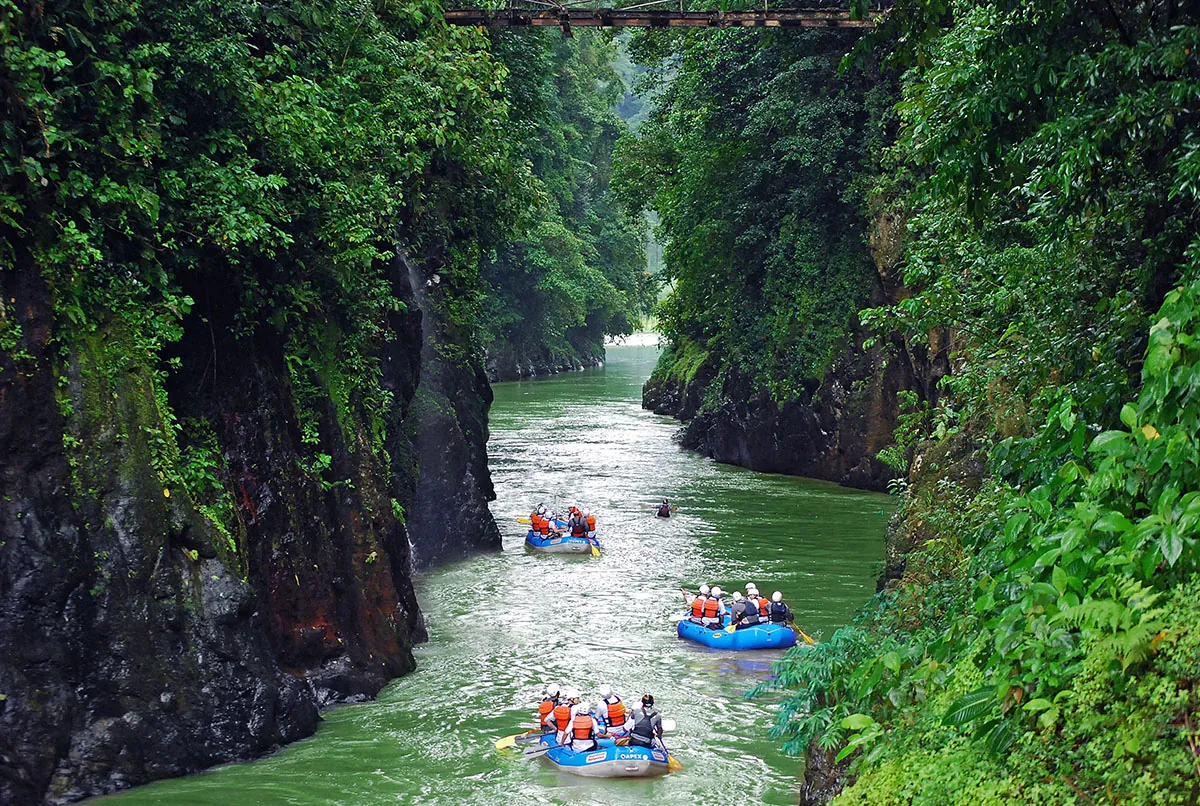
According to the lodge’s FAQ, Pacuare Lodge sits in the Pacuare Protected Zone in Costa Rica’s Atlantic region, about 20 miles from the town of Siquirres, at an altitude of around 770 feet. There is no public road to the door. The classic arrival is a whitewater rafting trip downriver from the put-in, with a stop on the way for a Costa Rican breakfast; the lodge’s Pacuare River page puts the full river run at around five hours, past waterfalls and steep forested canyon walls.
If the river is too high, or you simply don’t want to raft, the lodge drives guests in by 4×4 in about 45 minutes. Shared transfers collect guests from San José hotels around 6 am, drivers can meet the team at its warehouse in Siquirres, and there’s a helipad for private arrivals.
Rafting in requires guests to be at least 9 years old, and rafting out at least 12, with weight limits set by the outfitter. The lodge’s minimum age for any stay is 7.
Suites and villas
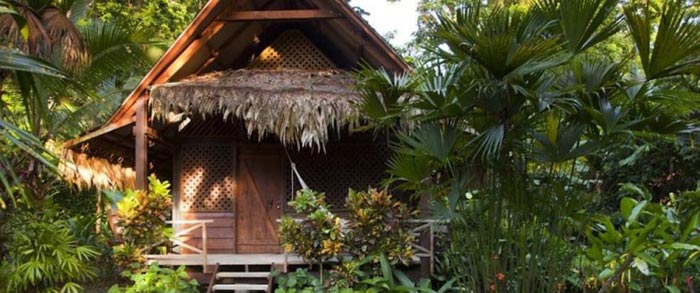
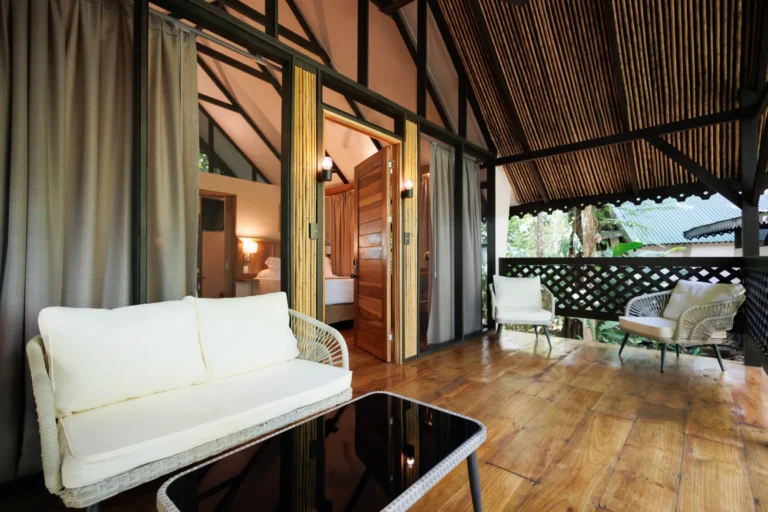
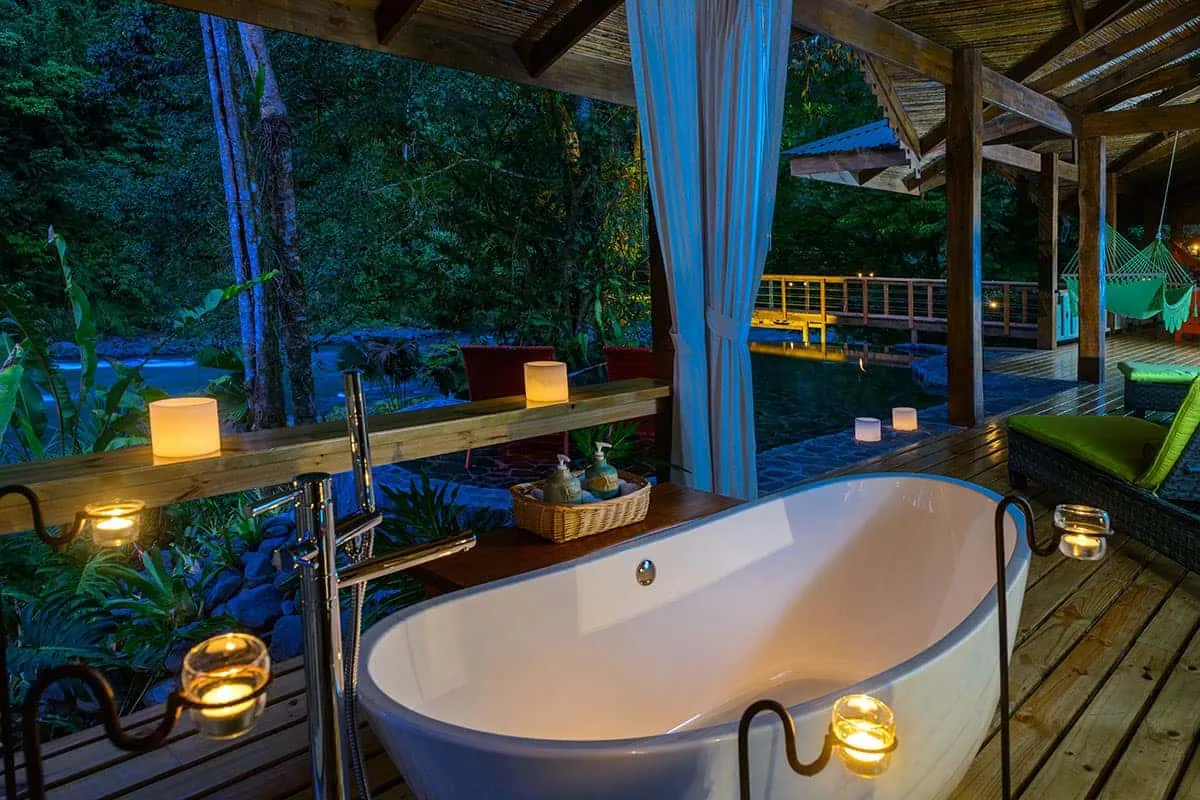
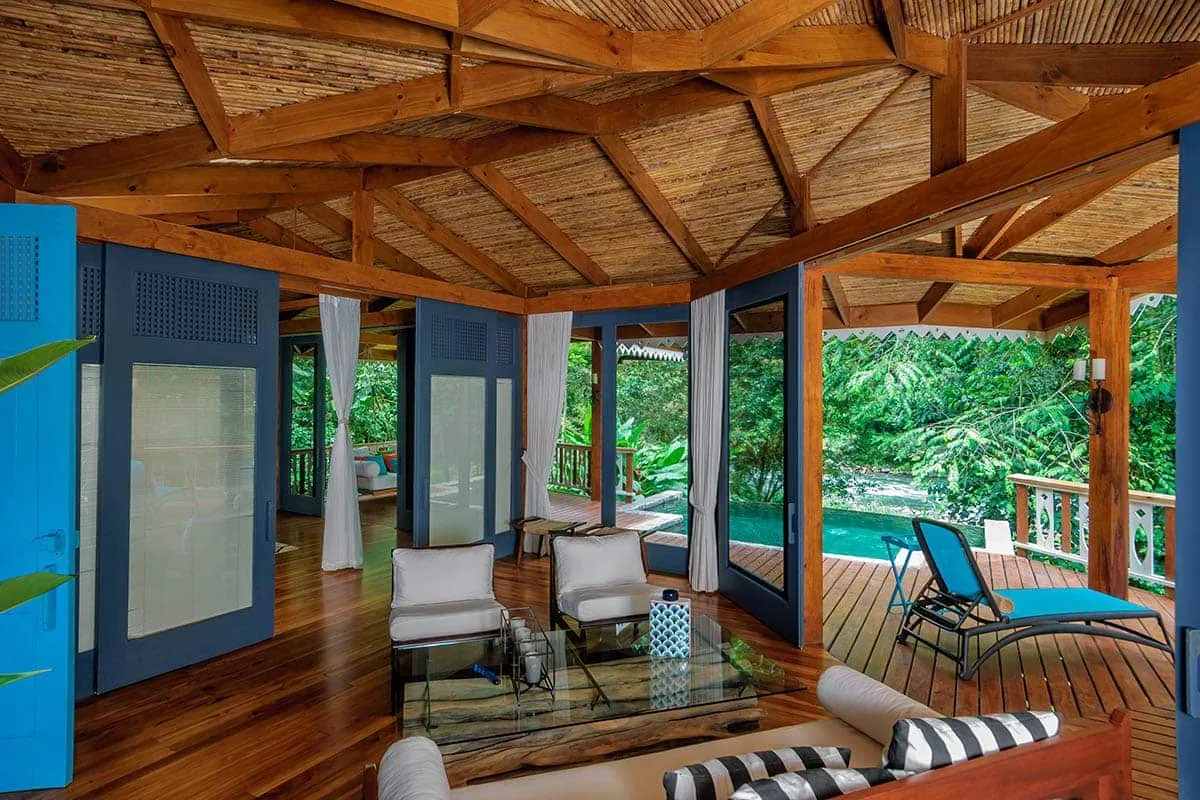
The lodge describes 20 bungalows set apart in the forest, though the Michelin Guide lists 18 rooms, so treat the figure as approximate. All have thatched roofs, teak floors, hardwood furniture, screened walls, ceiling fans and solar-heated water. There is no air conditioning; the elevation and river breeze do that job. Categories, from the most private down:
- Canopy Villa: a honeymoon suite on a hilltop, about 230 square meters, with a hanging bridge to a private lookout platform in the trees.
- Jaguar Villa: the largest unit at about 350 square meters, set beside the river.
- Linda Vista Villas: on a ridge with river and forest views, a king bed, indoor and outdoor showers, a long deck and a private plunge pool.
- River View Suites: about 62 square meters with a private terrace over the river.
- Garden Suites: private terraces facing gardens and forest falling away down the slope.
Wi-Fi reaches the suites but can be unreliable, and hair dryers aren’t allowed because the lodge runs on its own renewable power.
Food
The restaurant is named Nairi Awari, after the nearby Cabécar Indigenous reserve. The culinary page says much of the produce comes from the company’s own organic farm, Las Nubes de Tuis, on the slopes of Turrialba Volcano, which also makes goat cheese. Menus change with the seasons and mix Costa Rican dishes such as pozol, pejibaye soup and casado with international cooking. Separate plant-based lunch, dinner and dessert menus are published, and there’s a children’s menu.
The lodge brews two beers on site and keeps a cellar of more than 80 wines.
What’s included and what to do
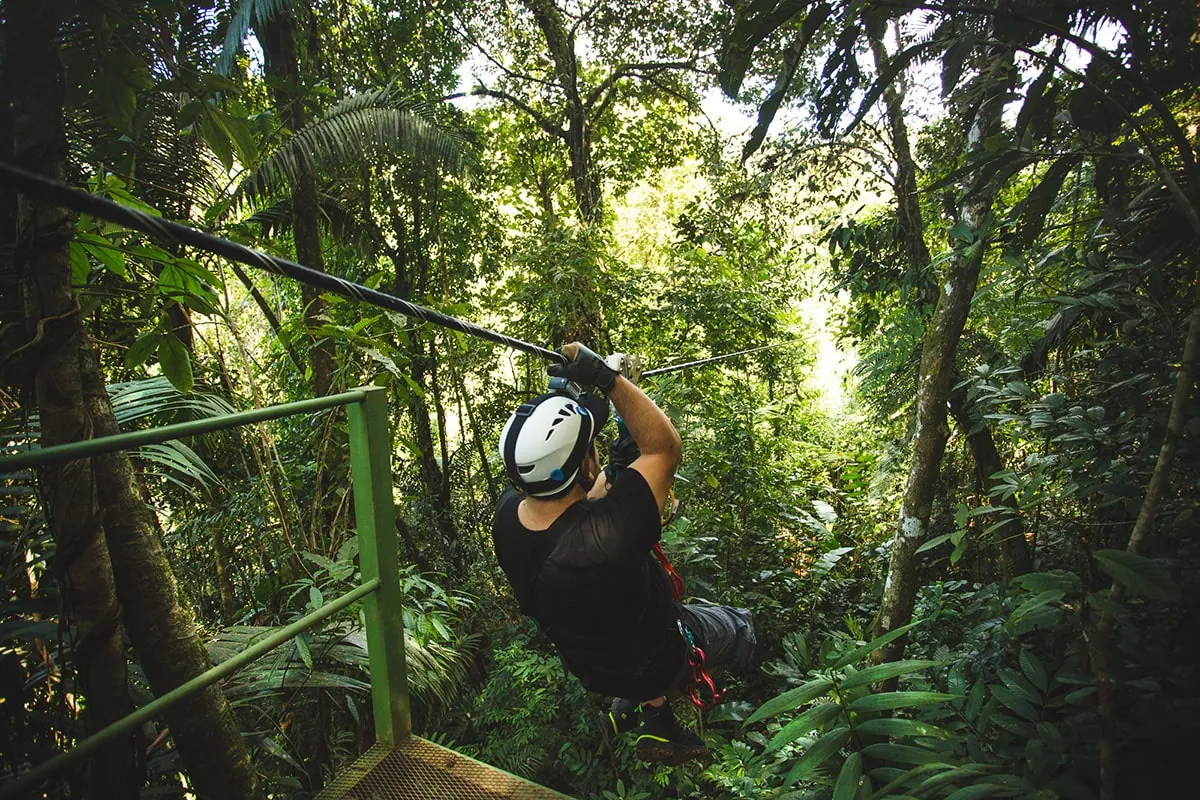
The standard stay bundles eight guided experiences, according to the FAQ: a canopy tour, tropical canyoning, birdwatching, a Cabécar Indigenous hike, an ancient-trail hike to a hidden waterfall, a rural experience in the farming village of Bajos del Tigre, a forest loop walk and a sustainability tour of the lodge’s own systems. Most need a minimum of two people and good health, and several have a minimum age of 12.
The Cabécar experience is the most distinctive. It takes four to five hours along trails the Cabécar have used for generations, ends with a visit to a family from the Nairi Awari reserve, and is genuinely demanding. Quieter days can be spent at the spa or the pool.
Wildlife and research
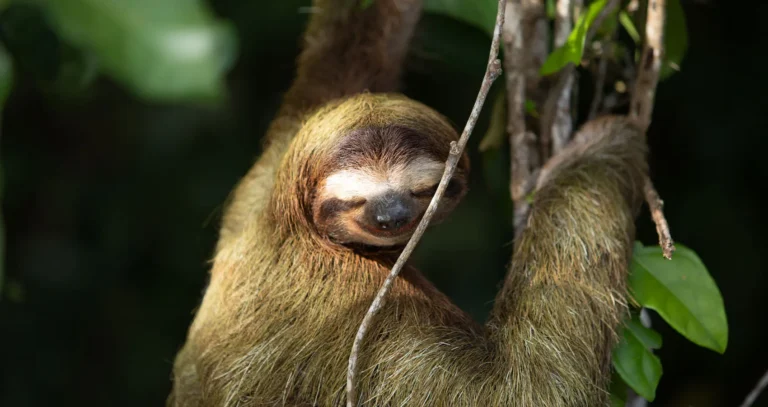
The Pacuare region is home to sloths, monkeys, toucans and hummingbirds, and the lodge has backed the National University’s Jaguar Program since 2009. Camera traps in the reserve and nearby protected areas have recorded about 5,000 images of 18 large mammal species, including five native cats, Baird’s tapir and red brocket deer, and five individual jaguars, one of them black. Sightings of any cat are rare; the cameras show what lives here, not what guests should expect to see.
Sustainability
The sustainability page is one of the most detailed of any lodge in the country. The main points:
- Construction: no trees were cut to build the lodge, which opened in 1995. Lumber came from a reforestation project run by small farmers.
- Energy: three hydroelectric turbines and 204 solar panels, with battery storage.
- Water: spring water from the mountain, tested regularly; solar water heating; wastewater treated in septic systems designed to protect the river; biodegradable soaps.
- Waste: organics are composted and sorted recyclables go to a local center.
- People: most staff come from nearby communities including the Nairi Awari reserve, Bajos del Tigre, Linda Vista and Santa Marta. The lodge funds environmental education in local schools, trains Cabécar residents in guiding, English and food handling, supports a youth soccer school and helped restore the cable car that villagers use to cross the river.
- Networks: it is a Fellow member of The Long Run, a global group of nature-based tourism businesses.
The lodge says it was awarded the CST’s Elite level on January 23, 2024, covering accommodation, food, spa and adventure services. It did not appear in the official CST directory when this page was checked in October 2026, so ask the lodge for its current certificate. The Michelin Guide lists Pacuare Lodge with two Michelin Keys.
Who it suits
This is a place for people who want effort and comfort in equal measure: a morning of rapids or canyoning, then a plunge pool and a long dinner. Honeymooners favor the Canopy Villa, and families with children over 7 do well here, though the best activities start at 12. The lodge recommends at least three nights.
It’s not for anyone who needs air conditioning, a strong internet connection or a short transfer. Rain is frequent, and river levels rise from September to November. If you’d like a simpler riverside stay in the same valley, see Rios Lodge Pacuare. Böëna’s Pacific sister lodge is Lapa Rios. Browse all our Caribbean eco-lodges, or read about Indigenous and community tourism in Costa Rica.
Frequently asked questions
Do you have to raft to reach Pacuare Lodge?
No. Rafting in is the classic arrival, but the lodge also drives guests in by 4x4 in about 45 minutes, and it switches everyone to the road when the river is unsafe.
Is rafting experience needed?
No. The lodge says first-timers in reasonable shape are fine, and its guides are certified in first aid, CPR and swiftwater rescue. Rafting in has a minimum age of 9, and rafting out a minimum of 12.
What is the Cabécar hike like?
It's a four to five hour walk on old Indigenous trails, ending with a visit to a Cabécar family. The lodge rates it as physically demanding, with a minimum age of 12.
Can you see jaguars at Pacuare Lodge?
Jaguars live in the area, and research cameras in the lodge's reserve have identified five individuals, including a black jaguar. Guests very rarely see one, so think of the cats as a sign of a healthy forest rather than a likely sighting.