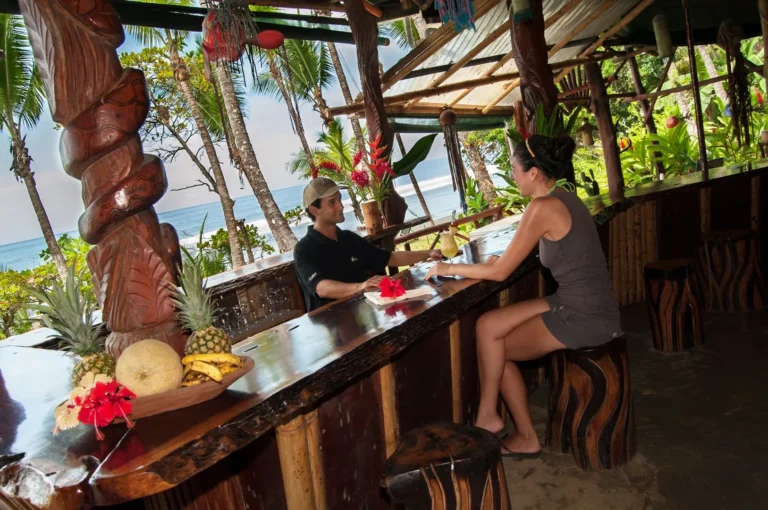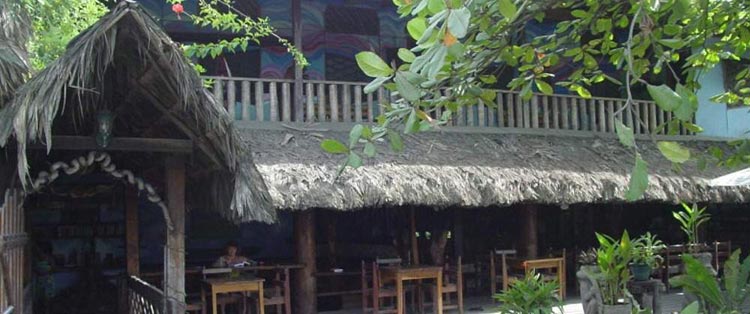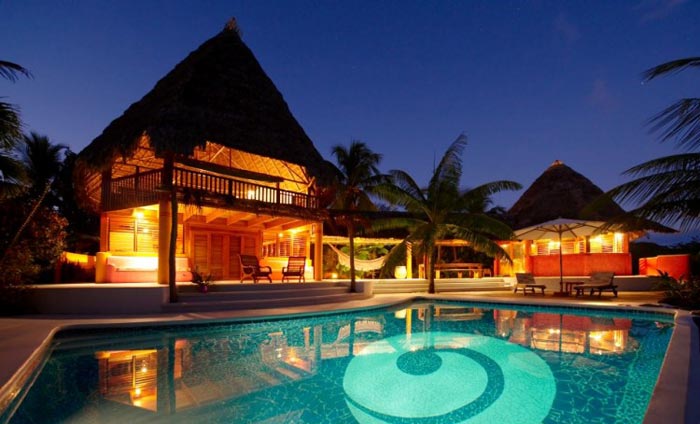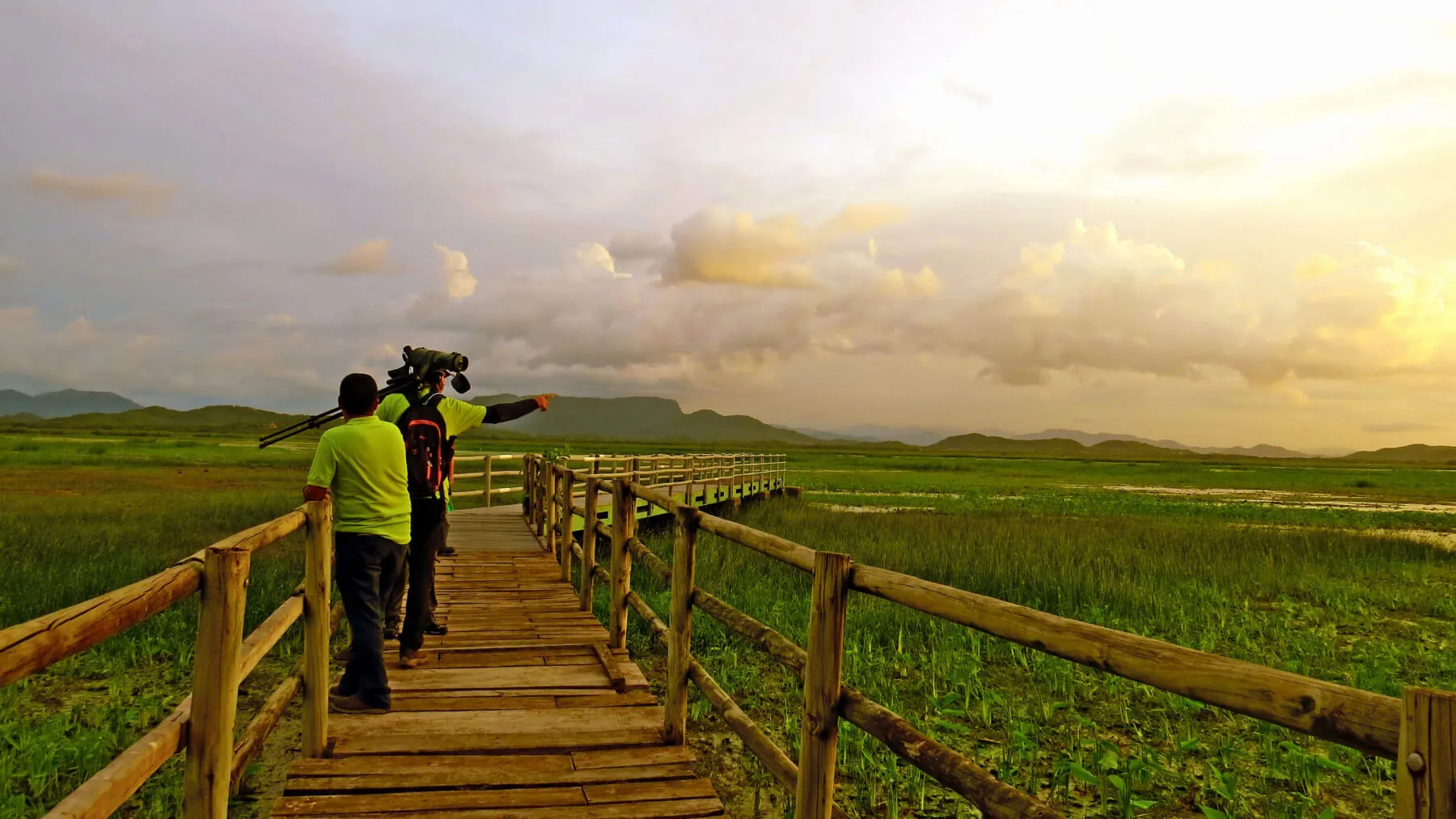
Some of Costa Rica’s most rewarding nature experiences happen outside its famous national parks. A family may protect a forested hillside for decades. A nonprofit might buy land to keep a wildlife corridor open. A biological station may welcome visitors onto trails that scientists have studied for half a century. A small lodge could maintain forest that links two larger protected areas.
These places make up a quieter conservation landscape. They rarely have the name recognition of Corcovado or Manuel Antonio, but many offer excellent guided walks and birding, and a closer look at the people who protect Costa Rica’s habitats.
What is a private nature reserve?
A private nature reserve is land conserved through private ownership or management. In Costa Rica that may mean individuals, families, nonprofits, universities, communities or tourism businesses. Some reserves protect old-growth forest; others focus on regrowing woodland, wetlands, shade-grown farms or connections between larger habitats.
The scale is bigger than most visitors realize. A 2021 study by University of Costa Rica researchers in the Revista Iberoamericana Ambiente & Sustentabilidad found more than 210 private reserves belonging to the national private reserves association, the Asociación Red Costarricense de Reservas Naturales, plus others that aren’t members. The same study notes that surprisingly little is known about what these reserves contribute, and that economic sustainability was the weakest area in the reserves it assessed.
“Private reserve” isn’t one legal category or a sustainability award. Some reserves have formal protection or conservation agreements; others are managed voluntarily and could change with ownership. A hotel that says it owns a reserve should be able to explain the boundaries, size and management goals.
How private reserves complement national parks
National parks protect large, representative ecosystems. Private reserves fill the gaps: buffer zones beside parks, restored farmland, river corridors and stepping stones that let wildlife move between larger forests. That matters most for animals that range widely, such as big cats, peccaries and fruit-eating birds that follow ripening trees up and down mountains.
Some of the most valuable conservation properties keep visitors out entirely. Others run a small, carefully managed ecotourism program to pay for guards, trail upkeep and monitoring. Don’t assume a private reserve follows SINAC’s reservation system; each sets its own rules. Our national parks guide covers the public side, and our conservation story explains how the two systems grew up together.
Some reserves also earn income outside tourism. Costa Rica’s FONAFIFO Payment for Environmental Services program pays forest owners for carbon storage, biodiversity, water protection and scenic beauty, but participation varies, so never assume a particular property is enrolled.
Notable private reserves and research stations you can visit
| Reserve or station | Region | Managed by | What visitors can do |
|---|---|---|---|
| Monteverde Cloud Forest Preserve | Monteverde | Tropical Science Center | Timed-entry trails, guided natural history and night walks |
| Children’s Eternal Rainforest | Monteverde and Arenal slopes | Monteverde Conservation League | Day trails at Bajo del Tigre; remote field stations at San Gerardo and Pocosol |
| La Selva Biological Station | Sarapiquí | Organization for Tropical Studies | Lodging, birding and night walks, all-access trail |
| Las Cruces and Wilson Botanical Garden | Coto Brus, southern highlands | Organization for Tropical Studies | Lodging, garden and birding walks, observation tower |
| Tirimbina | Sarapiquí | Tirimbina reserve | Hanging-bridge trails, lodge, guided tours |
| Lodge reserves (examples below) | Nationwide | Individual lodges | Guided and self-guided trails for guests |
Monteverde: a landmark in private conservation
Monteverde is the best place to see how privately managed forest can become internationally important. The Monteverde Cloud Forest Preserve protects more than 10,000 acres (about 4,100 hectares) of cloud forest. It limits visitor numbers in each time slot based on scientific studies, and its guided natural history and night walks take no more than 10 people. In 2026 the preserve reported that it had become the first protected area in Costa Rica included on the IUCN Green List, which recognizes well-managed protected areas. That recognition applies to the preserve, not to every hotel nearby.
The preserve is only one piece. According to the Monteverde Conservation League, community members founded the league in 1986. A campaign that began when Swedish schoolchildren raised money to buy six hectares of rainforest grew into the Children’s Eternal Rainforest, now almost 23,000 hectares across seven of Costa Rica’s twelve life zones, bought with help from donors in more than 40 countries. The league calls it the largest private reserve in the country. Together with the Monteverde Cloud Forest Preserve, Santa Elena, Bosque Eterno and Curi-Cancha, it forms a complex of about 28,000 hectares. The league also took part in creating the Bellbird Biological Corridor in 2008, an effort to reconnect forest from Monteverde down toward the Gulf of Nicoya.
Lodges plug into this network in different ways. Rancho Margot, on Lake Arenal, worked with the league to set up a ranger station within the Children’s Eternal Rainforest. In Monteverde itself, Monteverde Lodge and Gardens is about 15 minutes from the cloud forest preserve and runs guided day and night hikes there. Our Monteverde guide compares the area’s reserves and how to choose between them.
Biological stations: La Selva and Las Cruces
A biological station isn’t a typical hotel. Its main jobs are research, university teaching and long-term monitoring, though some welcome the public under set conditions.
La Selva, run by the Organization for Tropical Studies (OTS) near Puerto Viejo de Sarapiquí, protects about 1,600 hectares of old-growth and recovering lowland forest that adjoins Braulio Carrillo National Park, creating a forested slope from about 35 meters above sea level up to Barva Volcano. OTS established the station in 1968 on a farm owned by forester Leslie Holdridge. It records more than 2,077 plant species, 470 bird species and 125 mammals, 72 of them bats, and has 61 kilometers of trails. Visitors can stay overnight (there’s room for up to 180 people) and join birding, natural history and night walks. Our La Selva review describes the station’s simple rooms and long trail network.
In the southern highlands, Las Cruces protects 365 hectares of premontane forest, one of the largest remaining fragments in Coto Brus, along with the 10-hectare Wilson Botanical Garden. The Wilsons started the garden in 1962, and OTS acquired the site in 1973. It offers lodging for up to 100 people, plus day visits with garden and birding walks and an observation tower.
Research stations reveal changes that short visits can’t. A forest that looks lush may still be losing amphibians or certain birds, and long-term records are how scientists spot that.
Northern plains and Sarapiquí
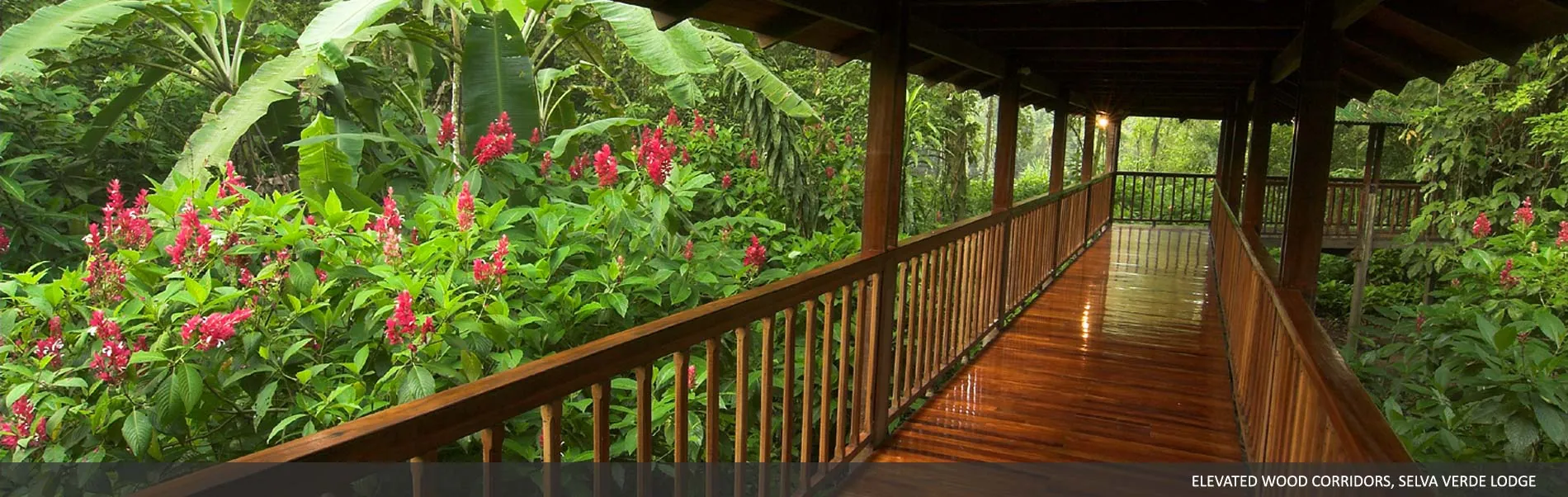
The forests around Sarapiquí and Boca Tapada mix research sites, river ecosystems and lodges with their own reserves. Tirimbina, which describes itself as a tropical science resource and travel destination combining research, education and tourism, has about 7 kilometers of rainforest trails with three hanging bridges, a lodge, and on-duty biologists, and provides free environmental education to local communities. Nearby, Selva Verde covers about 500 acres of rainforest reserve and is popular with birders and student groups.
Farther north, the great green macaw is the flagship of private and public conservation working together. In the IUCN journal PARKS, researchers from the Tropical Science Center report that the macaw’s nesting range in Costa Rica had shrunk by about 90 percent since the early twentieth century. Research begun in 1994 led an alliance of 22 organizations to create the San Juan-La Selva Biological Corridor, with the Maquenque National Wildlife Refuge at its core, and much of that corridor is private land. Maquenque Eco Lodge is a 60-hectare reserve beside the refuge near Boca Tapada. A responsible birding program here focuses on habitat and local guides, not on promising a specific nest.
The Osa Peninsula
The Osa holds major public parks and a patchwork of private rainforest, coastal forest and wildlife corridors. Osa Conservation reports that its camera-trap network, launched with more than 222 cameras in 2018, brings together about 30 members, including landowners, researchers, protected-area managers and ecotourism operators. It recorded a puma on private land at the edge of Corcovado and species once confined to the park spreading into Piedras Blancas National Park, evidence that private land is doing real work as a corridor.
Several lodges protect sizable reserves. Lapa Rios Ecolodge describes a 1,000-acre private rainforest reserve on its own site. Bosque del Rio Tigre, near the village of Dos Brazos, is a small lodge within a 31-acre private reserve of primary and secondary forest known for birding. Near Drake Bay, Tamandua Biological Station is a Costa Rican family project on about 50 hectares that the Arguijos family has protected for decades, with waterfalls and access to Corcovado tours. On the Golfo Dulce side, Esquinas Rainforest Lodge borders Piedras Blancas and ties its guest program to local conservation and research.
A private reserve may offer more flexible hiking than Corcovado, but it isn’t a park entrance unless that’s genuinely true. Our Corcovado and Osa guide explains the difference.
Highland and coastal lodge reserves
Private reserves aren’t only in the lowlands. Near Turrialba, Rancho Naturalista is a 125-acre birding lodge in premontane forest, and our review notes more than 430 bird species recorded on its reserve. In the Talamanca mountains, Savegre Mountain Hotel maintains a network of trails on a private reserve in San Gerardo de Dota, one of the best areas for quetzals.
On the coast, Lagarta Lodge in Nosara is next to a 90-acre private preserve with trails through mangroves and forest, which guests can enter from the lodge.
Biological stations versus wildlife rescue centers
These are different kinds of institutions. Biological stations support research, education and monitoring. Wildlife rescue and rehabilitation centers care for injured, confiscated or displaced animals under government permits. Legitimate rescue work isn’t the same as an attraction where visitors pay to handle wildlife.
SINAC and the tourism institute’s joint guidance for visitors asks people not to touch, trap, handle or feed wild animals and to report injured animals to rangers rather than handling them. Apply the same standard to private centers. A good one will explain its mission, keep visitors at a distance and be honest that not every animal can be released. Our wildlife watching guide covers responsible viewing in more depth.
How to judge a reserve before you go
Start with what interests you: birds, cloud forest, lowland rainforest, restoration or science. Then check whether the reserve welcomes visitors, what trails it has and whether a guide is required. Small reserves may need advance notice; others run timed entries or keep sensitive areas closed.
Then ask a few questions that separate real conservation from a scenic garden using the word “reserve”:
- Size and status. How many hectares are protected, and is that protection formal, such as a legal agreement, or voluntary?
- Landscape role. Does the land protect a watershed, a corridor or a stretch of mature forest? What does it connect to?
- Management. Who manages it, and is there a published mission, management plan or monitoring program?
- Partnerships. Does it work with researchers or recognized organizations?
- Money. How does visitor income support the reserve itself?
A wooden sign at the gate tells you little. Good evidence doesn’t need to be complicated, but it should exist. Our guides to choosing a sustainable hotel and what makes an eco-lodge include more questions to ask.
Small reserves can matter more than their acreage suggests. A forest strip along a stream can protect water quality, shelter nesting birds and link larger habitats. On a lodge walk, ask the guide what lives next door and which animals pass through; that conversation often reveals more than a species list.
Frequently asked questions
How many private nature reserves are there in Costa Rica?
A 2021 University of Costa Rica study counted more than 210 private reserves in the national private reserves association, plus others outside it. There's no single public register of every private reserve, and they range from a few hectares to the roughly 23,000-hectare Children's Eternal Rainforest.
Are private reserves open to the public?
Some are, some aren't. Many limit access to guests, research groups or guided visits, and a few are closed to tourism to protect sensitive habitat. Contact the reserve or lodge directly before you go, and don't assume SINAC's park booking system applies.
What's the largest private reserve?
The Monteverde Conservation League describes its Children's Eternal Rainforest, almost 23,000 hectares on both sides of the Tilarán range, as the largest private reserve in Costa Rica. It began with a fundraising campaign by Swedish schoolchildren in the late 1980s.
Can I stay at a biological station?
Yes, at some. OTS offers lodging at La Selva for up to 180 people and at Las Cruces for up to 100, with guided walks open to visitors. Rooms are practical rather than luxurious, and you'll share the station with researchers and students.
Does staying at a lodge with a reserve help conservation?
It can. Guest income can pay for guards, trail upkeep and monitoring, and some lodges partner with researchers or corridor projects. Ask how large the reserve is, how it's protected and how your stay supports it.
Is a private reserve better than a national park?
Neither is better; they do different jobs. Parks protect large areas under public law, while private reserves buffer and connect them and often allow smaller, slower guided visits. The best trips usually include both.