A bright blue butterfly gliding between trees can stop a rainforest walk as effectively as a howler monkey. So can the sound of cicadas, a line of leafcutter ants crossing the trail or a metallic green bee darting between flowers. Costa Rica’s small wildlife is both beautiful and ecologically indispensable, yet visitors often overlook it while scanning the canopy for toucans and sloths.
The scale is hard to grasp. The Organization for Tropical Studies counts “tens of thousands” of insects, spiders and other arthropods at its La Selva Research Station alone, and Osa Conservation reports about 6,000 insect species described so far on the Osa Peninsula, with many more still unnamed. The most rewarding insect encounters happen when you slow down. The forest floor turns into a network of busy roads, leaves reveal caterpillars and camouflaged hunters, and flowers attract pollinators whose work rivals that of birds and bats.
Blue morphos and other butterflies
Costa Rica is one of the richest butterfly countries on Earth. Entomologist José Montero told the EFE news agency in 2025, as reported by Ecoticias, that the country has about 1,600 species of day-flying butterflies, roughly 8 percent of the world total, and many thousands of moth species. Counts vary between experts as new species are described, so treat any single figure as an estimate.
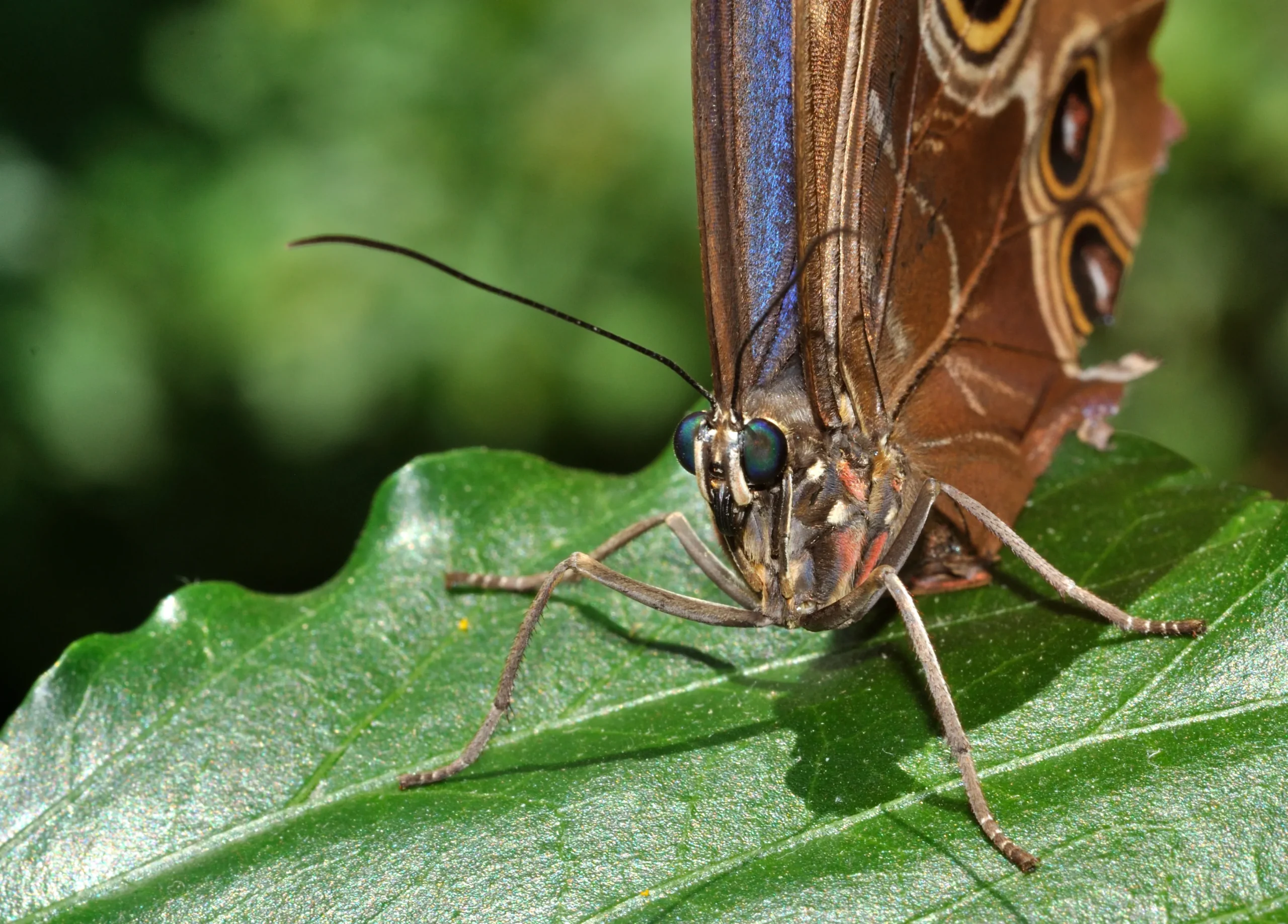
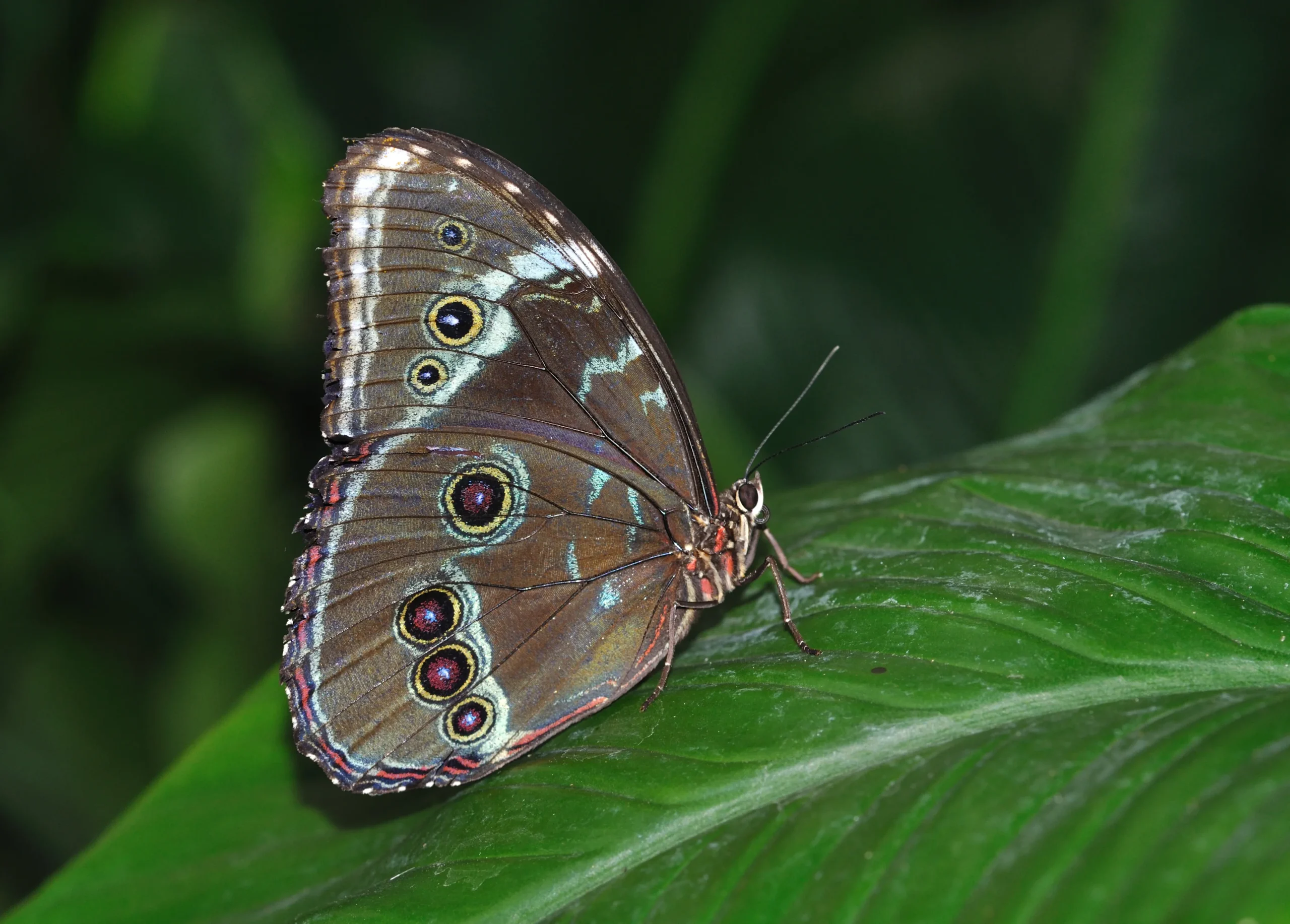
The blue morpho is the star. Its upper wings flash an almost electric blue through shaded forest, while the undersides are brown with eye-like spots. That blue is not pigment. Researchers in Nipam Patel’s lab at UC Berkeley, interviewed by KQED Science, explain that it is structural color: microscopic ridges on the wing scales bend and reflect light so that our eyes see blue. When the butterfly lands and closes its wings, the color disappears and it becomes a dull leaf-colored shape.
Blue morphos favor forest edges, stream corridors and clearings in warm, wet lowlands, and they often feed on fallen, fermenting fruit. A close view is never guaranteed, because they fly erratically and rarely sit still with open wings. Watching one drift through a sunlit gap is a genuinely wild experience no display case can match.
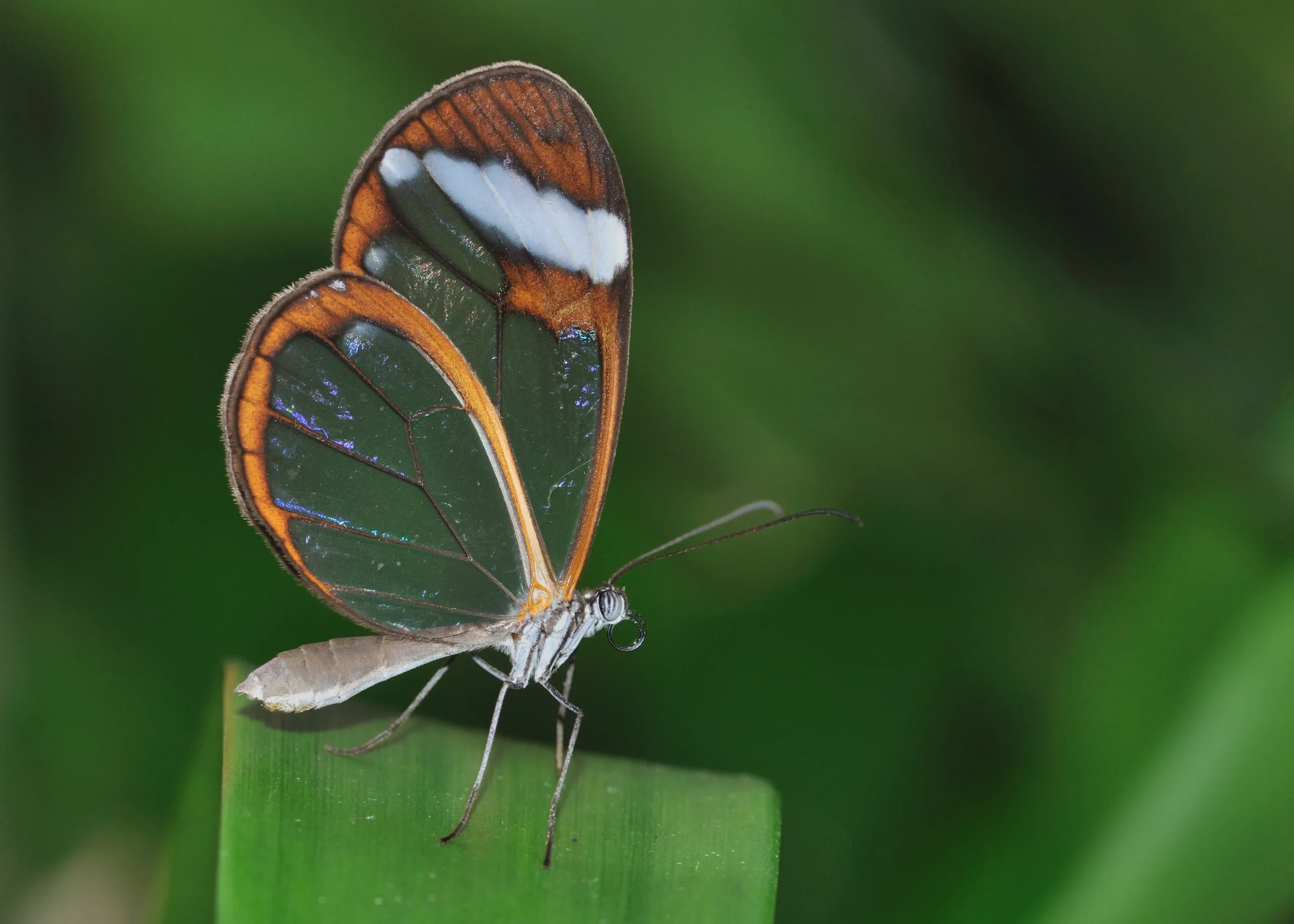
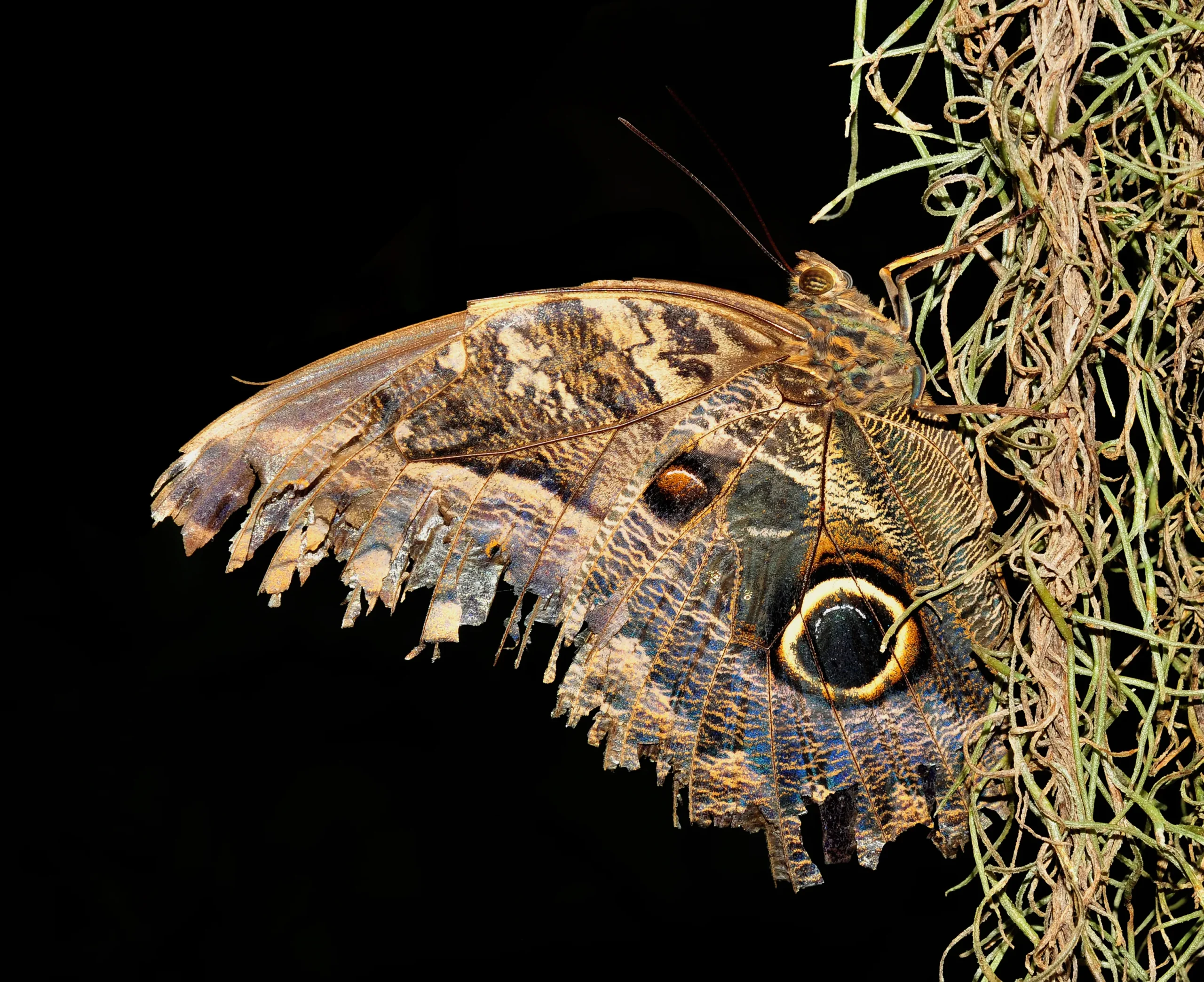
Costa Rica also has glasswing butterflies with transparent wings, owl butterflies with large eyespots, swallowtails, heliconians with long, narrow wings and many tiny skippers and hairstreaks. Rather than trying to memorize names, start by noticing behavior: which butterflies visit flowers, which feed on rotting fruit, which stay in deep shade and which gather on damp riverbank sand.
The caterpillar inventory that changed tropical science
Much of what scientists know about tropical caterpillars comes from Costa Rica. In the Área de Conservación Guanacaste in the northwest, an inventory begun in 1978 by Daniel Janzen and Winnie Hallwachs has reared more than 750,000 wild-caught caterpillars across about 120,000 hectares, identifying their food plants and the wasps and flies that parasitize them. The project’s online database records that the work was carried out with a team of local parataxonomists and concluded in 2025. It also helped pioneer the use of DNA barcoding to separate look-alike species.
For travelers, the lesson is simple: almost every caterpillar you see is tied to particular host plants, and many have relationships with predators and parasites that are still being worked out. Our ecosystems guide explains how Guanacaste’s dry forest differs from the wet forests where most visitors look for butterflies.
Butterfly gardens versus wild butterfly watching
Butterfly gardens can be an accessible introduction, particularly for children or anyone who finds rugged trails difficult. A well-run facility explains metamorphosis, host plants and conservation, and it is open about where its butterflies come from and how it manages releases.
Several lodges include or arrange these visits. At Si Como No in Manuel Antonio, our review describes a butterfly garden alongside a 30-acre wildlife refuge. Near La Fortuna, Arenal Oasis Eco Lodge combines a butterfly garden with a natural history walk past stations for insects, frogs, snakes and lizards, and Catarata Eco Lodge arranges visits to the Danaus Ecocenter, which pairs a butterfly exhibit with native plants and traditional crops.
Wild butterfly watching is a different experience. Look along forest edges, flowering gardens, sunny breaks in the trail and stream banks where butterflies gather to drink minerals from damp ground. Never catch or handle a butterfly for a photo; the scales rub off easily and a close-up is not worth harming the animal.
A property that plants host and nectar plants makes a real contribution to insect habitat. Advertising “lots of butterflies” is not conservation. Ask what plants and land management support the insects on site.
Leafcutter ants: a forest workforce
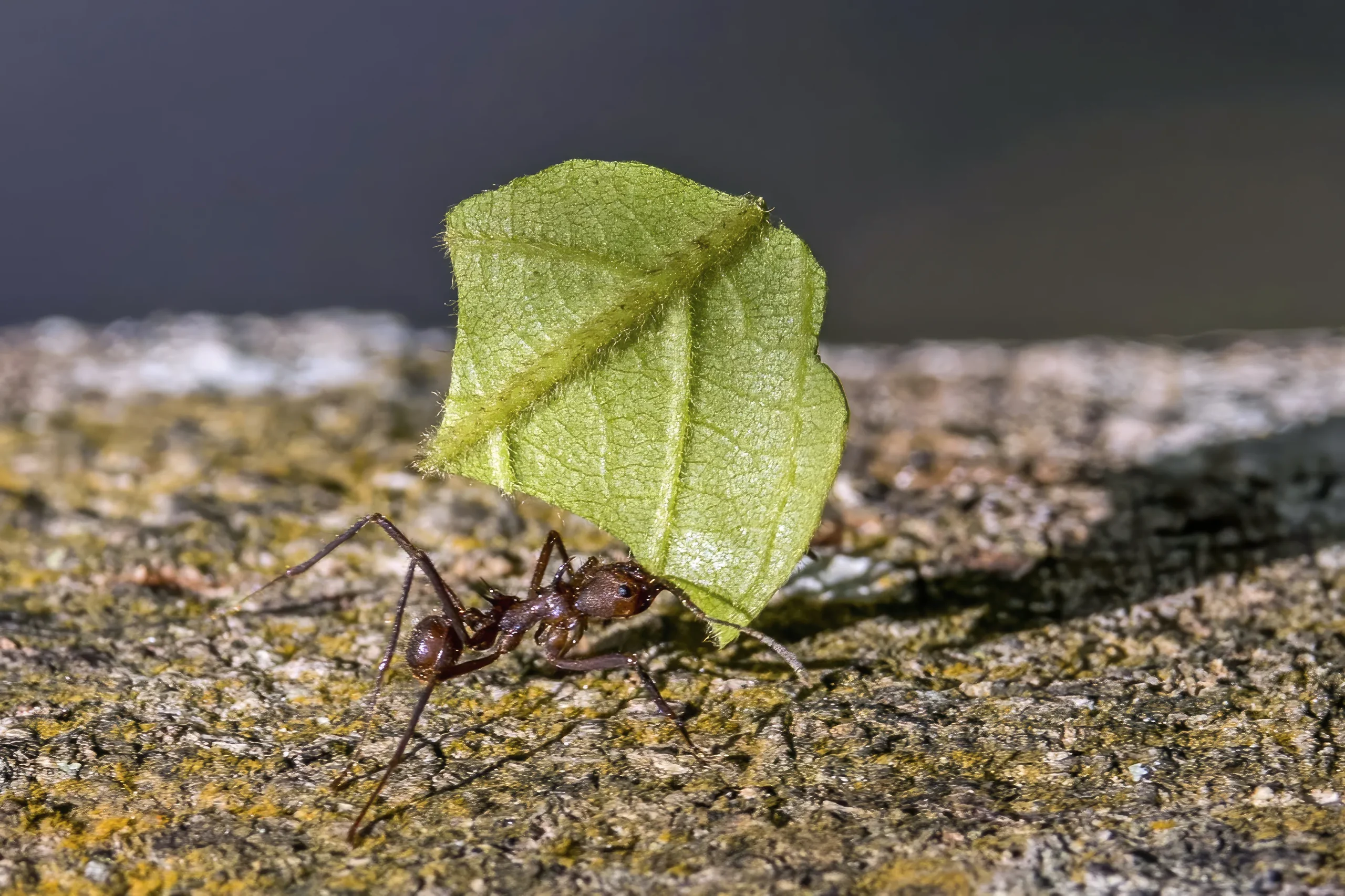
Leafcutter ants are among the most fascinating animals in Costa Rica. Along some trails, a stream of green leaf pieces moves across the ground as if on its own. Workers cut fresh vegetation and carry it into underground nests, where it feeds a fungus garden that in turn feeds the colony. Leafcutters belong to the fungus-farming attine ants, a New World group of nearly 300 species that all grow fungus for food. A 2016 study in PLoS One led by Smithsonian researchers estimated that ant agriculture began about 54 to 67 million years ago and described the leafcutter genera Atta and Acromyrmex as dominant plant eaters in Neotropical ecosystems.
A healthy colony builds cleared trails that run across paths, roots and open ground, and watching workers of different sizes cut, carry, guard and repair the route can hold the attention of any age group. Avoid standing on the procession or damaging nest entrances, and do not let anyone dig into a nest for a demonstration. The larger workers can bite hard.
Army ants and the birds that follow them
Army ants move in raiding swarms across the forest floor. Insects, spiders and other small animals flee ahead of them, and certain birds, notably several antbirds, follow the swarms to catch what the ants flush out. The birds are not eating the ants; they are using them as beaters. It is one of the clearest examples of how tropical wildlife communities depend on one another.
A naturalist who notices sudden bird activity low in the understory may discover a swarm passing below. Give it room, do not stand in the column and do not try to redirect it for photographs. For more on the birds involved, see our birds of Costa Rica guide.
Orchid bees and other pollinators
Orchid bees can be brilliant metallic green, blue or gold, and they move fast. The University of Illinois’ Cameron Lab describes them as bees found only in the New World tropics that are major pollinators of certain orchid groups and can make up about a quarter of the bee community in some Neotropical forests. Males collect fragrances from many different orchids and other sources, blending a species-specific perfume that they store in their enlarged hind legs.
Protecting flowering trees, understory plants and native vegetation does more for these bees than any single guest activity. Moths, beetles and flies are easy to underestimate as pollinators, and many work at night when travelers are indoors. A guided night walk can reveal animals that rarely appear on postcards.
Beetles, cicadas, spiders and the forest soundtrack
Beetles occupy almost every microhabitat, from rotting wood and leaf litter to flowers and the canopy. Some have elaborate horns, metallic colors or chemical defenses, and together they do a huge share of the forest’s decomposition. Cicadas supply much of the afternoon soundtrack; their calls rise and fall with heat and time of day, and the loudest noise in the forest may come from an insect nearly invisible on the bark.
Not every small forest animal is an insect. Spiders and scorpions are arachnids, while millipedes and centipedes belong to separate groups. Orb weavers string webs across gaps, hunting spiders patrol trunks at night, and millipedes recycle fallen leaves. Most avoid people, but some can bite or sting painfully, so do not handle unfamiliar invertebrates, reach into dark crevices or poke at animals. Let the guide set the distance.
Insects at night
A guided night walk reveals a completely different community. Moths gather near light, katydids and crickets call, spiders position themselves to hunt and tiny creatures appear along stream vegetation. Some of the best discoveries are the smallest: a leaf that turns out to be a katydid, an egg case on bark or a moth that looks exactly like a dead leaf.
Artificial light changes insect behavior, so the ideal lodge does not floodlight the forest. Our review of Selva Bananito Lodge, on the Caribbean slope, describes cabins lit by oil lamps rather than electric lights, a choice that keeps nights dark for wildlife. In Monteverde, the cloud forest reserve’s guided night walk is limited to 10 people, and Monteverde Lodge and Gardens is close to a butterfly garden and the Bat Jungle exhibit as well as the reserves. Our Monteverde guide has more.
A responsible night walk uses light sparingly, keeps groups small and leaves animals where they are. Note that national park rules vary; SINAC does not allow night walks inside Corcovado National Park, so after-dark exploring on the Osa happens on private reserves.
Where to find excellent insect experiences
| Experience | Where to go | Best timing | Lodges to consider |
|---|---|---|---|
| Wild blue morphos and forest butterflies | Wet lowland forest edges and streams: Sarapiquí, Arenal, Caribbean, Osa | Sunny mornings after rain | Arenal Oasis Eco Lodge, Esquinas Rainforest Lodge |
| Butterfly gardens and exhibits | Arenal, Manuel Antonio, Monteverde | Mid-morning when butterflies are warm and active | Si Como No, Catarata Eco Lodge |
| Leafcutter and army ants | Almost any lowland forest trail | Daytime; ask your guide to watch for bird flocks low in the understory | Selva Verde, La Selva |
| Night insects, moths and spiders | Lowland and cloud forest lodges with dark surroundings | After dusk, especially after rain | Selva Bananito Lodge, Monteverde Lodge and Gardens |
| Pollinators in gardens and forest | Foothill and mid-elevation lodges with native plantings | Morning flower visits | Rancho Naturalista, Tenorio Lodge |
Sarapiquí and the Caribbean. Selva Verde protects about 500 acres of lowland forest, and La Selva offers guided natural history walks at one of the world’s most studied tropical forests.
Arenal and the north. Tenorio Lodge sits on 17 acres of heliconia gardens, ponds and native trees at about 500 meters near Bijagua and runs trips to a hanging-bridge trail with a butterfly garden.
Turrialba and the Central Valley. Rancho Naturalista is best known for birds, but our review notes its many moths and butterflies on a 125-acre foothill reserve. Finca Rosa Blanca Coffee Plantation Inn grows organic shade coffee, a farming system that keeps more trees and flowering plants than sun coffee.
Osa and Golfo Dulce. Esquinas Rainforest Lodge, beside Piedras Blancas National Park, runs hikes our review describes as rich in butterflies and unusual insects. Our Corcovado and Osa guide has more.
Monteverde supports its own mountain insect communities adapted to cool, wet conditions, while in Guanacaste the dry season changes which insects are most conspicuous. A species photographed in one habitat should not be advertised as common throughout the country, so choose a naturalist who knows the specific forest where you will walk.
Insects, conservation and eco-lodges
Many insects depend on native vegetation, dead wood, clean streams or specific host plants. Manicured lawns, broad-spectrum pesticides and heavy night lighting can reduce habitat quality even where the surrounding forest looks green. A genuinely eco-minded lodge supports insects by keeping diverse vegetation, limiting chemical use, protecting leaf litter and waterways, and using warm, shielded lighting.
Reforestation helps too. At Leaves and Lizards near Arenal, the owners planted about 3,000 trees on former dairy pasture after buying it in 2006. Regrowing forest brings back host plants, and host plants bring back butterflies.
When you choose a stay, ask whether naturalists interpret insect ecology, whether gardens favor native plants and how the property handles pest control. Our private nature reserves guide explains how lodge reserves add up to wider protected landscapes.
Photographing small wildlife responsibly
Macro photography reveals extraordinary detail, but close lenses, flash and repeated repositioning create risks. Do not touch butterflies, move insects onto “better” leaves, peel bark or herd animals into a composition. Before you lean in, consider whether the animal is feeding, laying eggs or resting.
Patience usually wins. Choose a flowering plant, sit quietly and wait for visitors to arrive. On trails, use a lens with enough working distance that you never press equipment against leaves or fragile bodies. A photo should record the encounter, not prove it was forced. Our wildlife watching guide covers ethics for every kind of wildlife tour.
Frequently asked questions
Where can I see blue morpho butterflies?
Warm, wet lowland forests are best, including Sarapiquí, Arenal, the Caribbean coast and the Osa. Look along stream corridors and forest edges on sunny mornings. Wild sightings are unpredictable, and butterfly gardens offer a reliable close look.
How many butterfly species live in Costa Rica?
Experts estimate roughly 1,600 species of day-flying butterflies and many thousands of moths. Figures differ between sources and keep rising as new species are described.
Are butterfly gardens ethical?
Good ones are. Look for facilities that explain host plants and life cycles, are open about where their butterflies come from and do not encourage handling.
Are leafcutter ants dangerous to watch?
No, as long as you keep a respectful distance. Do not stand in their trails or disturb nests; the larger workers can give a painful bite.
Do I need a night tour to see rainforest insects?
Many insects are active by day, but a responsible night walk reveals a completely different community, from katydids and moths to hunting spiders. Choose a small group with a guide who leaves animals in place.
Are there dangerous insects or spiders in Costa Rica?
Some ants, wasps, caterpillars, scorpions and spiders can sting or bite painfully, but serious problems are uncommon for travelers who wear closed shoes, shake out boots and avoid touching unfamiliar animals.
Why do insects matter to eco-lodges?
They pollinate plants, break down organic matter, recycle nutrients and feed birds, bats, frogs and lizards. Protecting insect habitat protects the wider ecosystem that guests come to see. See our reptiles and amphibians guide for the rest of the food web.