
On a humid evening in Costa Rica, an ordinary patch of leaves can become a miniature world of sound and color. Tree frogs call from branches, a gecko hunts insects near a light and a small lizard settles on a broad leaf. The excitement is not limited to dramatic animals. Reptiles and amphibians show how the forest works from the leaf litter to the canopy, and watching them well takes both curiosity and care.
The diversity is remarkable for a small country. An annotated checklist published in 2025 in the Revista de Biología Tropical by researchers at the University of Costa Rica’s Museum of Zoology recognizes 221 amphibian species and 257 reptile species in Costa Rica. Some are common around gardens; others are specialists of cloud forest streams or wet lowland leaf litter. This guide explains what travelers may encounter, where to go and how to enjoy those encounters safely and ethically.
Reptiles and amphibians: a quick distinction
Amphibians, which in Costa Rica means frogs and toads, salamanders and the legless caecilians, usually have thin, permeable skin and life cycles tied closely to moisture. Reptiles, including snakes, lizards, turtles and crocodilians, have scaly skin and lay eggs on land or give birth to live young. Both groups depend on the right temperature, habitat and food.
That difference matters for travelers. Frogs are especially sensitive to handling because their skin absorbs water, salts and anything on your hands, including sunscreen and insect repellent. Reptiles are often hard to detect in leaf litter, branches or water. The responsible approach is the same for both: watch without touching, do not overturn logs or strip vegetation, and follow your guide.
Red-eyed tree frogs
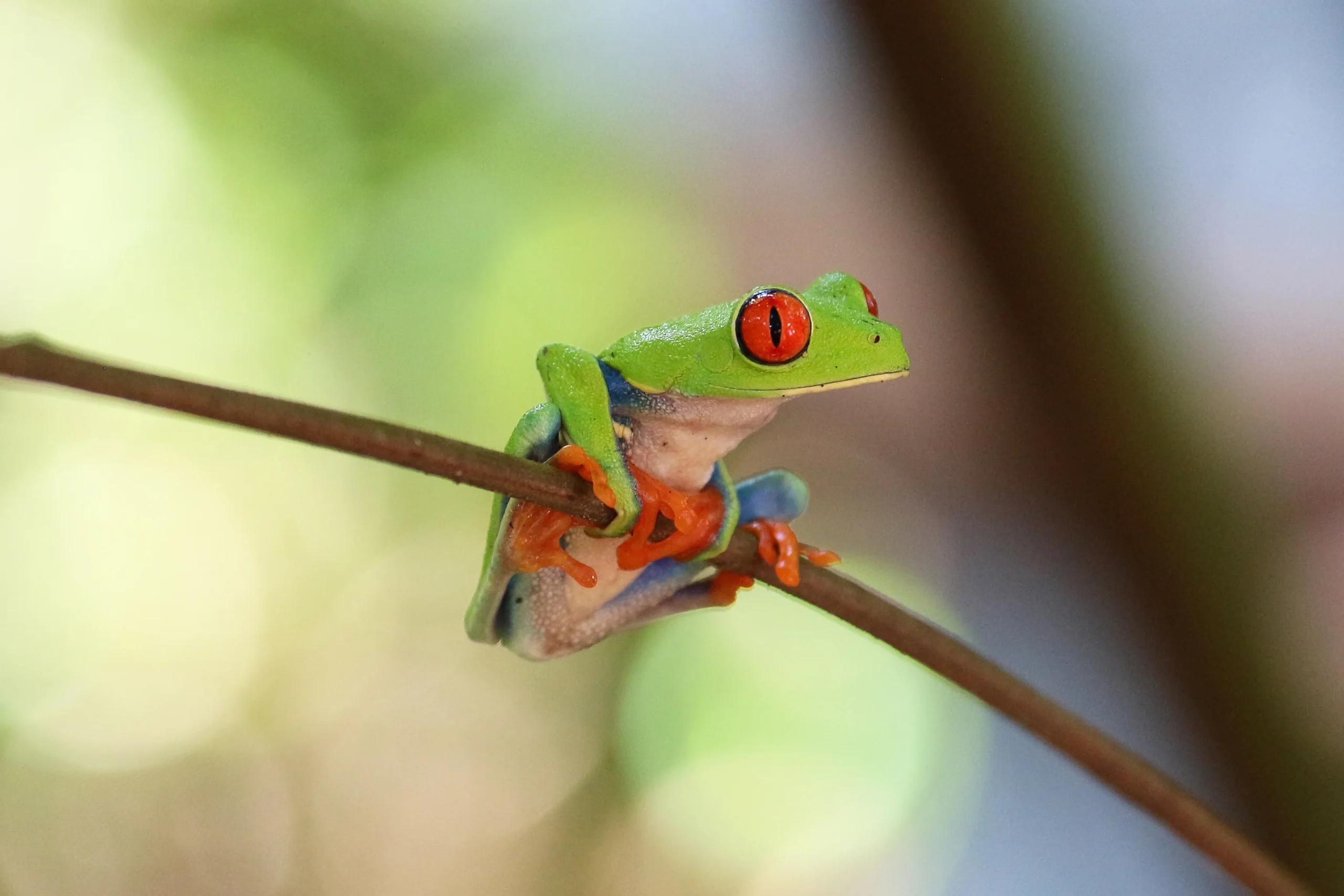
The red-eyed tree frog is one of Costa Rica’s best-known rainforest images, with its green body, scarlet eyes and blue-and-yellow flanks. In real forests it usually spends the day asleep on the underside of a leaf, eyes closed and legs tucked in, and becomes active at night, especially around ponds and slow water after rain.
Night walks at lowland rainforest lodges are the best way to see one. In Arenal, the family-owned Arenal Oasis Eco Lodge runs a dusk night walk on its own refuge that includes what it calls a Frog Song session, and its natural history walk passes stations for frogs, snakes and lizards. Nearby, Catarata Eco Lodge arranges night walks for nocturnal wildlife. Do not handle a frog to reveal its colorful legs or ask anyone to reposition it, and use light briefly and from a distance. Our Arenal and Río Celeste guide covers the wider area.
Glass frogs: small windows into a remarkable body
Many glass frogs have translucent undersides through which you can see the heart, gut and other organs. These small, delicate frogs live in moist vegetation over streams, where males call at night and females lay eggs on leaves that hang above the water. In some species the male guards the eggs. Identifying individual species usually requires expertise.
The appeal of a glass frog is not that it can be lifted and turned over. With a guide and soft lighting, you may watch one perched above a stream, sometimes beside its eggs. Stay on established paths rather than trampling streamside vegetation to get closer, because that is exactly the habitat the frogs need.
Poison frogs and the meaning of warning colors
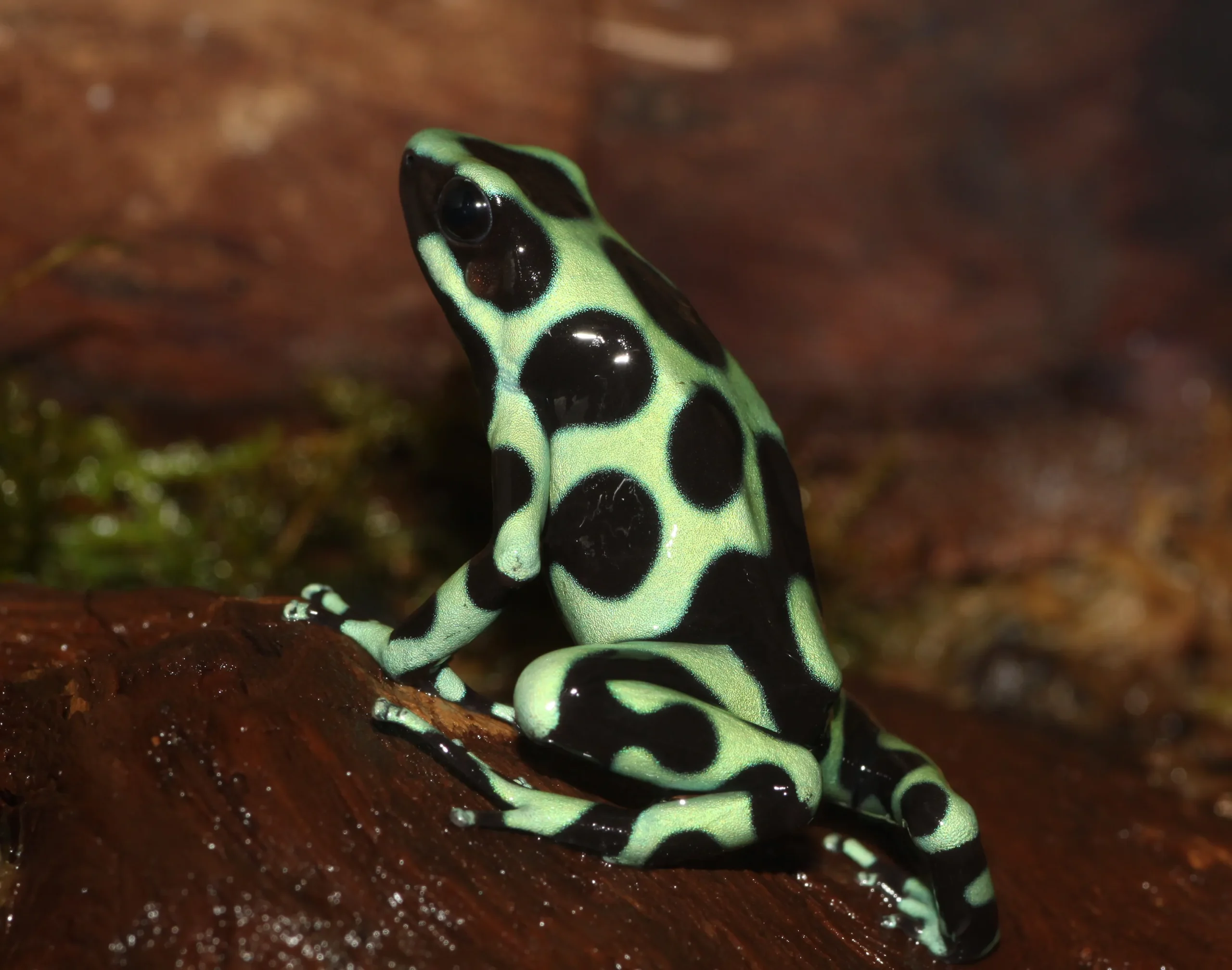
Several colorful poison frogs live in Costa Rica. The red-and-blue strawberry poison frog is a favorite in the Caribbean lowlands, where it is a common member of the leaf-litter community, and the green-and-black poison frog also occurs in wet lowland forest. Their bright patterns advertise chemical defenses to predators. In the south Caribbean, our review of Almonds and Corals, a tented lodge inside the Gandoca-Manzanillo Wildlife Refuge, mentions the region’s poison frogs along its forest walks, and in Tortuguero, Tortuga Lodge and Gardens highlights poison dart frogs on its early-morning and late-afternoon trails.
Wild poison frogs should not be touched. The popular idea that every colorful frog is lethal is misleading, but treating any amphibian as a handling opportunity is equally unwise. These frogs are easiest to appreciate by slowing down and scanning the forest floor near buttress roots and fallen palm fronds.
Why amphibian conservation matters
Amphibians are sensitive indicators of environmental change, and Costa Rica has been central to research on tropical declines. The most famous loss is the golden toad, once found only in the Monteverde area; the Monteverde Cloud Forest Reserve notes that it vanished in the late 1980s and has become a global symbol of cloud forest fragility.
Declines are not limited to the highlands. A 35-year study at La Selva published in PNAS found that the density of leaf-litter amphibians and reptiles in primary forest fell by about 75 percent between 1970 and 2005, and linked the decline to climate-driven reductions in leaf litter rather than to the chytrid fungus. A healthy-looking forest does not always mean every population is doing well. La Selva Research Station itself records 48 amphibian and 87 reptile species on its 1,600 hectares.
Visitors can help by staying on trails, keeping sunscreen and repellent off their hands near water, and refusing tours that collect or pose animals.
Iguanas, basilisks and lizards
Green iguanas and black spiny-tailed iguanas are among the most visible reptiles in Costa Rica. Large iguanas bask in riverside trees or on sunny rocks, and some have become used to people around hotels and beaches. They are still wild animals, and feeding them is neither necessary nor beneficial.
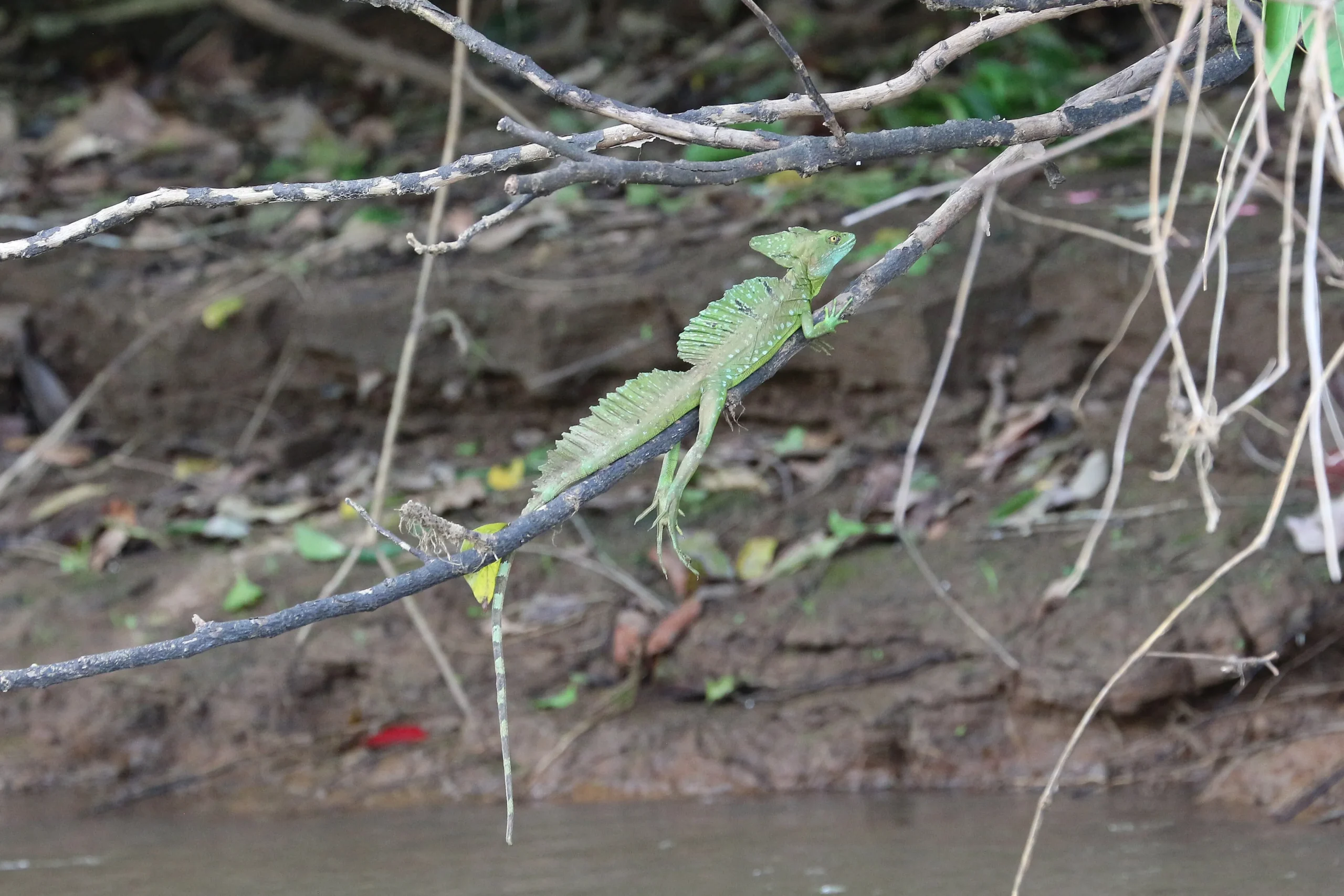
Basilisks are famous for briefly running across the water’s surface on their hind legs, which earned them the nickname “Jesus Christ lizard.” The trick depends on speed, large hind feet and the right conditions, and it lasts only a few strides. Look for basilisks along streams and riverbanks, especially in the Caribbean and Sarapiquí lowlands.
Smaller anoles and geckos use gardens, tree trunks and buildings. Even a lodge walkway can show you how different lizards divide sun, shade and shelter.
Snakes: respect without panic
Snakes are far more diverse, and far less dangerous, than many visitors assume. The University of Costa Rica’s Clodomiro Picado Institute, which makes the country’s antivenom, reports in its 2019 book Serpientes venenosas de Costa Rica that 144 snake species have been recorded in Costa Rica and only 24 are venomous and capable of harming people. The same book notes that any single locality rarely has more than 35 snake species, of which no more than five or six are dangerous, and that snakes are protected under the national Wildlife Conservation Law (Law 7317).
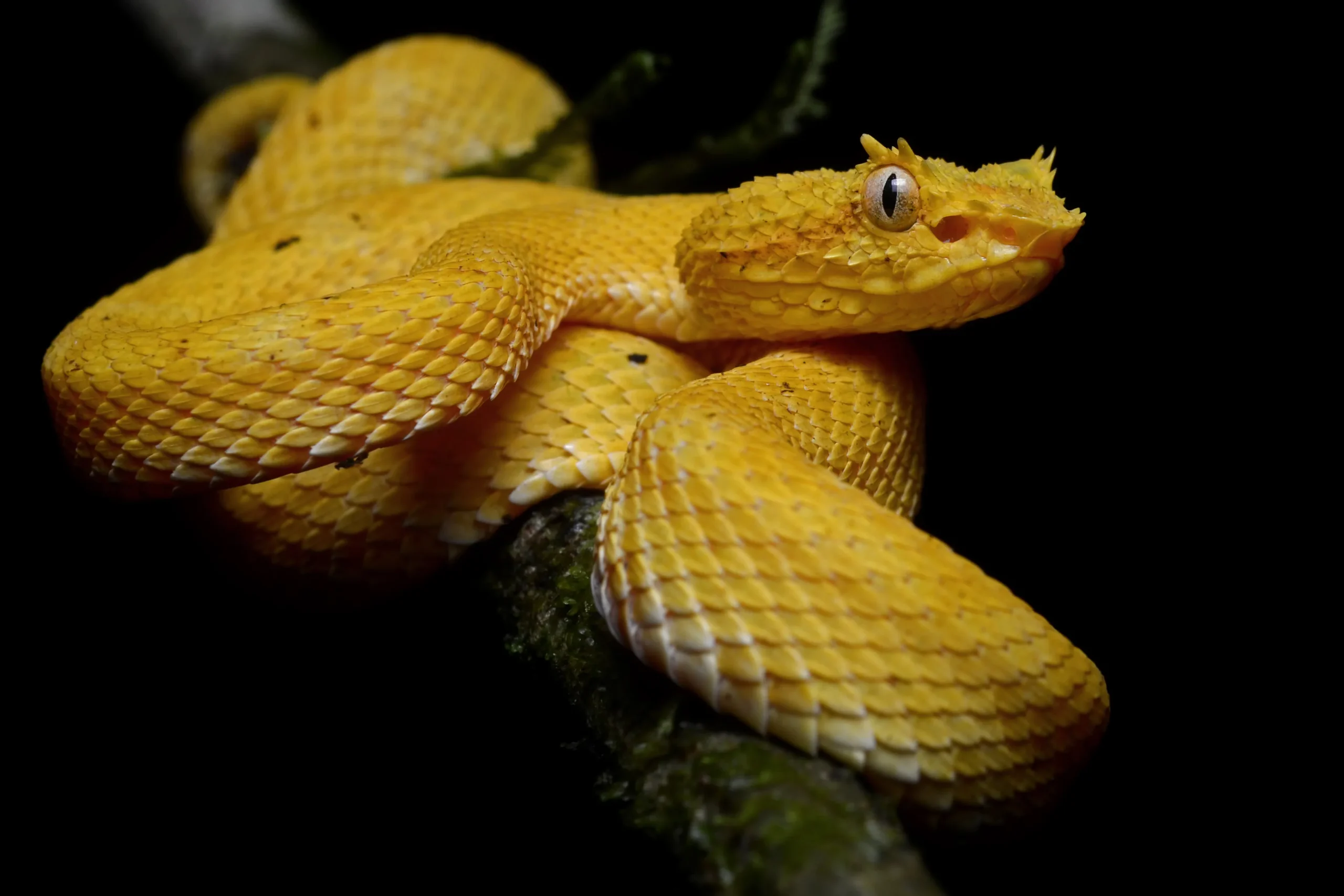
The institute’s visitor leaflet on venomous snakes explains that the viper family causes most bites; it includes the fer-de-lance (terciopelo), the hognosed pitviper and the rattlesnake. Coral snakes cause very few bites, and harmless mimics look similar, so color patterns should not be your only basis for identification. The eyelash viper, which often rests on vegetation at eye level, is one reason guides tell you to look before you grab a branch; the tourism board lists it among the snakes of Cahuita National Park.
The best precautions are practical: carry a flashlight on dark paths, wear closed shoes or boots on forest trails, watch where you put your hands and feet, and never reach into vegetation, holes or woodpiles without looking. Do not try to touch, catch or move a snake. If one is on a path, give it space and let staff move it if necessary. The institute also publishes a free ICP App for iOS and Android that helps identify venomous species by province and explains what to do after a bite.
If someone is bitten, the institute’s guidance is clear. Stay calm, keep the bitten limb still if possible and get the person to the nearest medical center immediately, calling 9-1-1. Do not apply a tourniquet, cut the wound, suck the venom, use ice, creams or home remedies, or try to kill or catch the snake. Doctors identify the type of bite from the symptoms. Remote lodges should be able to tell you their emergency transport plan, and it is reasonable to ask before you book.
Crocodiles and caimans
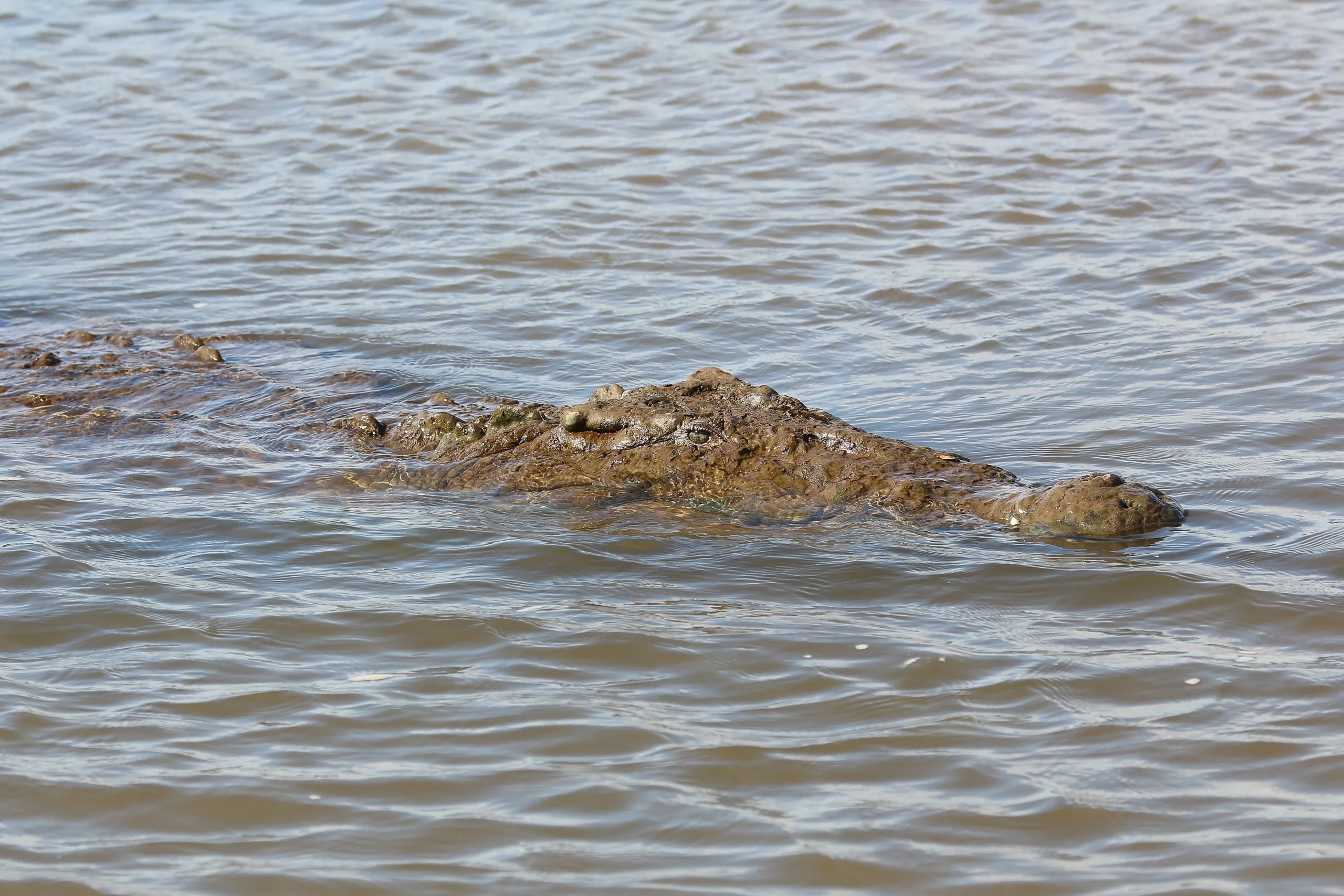
The American crocodile lives in rivers, estuaries and coastal wetlands, and the Río Grande de Tárcoles in the Central Pacific is the best-known place to see it. A University of Costa Rica study in the Revista de Biología Tropical estimated a high density of about 19 crocodiles per kilometer of river during the 1989 and 1990 dry seasons. The smaller spectacled caiman lives in freshwater wetlands and slow channels, including Tortuguero and Caño Negro. Size, head shape and habitat help guides tell them apart.
Never swim where crocodiles may be present, approach one on a bank or feed them. Choose boat tours that keep their distance and do not bait animals. In Guanacaste, the tourism board’s Palo Verde National Park page lists crocodiles, iguanas, boas and rattlesnakes among the park’s reptiles and notes that the Tempisque and Bebedero rivers are good for seeing crocodiles and turtles at high tide. Tenorio Lodge arranges trips to Palo Verde and Caño Negro. A large fire burned part of Palo Verde’s wetland in May and June 2026 and temporarily closed the park, so check its current status first.
Sea turtles and freshwater turtles
Sea turtles spend nearly all their lives at sea and come ashore only to nest. Tortuguero is the headline destination: the Sea Turtle Conservancy describes its black-sand beach as holding the largest green turtle nesting population in the Atlantic, with nesting from June through November. Pacific beaches such as Ostional host other species and very different nesting spectacles, and access to all of them is regulated.
Our sea turtle nesting guide explains seasons, beaches and how to join a guided watch responsibly. On rivers and lagoons, freshwater turtles often bask on logs and slide into the water if a boat comes too close, so quiet approaches give the best views.
Where to see reptiles and amphibians
| Region | Highlights | How to visit | Lodges to consider |
|---|---|---|---|
| Sarapiquí and the Caribbean lowlands | Strawberry poison frogs, red-eyed tree frogs, basilisks, vipers | Guided day and night walks at lodges and La Selva | Selva Verde, La Selva |
| Arenal | Red-eyed and other tree frogs, snakes, lizards | Lodge night walks; trails in private refuges | Arenal Oasis Eco Lodge, Leaves and Lizards |
| Tortuguero | Caimans, poison frogs, basilisks, nesting sea turtles | Canal boat tours; licensed guided turtle walks in season | Tortuga Lodge and Gardens, Pachira Lodge |
| Cahuita and the south Caribbean | Eyelash vipers, hognosed pitvipers, iguanas, poison frogs | Maintained park trails; community guides | Cabinas Caribe Luna, Almonds and Corals |
| Osa Peninsula and Golfo Dulce | Lowland frogs, dart frogs, snakes, crocodiles at river mouths | Guided walks on private reserves; Corcovado by day only | Bosque del Río Tigre, Saladero Lodge |
| Monteverde and the highlands | Cloud forest frogs and salamanders | Small guided night walks in the reserves | Monteverde Lodge and Gardens |
| Tárcoles, Palo Verde and Caño Negro | American crocodiles, caimans, iguanas, turtles | Bridges, viewpoints and responsible boat tours | Tenorio Lodge |
Sarapiquí. Selva Verde protects about 500 acres of lowland forest, and La Selva runs guided night walks at its biological station.
Arenal. Leaves and Lizards is a small farm lodge on 26 acres whose owners, after buying the former dairy pasture in 2006, planted about 3,000 trees and worked to restore the surrounding forest, a good example of how regrowth brings frogs and lizards back.
Caribbean coast. Cabinas Caribe Luna is a simple, walkable base in Cahuita village, about 10 minutes from the national park. Pachira Lodge in Tortuguero sits on the main canal and offers canoe and kayak outings, the quiet way to look for caimans and basilisks along the banks. Our Tortuguero National Park guide and Caribbean eco-lodges page have more options.
Osa and Golfo Dulce. SINAC does not allow night walks inside Corcovado National Park, so after-dark frog and snake watching happens on private land. Bosque del Río Tigre lists dart frogs among the wildlife on its reserve, and our review of Saladero Lodge describes tree frogs singing around the property at night. See our Corcovado and Osa guide.
Monteverde. The Monteverde Cloud Forest Reserve runs small guided night walks, capped at 10 people, where tree frogs and salamanders are among the animals you may see. Highland species differ sharply from lowland ones. Our Monteverde guide has details.
Choosing a responsible night walk
Ask about group size, which trails are used, the guide’s experience and how they limit light disturbance. A good guide explains frog calls, insects and reptile habitats without handling animals. Night walks should not involve tearing leaves apart, flipping logs carelessly or collecting animals for close-up photos.
Wear closed shoes, bring a rain layer and follow instructions about flash. Wildlife is often most active after heavy rain, but slippery trails and rising streams call for judgment. The goal is not to find every colorful animal in an hour. It is to understand a forest after dark.
Temporary pools, wet banks and slow streams are critical breeding habitat. Repeated trampling of the same bank or moving vegetation to reveal eggs damages exactly what visitors came to see, so small groups on defined routes are better for frogs and for you. Our wildlife watching guide has more on choosing ethical tours.
Frequently asked questions
Are Costa Rica's brightly colored frogs dangerous?
Some carry chemical defenses, but the simple rule is never to handle wild frogs of any color. Your hands can harm them as much as their skin chemicals might bother you.
How many venomous snakes live in Costa Rica?
The University of Costa Rica's Clodomiro Picado Institute counts about two dozen venomous species out of roughly 140 snake species, and its 2019 book gives 24 of 144. Most snakes you might see are harmless, and in any one area only a handful of dangerous species occur.
What should I do if someone is bitten by a snake?
Keep the person calm, keep the limb still if possible and get to the nearest medical center at once, calling 9-1-1. Do not use a tourniquet, cut or suck the wound, apply ice or try to catch the snake. Costa Rica produces its own antivenom, and doctors judge treatment from symptoms.
Are snakes commonly seen on lodge grounds?
They can occur in natural habitats, but sightings vary widely and most snakes avoid people. Use a flashlight at night, wear closed shoes on trails and follow staff guidance.
Where can I see red-eyed tree frogs?
Warm, wet lowland forests are best, including Sarapiquí, Arenal, Tortuguero and the Caribbean coast. A guided night walk after rain gives the best chance.
What is the safest way to see crocodiles?
Use designated viewpoints, such as the bridge over the Río Grande de Tárcoles, or boat tours that keep their distance and never feed or bait the animals. Do not swim in rivers or estuaries where crocodiles may live.
Can I touch iguanas or basilisks around hotels?
No. Even habituated lizards are wild animals, and feeding or touching them changes their behavior and can spread disease. Watch them from a few meters away.