
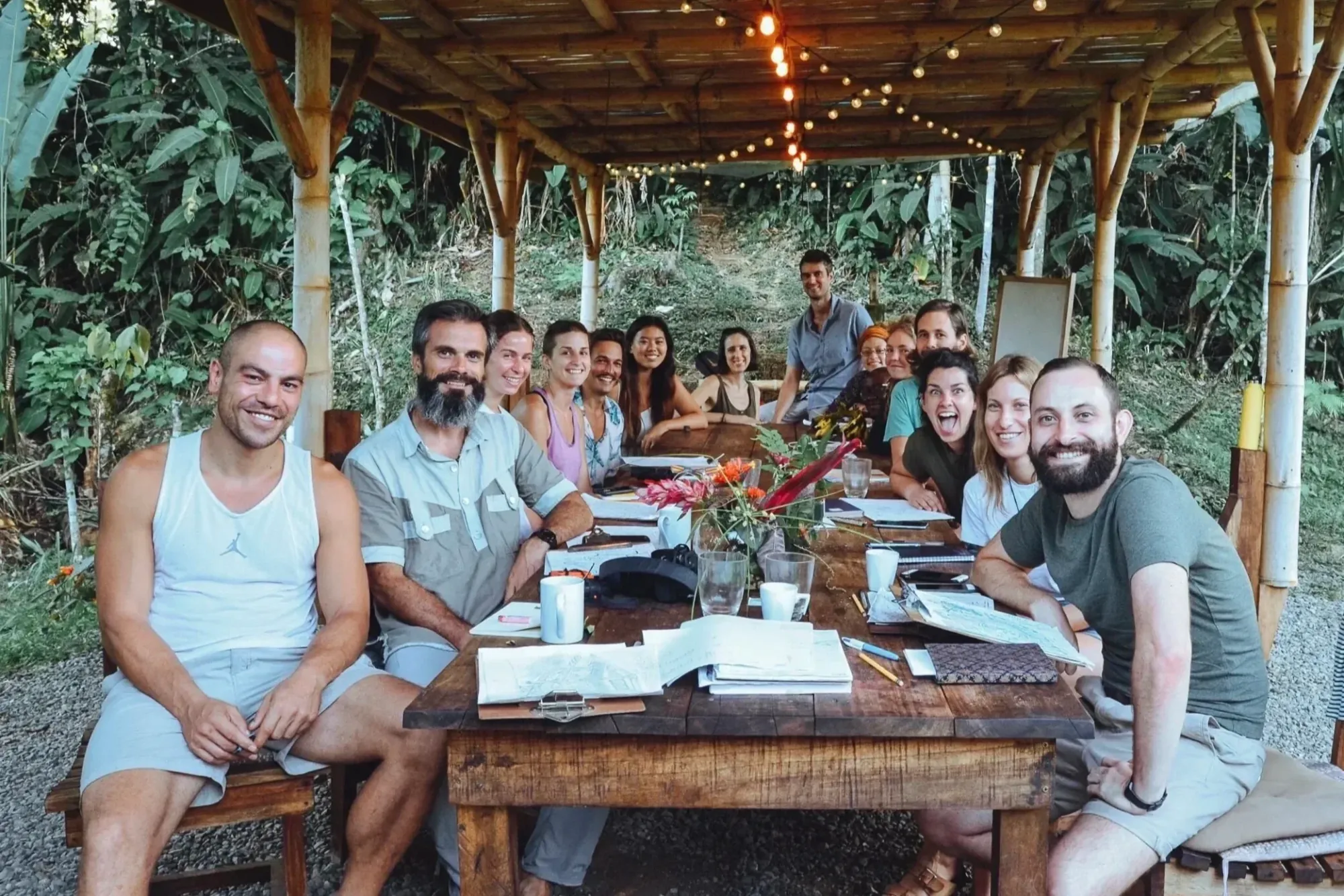
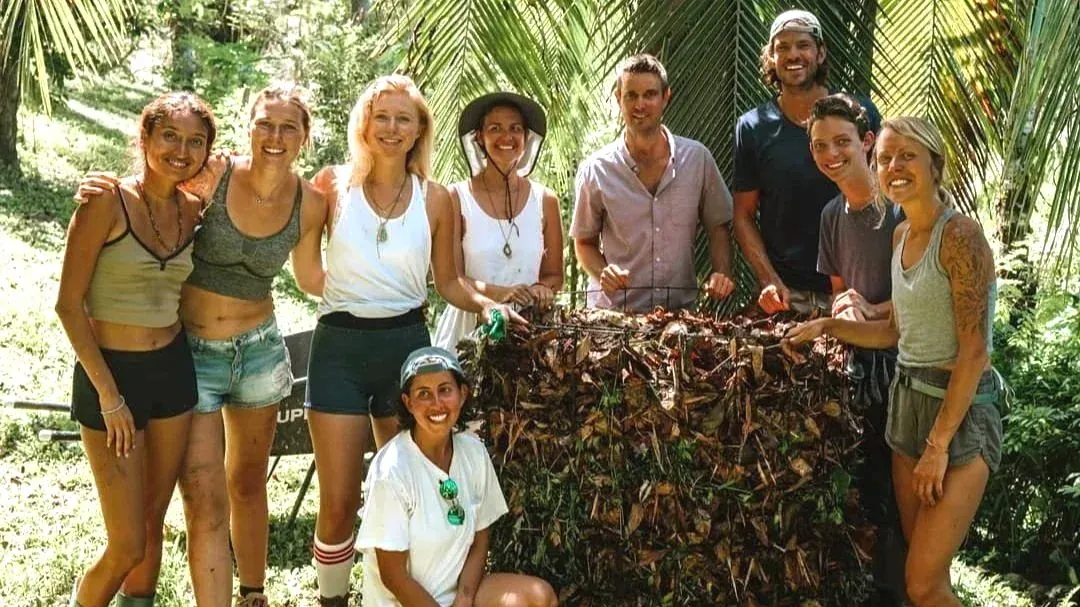

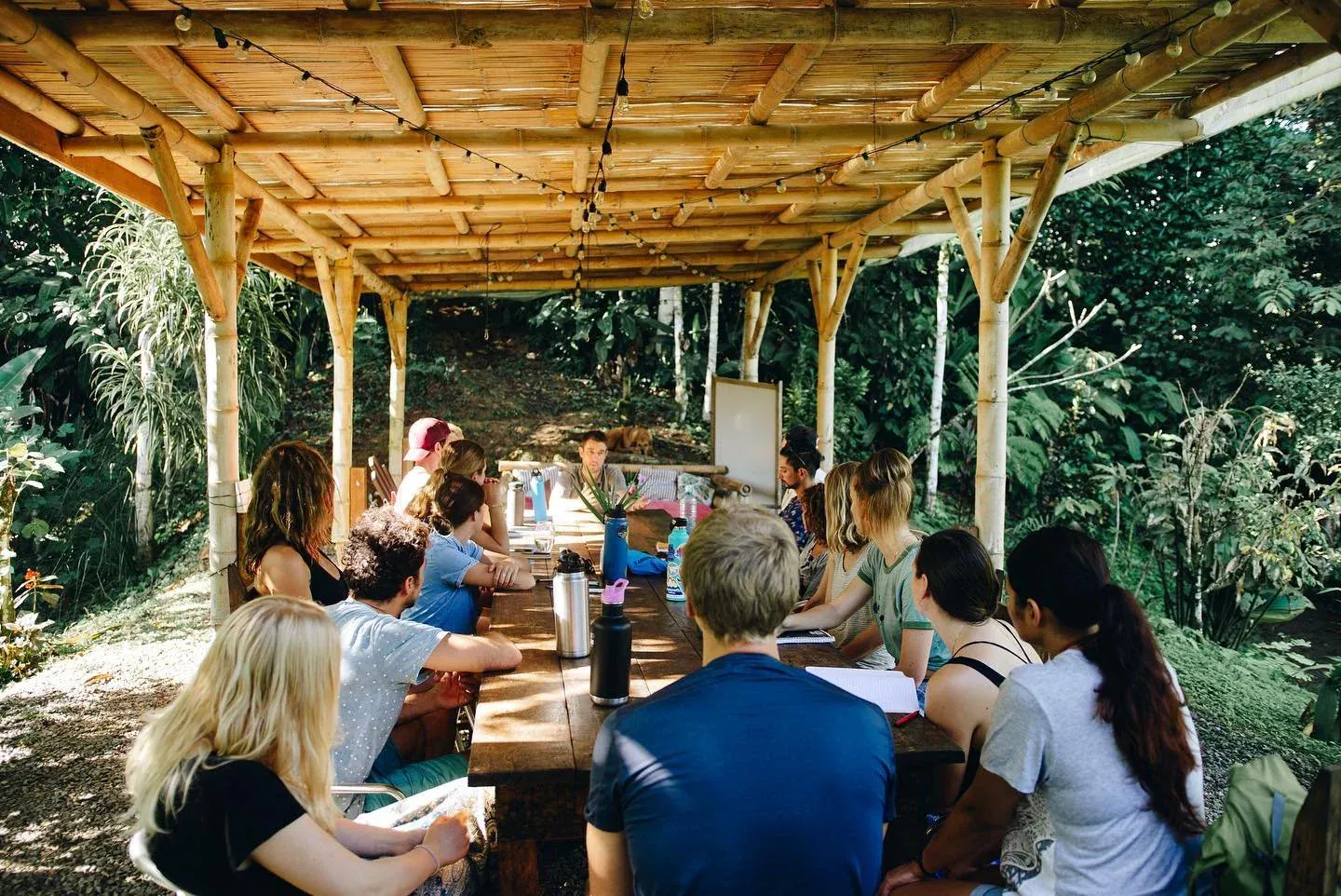
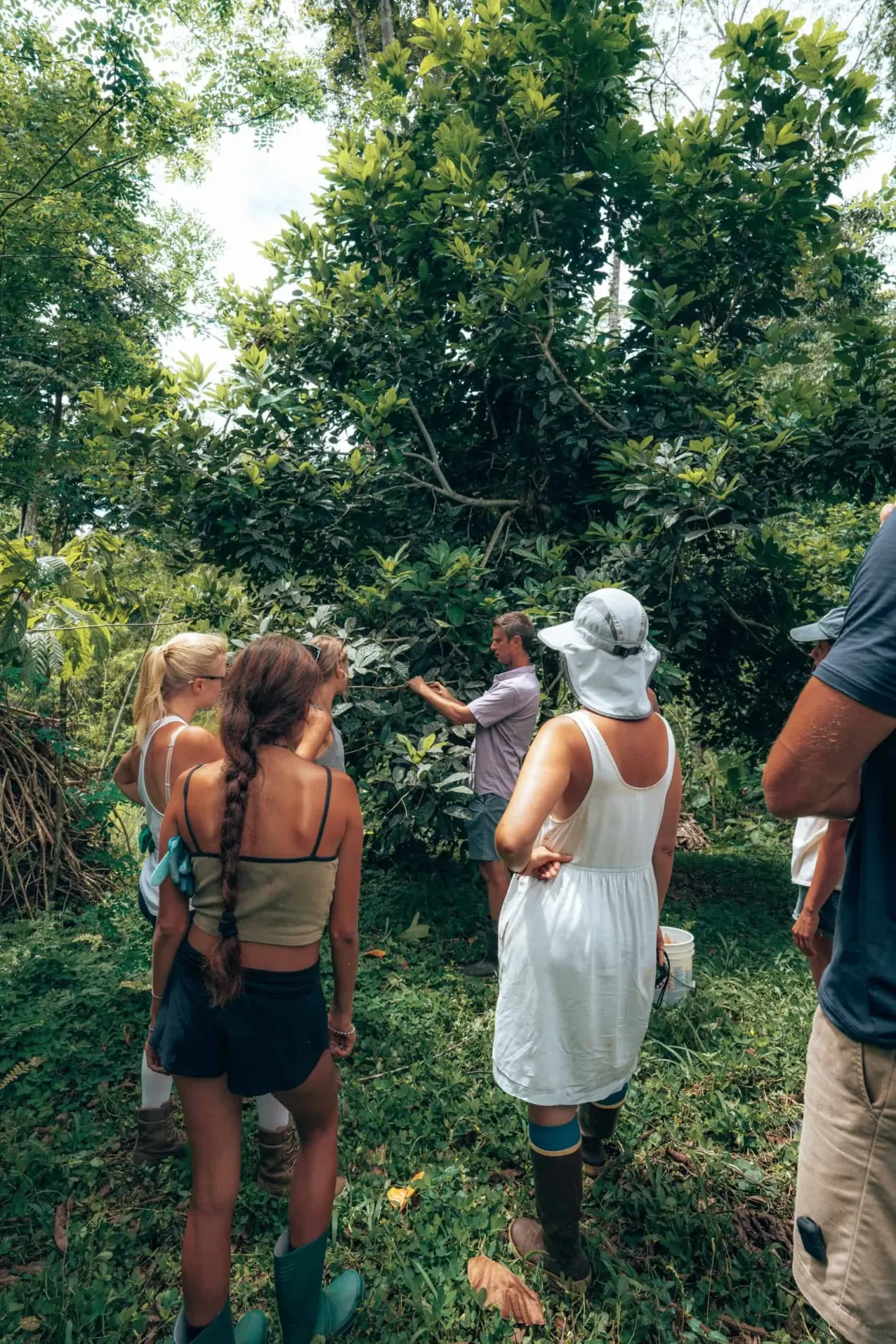
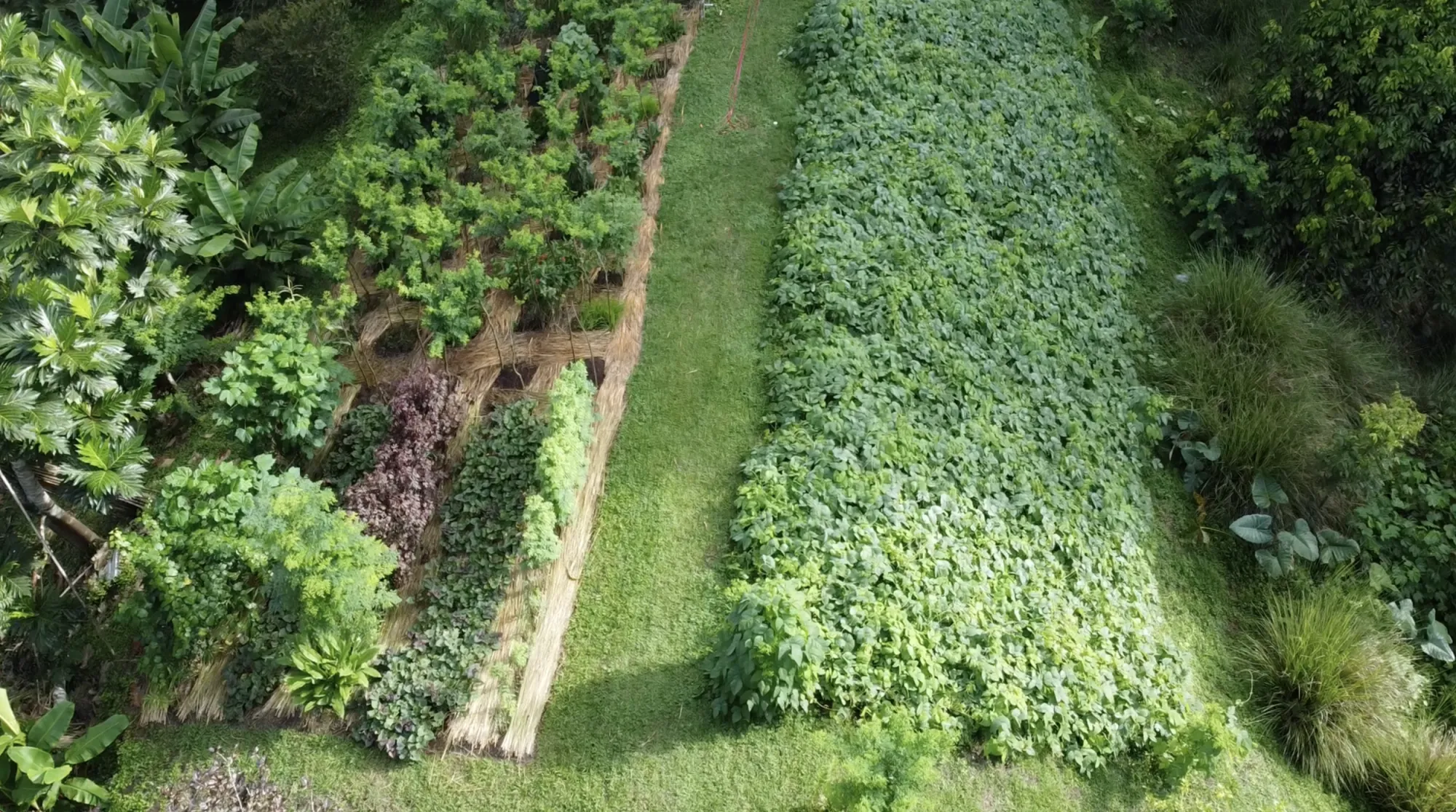
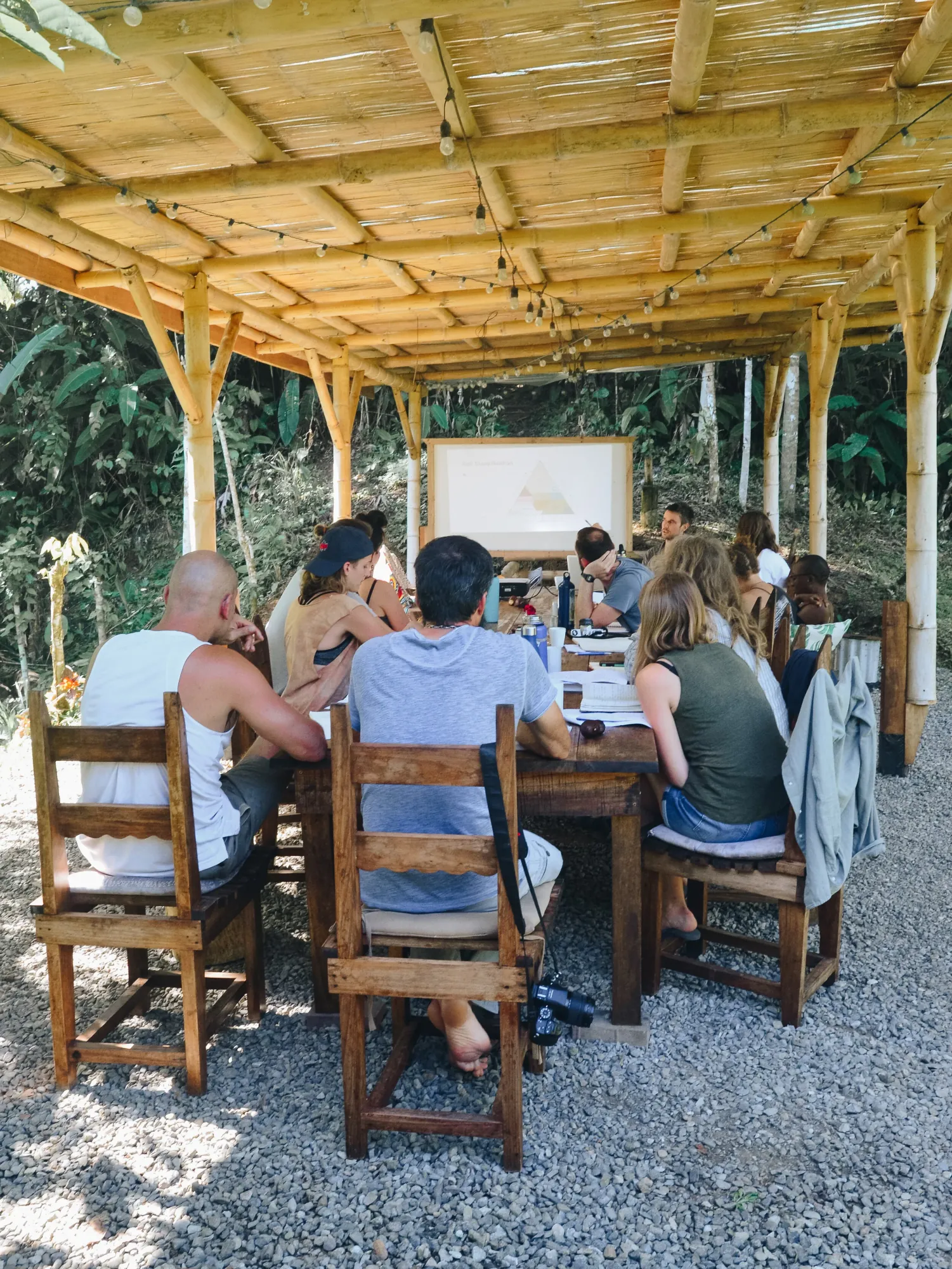
Finca Tierra is an off-grid permaculture farm and education center in the forest above Playa Cocles, just south of Puerto Viejo on Costa Rica’s southern Caribbean coast. Founded in 2008 by Ian Macaulay and Ana Gaspar Aguerri, it’s where more than 1,000 students from over 40 countries have learned to design food forests, water systems and bamboo buildings. You stay here through a course or a week-long garden-and-kitchen retreat, sleeping in a hand-built bamboo cabin and eating meals largely grown on the land.
At a glance
| Location | Calle Olé Caribe, Playa Cocles, about 15 to 20 minutes by taxi from Puerto Viejo de Talamanca |
|---|---|
| Style | Working off-grid permaculture farm; stays only through courses and scheduled retreats |
| Setting | Food forest, gardens and Caribbean lowland rainforest in a biological corridor |
| Best for | Aspiring homesteaders, gardeners, sustainability professionals, curious food lovers |
| Getting there | About 4 to 5 hours from San José by shuttle or bus to Puerto Viejo, then a 4×4 taxi |
| CST status | Not in the official CST directory (checked 2026-Oct-21) |
Where it is
The farm’s arrival guide gives its location as Playa Cocles, on Calle Olé Caribe, and suggests a 15 to 20 minute taxi from Puerto Viejo. Shuttles and the public bus run from San José to Puerto Viejo in roughly four to five hours, and some buses stop at the Olé Caribe junction, about 3 kilometers from the farm. A 4×4 is recommended for the final access road if you drive yourself.
This stretch of coast is one of the country’s richest for wildlife. The Gandoca-Manzanillo National Wildlife Refuge begins at the mouth of the Cocles River and runs south to the Panama border; SINAC says it protects wetlands, reefs and nesting beaches for leatherback, loggerhead, green and hawksbill turtles. Cahuita National Park lies a short drive north.
The people and the idea
Husband and wife Ian Macaulay and Ana Gaspar Aguerri built Finca Tierra around permaculture, a design approach that arranges food, water, energy and buildings so they support each other with little outside input. According to the farm’s homepage, the property has been developed, tested and refined as a working off-grid household system since 2008. The farm also partners with SEED, a 370-acre ecovillage and reforestation project in the hills above Cahuita.
How you can stay
Finca Tierra isn’t a lodge you book for a night or two. Overnight stays come in two forms:
- Permaculture Design Course: a 15-day residential course following the internationally recognized 72-hour PDC curriculum, limited to 12 students. Accommodation, all meals, a field trip and the certificate are included. The course page lists sessions through March 2027.
- Plant, Harvest, Cook Retreat: a seven-day, six-night week for people who want the farm life without the full course. The retreat page says only eight private cabins are available each week, and every session is optional.
There’s also a self-paced online course for those who can’t travel.
Bamboo cabins and the bathhouse
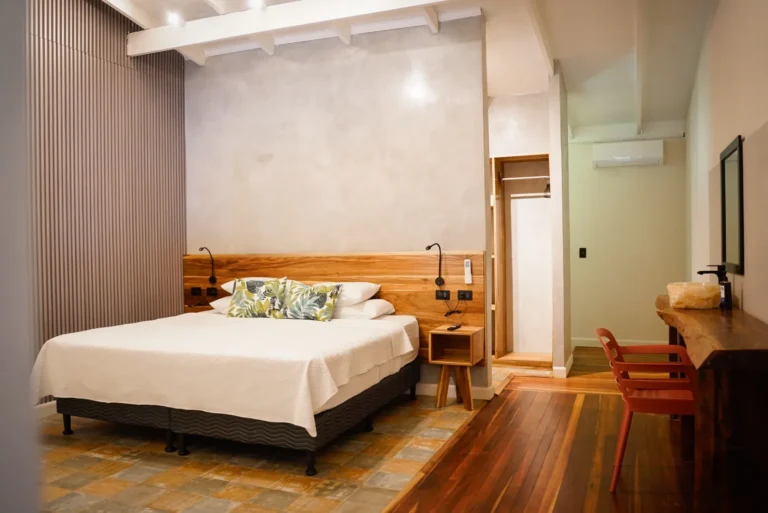
Guests sleep in private, hand-built bamboo cabins with a queen or twin beds, mosquito nets and natural linens. There’s no electricity inside the cabins: they’re lit by lanterns, and devices are charged in the main building. Cabins are cleaned daily.
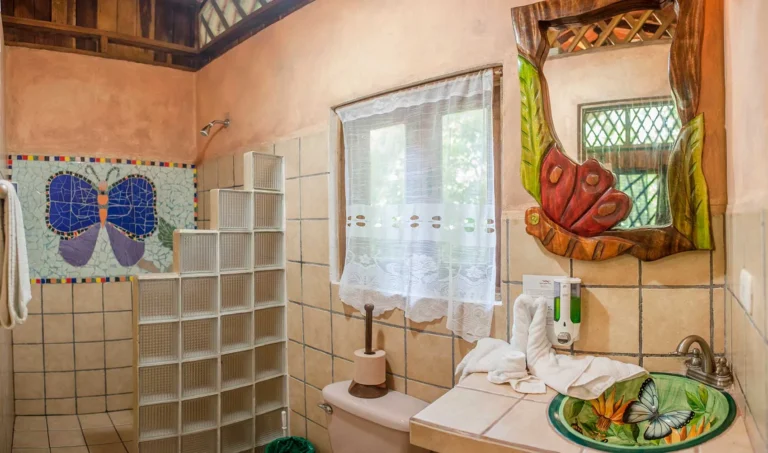
A short walk away, a shared solar bathhouse has four rainwater showers with warm water, five flush toilets and an open-sky roofline. Eco-friendly shampoo, conditioner and soap are provided. This is comfortable camping-style living rather than hotel rooms, and it suits people who see that as part of the point.
A week on the farm
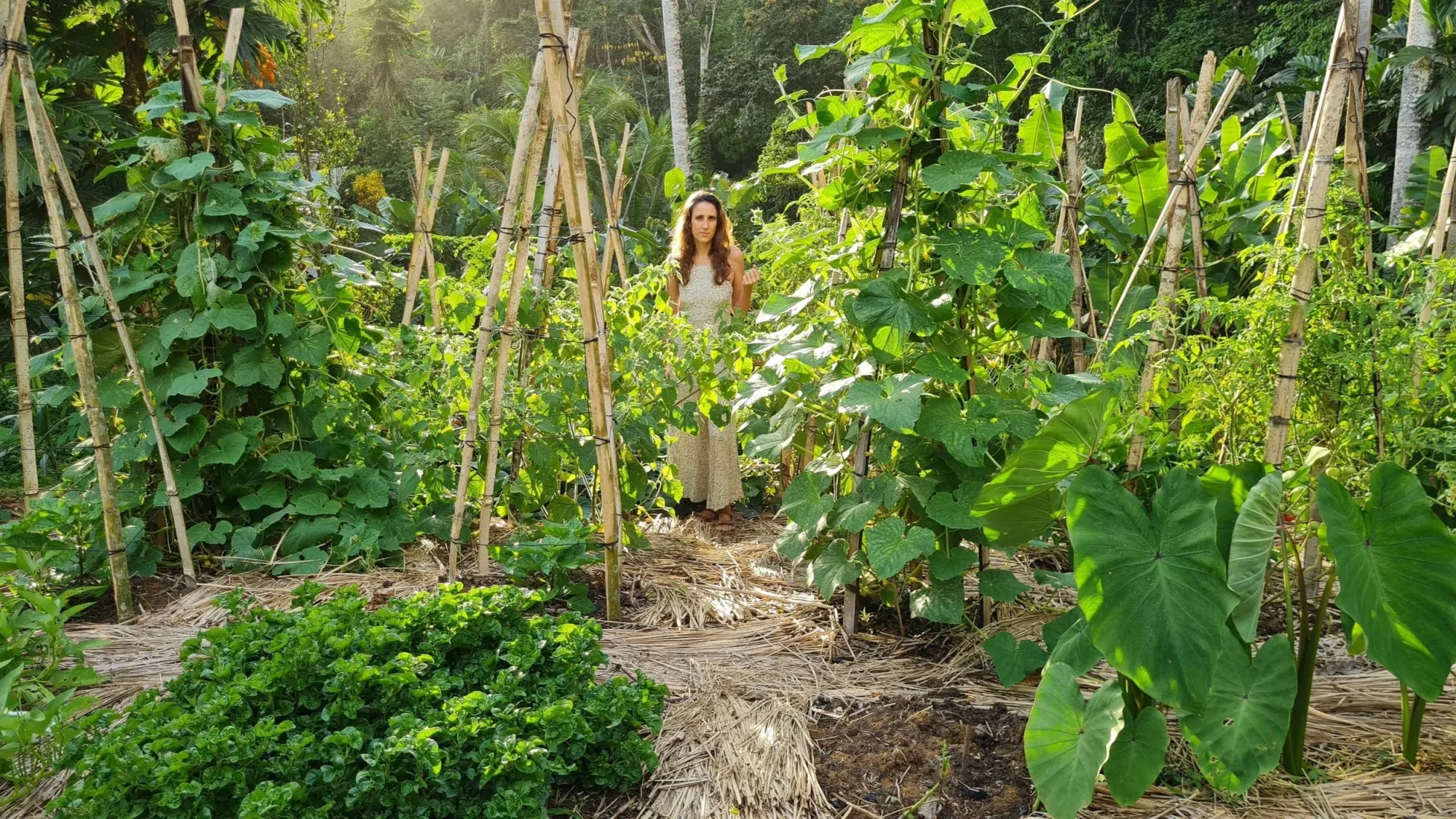
On the retreat, mornings start in the gardens and food forest: planting greens and herbs, harvesting roots and fruit, tasting unfamiliar crops and, if you like, learning to handle a machete. Late mornings move to the open kitchen, where cooks work over fire with the day’s harvest. The retreat page describes roasting cacao for stone-ground chocolate, pressing coconut milk and sugarcane juice, and charring plantains, cassava, taro and sweet potato.
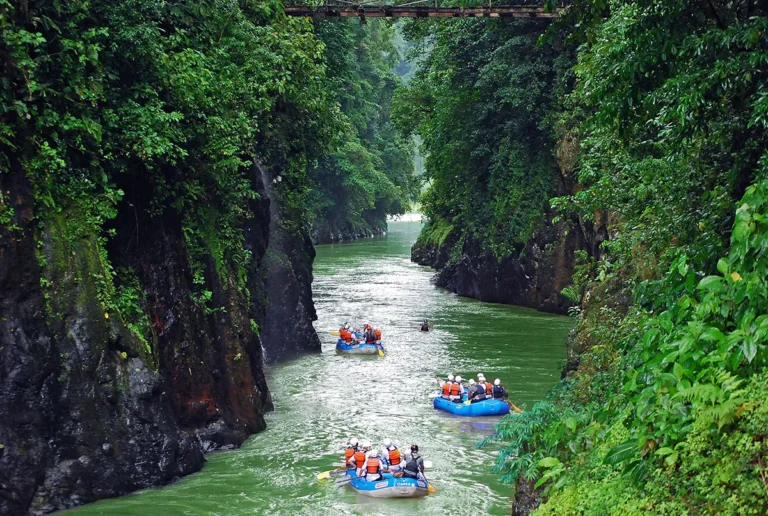
Afternoons are free. A daily shuttle runs to the beach and Puerto Viejo, there’s a natural pond for swimming, and local partners can arrange surf lessons, kayaking or snorkeling, wildlife walks, massages and night hikes. Evenings center on dinner and a fire.
Food
Meals are primarily plant-based and cooked from the land. The homepage lists tropical roots, fruits and vegetables, perennial crops, homemade flours, coconut milk, ferments, honey and chocolate among the foods produced or prepared on the farm, supplemented by local growers. Earlier descriptions of Finca Tierra’s kitchen noted Afro-Caribbean influences, which fit its place on this coast.
The systems you’ll see
Finca Tierra’s sustainability isn’t a policy page; it’s the curriculum. The course page lists the working systems students learn inside:
- mature food forests, staple-crop areas and biointensive gardens
- rainwater harvesting and solar energy
- greywater and biological waste systems, composting and biochar
- bamboo buildings
- small-scale animal and aquatic systems
- a farm-to-table kitchen, with “Diet Design” training that links land use to calories, protein and household food needs
Finca Tierra isn’t in the official CST directory, so the descriptions above are the farm’s own; the difference is that course students see every one of these systems working.
Wildlife
The retreat page lists the farm’s regular neighbors as sloths, toucans, great green macaws, howler, spider and capuchin monkeys, anteaters, blue morpho butterflies and poison dart frogs. Great green macaws are endangered and a real treat on this coast; as with all wildlife, sightings aren’t guaranteed.
Who it suits
Finca Tierra is ideal for anyone thinking seriously about growing food, building with natural materials or living off-grid, and for travelers who’d rather spend a week learning in a garden than lying by a pool. The retreat is a gentler option for couples and solo travelers who simply love food and plants.
It doesn’t work for short or spontaneous stays, and the lantern-lit cabins and shared bathhouse won’t suit everyone. If you want a conventional room nearby, look at Geckoes Lodge in Cocles or Azania Bungalows, which past students have used for nights before a course. Read more about Finca Tierra, browse our Caribbean eco-lodges, or see our guide to organic farm stays and permaculture in Costa Rica.
Frequently asked questions
Can I book Finca Tierra for just a few nights?
Not as a regular guest. Stays are tied to the 15-day Permaculture Design Course or the seven-day Plant, Harvest, Cook Retreat, both on set dates. Contact the farm about anything else.
Do I need gardening experience for the retreat?
No. The morning garden and cooking sessions are optional, and the farm says you can join fully, partly, or simply watch with a coffee.
Is there electricity?
The farm runs on its own solar system, but there's no power inside the cabins. You charge phones and cameras in the main building, and cabins are lit by lanterns.
How far is the beach?
Playa Cocles is close by, and the retreat includes a daily afternoon shuttle to the beach and Puerto Viejo, leaving at 1:30 p.m. and returning at 5:30 p.m.