


Tiskita is a family-run lodge inside an 800-acre private reserve at the far southern end of Costa Rica’s Pacific coast, near Punta Banco and the Panama border. It began as a tropical fruit farm in the 1970s, welcomed its first guests in 1987, and has since regrown much of its cattle pasture into forest and helped bring scarlet macaws back to the coast. Come for the trails, the orchard, the quiet beaches and full-board meals, and accept that getting there takes most of a day.
At a glance
| Location | Near Punta Banco, south of Pavones, at the mouth of the Golfo Dulce |
|---|---|
| Style | Small full-board lodge with shared-porch casitas and standalone bungalows |
| Setting | 800-acre private reserve of primary and regrown rainforest, orchard, waterfall and beach |
| Best for | Nature lovers, birders, families, yoga groups and surfers bound for Pavones |
| Getting there | Flight to Golfito then about 1.5 hours by taxi, or about 8 hours by road from San José |
| CST status | Not in the official CST directory on 2026-Oct-21 |
Where it is
Tiskita sits where the road runs out, on the coast below Pavones, facing the mouth of the Golfo Dulce. The lodge’s getting here page recommends flying from San José to Golfito (about 50 minutes) and then taking a taxi south along the coast for about an hour and a half. A more scenic option is to fly to Puerto Jiménez on the Osa Peninsula and cross the gulf by boat in about an hour, best in the dry-season mornings before the wind picks up. Driving from San José takes seven to eight hours via Highway 27 and the coastal highway. The FAQ warns that the last 6 km from Pavones are unpaved and usually the roughest part of the trip, and that the last fuel stop is at Río Claro.
There’s no bank or ATM nearby, so bring cash.
How a fruit farm became a forest
The family’s history page tells the story in detail. Peter Aspinall, who grew up exploring Costa Rica’s forests and rivers, homesteaded land near Punta Banco in the early 1970s, meaning to grow tropical fruit. He later bought the four properties that became Tiskita, much of it cleared cattle pasture with patches of original rainforest. With his father he built a grass airstrip, since there was no real road.
Lisbeth Núñez joined him around 1980. Shipping perishable fruit from so remote a farm proved impractical, and by 1987 Tiskita was welcoming its first guests: scientists, friends and early nature travelers. Meanwhile Peter kept planting native hardwoods and “wildlife trees” chosen to draw birds and monkeys back into the old pasture. The lodge says more than 90 percent of the property is now conserved as forest. Peter and Lisbeth still run it with the next generation.
Cabins
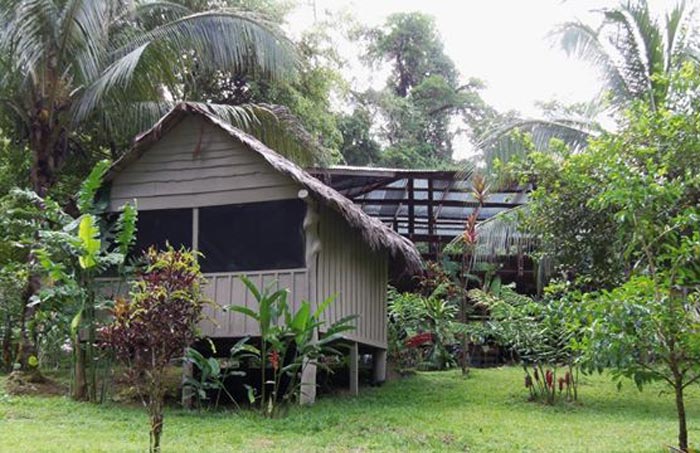
Each cabin is a little different, and the lodge describes each one individually:
- Superior Casitas are larger cabins split into private rooms with private bathrooms and a shared porch. Howler has three rooms, each with its own porch area, closest to the lodge. Toucan has four rooms and a big shared porch with ocean views. Black Iguana has two rooms and can be reached by car, with a ramp, which makes it the best choice for small children or anyone who has trouble with steps.
- Bungalows are standalone cabins. Kinkajou is one of the originals, near the yoga deck and down a long flight of steps. Agouti and Jaguarundi are set up for couples with king beds. Titi has the most space, two semi-outdoor bathrooms and no Wi-Fi.
- Jungle rooms and a family house with a kitchen are offered mainly in the green season.
Bathrooms are mostly outdoor or semi-outdoor, with solar-heated showers and spring-fed water. There are no televisions, and Wi-Fi reaches only some cabins.
Food and the orchard
Stays are full board, with family-style meals in the open-air dining area and house-made jams, juices and tortillas. The kitchen asks for dietary needs in advance, and drinks come from an honor bar.
Much of the fruit on the table comes from the organic orchard, a ten-minute walk from the lodge in a valley surrounded by forest. Peter has gathered more than 125 kinds of tropical fruit there from Costa Rica and around the world, including mangosteen, durian, rambutan, jackfruit and several anonas. Cacao is now the largest crop, and the lodge makes small-batch chocolate from it.
The reserve and what to do
The Explore page lists the main activities:
- More than 15 km of trails through primary and regrown forest, from an easy stream walk to longer hikes. Guided walks are included in the full-board stay, focused on the reserve or the orchard depending on the season.
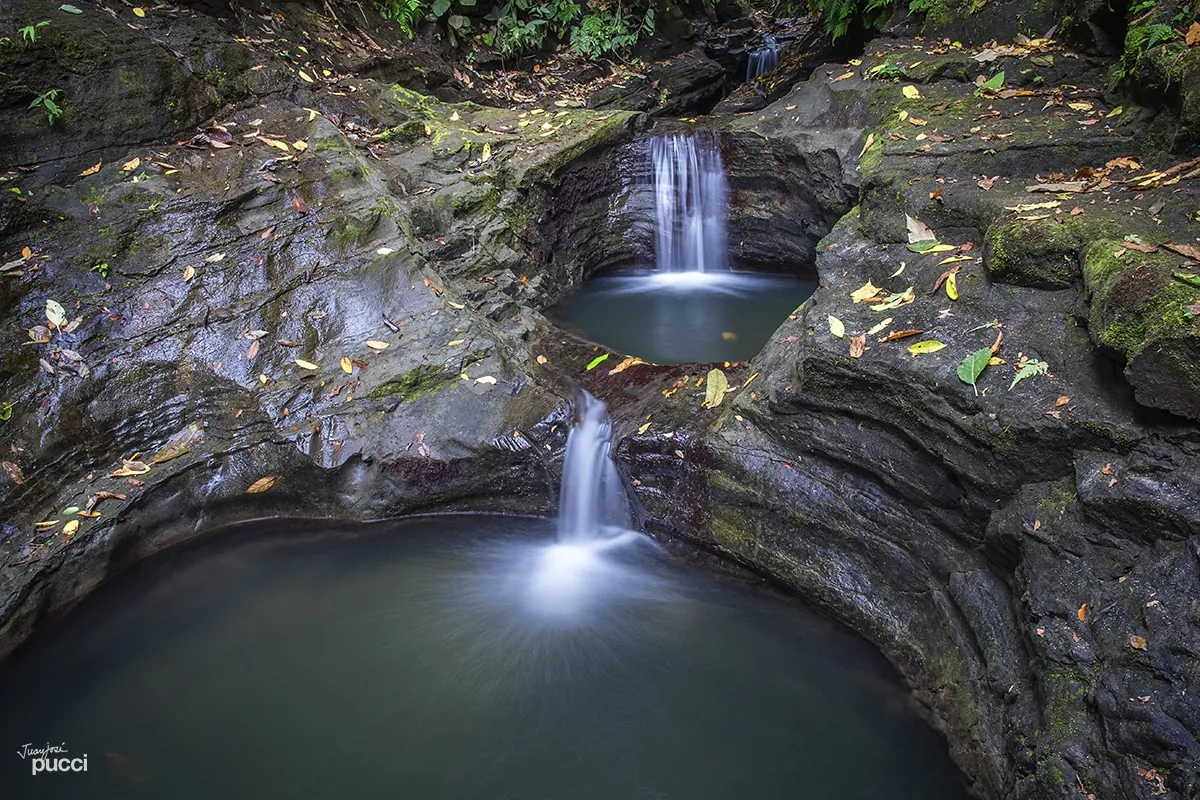
- Waterfall and stream pools a few minutes from the lodge for a swim between meals.
- Night walks when conditions are right, stopping at frog pools where red-eyed tree frogs call, with a blacklight to find scorpions.
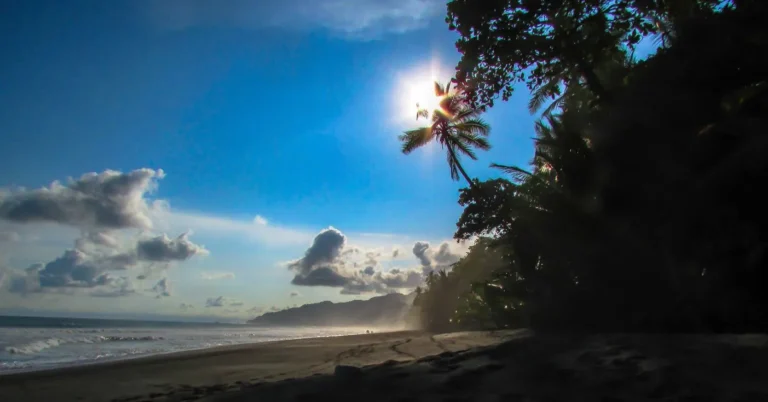
- Horseback riding on Tiskita’s own horses: a three-hour reserve loop with gulf views, or beach rides to Río Coco or north to Pavones and its famous left-hand wave.
- Chocolate and tortilla workshops, birding, tide pools, gulf boat trips and surf lessons.
- Yoga on an open-air deck. The lodge hosts visiting teachers’ retreats and trainings, and usually has a teacher on site from mid-January to March.
Close to 200 bird species have been recorded at or near Tiskita, along with monkeys, sloths, agoutis, coatis, iguanas and frogs, according to the lodge. Sir David Attenborough filmed part of Life in Colour here.
Conservation
The conservation page describes three strands of work:
- Reforestation. Photos from 1983 and 2026 show pasture turned back to forest.
- Scarlet macaws. Between 2002 and 2014, 75 scarlet macaws were released at Tiskita after acclimatization, with long-term monitoring of nests and individual birds. Wild-born chicks have been seen since 2008, and the lodge says the population is now stable and growing, so the release phase has ended.
- Sea turtles. Punta Banco’s beach has been monitored for nesting since 1996, when the conservation group PRETOMA started work there, mainly with olive ridleys, with green and hawksbill turtles also nesting. Today Tortugas Punta Banco is run entirely by the community, with help from the Aspinalls among others. Guests can ask about visiting or volunteering, and hatchlings are usually seen from November to the end of January.
None of this is independently certified: Tiskita isn’t in the official CST directory.
When to go
The main season runs through the dry months, December to April. The FAQ gives daytime highs around 30 °C and 3,000 to 4,000 mm of rain a year, wettest from mid-September to mid-November. At the time of writing the lodge was booking December 2026 to April 2027.
Who it suits
Tiskita is ideal for families, birders, walkers and small groups who want a remote place with trails from the door, and for surfers who’d rather sleep in a forest than in town. It’s not the right fit if you want air conditioning, Wi-Fi in your room or easy transfers, and the long journey makes stays of under three nights hard to justify.
Across the gulf, Playa Cativo Lodge and Golfo Dulce Lodge offer boat-access stays near Piedras Blancas National Park, and Esquinas Rainforest Lodge is near Golfito. Browse all our Osa and Golfo Dulce eco-lodges, or read how private land like this adds to the parks system in our guide to private nature reserves in Costa Rica.
Frequently asked questions
Is Tiskita open all year?
The main season is December to April. In the green season the family offers a few jungle rooms and a house, so ask about other dates.
Are activities included?
Full board includes meals and a guided reserve or orchard walk. Riding, workshops, surf lessons and boat trips are extra and usually arranged on arrival.
Which cabin works for someone who can't manage steps?
Black Iguana. It's reachable by car and has a ramp, which the lodge recommends for small children and guests with limited mobility. Kinkajou, by contrast, is down a long flight of steps.
Can I see the macaws and sea turtles?
Wild macaws are now common around the reserve, though never guaranteed. Turtle hatchlings at Punta Banco are most often seen from November to January.