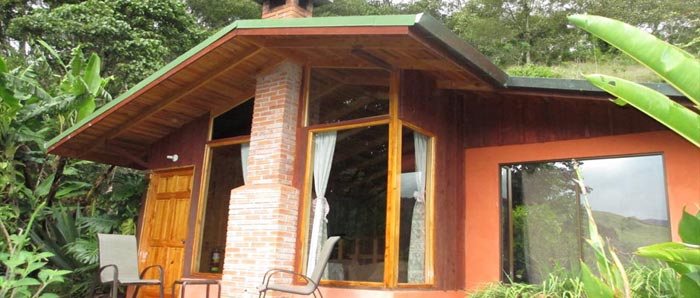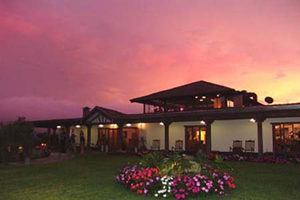


Dantica is a small, glass-walled bungalow lodge at about 2,600 meters in the oak cloud forest above San Gerardo de Dota, on a 20-hectare private reserve that borders Los Quetzales National Park. It was built by a tropical ecologist and a textile designer, and it shows: the trails are run for wildlife first, the heating runs on sugar cane ethanol, and the gallery holds indigenous art from across Latin America. Come for quetzals, cool mountain mornings and the view from your own window.
At a glance
| Location | Upper San Gerardo de Dota valley, Copey district, Dota canton, inside Los Santos Forest Reserve |
|---|---|
| Style | Bungalows, suites and a separate house, with a restaurant and art gallery |
| Setting | 20-hectare private reserve of upper montane oak forest at about 2,600 m, bordering Los Quetzales National Park |
| Best for | Birders, couples and families who want comfort, heating and forest trails from the door |
| Getting there | Turn off the Inter-American Highway (Route 2) onto the steep road down into the San Gerardo valley; the lodge can pick you up at the valley entrance |
| CST status | Not in the official CST directory on 2026-Oct-21 (the lodge cites earlier CST awards) |
How Dantica began
The history page tells the story. Joost Wilms, a Dutch tropical ecologist, first came to San Gerardo de Dota in 1992 to study how fruit-eating birds help the cloud forest regrow. He then spent a year studying tapirs in the Colombian Amazon, where the Andoke people gave him the nickname Dantica, “little tapir.” That’s why a tapir is the lodge’s logo. He later met Maria Luisa Castro Fernández, a Colombian textile designer who worked with indigenous communities, and the couple moved to San Gerardo to open a lodge and gallery.
Building started in 2003 with their house, a gallery in the living room and two bungalows. Over the next 14 years Dantica grew to 12 bungalows, a large gallery with a restaurant, a staff house, a playground and a laundry. Colonial doors, windows and tiles, 200 to 300 years old, were shipped from the Colombian highlands, and the buildings went only into clearings once used for blackberry farming. The owners say not one tree was cut, and some bungalows were shaped to fit between the trees left standing.
The valley
The same page sketches the valley: Pacific-slope oak forest between about 2,000 and 3,025 meters, reached by a 9 km road from the top, where the Ojo de Agua and Savegre rivers meet. The pioneering Chacón family arrived in the 1950s, dug that road by hand and welcomed the first visitors in the early 1970s. The valley joined Los Santos Forest Reserve in 1975.
Los Quetzales National Park followed. SINAC, the national parks service, says it was created by decree on April 25, 2006, covers 4,117 hectares at the head of the Savegre watershed, and ranges from 1,240 to 3,190 meters. SINAC gives temperatures of 5 to 14 °C. Dantica’s reserve is separated from the park only by the Ojo de Agua stream.
The bungalows
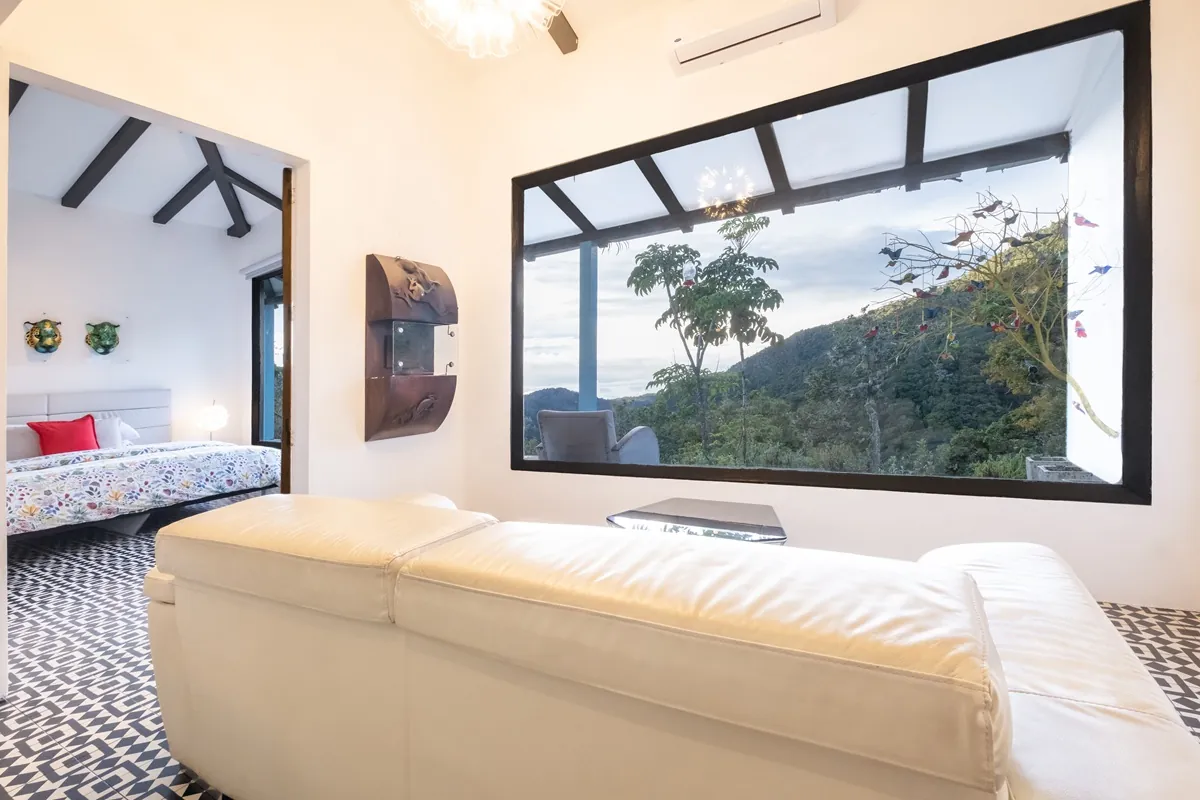
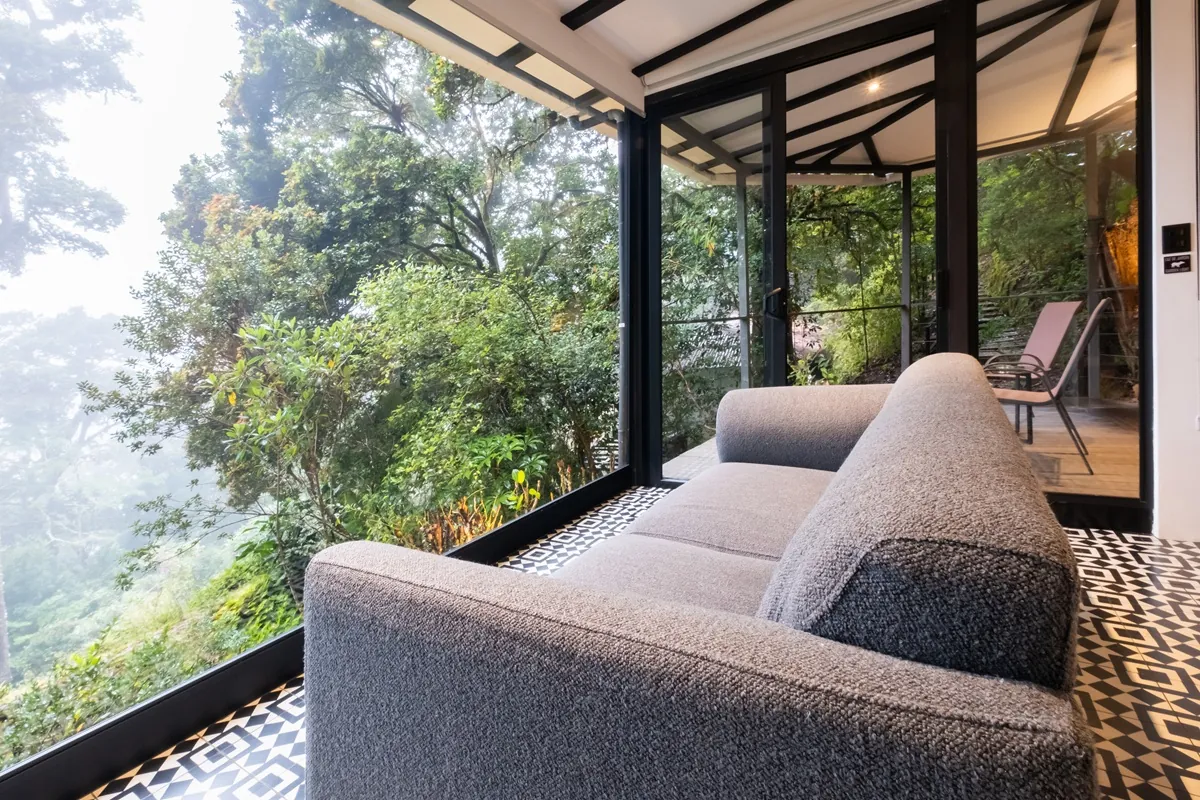
Every unit faces south or west to catch the sun, and the rooms page describes floor-to-ceiling windows, some up to 6 meters wide, and covered terraces so fog and rain don’t keep you indoors. Each listing on that page names an inverter air-conditioning unit for heating, and the lodge’s sustainability page also describes ethanol fireplaces in the bungalows and restaurant. Categories run from the Standard Bungalow through two- and four-person bungalows, the Quetzal Bungalow and two suites to The Terraces, a separate house in the forest. Distances from reception run from about 15 meters to 500 meters along a lit trail, and staff carry luggage to the farther units between 7 am and 5 pm.
Every bungalow has high-speed internet, and there’s a playground with a trampoline. Pets need written approval from management and must stay leashed.
The reserve and its trails
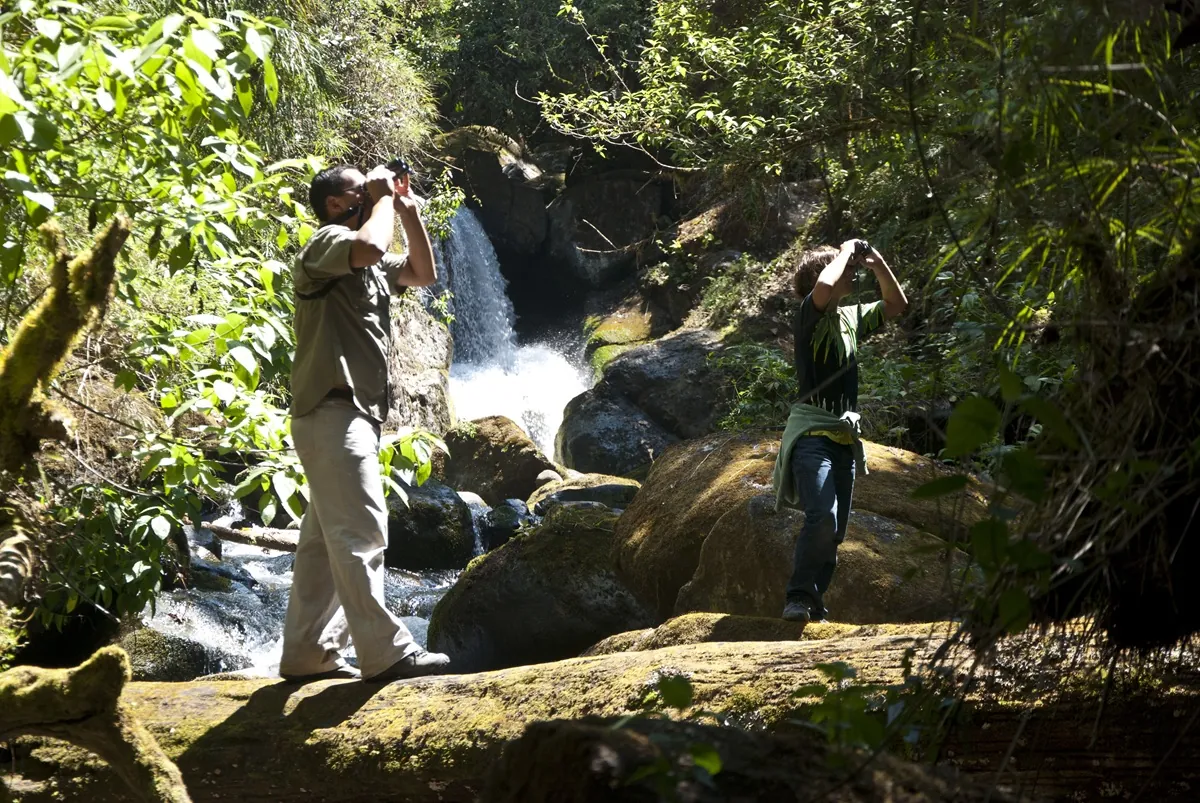
According to the reserve page, over 90% of the 20 hectares is primary forest. Almost 5 km of trails drop through oak forest and regrowth to the river, marked with numbered posts that match a map from reception, and only lodge guests are allowed in. Fallen trees are left to rot, and the main trails are lit for only a few hours at night to limit disturbance.
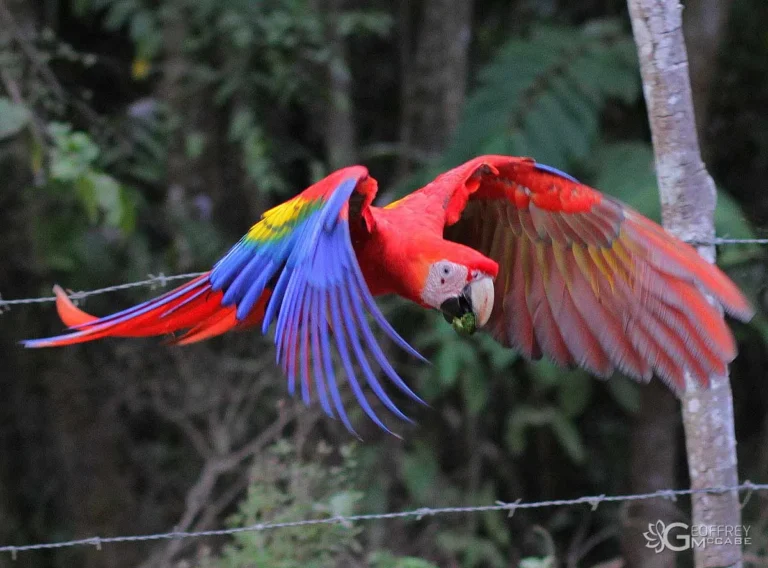
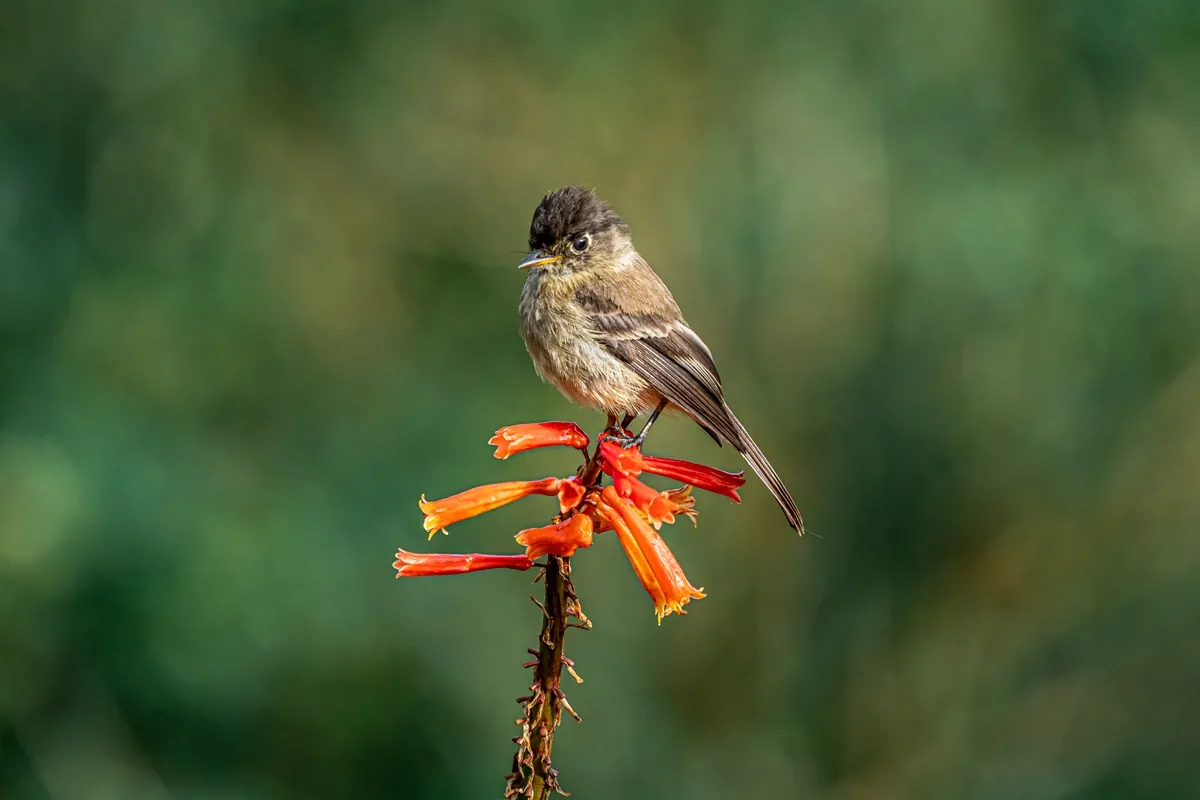
The lodge says almost 120 of the roughly 170 bird species counted in the region have been seen on its land, and over 50 mammal species are recorded there. Dantica reports that hunting has almost stopped since the park was created, letting tapir, puma and ocelot return, though porcupines, squirrels and tayras are likelier sightings. Orchids flower mostly from August to January.
Guided tours
The tours page lists:
- Quetzal tour: an early walk starting between 5 and 6 am on the road outside reception. The lodge claims a yearly success rate of over 95% with its guide; sightings still depend on the birds.
- Flora and fauna walks in the reserve, including the “wild avocado trail” where the trees quetzals feed on grow, and a river trail under old oaks.
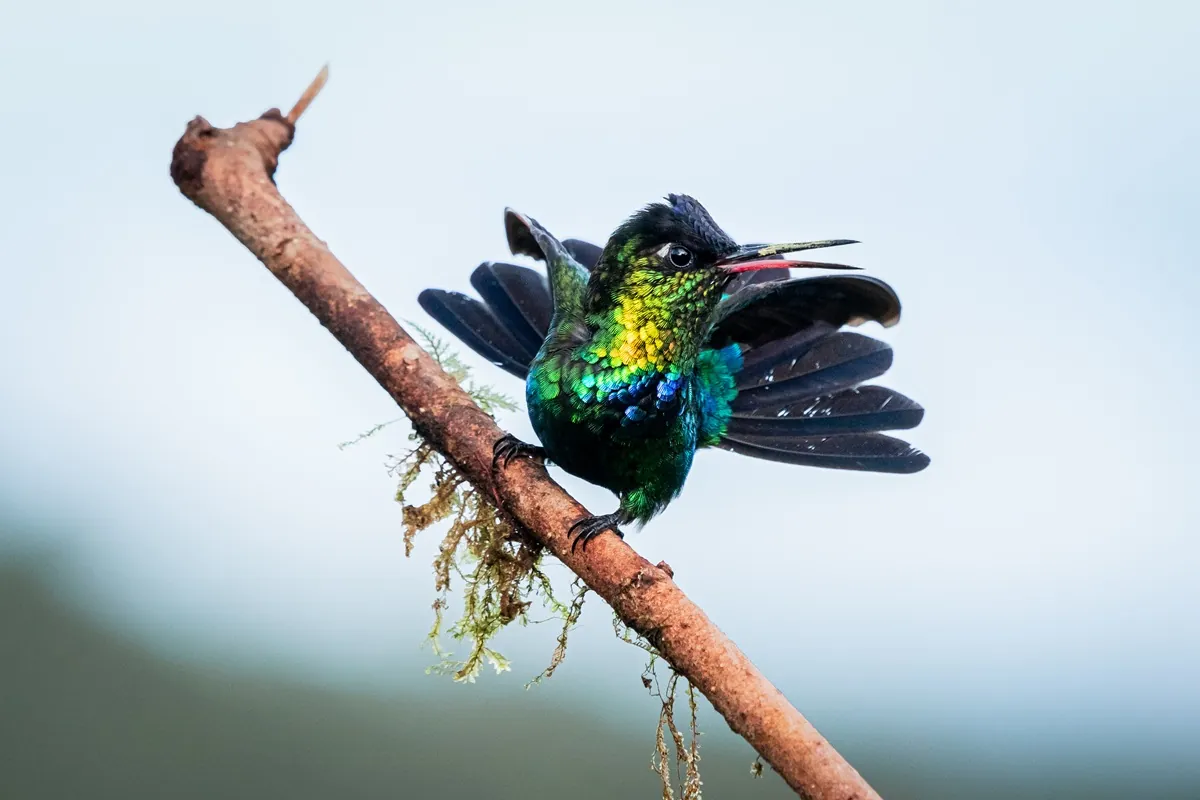
- Birding walks in the valley for acorn woodpecker, black guan, golden-browed chlorophonia and volcano hummingbird, and a longer route to the Savegre waterfalls at lower altitude.
- Páramo walk on the 3,491-meter peak at Cerro de la Muerte, inside Los Quetzales National Park.
- Night walk and a horseback ride to the waterfalls at the end of the valley (not run by the lodge’s guide).
Wear neutral colors, and note that some quetzal routes cross private farms with their own entry charge.
Food
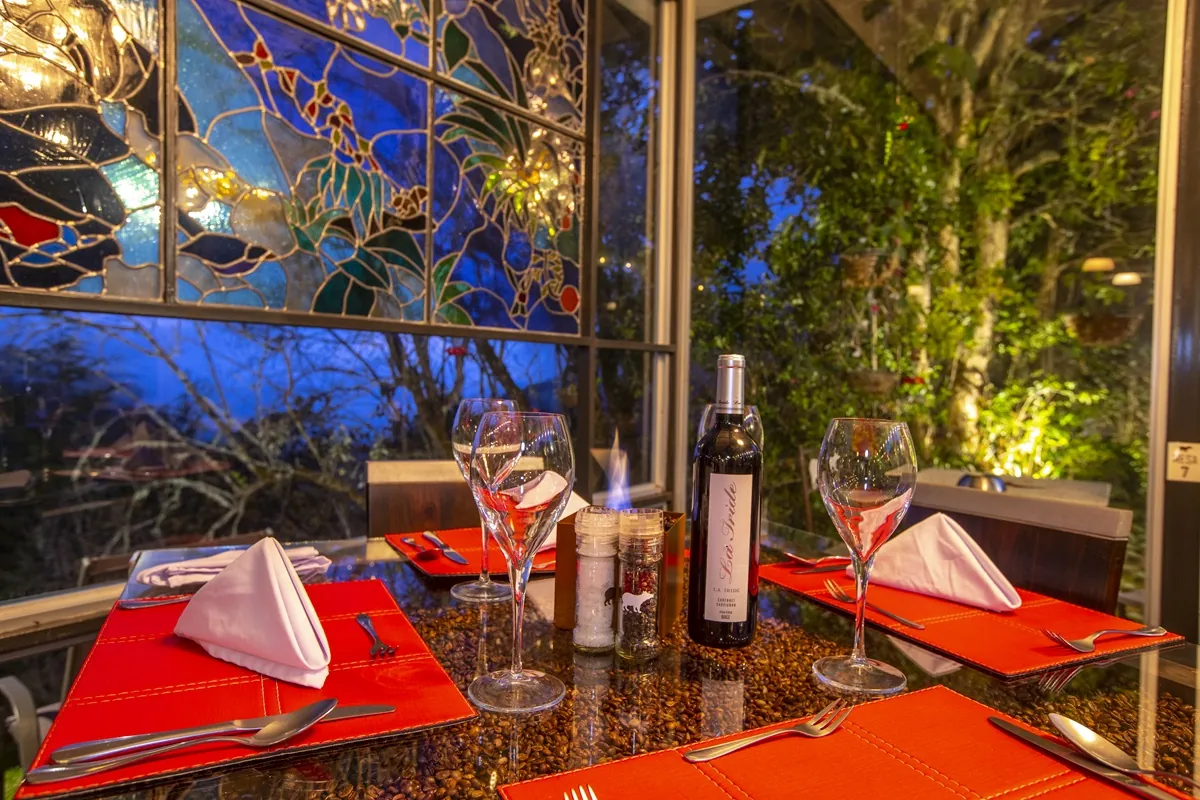
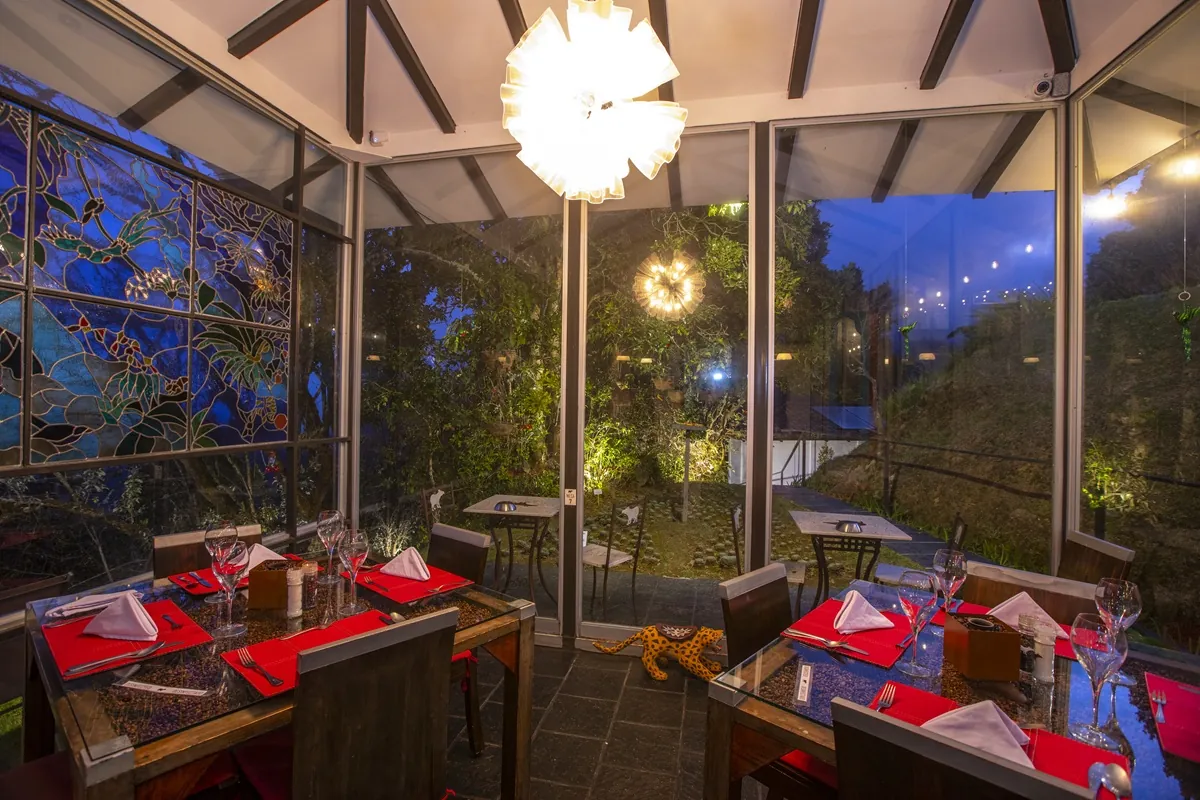
Le Tapir, the glass-walled restaurant beside the gallery, serves breakfast, lunch and dinner every day from 7 am to 9 pm, and breakfast is included in the room rate. The restaurant page mentions fresh pasta and plates finished with about 20 kinds of herbs from the lodge’s organic garden, fertilized with worm compost from kitchen scraps. Trout, honey and produce come from the region, and packed lunches are available.
Sustainability
The sustainable tourism page lists, according to the lodge, gravity-fed water, solar water heating, ethanol fireplaces fuelled by sugar cane waste, biodegradable soaps, worm composting, no pesticides, a green roof on the laundry, detailed recycling and only native plantings in the forest. Staff come from San Gerardo or the wider Los Santos area where possible, the lodge supports the local school and church, and it lends staff to help maintain the national park.
Dantica’s certifications page lists CST awards with four leaves in 2009 and five leaves in 2013, plus Ecological Blue Flag awards in 2010. When we searched the official CST directory on 2026-Oct-21, Dantica wasn’t listed, so ask the lodge about its current status.
Who it suits
Dantica fits travelers who want a beautiful, warm room with a cloud forest view, a reserve to walk without driving and hosts who know the ecology. It’s a strong choice for a quetzal trip and for families, given the playground and four-person units.
It’s not for anyone who dislikes cold or steep paths: nights get chilly and the trails drop sharply to the river. Those who’d rather be down by the Savegre with more services around them might compare Savegre Mountain Hotel or Trogon Lodge. See our Central Valley and highlands eco-lodges for more, and our birds of Costa Rica guide before you pack the binoculars.
Frequently asked questions
How close is Dantica to Los Quetzales National Park?
The lodge's reserve borders the park along the Ojo de Agua stream, and Dantica's area guide puts the park entrances on the Inter-American Highway 13 km toward San Isidro and 9 km toward San José, with the ranger station on the San José side.
Are the bungalows warm enough at 2,600 meters?
The lodge lists an inverter heating unit in every bungalow, describes ethanol fireplaces as well, and several bungalow listings mention goose feather duvets. Expect around 10 °C at night, according to the lodge's climate notes.
Can I walk the trails without a guide?
Yes. Guests get a trail map with numbered posts that match markers in the forest, and the map shows which routes are easier or harder. Only lodge guests may use the reserve trails.