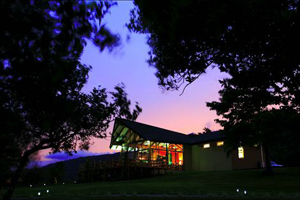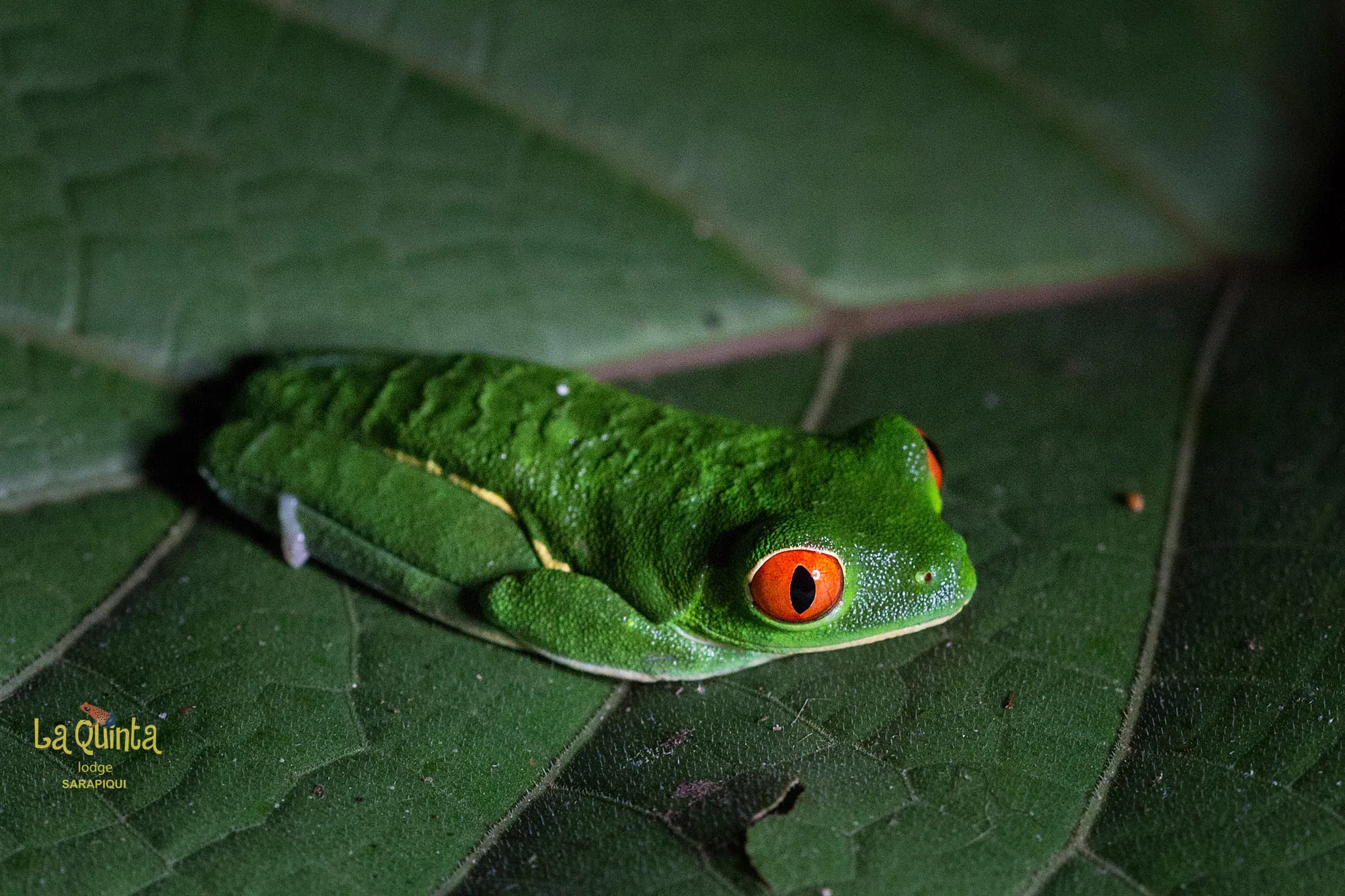




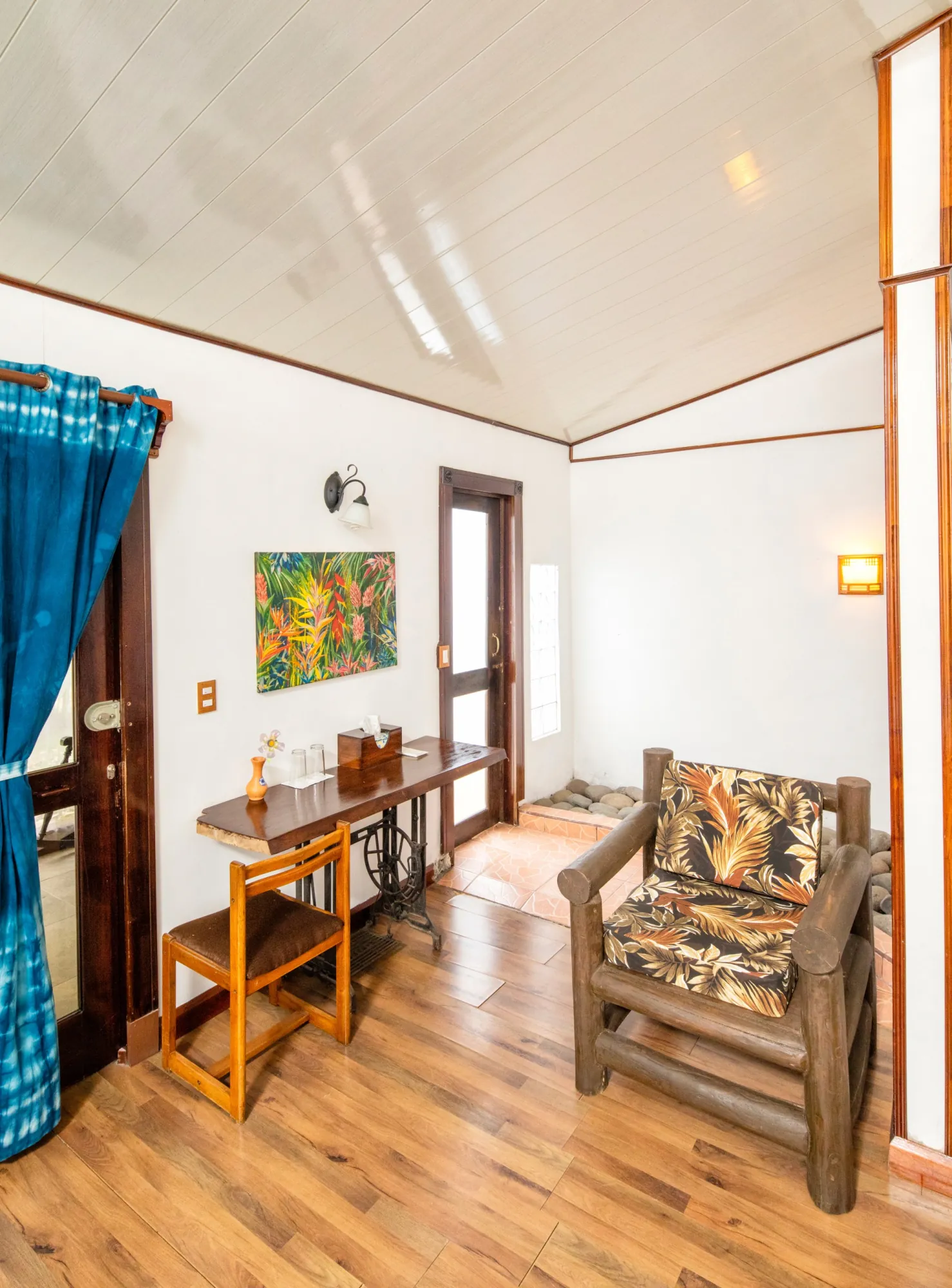
La Quinta Sarapiquí Lodge, the place this guide once listed as La Quinta Country Inn, is a 60-room garden lodge in Costa Rica’s Caribbean lowlands, 12 km west of Puerto Viejo de Sarapiquí. Stay here for easy wildlife on short paths (poison dart frogs, caimans, howler monkeys and a long bird list), comfortable air-conditioned rooms, and a family that has spent three decades turning cleared pasture back into forest.
At a glance
| Location | Bajos de Chilamate, Sarapiquí, Heredia; 5 km past La Virgen, 1.2 km off the main road |
|---|---|
| Style | Family-run lodge with 60 rooms, a group block, restaurant and two pools |
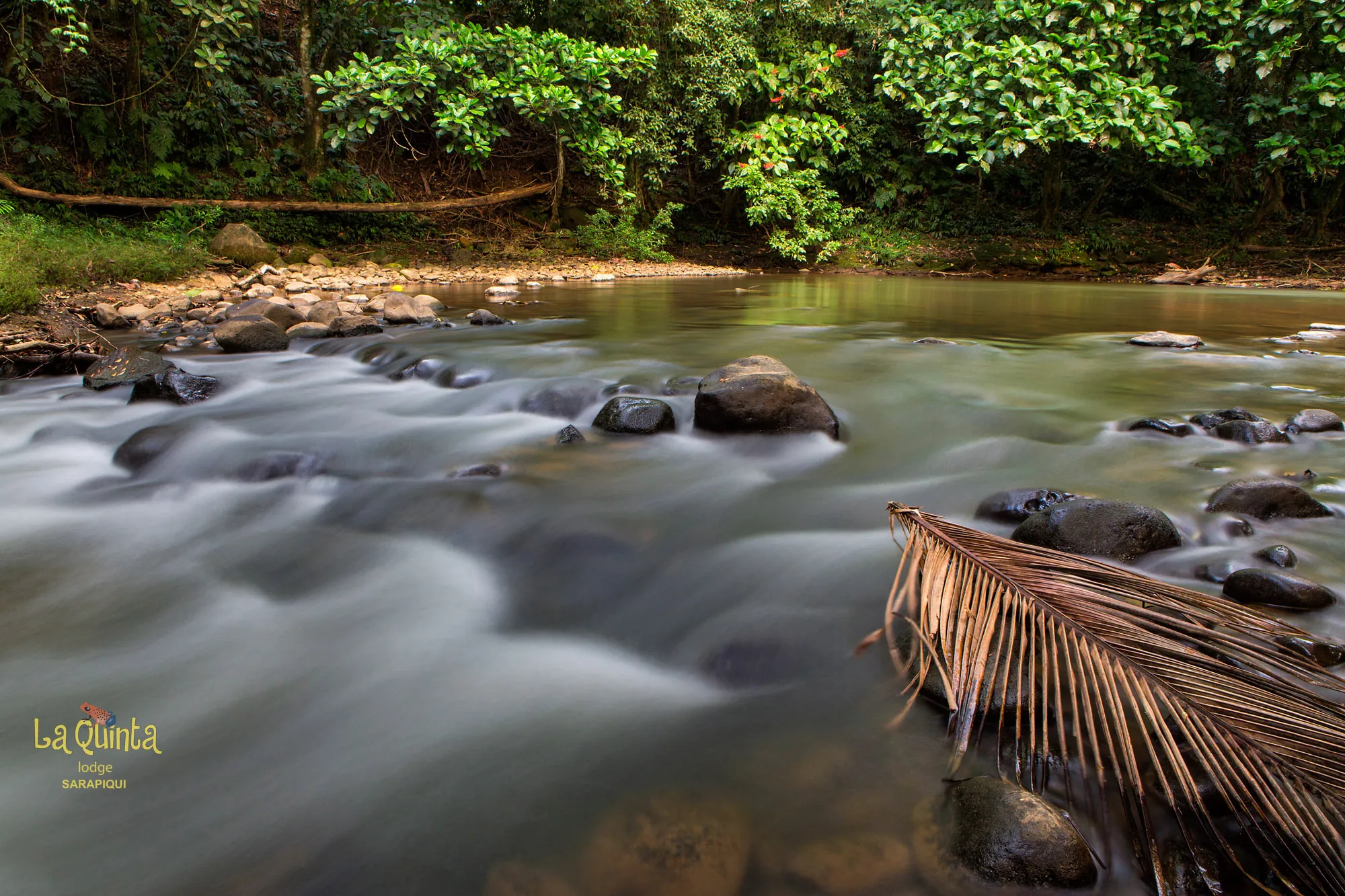
| Setting | Gardens, three ponds, native reforestation and riverside forest by the Río Sardinal |
| Best for | Families, school and university groups, first-time birders |
| Getting there | About 96 km and two hours by car from San José |
| CST status | Lodge cites a five-leaf rating; not in the current directory (checked 2026-10-21) |
From cattle pasture to wildlife garden
When Beatriz and Leo opened La Quinta in 1993, the land was a cattle farm stripped of almost all its trees, according to the lodge’s own history. The old buildings had served a neighboring orange plantation, and the main house became the lobby, front desk and dining room. Leonardo Jenkins, co-owner and the lodge’s chef, still runs the kitchen, and the couple’s children have their own projects on the land: Andrés, an agricultural engineer, has developed a production farm called El Patio since 2017, while Beatrice leads a wellness program called Serenity.
Roughly 5 acres have been replanted only with native species, and that young secondary forest now links the gardens to the Sardinal River as a corridor for animals moving through the valley. The lodge describes its total area as 20 acres on its home page and 14 acres on its facilities page, so treat the size as approximate. Either way, it’s a compact property, and that’s part of its appeal: you can see a lot without walking far.
Rooms and group stays
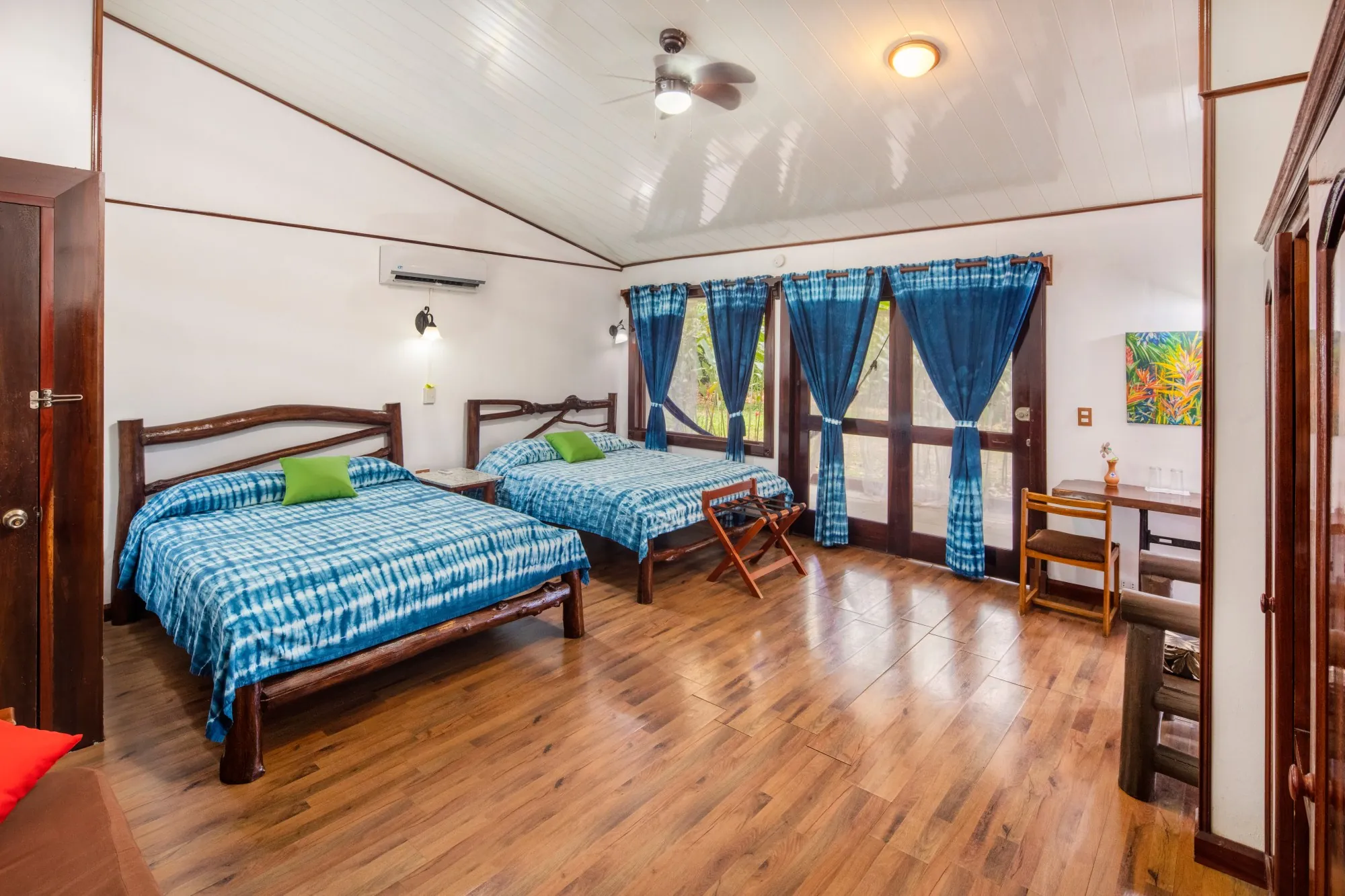
All 60 rooms face the gardens and come with air conditioning, a ceiling fan, hot water, a walk-in closet, an in-room safe and a porch strung with hammocks and rocking chairs. The lodge also offers wheelchair-accessible rooms; ask for one specifically, since the site doesn’t say how many there are.
Groups get their own block. Kinkajou Town has six multi-occupancy rooms, each with two showers and two toilets, a porch facing the trails, plus a meeting room and a playing field. It’s built for school trips, research teams and team-building retreats, and shares the main lodge’s pools and restaurant.
Walking the grounds
A self-guided loop of 20 to 30 minutes, mapped on the facilities page, strings together most of what the property offers:
- Frog garden. Strawberry poison dart frogs and green-and-black poison dart frogs live here and are active by day, so children can find them without a night tour.
- Ponds. Three small lakes are used for fishing and birdwatching. The largest holds a family of caimans rescued from captivity through a government wildlife rehabilitation program.
- Butterfly garden. Planted with host and nectar plants for native species, though the lodge lists it as under renovation.
- Reforestation plot and riverbank. The path ends at the Sardinal, where the regrown forest meets older riverside trees.
- Kitchen garden. Sweet peppers, lettuce, cucumbers, tomatoes, cassava, malanga and herbs grow for the restaurant.
The pools sit at the forest edge, and the lodge reports that howler monkeys and Scarlet Macaws sometimes pass overhead. La Quinta is also an eBird hotspot, useful for checking what other birders have logged on the grounds before you arrive.
Things to do, on site and nearby
The lodge runs a few low-key activities of its own. Guests can plant a native tree, usually a mountain almond, at no charge; cook corn empanadas with a local cook; float the Sardinal on an inner tube for about half an hour when the river allows; and, during the school term and with the principal’s approval, visit a nearby school through its Escuelas Felices program.
Most adventure happens off the property. Sarapiquí River rafting runs from gentle Class I to II floats up to Class IV runs for experienced paddlers, and there’s a two-hour powerboat trip on the same river. A chocolate tour at Tirimbina, a pineapple farm visit, ziplining and horseback rides on local farms are all close. Keen naturalists can add a morning at La Selva Biological Station, the research station run by the Organization for Tropical Studies, a short drive east.
Food
Meals are traditional Costa Rican cooking. A typical dinner is a buffet with natural fruit juice, a salad bar, grilled meats, local side dishes and dessert, and part of the produce comes from the lodge’s own garden. Costa Rican coffee is on offer all day, and the front desk can arrange cooking classes when a cook is free. Groups can choose meal plans from breakfast only to full board.
Getting there
The lodge describes two routes from San José of about 96 km each, so you can drive a loop. The eastern one follows Route 32 through Braulio Carrillo National Park and is quicker; the western one climbs past Vara Blanca and the La Paz Waterfall before dropping into the lowlands. Look for the yellow La Quinta sign 5 km after La Virgen, then follow 1.2 km of paved side road. Public buses run from San José to Puerto Viejo de Sarapiquí, a short taxi ride away.
Sustainability
The case for La Quinta rests mostly on the land itself: thirty years of native replanting on former pasture, a river corridor, a working organic garden and a staff hired from Sarapiquí, some of whom have been there since opening. The lodge also reports a 2021 Bóscares award for forest recovery, and Sarapiquí was certified as a sustainable destination by TourCert in 2018.
On certification, the lodge’s site still describes a five-leaf CST rating from the program’s older scale. It doesn’t appear in the current CST directory of certified businesses, which now grades businesses as Basic or Elite. Our guide to CST certification explains the change.
Who it suits, and who it doesn’t
La Quinta works well for families with young children, who can see frogs, caimans and butterflies minutes from their porch and then swim. Groups and field courses get practical facilities, and travelers who need air conditioning or an accessible room will find both.
It’s not a wilderness lodge. With 60 rooms and managed gardens, it has more people and less forest than places such as Selva Verde, a few kilometers up the road, or a night at La Selva itself. More choices are on our northern Costa Rica eco-lodges page. Older write-ups, including this profile at Costa Rica Journeys, still use the Country Inn name. The official site is laquintacostarica.com.
Frequently asked questions
Is La Quinta Country Inn the same place as La Quinta Sarapiquí Lodge?
Yes. It's the same family lodge on the same site near La Virgen de Sarapiquí; it now trades as La Quinta Sarapiquí Lodge.
Where can I see the caimans, and is it safe with children?
They live in the largest of the three ponds on the self-guided trail. Stay on the paths, keep small children close at the water's edge and follow staff directions.
Can I plant a tree during my stay?
Yes. Guests can plant a native tree, usually a mountain almond, free of charge, as part of the lodge's reforestation work. Ask at the front desk.
Is the lodge good for a school or research group?
It's one of the better-equipped options in Sarapiquí for groups. Kinkajou Town has six multi-occupancy rooms, a meeting room and a field, and La Selva Biological Station is a short drive away.