
Some of Costa Rica’s best eco-lodges can only be reached by water, and many more are built so that a river, lagoon or bay is the center of every day. Staying on the water changes the trip: you see wildlife from a canoe instead of a trail, you arrive by raft or boat, and the sound you fall asleep to is a current or the surf. This guide groups the best water-based lodges on our site by the kind of water they sit on, so you can pick the experience first and the lodge second.
Choosing your kind of water
| Water | What you do there | Lodges in this guide | How you usually arrive |
|---|---|---|---|
| Caribbean canals | Boat and kayak tours, turtle nesting | Tortuga Lodge, Laguna Lodge, Pachira Lodge | Small plane or road then boat |
| Whitewater river | Rafting, river hikes, waterfalls | Pacuare Lodge, Rios Lodge | Raft, or 4×4 and cable crossing |
| Northern lowland rivers and lagoons | Birding by boat, canoeing, kayaking | Maquenque, Laguna del Lagarto, Chilamate, Selva Verde | Road |
| Golfo Dulce | Kayaking, snorkeling, dolphins | Playa Nicuesa, Playa Cativo | Boat only |
| Drake Bay and the open Pacific | Diving, snorkeling, fishing, whales | Aguila de Osa | Small plane or boat from Sierpe |
| Gulf of Nicoya | Island camping, paddling, bioluminescence | Isla Chiquita | Water taxi |
| Volcanic rivers and hot springs | Soaking, river swims, volcano hikes | Blue River Resort | Road |
Tortuguero: lodges on the canals
Tortuguero is the classic water destination. There’s no road, the village sits on a sandbar between the Caribbean and a network of canals, and every tour starts at a dock. Tortuguero National Park protects 26,653 hectares of land and more than 50,000 hectares of sea, with 442 recorded bird species and what the park calls the world’s largest green turtle population, around 22,500 nesting females a year.
- Tortuga Lodge & Gardens is the small, upscale choice: 29 air-conditioned rooms on the Tortuguero River, opposite the airstrip, with its own 26-hectare reserve. Its sustainability page is unusually specific, with 55 solar panels, biodigesters and a septic system designed to keep gray water out of the canals.
- Laguna Lodge has been open since 1990 on the strip between the lagoon and the sea, with 110 wooden rooms in about six hectares of gardens and its own path to the beach.
- Pachira Lodge is the big full-board option across the canal from the village, with packages that bundle the trip from San José, meals and guided boat tours.
Green turtles nest from June through November, according to the Sea Turtle Conservancy, and beach visits at night must be made with a tour operator authorized by the park. Our Tortuguero National Park guide covers the details.
The Pacuare River: lodges you raft into
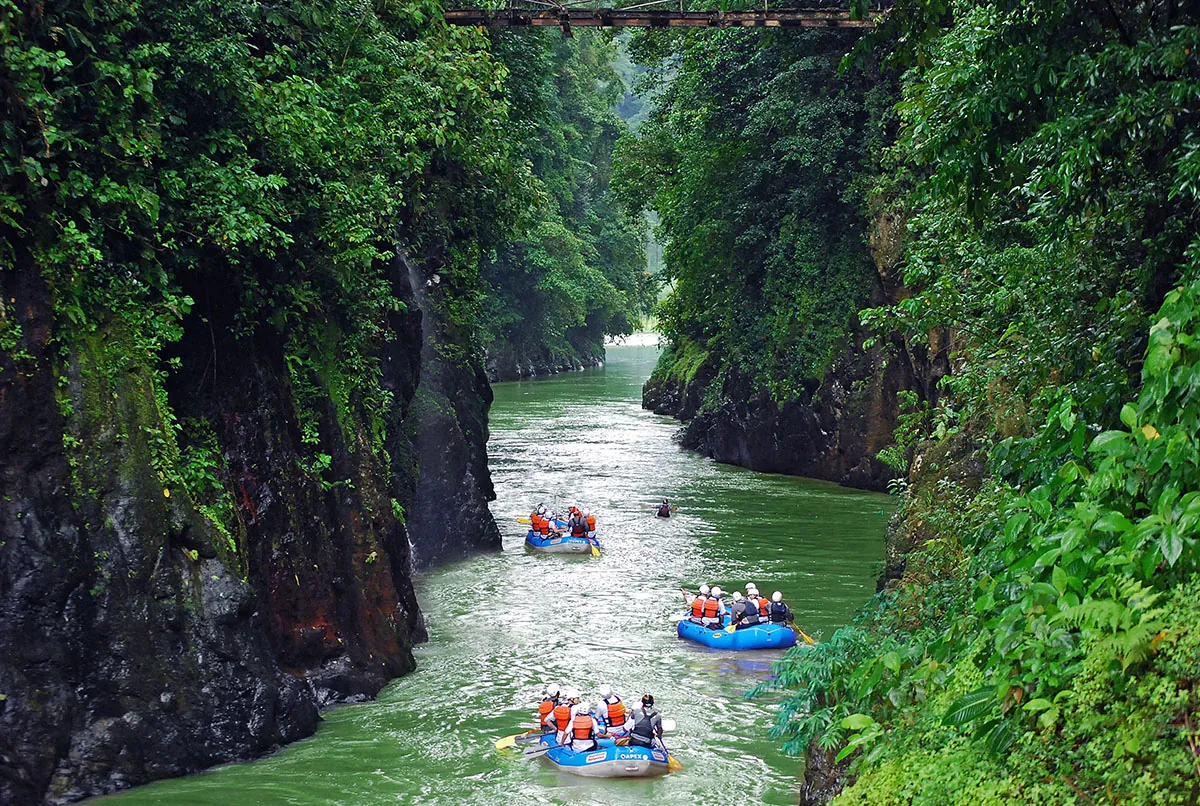
The Pacuare cuts through a forested canyon on the Caribbean slope, and two lodges sit on its banks with no road to the door.
- Pacuare Lodge has 20 bungalows and suites inside a 340-hectare protected area. According to its arrival page, most guests raft in, a river trip of one to two hours. If you’d rather not raft, a 4×4 drive is followed by a gondola ride across the river on a 100-meter cable. The lodge’s architecture draws on the Indigenous Cabécar culture of the area, and its activity list includes a Cabécar hike.
- Rios Lodge grew from a riverside rafting camp started in 1985. It runs off-grid on hydropower inside some 1,000 hectares of protected rainforest, and stays include rafting, an eight-line zipline over the river and waterfall hikes.
Either one makes a two-night stay feel like a small expedition. Pack for getting wet, and check the age and swimming requirements for rafting before you book with children.
Northern rivers and lagoons: birding by boat
The lowlands north of the central volcanoes are crossed by slow, wide rivers and dotted with lagoons, and the best way to see wildlife here is often from the water.
- Maquenque Eco Lodge sits on the banks of the San Carlos River near Boca Tapada, in great green macaw country. Its golden-hour boat trips through the wetlands often turn up caimans and macaws. It holds the top Elite level in the CST program, certified in November 2025. Its CST listing says it opened in 2009, employs more than 45 local families, runs on solar energy and invites guests to plant native trees. You can also read about Maquenque Eco Lodge on Costa Rica Journeys.
- Laguna del Lagarto Eco-Lodge has protected a large private forest with lakes near the Nicaraguan border since 1992, and guests canoe its lagoons looking for birds.
- Chilamate Rainforest Eco Retreat is a family-run lodge on the Sarapiquí River, protecting 42.8 hectares of lowland forest, with river kayaking through a local river school.
- Selva Verde in Sarapiquí has welcomed nature travelers since 1986, according to its website, and its CST listing shows the Elite level, 61 rooms and more than 370 bird species recorded in its reserve.
See our northern eco-lodges section for more.
Golfo Dulce: boat-only rainforest lodges
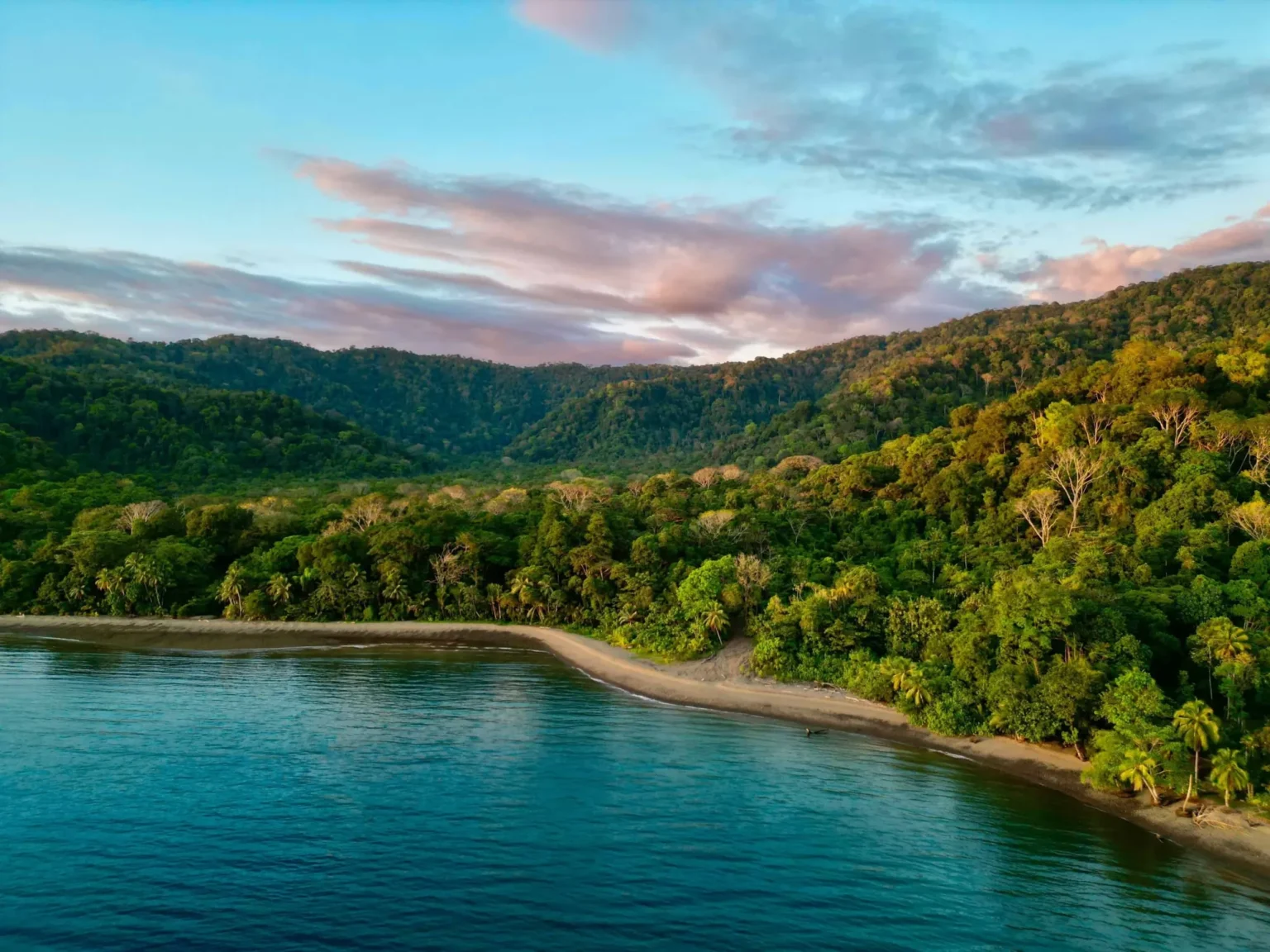
The Golfo Dulce, between the Osa Peninsula and the mainland, is a deep, sheltered gulf where the rainforest of Piedras Blancas National Park runs straight down to calm water. It’s one of the best places in the country to kayak, snorkel and watch dolphins from a lodge’s own beach.
- Playa Nicuesa Rainforest Lodge is reached by a boat transfer of about 30 minutes, according to its website. It holds the CST Elite level, certified in October 2024, and its CST listing describes how it started by letting forest regrow on a former cacao plantation.
- Playa Cativo Lodge is boat-only too, sitting inside a 1,000-acre private reserve bordering Piedras Blancas. According to its website, guests can kayak, paddleboard and snorkel in Cativo Bay. Its CST listing shows the Basic level as of March 2026 and says the lodge runs on 100% clean energy from its own hydro and solar systems.
Drake Bay: a lodge built around boats
On the Osa’s northern shore, Aguila de Osa sits at the mouth of the Agujitas River in Drake Bay. Guests arrive by boat, and the lodge’s own boats run snorkel and dive trips to the Caño Island Biological Reserve, catch-and-release sport fishing and whale and dolphin watching. SINAC describes Caño’s reefs as some of the most extensive and best preserved on Costa Rica’s Pacific coast. Our whale and dolphin watching guide explains the seasons, and our Osa Peninsula eco-lodges section lists more lodges nearby.
Gulf of Nicoya: a whole island to yourself
Isla Chiquita Glamping occupies an entire small island a few minutes by water taxi from Paquera, on the southern Nicoya Peninsula. Guests sleep in screened tent suites on raised decks, paddle straight off the beach and go out at night to see glowing plankton. It’s a good fit for travelers who want the gulf’s islands and mangroves to be the main event. More lodges in the area are in our southern Nicoya section.
Volcanic rivers and hot springs
Not all water-based stays involve boats. Blue River Resort and Hot Springs sits in the forest on the flanks of Rincón de la Vieja, about 90 minutes from Liberia’s airport, according to its website. It has three natural mineral hot spring pools and two freshwater pools, a vivid blue volcanic river running through the grounds, botanical and butterfly gardens, and tours to the volcano. It’s more of a resort than a rustic lodge, and it doesn’t publish sustainability details, but it’s a family-friendly way to combine Guanacaste’s dry northwest with forest and warm water. You can also read about Blue River Resort and Hot Springs on Costa Rica Journeys. For more options like this, see our guide to waterfalls, jungle rivers and hot springs.
Practical tips for water-based lodges
- Pack soft and light. Boat transfers and raft-in lodges limit luggage, and you may step off into shallow water. A dry bag for electronics is worth bringing.
- Watch the clock. Many boat transfers run on fixed schedules. Tortuga Lodge’s shared boat from Caño Blanco, for example, leaves at 10:30 am and has to be booked two business days ahead.
- Ask about the water you’ll swim in. Calm gulfs and lagoons are a different world from Pacific surf beaches and rivers with crocodiles or strong currents. Ask staff before you swim.
- Check certification yourself. The official CST directory lists every certified business and its level. Of the lodges above, Maquenque, Selva Verde and Playa Nicuesa hold the Elite level and Playa Cativo the Basic level.
Our guide on how to reach remote eco-lodges has more on domestic flights, boat transfers and 4×4 roads.
Frequently asked questions
Which Costa Rica eco-lodges can only be reached by boat or raft?
The Tortuguero lodges, the Golfo Dulce lodges (Playa Nicuesa and Playa Cativo) and Isla Chiquita are reached by boat. On the Pacuare River, Pacuare Lodge and Rios Lodge are reached by raft, or by a 4x4 and a river crossing for those who prefer not to raft.
When is the best time to visit Tortuguero for turtles?
Green turtles nest from June through November, according to the Sea Turtle Conservancy. Leatherbacks and hawksbills also nest in the park. Night beach visits require a park-authorized tour operator.
Which water-based lodges are best for birdwatching?
The northern river lodges stand out. Maquenque and Laguna del Lagarto are known for great green macaws and lowland birds seen by boat and canoe, and Selva Verde's CST listing records more than 370 bird species in its reserve.
Are water-based lodges suitable for families?
Many are. Pachira Lodge has rooms that sleep four, Blue River Resort has pools and a waterslide, and Tortuga Lodge welcomes children of any age. For the raft-in lodges, ask about minimum ages for rafting before you book.