



Ojo del Mar is a small, hand-built bamboo lodge on the beach at Cabo Matapalo, the southern tip of the Osa Peninsula, about 12 miles south of Puerto Jiménez. It runs on solar power, drinks from its own well, serves breakfast and a shared candlelit dinner at one long table, and starts most days with yoga. Stay here for a simple, artistic, low-tech base between two of Costa Rica’s wildest coastlines, not for hotel polish.
At a glance
| Location | Playa Carbonera, Cabo Matapalo, Osa Peninsula, about 12 miles south of Puerto Jiménez |
|---|---|
| Style | Small family-scale lodge: elevated cabinas, a beach house and open “beach nests” |
| Setting | A 1.5-hectare beachfront property between the Golfo Dulce and the rainforest |
| Best for | Yoga travelers, beginner and intermediate surfers, couples who like rustic design |
| Getting there | Fly or drive to Puerto Jiménez, then a 4×4 or taxi ride on the gravel road toward Carate |
| CST status | Not in the official CST directory (checked 2026-Oct-21) |
Where it is
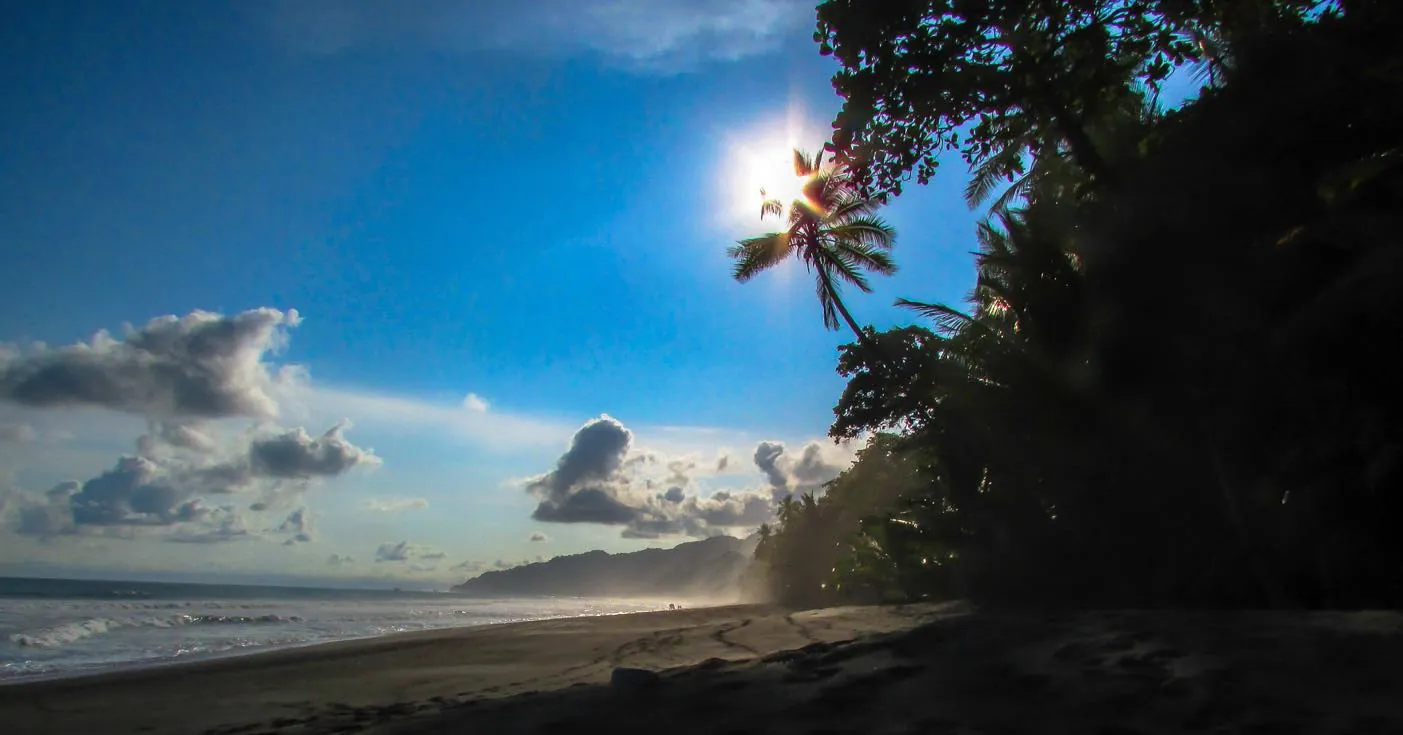
The lodge’s getting here page puts it roughly 12 miles south of Puerto Jiménez and gives its mapping address as Playa Carbonera, the long beach just inside the point where the Golfo Dulce meets the open Pacific. The gravel road continues past Matapalo to Carate, the southern gateway to Corcovado National Park. SINAC, the national parks service, says Corcovado was created in 1975, covers about 42,560 hectares of land, and holds roughly 2.5 percent of the world’s biodiversity.
You can reach Puerto Jiménez from San José by small plane, car or bus. The lodge warns that phone and Wi-Fi signal are patchy in the area, so download maps and directions before you leave town.
A lodge built by hand
The lodge’s story page explains how it began. Mark and Nico, a German couple (he an artist and surfer, she a homeopath and yoga teacher), found the land during a trip in 2000. Their first buildings were made from collected driftwood and harvested bamboo: a small home, a few shacks and an outdoor yoga platform where they started giving public classes. The name, “Eye of the Sea,” came from those early days.
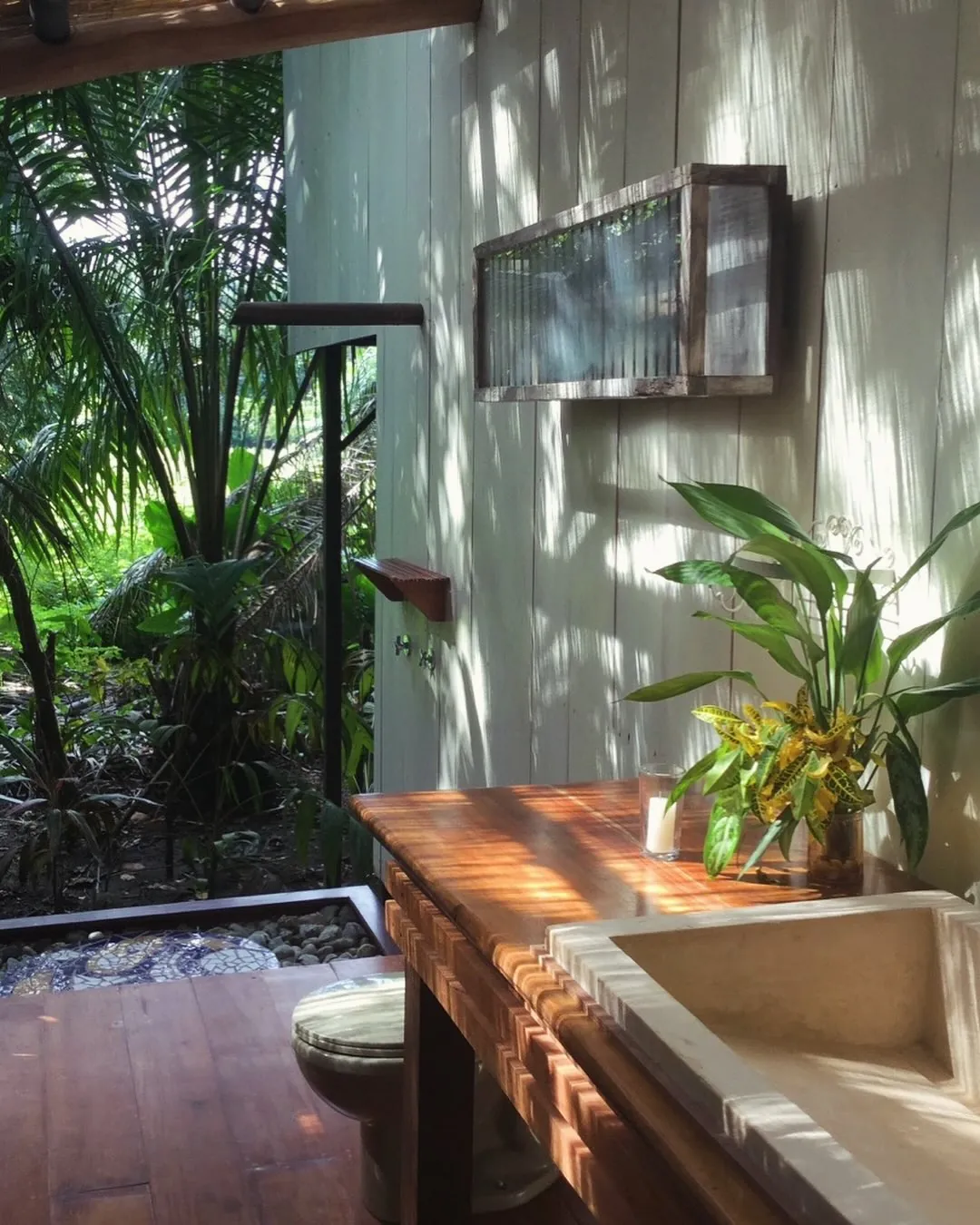
Mark went on to develop techniques for framing whole structures in bamboo and now teaches bamboo building. Nico wrote a handbook on sustainable living on the Osa Peninsula. That craft shows in the property today: palm-leaf roofs, open sides, bamboo frames and furniture made on site.
Rooms
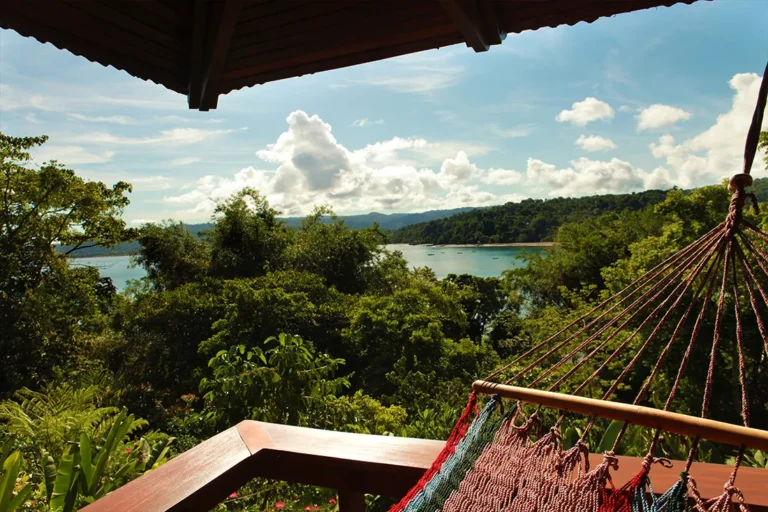
The lodge describes its rooms as “airy, elevated” and each one different, built from sustainably sourced materials. The current list on its nature lodge page includes the cabinas Maravilla, Marlinche, Marcondo, Marpache and Marina (a cabina for two), the Beach House with water views, and a category called Beach Nests, set right on the sand.
Expect fans and sea breezes rather than air conditioning, outdoor showers in some units, and lighting from solar lanterns and candles after dark.
Food at the Casa Grande
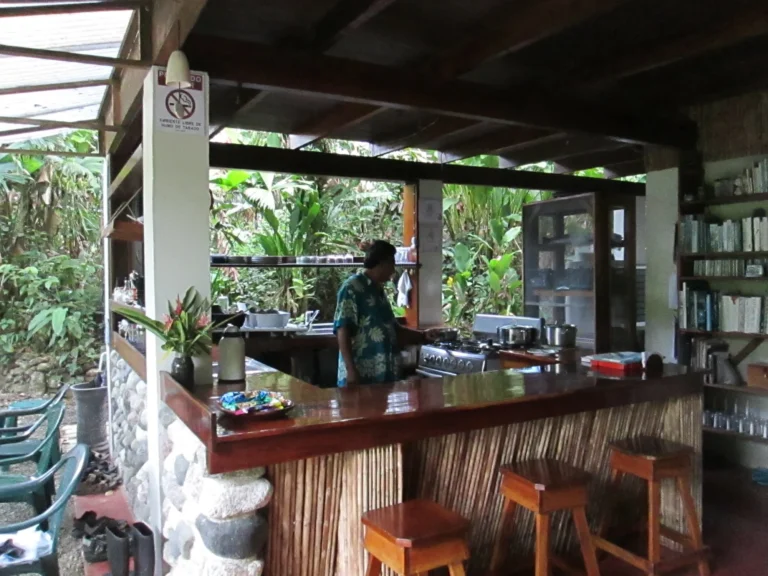
The Casa Grande is the center of the lodge: an open kitchen, a communal table, a library and the place where everyone gathers. According to the meals page, breakfast is included and comes as a spread of juices, tropical fruit, yogurt and homemade granola, plus a hot dish such as eggs to order, gallo pinto or banana pancakes. Dinner is a shared seasonal buffet with a vegetarian, chicken or fish main, several sides and a homemade dessert.
The kitchen describes its cooking as healthy comfort food with Mediterranean, Asian, Indian, African and Mexican influences. Ingredients come from the lodge’s own gardens and from local farmers and fishers. Vegetarian food is always available, and vegan, gluten-free and allergy-friendly meals can be arranged with notice. The lodge says plainly that it does not cater for keto, paleo, raw, kosher or halal diets.
Yoga
Yoga is part of the lodge’s DNA. The shala described on the yoga page has a hardwood floor, an insulated bamboo roof and movable screened walls on every side, and there are mats, blocks, straps and blankets for guests. Morning Vinyasa and Hatha classes run daily (they’re an add-on rather than part of the room). Ojo del Mar also hosts group retreats, and when a large retreat is in residence the yoga spaces may be reserved for that group, so ask when you book.
What to do
The lodge sits on the Golfo Dulce side of Cabo Matapalo, close to one of the area’s well-known surf breaks, and Pan Dulce beach nearby has a gentle wave suited to lessons. The lodge’s adventure page lists a local surf instructor, a horseback ride through forest to a waterfall and along the beach, guided tree climbing about 90 feet into the canopy, and waterfall or cliff rappelling.
For wildlife, the lodge’s wildlife page offers an early-morning rainforest and waterfall walk from the property, private birding hikes, full-day guided hikes in Corcovado from the Carate side, a kayak and mangrove trip out of Puerto Jiménez, and boat tours on the Golfo Dulce and the Esquinas River. Corcovado can only be visited with a certified guide, and park spaces are limited, so book that day early.
Sustainability
Ojo del Mar’s sustainability page is specific. According to the lodge:
- Power comes from solar only, with on-demand propane for cooking.
- All water is drinkable and comes from the property’s own well; wastewater goes to septic tanks without synthetic chemicals.
- No rainforest trees were cut to build the lodge, buildings cover less than 1 percent of the 1.5-hectare site, and furniture is made on site from plantation wood.
- Staff separate waste into organic and recyclable streams, organic waste becomes fertilizer, and recyclables go to a center in Puerto Jiménez. The lodge doesn’t use plastic drinking bottles.
- Food is sourced first from the property, then the immediate neighborhood, then Puerto Jiménez, and the kitchen won’t serve dredged shrimp or endangered grouper or marlin.
The lodge says it has worked toward Costa Rica’s sustainable tourism certificate, but it doesn’t appear in the official CST directory, so treat these points as the lodge’s own statements.
Wildlife
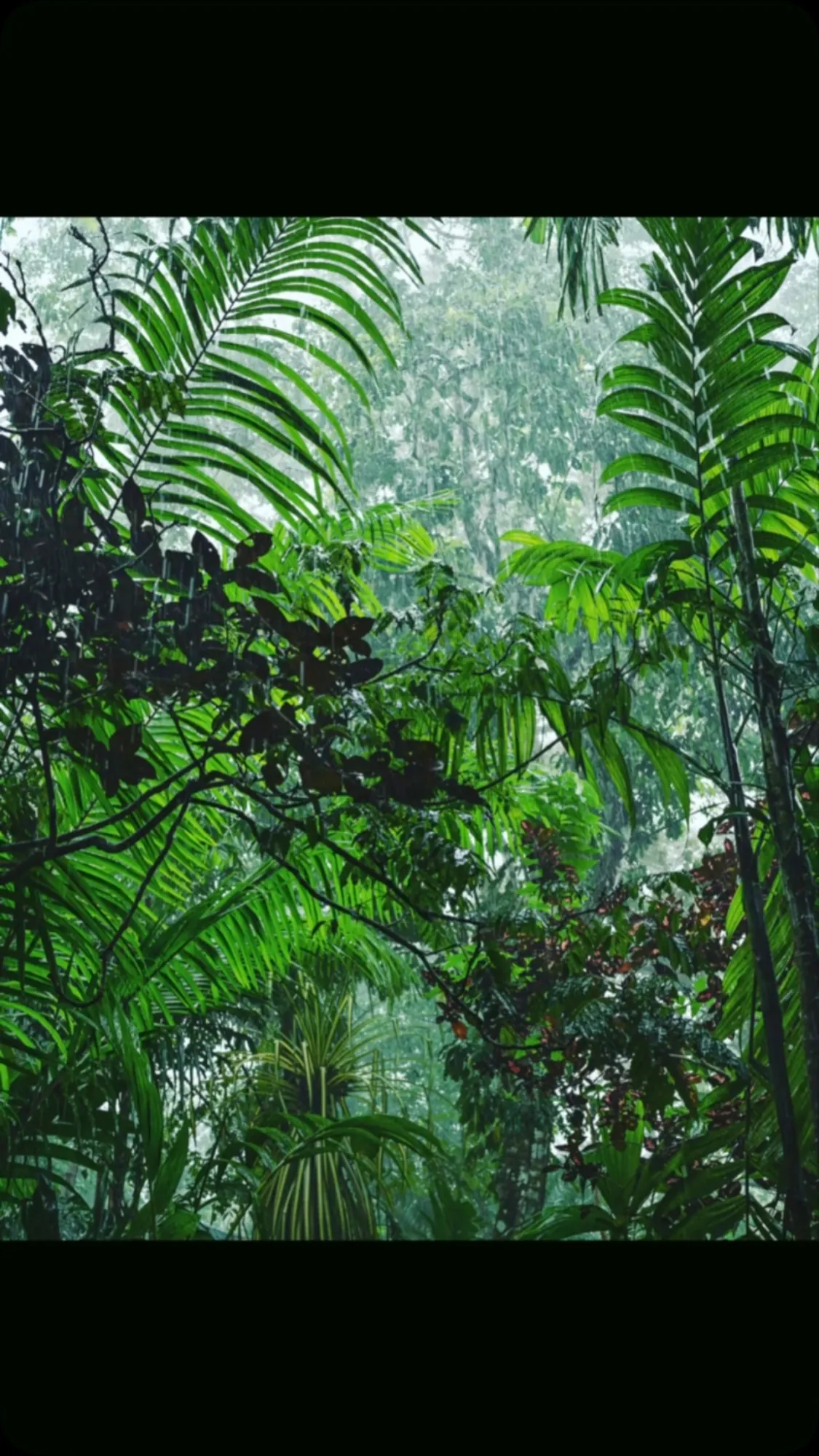
Cabo Matapalo is one of the most reliable places on the Osa to see wildlife close to your room. The lodge mentions squirrel monkeys and hummingbirds around the grounds, and says walks in the Matapalo forest can turn up all four of Costa Rica’s monkey species, anteaters, sloths, coatis, scarlet macaws, toucans and poison dart frogs. Dolphins live in the gulf year round, and the lodge gives May to December as the months when whales may be seen. Sightings are never guaranteed.
Who it suits
Ojo del Mar suits travelers who want a beach, a yoga practice and a shared dinner table more than room service, and who find bamboo craftsmanship and candlelight charming rather than inconvenient. Surfers get an easy beginner wave nearby and more serious point breaks around the cape.
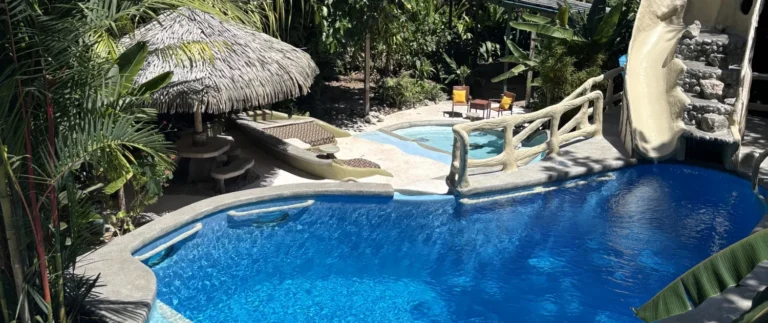
If you need air conditioning, steady power for devices or a pool and full service, look at Lapa Rios Ecolodge on the ridge above Carbonera, or the cliff-top cabins of El Remanso Lodge farther along the cape. For the wider area, see our Osa Peninsula eco-lodges and our Corcovado and Osa Peninsula guide.
Frequently asked questions
Is Ojo del Mar the same place as "Ojo del Mar Eco Lodge"?
Yes. It's one lodge on the beach at Cabo Matapalo; some listings simply add "eco lodge" to the name, and others use the English translation, Eye of the Sea.
Can I charge a laptop or phone at Ojo del Mar?
Only lightly. The lodge runs on solar power alone and lights its paths with solar lanterns and candles, so plan on charging phones and cameras rather than running a laptop for hours. Mobile signal in the area is unreliable.
Which meals are part of a stay?
Breakfast is included. Dinner is a shared buffet served at the Casa Grande, and packed lunches, afternoon drinks and alcohol are extra. Ask the lodge which dinner arrangement applies to your booking.
Is the surf good for beginners?
The lodge books lessons at Pan Dulce, which it describes as a forgiving wave for learners. More experienced surfers can walk or drive to the point breaks around Cabo Matapalo; ask the lodge which break suits the day's swell and tide.