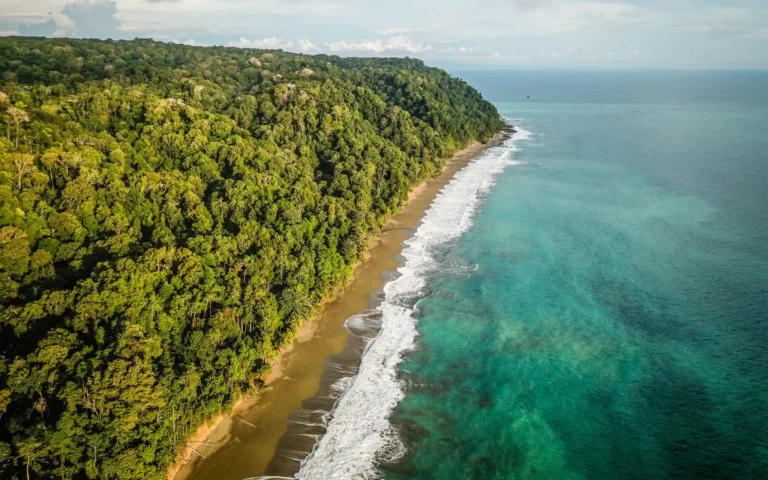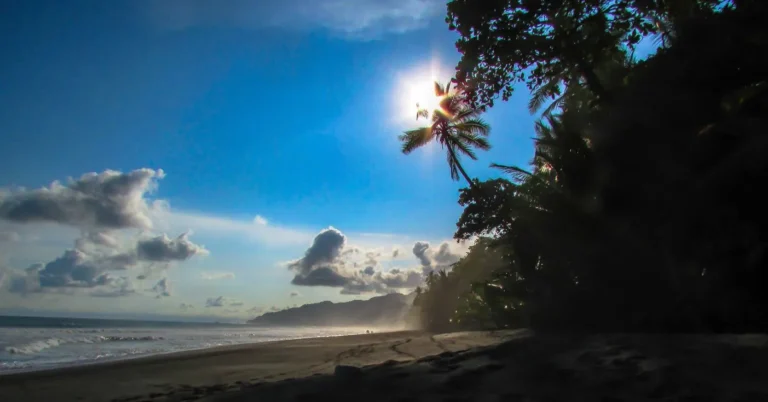
Danta Corcovado Lodge is a small, family-run rainforest lodge in Guadalupe, a farming community outside La Palma on the Osa Peninsula, about 8 km from the Los Patos entrance to Corcovado National Park. It’s a good base if you want to hike into Corcovado from its quieter northeastern side, walk a 30-hectare property of forest and regenerating land on your own, and stay somewhere built and staffed by people from the surrounding villages.
At a glance
| Location | Guadalupe de La Palma, Puerto Jiménez district, Osa Peninsula |
|---|---|
| Style | Rustic, locally run lodge with nine units and an open-air restaurant |
| Setting | 30-hectare property of primary and secondary forest, reforestation and a heart-of-palm plantation |
| Best for | Hikers heading for Corcovado via Los Patos, birders, families and student groups |
| Getting there | Paved road from the Inter-American Highway at Chacarita toward Puerto Jiménez; flights land at Puerto Jiménez |
| CST status | Says it takes part in CST; not in the official directory on 2026-Oct-21 |
Where it is
The lodge sits in the rainforest just off the road between Chacarita and Puerto Jiménez, close to the village of La Palma. Its directions page sends drivers down the Inter-American Highway (or the coastal Costanera road through Quepos and Dominical) to Palmar Norte and Chacarita, then onto the Puerto Jiménez road, following Danta signs. Puerto Jiménez has a small airstrip with daily domestic flights, and the lodge can arrange the transfer, which is roughly 45 minutes.
The Costa Rica Tourism Board’s official listing places the lodge about five miles from the Los Patos sector of Corcovado National Park and describes it as the closest lodging to the Guaymí (Ngäbe) indigenous territory of Alto Laguna.
The rooms
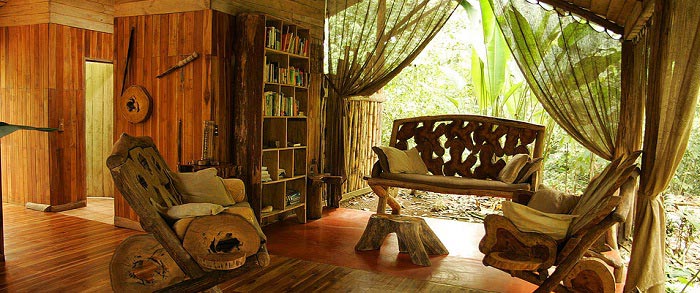
Danta has about nine units in four styles and holds roughly two dozen guests at most. The interiors are the work of local woodworkers, and the details are the point: twisted branches frame the windows, mirrors and bedside tables are cut from tree “cookies”, and the Surá beds have tall carved headboards.
- Standard rooms: two simple rooms with polished teak floors, ceiling fans and screened windows.
- Bungalows: forest cabins (outside listings count six) of melina wood and bamboo, set about 200 m from the main building for privacy. Each has a full-size canopy bed and a private garden bathroom open to the trees, with screening rather than solid walls.
- Two-bedroom bungalow: two bedrooms, each with its own bathroom, close to the main building.
- The House: a 100-square-meter unit with two bedrooms (one double bed in one, a double and a single in the other), a kitchen, a living room and hot-water bathrooms, about 50 m from the parking area. The lodge pitches it at families and student groups.
The lodge’s facilities page also describes a wheelchair-accessible master suite with a river-stone, semi-open bathroom. There’s no pool, air conditioning or TV. Expect fans, mosquito nets and the night noise of frogs, kinkajous and potoos instead.
Meals
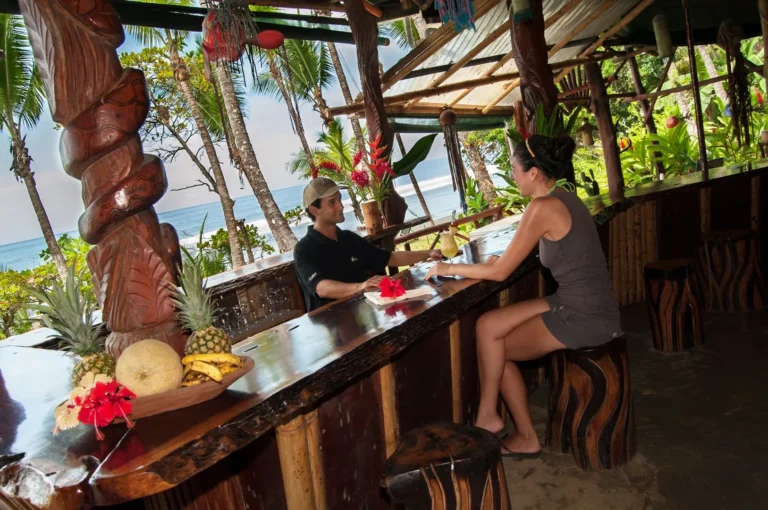
Meals are served in the Ranchito, a multi-level open-air dining room above a creek, reached by a bridge wrapped in twisted branches and held up in part by an upside-down tree trunk. According to the lodge, cooks from the community make traditional Costa Rican food and change the menu with what’s in season. Breakfast is included in the room rate, and lunch and dinner are served at set hours. Vegetarian dishes are available, and anyone with allergies should tell the lodge before arriving.
Things to do
On the property
The lodge’s private trails run through a heart-of-palm plantation, a reforestation area, regenerating and secondary forest, and patches of primary forest. Guests can walk them on their own, and a loop takes about two hours. The lodge reports more than 200 bird species on the land, along with regular squirrel, howler and white-faced capuchin monkeys, and occasional jaguarundis, northern tamanduas and three-toed sloths. A guided night walk circles a small lagoon at dusk looking for caimans, tarantulas and tree frogs, and a 2.5-hour birding walk targets regional specialties such as the black-cheeked ant-tanager, fiery-billed aracari and yellow-billed cotinga.
Corcovado via Los Patos
The signature outing is a full day in Corcovado. The Corcovado tour runs roughly from 7 am to mid-afternoon: about 8 km by 4×4 or tractor to the Los Patos ranger station, then around 6 km on foot inside the park, with a picnic lunch beside a small waterfall. The lodge rates it medium to difficult because of steep, muddy terrain. Park entry has to be bought in advance with each guest’s name and passport number, at least five days before arrival, and SINAC requires visitors to enter with an authorized guide.
In the community and on the gulf
- Indigenous visit: a Spanish-language morning with a Ngäbe family in the neighboring territory, which begins with a purification ritual and covers medicinal plants, crafts and daily life.
- Chocolate: a three-hour session, mornings or afternoons.
- Sloths: a visit to La Perica Sloth Garden, run by the Valverde family.
- Golfo Dulce kayaking: a two-hour paddle from Playa Blanca through mangroves, where dolphins are often seen, followed by lunch nearby.
Sustainability and the family behind it
Danta is a local family business, and its sustainability page traces its community work to the owner’s father, Juvenal Oviedo. Visiting school, university and church groups have painted houses, built school furniture, planted trees, taught music and helped build a community center in Guadalupe. The lodge says most of its staff come from nearby villages and that it buys food, crafts, furniture and transport from small local businesses, and its gift shop stocks indigenous, organic and recycled-material products.
According to the lodge, it heats water with solar panels, relies on open, naturally lit buildings, runs water- and energy-saving and recycling programs, treats its wastewater, and uses biodegradable cleaning products and non-toxic pest control. It says it doesn’t keep or feed wild animals. The lodge says it participates in the CST program, but it doesn’t appear in the official CST directory as of October 2026, so treat that as unconfirmed.
Who it suits
Danta is a strong pick for travelers who want Corcovado on foot without the long boat rides of Drake Bay or the beach-and-airstrip trip to Carate, and for anyone who’d rather spend money in a small farming community than at a large resort. The House and two-bedroom bungalow suit families and school groups.
It’s not for everyone. The bungalows are open to the forest by design, so insects, humidity and noise come with them, and there’s no pool or air conditioning. The Corcovado day is a serious hike. If you’d rather have the sea on your doorstep, look at El Remanso Lodge at Cabo Matapalo; for another small, birding-focused stay at the edge of the park, there’s Bosque del Río Tigre in Dos Brazos. More choices are in our Osa Peninsula eco-lodges section, and our Corcovado and Osa guide covers park sectors and access. If the Ngäbe visit appeals, our guide to community and indigenous ecotourism has more like it.
Frequently asked questions
How close is Danta Corcovado Lodge to Corcovado National Park?
About 8 km from the Los Patos ranger station, the park's entrance on this side. The lodge's Corcovado day covers that stretch by 4x4 or tractor before you start walking.
Do I need a guide to enter Corcovado from Los Patos?
Yes. SINAC requires an authorized guide for every Corcovado visit, and tickets must be booked ahead. Danta arranges both, but it needs passport details at least five days before your stay, and the entry fees can't be refunded once bought.
Can I explore the lodge's land without a guide?
Yes. The private trails are open to guests at no extra charge, and the main loop takes about two hours. The night walk and birding walk are guided.
Is the indigenous visit offered in English?
No. The lodge says the visit to the Ngäbe family is conducted only in Spanish, so bring someone who can translate if you don't speak it.