
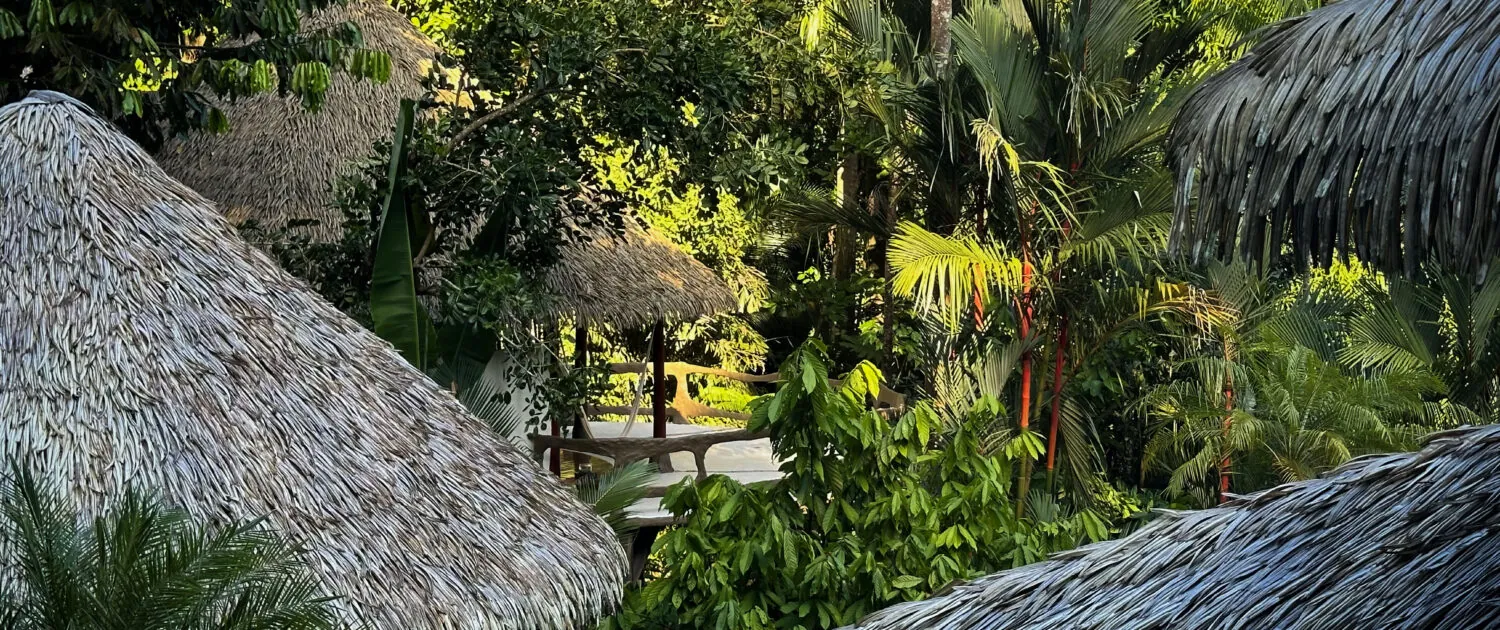


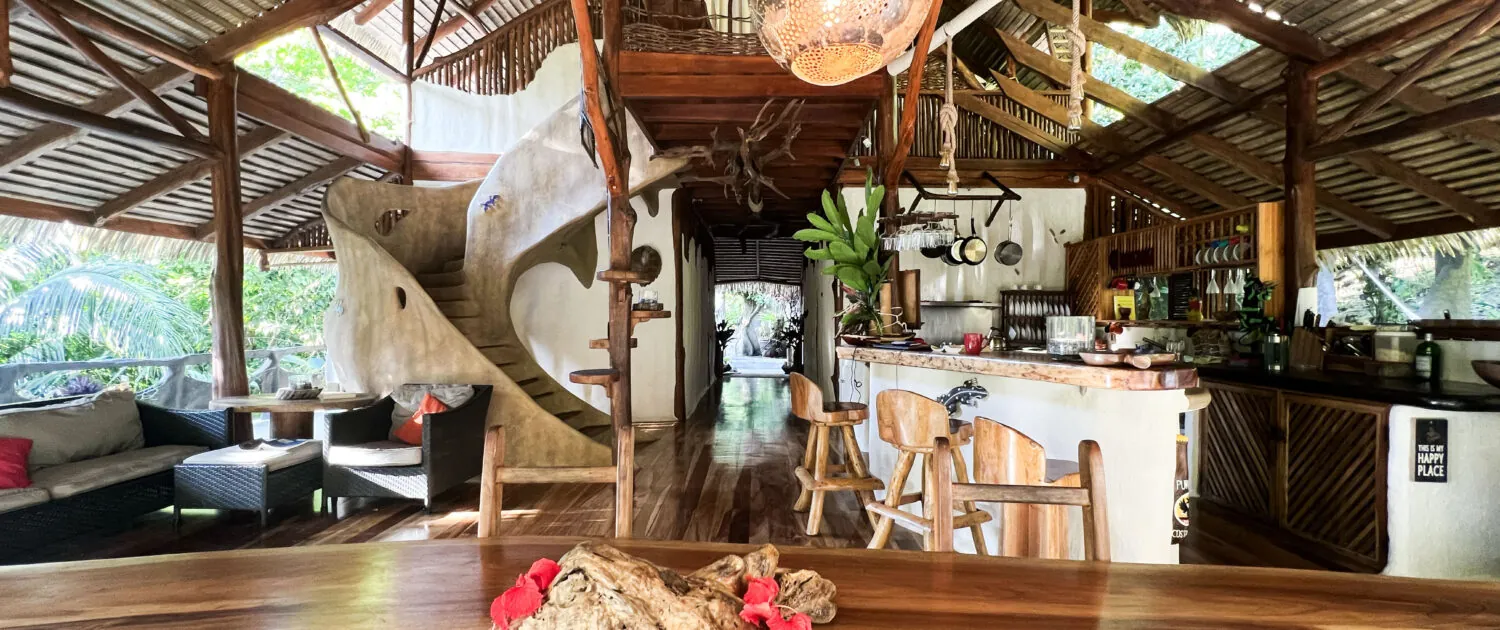


Casa Vida Verde isn’t a lodge but a private, solar-powered rental house for up to 12 people at Cabo Matapalo, the southern tip of the Osa Peninsula. You rent the whole place: four suites, an open-sided kitchen and living platform, a garden of pools, and a slope of forest behind the house where macaws and monkeys are part of the daily routine. It suits families and friends who want to cook for themselves and explore one of Costa Rica’s wildest corners at their own pace.
At a glance
| Location | Cabo Matapalo, near Puerto Jiménez, Osa Peninsula |
|---|---|
| Style | Whole-house vacation rental with on-site manager; self-catering |
| Setting | Forested hillside above the beaches of Cabo Matapalo, off the power grid |
| Best for | Families and groups of friends, surfers, independent wildlife watchers |
| Getting there | About 40 minutes by 4×4 from the Puerto Jiménez airstrip |
| CST status | Not listed (checked 2026-10-21) |
The setting
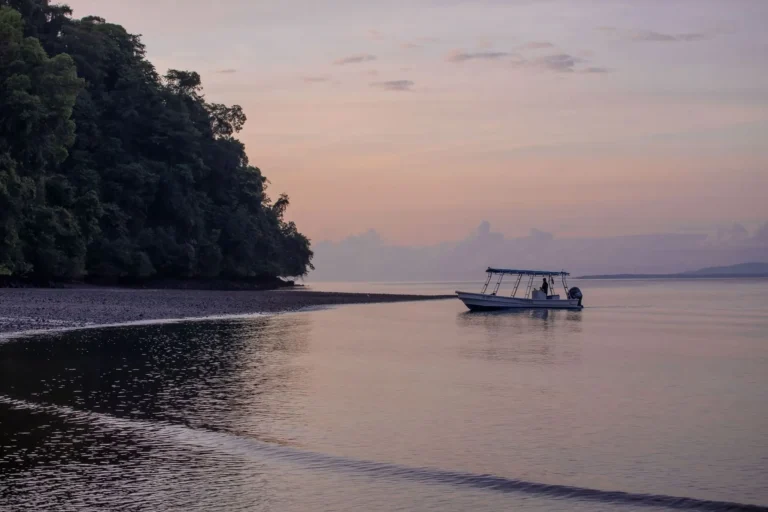
Cabo Matapalo is the point where the Golfo Dulce meets the open Pacific. It’s a scattered community of homes and a few small hotels and bars, with no grocery store and no grid power, reached by a dirt road from Puerto Jiménez. According to the house’s own description of the area, the surrounding forest connects to Corcovado National Park, and more than 300 bird species have been recorded locally. The owners report that all four of Costa Rica’s monkey species can be seen here, along with sloths, coatis, agoutis and anteaters.
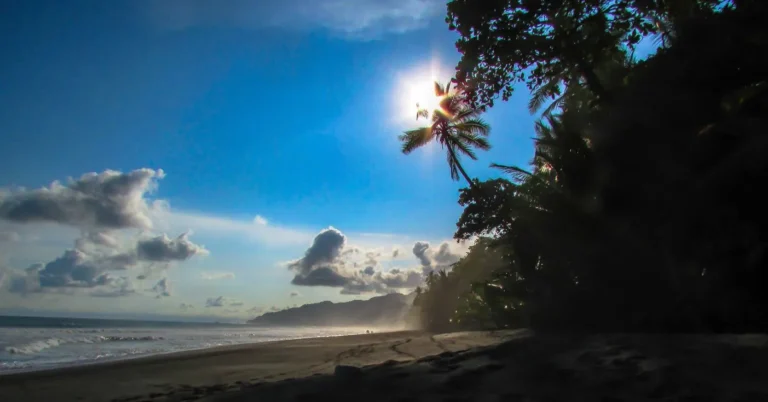
Three surf beaches are within a short walk: Playa Pan Dulce, gentle enough for beginners; Backwash Bay, favored by intermediate surfers; and Playa Matapalo, which challenges even advanced riders. Two waterfalls lie a jungle hike away.
The house
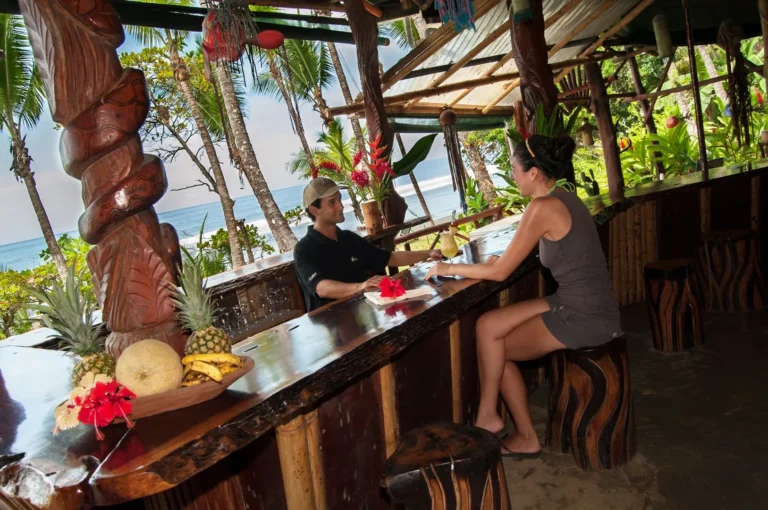
The four-bedroom home is open plan, with walls only where privacy needs them, as laid out on the house description page. The main platform holds the kitchen, dining table for 12, living area and two suites, and a viewing deck looks into the old forest behind the house.
- Master Suite, upstairs, with a king bed under a mosquito net and a hanging bridge to an open deck in the trees.
- Junior Suite, on the main floor, with a king bed and its own deck.
- Family Suite, a screened room that can be set up as a king room, a king plus extra singles, or a bunk room for five.
- Canopy Suite, reached by another hanging bridge, with a double shower and a private deck at monkey height above the pools.
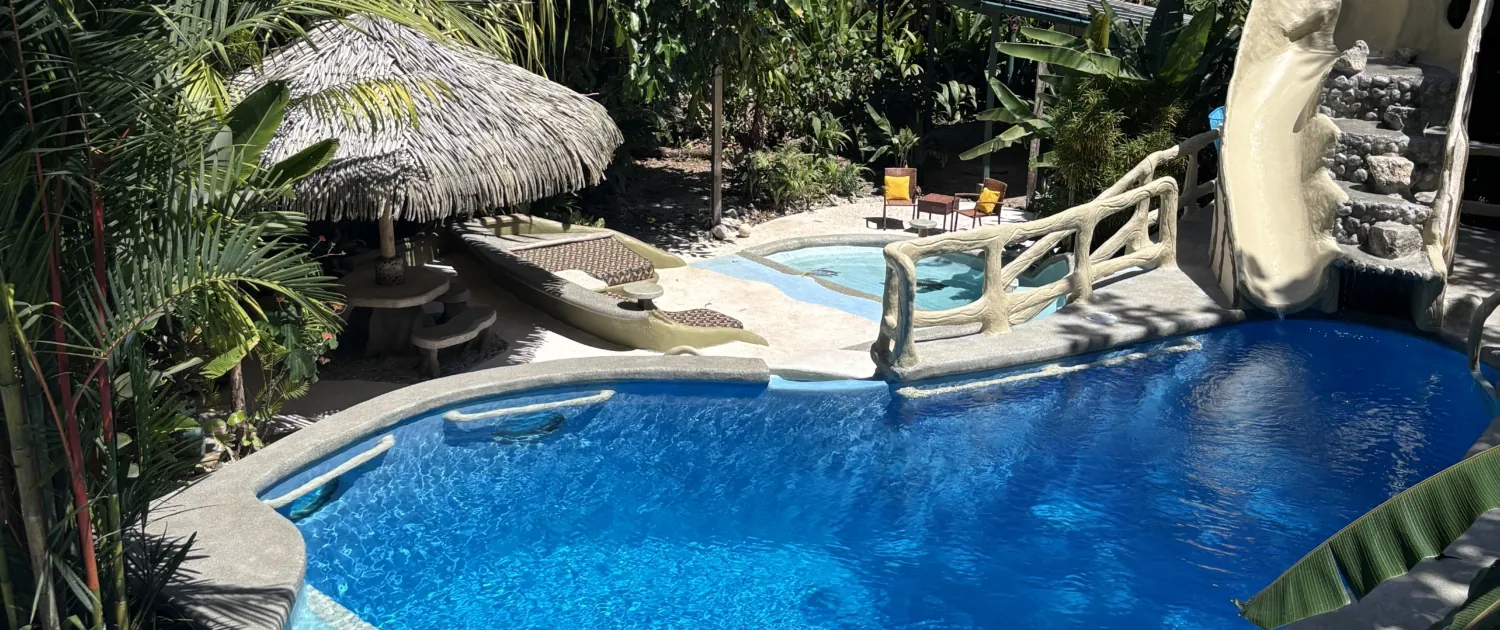
Below the house, the garden steps down to a set of connected pools: a 3-meter-deep pool with a springboard, slide and small waterfall, a shallow lounging area, a swim-up bar and two smaller dipping pools, with a barbecue and hammocks alongside. A rancho with hanging chairs catches the cool afternoon air off the hill, and the basement has ping pong and a pool table.
Higher up, a looping trail of steps climbs through the forest the owners describe as primary to a large private platform with a view to the ocean, used for yoga, massage and early-morning birding.
Living off the grid
The house runs entirely on solar power, so there’s no air conditioning, and the managers ask guests to charge devices by day and switch off fans and lights not in use. Water comes from a well on the property, with a filtered tap in the kitchen for drinking. The FAQ page explains that the house supplies biodegradable shampoo, conditioner and shower gel, a natural insect repellent in each bathroom, and identification cards on local plants and animals. Herbs grow on site, and fruit from the property’s trees goes to guests when it’s ripe.
Day-to-day help comes from Carlos, the manager, who lives on the property, and Sianne, the housekeeper. Both speak English. Carlos can arrange taxis, grocery runs from Puerto Jiménez, surf instructors and guides.
The setup is genuinely light on the land, but it’s worth being clear about what it isn’t: there’s no certification, no published conservation program and no restaurant. The sustainability comes from the design itself, a solar-powered home built into the forest rather than cleared from it.
What to do
Most activities are run by local operators and booked through the house. The activities page lists climbing a giant strangler fig on a top rope to a perch about 70 feet up, guided rainforest hikes past waterfalls, waterfall rappelling down drops of 45 and 100 feet, surf lessons, private yoga, and birding with a local guide. The regular Matapalo community yoga sessions are within walking distance. For many guests, the highlight is a guided day or overnight trip into Corcovado; our Corcovado and Osa guide helps with planning that trip.
Practical details
You’ll need to shop in Puerto Jiménez before arriving, since Matapalo has no grocery store. The kitchen has a six-burner gas stove, a large oven, an American-style fridge and three sinks, so cooking for a crowd is straightforward. A rental car isn’t essential; local taxis know the road and the wildlife.
The dry season runs from December through April. October and November are the wettest months, and the owners note that the house is usually closed then. There’s no air conditioning, and the open design means insects are part of the experience: beds have quality nets and the Family Suite is fully screened.
Who it suits
Casa Vida Verde is a strong choice for multi-generational families, surf trips and groups of friends who like to cook and want privacy and wildlife without hotel routines. Children tend to love the pools, the hanging bridges and the monkeys.
It’s not for travelers who want meals served, nightly entertainment or air conditioning, or anyone uneasy with insects. Couples who prefer a staffed lodge nearby might look at Bosque del Cabo or Lapa Ríos, both on the same stretch of coast. More options are on our Osa Peninsula eco-lodges page. Contact details and availability are on the house’s site, casavidaverde.com.
Frequently asked questions
How many people can stay at Casa Vida Verde?
Up to 12, across four suites. The Family Suite is the flexible one, set up as a king room, a king with extra singles, or a five-bed bunk room.
Are meals provided?
No. It's a self-catering house with a well-equipped kitchen. The manager can help with grocery runs from Puerto Jiménez, and the house has herbs and fruit trees on site.
Is there air conditioning?
No. The house runs on solar power alone, and its open design relies on forest breezes. Guests are asked to charge devices during the day.
When is the house closed?
The owners say it's usually closed in October and November, the rainiest months on the Osa Peninsula. Check with the manager for exact dates.