Ylang Ylang Beach Resort is a small, family-owned hotel on the beach a short walk north of Montezuma, reached on foot along the sand rather than by a public road. It grew out of land the Iacono family bought in the late 1970s, and it now pairs beachfront bungalows with a pool, daily yoga and a restaurant that caters well to vegetarians and vegans. Choose it for a quiet beach base that is still close enough to walk into the village for dinner.
At a glance
| Location | About 700 meters north of the school, Montezuma, southern Nicoya Peninsula |
|---|---|
| Style | Family-run beach resort with rooms, suites and bungalows |
| Setting | Beachfront gardens between the sand and forested hillside |
| Best for | Couples, yoga travelers and families who want a car-free feel |
| Getting there | 10 to 15 minute beach walk from Montezuma, or a pickup arranged by the resort |
| CST status | Not listed in the official directory |
A long family history
The resort’s story begins with Lenny and Patricia Iacono, who bought this beachfront lot in the late 1970s while making a living selling dried fruit. Back then the land was a grove of coconut and banana trees. The couple opened El Sano Banano, a health food restaurant in central Montezuma, and slowly developed the beach property into a place to stay. It took the name Ylang Ylang, after a fragrant tropical flower, in early 2005. The founders have since retired, and their children and in-laws now run both the resort and El Sano Banano. Its awards are mostly from Tripadvisor, and the resort also cites a Fodor’s Choice listing.
Getting there and the walk from town
There is no paved road to the resort. Most visitors simply walk: independent guides such as i-escape put it about 15 minutes along the beach from Montezuma, and the resort gives 10 to 15 minutes. The walk is lovely at the right tide, but less pleasant at night or for anyone who struggles on sand. If you arrive by road, the directions page explains that the resort’s driver collects guests at El Sano Banano in the village and drives them out.
Reaching Montezuma itself, the resort lists about three hours by car from Liberia, about four hours from San José using the Puntarenas to Paquera ferry (the crossing is roughly an hour and a quarter), and around 15 minutes from Cóbano. A taxi boat crosses from the Jacó area in about an hour, and domestic flights from San José take about 25 minutes. Mal País and Santa Teresa are 30 to 40 minutes away by road.
Rooms and bungalows
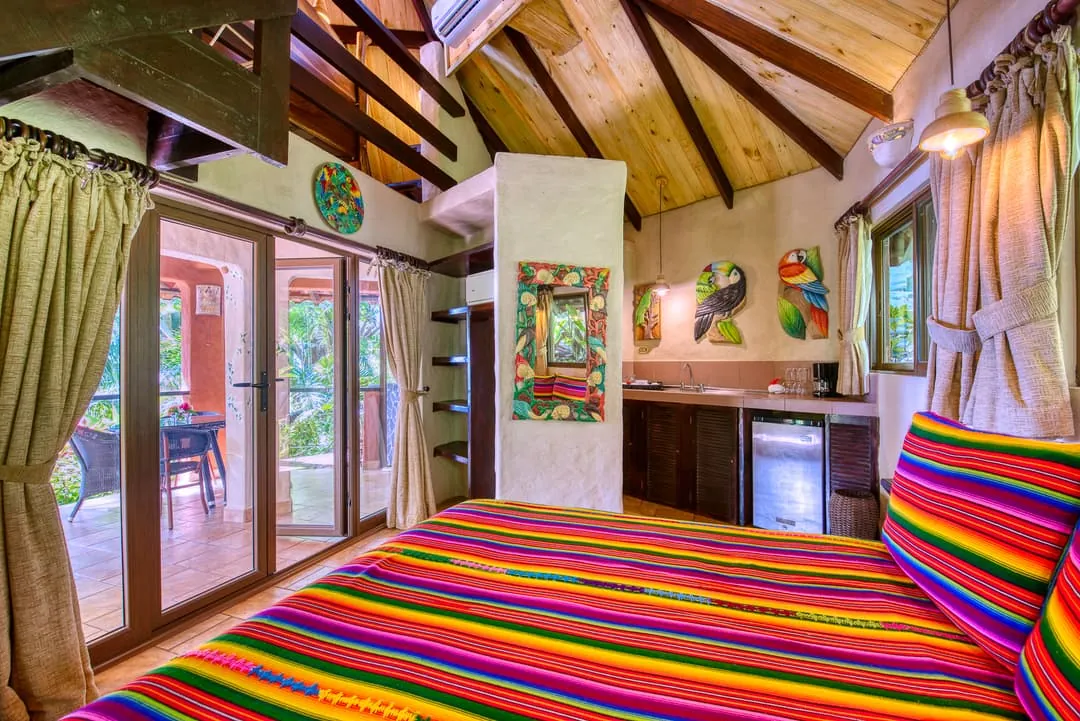
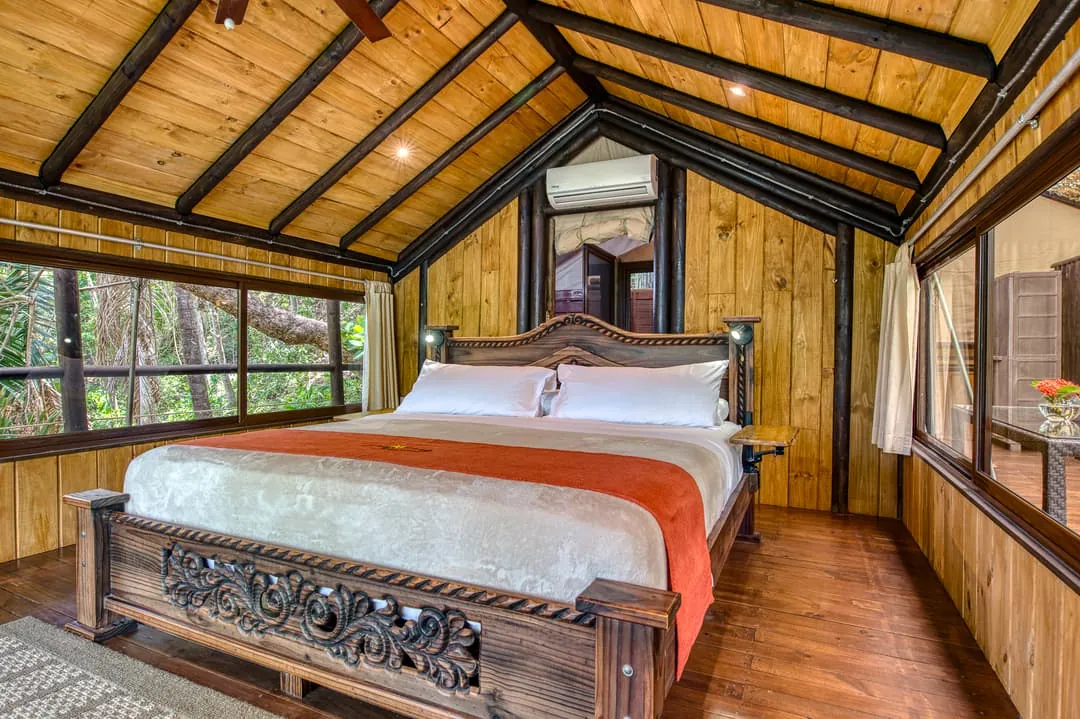
The accommodations range from compact to family-sized, and each has its own bathroom and daily housekeeping:
- Cabina: wood-paneled, sleeps three.
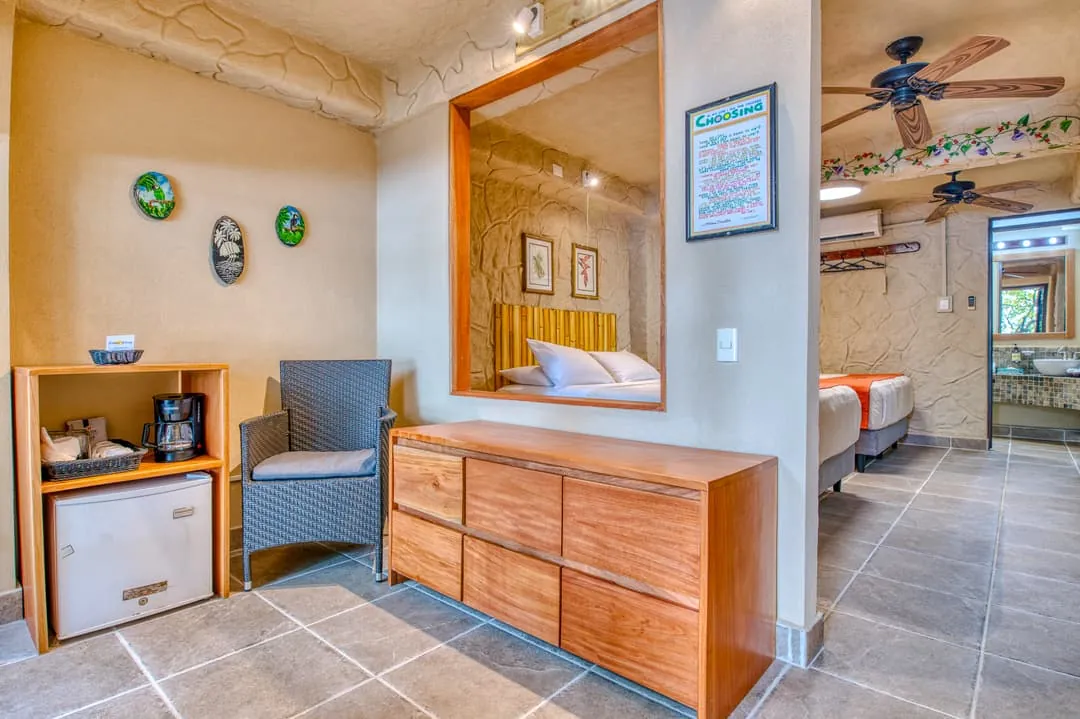
- Standard Beach Room: two queen beds, mini fridge and coffee maker, sleeps four.
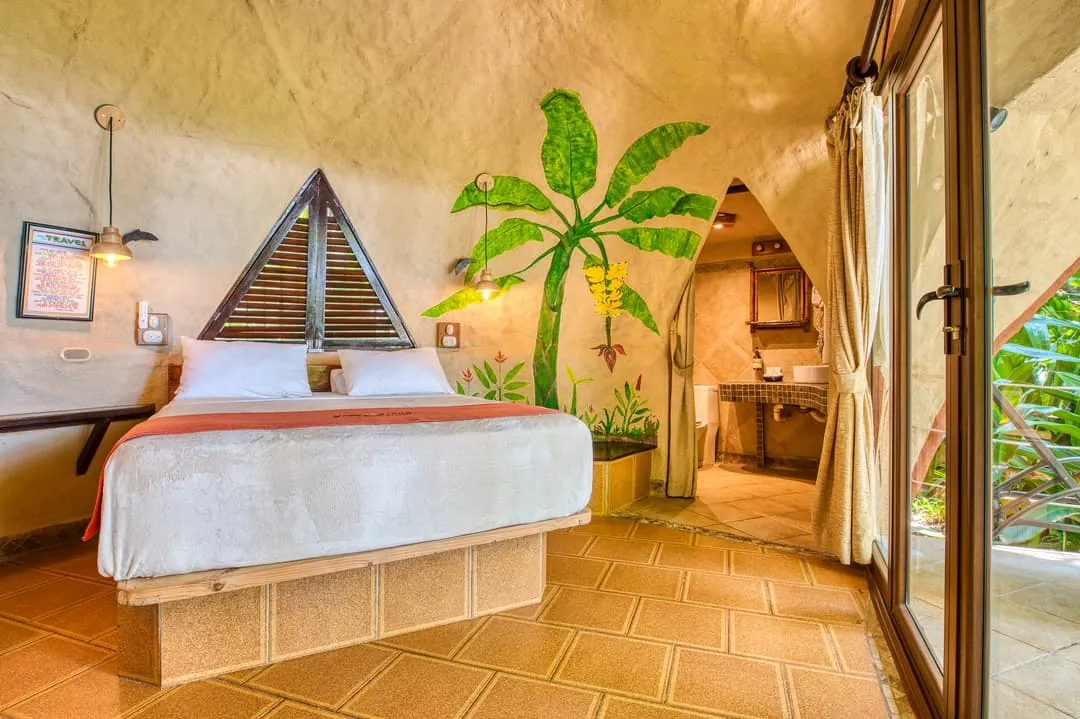
- Beach Front Bungalow: king platform bed under a painted mural of an ylang ylang tree.
- Tree Top Canopy: king bed, vaulted ceilings and rich wood paneling.
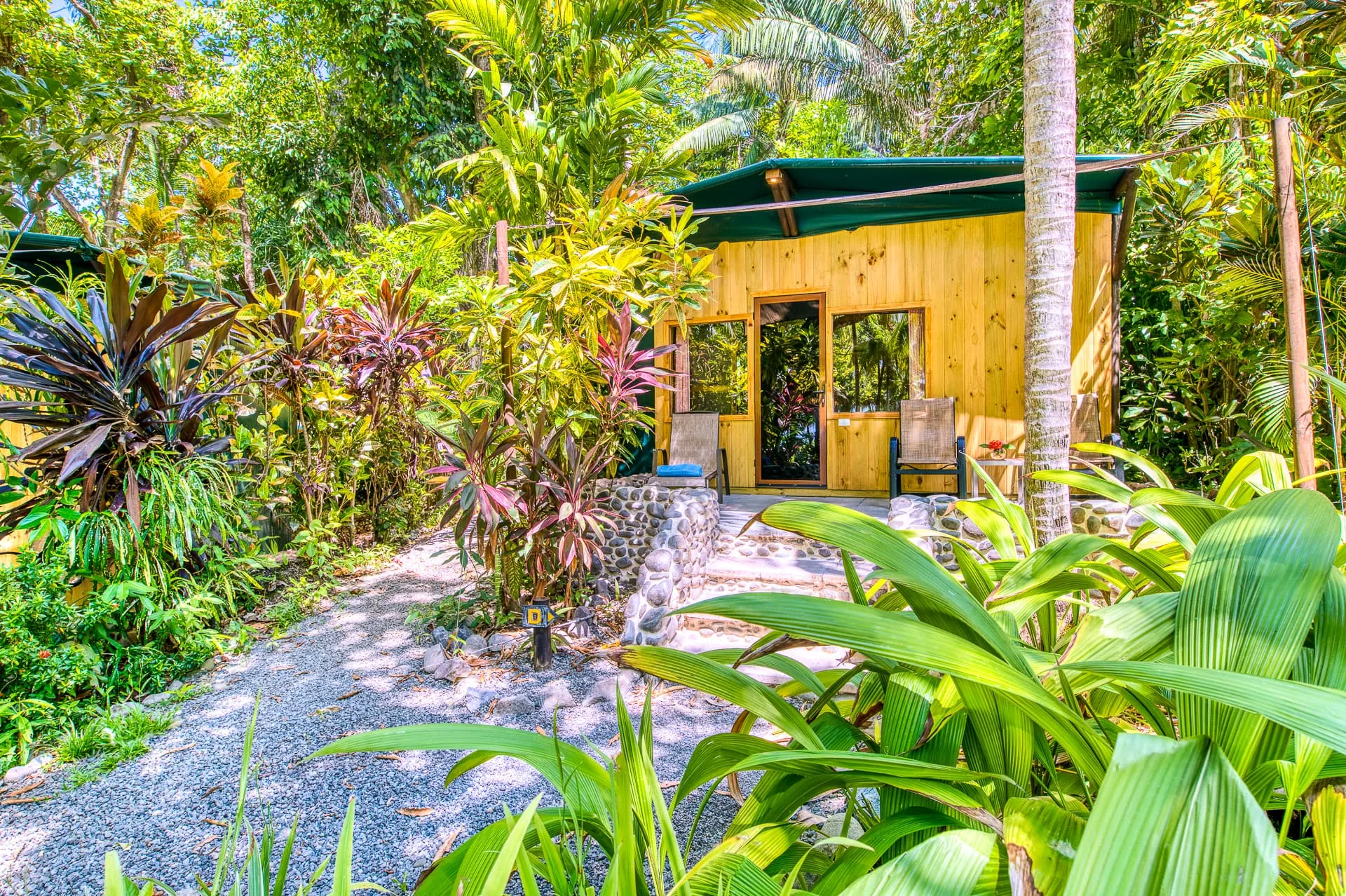
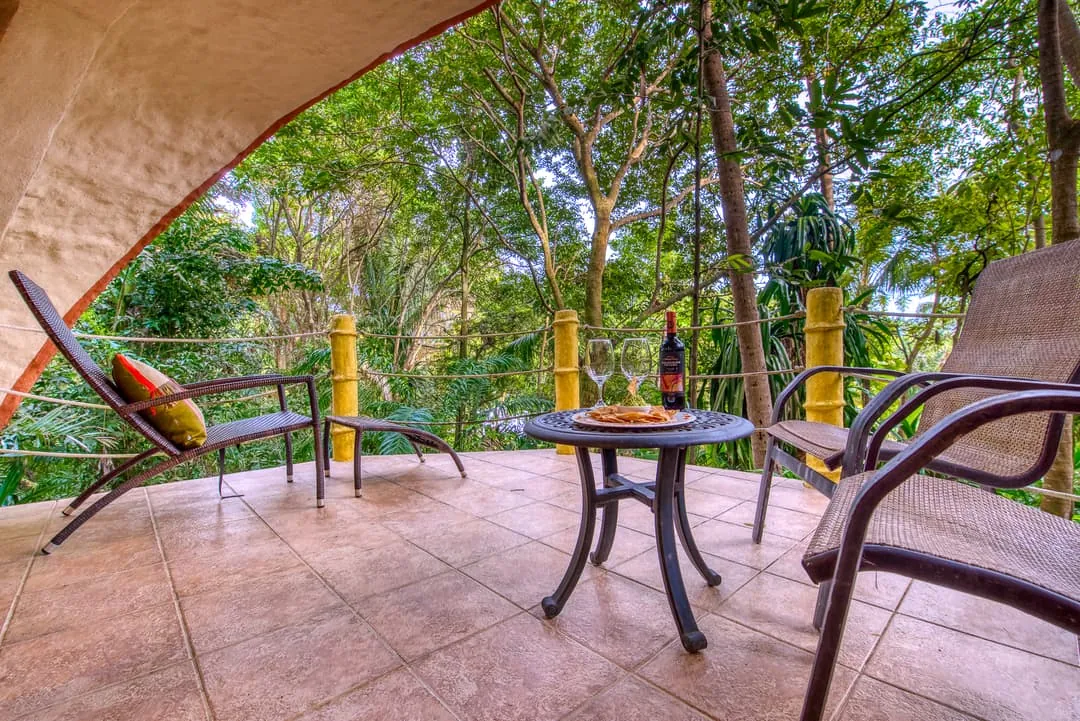
- Garden Bungalow: king bed with a private terrace looking into the jungle.
- Colibri and Coco Joe’s bungalows: each sleeps four, the latter with sliding doors onto a patio.
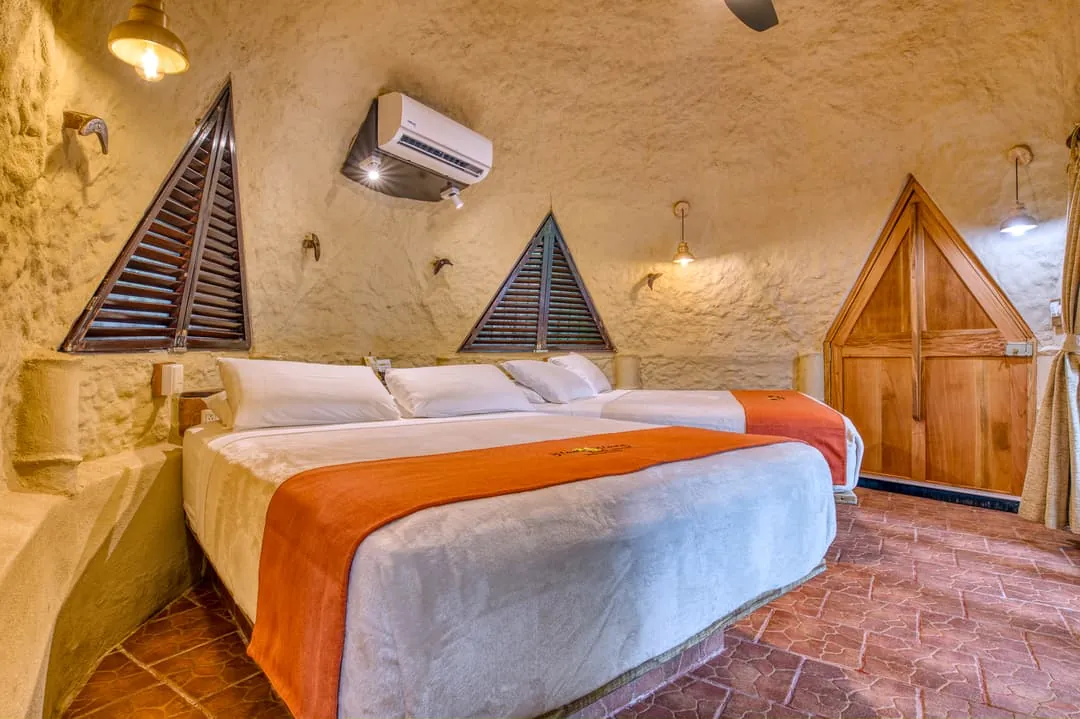
- Family Beach Suite: two queens plus a king, for up to six.
Stone paths connect the units through the gardens, and hammocks and loungers are set out along the beach.
Restaurant, pool and yoga
The open-air restaurant sits under a palapa a few steps from the water, having moved there from the founders’ former home. Its menu covers seafood and sushi, hormone-free chicken, and vegetarian, vegan and gluten-free dishes, and the family describes the cooking as organic where possible. Meal inclusion depends on the rate you book.
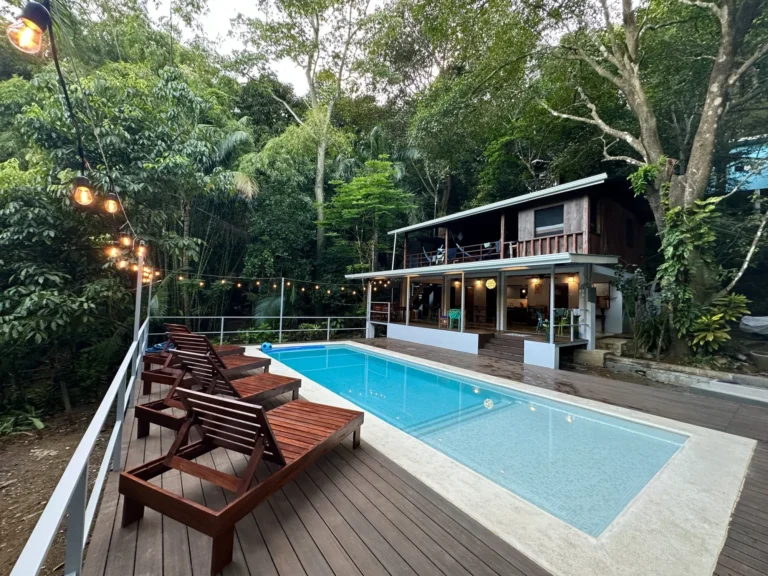
There is a freshwater pool with a small waterfall, daily yoga in an open-air studio, and a spa offering massages, facials and body polishes. Organized outings booked through the front desk include zip-lining, horseback riding and sport fishing.
Around Montezuma
The village has a famous set of waterfalls on the Montezuma River, an easy walk inland from town. North of the resort, the beach continues past Playa Grande, about 25 minutes on foot, toward a long stretch of empty sand. South of the village, the Cabo Blanco Absolute Natural Reserve protects the tip of the peninsula. It marked its 60th anniversary in 2023, and Semanario Universidad describes it as Costa Rica’s oldest protected area; it is closed on Mondays and Tuesdays. Island trips to Isla Tortuga and visits to the Curú refuge near Paquera are popular half or full days out.
The grounds back onto forest, and the resort talks generally about tropical wildlife rather than naming species. In practice the Montezuma coast is home to howler and white-faced monkeys, iguanas and coastal birds, but nothing is ever guaranteed.
Sustainability, as described by the resort
The resort’s green initiatives page is more specific than most. According to the resort, a solar array upgraded in 2018 produces three to four times more power than the old panels and covers roughly 40 percent of yearly electricity use, running room lights, outlets, fans and air conditioners as well as the restaurant, bar and front desk. Hot water is heated by waste heat from the room air conditioners. The restaurant hands out straws only on request, offers compostable cups for the pool and beach, and uses compostable trash bags in rooms. Cleaning products and laundry detergent are biodegradable and locally sourced.
The family also backs ASEPALECO, a nonprofit founded in 1991 that works on conservation, education and sustainable development on the peninsula. The resort makes a contribution to the foundation for every guest night and lets guests add a voluntary contribution to their bill; its old solar panels went to the foundation when the system was upgraded. Ylang Ylang does not appear in the official CST directory (checked October 2026).
Who it suits
This is a good match for couples, yoga travelers and families who like the idea of a beach hotel without cars outside the door, and who will enjoy walking into Montezuma for dinner and back along the sand. Vegans and vegetarians will eat well.
Anyone with limited mobility, heavy luggage they want to carry themselves, or a plan to drive in and out several times a day should think about the access before booking. Travelers wanting a formally certified hotel, or a deep rainforest setting, may prefer other options. For alternatives in the same village, see Luz en el Cielo and Anamaya Yoga Retreat, or browse the full southern Nicoya eco-lodges list. Our guide on how to choose a sustainable hotel in Costa Rica explains what to ask a hotel that is not CST-certified.
Frequently asked questions
Can you drive to Ylang Ylang Beach Resort?
Not in the usual way. There is no paved road for guests; the resort's driver picks up arriving guests at El Sano Banano in Montezuma, and otherwise people walk 10 to 15 minutes along the beach from town.
How much of the resort's power comes from solar?
The resort says its 2018 solar upgrade covers about 40 percent of average yearly electricity consumption, and that room air conditioners also heat the water.
Who owns Ylang Ylang Beach Resort?
It is still a family business. Founders Lenny and Patricia Iacono have retired, and their children and in-laws run the resort along with El Sano Banano restaurant in the village.
Does Ylang Ylang offer yoga?
Yes. The resort runs daily yoga classes in an open-air studio, and it also has a spa with massages and facials.