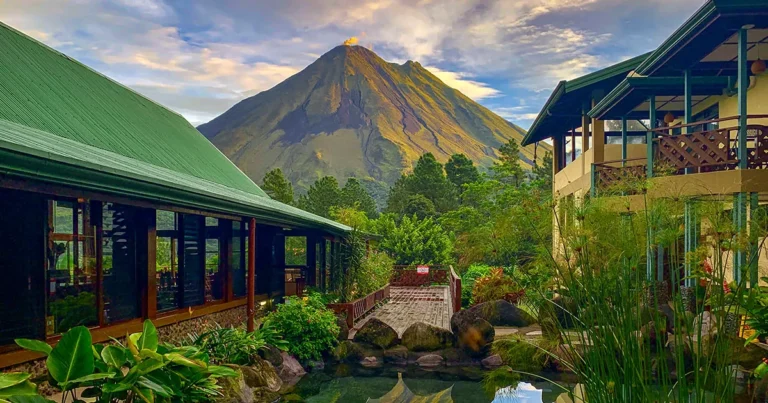

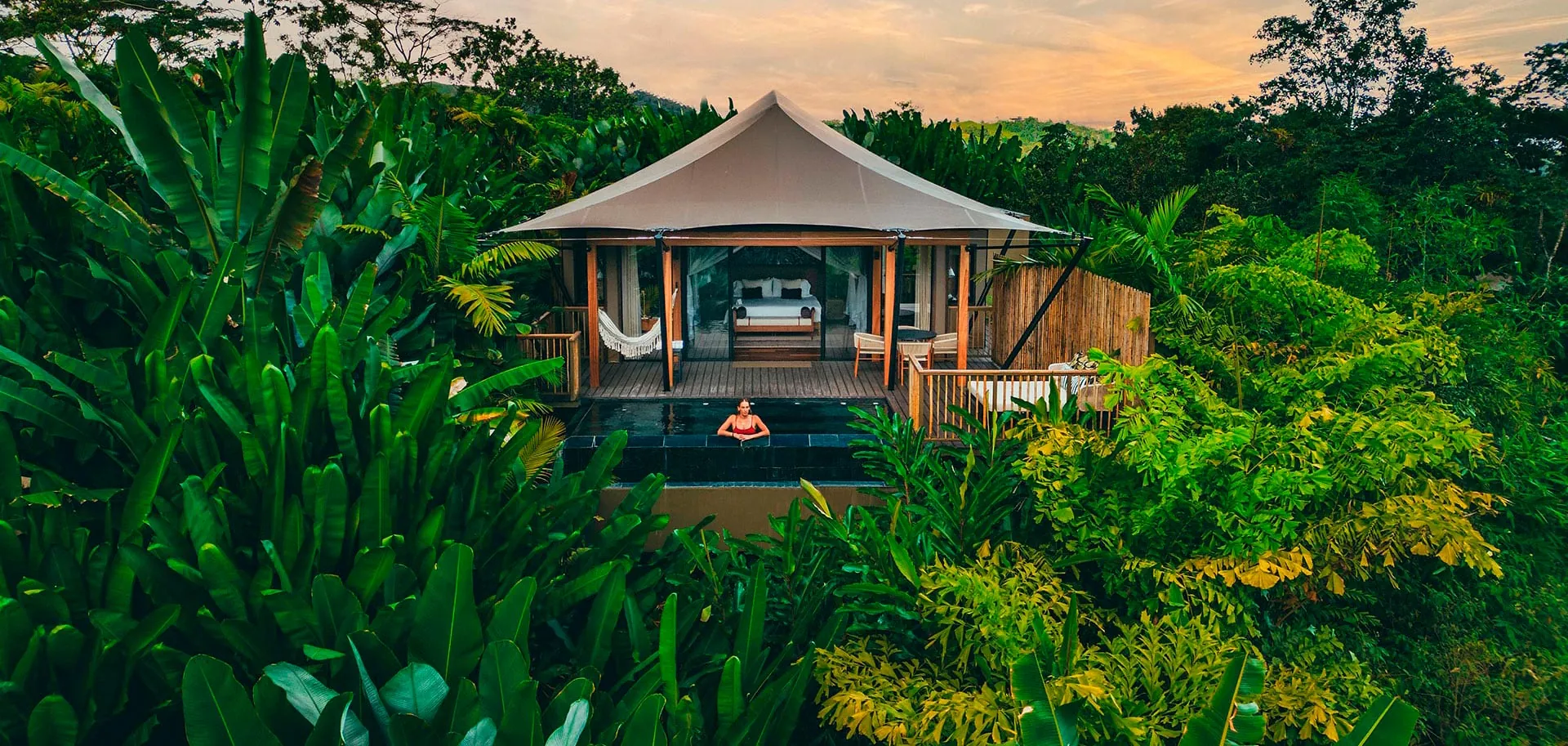
Nayara Tented Camp is a high-end safari-style camp on a hillside facing Arenal Volcano, where each canvas tent stands on stilts and has its own plunge pool filled from natural mineral hot springs. The land was cattle pasture before Nayara replanted it, and the camp now runs a sloth habitat in the regrowing forest, so this is a place to watch reforestation at work from a very comfortable deck.
At a glance
| Location | Hillside facing Arenal Volcano, a short drive from La Fortuna |
|---|---|
| Style | Luxury tented suites, family tents and private residences; part of Nayara Resorts |
| Setting | Replanted former pasture with a sloth preserve, beside Arenal Volcano National Park |
| Best for | Couples and families on a splurge who want hot springs and wildlife without leaving the property |
| Getting there | About 3 hours by road from San José or Liberia airports, or 15 to 20 minutes from the La Fortuna airstrip |
| CST status | Not in the official CST directory on 2026-Oct-20 |
Where it is
Nayara describes the camp as being in Arenal Volcano National Park, and the booking address is La Fortuna. It shares its hillside with two sister hotels, Nayara Springs and Nayara Gardens, on the road from La Fortuna toward the volcano. The camp’s FAQ puts the nearest gas station, in La Fortuna, about 7 km from the resort entrance. It quotes roughly three hours by private transfer from Juan Santamaría (San José) or Liberia international airports, and 15 to 20 minutes by road from the La Fortuna airstrip for guests who fly in on a small plane.
The national park itself was created in 1991 to protect the volcano and the watershed that feeds Lake Arenal. Climbing the cone is strictly forbidden, so volcano days mean trails on the old lava flows and the forest around them.
From pasture to forest
The camp’s About page is candid about the land’s history: a previous owner cut every tree to make cattle pasture. Nayara says it has since planted thousands of trees and native shrubs, kept the few heritage trees that had survived, and built the tents on stilts with gaps between them so more palms and trees could be planted underneath. It also says it helps with reforestation in the national park.
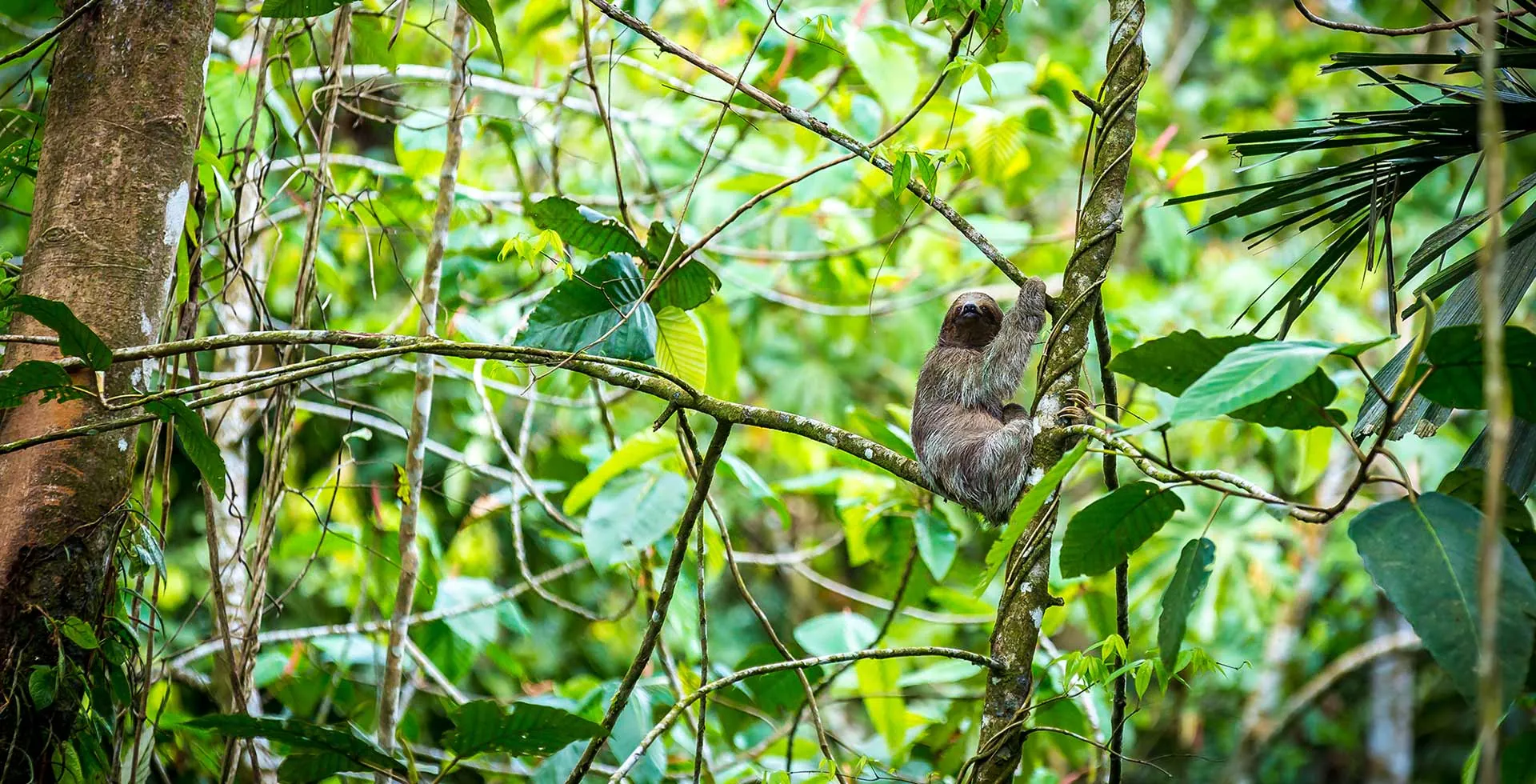
The camp’s design firm, Luxury Frontiers, said in its pre-opening announcement that the camp would open on December 20, 2019. That release said the sloth sanctuary held more than 15 sloths and that reforestation would increase the cecropia trees they feed on from about 300 to more than 1,000. Nayara now reports more sloths, monkeys, butterflies and birds on the property than before, and staff will point out a resident sloth they call Tony if you ask.
The tents
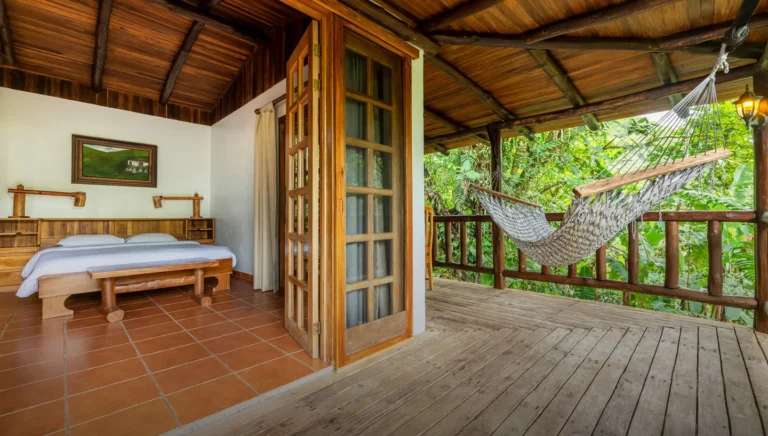
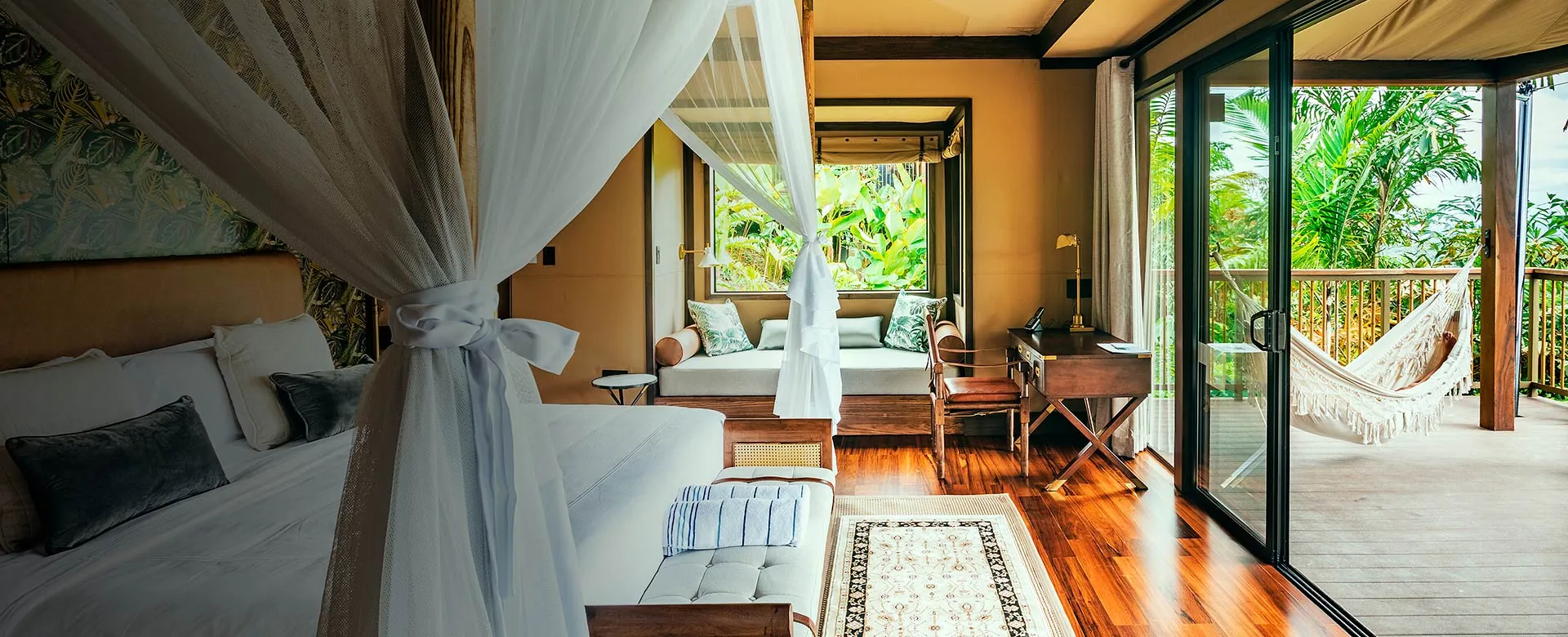
Tents are raised on stilts along the clifftop, air-conditioned and built for the wet climate. The Stay page lists four types:
- Nayara Tent: the standard suite, with rainforest views and a private pool fed by mineral hot springs.
- Family Tent: two connected tents sharing an outdoor living space and a private pool, for up to six adults or a couple with children.
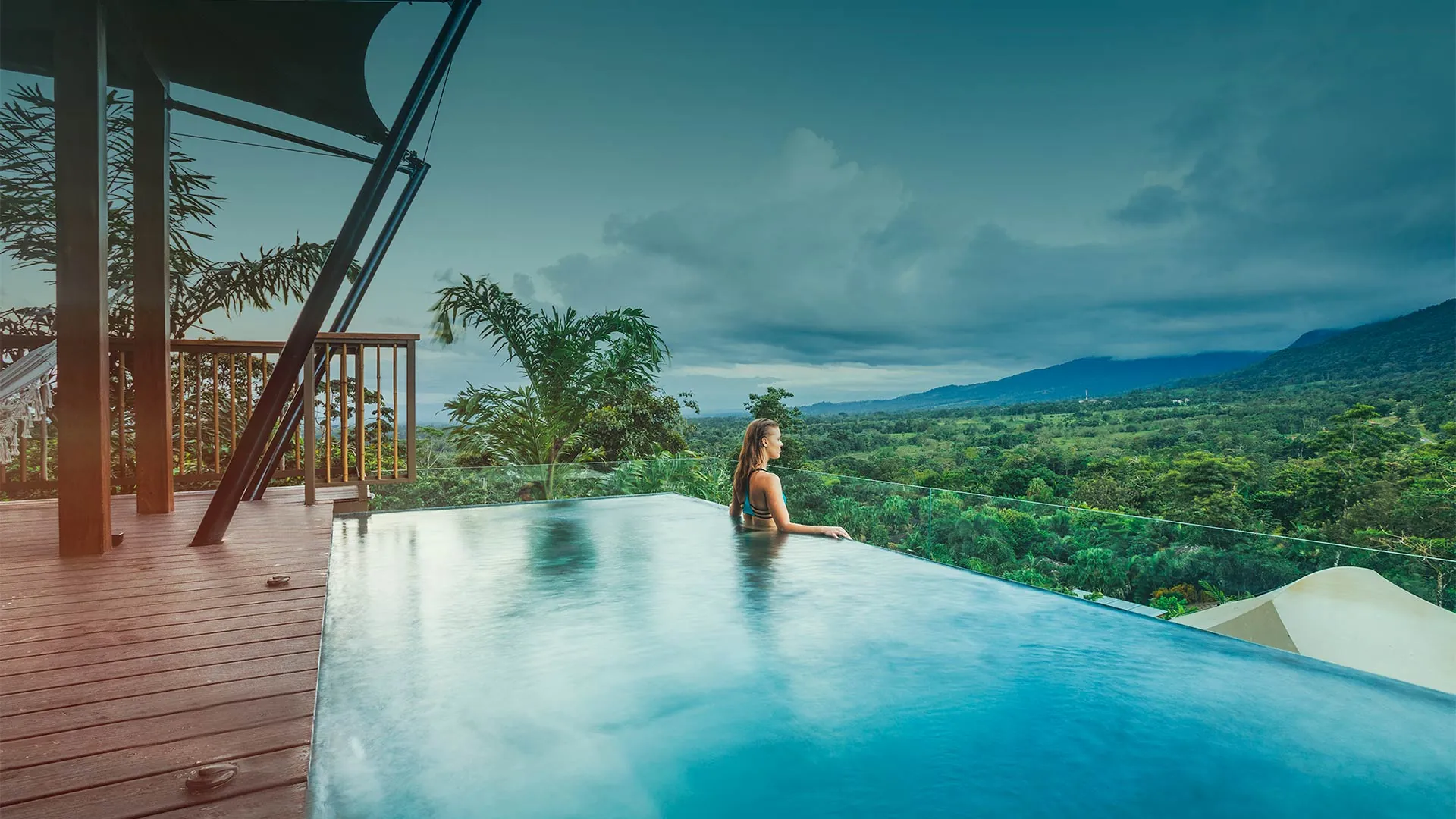
- Grand Tent: a single villa with a king bed and daybeds in the main tent, a ground-floor room with two queens, a full kitchen, indoor and outdoor lounges and an oversized infinity pool facing the volcano.
- Private Residences (Casa Paloma and Casa Dana): each pairs two Family Tents around a shared villa with a kitchen, fire pit and hot spring infinity pool, for up to twelve guests.
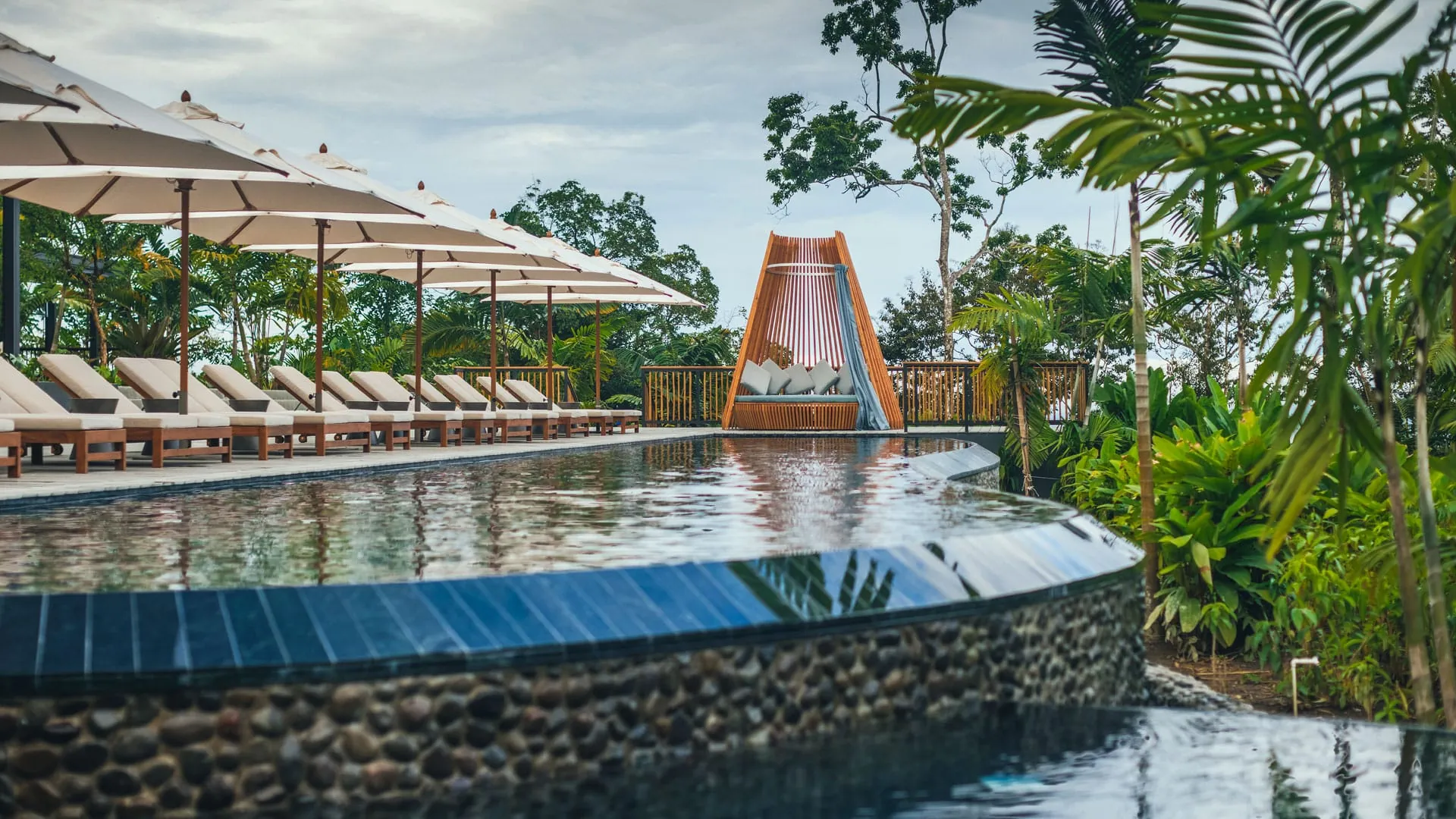
At launch, Luxury Frontiers described 29 units of roughly 1,500 square feet, some freestanding and some joined in pairs, plus a cluster of seven connected hot spring pools spread over two acres of forest. Later press gives higher totals after expansion, and Nayara does not publish a current count.
Because the tents sit on stilts on a slope, the FAQ says no tents are wheelchair accessible.
What you do here
On the property, the Explore page lists dawn birdwatching walks, trails where guests look for sloths and monkeys, yoga and meditation sessions, and garden walks among heliconias and orchids. The Unwind spa is on site. Tanagers, hummingbirds, toucans and oropendolas are among the birds the camp mentions, along with colorful frogs.
Off the property, the concierge books the usual Arenal outings: hanging bridges, hikes over the dry lava fields, waterfalls, ziplines, waterfall rappelling, white-water rafting on the Sarapiquí River, a coffee and cacao farm, a float through Caño Negro Wildlife Refuge, a visit to the Proyecto Asis animal rescue center and a Maleku indigenous community.
Food
Tented Camp guests can eat across the three Nayara properties. The Eat page lists Ayla, a modern Mediterranean restaurant with Middle Eastern touches; Amor Loco, an adults-only restaurant at Nayara Springs; the open-air family restaurant La Terraza del Arenal; Asia Luna for Costa Rican and Asian fusion and sushi; and several bars, including a wine bar and a library bar with a fireplace. The About page describes a “Cero Kilómetros” approach that favors seasonal produce from nearby farms.
Breakfast is usually included in Costa Rican rates, though it depends on the package. In-room dining runs around the clock. Vegetarian, vegan, kosher and gluten-free diets are covered with 72 hours’ notice.
Sustainability and community
According to Nayara, the tents are oriented to catch light and breezes so they need less air conditioning, lighting is low energy and faucets are water saving. The camp has replaced plastic water bottles with reusable glass, removed plastic straws and recycles plastic and cartons, with a stated goal of becoming free of single-use plastic. It publishes an ESG report through its website.
On the community side, Nayara says most staff come from La Fortuna, and that it provides staff transport, health services, sustainable-tourism training and free early education for employees’ children. It also supports a local children’s home and local artists. The camp does not appear in the official CST directory, so these are the company’s own descriptions.
Who it suits
This is the right pick for a honeymoon or a milestone trip when you want to soak in hot spring water on your own deck, walk to dinner, and still see sloths on the way. Families are welcome, and the Family Tents and Private Residences are designed for them.
It is not a place for a tight budget, and it is not a remote wilderness camp: you are a short drive from a busy tourist town and next to two large sister resorts. Travelers who want a smaller, simpler lodge with its own trails might compare Arenal Observatory Lodge or Arenal Oasis Eco Lodge. For more choices see our Arenal and Monteverde eco-lodges, and read our Arenal and Río Celeste guide to plan the days out.
Frequently asked questions
Is the plunge pool in every tent really hot spring water?
Nayara says the pool at each standard Nayara Tent is fed by natural mineral hot springs, and that the Private Residences have hot spring infinity pools. The camp also has a set of shared hot spring pools in the forest.
Is Nayara Tented Camp adults only?
No. Its FAQ calls the camp family-friendly, and it offers Family Tents and Private Residences for families. One restaurant guests can use, Amor Loco at Nayara Springs, is adults only.
Will I definitely see sloths?
Not definitely. The camp runs a sloth habitat in its replanted forest and staff often know where individual animals are resting, but sloths are wild and move around, so sightings are likely rather than guaranteed.
Can a wheelchair user stay at the Tented Camp?
The camp says none of its tents are accessible because they are built on stilts on a clifftop. Its sister hotels may be a better fit, so ask the reservations team.